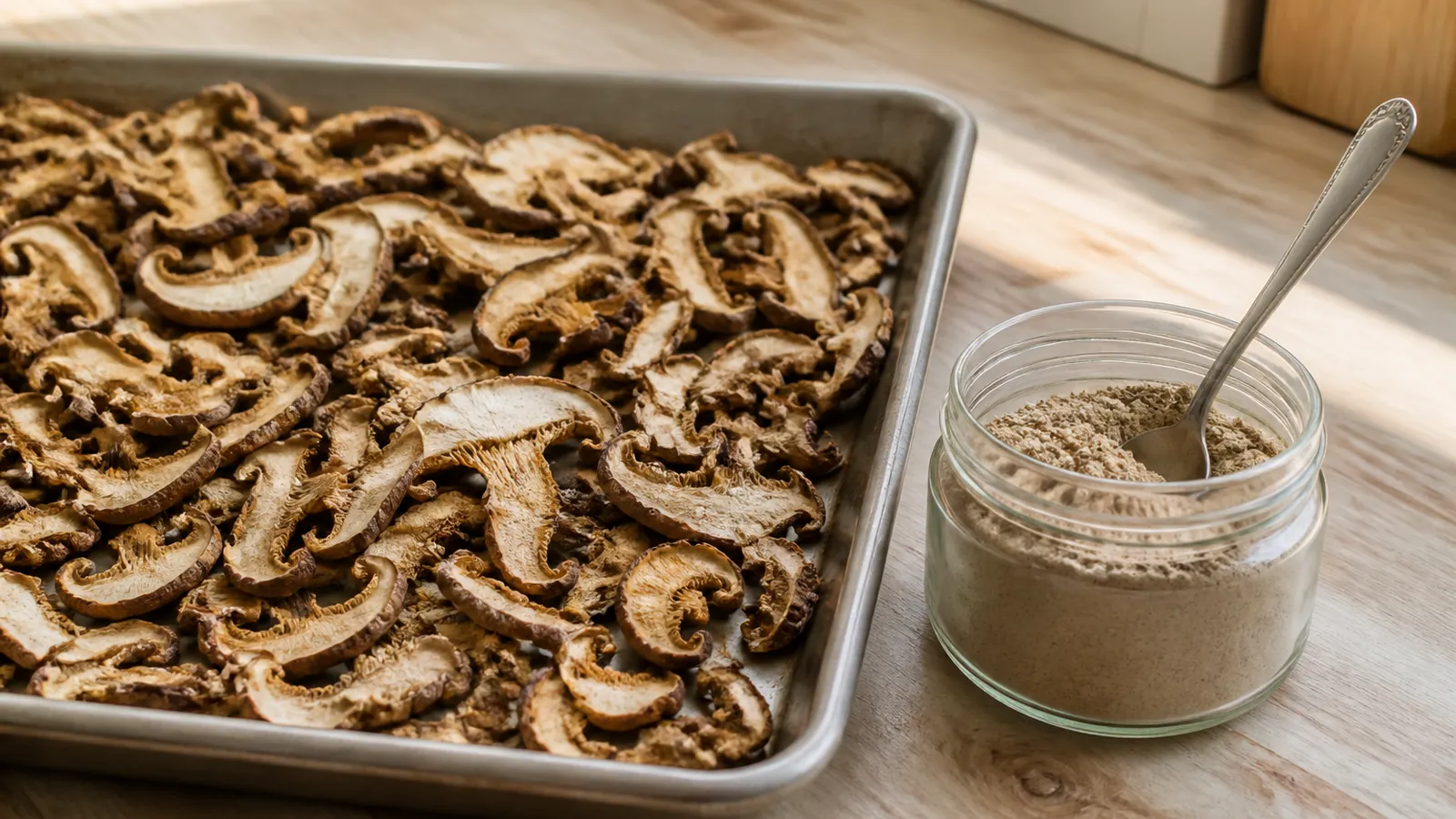
A preservation method for turning dried mushrooms into a powder that keeps for a year, covering what grinding does and does not achieve, the snap test and the water activity thresholds behind it, which species carry enough glutamate and guanylate to be worth the effort, why the savory compounds are heat-sensitive, how to grind without cooking the batch, storage that survives a humid month, and where powder outperforms whole mushroom in cooking.
A tray of dried mushrooms becomes about a jam jar of powder, and whether that jar is still good in a year is decided before the grinder is switched on. Two things decide it, which are how dry the material actually was and how hot the process got.
Neither of those two is the step most guides spend their time on. Choose the mushroom for the dish you intend to season, then dry and store the powder carefully.
What the powder is actually for
Grinding does one useful thing to a dried mushroom. It turns something you would have to soak and then fish back out into something that dissolves.
That is the whole practical case, and it is a better one than it sounds.
The first of those four lines is the one people underestimate.

It is worth being clear about what this method is not, because the internet muddles it.
Fungal cell walls are built on chitin, which a grinder does not break and human digestion does not either. Milling makes particles smaller and opens nothing, so a powder is not a concentrated anything in the way a supplement extract claims to be.
The compounds that make this worth doing are already free after drying and are water-soluble, which is why they show up in a stock and why they were never the point of a capsule.
If you arrived here from the supplement aisle rather than the kitchen, that distinction is the whole subject of a separate page and it is worth reading before you spend money.
Cooking MushroomsHow to Cook Cauliflower Mushroom Without Trapping GritDry means drier than it looks
This is the step that decides whether the jar survives, and almost every guide skips past it with the word thoroughly.
A slice that bends is not dry. A slice that snaps cleanly and shatters slightly at the edge is.
Grinding makes this harder rather than easier, and that is the trap in this method.
The process warms and aerates the material, so a batch feels bone dry the moment it comes out of the grinder and can still be carrying water that will find its way back out in a sealed jar over the following weeks.
The food-safety numbers behind the snap test are worth knowing, even though no kitchen can measure them directly. They are what the test is standing in for.
No domestic kitchen owns a water activity meter, so the snap test is the proxy everybody uses.
It is a good proxy. Material that shatters is well under the threshold and material that bends is not, and the gap between those two states is wider than it feels when you are impatient at the end of a long drying session.
If your material will not get there, the honest move is to stop and freeze it instead of grinding something that is going to spoil.
Which mushrooms repay the effort
Powder tastes of what the mushroom tasted of, multiplied. A mild mushroom makes mild powder, and no amount of grinding puts flavor into material that had none.
What separates the good candidates from the rest is a specific pair of compounds.
- Glutamate
- The amino acid behind the plain savory taste, present in the fresh mushroom
- Guanylate
- A ribonucleotide, largely created during drying rather than present beforehand
- Why the pair matters
- Together they taste far more intensely savory than the sum of either alone
- What creates the second one
- Ribonuclease breaking down RNA in the tissue as the cells collapse during drying
That second row is the interesting one, and it is the reason dried mushrooms are not simply mushrooms with the water removed.
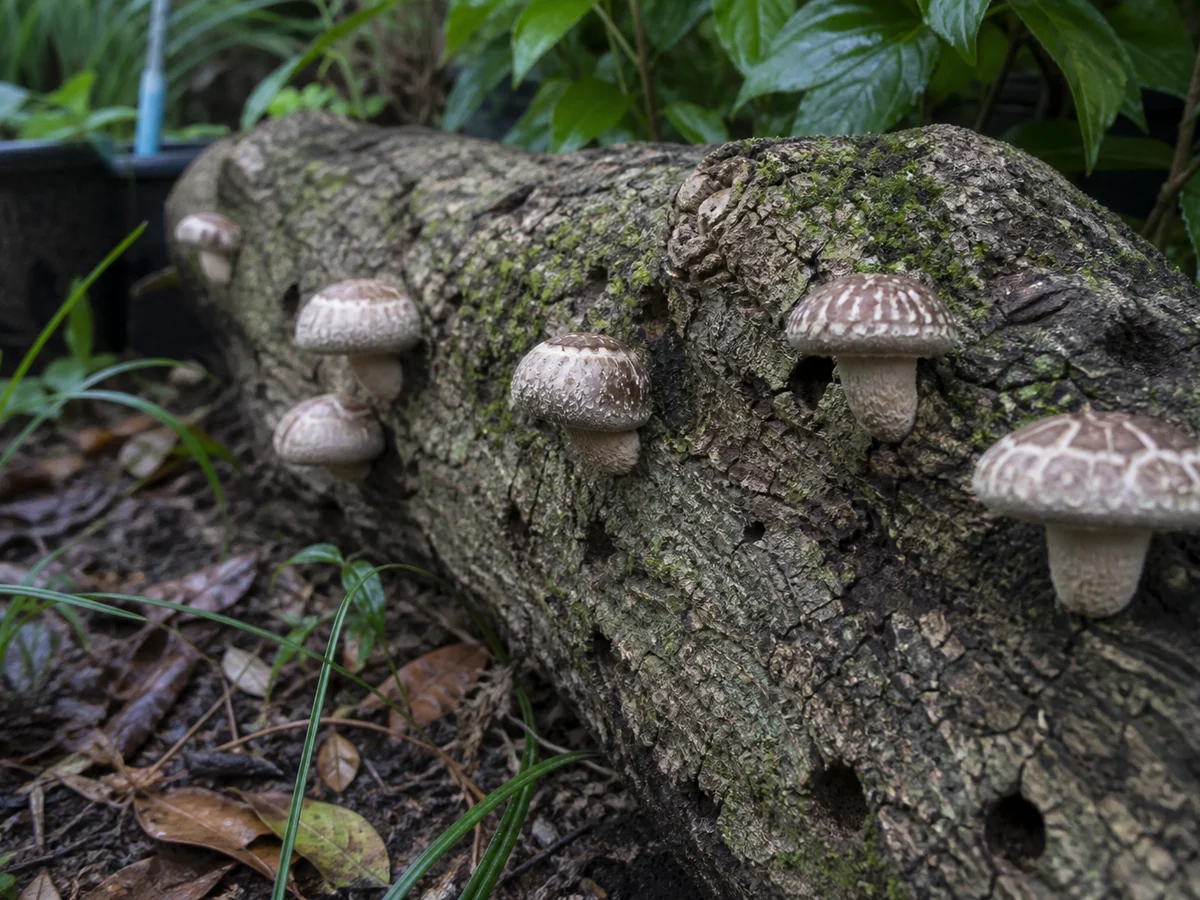
Published compositional work on dried shiitake gives the numbers. That material carried 52.77 milligrams of guanylate and 467.42 milligrams of glutamic acid per hundred grams, with an equivalent umami concentration of 123.99 grams of MSG equivalent per hundred grams.
Those are large figures for a food, and they explain why a spoonful of shiitake powder does something to a sauce that a spoonful of most other things does not.
- Strong candidates, dried and then powdered, are shiitake and porcini, both dense in the compound pair
- Reasonable candidates are field and portobello mushrooms, which are milder but plentiful and cheap
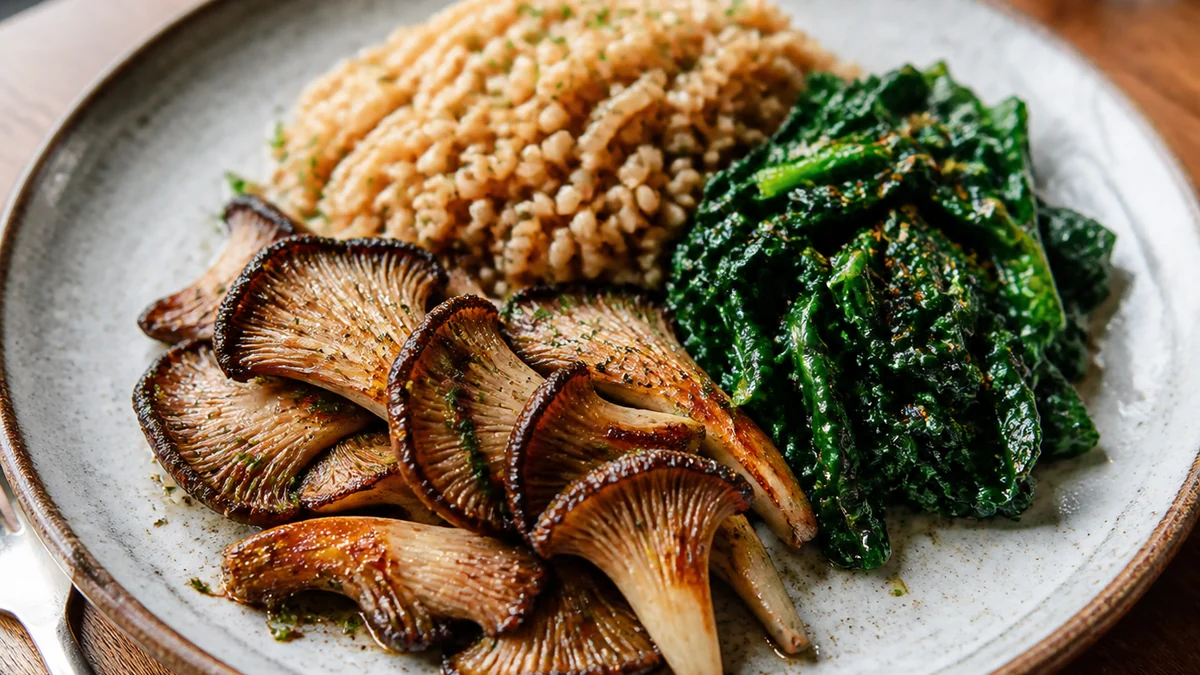
- Weak candidates are oyster mushrooms and most delicate species, which dry to something pale and mild
- Not worth it are any mushrooms that were watery, tired or already past their best when they went in
The rule underneath that list is unglamorous. Powder is a concentration method, and concentrating something disappointing produces a concentrated disappointment.
Cooking MushroomsHow to Cook Black Morels: Halve Them, Never Slice ThemHeat is the enemy of the thing you are concentrating
Most people treat heat as neutral in this process, on the reasoning that the mushrooms are already dried and cannot be damaged further.
The measured evidence says otherwise. The size of the effect is worth seeing in full.
That experiment ran for twenty days, so it does not describe an afternoon in a dehydrator and should not be read as though it did.
What it does establish is that these compounds are heat-labile rather than stable, which changes how you should think about every warm step in the process.
Warning
Dry at the lowest setting that will finish the job rather than the fastest one, and grind in short bursts rather than continuously. A blade grinder run for a full minute gets genuinely hot, and the thing being heated is the flavor you spent a day concentrating.
The practical version is simple. Low and slow at the drying stage, short and cool at the grinding stage, and no shortcuts that involve an oven on a high setting.
Cooking MushroomsHow to Cook Black Truffle Without Losing Its AromaThe grind itself
The equipment question has a boring answer and the technique question has an interesting one.
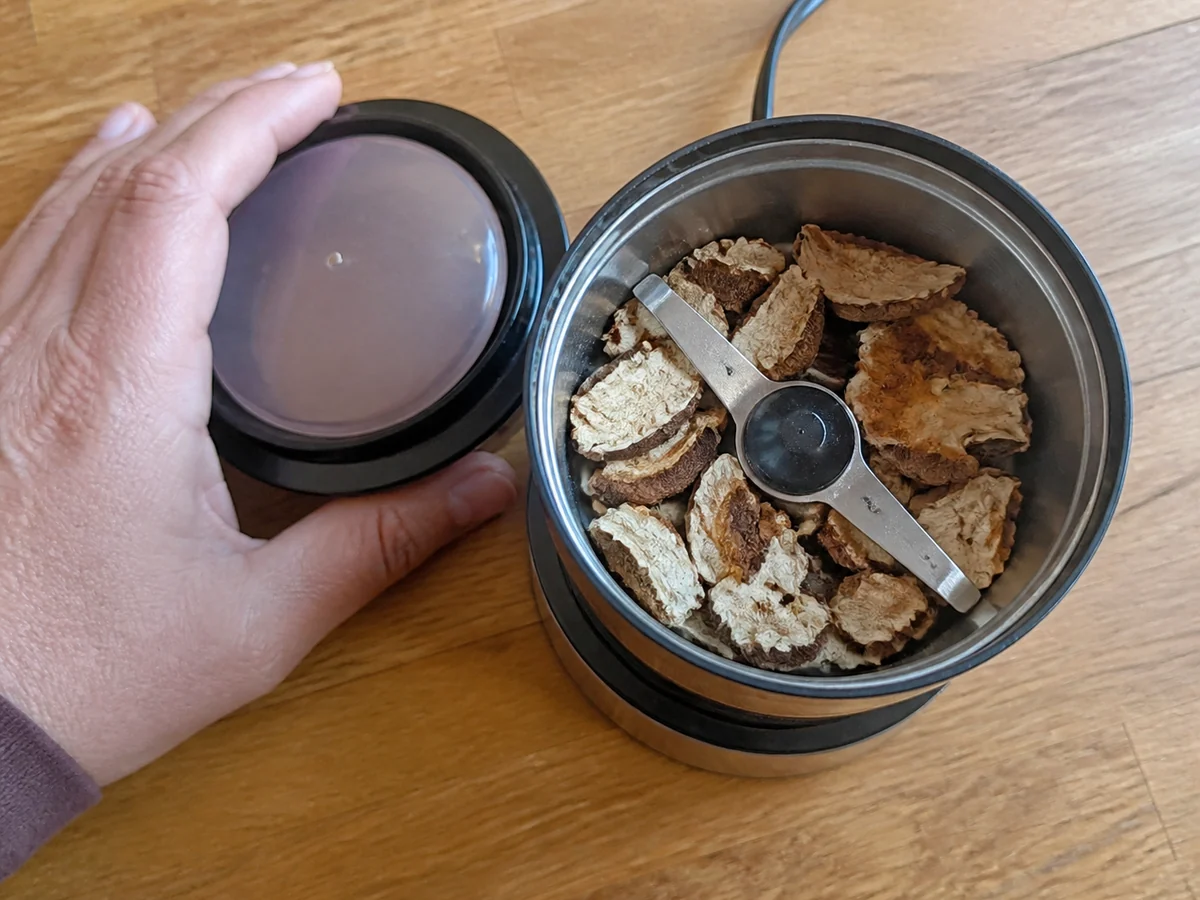
A small blade coffee grinder is the standard tool, and it works for a reason that is not obvious. Its chamber is small enough that the material stays at the blade, and small enough that you naturally run it in bursts.
A full-size jug blender usually disappoints at this. Powder needs mass down at the blade, and a large jug lets the material climb the sides and sit there while the blade spins in air.
- Break the slices roughly by hand first, because whole caps bounce rather than grind
- Fill the chamber no more than half, since a packed chamber grinds slowly and heats fast
- Run in bursts of a few seconds, shaking the grinder between them rather than holding the button
- Stop when the sound changes from a rattle to a hiss, which is the point where fragments become dust

How fine is fine enough is a judgment made by eye, and most people stop too early.
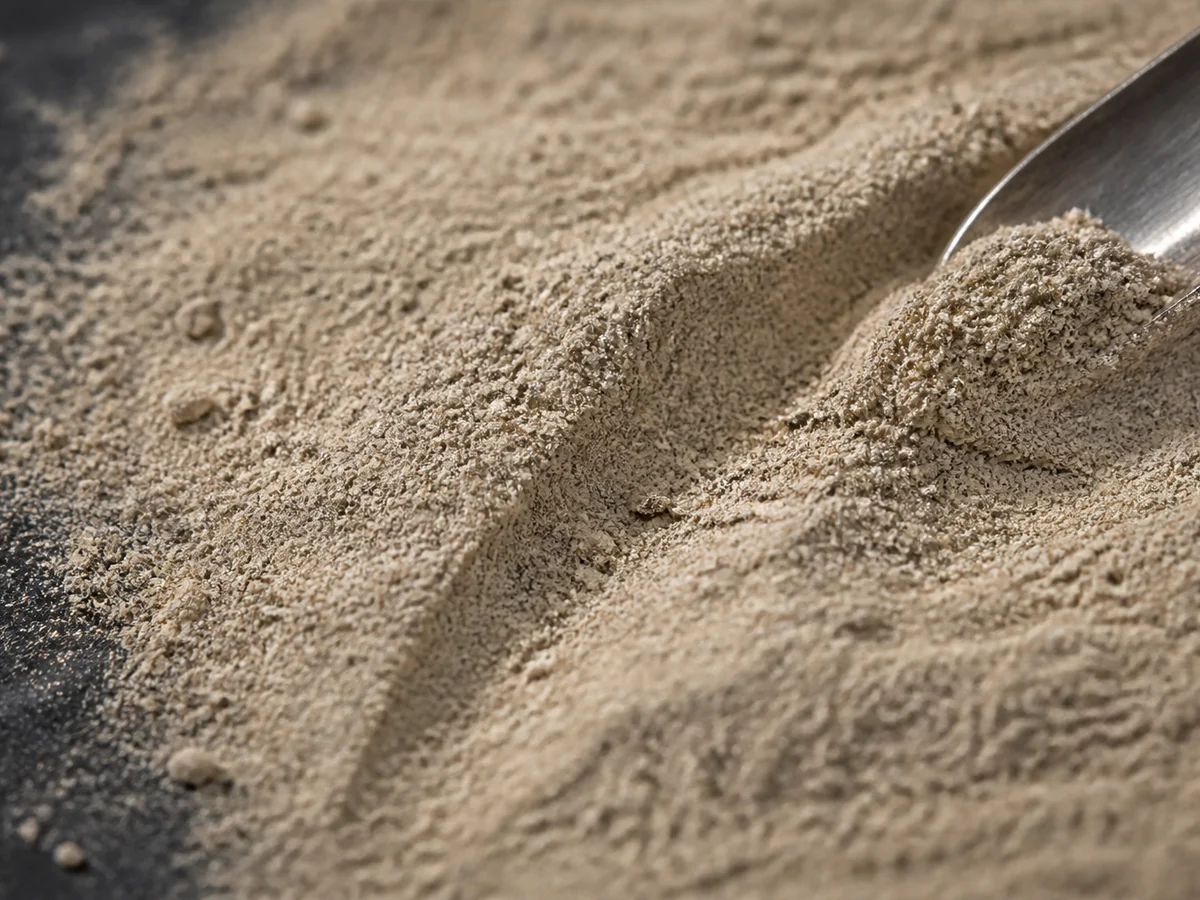
Sieving settles the argument. Push the batch through a fine mesh sieve, return whatever stays behind for a second pass, and repeat until the coarse fraction is small enough to discard or keep for stock.
There is one step nobody mentions, and it comes last. Let the ground powder stand uncovered for a few minutes before you jar it, so the finest dust settles rather than rising in a cloud when you tip it.
That pause also lets the batch come back to room temperature, which matters more than it sounds given what the last section established.
Storing a jar that survives the year
An airtight glass jar in a dark cupboard is the whole storage method, with one cheap addition that most guides leave out.

A food-safe silica sachet in the jar absorbs the small amount of humid air that enters every single time you open it. Over a year of daily cooking that is a lot of openings.
Dark matters as well, because clear glass on a sunny windowsill loses color and aroma over months.
Key takeaway
Clumping is not a texture fault. It is water, either left in the material before grinding or admitted afterwards, and a jar that has started to clump is on its way to spoiling rather than merely looking untidy.
It is worth knowing what that looks like before you see it in your own cupboard.

A jar that smells sour, musty, or of nothing much at all has finished. Drying it out again recovers the texture and does not recover the flavor, and anything that has visibly grown goes in the bin without negotiation.
Kept properly, a jar is good for around a year before the aroma noticeably flattens. It does not become dangerous at twelve months and one day, it just stops being worth the cupboard space.
In a humid climate the freezer solves the problem outright. Freeze the sealed jar and let it return to room temperature before opening it, because a cold jar opened in a warm kitchen collects condensation on the inside of the glass.
Where powder belongs in cooking
Powder is better than whole mushroom in a narrow set of places and worse in a much larger set, which is worth knowing before you start putting it in everything.
Its advantage is that it disappears. Anywhere you would otherwise have simmered dried mushrooms and then strained them out, powder does the same job and skips the straining.
Mixed with salt in a rough ratio of one part powder to three or four parts salt, it becomes a seasoning that behaves exactly like salt on the way to the pan and tastes of considerably more once it gets there.
| Use | Why it works | What to watch |
|---|---|---|
| Stocks, braises and pan sauces | Dissolves completely and adds savory depth without solids to strain | Add late, since long boiling drives off aroma |
| A salt and powder seasoning blend | Behaves like salt in the hand and seasons two things at once | Keep the blend dry, because the powder attracts moisture faster than salt does |
| Thin sauces and gravies | Thickens very slightly while it seasons | The thickening is small, so it is not a substitute for a roux |
| Rubs and dry marinades | Sticks to a wet surface and browns well | Sugar in a blend will burn before the powder does |
| Anywhere texture was the point | It is not, and it cannot be | A dish that wanted pieces of mushroom still wants pieces of mushroom |
Three habits get more out of a jar than any single recipe does.
- Season with it early in your own tasting, so you learn what a level teaspoon does before committing a whole pot
- Keep the salt blend in a separate small jar from the plain powder, because once blended it cannot be unblended
- Treat a heaped spoonful as a mistake rather than an improvement, since the flavor is concentrated and it saturates
Timing is the one technique note worth carrying. Powder added at the start of a long simmer loses most of its aroma to the extractor fan, and the same spoonful added in the last few minutes tastes noticeably stronger.
That is the whole method. Dry it further than feels necessary, keep everything cooler than feels efficient, grind finer than feels finished, and put a sachet in the jar.
Sources & References
- Changes in Physicochemical Characteristics and Antioxidant Activities of Dried Shiitake Mushroom in Dry-Moist-Heat Aging Process, Foods The measured guanylate, glutamic acid and equivalent umami figures for dried shiitake, and how far sustained heat at 80 degrees Celsius degraded them.
- US Food and Drug Administration, Water Activity (aw) in Foods, Inspection Technical Guide That water activity below 0.60 inhibits all microbial growth and below 0.65 inhibits xerophilic fungi, and that products between 0.60 and 0.85 spoil from yeast and mold.
- Edible mushrooms and beta-glucans, impact on human health That fungal cell walls are built on chitin, so milling increases surface area without releasing what is bound inside them.