Fresh mushrooms are ruined by the moisture they give off rather than by any water added to them, and most kitchen advice guards the wrong one. This guide gives a measured shelf life rather than a folk one, compares the three containers a reader actually has, explains that paper works by absorbing rather than by breathing, settles the washing argument with the published measurement, separates past-best from spoiled, and hands the surplus to the preservation methods at the point storing stops working.
The water that ruins mushrooms is the water they give off, not the water you might rinse them with.
Most kitchen advice has that the wrong way round, which is why people guard a rinse worth a couple of percent while storing mushrooms in the one container that costs them half their shelf life.
The thing that spoils them is their own water
A mushroom is mostly water, and it does not stop living when it is picked. It keeps respiring on the shelf, and that is why mushrooms go over faster than almost anything else in the drawer.
Warning
The moisture leaves the mushroom whatever you do. Storage does not decide whether that happens, only where the water ends up, and a cap sitting in its own moisture is the definition of slimy.
A bag that has failed shows the whole mechanism at once.

Look at the inside of a bag that has gone wrong. Every one of those droplets came out of the mushrooms, condensed on the plastic, and ran straight back onto the caps.
That is the whole failure in one image.
The advice to never wash them targets a much smaller effect than the container decision does, which is worth knowing before spending any more effort on the wrong variable.
Cooking MushroomsHow to Cook Cauliflower Mushroom Without Trapping GritHow long you actually have
The shelf life figures in this category are almost all folklore. There is a measured one worth using instead.

Four numbers are worth carrying around.
- The measured baseline
- Unpackaged white button mushrooms held at about 2 degrees Celsius crossed the acceptability threshold on day six
- With engineered film
- The same trial reached 14 and 21 days, using controlled packaging rather than better habits
- What was measured
- Agaricus bisporus, so the figure maps onto white button and cremini
- Where your clock starts
- Later than the study, since harvest happened days before the punnet reached a shelf
Six days is the useful number to plan around, and it is shorter than most people assume.
It also comes with a species boundary. That study measured one species, so cremini and button sits squarely inside the result while others do not.
Thin-fleshed species go over faster. An oyster mushroom cluster has a large surface for very little flesh, and it dries and limps within a couple of days rather than a week.
Dense flesh runs the other way. A dense shiitake cap holds its texture noticeably longer than a button of the same age, and dried edges on one are cosmetic rather than terminal.
Paper, plastic, or the punnet they came in
Three containers cover almost everyone, and the usual ranking is right for a reason that is usually stated wrong.

The difference between them is entirely about where the released water ends up.
| Container | What it does with released water | Verdict |
|---|---|---|
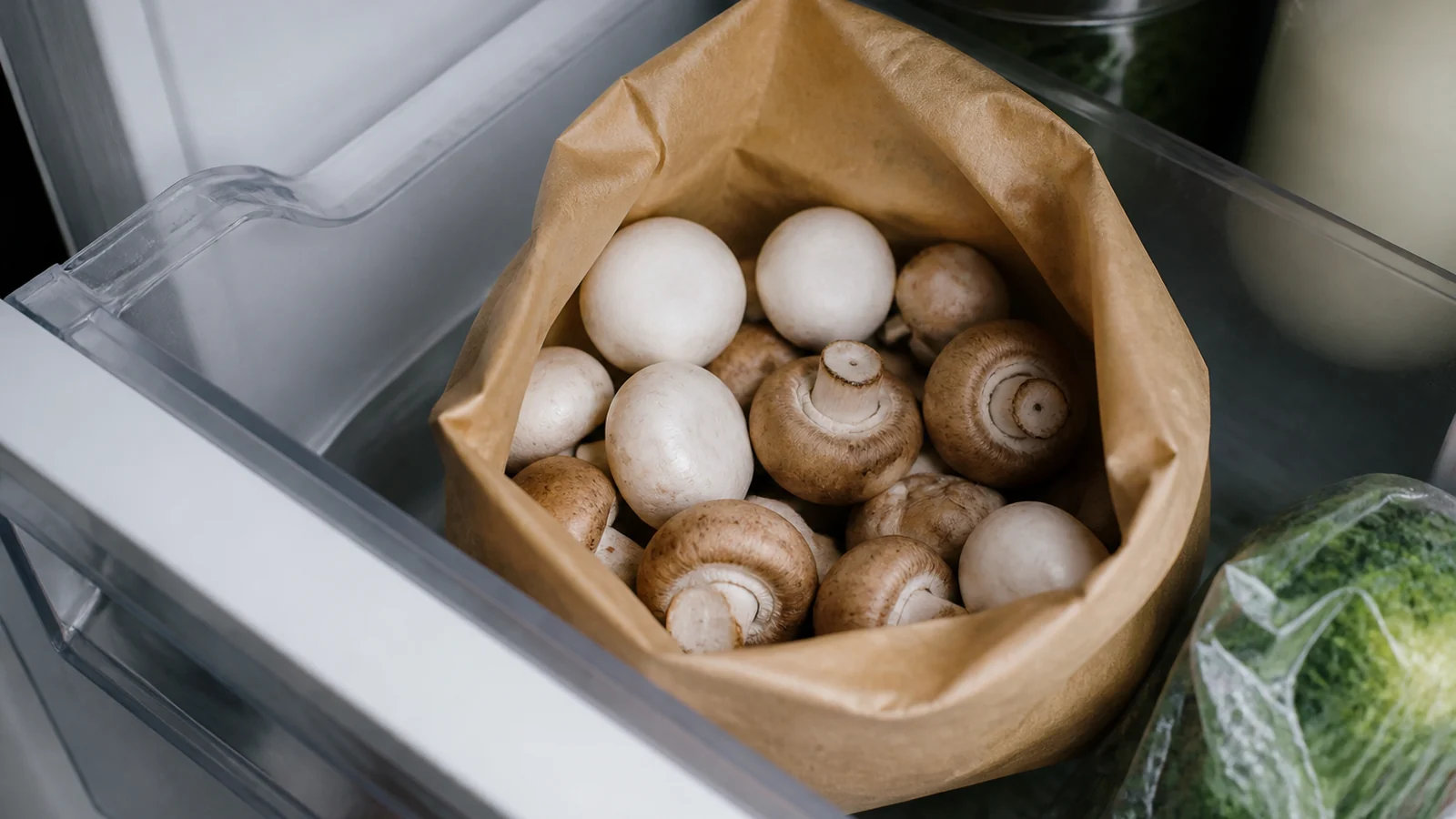
| Open paper bag | Absorbs it into the paper, away from the caps | Best of the three at home |
| Original punnet with film pierced | Lets it escape as vapor, already ventilated | A reasonable middle option |
| Sealed plastic bag | Traps it and returns it to the caps as condensation | The one that halves your shelf life |
Paper does not breathe in the way the advice implies. Paper absorbs, and that is a different property and a more useful one, because it takes the water somewhere the mushrooms are not.
That distinction matters when the paper is gone.
- A clean tea towel absorbs just as well and is reusable
- A cardboard box works, less well, for the same reason
- A sealed container with a sheet of kitchen paper inside is a workable compromise
- Nothing absorbent at all is the case to avoid, whatever the container is made of
There is a wrinkle in the research worth stating, because it looks like a contradiction.
So the laboratory result is not permission to seal mushrooms in a supermarket bag.
A bag from the produce aisle has no engineered permeability at all. It holds the water in and returns it, which is the opposite of what the tested films were designed to do.
Cooking MushroomsHow to Cook Black Morels: Halve Them, Never Slice ThemWhat the fridge is actually doing
Cold slows respiration, and respiration is what drives the whole decline. That single lever is the largest one a home cook has.
Put together, that is one drawer, one shallow layer and one open bag.

The dry matte cap is the test worth learning, because it takes a second and needs no equipment.
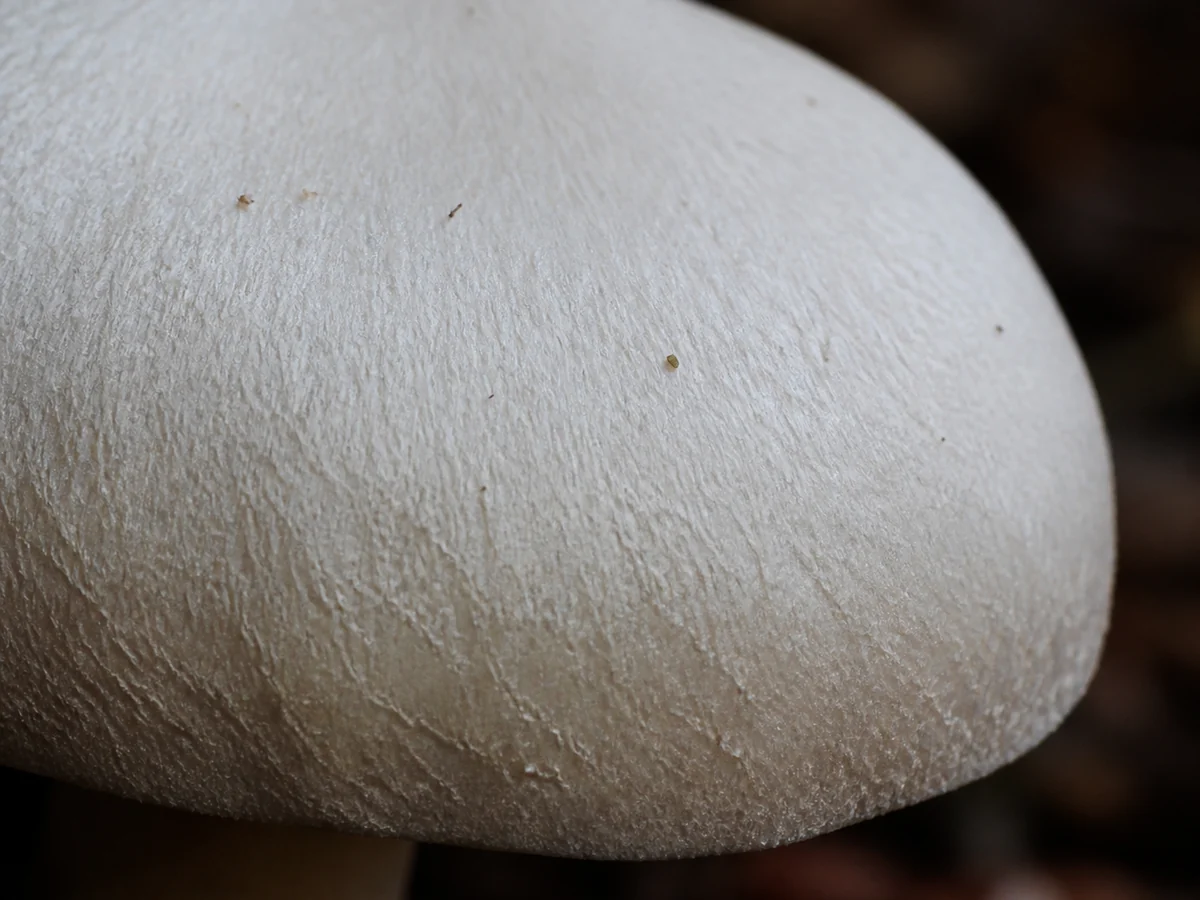
Shine on a raw cap is the opposite of that dry matte surface, and it is not freshness. It is water that has already left the flesh and is sitting on the outside, which is the first step toward the sealed bag at the top of this page.
Leaving the bag open at the top helps more than it sounds like it should, because it gives the vapor somewhere to go instead of collecting at the fold.
- Do not seal the bag, roll it, or clip it shut
- Do not wash them and put them away wet
- Do not stack anything heavy on top of the bag
- Do not store them in the door, where the temperature swings
The washing question, settled
The instruction never to wash mushrooms has been repeated for the better part of a century. It has also been tested, and the test is easy to describe.
Note
In a kitchen test reported by Serious Eats, mushrooms that were washed and then dried in a salad spinner had taken on about 2 percent of their weight in water. That is a full wash rather than a quick rinse, and it is a long way from the sponge the warning implies.
Two percent is not nothing, but it is not the reason your mushrooms went slimy either.
The storage-relevant part is different from the cooking argument. Water sitting on a cap before it goes into the fridge is surface water, and surface water is exactly what the whole page is about keeping away from the caps.
So the rule for storage is simple. Wash if you need to, then dry them properly before they go anywhere near a bag.
For gritty wild species there is no realistic alternative. Sand does not brush out of a ridged chanterelle, and a rinse followed by a proper drying beats grit in the pan every time.
Reading a mushroom on its way out
Most mushrooms are thrown away a few days too early, and a few are kept several days too long.
The signs separate cleanly enough to settle it in a few seconds.
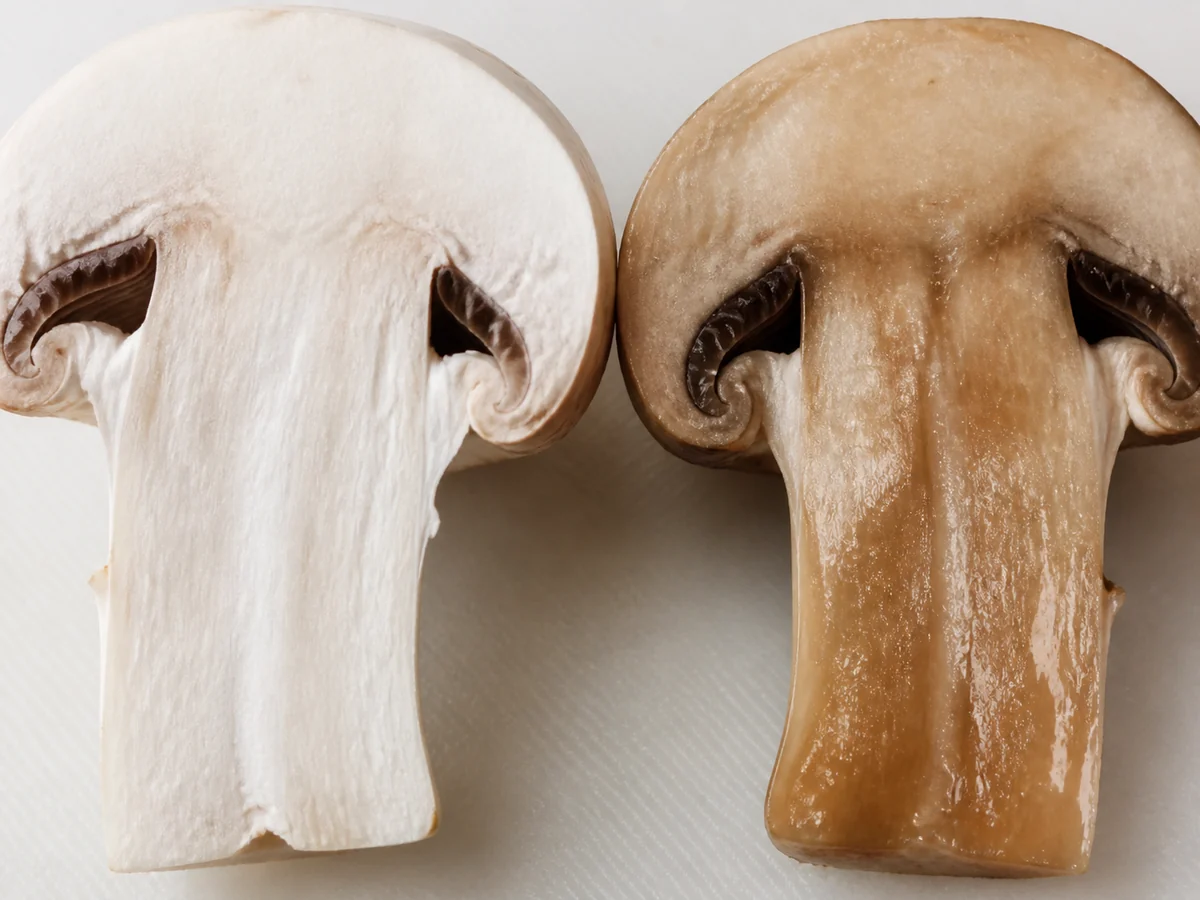
Five signs cover almost every mushroom a reader will be holding.
| What you see | What it means | What to do |
|---|---|---|
| Cut face browned, flesh still firm | Oxidation, the same reaction as a cut apple | Use them, ideally cooked rather than raw |
| Caps drying and slightly wrinkled | Moisture loss, and flavor concentrated | Use them, and they suit long cooking |
| Cap slimy or tacky to the touch | Texture is gone and will not come back | Throw them out |
| Sour or ammonia smell | Spoilage, not age | Throw them out |
| Soft dark patches spreading in the flesh | Breakdown through the mushroom | Throw them out |
Browning is the one that causes the most waste, because it is the same reaction that darkens a cut apple, and a browned cut face on firm flesh is a cosmetic problem rather than a safety one. Wrinkled mushrooms are often better than fresh ones for some jobs, because the flavor has concentrated as the water left.
Slightly past-best mushrooms are also the best candidates for mushroom powder, where concentrated flavor is the entire point.
The slimy test is the one to trust, because if a cap feels tacky under a finger no amount of cooking recovers the texture.
- Browned but firm goes in the pan
- Wrinkled and dry goes into something slow cooked
- Tacky, sour, or darkening through the flesh goes in the bin
- When two of those signs appear together, do not spend time deciding
When storing stops being the answer
At some point the question stops being how to keep them fresh and becomes what to do with them.
The decision point is firmness rather than a date on a receipt. Once mushrooms have started to soften, extending freshness is no longer available and the choice is between three preservation routes.
Drying is the one that buys the most time, and drying mushrooms suits anything still firm enough to slice cleanly.
Once texture has started to go, that argument is over. Freezing mushrooms accepts the texture loss instead of fighting it, which makes it the right call for the ones you left a day too long.
Small firm caps have a third option that the other two do not suit. Pickling mushrooms is a flavor decision as much as a preservation one, so it belongs to the batch you actually wanted to do something with.
Sources & References
- Biodegradable blend films for shelf life extension of whole white button mushrooms, Journal of Food Science and Technology 2021 That unpackaged white button mushrooms at about 2 degrees Celsius became unacceptable on day six, that engineered films reached 14 and 21 days, and the weight loss figure of about 4.4 percent at day 14. The study measured Agaricus bisporus.
- Are We Supposed To Wash Mushrooms Or Not?, The Takeout The reported Serious Eats measurement that mushrooms washed and dried in a salad spinner had absorbed about 2 percent of their total weight in water