A shop punnet is one species cut on one day and chilled ever since, so storing it is a container question. A foraged basket is several species at several ages, warm for hours and often carrying larvae, so storing it is a sorting job first. Tip the basket out before cleaning anything, halve every thick stem to check for tunnels, and make four piles: tonight, dry, freeze and discard. Dense flesh such as morels and boletes dries and keeps a year in sealed jars. Thin-fleshed species such as chanterelles dry badly and should be cooked first, then frozen flat for about six months.
The basket that comes home from a walk is not one thing, and that is why one storage method fails it.
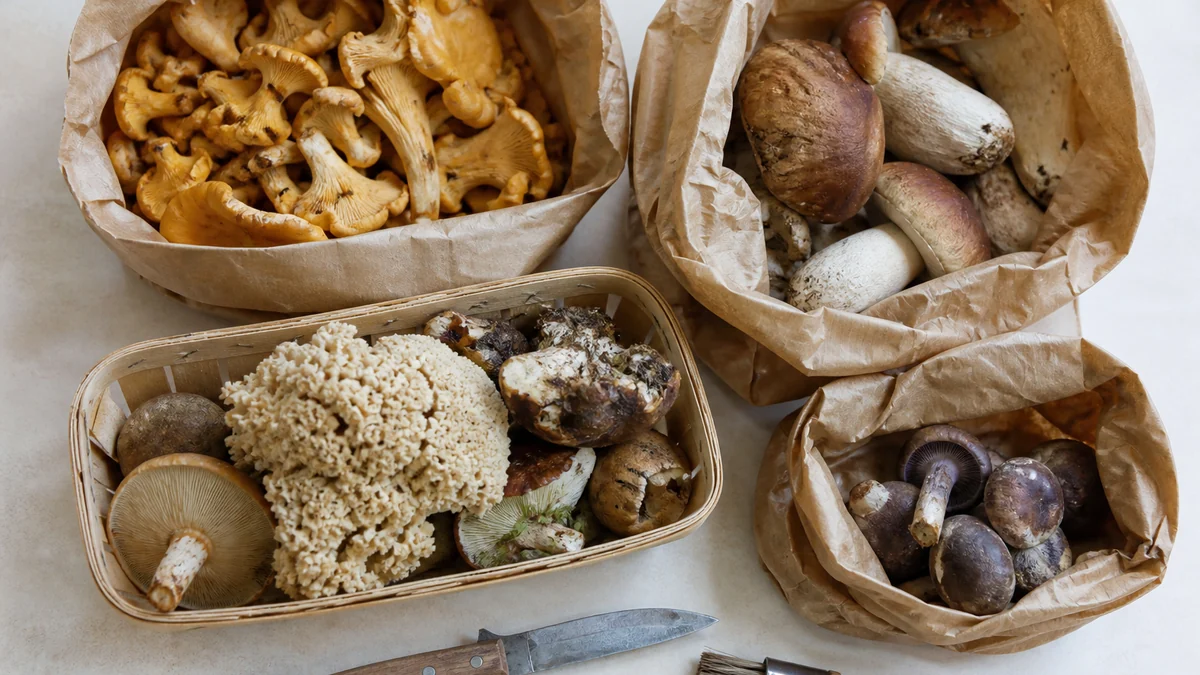
A punnet from a shop is a single species, cut on a single day, cleaned and cold ever since. A basket is four or five species at four or five ages, warm from the car, carrying soil and, quite often, carrying passengers.
Why is a foraged basket different from a shop punnet?
Because four things are true of it at once that are never true of a punnet.
The species are mixed, the ages are mixed, the whole basket has been warm for hours, and some of what you picked has insect larvae inside it already.
Any one of those would complicate storage on its own, and together they mean the basket has to be split before anything is put away.
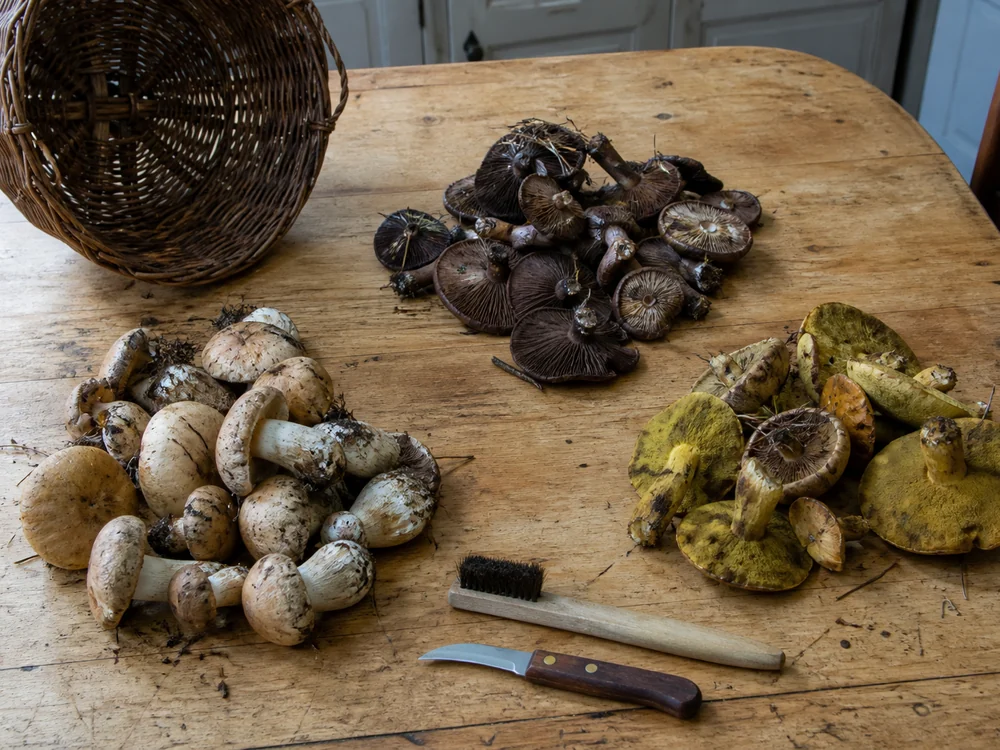
Age is the one people underestimate. A shop punnet was cut on one morning, while a basket routinely holds a firm young cap and, three feet away, one that has been standing in the woods for five days.
The warm hours matter as much. A commercial mushroom goes from field to chill within hours and never really warms up again, while yours spent a morning in a basket and an afternoon in a car.
Note
Sort and identify the collection before choosing a storage container. Whether paper beats plastic, what a fridge is actually doing, and whether to wash before storing are all settled on the page about storing fresh mushrooms, and the answers there apply once the sorting here is done.
What do you do in the first hour?
Tip the whole basket out and sort it, before you clean a single mushroom.
Cleaning first feels productive and wastes the hour that matters. Sorting is the only step that cannot be done later, because the pile that has to be cooked tonight is losing quality while you brush soil off something that is going to be dried anyway.
Four piles, and the order they are dealt with is the opposite of the order they were made:
- Discard goes out first, because it is the pile that will damage the others if it sits there.
- Dry goes on the rack next, because it takes the longest to finish and needs no attention once it is running.
- Tonight gets cooked while the rack is working, since it is the pile with the shortest clock.
- Freeze is the last job, because it happens after that cooking anyway.
Cleaning happens inside those piles rather than before them. A mushroom heading for the pan gets brushed now, one heading for the rack gets brushed now, and one heading for the bin gets nothing.
Which ones should never be stored at all?
The wormy, the waterlogged and the tired. That first pile is usually bigger than anyone wants it to be.
Larvae do not stop when the mushroom is picked. They keep eating and they keep moving, which is why a basket left overnight can hold mushrooms that were sound in the woods and hollow by breakfast.
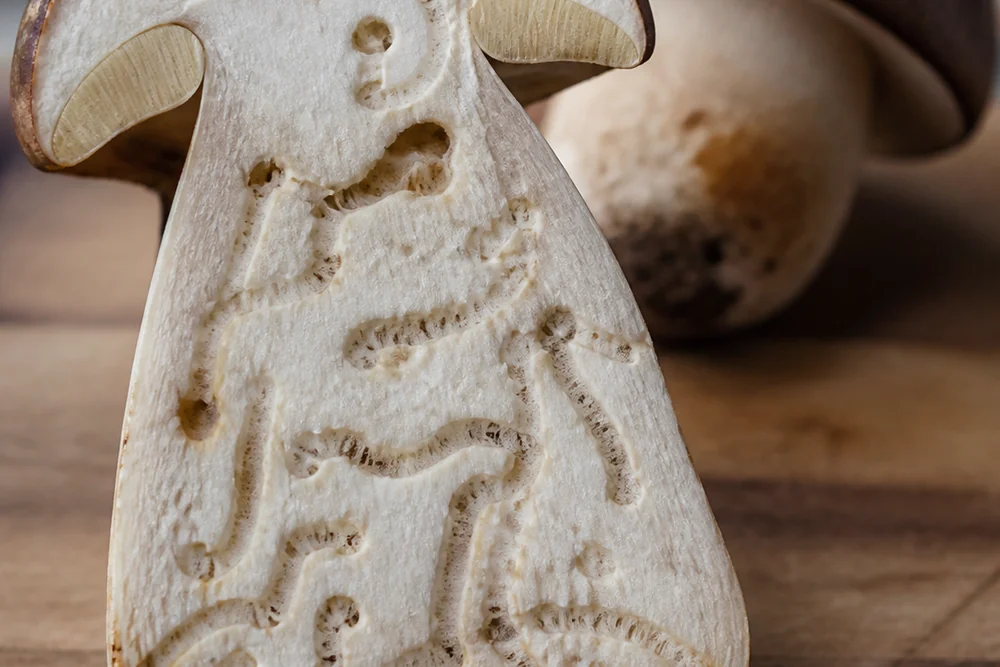
Because larvae work faster than a fridge does, the handling rule around them is blunter than most foraging advice.
Halve every thick-stemmed mushroom before it joins a pile
Discard anything with tunnels running through the stem base
Bin any cap that is soft, slimy or smells sour
Store a waterlogged cap, which will neither dry nor fry
Keep one questionable mushroom in with good ones overnight
Trim heavily infested flesh and store the rest, which rarely works
Which species you are holding changes how carefully you look. The risk is not spread evenly across a basket:
- Boletes are the worst offenders, and a large one in warm weather is more often tunnelled than not.
- Russulas and milkcaps go soft early and carry larvae in the stem before the cap shows anything.
- Chanterelles are among the cleanest, which is part of why they are worth the walk.
- Anything picked from a fruiting that is already collapsing is old whatever the individual cap looks like.
Waterlogging is the quieter loss. A mushroom picked out of standing water or after two days of rain is already full, and it will steam rather than brown in a pan and stay leathery on a drying rack.
Age shows in the same three places every time: a cap edge gone wavy and thin, flesh that gives under a thumb, and a smell moving from earthy toward sour.
There is one exception worth knowing. A lightly tunnelled cap that is going straight into a hot pan tonight is a different proposition from one going into a jar for a year, because the pan ends the problem and the jar preserves it.
That is the logic of the four piles in one line: a mushroom does not have to be perfect to be eaten tonight, and it does have to be perfect to be kept.
Warning
A discard decision is not an identification decision. If a mushroom is in the basket because you were not certain about it, it does not belong in any of the four piles, and no amount of drying or freezing makes an uncertain identification safe.
What should be dried?
Dense flesh belongs on the rack, and a few species are genuinely better dried than they ever were fresh.
Dried morels are the clearest case, since drying concentrates them and they rehydrate into something closer to their original texture than most species manage. Sound boletes, hedgehog mushrooms and dense-fleshed polypores hold up to drying. Follow the drying method for temperature and storage guidance.
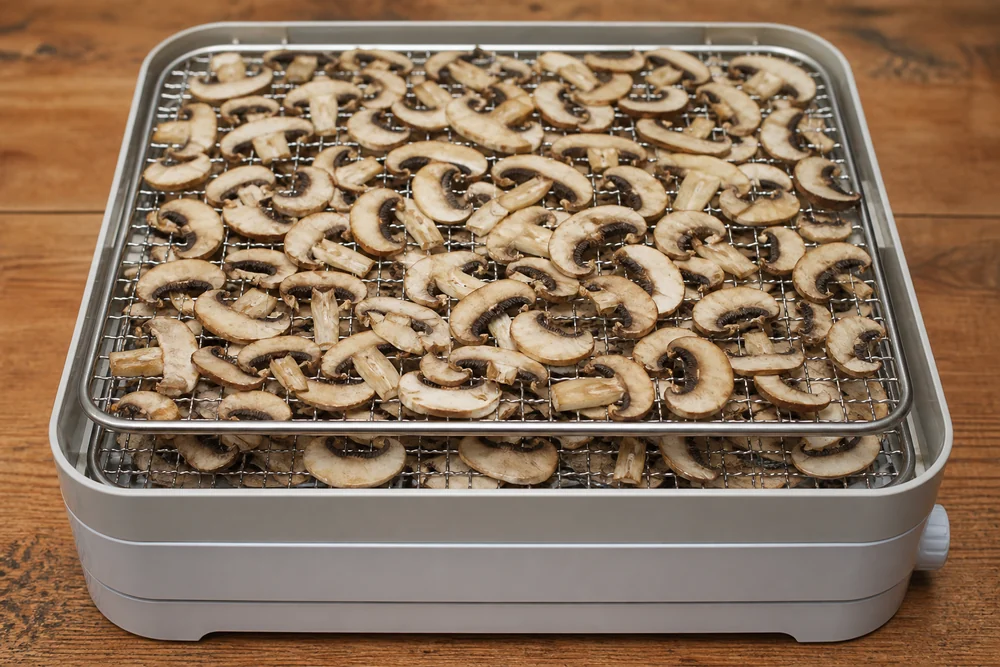
Thickness is the variable worth controlling. Slices cut to a similar depth finish at the same time, and a tray holding one thick piece among thin ones is a tray that either scorches or comes out half done.
Air movement does the rest. A dehydrator provides it, an oven on its lowest setting with the door propped provides some of it, and a warm dry room with a fan provides enough of it for a small batch.
Roughly speaking the rack suits some species and ruins others:
- Dries well: morels, boletes, hedgehogs, dense polypores, and most firm-fleshed finds.
- Dries acceptably: shaggy parasols and larger agarics, provided they are sliced thin and are young.
- Dries badly: chanterelles, oysters and anything thin and pliable, which come back tough.
- Does not dry: waterlogged caps of any species, which turn leathery rather than brittle.
The method is less fussy than the arrangement. Slice to an even thickness, lay the pieces in a single layer with space around each one, and run the heat low enough that they dry rather than cook.
Done is a texture rather than a time, and a finished slice snaps cleanly when you bend it while anything pliable is still holding water that will spoil a jar.
Let them cool completely before they go into glass. Warm slices sweat inside a sealed jar, and one jar of sweating mushrooms will grow mold over a week that no amount of later drying reverses.
What should be frozen?
The thin-fleshed and the delicate. All of it cooked first, without exception.
Fresh chanterelles are the species that pushes people toward the freezer, because drying turns them tough and rubbery in a way that rehydration never fixes. Oysters, blewits and most soft-fleshed finds behave the same way, which is why freezing them cooked is the right answer for them rather than a fallback.
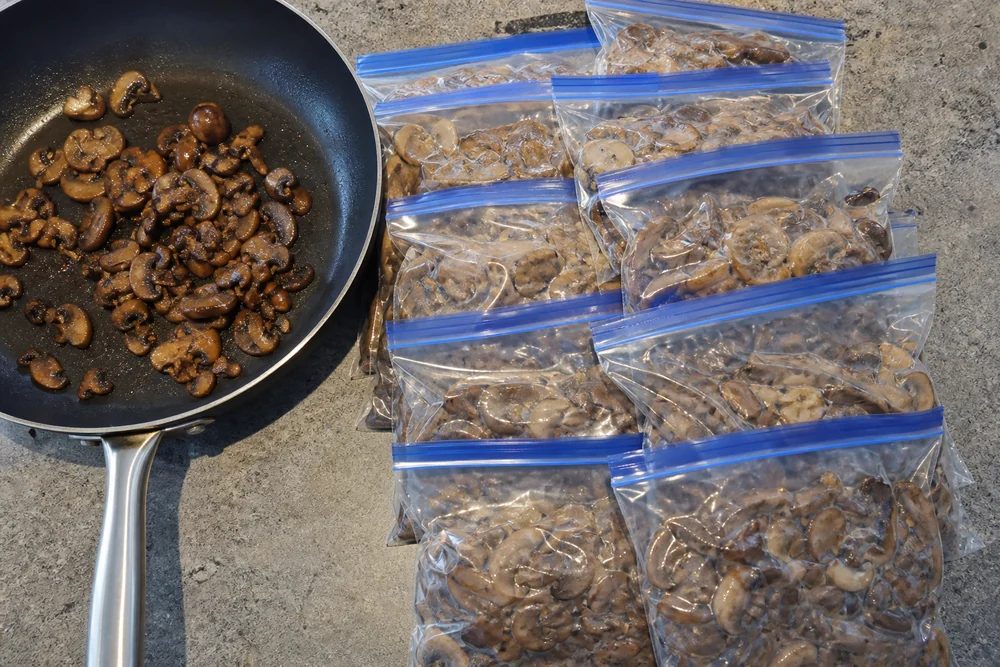
The step people skip is the one that makes the rest work, and it happens on the same evening as everything else.
Key takeaway
Cook before freezing. A raw wild mushroom is mostly water, and freezing that water tears the structure apart so it thaws into something gray and slack. Dry-frying or sautéing first drives the water off and freezes the flavor rather than the liquid.
Dry-frying is the version worth learning. The mushrooms go into a hot dry pan, release their water, and cook in it until the pan goes quiet and they start to color, at which point they are ready to cool and pack.
Two handfuls of cooked mushrooms is roughly one meal for two people, and deciding that once beats deciding it every time.
Flat is what makes a frozen store usable. Press each portion thin inside its bag so it stacks, thaws in minutes and comes out as one meal rather than as a block you have to hack at.
ForagingMushroom foraging laws in the UK: what is actually legalHow do you bring dried mushrooms back?
Rehydration is the half of drying nobody plans for. Doing it badly undoes the work of the rack.
Warm water rather than boiling, twenty to thirty minutes rather than five, and enough of it that the slices float freely rather than sitting packed in a puddle.

The soaking liquid is the point people miss. It holds most of what the drying concentrated, and it belongs in whatever you are cooking rather than down the sink.
Whatever sand came off a bolete in the woods is now sitting in the last centimeter of that bowl, which is why the slices come out by hand rather than through a pour.
Some species never come back to their original texture and are worth using differently. Boletes rehydrate close to the original, while thinner species end up better suited to stock, powder or anything simmered rather than fried.
Note
Dried mushrooms also work without any water at all. Ground to a powder in a spice grinder they season a dish directly, which is the best use for the broken pieces at the bottom of the jar.
What actually keeps for a year?
Only one method reaches a year, and it is not the one most people default to.
Dried and sealed in glass is the only method that reaches a year, and everything else on this page is measured in days or months. Frozen cooked portions are honest for about six months before the texture starts to slide, and a fridge is measured in days rather than weeks for anything wild.
Set against each other, the four options are not close.
| Method | Realistic life | Best for | Weak point |
|---|---|---|---|
| Fridge, whole | 2 to 4 days | Tonight and tomorrow | Age and larvae keep working |
| Dried in sealed jars | A year or more | Morels, boletes, dense flesh | Any moisture left in a slice |
| Cooked and frozen flat | About 6 months | Chanterelles, oysters, soft flesh | Freezer burn on thin packets |
| Frozen raw | Not recommended | Nothing | Thaws slack and gray |
Only the top row of that table is a storage decision you make in the moment. The other three are decisions you made on the evening of the walk, and they show up months later on a shelf.

Freezer burn is the failure people meet at about month eight. Thin flat packets freeze fast and thaw fast, and that same thinness is what dries them out if the bag is not pressed properly closed.
Labels are what turn a store into something you use. Species and date on every jar and packet, because dried slices of three different species look identical by January and nobody remembers which shelf held what.
A dried bolete jar and a hedgehog jar are the two most likely to be confused, since both dry to the same brown curl and both smell broadly similar through glass.
Rotation follows from the label, so cook the oldest jar first and check any jar that has clouded or shows condensation on the inside of the glass.
What is the routine, start to finish?
One sequence. Two steps in it are the ones people skip, and they are the two that matter.
The order is tip out, halve, sort, bin, dry, cook, pack, and it runs in that sequence because each step frees the next one. Labels go on before you sit down.
- The step people skip first
- Halving thick stems, which is where the larvae show.
- The step people skip second
- Labeling, which is what makes the store usable in January.
- The pile that decides the evening
- Discard, because it damages whatever it sits beside.
- The one thing that cannot wait
- Sorting, which is why cleaning comes second.
Two of those steps take five minutes between them and save the other five from being wasted.
None of this takes long once it is a habit. An hour on the evening of a good walk is what turns a basket into a shelf, and the alternative is a fridge drawer that gets emptied into the bin on Thursday.
None of this rescues a basket that was doubtful when it came in, and an uncertain identification is a safety question rather than a storage one.
What you do with the store afterwards is a kitchen question rather than a foraging one, and the beginner's routine covers the walk that fills the basket in the first place.
Sources & References
- Drying Herbs, Fruits and Vegetables at Home (Michigan State University Extension) University extension guidance used for the single-layer arrangement, the low drying temperature, and the principle that food must be fully dry and fully cooled before it goes into a sealed container.
- Freezing Prepared Foods (National Center for Home Food Preservation) National food preservation center used for the practice of cooking before freezing, for flat packaging to speed freezing and thawing, and for realistic frozen storage periods.
- Wild Mushroom Handling and Safety (Minnesota Department of Natural Resources) State agency material used for general wild mushroom handling, including the point that an uncertain identification is never resolved by any storage or preparation method.