What is a shaggy parasol?
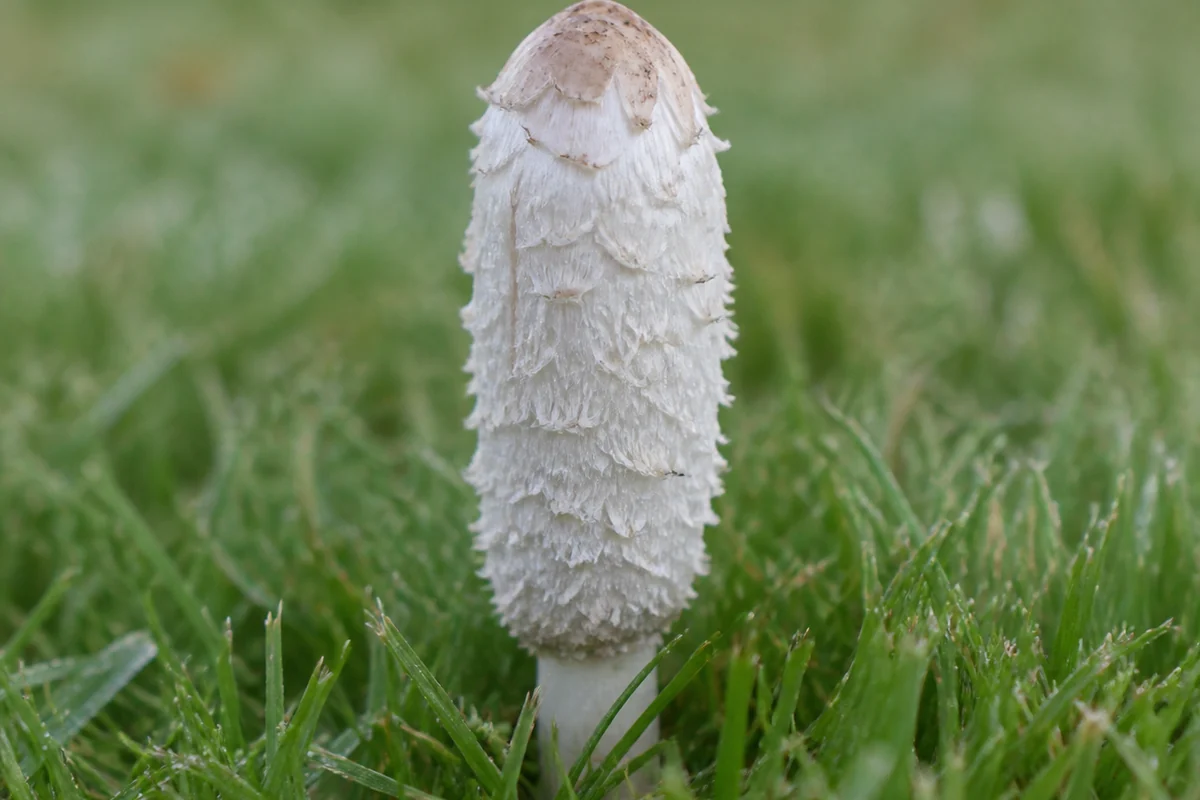
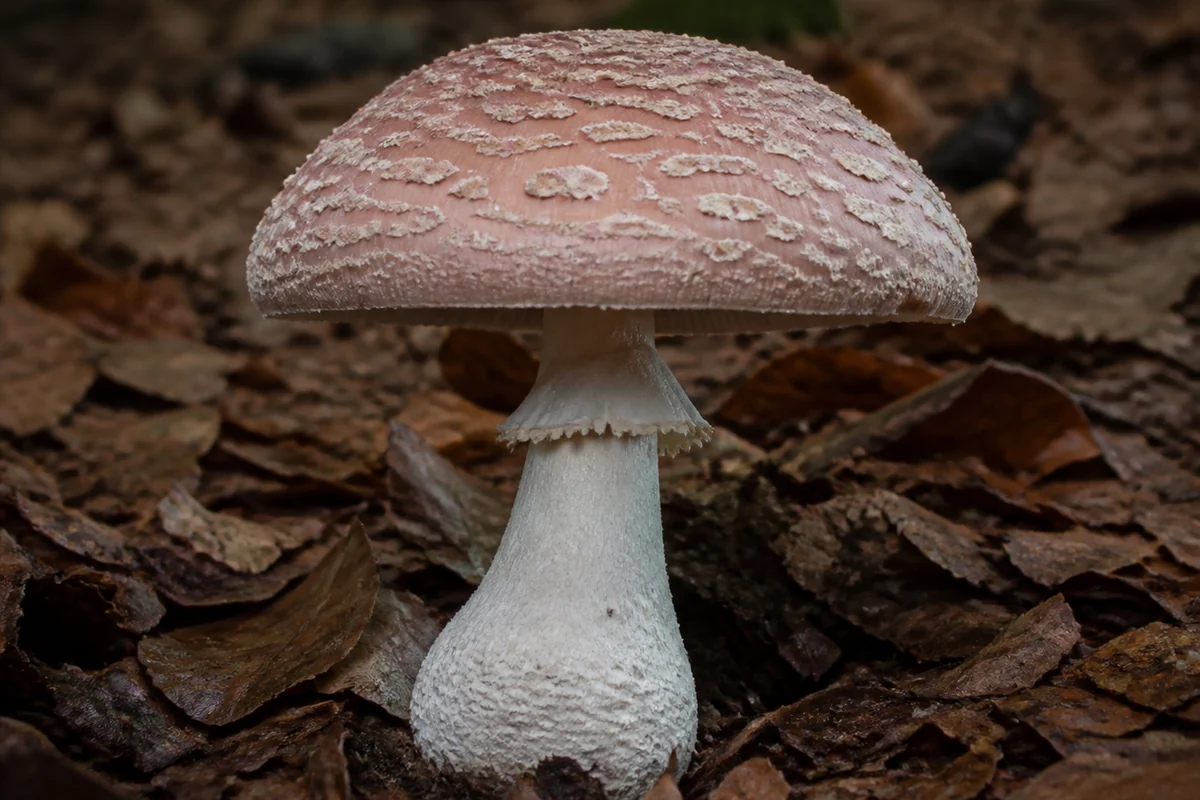
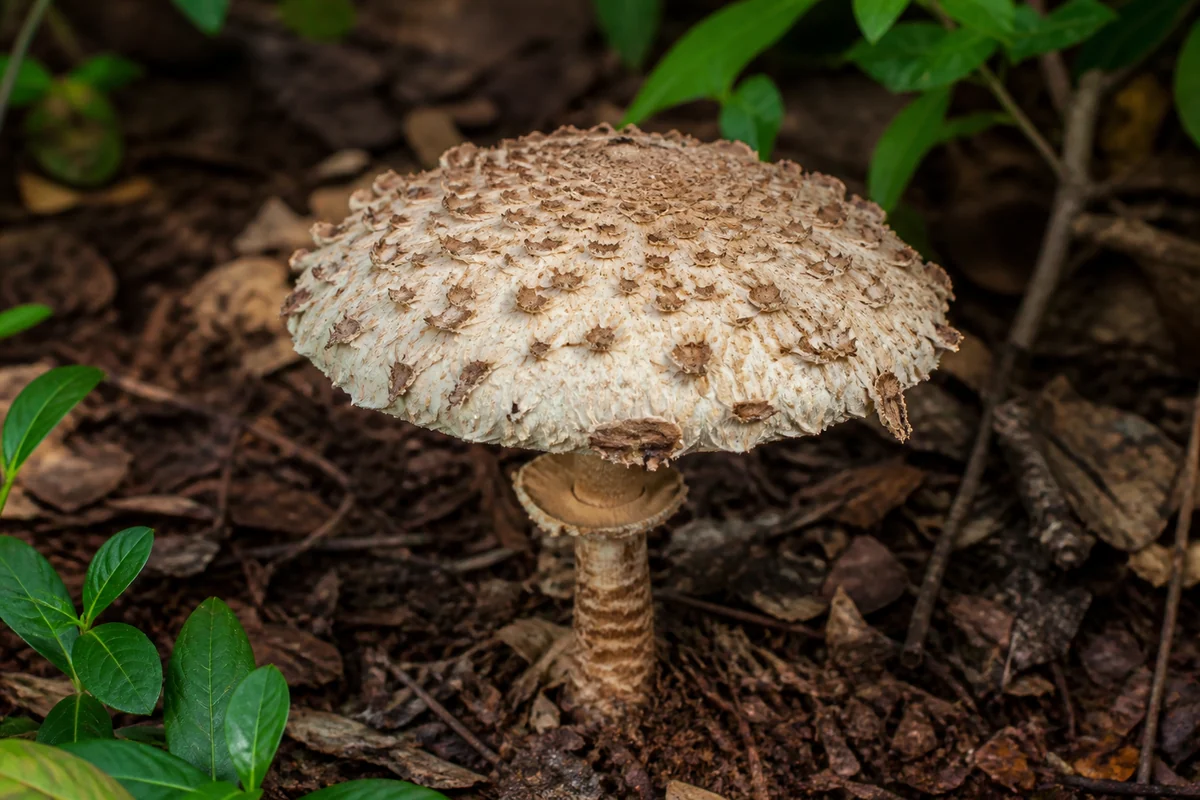
A shaggy parasol is a large gilled mushroom with a pale cap broken into big coarse brown scales, white gills that are free of the stem, and a thick ring that slides.
The name covers three closely related species rather than one. Chlorophyllum rhacodes is the one the name usually means, with C. olivieri and C. brunneum alongside it, and they are separated by cap tone and by the shape of the stem base.
For a cook the three behave the same way, so the group name is useful rather than lazy.
The ring is worth a moment on its own. It is thick, it has a free edge, and it slides up and down the stem when pushed, which is a structural fact about how the veil was attached rather than a sign of age.
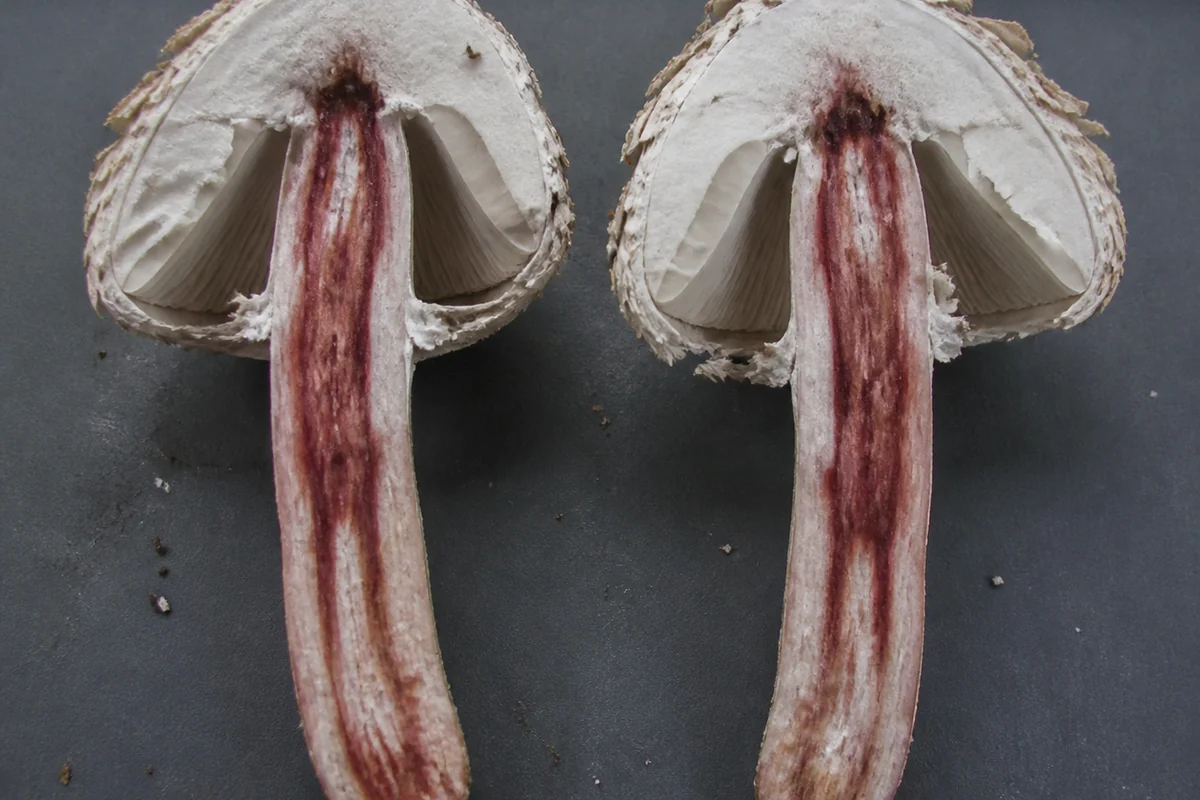
The reddening is the character people remember. Cut one in half and the white flesh flushes toward red and then maroon while you watch, which is unusual enough among large pale mushrooms to be worth relying on.
How do you identify a shaggy parasol?
Cream to pale buff under large coarse brown scales that lift away from the surface, 6 to 20 cm across, rounded at first and flattening with a smoother brown center.
Free of the stem, crowded, white to cream, and bruising slowly toward brown or reddish where handled.
Smooth and pale, 5 to 20 cm tall and 2 to 3 cm thick, without the brown banding of a true parasol, carrying a thick movable ring and either a tapering base or, in one of the three species, a bulb with a sharp rim.
White, flushing distinctly reddish to maroon within a minute of being cut, with a strong smell that most people find sharp rather than pleasant.
Work through the mushroom in the order that puts the cheap tests first.
The scales, the ring and the cut flesh can all be read in under a minute in the field, and only after they agree is a spore print worth the wait.
The measurements matter here because size is one of the things that separates this group from the true parasol.
| Character | Shaggy parasol | Note |
|---|---|---|
| Cap | 6 to 20 cm across | Smaller than a mature true parasol |
| Stem | 5 to 20 cm tall, 2 to 3 cm thick | Plain, never banded |
| Cut flesh | Flushes reddish to maroon | Within about a minute |
| Ring | Thick and movable | Slides on the stem |
| Spore print | White | The whole safety decision |
The stem base is what separates the three species from each other, and it is the character most often left in the ground. Cut a mushroom at soil level and the question of which of the three you have is closed before it was asked.

One of the three carries a swollen base with a distinct rim around the top of it, and the others taper into the soil without one. That difference does not change what you do with the mushroom, and it is worth noting anyway, because the rimmed one is the species most often named in reports of people reacting badly.
Then there is the spore print, and it is not optional on a mushroom you have not picked before.
Cut the stem off flush, lay the cap gills down on a sheet of paper, cover it with a bowl and leave it for two to four hours or overnight.
Use paper that is half white and half dark, or lay the cap across the join between two sheets. A white print on white paper is nearly invisible and a green one on dark paper is not much better, so spanning both colors removes the one way this test commonly gets misread.

White print, cook it. Green print, throw the whole collection away.
The only test that decides
White means the shaggy parasol group and green means the poisonous one. Old gills can take on a greenish tone in the dangerous species, but gill color on its own is not the test and the print is.
The practical answer to a test that takes hours is to change when you take it. Pick in the afternoon, print overnight, and cook the following day, which costs a night in the fridge and removes the only serious risk this mushroom carries.
The caps keep well enough for that. Lay them gills down in a paper bag or an open box in the fridge and they will be in good condition the next evening.
One print per collection is not enough if the mushrooms came from more than one spot. Two patches in the same garden can be two different species, and the print only speaks for the cap that made it.
What is the difference between a shaggy parasol and a parasol?
Three mushrooms sit near this one and they matter in very different ways.
The green-spored parasol is the one that hurts people, and in North America it is among the most commonly reported causes of mushroom poisoning.
It shares the large scaly cap, the pale gills and the ring, and it prints green.
Warning
There is no reliable way to separate the two from the cap alone. Anybody who has picked a large scaly pale mushroom from a lawn or a garden and has not taken a print has not finished the identification.
Print is white
Cook a small first portionThe species question is settled and only individual tolerance is left
Print is green
Discard the whole collectionAnything the green-spored one touched in a basket is no longer worth sorting
No print taken yet
Do not cook any of itCap, gills, ring and size all overlap, so nothing else settles it
The true parasol is the second comparison and it is a pleasant one, because it is also edible. It grows larger, its cap scales are finer and more evenly spaced, and its stem carries a distinct brown snakeskin banding that a shaggy parasol never has.
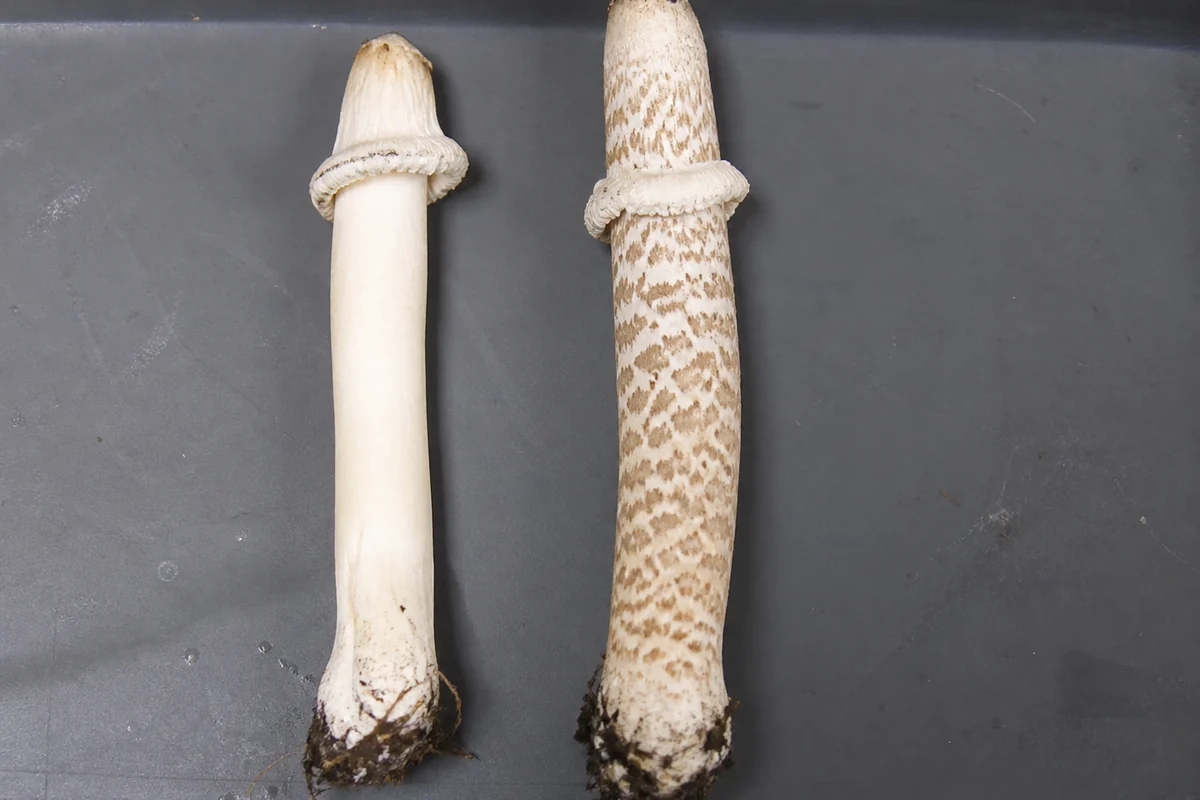
The third group is the smaller scaly mushrooms of lawns and woodland edges, and the rule there is size. Several small species with shaggy caps are seriously poisonous, so a scaly pale mushroom with a cap the width of a coin is not a young shaggy parasol until proved otherwise.
Some of those small ones carry the same class of toxin as the death cap, which puts them in a different category from an upset stomach.
The rule that keeps people out of that trouble is a size rule rather than a character rule. A shaggy parasol is a big mushroom, and anything small and scaly should be left alone regardless of how well it seems to match.
Warning
The spore print is not a formality on this mushroom. It is the only character that reliably separates a shaggy parasol from the green-spored parasol, and the poisoning that follows a mistake is severe enough to put people in hospital.
Is shaggy parasol safe to eat?
A well chosen shaggy parasol is a good mushroom, firm and meaty, and the caps take a hot pan well.
The stems are fibrous and are usually discarded, and the cap alone is what most people cook.
Take that extra precaution even when you have correctly identified an edible specimen. Some people react badly to shaggy parasols that were correctly identified and thoroughly cooked. Local mycological societies report it, and they note that it happens to people who have eaten the same mushroom before without trouble.
The reaction described is stomach upset rather than anything organ-threatening, which is worth stating plainly so the caution stays proportionate. Nobody has published a dependable figure for how often it happens, so the honest description is a minority rather than a percentage.
Note
A small first portion is the standard way to handle a mushroom with this pattern. It costs one meal and it answers a question that no amount of identification work can answer for you.
If a small portion does disagree with you, the answer is simply not to eat the species again. Anything more than a straightforward upset stomach, and particularly anything that starts many hours later, is a reason to seek medical advice and to keep whatever is left of the collection.
In the kitchen the caps suit being sliced thick and fried hard, and they hold their shape better than most large pale mushrooms.
They dry reasonably well too, though the strong smell of the fresh flesh concentrates as they dry, which some people like and some do not.
Where do shaggy parasols grow?
The shaggy parasol is saprotrophic, feeding on dead plant material rather than partnering with trees.
What it wants is rich, disturbed, shaded ground. Compost heaps, garden beds, hedge bottoms, leaf litter under shrubs and the edges of woodland all produce it, and it prefers those to open grassland.
- Ground
- Compost, leaf litter, garden beds and hedge bottoms
- Light
- Shade and dappled edges rather than open pasture
- Season
- Late summer into autumn, later in mild regions
- Habit
- Singly, in groups and sometimes in rings
That preference for shade is one of the few habitat separations worth carrying, because the dangerous relative is far more a mushroom of open lawns, parks and playing fields.
It is a tendency rather than a rule, and it should never be used to skip a print.
Fruiting in rings is common where the ground suits it. A garden that produces a ring one autumn tends to produce one in the same place the following year, because the fungus is living in the soil rather than passing through.
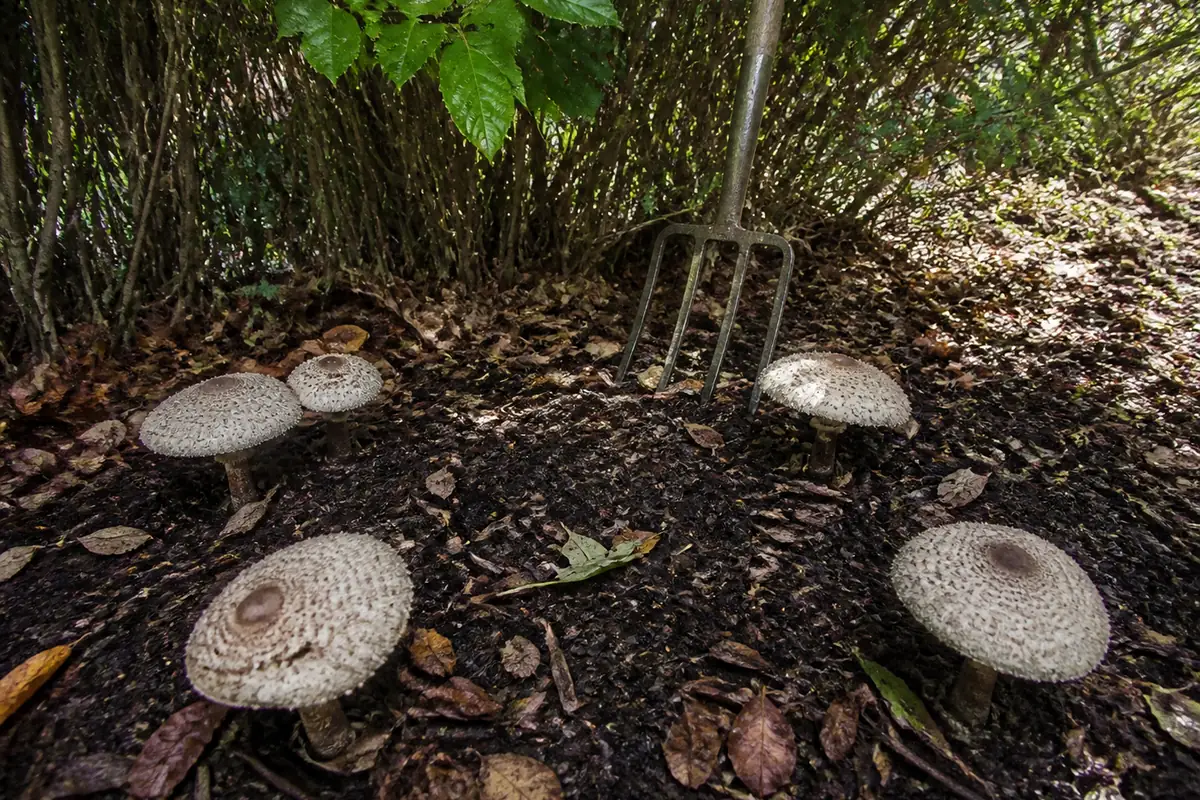
The garden setting is also why this species reaches so many people who are not foragers at all.
It is also why the poisonings involving its relative are so often domestic. The mushrooms that catch people out are usually growing where those people already live rather than somewhere they went looking.
A large handsome mushroom that appears in a flower bed gets photographed, searched for and sometimes eaten by somebody who never intended to pick a wild mushroom that week.
Can shaggy parasols be grown?
The shaggy parasol is not cultivated commercially, though it is one of the wild mushrooms most likely to turn up uninvited in a garden. Compost heaps and freshly mulched beds produce it without anybody intending to grow anything, which is closer to a side effect of gardening than to cultivation.
There is no reason to try growing it deliberately.
It has a lookalike that puts people in hospital and a minority of eaters react to it, and neither of those is a good basis for a crop.
Is there any medicinal use?
There is no medicinal use of the shaggy parasol and no clinical literature behind it. It is a food mushroom with a caution attached, and that is the whole of its claim.
Is it worth eating for nutrition?
Shaggy parasol caps give the ordinary profile of a large wild gilled mushroom, which is mostly water with a little protein, some B vitamins and a useful amount of fiber. They are more substantial than most pale mushrooms of the same size, because the flesh is firmer and holds less water.
This sits among the edibles that carry a caution rather than among the straightforward ones, and the caution is about the print and about individual tolerance.
None of that is a reason to pick one. This is a mushroom eaten for its texture and its size, by people who were willing to wait for a spore print.
Why did the shaggy parasol change genus?
The shaggy parasol used to be filed under Macrolepiota, alongside the true parasol, and it was moved into Chlorophyllum.
That move put it in the same genus as the green-spored parasol, which reads as alarming and is actually the useful part.
Key takeaway
The genus change did not make the shaggy parasol more dangerous. It recorded a relationship that was already there, and that relationship is exactly why the two are hard to separate by eye.
Genus names in this group follow spore characters and microscopic structure rather than the impression a mushroom makes in a field.
Chlorophyllum means green leaf, and the name was built around the green-spored species, which is why an edible white-spored mushroom now sits under a name describing a color it does not have. The three species inside the shaggy parasol name have had their own reshuffling, and the spellings rhacodes and rachodes both appear in older books for the same mushroom.
None of that changes anything a forager does. The practical position has been stable throughout: cut it, watch it redden, print it, and only then cook it.
Frequently Asked Questions
Is shaggy parasol edible?
How do you tell a shaggy parasol from a green-spored parasol?
How long does a spore print take?
What is the difference between a shaggy parasol and a true parasol?
Why does shaggy parasol flesh turn red?
Can shaggy parasol make you sick even if you identified it correctly?
Sources & References
- Shaggy parasol General account used for the three species covered by the name, the cap and stem measurements, the reddish to maroon flesh reaction, the white spore print, the shade preference, and the separations from Chlorophyllum molybdites by spore color and from Macrolepiota procera by stem banding and size.
- The Shaggy Parasol Mycological society account used for the separation of the three species, including the rimmed bulbous base and single-layered ring of C. brunneum, the orange stem reaction, and the report that some people suffer gastrointestinal upset from shaggy parasols including people who had eaten them before without problems.
- Shaggy parasol (Chlorophyllum rhacodes) identification Field guidance used for the habitat description, the coarse lifting cap scales, the movable ring and the handling of the fibrous stem.
- Shaggy Parasol Field guide entry used as a second check on the season, the habitat preference for rich shaded ground, and the caution about individual reactions.