Personal mushroom picking is lawful across England and Wales under a specific exception in the Theft Act 1968, and four things can override it: the species, the site designation, the land manager rules, and your own purpose. Scotland reaches a similar place through access rights instead. The 1.5 kg figure quoted everywhere is not law.
Two things you have probably read about British foraging are both true, and together they make no sense.
Picking wild mushrooms for yourself is lawful across England and Wales under a specific statutory exception, and the most famous mushroom wood in the country asks you not to pick anything at all.
Is picking wild mushrooms illegal in the UK?
No. The starting position across England and Wales is that picking wild mushrooms for your own use is not theft, and that position comes from statute rather than from custom or tolerance.
What makes the question feel unanswerable is that the default can be overridden four different ways, and each override attaches to something different.
Warning
This page explains how the rules are arranged and is not legal advice. Site rules change, and the only position that governs your afternoon is the one published by whoever manages the ground under your feet.
The four overrides are easier to see than to list, because each one attaches to a different kind of ground rather than to a different rule.

It is worth saying how different this is from the American arrangement, where no national default exists and every answer starts with the land manager.
Britain gives you a national answer first and then takes it away in specific places. That is a better starting point, and it is also why one confident sentence from a forum is usually wrong about a particular wood.
What does the Theft Act actually say about mushrooms?
The provision is short and unusually clear for a statute.
Section 4(3) of the Theft Act 1968 says that a person who picks mushrooms growing wild on any land does not steal what they pick, unless they do it for reward or for sale or other commercial purpose.
Three words in that sentence carry the whole thing. Picks, wild, and purpose.
| What the wording covers | What it does not cover |
|---|---|
| Picking the fruiting body | Uprooting or digging up a plant |
| Fungi growing wild | Anything cultivated or deliberately planted |
| Your own consumption | Picking for reward |
| Giving some to a friend | Picking for sale |
| A basket for the table | Picking for any other commercial purpose |
Picking is not the same as taking the whole organism. That distinction matters more for plants than for fungi, since the mushroom you cut is the fruiting body rather than the fungus, which stays in the ground.
Growing wild does real work too. A mushroom somebody inoculated into a log or a bed is not growing wild, and the exception has nothing to say about it.
Reading the provision closely is worth the two minutes, because the summary everybody repeats drops the word that decides most real cases.
Note
The exception removes the theft question and nothing else. It does not give you permission to be on the land, and it does not override a rule made by the land manager.
When does picking become commercial?
Purpose is the line the statute draws. It runs around money rather than around quantity.
That matters because it inverts what most people expect. Readers arrive looking for a threshold in kilograms and the statute gives them one in intention instead.
Sell what you picked, at any quantity
Pick to order for a restaurant or a shop
Take paid work picking, whoever eats the result
Supply a kitchen you work in
Give mushrooms away to friends and neighbors
Pick as much as your own household will eat
Every item on that list sits outside the exception, and none of them becomes lawful because the basket was small or because the picker ate some of it.
The practical consequence surprises people. A modest commercial pick is a worse legal position than a large personal one, which is the reverse of the rule most foragers think they are following.
Giving mushrooms away is not a sale, so a bag handed to a neighbor stays inside the exception.
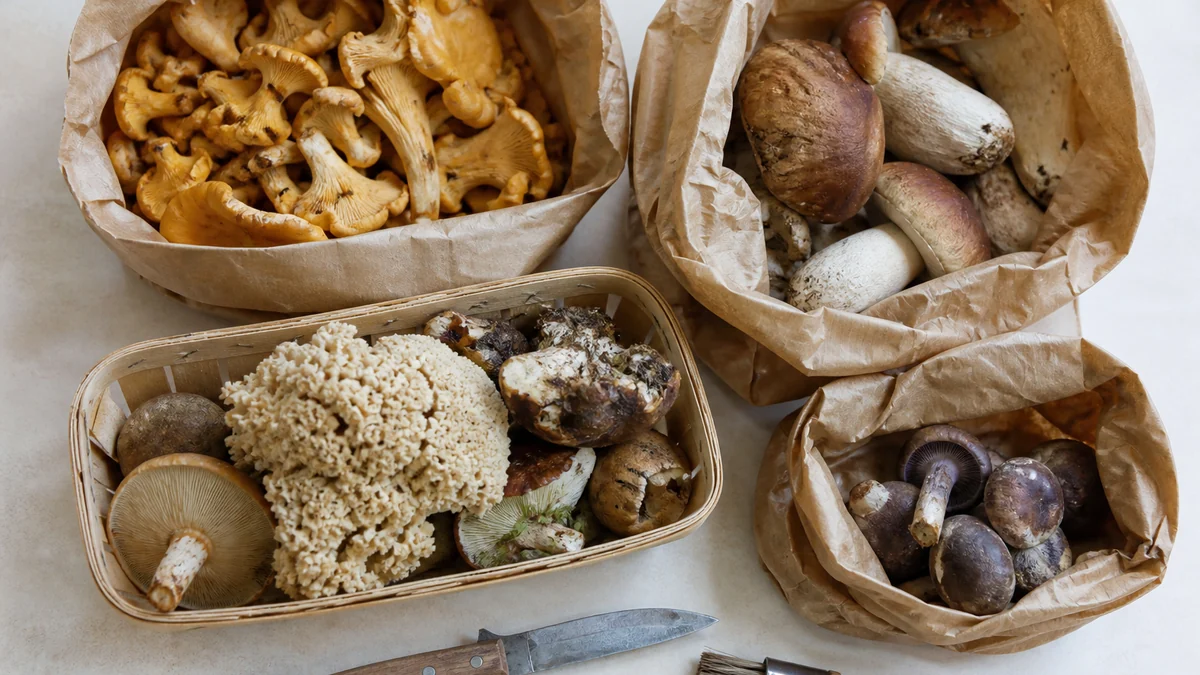
Commercial picking in Britain concentrates on a short list of species with a restaurant market, above all ceps and porcini and golden chanterelles. That is why beech and birch woods in a good autumn draw far more attention from keepers than the ground around them.
Which fungi are illegal to pick anywhere in Britain?
Four fungi are listed on Schedule 8 of the Wildlife and Countryside Act 1981, and for those the protection travels with the species rather than with the ground.
For a listed species the prohibited acts are wide.
- Intentionally picking, uprooting or destroying it
- Possessing or transporting it, or any part of it, alive or dead
- Selling it, offering it for sale, or advertising it for sale
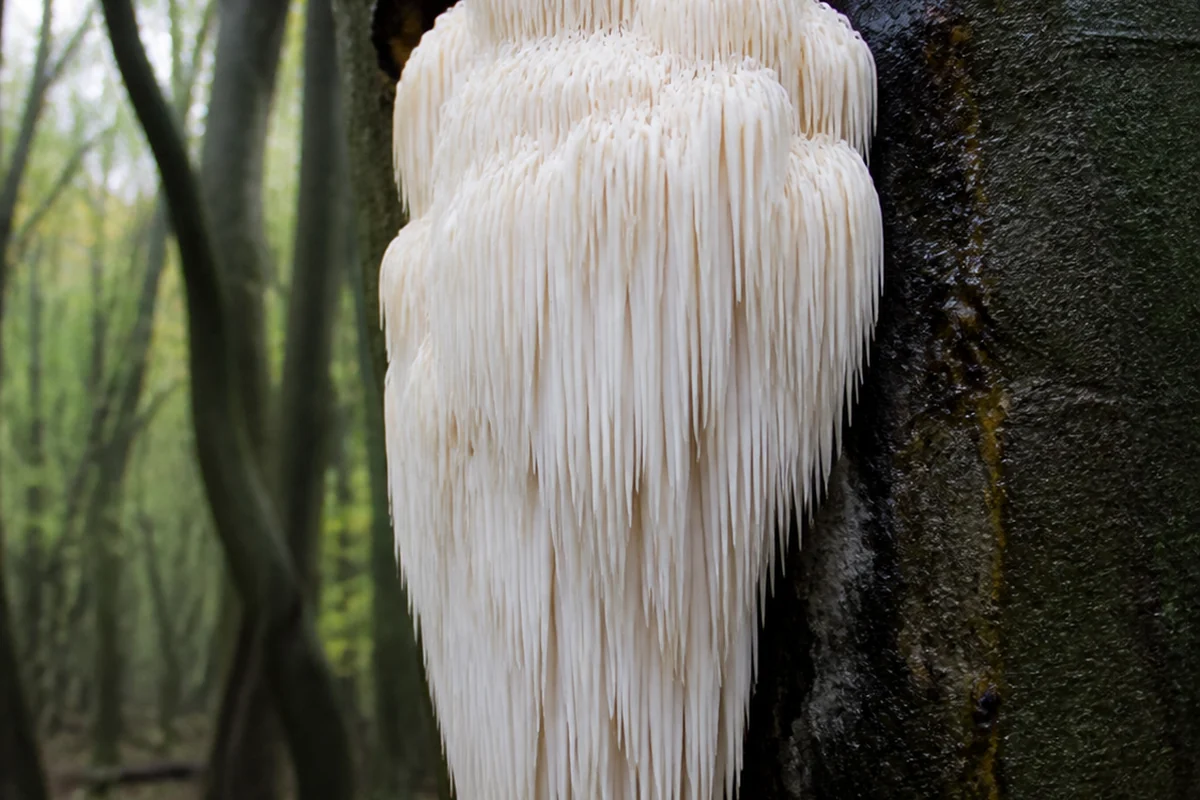
One of the four is a mushroom people actively want. The bearded tooth, better known as lion's mane, is rare in Britain and concentrated in southern beech woods, and reported penalties for picking it run to a five thousand pound fine or six months.
Warning
Lion's mane sold in shops and grown at home is entirely legal. The protection is on the wild British population, so buying it, growing it and eating it are all fine, and taking one off a beech trunk is not.
Three practical consequences follow from a species-level ban.
- It applies on ground where picking is otherwise entirely lawful
- It applies to a single specimen as firmly as to a basket
- It follows the mushroom into your bag, your car and your kitchen
The other three listed fungi are rare enough that most foragers will never meet one. That is a good argument for learning the one that matters rather than memorizing a list.
Where does the statutory default stop applying?
Designation is the second override. It changes underfoot, without a fence or a sign to mark where.
A Site of Special Scientific Interest protects the features that led to its notification. On a site notified partly for its fungi, damaging those fungi is an offence in its own right regardless of what the Theft Act says.
Byelaw powers over SSSIs exist and have largely not been used, so the enforceable position on many designated sites still runs through the damage provisions rather than through a posted byelaw.
Designation is rarely the only layer in force on one wood, which is why the board matters more than the map. Three things commonly carry their own rules on the same piece of ground.
- The designation, which protects named features
- The land manager, through byelaws or a published position
- The owner, who may be neither of the above
Nature reserves are the clearest case of all. Reserve byelaws are site-specific, they are posted at the entrances, and a good number of reserves prohibit removing anything at all.
Note
Read the board rather than the map. A wood can be a nature reserve, an SSSI and privately owned at once, and only the board tells you which rules the manager is actually applying.
Can you pick mushrooms in the New Forest?
The New Forest is where this subject usually breaks down, because the headline and the statute disagree and both keep getting quoted at people.
Forestry England's position for the site is a Look, Don't Pick request, and it withdrew the personal allowance that visitors had relied on for years.
The detail that gets lost is what kind of instrument that is. There is no explicit fungi byelaw for the site, and the 1982 Forestry Commission byelaws refer to plants, which is why the position has been argued over rather than simply enforced.
Key takeaway
A byelaw is a rule with an offence attached. A land manager request is an instruction from the people who run the site, enforceable through access rather than through prosecution. The New Forest position is the second kind, and the designation underneath it is the first.
Where the enforceable protection actually sits is the designation. The New Forest is an SSSI, and damage to the features it was notified for is an offence whatever the byelaws happen to say about plants.
Note
A land manager asking you not to pick is not the same as a criminal offence, and it is still a clear instruction from the people who run the site. Ignoring it on a technicality is a poor argument to be making to a keeper.
How is Scotland different?
Scotland answers the same question from a different statute, and the result looks similar for a walker and quite different for anybody selling.
The Land Reform (Scotland) Act 2003 created a statutory right of responsible access to most land, and that right is the framework everything else hangs from.

Taking things away for a commercial purpose or for profit is excluded from those access rights, so commercial picking in Scotland needs the permission of the owner or manager.
Customary picking of wild fungi and berries for your own use is not affected by that legislation. The personal forager therefore ends up in much the same practical position as in England, by a completely different route.
Is there a legal limit on how much you can pick?
No British statute sets a weight limit on personal picking, and the number everybody quotes is not law.
The 1.5 kilogram figure circulates as though it were a statutory allowance. It came from a voluntary code of conduct for wild mushroom pickers, and that code offered it as guidance for culinary picking with the landowner's permission.
A guidance figure detached from its condition and promoted to a legal limit is worse than no figure at all. It gives a picker false confidence in exactly the conversation where confidence is not the useful thing to have.
What actually constrains you is purpose and site rules, and both are qualitative rather than numerical.
A basket that looks like a commercial harvest attracts attention whatever it weighs, and a site that prohibits removal prohibits the first mushroom as firmly as the fiftieth.
ForagingMushroom foraging rules in Colorado: permits, limits and closed groundDo you need the landowner's permission?
Two separate permissions are in play here. People routinely collapse them into one and end up wrong about both.
Landowner permission is needed to be on the land at all, and the Theft Act exception does not supply it.
That first permission comes from ownership, a right of way, open access land, or the owner saying yes. The second is permission to take something away, which the exception addresses only by removing the theft question.
A public footpath grants passage rather than a right to gather. Walking a right of way through private woodland does not convert that woodland into somewhere you may harvest.
- Ownership
- Decides who is able to give permission at all.
- Right of way
- Passage across the land, not access to the whole wood.
- Management
- A tenant or manager may set rules the owner never wrote.
- Published position
- Usually the fastest real answer available.
The awkward middle case is common land and access land, where you may have a right to walk and no clear right to gather, and where the manager's published position is the only practical guide.
What happens if a warden stops you?
The realistic outcome of most encounters is a conversation rather than a prosecution.
That is worth knowing because maximum penalties get quoted far more often than usual results, and the gap between the two is where a lot of unnecessary worry lives.
A warden or keeper can ask what you are doing, ask you to stop, and ask you to leave. On most sites that is where it ends for somebody with a small personal basket.
What changes the seriousness is the thing the statute cares about. Volume and evidence of selling move a picker into a different category, because both point at commercial purpose.
Species matters too, and it is the one situation where a small quantity is not a mitigating fact. Picking a Schedule 8 fungus is an offence in its own right.
What do the neighbours do?
Cross the Channel and the same question gets a different first principle, which is worth knowing before a holiday rather than after one.
French forest law starts from ownership. The mushrooms belong to whoever owns the land, and picking in a public forest rests on a presumption of tolerance rather than on any right.
German law starts from species protection instead, exempting small personal quantities from a rule that otherwise forbids taking protected fungi at all.
| England and Wales | France | Germany | |
|---|---|---|---|
| Starting point | Picking is not theft | The landowner owns the fungi | Protected species may not be taken |
| Personal picking rests on | A statutory exception | A presumption of tolerance | An exemption for small quantities |
| Typical stated limit | None in statute | Five liters, often varied locally | Small quantity, undefined |
| What changes locally | Site designation | The prefectoral order | The state and the site |
Britain is the outlier of the three. It starts from a freedom and carves overrides out of it, where both neighbours start from a restriction and carve a permission out of that.
The practical consequence is that a British picker abroad is wrong in a different way in each country. In France the question is whose wood this is, and in Germany it is what species you are holding.
How do you check one specific wood before you go?
The whole page collapses into a short routine of about five minutes.
What happens after that is a kitchen problem rather than a legal one, and sorting a foraged basket decides how much of it you actually eat.

Three lookups cover it, and they are separate questions rather than one.
Start with the manager, because that is the person whose published position governs the site. Then check the designation, since it adds a layer the manager did not write and cannot waive.
Then look for what that manager has actually published, because a stated position is far more useful to rely on than a general reading of the statute.
Silence is the case people handle worst. A manager who has published nothing has given no permission, and the sensible reading is to ask rather than to assume.
Tip
Screenshot the position you relied on before you set out. It costs nothing, and it turns a disagreement in a car park into a short conversation about a page you can both read.
From there the questions stop being legal ones. Use the beginner's routine to plan what to pick, how much a patch can spare, and how to check the species.
Sources & References
- Fungi and the Law, a summary (New Forest Association) Used for the wording of the Theft Act 1968 section 4(3) exception, the Forestry England position in the New Forest, the absence of an explicit fungi byelaw and the reference to plants in the 1982 byelaws, and the origin of the 1.5 kg figure in a voluntary code of conduct offered for picking with the landowner permission.
- Protected plants, fungi and lichens: advice for making planning decisions (GOV.UK) Used for the Schedule 8 offences, which cover intentionally picking, uprooting or destroying a listed species, possessing or transporting it or any part alive or dead, and selling or advertising it for sale.
- Bearded Tooth Fungus (Woodland Trust) Used for the status of Hericium erinaceus as one of only four fungi on Schedule 8, its rarity and southern English beech woodland distribution, and the reported penalty of a five thousand pound fine or six months.
- Guidance on foraging in Scotland (Scottish Outdoor Access Code) Cited as the governing guidance for Scotland alongside the Land Reform (Scotland) Act 2003, under which taking away anything for a commercial purpose or for profit sits outside access rights while customary personal picking of wild fungi and berries is unaffected.