In France wild mushrooms belong to whoever owns the ground, under article 547 of the Civil Code. Picking in state forest is lawful because article R163-5 of the forest code presumes permission up to five liters. Below ten liters a breach is a contravention with a maximum fine of 750 euros, and at ten liters and above it is prosecuted as theft. A prefectoral order can set a smaller limit and binds the landowner too.
A British forager arriving in France brings the wrong assumption with them, and it is the assumption that the mushrooms are nobody's until somebody picks them.
In French law they already belong to whoever owns the ground, and everything a visitor is allowed to do rests on a permission that is presumed rather than granted.
- The default
- Natural fruits of the land belong to the owner, under article 547 of the Civil Code.
- The permission
- Article R163-5 of the forest code presumes authorization up to five liters.
- The first threshold
- Below ten liters a breach is a contravention, with a maximum fine of 750 euros.
- The second threshold
- At ten liters and above it is prosecuted as theft.
- The local layer
- A prefectoral order can set a smaller limit, and it binds the landowner too.
Who owns the mushrooms in a French forest?
They belong to the owner of the land. They did so before you arrived and they will after you leave, which is where every other French rule starts.
Article 547 of the Civil Code puts the natural fruits of the ground with the person who owns the ground, and fungi are natural fruits. Picking them without permission falls under the theft provision in article 311-1 of the Penal Code.
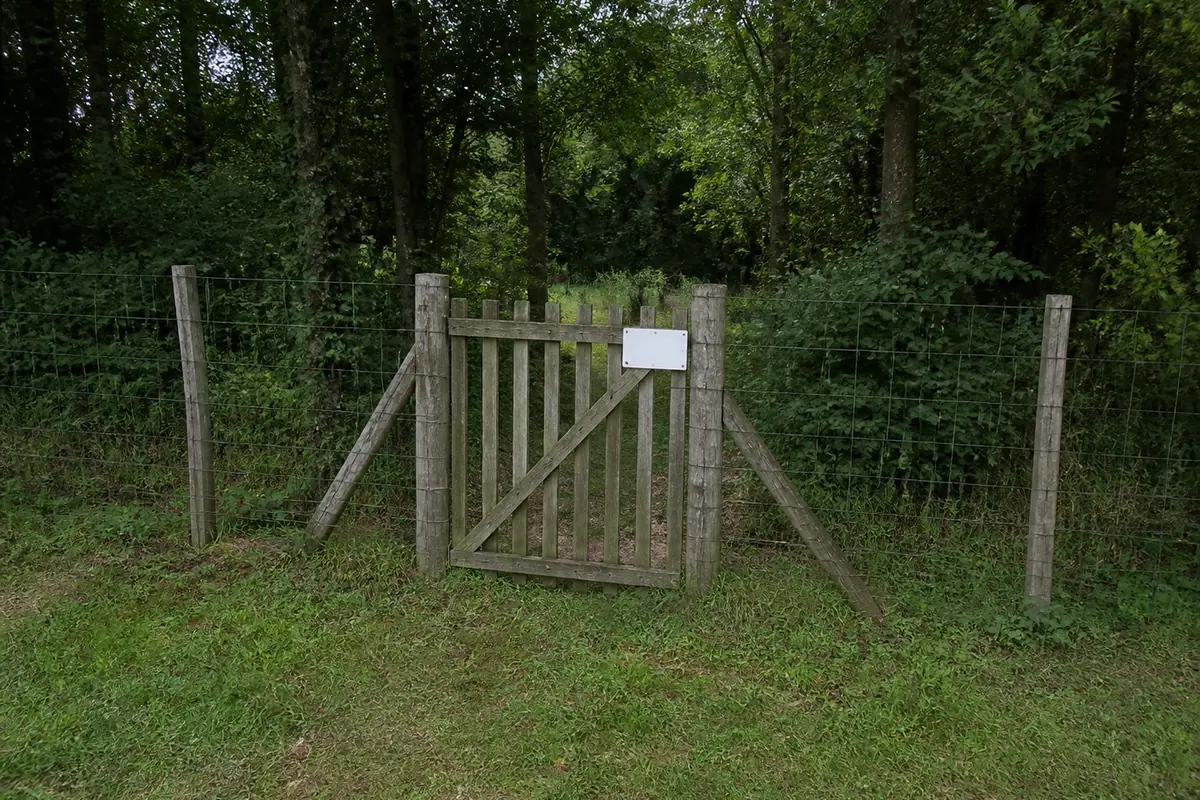
The three kinds of ground a French picker meets are easier to see side by side than to hold as a list.

That is the reverse of the British arrangement, where a statute specifically removes the theft question for personal picking and leaves the forager to worry about site rules instead.
The practical effect of the French default is easy to state. You are relying on permission that can be withdrawn. Establish who grants it and what it allows.
ForagingMushroom foraging laws in Germany: protected species and small quantitiesWhat makes picking in a public forest lawful?
A presumption in the forest code does the work. Its wording says noticeably different things from the summary everybody repeats.
Article R163-5 provides that in woods and forests under the forest regime, unless a contrary rule exists, authorization is presumed where the volume taken does not exceed five liters.

Read against that wording, the presumption has three conditions inside it, and every one of them can fail independently.
The forests concerned are those under the forest regime, which covers state forests and the woodlands of local authorities managed under it. A private wood is outside the provision entirely.
That distinction does more work in France than a visitor expects, because a large share of French woodland is privately owned and looks exactly like the state forest next to it.
Nothing on the ground reliably tells the two apart, since a forest track with a barrier and a green sign is usually managed woodland and a track with neither may be either.
The safest reading of an unmarked track is that it belongs to somebody. The cheapest way to find out who is to ask in the nearest village, where the answer is usually immediate and often comes with permission attached.
Key takeaway
A presumption is an assumption the law makes until somebody displaces it. Here it assumes a picker below five liters has permission, which is a weaker thing to hold than a right and a stronger thing than a tolerance.
That distinction decides what happens when somebody disagrees with you in a wood, which is the only place it will ever come up.
Note
A presumption is not a right. It says that a picker below the threshold is assumed to have permission, and an owner or a local authority can rebut that assumption by saying otherwise.
How much can you pick in France?
Five liters is the number everybody quotes, and it is smaller than most people picture.
| Volume | How it is treated |
|---|---|
| Up to 5 liters | Authorization presumed in a forest under the forest regime |
| 5 to 10 liters | A contravention, with a maximum fine of 750 euros |
| 10 liters and above | Prosecuted as theft, up to three years and 45,000 euros |
| Any quantity of truffles | Treated as the serious offence regardless of volume |
| Aggravating circumstances | Up to five years and 75,000 euros |
Every figure in that table comes from the same two instruments. It is worth knowing which is which, because one of them is a forest code provision and the other is the ordinary criminal law.
The volume is measured as volume rather than as weight, which matters more than it sounds.
Whole caps pack badly. Five liters of loosely piled ceps weighs far less than five liters of anything dense, so the measure is generous to somebody carrying big mushrooms and mean to somebody collecting small ones.

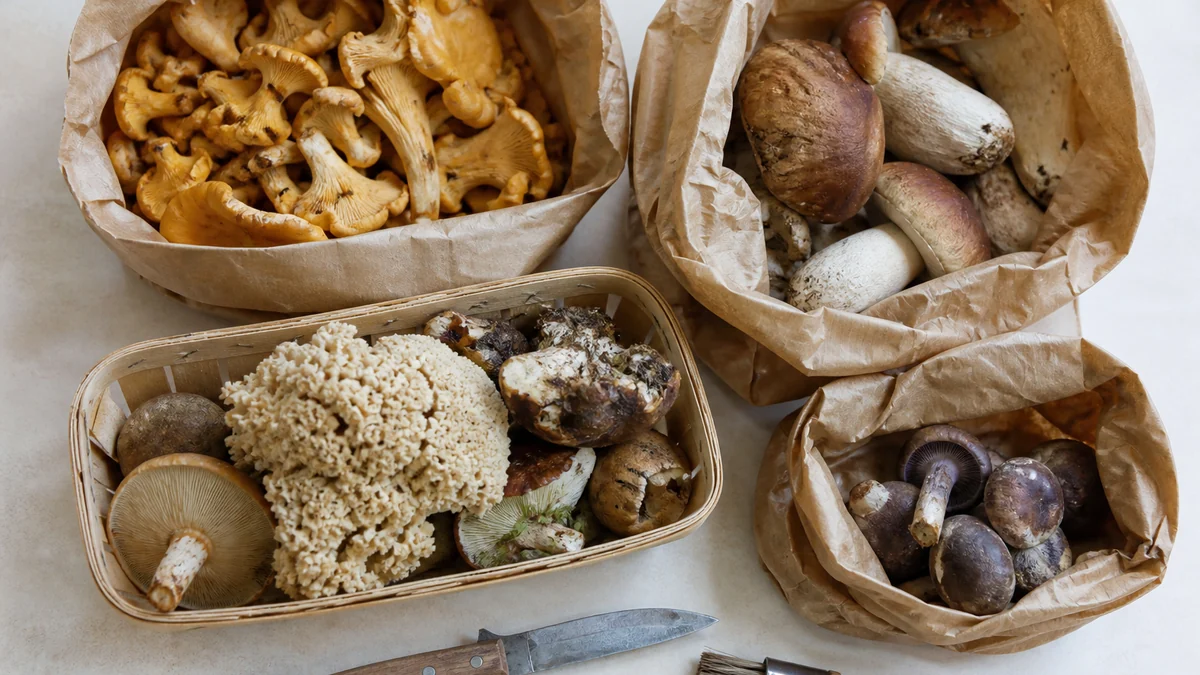
A basket of ceps and porcini fills that volume faster than the figure suggests, because whole caps pack badly and the measure is volume rather than weight.
Three things decide which band you are in, and none of them is how long you were out.
- The volume in the container, measured as volume
- Whether a local order has set a smaller figure
- Whether any of it is destined for sale
The jump at ten liters is the one worth remembering. Below it a picker is dealing with a fine, and at or above it the conduct is handled as theft, with a maximum of three years and forty five thousand euros.
Those are maximum figures rather than usual outcomes, and the gap between the two is wide. What actually drives a serious response is the pattern that looks organized, which means several people, large containers and a vehicle.
Truffles sit outside the volume logic completely, and the reason is that they are farmed rather than gathered.

Those groves are planted rather than wild. That is the thing a foreign visitor is least likely to read from the ground, because a truffle oak looks like a scrubby field tree rather than like a crop.
Warning
Truffle grounds are cultivated, valuable and watched. A truffiere looks like open scrubby woodland to somebody who does not recognize the bare burnt circles under the oaks, and walking into one with a basket is not a misunderstanding anybody is inclined to forgive.
Can a local order change the limit?
Yes. The local order is usually the rule that governs the wood you are standing in.
Prefectoral orders can regulate picking by territory, by season and by daily quantity, and reported limits run from two liters to ten depending on the region and the species.
Those orders exist because of pressure rather than principle. Regions with a strong commercial market for ceps and chanterelles have seen organized picking on a scale that local woodland cannot carry, and the order is the tool a prefect reaches for.
- A smaller daily volume than the national five liters
- A closed season for a particular species
- A restriction covering one commune or one massif
- A rule that applies to residents and visitors alike
A prefectoral order binds the landowner as well. That is the detail that surprises people, because it means a French owner cannot simply authorize a friend to take more than the order allows on their own ground.
Any of those can be in force without the others, which is why the list matters more than the headline figure.
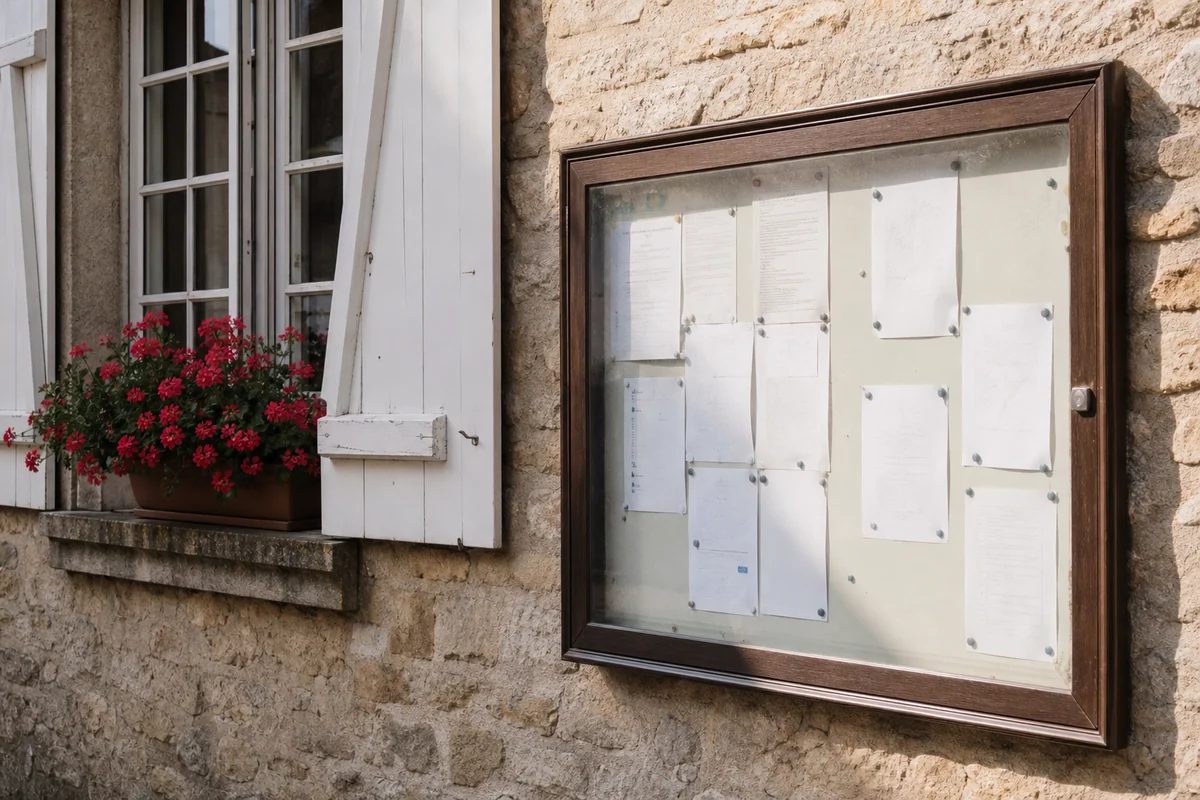
None of this is published in one place, which is the practical difficulty for a visitor. The departmental forestry office and the prefecture environment service hold the current position, and the mairie posts what applies locally.
An order can also close a season rather than cap a volume. That catches people who checked the quantity rule, found five liters, and stopped reading.
ForagingMushroom foraging laws in the UK: what is actually legalWhat are people actually picking in France?
Four names carry most of the French season. Knowing them explains why the five liter figure gets argued about as much as it does.
Cèpes are the reason the figure gets argued about at all, since a five liter basket of them fills long before it starts to feel heavy.

Golden girolles run through summer and into autumn on the same ground, and their orange impostor turns up in France exactly as it does elsewhere.
Trompettes de la mort come later. They arrive in dense patches that make a volume limit feel arbitrary rather than generous.
Volume as a unit is also why the container you carry matters more in France than anywhere else on this site.
The species matter legally because volume is the unit. A basket of trompettes and a basket of cèpes weigh very differently and occupy the same five liters, which is why the rule catches people out in some woods and never in others.
None of that changes the ownership question, and it is worth being blunt that no species is exempt from it. A rare mushroom and a common one belong equally to whoever owns the ground.
What happens on private land?
The presumption never reached private land, so the ownership rule applies with nothing softening it.
An owner can forbid access and picking, and they can do it without posting a single sign. French law puts no duty on an owner to advertise a boundary in order to keep what grows inside it.

That is where most visitors go wrong.
Unfenced woodland with nothing at the roadside reads as open ground to a British or American eye, and in France it reads as somebody's property that has not been fenced.
The difference is not a matter of signage standards. It follows from the ownership rule at the top of this page, which does not require an owner to announce anything to keep what is theirs.
Permission itself is usually informal and local, and it is worth knowing what it looks like in practice.
Ask at the nearest farm or house rather than looking for an office
Take a verbal yes from the owner, which is what most French pickers rely on
Join a local club or commune arrangement covering a named wood
Read an unfenced boundary as an invitation
Assume a long local custom gives you a right
Pick anything for sale without written permission
Three questions settle almost every French wood between them.
- Is it under the forest regime
- Is there a local order in force
- If it is private, has the owner said yes
Long-standing tolerance is the other trap. A village where people have always picked a particular hillside has a custom rather than a right, and a new owner can end it on the day they buy.
The custom is worth respecting for a different reason. A visitor who picks where locals pick, at the volume locals pick, is very unlikely to have a difficult afternoon, and one who fills a car boot is inviting the response the orders were written for.
ForagingMushroom foraging rules in Colorado: permits, limits and closed groundWhat happens if you are checked?
The people who carry out checks are not police in the ordinary sense, which changes the shape of the encounter.
Agents of the forestry service are sworn officers with the power to record forest offences, and in practice they are the ones a picker meets on a state forest track in October.
A routine check is short and it is about the basket rather than about you. The question is how much you have, and a picker with a small volume and a civil manner is usually sent on their way with nothing recorded.
That is worth knowing before the encounter happens, because the instinct to argue about a national figure is exactly the wrong one when a local order is in force.
Two things change that. Volume is the first, because a basket well past the local limit turns a conversation into a recorded offence with a fine attached.
Selling is the second, and it moves the matter into a different category entirely. Commercial picking needs the owner's authorization, and a picker found with commercial quantities and no authorization is no longer arguing about a contravention.
Vehicles and numbers make everything worse, and they do it visibly. Several people working one wood with large containers and a van parked on a track is the exact pattern the prefectoral orders were written to stop, and it is read that way whatever the individual baskets hold.
A family with two baskets in a state forest and a crew with crates in the same wood are not treated as the same thing, and the difference is visible from the roadside.
How does France compare with its neighbours?
France and Germany reach similar outcomes from opposite starting points. That is worth seeing before a trip crosses a border rather than after.
German law protects species first and then exempts small personal quantities, while France protects ownership first and then presumes tolerance in public forest. Britain, by contrast, starts from a statutory freedom and carves its overrides out of that instead.
The practical effect is that the first question differs in each country: in France it is whose wood this is, in Germany it is what you are holding, and in Britain it is what you intend to do with it.
What should you do before picking in France?
The check is short. It differs from the British one because it starts with a person rather than with a designation.
Start with the status of the ground rather than with the species or the season. Find out whether the wood is state forest, communal forest under the forest regime, or private, because that single answer decides whether you are relying on a presumption or on somebody saying yes.

Then look for the local order. It overrides the national figure in both directions, and it is the layer a visitor is least likely to know exists at all.
The three places worth asking are all within a few hundred meters of each other in a small commune, which makes the check cheaper than it sounds.
A holidaymaker carries exactly the same obligations as a resident, and not knowing the local order is not a defence.
It is also not much of a burden. The three places above are consulted in about the time it takes to buy bread, and a commune that has bothered to post an order is usually happy to explain it.
A five liter basket also has to get home, and sorting a foraged haul matters more after a long drive than after a short one.
From there the questions stop being French ones. Use the beginner's routine to decide what is worth picking and how to check its identity.
Sources & References
- Cueillette des champignons: que dit la loi? (CNPF) Forestry body guidance used for article 547 of the Civil Code giving natural fruits to the landowner, the theft provision in article 311-1 of the Penal Code, the maximum fine of 750 euros below ten liters, the three years and 45,000 euros at ten liters and above with truffles treated seriously at any quantity, the aggravated figures of five years and 75,000 euros, and the reach of prefectoral orders over landowners.
- Reglementation de la cueillette (Societe mycologique et botanique de Villefranche sur Saone) Mycological society summary used for the wording of article R163-5 of the forest code, under which authorization is presumed in woods and forests under the forest regime where the volume taken does not exceed five liters and no contrary rule exists.
- Conseils, precautions: comment bien cueillir les champignons en foret (prefecture de la Charente) Prefecture guidance used as the example of the departmental layer, and for the practice of consulting the departmental forestry office and the prefecture environment service before picking.