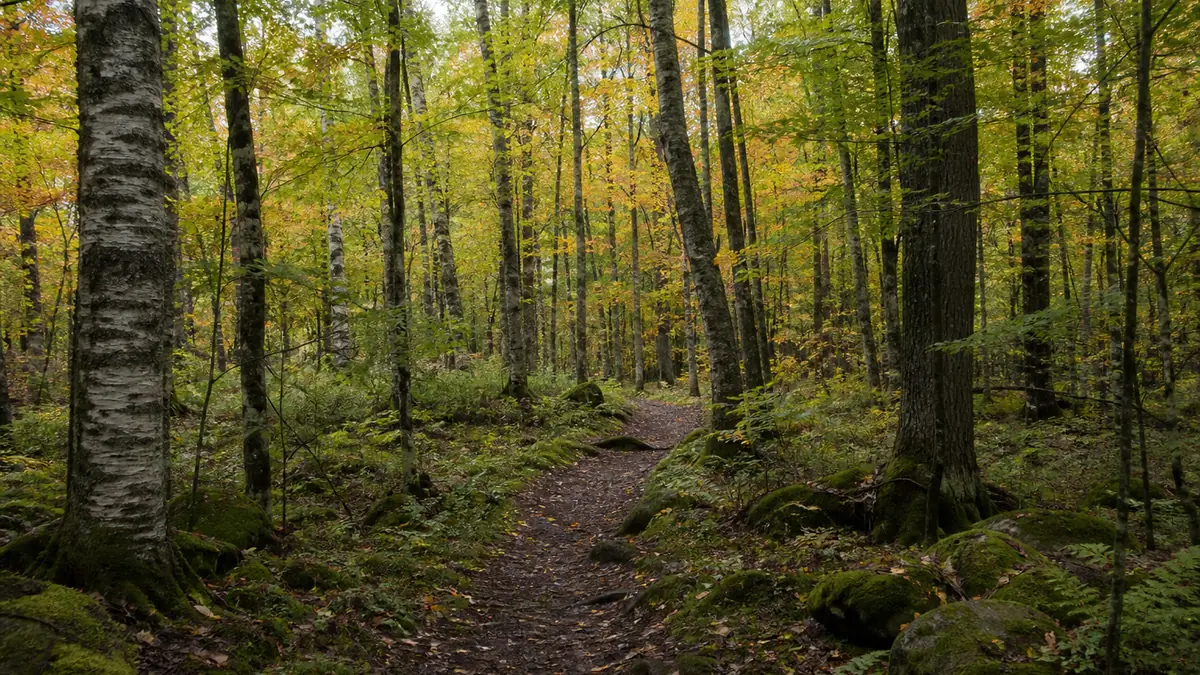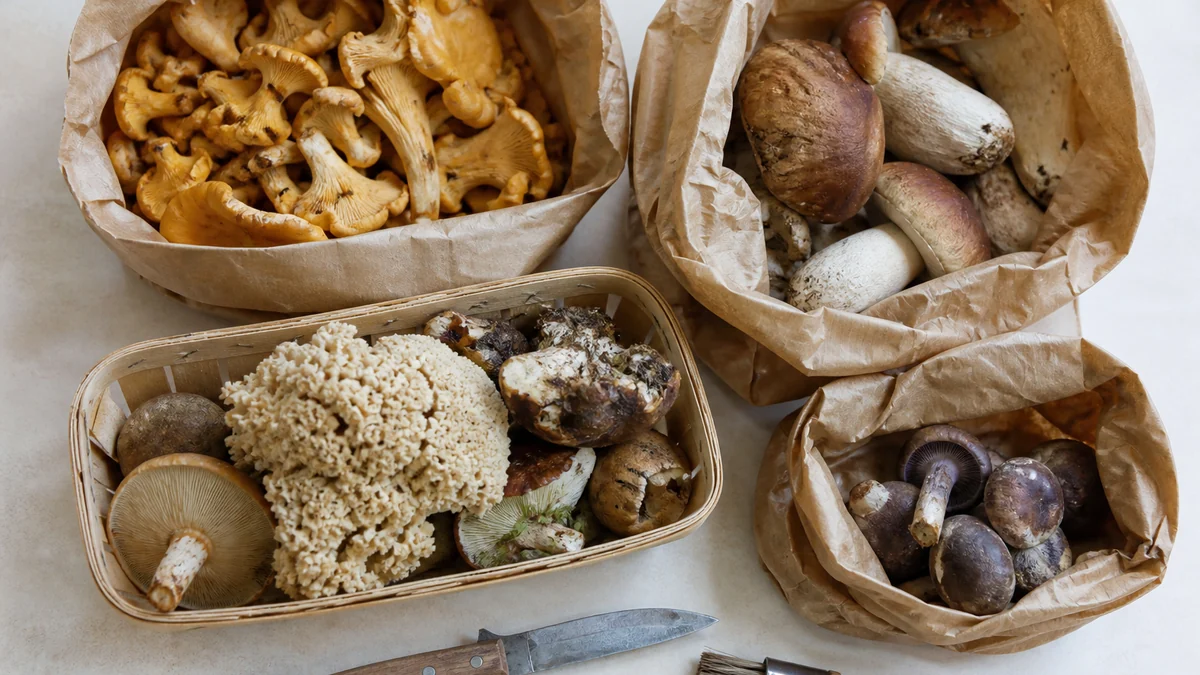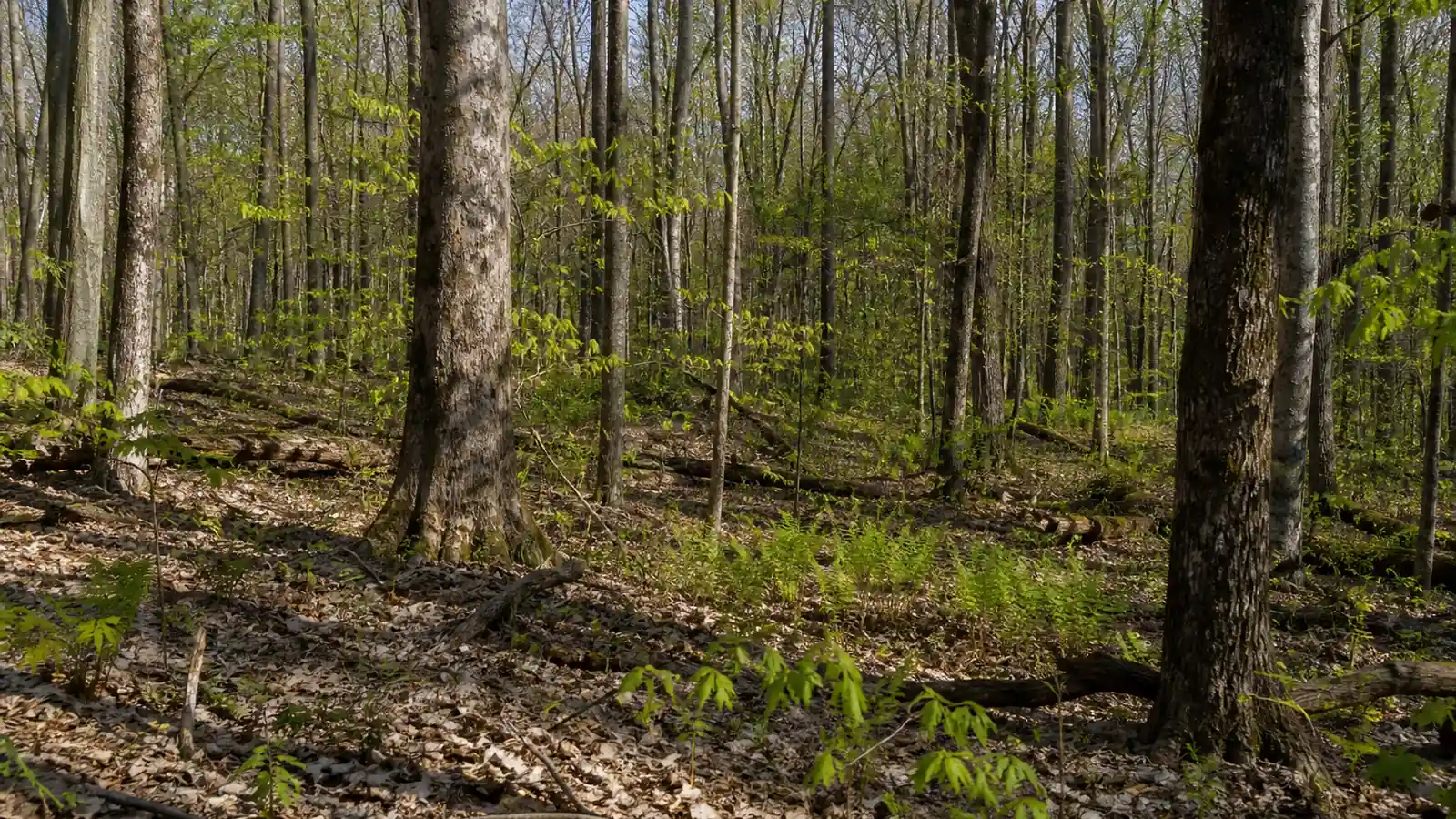
Minnesota separates fungi from plants. Edible fruits and mushrooms may be harvested in state parks, recreation areas and waysides for personal consumption, while picking wildflowers or other plants is not allowed even for personal use. State forest land allows small amounts of edible mushrooms for personal use without a permit. Collecting any amount for sale needs a special product permit, and a commercial mushroom permit is conditioned on accredited identification training. No per-person personal cap currently applies, and the DNR has been considering one.
In a Minnesota state park you may fill a bag with morels and you may not pick the trillium growing a foot away from them.
That is not an oversight. Minnesota's rules draw their line between fungi and plants rather than between species or quantities, and almost every confusion on this subject comes from missing it.
- State park
- Edible fruits and mushrooms may be harvested for personal consumption.
- Plants
- Picking wildflowers or other plants is not allowed, edible or not.
- State forest
- No permit for small amounts of edible mushrooms for personal use.
- Selling
- A special product permit is required for any amount collected to sell.
- Quantity
- No per-person personal cap currently applies, and that is under review.
Can you pick mushrooms in a Minnesota state park?
Yes, for your own table. The permission is broader than most visitors assume, and it covers four kinds of state land rather than parks alone.
Edible fruits and mushrooms may be harvested in state parks, state recreation areas, state waysides and state forest recreation areas, provided the harvest is for personal consumption.
In practice that means yellow morels in April and May, and it is the reason Minnesota park rules get looked up more in one month than in the rest of the year combined.
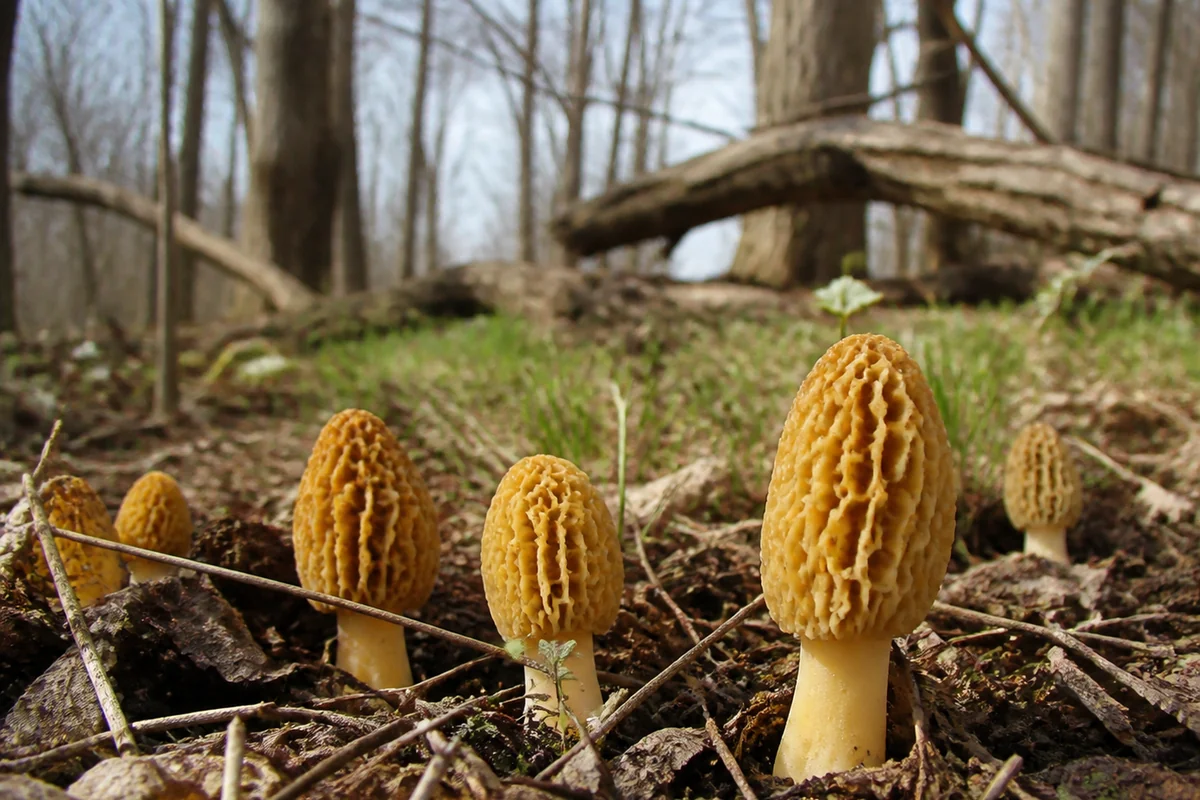
That surprises people who expect a park to be closed to everything. Minnesota parks carry a serious spring morel following, and the permission is why a state park car park fills up in the third week of April.
The surprise usually runs the other way once somebody reaches for a flower, because that is where the permission stops.
Three things sit inside the park permission and one sits outside it.
- Edible mushrooms, for your own kitchen
- Edible fruits and berries, on the same terms
- Nothing at all that is a plant
Commercial harvesting sits outside the park permission. That is worth flagging early, because the word harvest reads as neutral right up until money appears.
ForagingMushroom foraging laws in France: what the five liter rule meansWhy are plants treated differently?
The plant rule is a prohibition where the mushroom rule is a permission.
That single difference is what makes two organisms behave so unlike each other on one patch of ground.
Picking wildflowers or other plants is not allowed in these areas even for personal use, and the prohibition covers edible plants as readily as ornamental ones. Digging up or damaging plants is prohibited outright.
That last clause is why the rule reaches things nobody would call picking. Lifting a bulb, cutting a root or pulling a whole plant out of the ground is squarely inside the prohibition even when the intention was a meal.
Ramps are the species this catches most often in Minnesota, because the part people want is the part the rule protects.
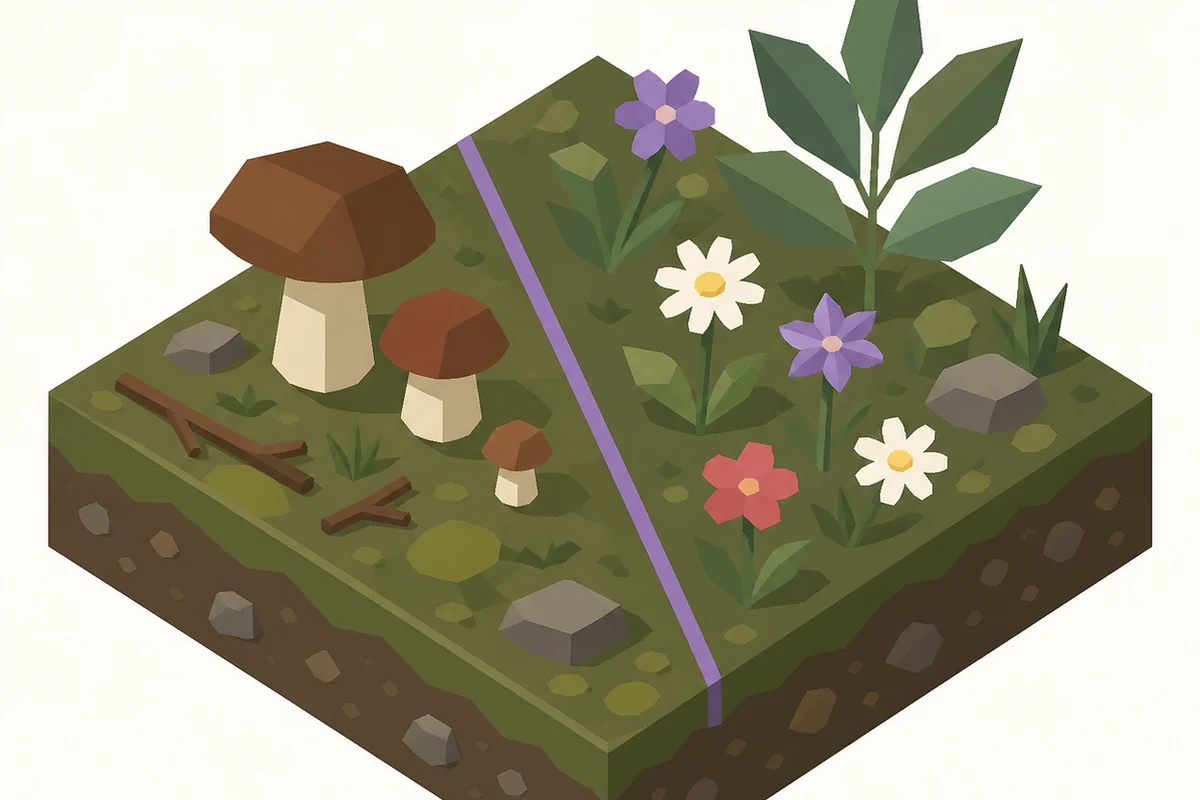
The spring season is where this bites hardest, because morels and the spring plants people want come up in the same fortnight and in the same woods.
The practical effect is that a Minnesota forage is two activities rather than one. A basket that holds morels and ramps is half legal in a state park, and nothing about the walk tells you where the boundary fell.
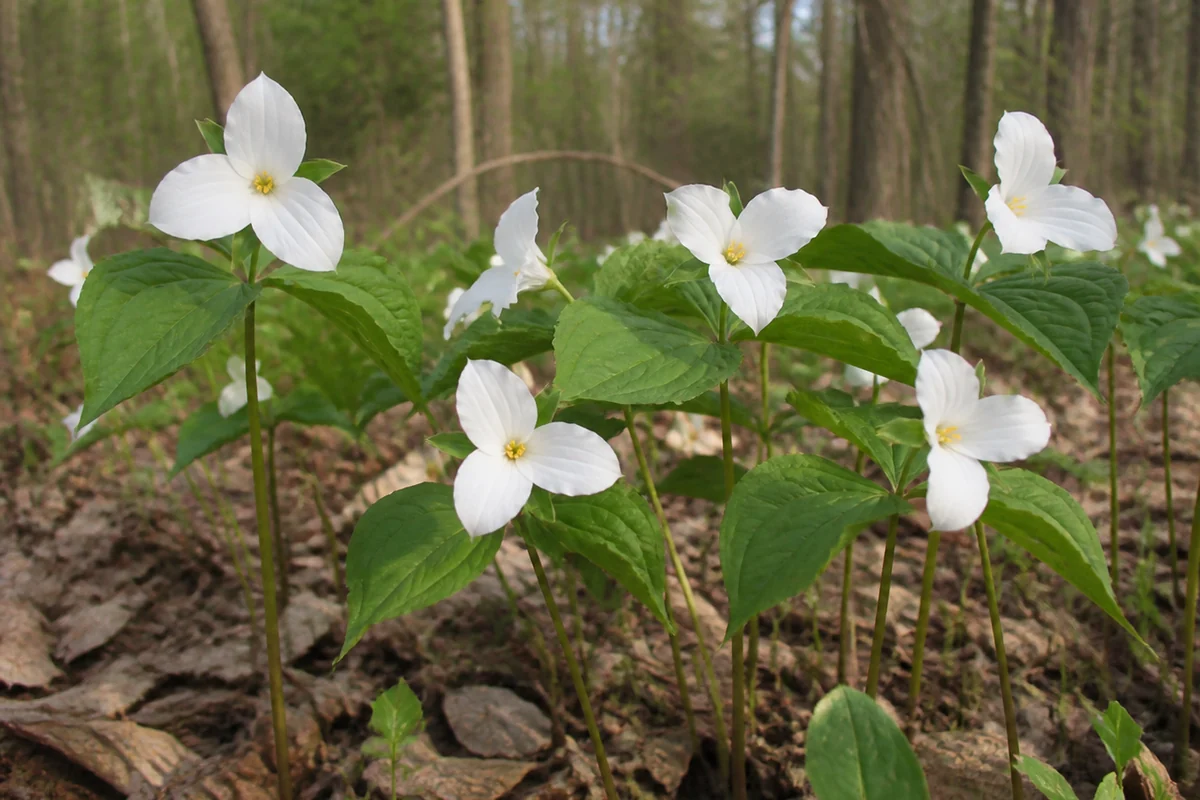
There is a second consequence people find harder to accept.
A plant that is unquestionably edible, growing beside a mushroom that is unquestionably edible, sits on the wrong side of the line for reasons that have nothing to do with either being food.
Do not assume that one quantity limit applies everywhere. The first question in Minnesota is what kind of thing you are holding, and the second is where you are standing.
Note
The split is a legal one rather than a biological argument. Fungi and plants are governed separately here because two different rules were written, and the reason a picker needs to know it is that both rules apply on the same square meter.
Which mushrooms are people actually picking?
Four species carry almost all of the Minnesota season. The rules above were written with them in mind, whether or not the wording ever names one.
Morels open it in April and May, which is when the park permission gets tested hardest.
Summer brings golden chanterelles in oak and mixed hardwood, and the hedgehog mushroom alongside them on the same ground.
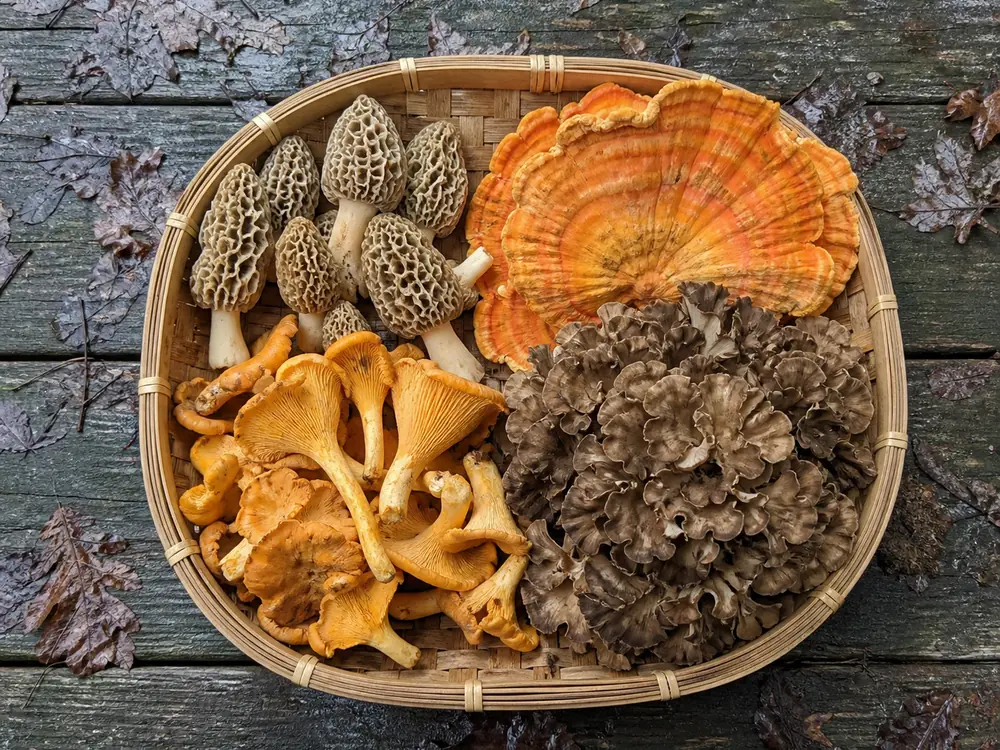
After that summer pair the year gets heavier rather than lighter. Chicken of the woods on standing oak and hen of the woods at the base of old trees both arrive in autumn and both arrive in quantity, which is when people start asking about limits.
A single hen of the woods can weigh several kilograms.
One of those four has a genuine impostor worth knowing about. The orange jack-o-lantern grows on wood in tight orange clusters and gets taken for a chanterelle, and the side-by-side comparison is the cheapest ten minutes a Minnesota picker can spend.
None of that changes the legal answer, because the permission names mushrooms as a category rather than a list. It does change how much the answer matters to you in any given month.
ForagingMushroom foraging laws in Germany: protected species and small quantitiesWhat is the rule on state forest land?
State forests are more permissive in one specific way. They are not the free-for-all their reputation suggests.
No permit is needed to harvest small amounts of edible mushrooms for personal use on state forest land, and berries and cones sit under the same position.
| State park | State forest | |
|---|---|---|
| Edible mushrooms | Allowed for personal consumption | Allowed, small amounts, no permit |
| Berries and fruits | Allowed for personal consumption | Allowed, small amounts, no permit |
| Wildflowers and plants | Not allowed, edible or not | Restricted, and not a picking permission |
| Collecting to sell | Not allowed | Special product permit required |
What a state forest adds is worth listing, because it is narrower than people assume.
- No permit for small amounts of edible mushrooms
- The same position for berries and cones
- No general licence to gather plants
The phrase small amounts is doing the same job that a number does elsewhere. Minnesota describes the permitted quantity qualitatively rather than setting a figure, which is generous and vague in the same breath.
Vague works well for the ordinary case and badly for the argument. Somebody with a basket is obviously inside it and somebody with a car boot obviously is not, and the space between those two is where a written figure would have earned its keep.
That gap is a large part of why a cap has been under discussion at all.
Practically, the two land types point a picker in the same direction for mushrooms and part company on everything else.
That is worth knowing before a drive. A trip planned around ramps and morels together has a legal problem in both places, and a trip planned around mushrooms alone has none in either.
What does it take to pick commercially?
Selling changes the requirement in kind rather than in degree. That is why it sits in its own section instead of inside the question about how much you may take.
A special product permit is required to collect berries, mushrooms, nuts, seeds, cones or dead fuelwood in any amount for sale, and the phrase any amount is the part people skip.
Pick for your own kitchen with no permit on the mushroom side
Apply to the local DNR forestry office before selling anything
Complete accredited identification training if you intend to sell mushrooms
Sell a surplus from a personal trip without a permit
Assume a small commercial quantity falls under personal use
Treat a permit for one product as covering another
Commercial mushroom harvest carries a condition the other products do not, which is training.
Nobody asks a berry picker to prove they can recognize a raspberry. Mushrooms are the one product on that list where a misidentification reaches the public through a restaurant or a market stall.
A commercial mushroom permit is therefore conditioned on accredited identification training, which is an unusual requirement to find in a forest products rule.
Reading that condition carefully matters, because it is a condition on the permit rather than a suggestion attached to it.
Key takeaway
A special product permit is a forest products permit rather than a food licence. It governs taking the material off public land, and any question about selling food to the public sits on top of it rather than inside it.
Where that permit is issued matters as much as what it says. Minnesota keeps the decision at the office nearest the ground rather than at a central desk.
Applications go through the DNR forestry office closest to the forest concerned, which keeps the decision local in the same way Colorado keeps it with a ranger district.
That locality is not administrative fussiness. The office that issues a permit for a particular forest is the one that knows what has already been taken out of it this season.
It also means the answer can differ between two forests for reasons that never appear in any published rule, which is worth expecting rather than arguing with.
Commercial pickers already work this way. They build a relationship with one office and one forest rather than treating the state as a single market, and the permit structure quietly encourages exactly that.
ForagingMushroom foraging laws in the UK: what is actually legalIs there a limit on how much you can pick?
There is currently no per-person cap for personal use. Recheck the current rule before a trip rather than relying on memory.
There is a reason a cap is being discussed at all, and it is the same reason France writes prefectoral orders and Germany leaves the figure to the states. Popular ground gets picked harder every year, and a qualitative standard eventually stops holding the line.
The Department of Natural Resources has considered setting a limit of roughly a gallon per person, and a sustainable foraging task force has been working through the question with the ecological arguments on both sides.
Warning
A proposal is not a rule and a rule is not a proposal. Anything you read about a Minnesota gallon limit should be checked against the current DNR position before you rely on it, because this is the one page in this set where the answer is actively moving.
Two things are worth doing while a rule is open.
- Check the current DNR position rather than a page from last season
- Pick at a scale that no proposal on the table would touch
Rulemaking of this kind takes years rather than months, and it usually lands somewhere less dramatic than either side argued for.
The argument itself is worth understanding even so. One side is worried about commercial-scale picking on popular ground, and the other is worried that a hard cap punishes ordinary families to reach people who were already ignoring the rules.
The sensible way to behave while a rule is open is the way most people already do. A basket for the kitchen has never been the thing any of this was aimed at, and somebody picking that way will not be affected whichever way the rulemaking lands.
What about county, city and federal land?
State rules stop at the state boundary, and Minnesota has a great deal of public land that is not the state's.
County and regional parks set their own ordinances, and they are consistently stricter than state parks rather than looser. Several of the larger metropolitan systems prohibit collecting outright, and none of them are covered by anything on this page.
Federal ground runs the other way. The Superior and Chippewa National Forests apply the personal use approach common across the national forest system, which is generally more generous than a state park and administered by district office rather than by statute.
| State park | County or regional park | National forest | |
|---|---|---|---|
| Mushrooms for the table | Permitted | Often prohibited | Generally permitted |
| Where the rule is written | State statute and DNR rule | Local ordinance | Federal regulation and district policy |
| Who to ask | Park office | The county parks department | The district ranger office |
The practical lesson is that a Minnesota answer is really three answers. A picker who has learned the state park rule and assumes it carries into a county park has learned the one that is most likely to be wrong.
Wisconsin next door splits the same problem differently again, cutting between a plant and its own parts rather than between fungi and plants, and the Wisconsin rules are worth reading before a weekend across the border.
What should you check before going out?
Check the land manager, collecting permission, and any local limits before setting off.
Doing them out of order is what produces most of the wrong answers, because the organism question has a different answer on different ground and people tend to ask it first.
Four steps cover it. The first is the only one that changes without you doing anything, which is why it goes first.
None of the four steps takes long, and the order is what makes them cheap. Settling the land type first means the other three questions have a definite answer rather than a general one.
Land type first is the habit worth building. It is the only one of the three that changes without you doing anything, and it changes at boundaries that are often unmarked in the middle of a wood.
Minnesota reaches its answer through a fungi and plants split, and the state-by-state arrangement is the reason a rule learned here transfers to almost nowhere else.
A basket that clears all three questions still has an evening attached to it, and sorting a foraged haul is where a good spring morning is usually won or lost.
From there the questions stop being Minnesota ones. Use the beginner's routine to decide what is worth picking and how to check its identity.
Sources & References
- Harvesting plants, state parks and recreation areas (Minnesota DNR) State agency page used for the permission to harvest edible fruits and mushrooms for personal consumption in state parks, recreation areas and waysides, for the exclusion of commercial harvesting, and for the prohibition on picking wildflowers or other plants even for personal use.
- Harvesting on state forest lands (Minnesota DNR) Used for the position that no permit is needed to harvest small amounts of edible mushrooms or berries for personal use on state forest land, for the special product permit required to collect any amount for sale, and for applications being made through the nearest DNR forestry office.
- Foraging on state forest land (Minnesota Legislative Coordinating Commission) Task force material used for the record that a sustainable foraging task force has been examining personal use limits, and that a per-person cap of roughly a gallon has been considered while none currently applies.