Spring is the shortest mushroom season and the one with the sharpest lookalike problem. The false morel appears alongside the true one, and the difference is a cut rather than a color judgment.
Spring produces fewer species than autumn and gets more attention than any other season.
The reason is the morel, which is the one wild mushroom many people can name and the one that draws them into the woods for a few weeks a year. Almost everything else in spring is quieter.
That concentration is also what makes the season risky.
Warning
The false morel fruits in the same weeks and the same ground as the true one. It is not a subtle lookalike problem, and the check that separates them takes one cut.
What actually fruits in spring
The spring list is short and it is worth knowing what is on it before spending weeks on the wrong ground.
| Species | When | Where |
|---|---|---|
| True morels | Soil temperature around 50 to 60 F | Dying elm, old orchards, burn sites, river bottoms |
| False morel | Same weeks, often earlier | Sandy soil under conifers |
| Oyster mushroom | Spring and again in fall | Dead and dying hardwood |
| Wine cap | Late spring onward | Wood chip beds and mulched ground |
| Dryad's saddle | Spring | Wounds on living and dead hardwood |
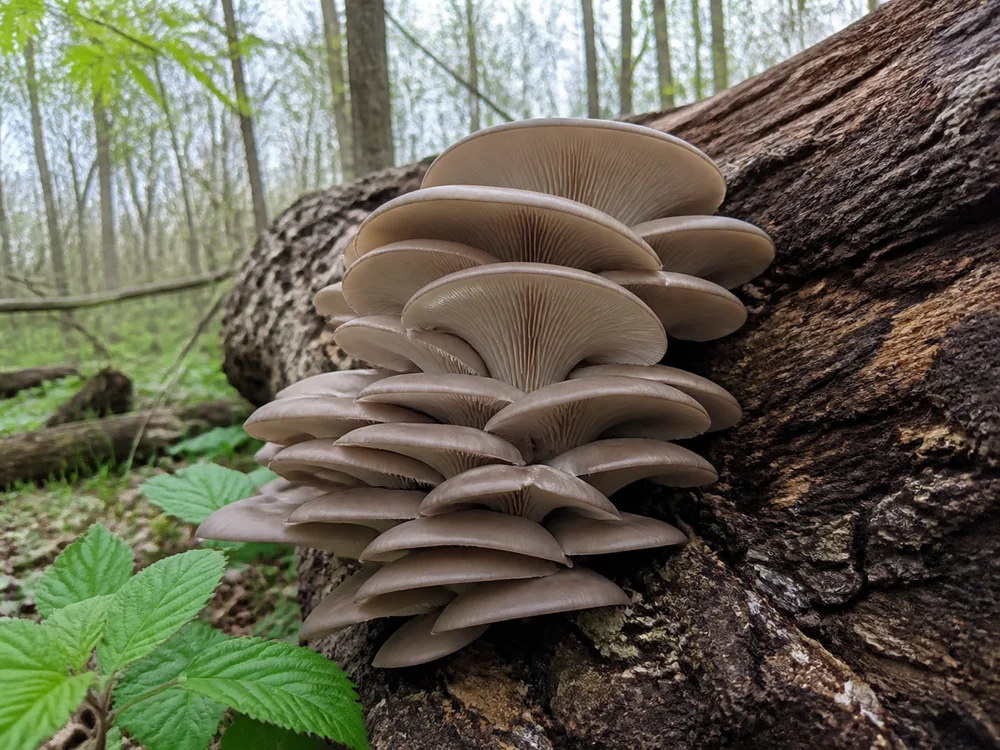
Oyster mushrooms are the reliable part of the season for most people.
They fruit on hardwood in spring and again in autumn, they are easy to learn, and they do not depend on the narrow soil temperature window that governs morels. The species is set out under oyster mushroom.
The morel window is narrow and local
Soil temperature drives the morel season more than the calendar does.
The usual trigger is soil in the range of about 50 to 60 F at a few inches down, which arrives weeks apart between the south and the north. A state can run through its whole season in ten days.
The state-by-state timing is the most requested detail of the whole season.
Local windows and ground types are set out in the morel season pages, including Michigan and the other states in that group.
The false morel problem
The check that separates a true morel from a false one is a lengthwise cut, and it is not optional.
A true morel is hollow from the tip of the cap to the base of the stem, one continuous chamber. A false morel is stuffed with cottony tissue or chambered irregularly inside.
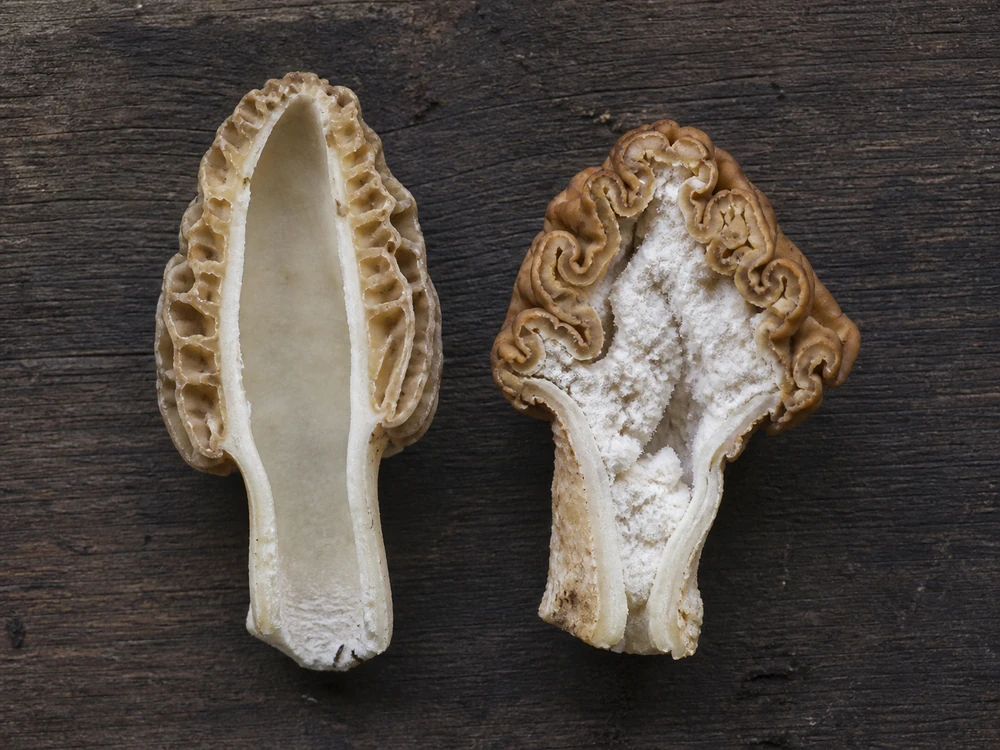
Cap shape helps but it is the weaker signal.
True morels have pitted honeycomb ridges, while false morels look brain-like or saddle-shaped. Weathered specimens blur that difference and the cut does not blur.
The comparison is worked through in false morel versus morel.
Cook everything, including morels
Spring species are not a place to relax about cooking.
Raw morels cause stomach upset reliably enough that it is not a matter of individual sensitivity, and the same applies to most of the season's list. Thorough cooking is the standing rule.
Note
Never eat morels raw, and never taste a raw fragment to identify one. Both are covered under raw morels.
The cooking method for a good haul sits under how to cook morels.
ForagingMushroom foraging laws in Germany: protected species and small quantitiesTiming after rain
Spring rain works the same way it does in autumn, with the lag that goes with it.
A warm rain onto ground that has reached temperature produces a flush within several days, and the same rain onto cold ground produces nothing at all. That mechanism sits under mushrooms after rain.
Cold snaps stall the season without ending it.
A late frost pauses fruiting rather than finishing it, and the flush usually resumes when the ground warms again. What ends a morel season is the canopy closing and the ground drying.
Why burn sites produce
Last year's fire ground is one of the most reliable morel settings, and the reason is worth understanding rather than just repeating.
Fire kills or stresses the trees the fungus was partnered with, and several morel species respond by fruiting heavily in the season that follows. It is a response to the partnership ending rather than to the ash itself.
The same logic explains dying elm.
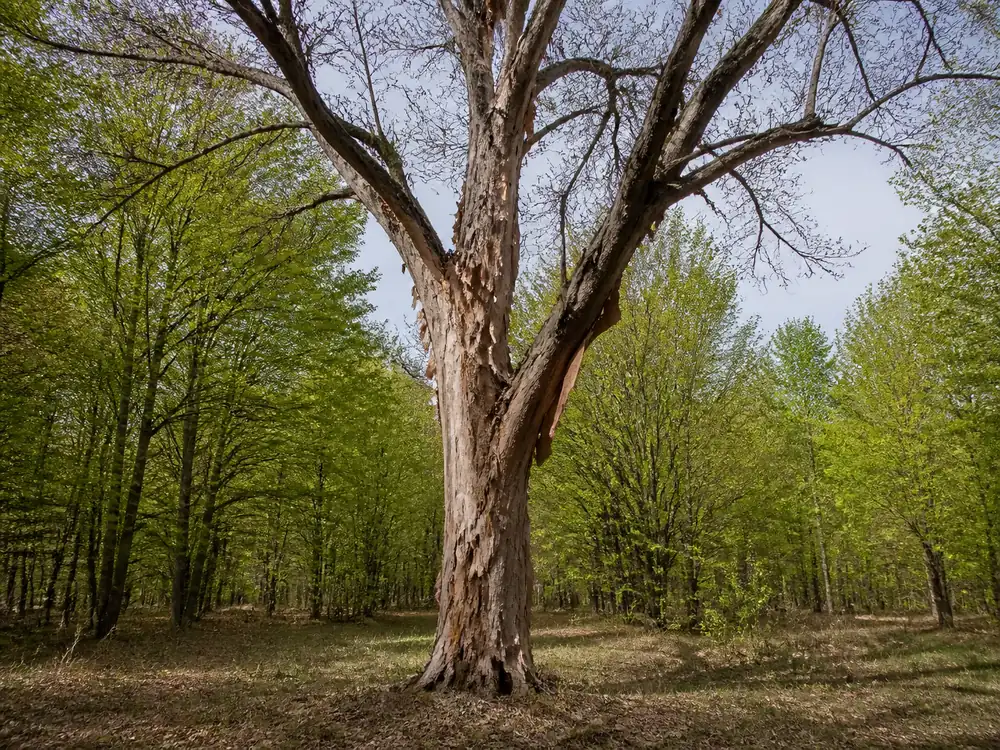
An elm losing its bark and its canopy is a partnership ending in slow motion, which is why the trees that look worst often produce best. A completely dead and long-fallen elm has usually stopped.
What ends the season
Morel season ends for two reasons and neither of them is a date.
The canopy closes and takes the light off the ground, and the soil dries out as the leaves start drawing water. Both happen within a couple of weeks in most places.
| Sign | What it means |
|---|---|
| Leaves fully out overhead | Light and soil temperature are changing fast |
| Litter dry and crumbling | The moisture the flush needed has gone |
| Specimens shriveled rather than rotting | The flush is spent rather than damaged |
| Nettles and undergrowth waist high | Practically the end, whatever the fungus is doing |
Spent morels look dried rather than rotten, which is a useful distinction.
A rotting mushroom means damage and a shriveled papery one means the flush has finished naturally. When most of what you find is papery, the ground is done for the year.
Tip
Note where the last productive spots were rather than the first. Late ground is usually cooler and shadier, and it is where to start next year when the early sites go over.
Spring on managed ground
Not all spring foraging happens in woodland, and mulched beds are the most productive ground most people have access to.
Wine caps fruit on hardwood chips from late spring onward, and they are commonly grown deliberately in garden beds. That makes them the one spring species a beginner can learn on their own ground over a whole season.
That last point matters more on mulch than in woodland.
Wood chips support a range of wood decomposers, and not all of them are what was inoculated. A cluster at the edge of a bed is not automatically the species you put there, which is set out under deadly galerina.
The species itself is covered under wine cap.
Spring also brings the first oyster flush on hardwood, which overlaps the morel window in most regions.
A short season rewards preparation
The whole spring window in one place can run under three weeks, which leaves no room for scouting once it opens.
Walking the ground in late winter, when the trees are bare and the undergrowth is down, is what makes the productive weeks usable. Dying elms and old orchard rows are far easier to find then.
That preparation is the difference between a season and a few lucky mornings.
Sources & References
- North American Mycological Association General reference on seasonal species and fruiting patterns.
- MushroomExpert Genus-level reference for the true morels and their season.