
Spring Mushrooms
Spring is a narrow, prized window. It is defined by one great edible and one serious hazard, and telling them apart is the season's whole lesson.
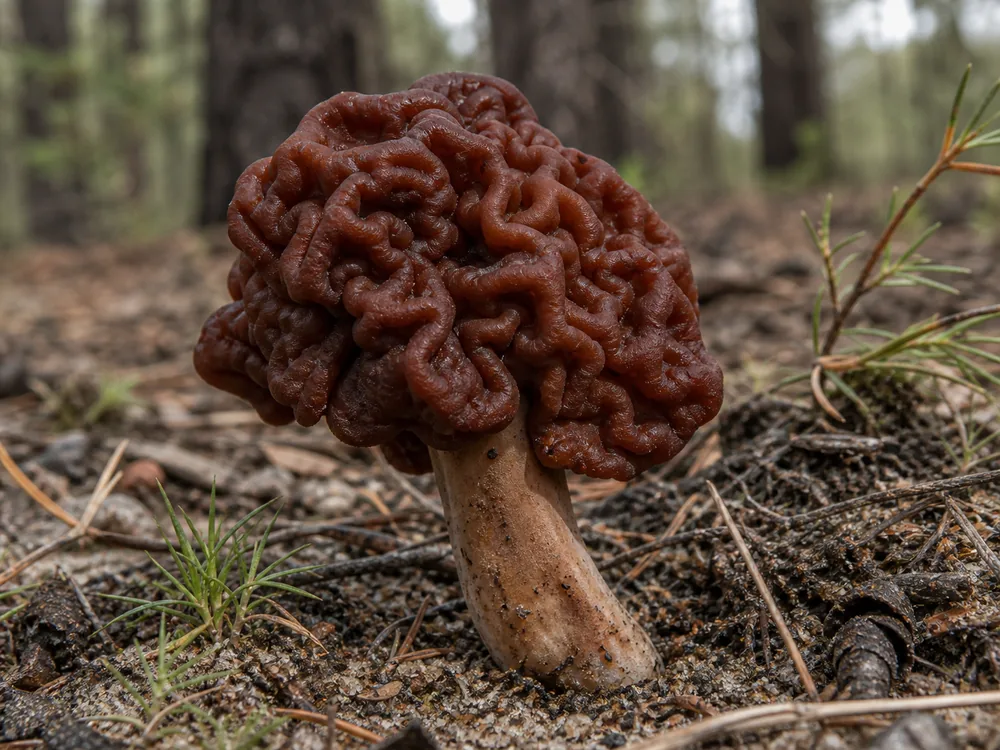
False Morel
Gyromitra esculentaGyromitra esculenta is a poisonous spring cup fungus with a chestnut, brain-like cap and a pale stem. A…
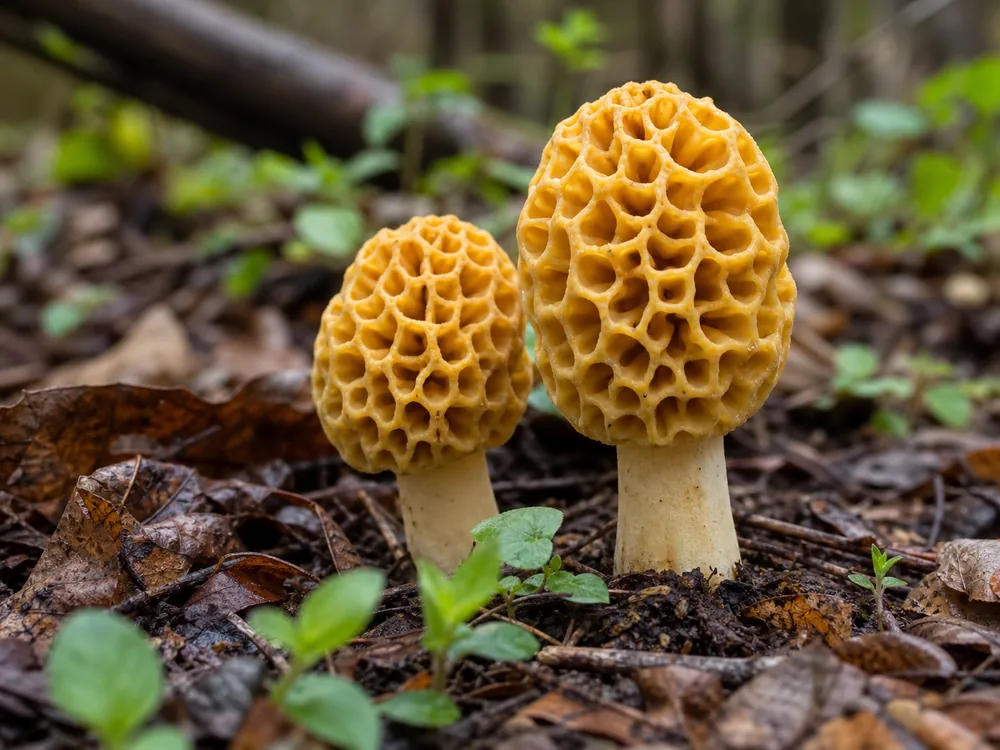
Morel
Morchella esculentaA morel is a spring edible with a strict safety routine. The lengthwise hollow test comes before cleaning…
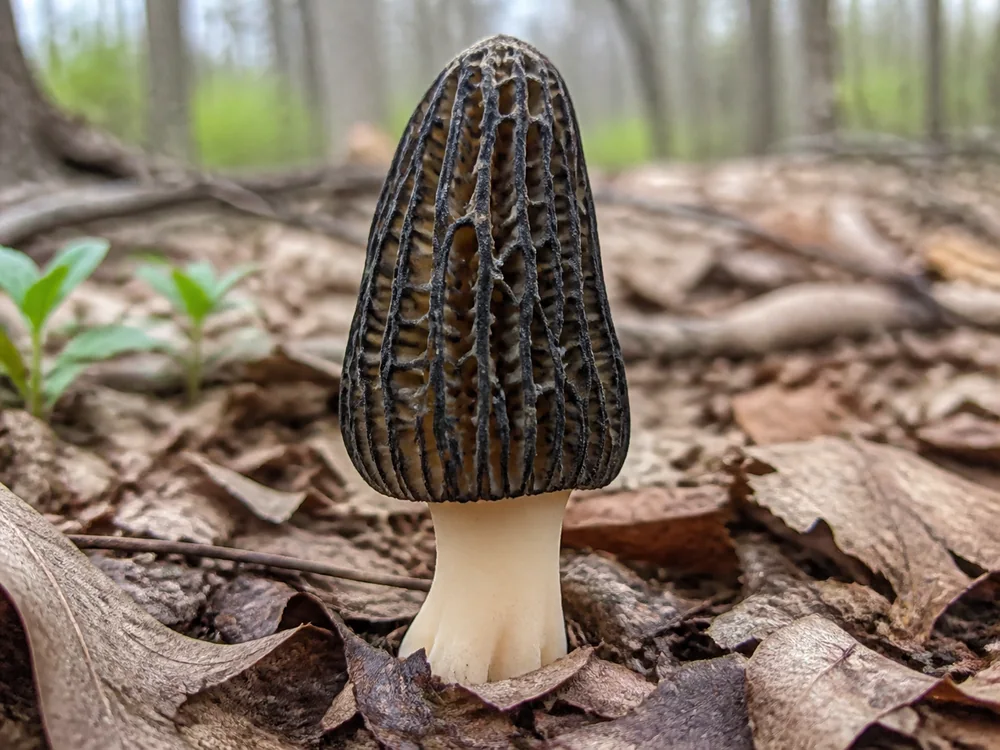
Black Morel
Morchella angusticepsMorchella angusticeps is the classic eastern North American black morel. Its conical cap has mostly vertical…
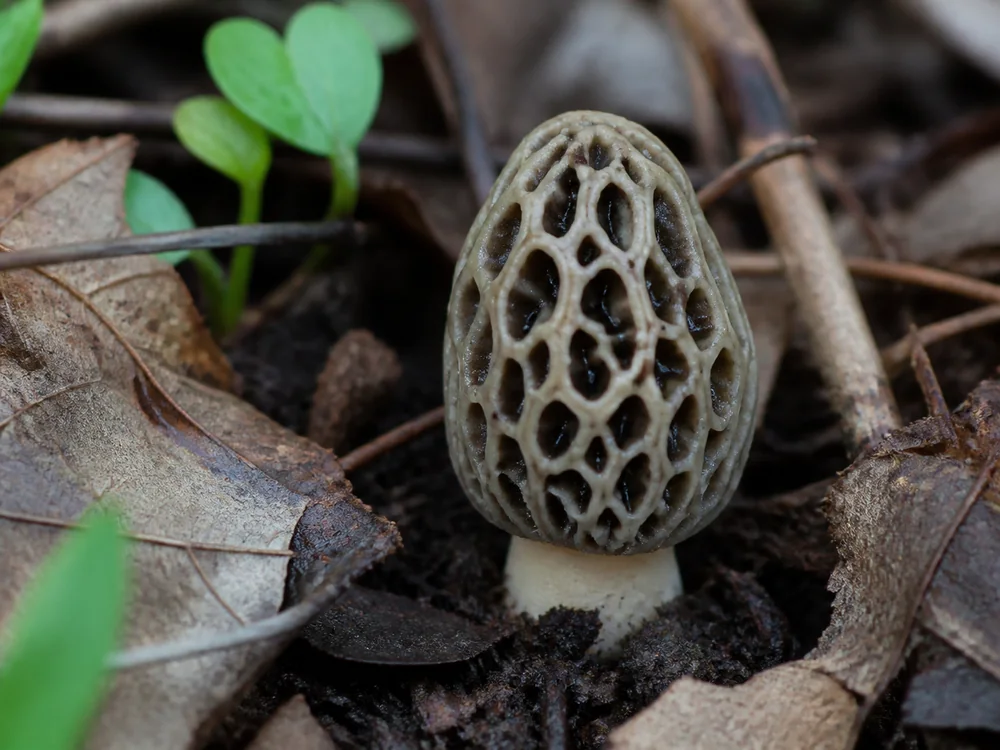
Gray Morel
Morchella esculentoidesOn this page, gray morel means the young gray form of the eastern yellow morel Morchella esculentoides. Color…
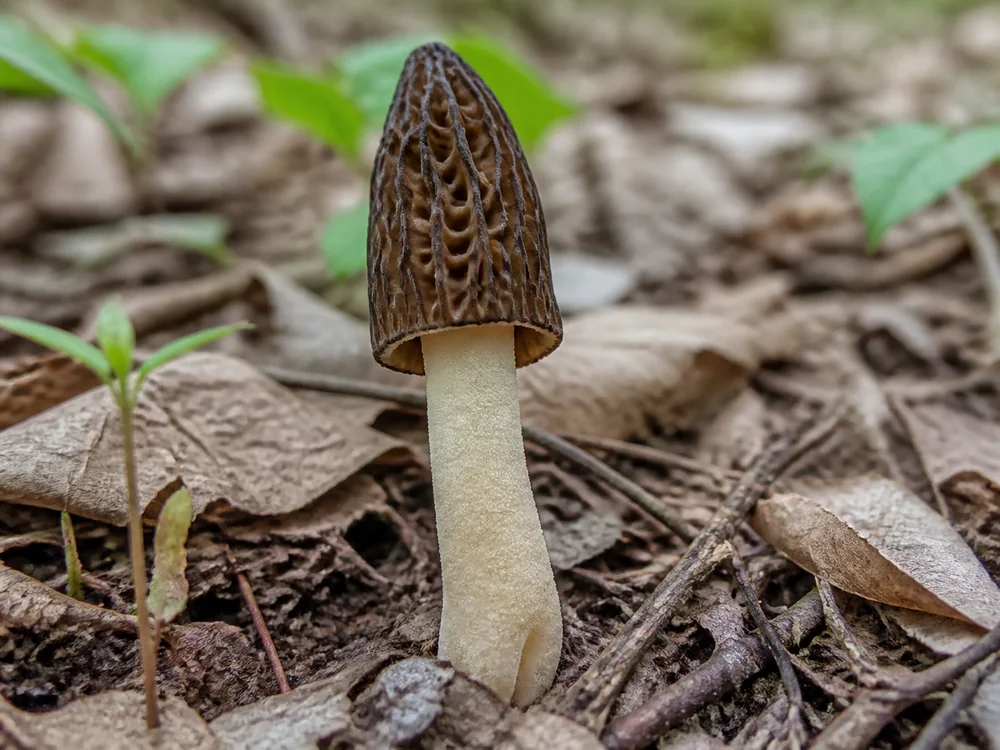
Half-Free Morel
Morchella punctipesThe eastern half-free morel, Morchella punctipes, has a small pitted cap joined partway down a long hollow…
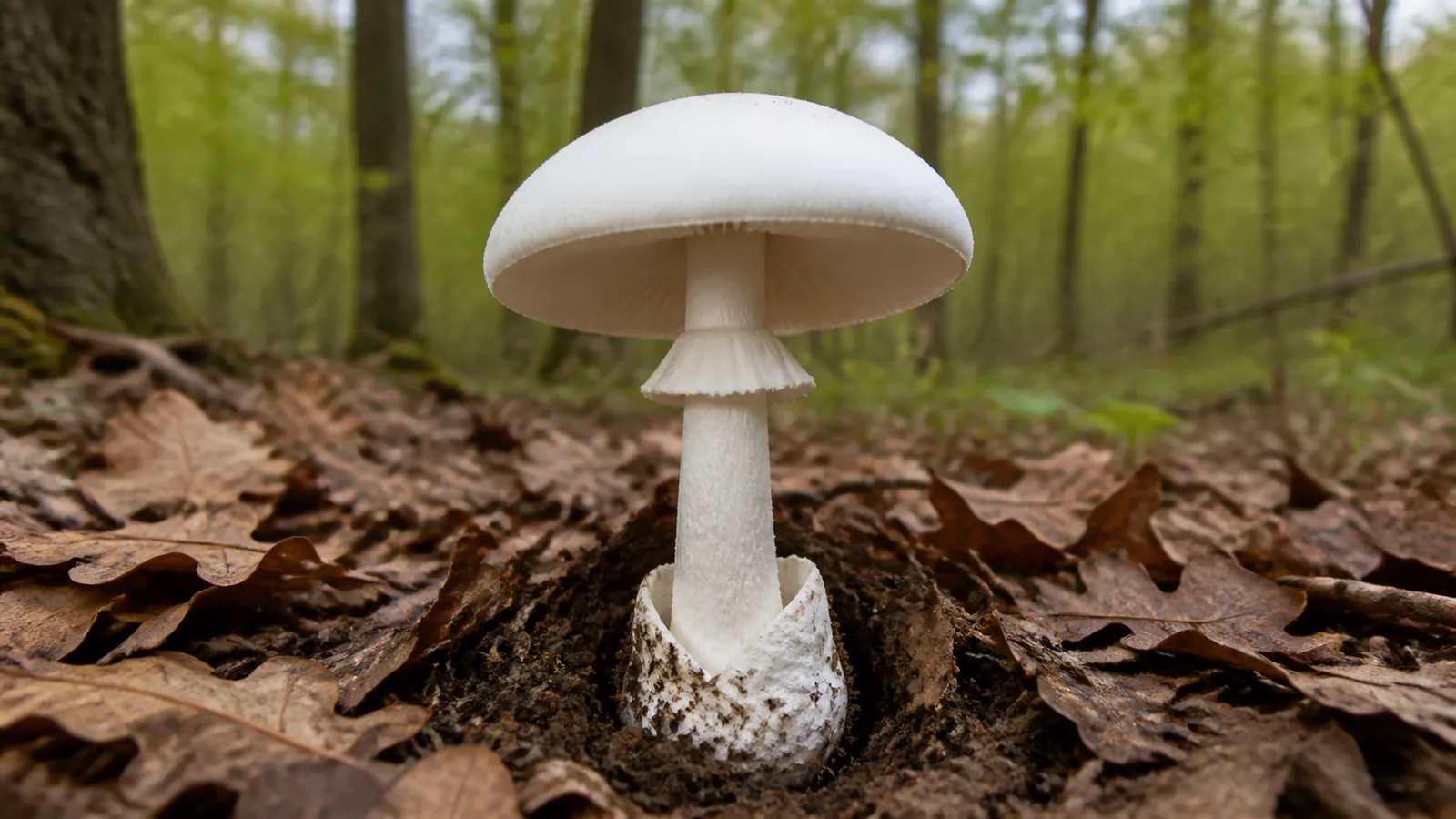
Fool's Mushroom
Amanita vernaFool's mushroom, *Amanita verna*, is a deadly white amanita associated with European broadleaf woodland in…
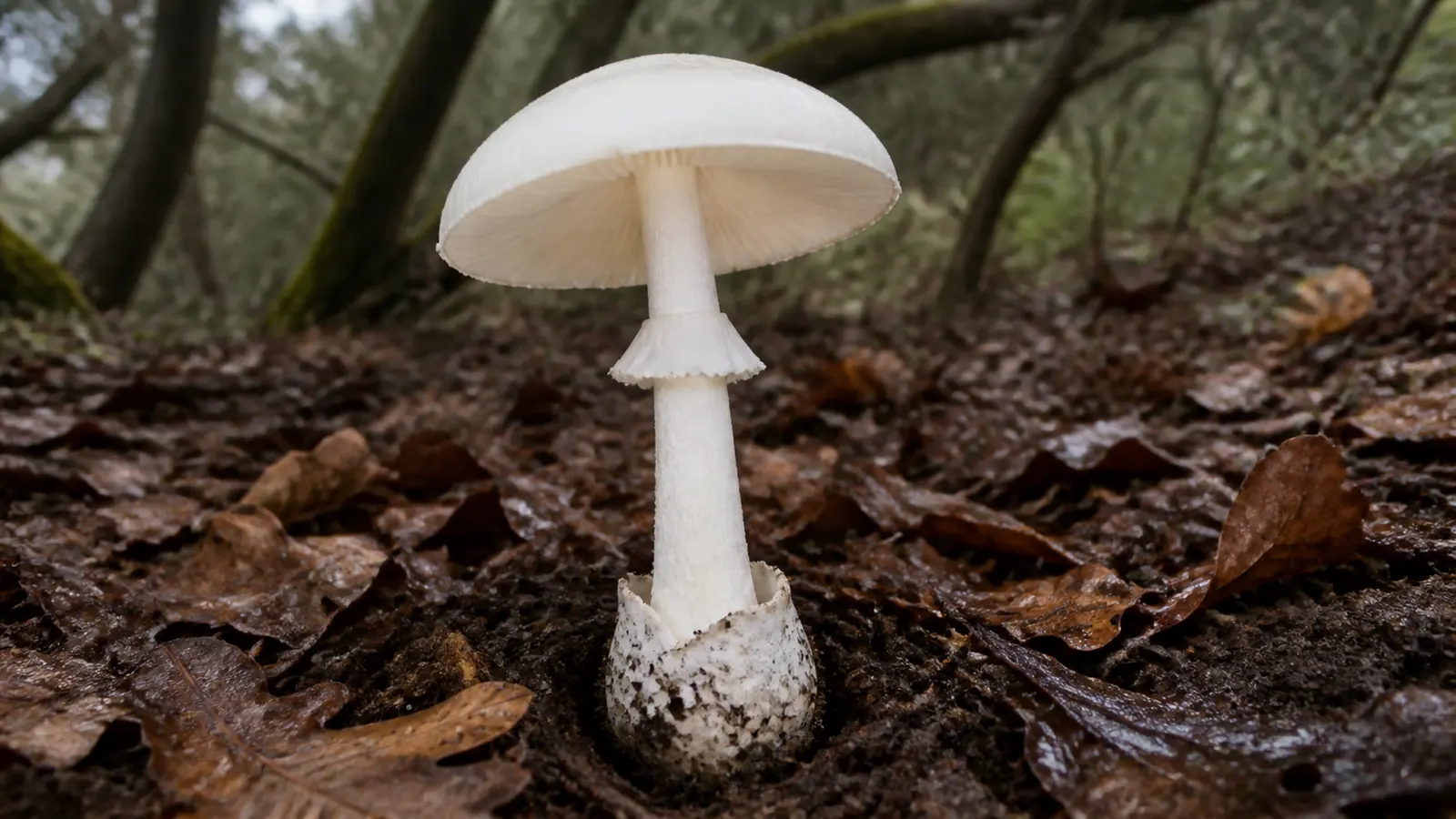
Western Destroying Angel
Amanita ocreataWestern destroying angel is California's native white amatoxin-producing *Amanita*. Its free white gills…
Morel season
As the ground warms after the first mild rains, true morels push up near ash, elm, and old orchards. The window is short, often only a few weeks.
The spring hazard
The false morels fruit at the same time and in the same places. Their toxin, gyromitrin, is not reliably removed by cooking.
Warning
Cut every spring morel lengthwise. A true morel is hollow from tip to base. A false morel is chambered or stuffed inside, and it can be deadly.
Beyond morels
A few other species appear in spring, but for most foragers the season is a focused morel hunt with the hollow test in hand.