Which mushroom does eastern black morel name here?
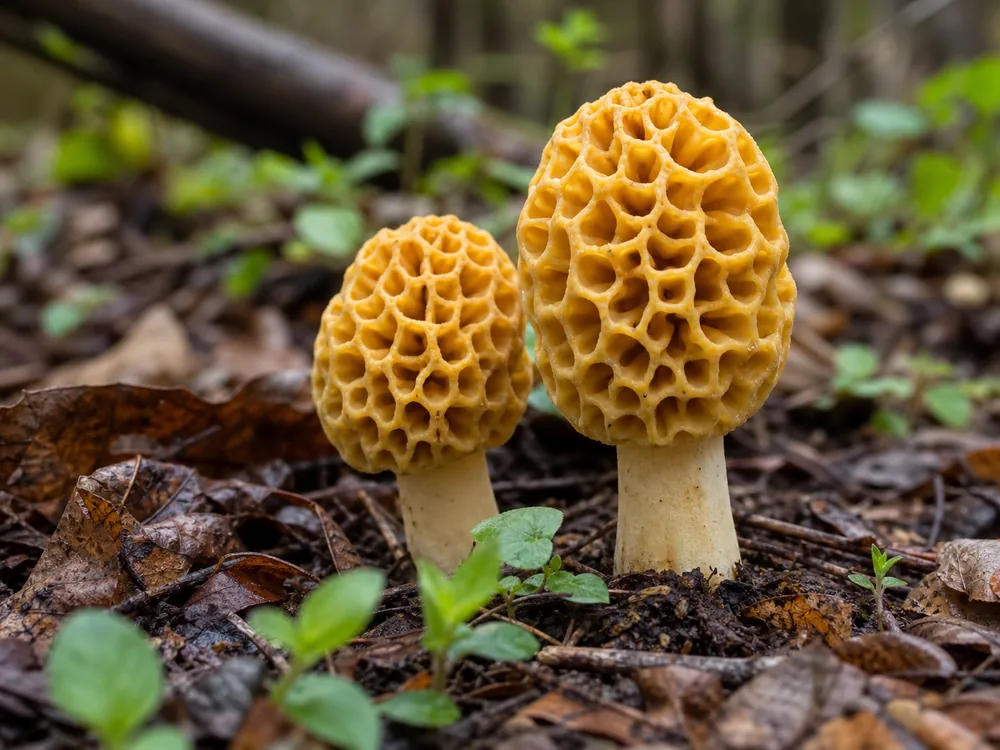
The name black morel covers several dark-ridged species in North America. On this page it means Morchella angusticeps, the widespread eastern species recognized in the 2012 revision of North American true morels.
That geographic boundary matters because western burn morels belong to other species. A dark morel photographed after a western wildfire should not be transferred into this profile simply because its cap looks black.
| Candidate | Evidence that fits | Boundary that prevents a shortcut |
|---|---|---|
| Morchella angusticeps | Eastern hardwood setting, mainly vertical pits, darkening ridges, and a shallow cap groove agree | A hollow cavity or dark color alone does not prove the species |
| Morchella punctipes | True pits and a hollow interior agree with a morel | The cap attaches around mid-stem and its lower edge hangs free |
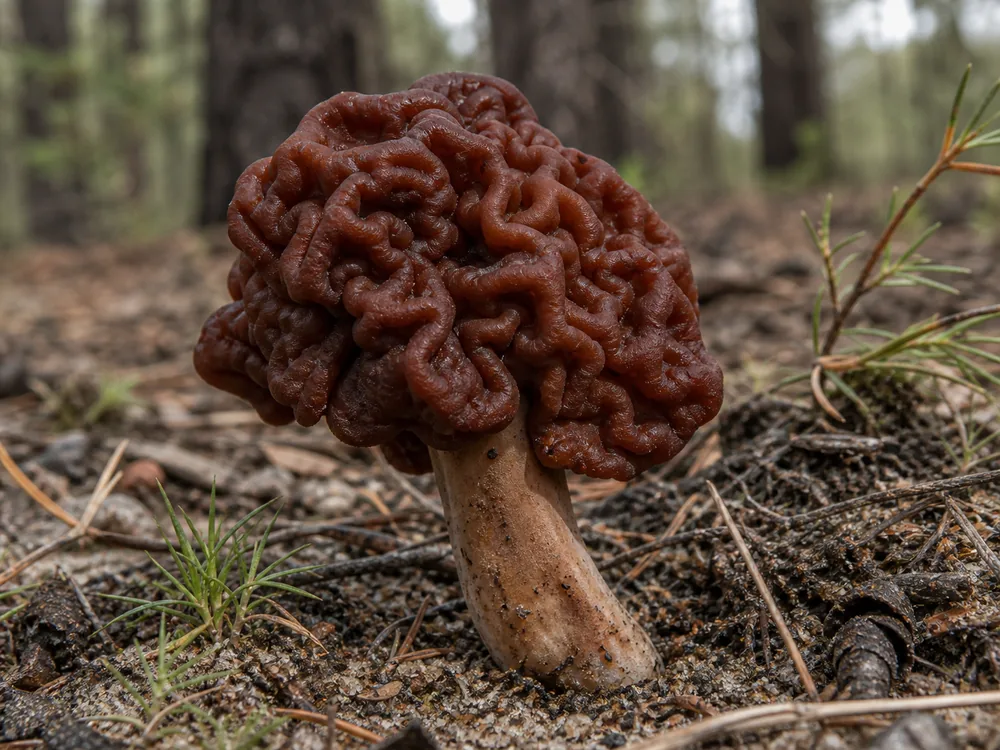
| Gyromitra esculenta | It may occur in spring and look dark from a distance | A folded cap and chambered or cottony interior reject a true morel identification |
A mature cap often looks like dark longitudinal lines laid over lighter pits. Young specimens may have tan ridges, so waiting for a nearly black color would miss part of the species' normal development.
Identification therefore moves from name and range to a combination of structures. The cap, attachment, interior, substrate, and nearby trees should agree before the collection is assigned to this species.
Why does a hollow cut not prove an eastern black morel?
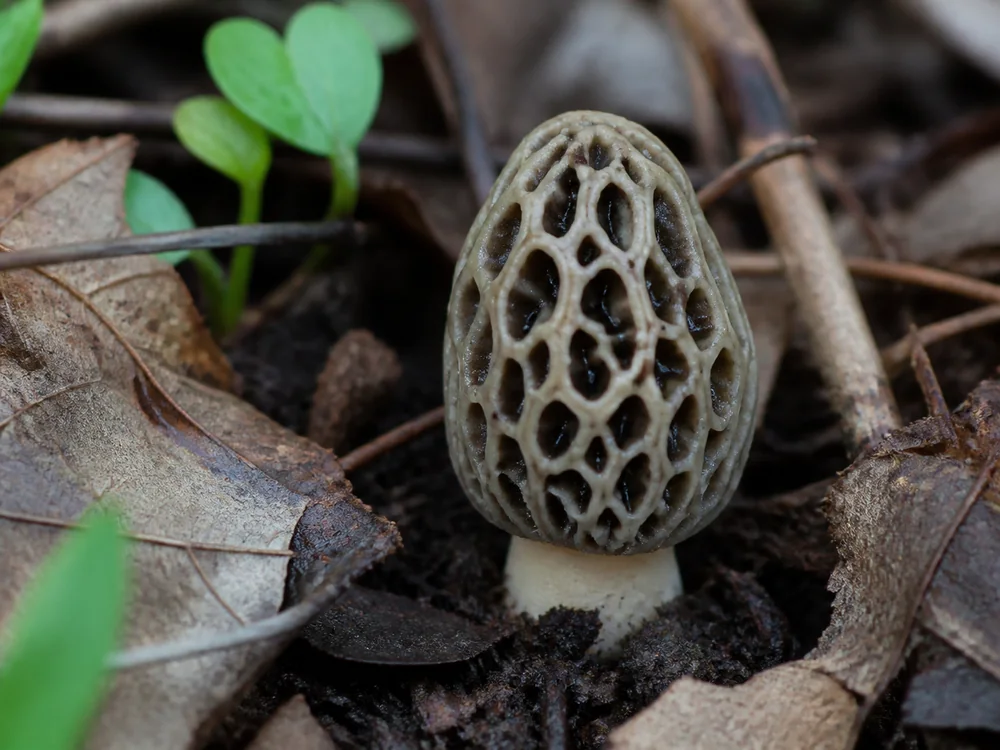
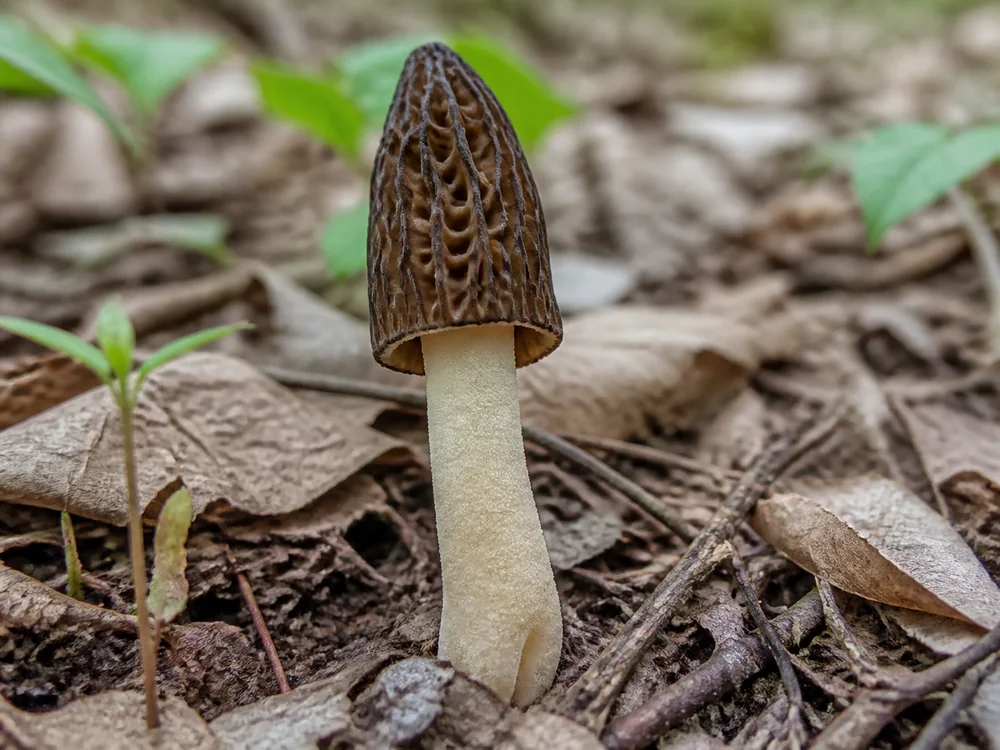
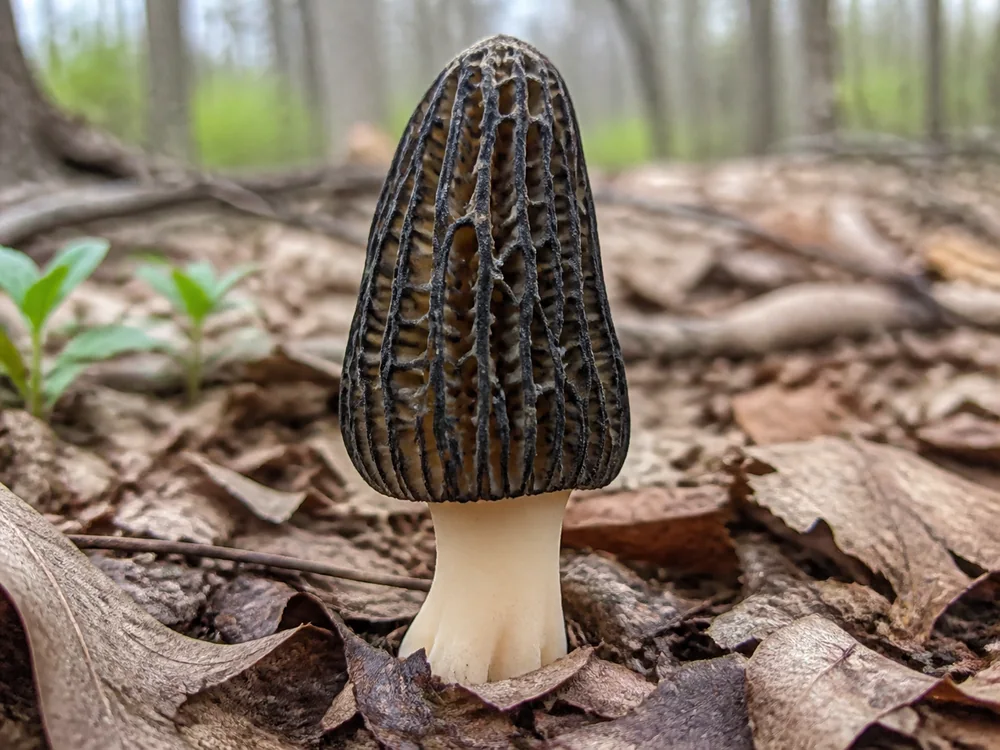
Usually conical or bluntly conical, 3 to 8 cm tall and 2 to 5 cm wide, with pits arranged mainly in vertical rows. The ridges begin tan to brown and darken to dark brown or black as the mushroom matures, while the pits remain brownish yellow to yellowish.
No gills. The pitted surface of the cap carries the spores.
Whitish to pale cream, hollow, and joined to the cap beneath a small groove rather than a long free-hanging skirt.
Thin and brittle, with a hollow interior and no distinctive odor reported as a field mark.
Begin with the cap as a whole. Morchella angusticeps is usually conical or bluntly conical, commonly taller than wide, and its pits are arranged mainly in vertical rows.
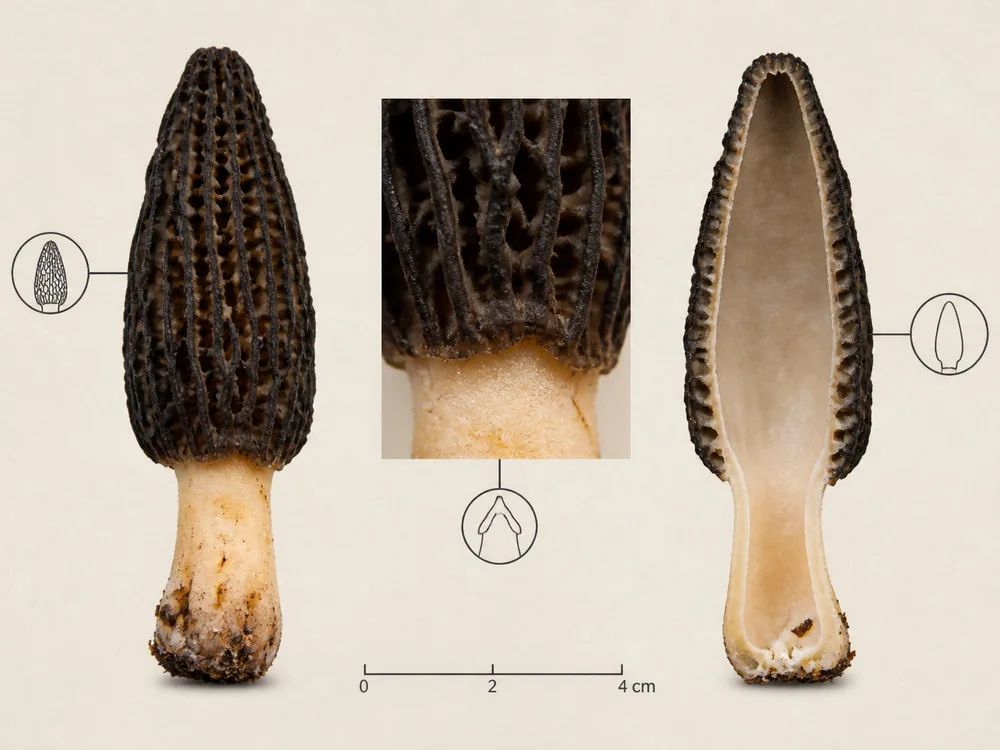
The ridges change as the fruit body matures. They are tan to brown and relatively flat when young, then become dark brown to black and may sharpen or erode, while the pits remain brownish yellow to yellowish.
The attachment is more precise than the phrase fully attached suggests. The cap meets the stem above a small groove about 2 to 5 millimeters deep, which differs from the conspicuous free-hanging lower cap of Morchella punctipes.
Cut the complete mushroom from cap tip through stem base. A filled or many-chambered interior rules against a true morel, but a single hollow cavity is a rejection check rather than proof of M. angusticeps because other Morchella species are also hollow.
- Photograph the intact cap, attachment, stem base, substrate, and nearby hardwoods.
- Keep the location and date with the specimen so eastern range and spring season can be evaluated.
- Retain a complete specimen when an expert needs to compare it with Morchella septentrionalis.
- Exclude any collection with a folded cap, internal cottony material, or several chambers.
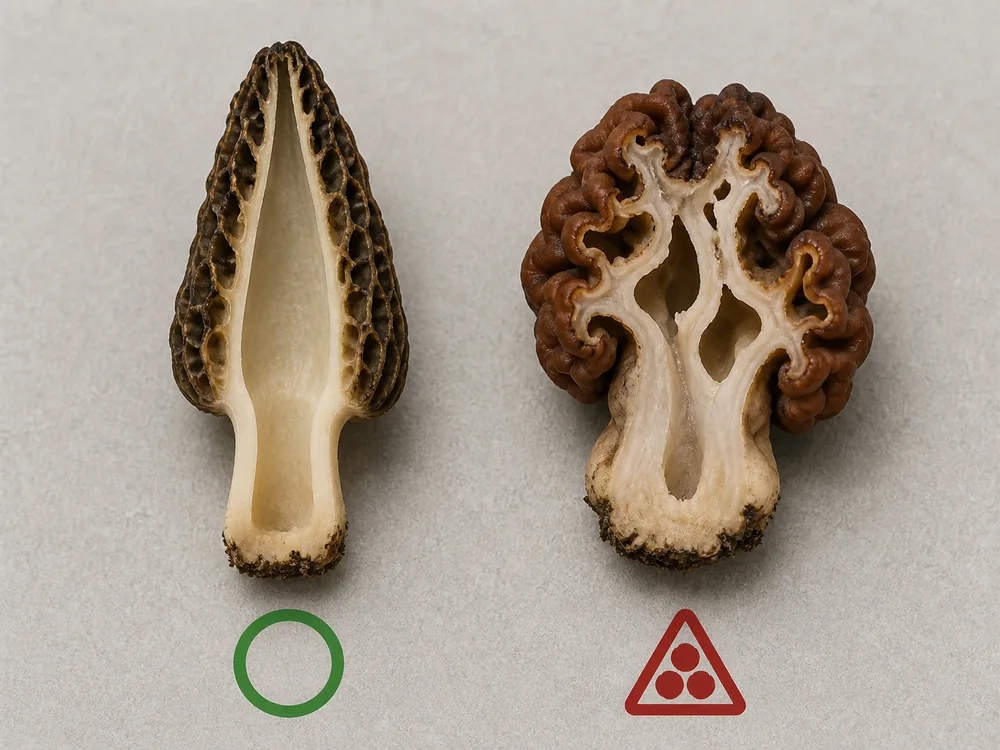
A false morel can be rejected when its folded cap and divided or filled interior are visible. A half-free morel requires a different comparison because it has true pits and a hollow interior, but much of its cap edge hangs free from the stem.
Which spring mushrooms can mimic the eastern black morel?
Confirm the pitted cap, the small groove at its attachment, and the full interior together. A lengthwise cut can reject a false morel, but the hollow chamber alone cannot establish Morchella angusticeps.
A false morel has a folded or lobed cap rather than regular pits and ridges. Its interior may contain cottony material or multiple chambers instead of the open cavity seen in a true morel.
The half-free morel is hollow too, but the lower part of its cap hangs free from the stem. Morchella angusticeps has only a shallow groove at the cap attachment.
In the northern part of its range, Morchella septentrionalis can be difficult to separate in the field. It tends to be smaller, has smaller spores, and often occurs near or directly from decaying wood, so a photograph alone may not support a species-level identification.
What does genus-level food evidence mean for eastern black morels?
Do not move a field collection into the kitchen until every specimen has been identified. A lengthwise cut exposes the attachment and interior for inspection, but that final check still does not replace expert confirmation.
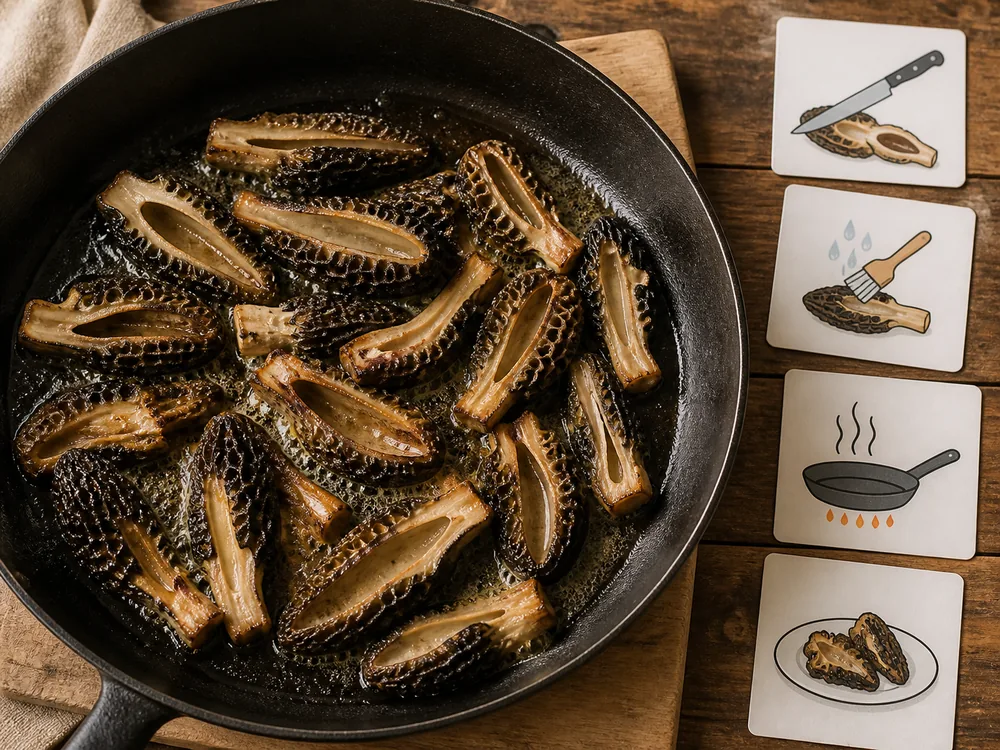
True morels should never be served raw or undercooked. FDA guidance says cooking can reduce the risk of illness but cannot guarantee safety, and it advises discarding specimens that are bruised, discolored, slimy, or otherwise spoiled.
NAMA case reports also document reactions after both raw and cooked Morchella meals. Because the registry is voluntary and many reports identify only the genus, it can show that adverse reactions occur but cannot define a universal preparation formula for this species.
If illness follows a mushroom meal, contact a health professional or Poison Control promptly. Keep uncooked material, photographs, and location notes available because those records may help identify what was eaten.
Where does the eastern black morel fruit, and which western burn morels are excluded?
Morchella angusticeps fruits on the ground under hardwoods from March through May and is widely distributed east of the Rocky Mountains. White ash, green ash, and tulip tree are specifically documented associates.
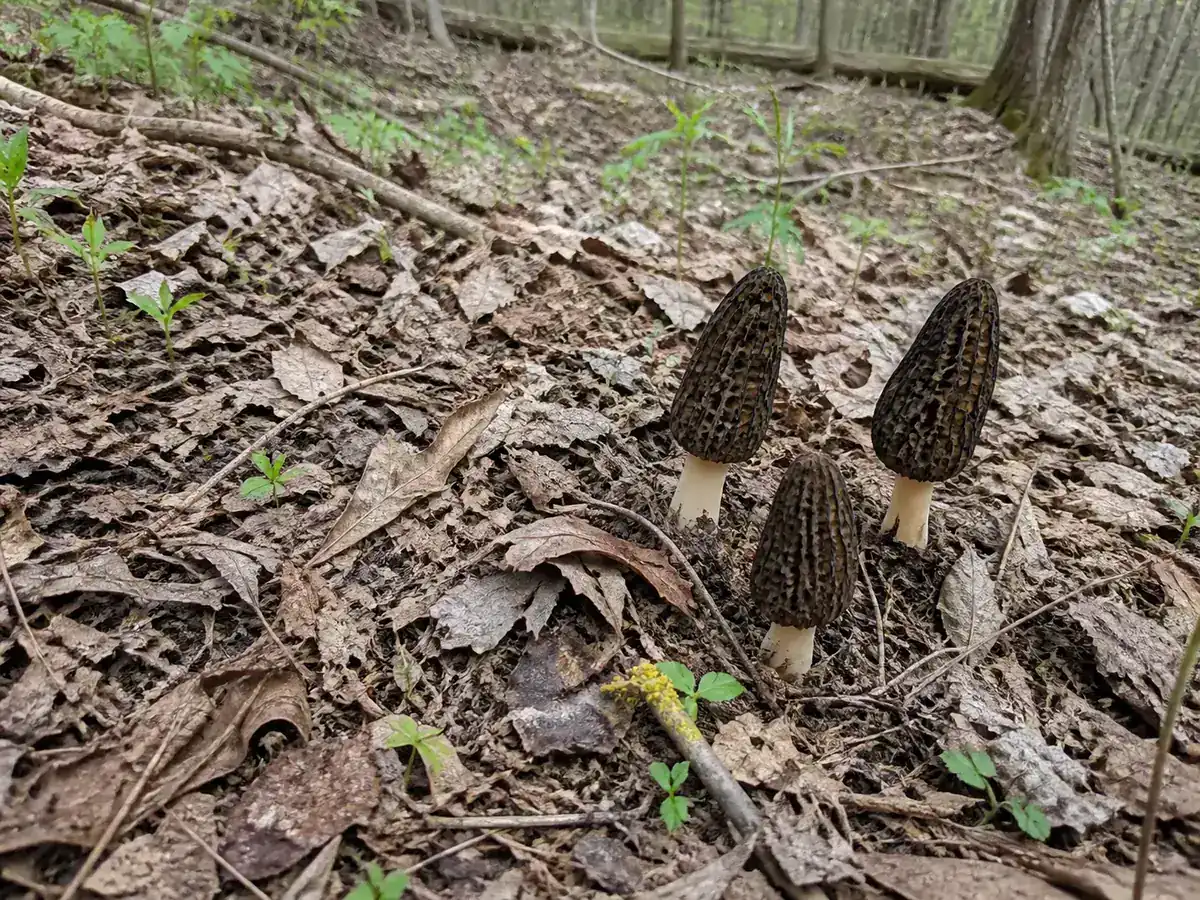
The ecological mode is not settled as a simple label. Published descriptions allow that the fungus may act as a decomposer and as a root associate at different points in its life cycle, so a nearby tree is useful context rather than a claim about one fixed relationship.
Key takeaway
Western wildfire reports do not establish this species | Burn-associated black morels of western North America include other Morchella species. Keep a western post-fire collection outside an M. angusticeps identification unless species-level evidence supports the name.
North of roughly the 44th parallel, compare collections with Morchella septentrionalis. That species is often smaller and may grow near or from decaying wood, but microscopic or molecular evidence can be needed when visible characters overlap.
The practical habitat record should stay concrete. Photograph the ground surface, record whether the mushroom arose from soil or wood, identify nearby hardwoods when possible, and keep the exact locality within the documented eastern range.
Can black morels be grown?
The reviewed sources describe wild Morchella angusticeps ecology but do not establish a repeatable home-cultivation method for this species. Commercial or experimental results involving other morels should not be presented as instructions for growing eastern black morels.
Do black morels have medicinal use?
No species-specific clinical evidence in the reviewed sources supports using Morchella angusticeps to treat or prevent disease. That evidence gap should remain explicit rather than being filled with laboratory claims from other morels or unidentified Morchella material.
What do cooked black morels provide?
Species-specific nutrient measurements were not found in the reviewed evidence. General nutrient values for morels or mushrooms cannot be assigned to Morchella angusticeps with enough precision to support amounts or health claims here.
Taxonomy & Naming
The 2012 North American revision applied the name Morchella angusticeps to a phylogenetic species in the black-morel clade. It is an eastern North American name, not a catch-all for every dark true morel on the continent.
Older North American records may appear under European names such as Morchella elata. Modern identifications need to respect the revised geographic and genetic boundaries, especially when a collection comes from western burn habitat or the northern overlap with Morchella septentrionalis.
Black morel questions
How do you distinguish Morchella angusticeps from a false morel?
Where does Morchella angusticeps grow?
When does the eastern black morel fruit?
What is the groove on a black morel cap?
Is a hollow mushroom automatically a black morel?
Can you eat Morchella angusticeps raw?
Sources & References
- Kuo et al., Mycologia 2012 taxonomic revision applying Morchella angusticeps to an eastern North American phylogenetic species.
- MushroomExpert Cap dimensions, vertical pits and ridges, attachment groove, hardwood associations, spring season, eastern range, and northern comparison with Morchella septentrionalis.
- CDC MMWR The 2023 outbreak involved Morchella sextelata and supports genus-level caution about raw and lightly cooked morels.
- U.S. Food and Drug Administration Preparation, spoilage, identification, and illness guidance for morels and other wild mushrooms.
- North American Mycological Association Scope and limitations of the voluntary poison case registry used to document adverse mushroom reactions.