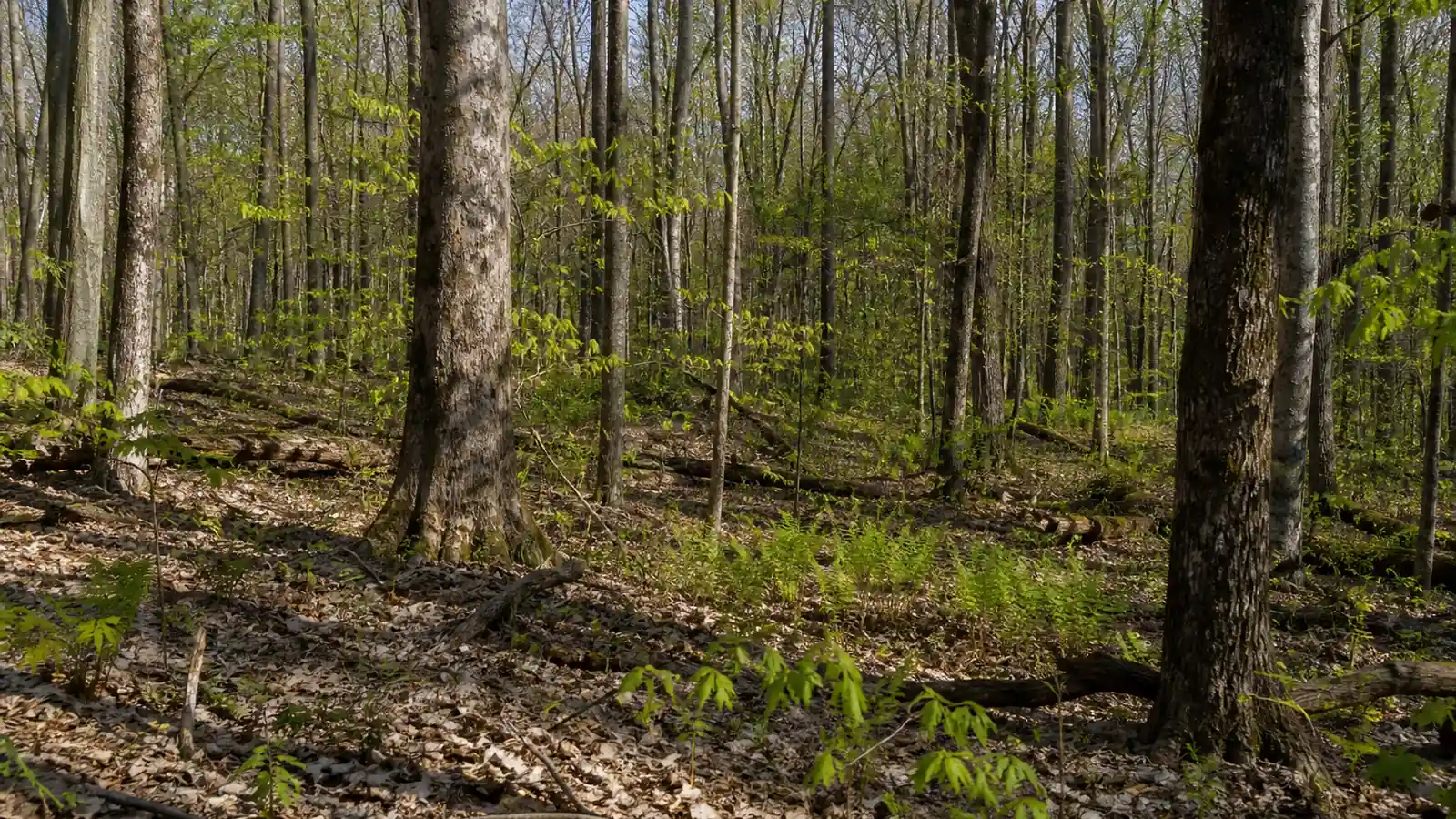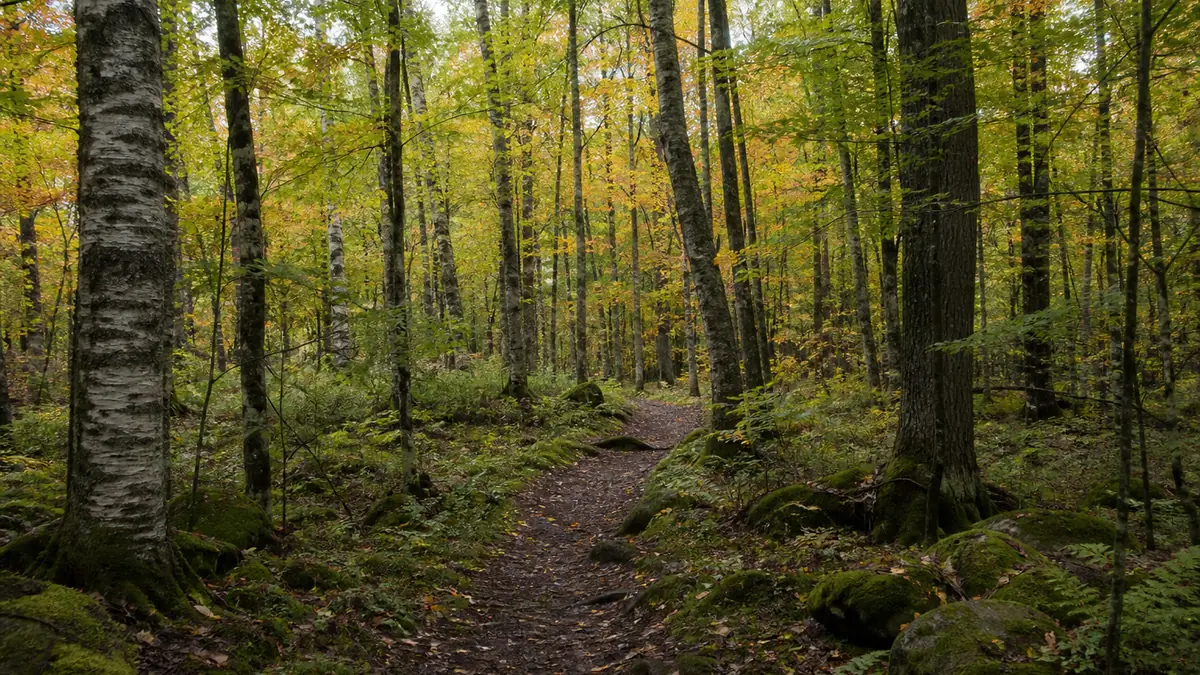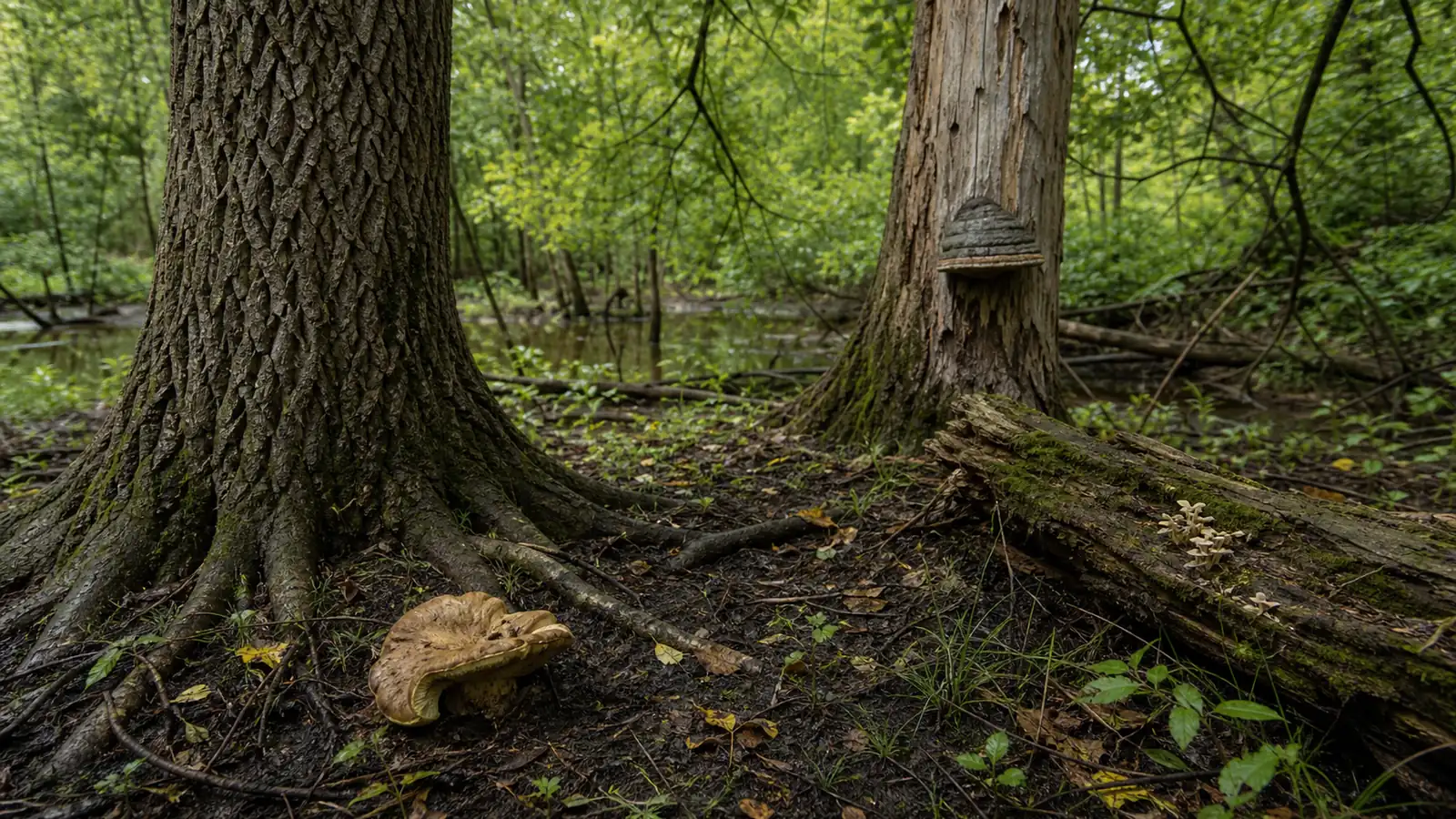
Ash-tree bolete fruits from soil near living ash, while morels may occur in the wider habitat and decomposers attach to wounds, roots, stumps, or dead trunks. Exact growth point matters more than the host name alone.
Emerald ash borer creates brittle standing deadwood and a changing decay sequence. Record ash identity, crown and bark condition, mushroom underside, complete base, region, and season before naming the find.
Ash supports mushrooms in three different places, with ash-tree bolete in soil near living roots, possible morels in the wider root zone, and wood-decay fungi attached to wounds, roots, stumps, or fallen trunks.
Begin with the mushroom's exact point of origin, since the host name becomes useful only after you know whether the fungus is using living roots, dead ash wood, or soil that several trees share.
The arrival of emerald ash borer has created large areas of dying ash in North America, but a dead ash is not a reliable shortcut to an edible mushroom. Tree identity, decay stage, region, season, underside, full stem base, and lookalikes still control the identification.
Three Ash Habitats Can Occupy One Small Area
A cap beside an ash trunk can be separated from the tree by several feet of roots and leaf litter. It may belong to a root-associated fungus, buried wood, or another tree whose crown overlaps the site.
Mushrooms attached to the root flare, trunk, or a branch are using wood. Their position also tells you where decay evidence matters, because a cluster on a cut stump raises a different tree-care question from repeated fruiting at the base of a living ash.
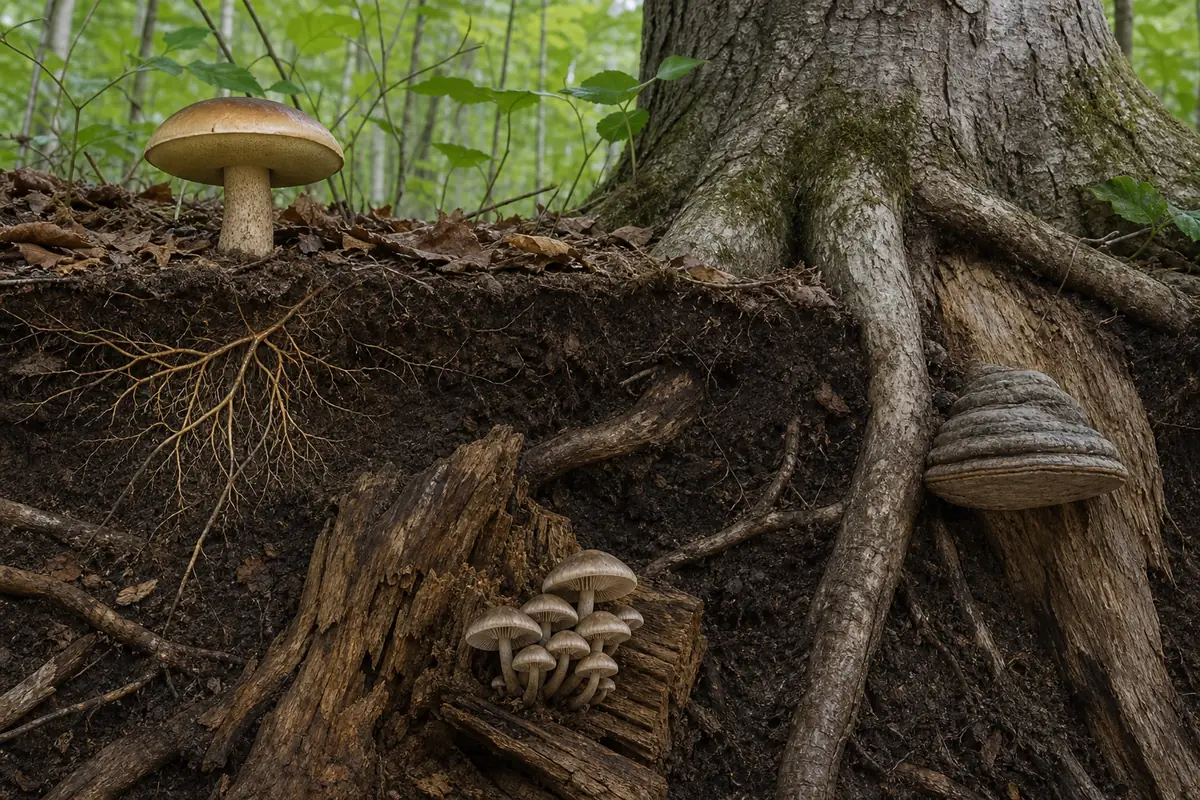
| Fruiting position | Strongest working explanation | Evidence needed next |
|---|---|---|
| Soil beneath a living ash | Root-zone association or an unrelated soil fungus | Nearby trees, full stem base, underside, season, region |
| Soil near an old removal site | Buried stump or roots may be feeding a decomposer | Site history, careful attachment check, wood fragments |
| Root flare or lower trunk | Root, butt, or wound decay | Exact attachment, crown condition, cracks, cavities, targets |
| Standing dead trunk | Sapwood or heartwood decomposition | Bark retention, wood hardness, fruiting height, underside |
| Fallen log or stump | Deadwood succession | Decay stage, bark, moisture, annual or perennial growth |
The attachment zones in the table become easier to test when soil, buried roots, and exposed wood remain visible together.
Ash bark alone cannot prove the host, but opposite branching, compound leaves, paired buds, and the intersecting diamond-shaped ridges of mature bark create a stronger combined record.
When leaves are absent, photograph twigs from more than one branch. Opposite buds and branch scars are stronger evidence than one patch of ridged bark, which can resemble walnut, hickory, or older maple from a distance.
Ash-Tree Bolete Has an Unusual Underground Association
Ash-tree bolete, Boletinellus merulioides, is the most distinctive soil mushroom tied to ash in eastern and central North America. It forms irregular tan to brown caps, often with an off-center stem, and the underside has broad radiating pores and cross-veins rather than ordinary blade-like gills.
Because the fungus is linked with root-feeding aphids rather than the direct ectomycorrhizal partnership formed by many other boletes, near ash does not mean attached to ash roots in the usual sense.
The useful combination is the off-center form plus the coarse pore network, not either tan cap color or ash habitat alone.
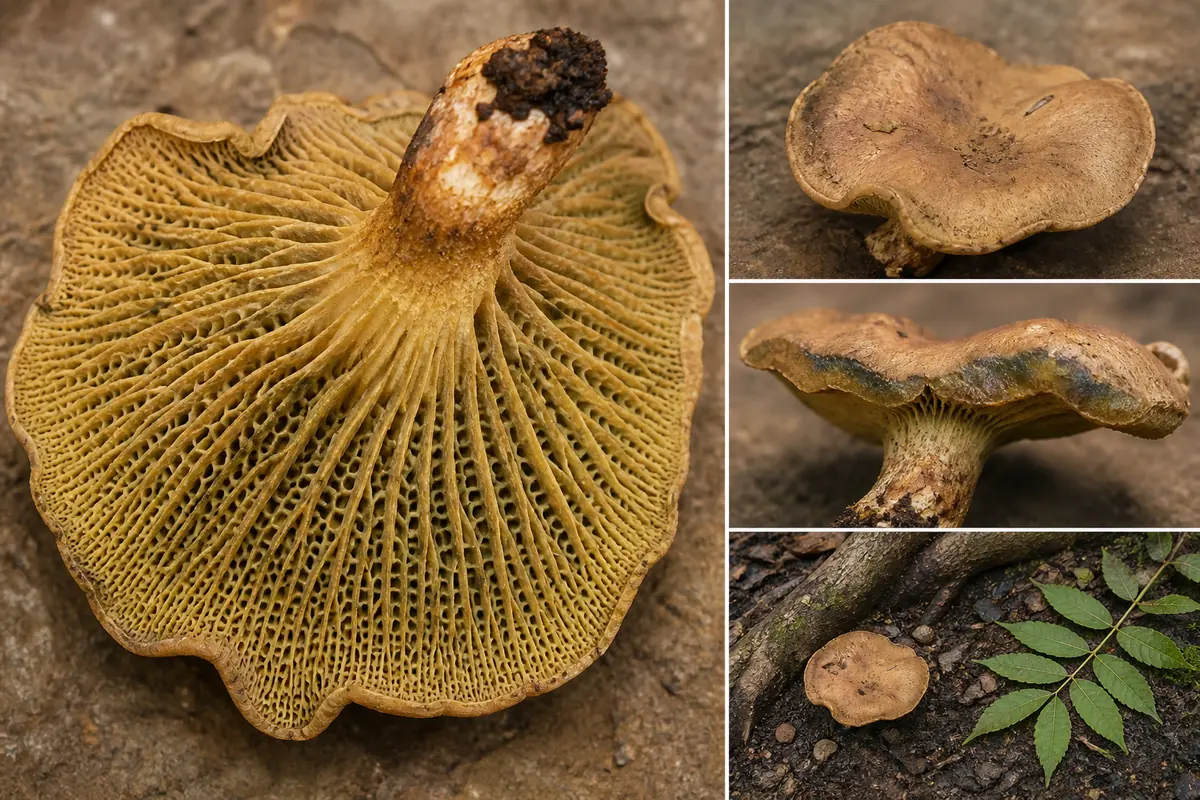
Missouri Department of Conservation lists cap widths of roughly 2 to 5 inches. Size varies with age and moisture, so a small specimen should not be rejected while its underside and attachment remain unchecked.
The mushroom is described as edible in some field references, but host association is not a food test. Condition, contaminants, individual tolerance, and a complete regional identification still matter, and a first meal from any confirmed wild mushroom should be modest.
ForagingMushroom foraging laws in Germany: protected species and small quantitiesEmerald Ash Borer Changes the Deadwood Clock
Emerald ash borer larvae feed beneath the bark and interrupt water and nutrient movement. Crown thinning often begins near the top, bark may split over larval galleries, woodpeckers can remove patches of outer bark, and D-shaped adult exit holes may appear.
These signs help date the arrival of dead ash wood, but they do not identify a mushroom and a borer-killed ash does not create a guaranteed morel patch.
Holding the trunk position constant makes crown loss, bark release, and the transition to ground-contact wood readable as one progression.

Morel reports around dead ash are inconsistent and region-dependent. Ash may occur in the same moist bottomlands, old fields, or mixed woods that support morels, while widespread ash mortality also creates an obvious tree for hunters to notice.
That overlap does not establish a universal biological partnership, so search suitable spring habitat only where local experience supports it and confirm a true morel by its deeply pitted cap, attachment, and hollow interior before any food decision.
Do not strip bark or dig into roots to date a tree. Those actions remove habitat evidence, can expose people to falling bark and limbs, and do not improve mushroom fruiting.
ForagingMushroom foraging laws in the UK: what is actually legalBrackets and Clusters Can Signal Structural Decay
Ash conk, Perenniporia fraxinophila, forms hard perennial brackets on ash in parts of North America. Other decay fungi can produce shelf-like conks, honey-colored clusters, or pale fans, so the common tree name cannot close the mushroom identification.
Dead ash can also support oyster mushrooms and cool-weather velvet shank where their ranges and seasons overlap. Oysters should show true gills running down a lateral attachment, while velvet shank combines an orange-brown cap, pale gills, and a dark velvety lower stem that must be compared against dangerous brown-spored wood mushrooms.
Those names are candidates for a complete record, not a harvest list. A pale fan photographed from above can hide pores or false gills, and a honey-colored cluster can belong to several unrelated genera.
The fruiting location does carry practical meaning. A conk four feet up the trunk points to affected wood at that height, while mushrooms at the root flare may involve load-bearing roots or the lower stem.
| Observation | Mushroom record | Tree decision |
|---|---|---|
| Hard bracket on a standing trunk | Photograph pore surface, edge, annual layers, height, and attachment | Inspect crown, cavities, cracks, lean, and targets around the tree |
| Cluster at the root flare | Preserve complete bases and show whether caps share one point | Arrange prompt assessment if roots move, bark separates, or crown decline is visible |
| Fans on a cut stump | Record gills or pores, flesh, odor, and spore deposit | Manage only if the stump or decayed roots affect site use |
| Small caps on a fallen log | Document wood hardness, bark, moisture, and cluster pattern | Leave habitat intact unless collection is lawful and useful |
The next view keeps the fungal record beside the crown and target evidence without treating them as one diagnosis.
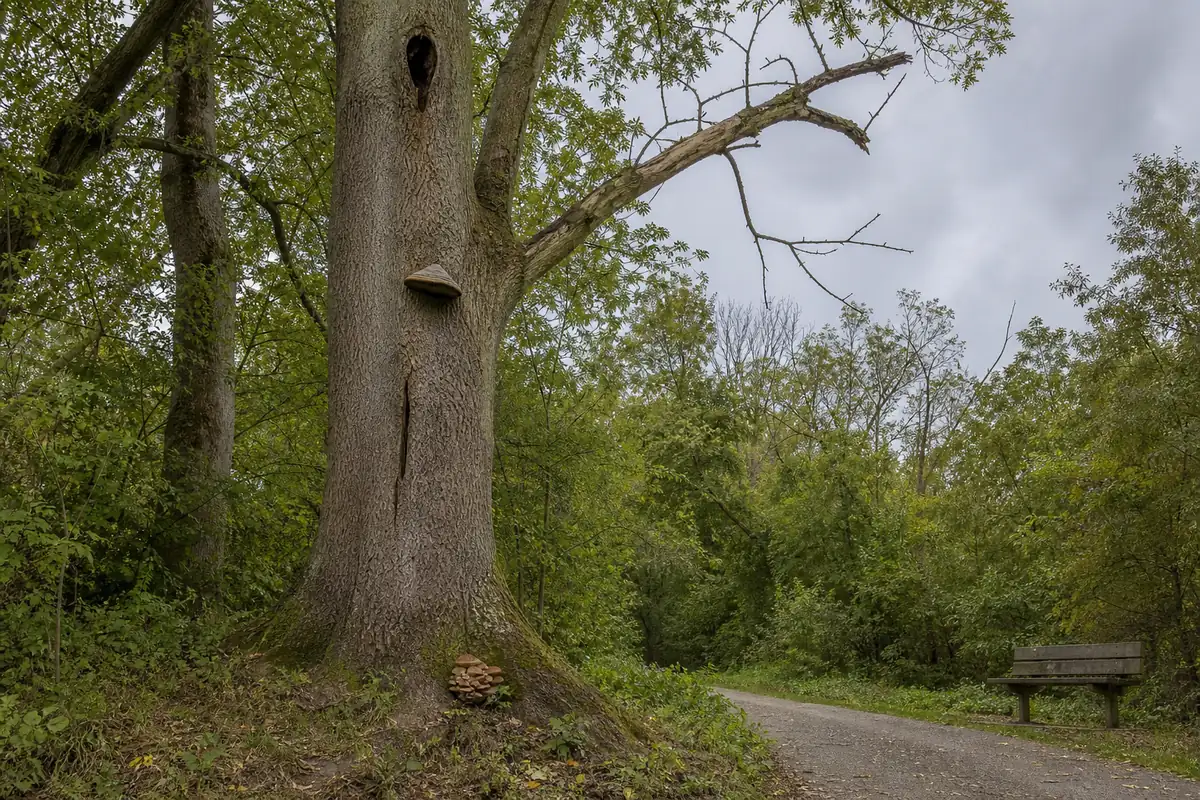
The pictured evidence still cannot justify stepping into the reach of a brittle snag.
Warning
Stay outside a dead ash target zone | Emerald ash borer can leave standing ash brittle, with branches or trunks that fail without obvious warning. Do not climb, strike, shake, or stand beneath a snag to photograph a mushroom.
Removing a conk does not remove fungus established inside wood. Leave the fruiting body when safe so an arborist or local identifier can examine its attachment and condition.
Build a Record That Separates Host, Fungus, and Hazard
Take the first photograph from far enough away to show the entire ash and the mushroom's position. Then move closer only when the tree has no overhead or trunk-failure hazard.
Use three linked evidence sets rather than one close-up. The tree record proves ash and its condition, the fungus record preserves identification characters, and the site record explains other possible hosts and buried wood.
The recording sequence works best when the photographer never has to step beneath a brittle snag. A long view can capture the crown and target area, a zoomed attachment view can establish substrate, and a specimen close-up is attempted only when the ground and overhead wood are safe.
- Photograph opposite twigs, buds, compound leaves when present, bark, and the whole crown.
- Show the cap in place with soil, root, stump, trunk, wound, or log visible in the same frame.
- Capture the cap, underside, side profile, complete stem base, bruising, and several ages.
- Record region, date, recent rain, soil moisture, nearby trees, and whether the patch returns.
- Keep each candidate in a separate paper packet if collection is lawful and needed for identification.
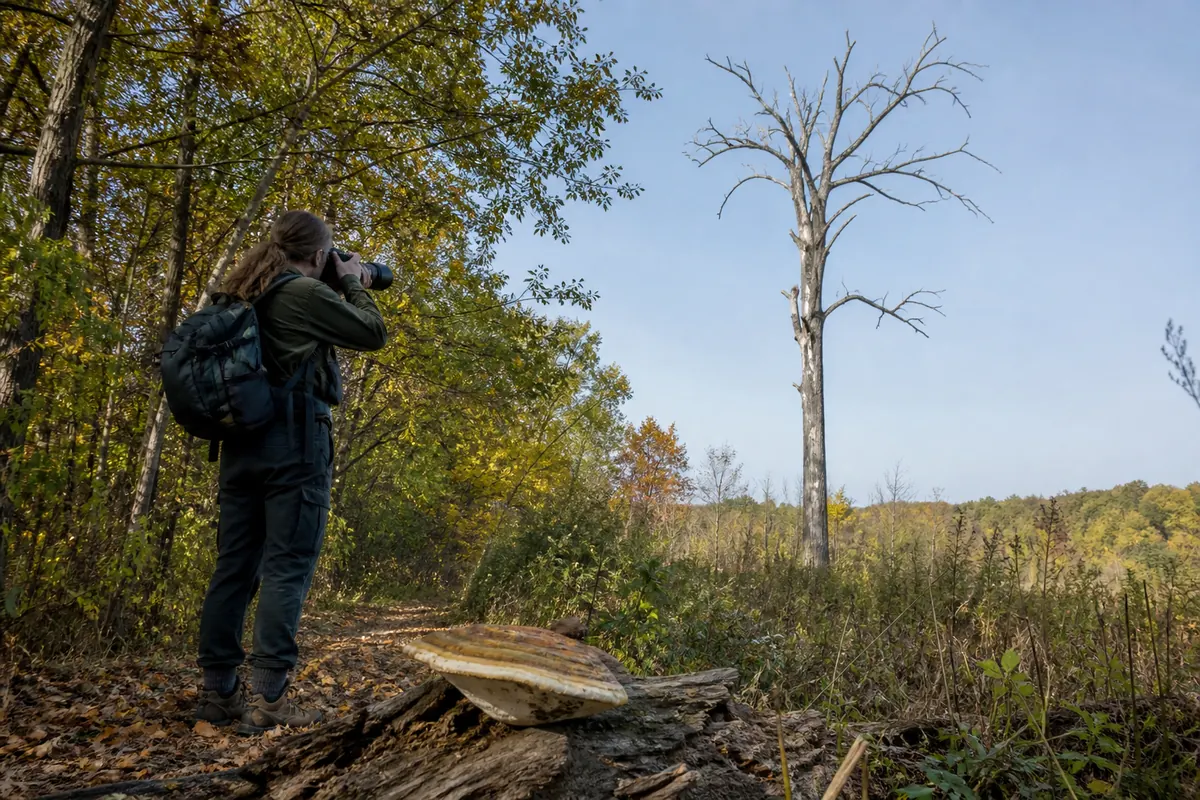
Ash-tree bolete, morels, wood oysters, brackets, and small brown deadwood mushrooms require different confirmation. A host-tree guide can narrow the field, but it cannot replace a current regional key or an experienced local identifier.
Never taste an unknown mushroom or treat an app match as clearance to eat. On a dead or declining ash, finish the hazard decision before moving closer for a better identification photograph.
Sources & References
- Missouri Department of Conservation Ash-tree bolete habitat and field characters.
- USDA Forest Service Ash pests, decline, and fungal disease evidence.
- Oregon State University Extension Ash conks and decay implications.
- USDA Forest Service Emerald ash borer biology and symptoms.