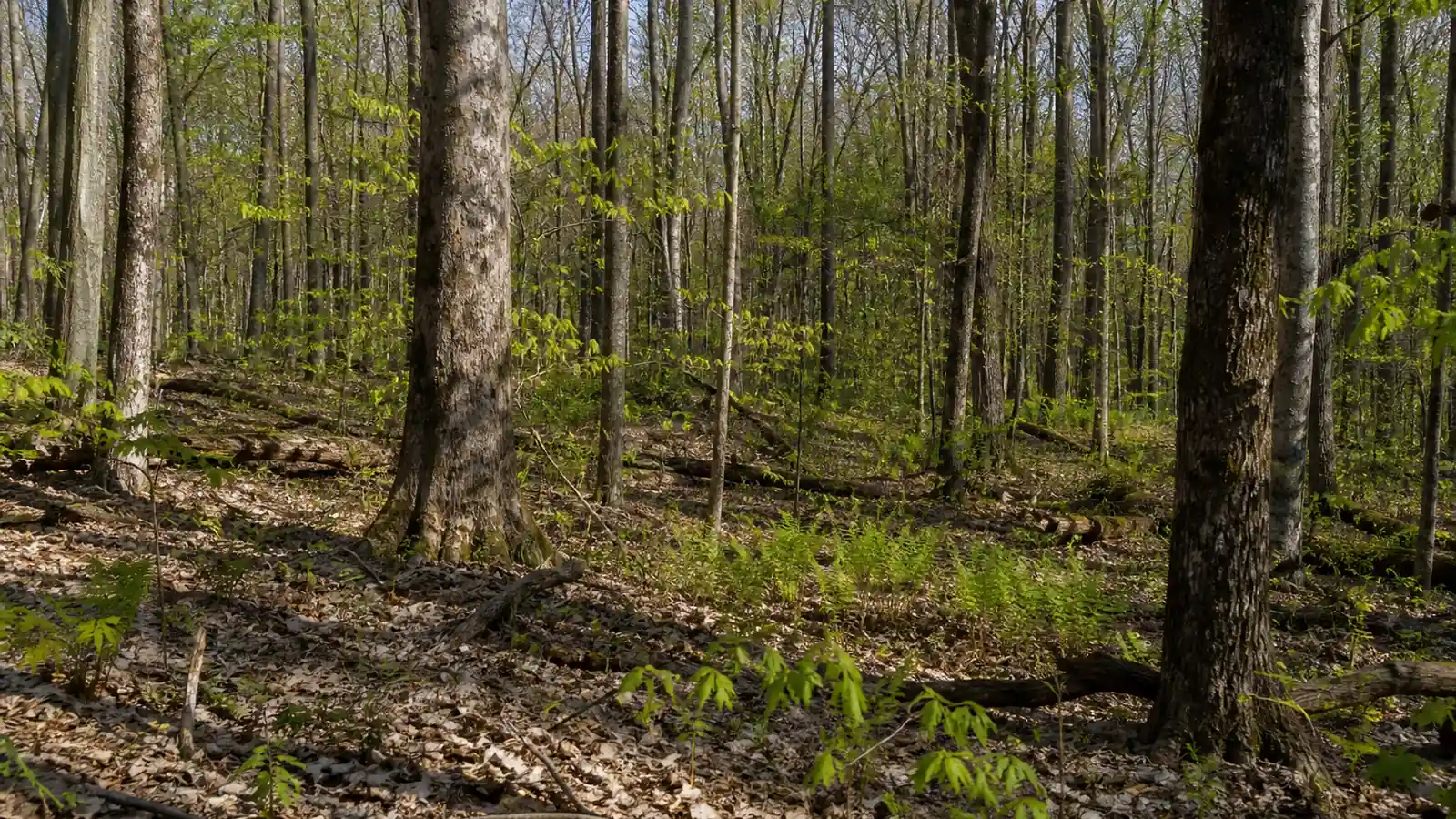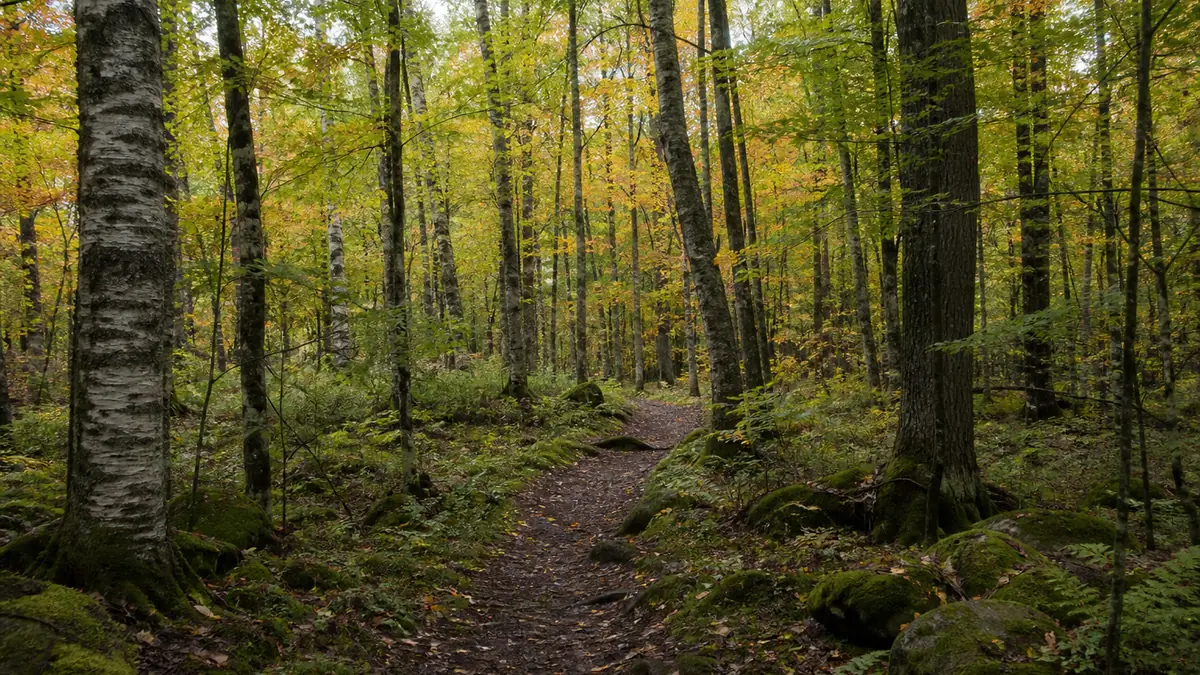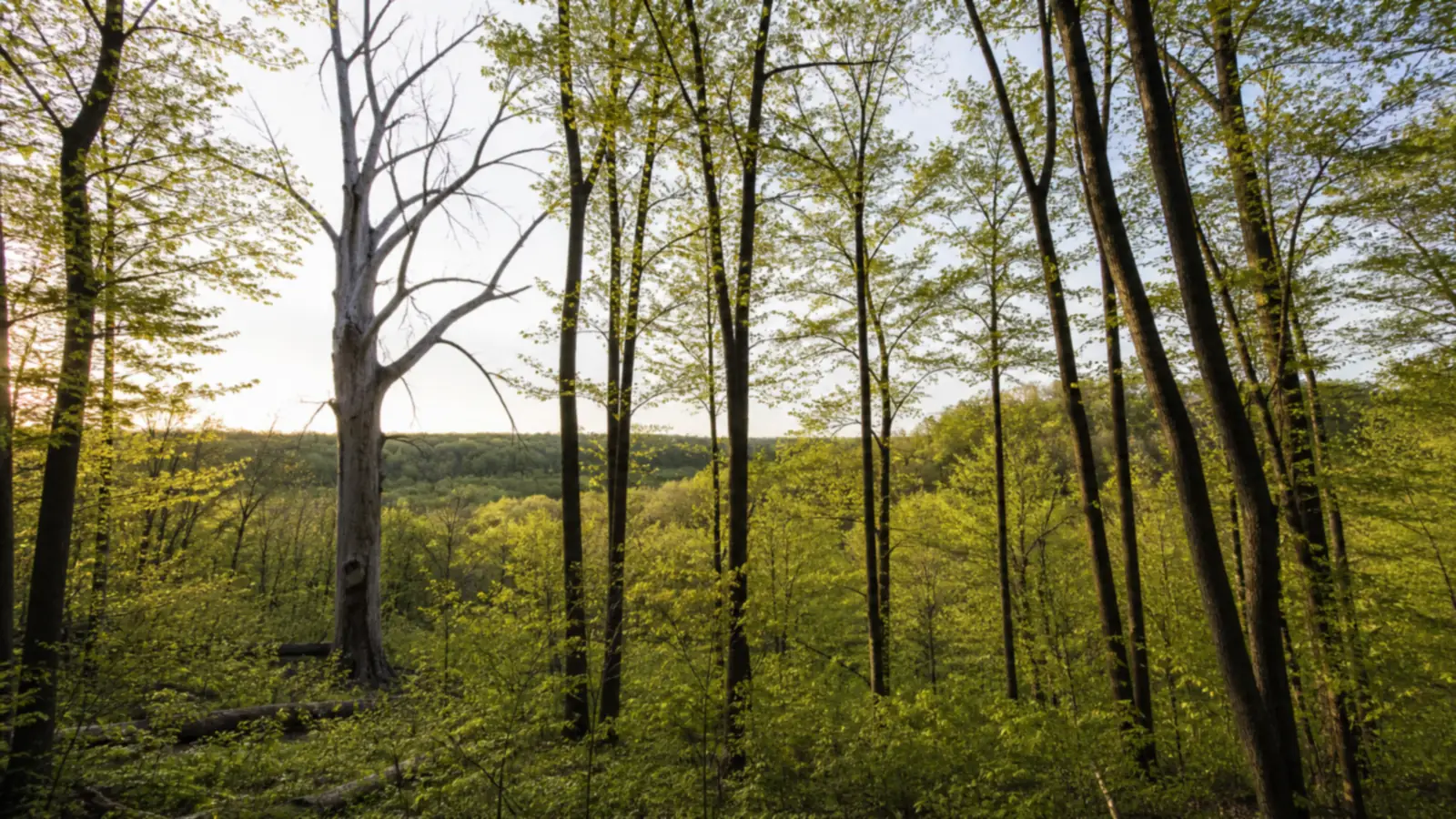
Minnesota morels run from late April in the south into early June in the far north, and most of them grow beside a declining tree. Because morels appear near a dying elm for only two or three years, a Minnesota route is a rotating list of trees that has to gain new ones every spring rather than a fixed set of spots.
Minnesota morels run from late April in the south into early June in the far north. That is the easy half of the answer.
The harder half is that most Minnesota morels grow beside a dying tree, and that tree only pays for two or three springs.
A hunter who understands that stops losing spots and starts replacing them.
Which trees carry Minnesota's morels
Minnesota thought highly enough of this mushroom to make it official. The morel was adopted as the state mushroom in 1984, which makes Minnesota one of the very few states to name one at all.
The mushroom repaid that by attaching itself to a tree Minnesota was busy losing.
When Dutch elm disease moved through the Twin Cities in the 1970s, the dying elms produced morels on a scale nobody has seen since. Hunters filled multiple bags in a single outing, in city parks and boulevards as much as in the woods.
Boulevard and yard elms still count in the Twin Cities. City trees die on the same schedule as forest ones, and a neighborhood losing an elm is worth noticing if you can get permission to walk the yard.
That history is also why Minnesota hunters talk about trees rather than about places.
A spot in Minnesota is a tree rather than a patch of woods.
That wave passed, but the pattern it taught did not. Minnesota morel hunting is still organized around elms in decline, and the rest of the host list sits behind that.
Why elm and not oak is a fair question. True morels favor trees under stress rather than healthy ones, and a large elm in decline puts an enormous root system into failure all at once.
Size is the other half of it, since a mature root system covers a lot of ground.
A mature elm held a wide circle of ground, and that whole circle is what turns productive as the tree gives out, which is why one good elm can outproduce an acre of healthy woods.

Ash has become the second story on that list, because emerald ash borer is now doing to ash what Dutch elm disease did to elm. The mechanism for a hunter is identical, which is a large tree dying slowly and feeding morels while it goes.
Everything else on the list is opportunistic. Cottonwood bottoms, old orchards and burn ground all produce, but none of them anchor a route the way a declining elm does.
ForagingMushroom foraging laws in France: what the five liter rule meansAn elm gives you two or three springs
Here is the number that changes how a season is planned.
Once a tree is in decline, morels appear near it for two to three years, and then they stop.
That is not a bad year when it happens. That is the tree finishing.
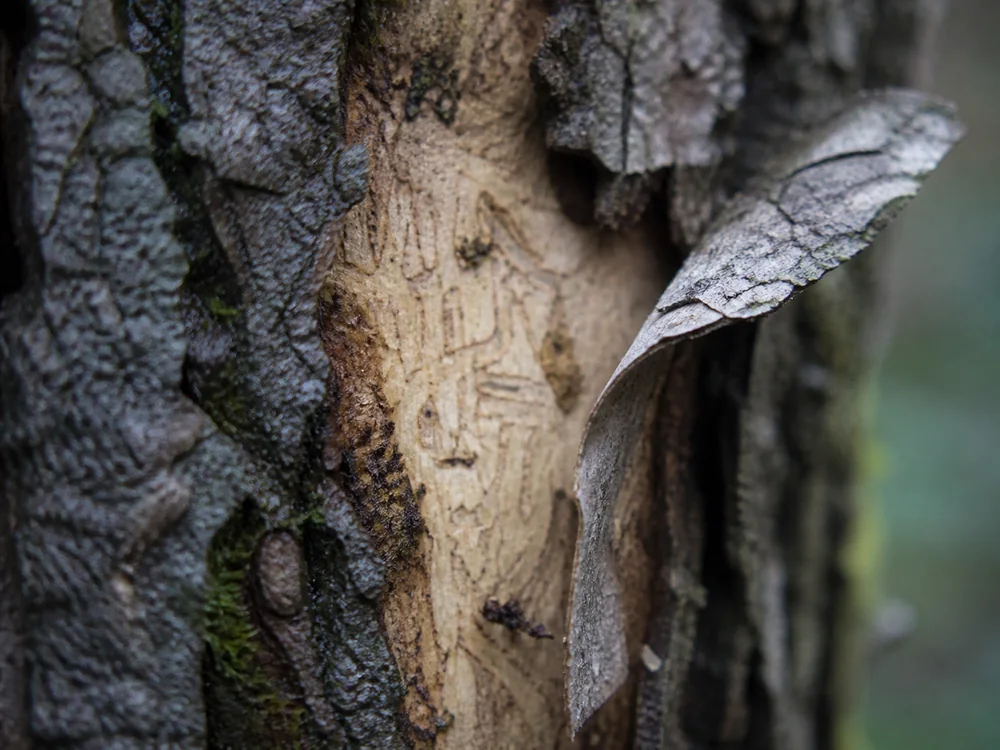
The stages are readable from a distance once you know them. A tree with a bare crown while everything around it is leafing out is the one to circle, and if the bark is still gripping the trunk it is probably early in its run.
Bark that has begun separating tells you the clock is nearly out.
How far from the trunk matters as much as which trunk. Work outward to roughly the spread the crown used to have, because that is the ground the roots held.
Morels do not care about the trunk itself.
They come up in the soil that tree fed, so the productive circle can sit twenty or thirty feet out from the bark you are standing next to.
The two-to-three-year figure is a pattern rather than a promise. Some trees give one good spring and quit, and a few keep going a year longer than they should.
Weather still overrides the clock in any single spring.
A cold, dry April can blank a tree that should have produced, and that is the one case where a blank year is not the tree finishing.
The mistake this prevents is the common one. A hunter finds a productive elm, marks it, returns for four or five years, and slowly concludes that morels are getting scarce.
The morels are not getting scarce. That specific tree ran out, and nothing was added to replace it.
Once the bark is off and the trunk stands bare and gray, the ground around it has moved on.
Walking it again costs a morning that a newer tree would have paid for.
How to build a route that refreshes itself
A route made of fixed spots loses value every single year, because every tree on it is ageing through its window at the same time. The fix is to treat the list as something that turns over.
Write down the year each tree went bare.
That one detail converts a list of locations into a schedule, because it tells you roughly when each tree will stop.
- The record
- Location, year the crown went bare, bark condition, what it produced
- The retirement rule
- Drop a tree once the bark is gone and it has blanked twice
- The replacement rate
- Add new declining trees every spring, not only when spots fail
- The working size
- Enough trees that a third can be finishing without hurting the season
- The scouting window
- Summer, when a thin or bare crown shows against full leaf
Twelve to twenty trees is a working route for one hunter. Below that a single blank year on two trees wrecks the season, and above it you cannot walk them all inside the window Minnesota gives you.
Flagging tape earns its place here.
A strip tied to a sapling near the tree saves ten minutes of searching in April, when the woods look nothing like they did in July.
Summer is the honest time to scout, and almost nobody does it. In July a dying elm is obvious from a road because its crown is thin or bare while every tree around it is in full leaf, and in April that same tree is one gray trunk among hundreds.
An hour of driving in July is worth more than a day of walking in May.

Ask what the tree is before you commit a spring to it. Elm, ash and cottonwood all decline differently, and only elm reliably runs the two-to-three-spring pattern this route is built on.
Share the route carefully or not at all.
A Minnesota elm route takes years to build and one broadcast location to strip, and the hunters who keep producing are usually the ones who kept quiet.
Add trees before you need them. A route that only gains a tree when an old one fails is always one season behind, while a route that adds two or three every spring stays level.
The same discipline applies to permission. Trees on private ground need the conversation renewed as owners change, and the year to ask is the year you notice the crown, not the year you want to walk it.
ForagingMushroom foraging laws in Germany: protected species and small quantitiesWhen the season reaches your county
Minnesota's window is short, which raises the cost of getting the week wrong. Southern counties can open in late April, and the season works north through May as soil reaches the low fifties.
The far north can still be producing into early June.
Three bands is the whole of it, which is why the plan matters more here than in a state carrying six weeks of season.
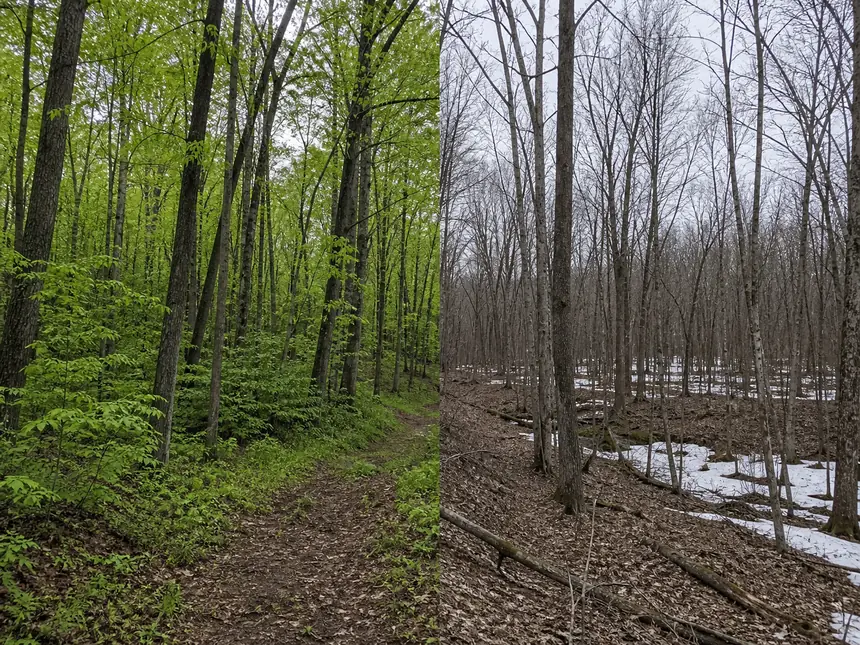
Soil temperature is the trigger rather than the date, and low fifties is the working figure. Air temperature swings around it, so a warm afternoon after a cold week means very little.
Plan the weekends before the season rather than during it. Minnesota gives most hunters three or four real chances, and deciding where to go on the morning of usually costs one of them.
Rain matters more here than it does in longer-season states.
A soaking rain on ground already sitting in the low fifties can bring a flush inside the week, and in a short season that is the difference between a good year and a blank one.
The north is not simply later, it is also shorter on the ground. Higher latitude compresses the whole spring, so northern hunters get a tighter window than southern ones even after they finally get one.
Watch the ground you can reach on a weekday too.
A short season rewards anyone able to walk an hour after work, because a flush does not wait for Saturday.
The compressed window is the real Minnesota problem. In a long-season state a missed weekend is an inconvenience, and here it can be a quarter of everything the year was going to give you.
That is another argument for the elm route. When the window is short, knowing exactly which twelve trees to walk beats wandering good-looking woods.
Hunters along the St Croix get a useful cross-check, because the valley runs on the same schedule on both banks and Wisconsin reports arrive from ground that behaves identically.
ForagingMushroom foraging laws in the UK: what is actually legalWhere else to look once the elms are done
Every Minnesota route eventually has a year where the elms are between generations. These are the settings that carry it through.
- River bottoms with cottonwood and silver maple, which hold moisture after the uplands dry
- The Driftless southeast, where unglaciated ground gives real slope aspect to work
- Ash stands hit by emerald ash borer, which are now widespread
- Old farm orchards, especially apple left standing at abandoned homesteads
- Burn ground in the northern forest, the spring after a fire
Cottonwood bottoms are the most reliable of those. Spring flooding drops fresh silt and leaves the ground damp well after the uplands have drained, which stretches the end of a Minnesota season by a week or more.
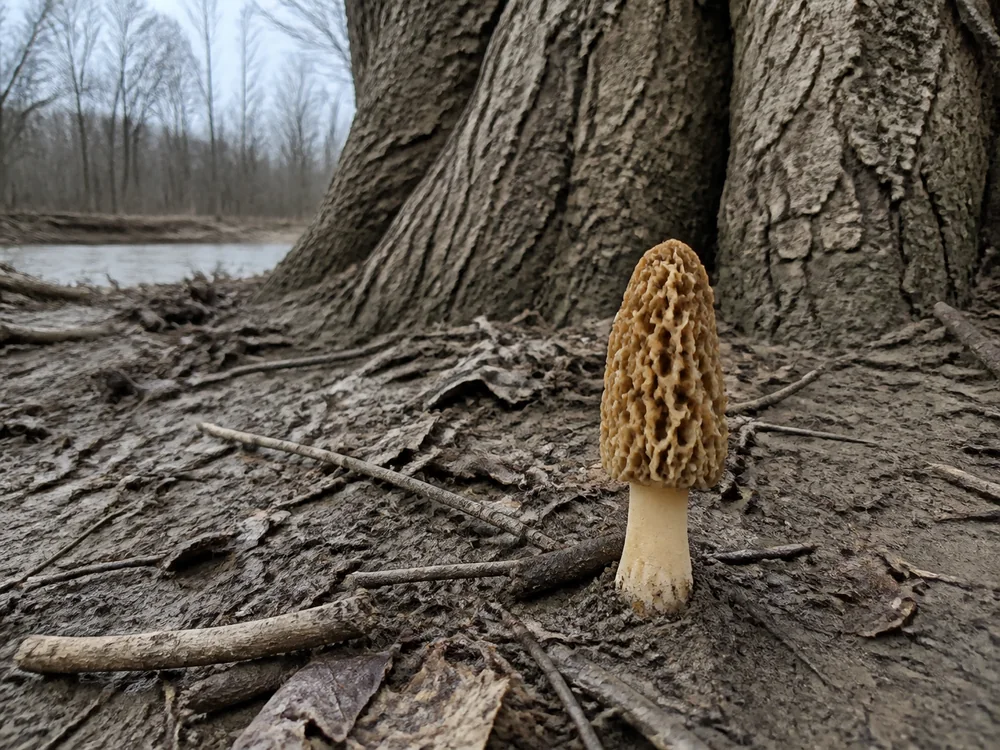
Orchards deserve the distinction from elm. An abandoned apple tree can produce for years rather than for springs, which makes an old farmstead the steadiest thing on a Minnesota route.
Burn ground is the northern option most hunters never use.
A fire the previous year opens the canopy and warms the ground beneath it, and the flush that follows can be heavy enough to justify a long drive north.
Silver maple deserves naming alongside cottonwood. It grows in the same wet bottoms, it fails in the same way, and it produces on the same ground.
The southeast corner is worth a separate trip rather than a detour. Unglaciated ground there holds steep valleys with sun and shade walls, and the same country continues south into Iowa, so reports from across the border arrive first.
The Driftless is also the one part of Minnesota where slope aspect is worth working. Everywhere else the ground is flat enough that choosing a face gains a hunter almost nothing.
The same handful of morels runs the length of Minnesota, and which one you are holding tells you how much season is left.
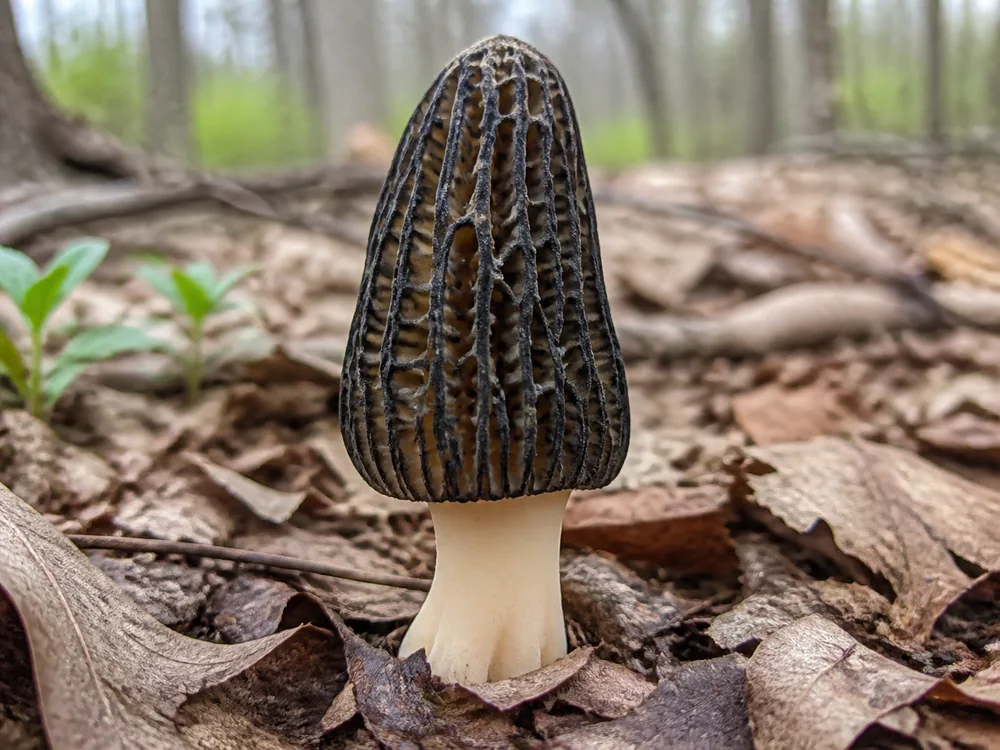 First upBlack morelEarliest of the run, and easy to walk over in dark litter
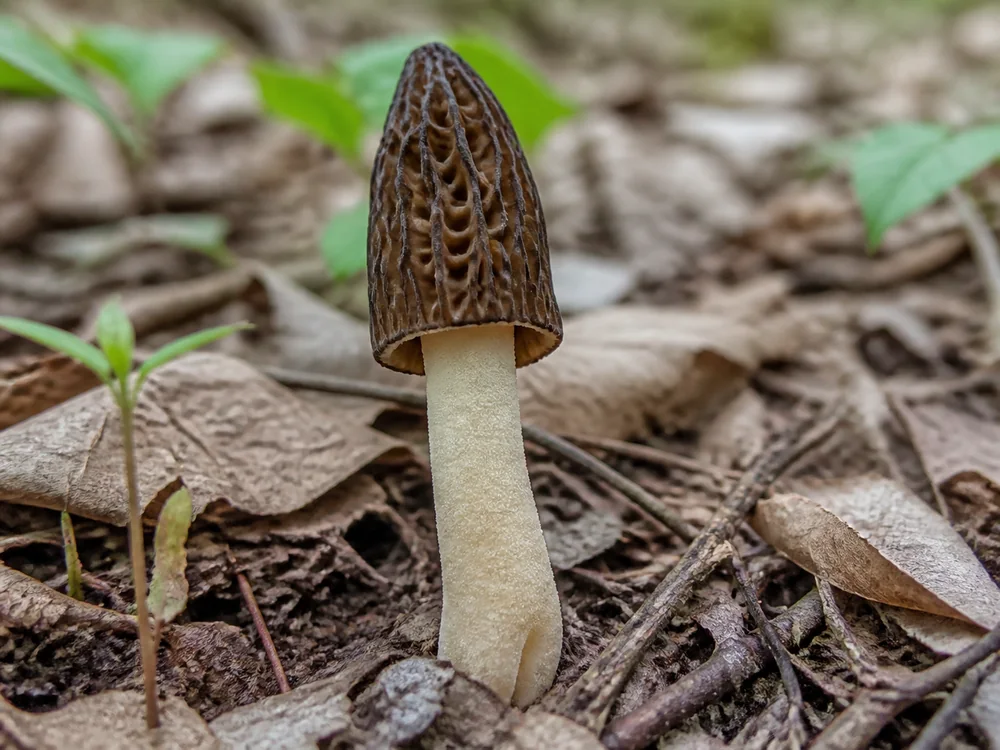 Middle of the runHalf-free morelCap hangs loose below where it joins the stem
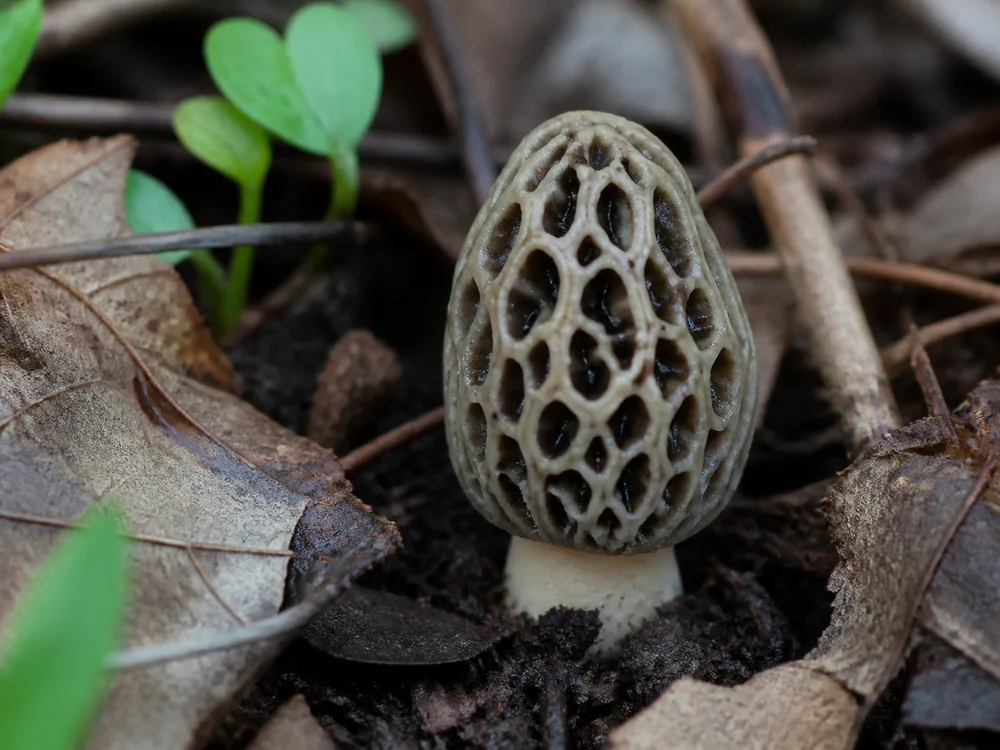 Early to middleGray morelThe young form most people find first
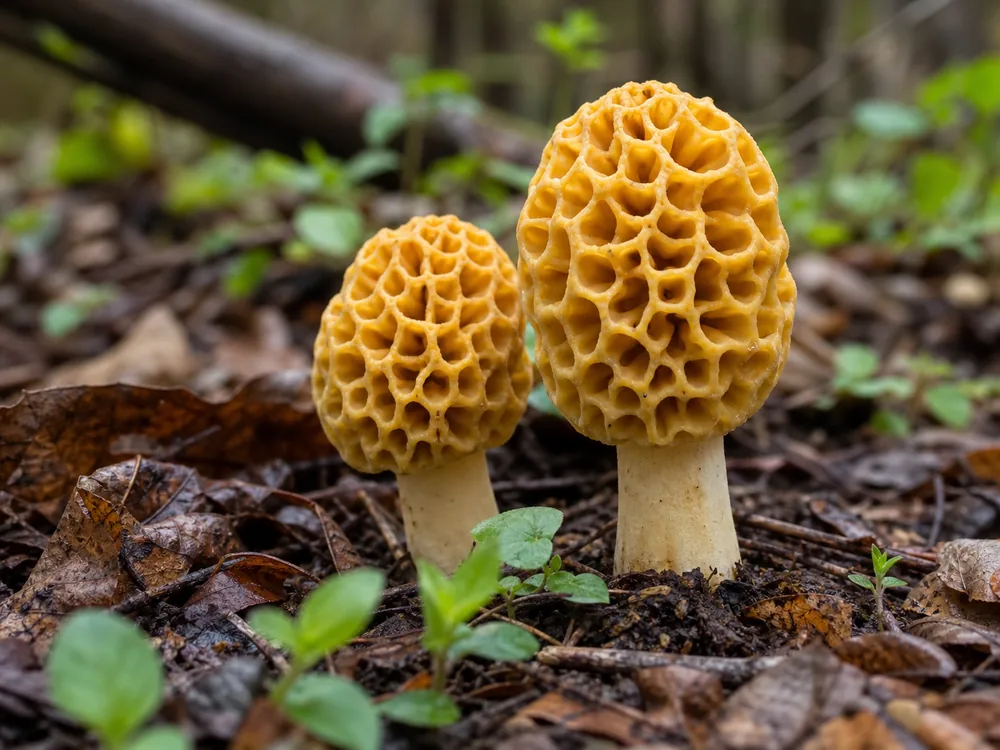 Last and largestYellow morelCarries the end of the season
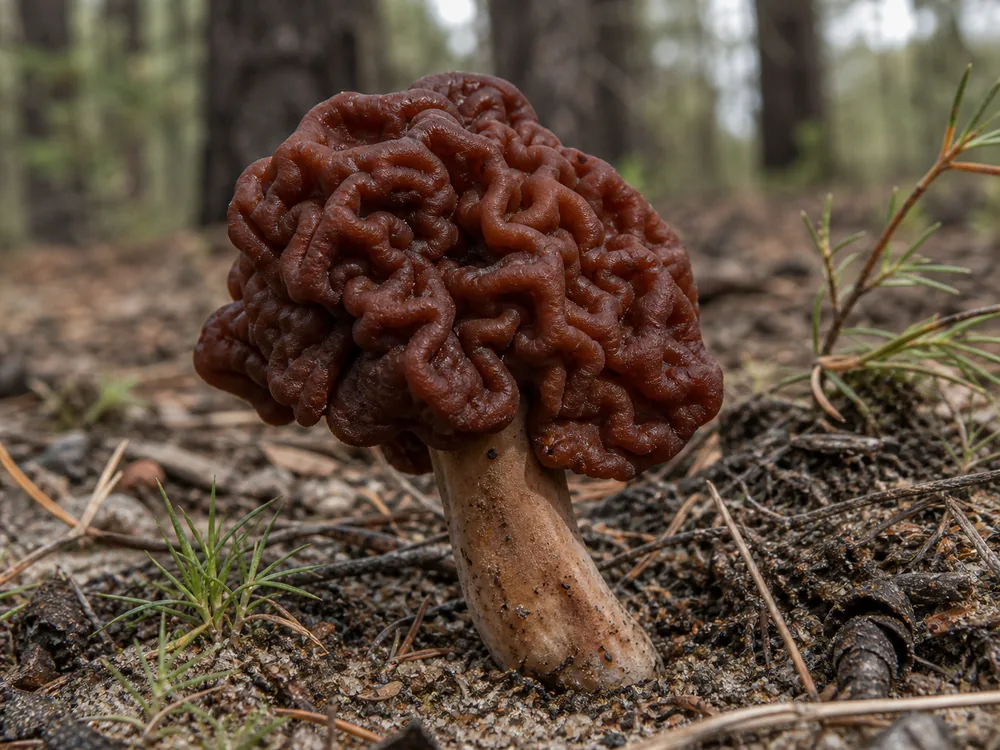 Same weeks, never edibleFalse morelWrinkled and lobed, with no honeycomb pits
Half-free morels turn up in those bottoms through the middle of the run, and finding them usually means the larger yellows on that ground are still ahead.
Black morels are the other thing worth knowing about, since they favor different ground from the elm yellows and often come earlier.
What you may take on Minnesota public land
Minnesota does not use one rule. Three different standards apply depending on the designation of the ground you are standing on.
In state parks, recreation areas, waysides and state forest recreation areas you may harvest edible fruits and mushrooms for personal consumption. A few mushrooms for dinner is the scale the rule has in mind, and large-scale or commercial harvesting is not allowed.
State forests, wildlife management areas and aquatic management areas use a plainer standard.
Small amounts for personal use are fine without a permit, and that standard is described as the amount you or your household would eat within the week.
- State parks
- Edible fruits and mushrooms for personal consumption
- State forests and WMAs
- What your household eats in a week, no permit
- Scientific and natural areas
- Closed, with plants protected
- Not allowed anywhere
- Large-scale or commercial harvest
- Private land
- Permission first, every season
The three standards exist because the land was set aside for different reasons. A state park is there for people, a state forest is there to be worked, and a scientific and natural area is there for what grows in it.
Reading the designation before the drive is the whole discipline, because the standards do not announce themselves.
Two units an hour apart can give opposite answers under those standards, and the boundary between them is often nothing more than a post at the edge of a parking area.
None of these standards is a bag limit in the ordinary sense. They describe a scale of use rather than a number, which puts the judgement on the person carrying the bag.
Private land is still where a great many Minnesota elms stand.
Farm windbreaks, pasture edges and yard trees hold plenty of them, and every one of those needs a conversation before it goes on a route.
That household-week phrasing is unusually useful, because it gives a picture rather than a number. If what you are carrying would feed your house for a week, you are inside the standard.
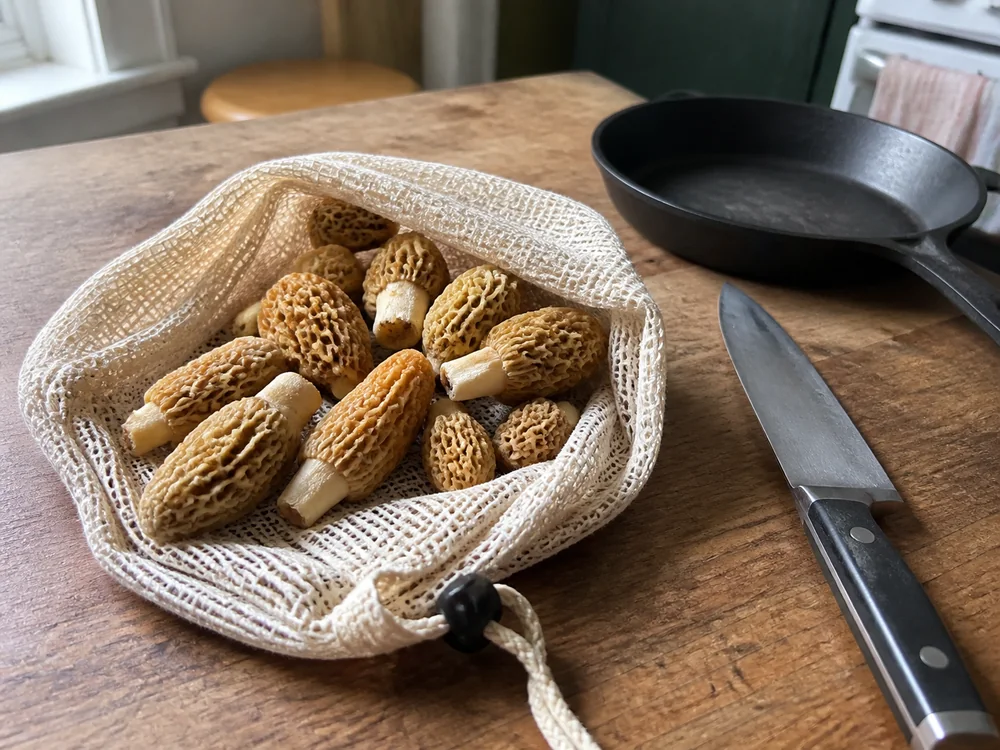
That standard covers how much you may carry, not where you may pick, and access is where Minnesota gets stricter.
Warning
Scientific and natural areas are not open to collecting, and the rules there cover plants living and dead. An SNA boundary is easy to cross on foot without seeing it, so check the designation before you walk, because the penalty falls on you rather than on the map.
Open access also puts first-season hunters in the woods holding a legal bag, which is exactly when knowing the dangerous lookalikes matters most.
How to settle a morel with one cut
False morels come up in the same Minnesota weeks, in the same woods, often within sight of the real thing.
The cap is the first read. A true morel is pitted like a honeycomb with ridges between the pits, and a false morel is wrinkled, folded and lobed like a brain.
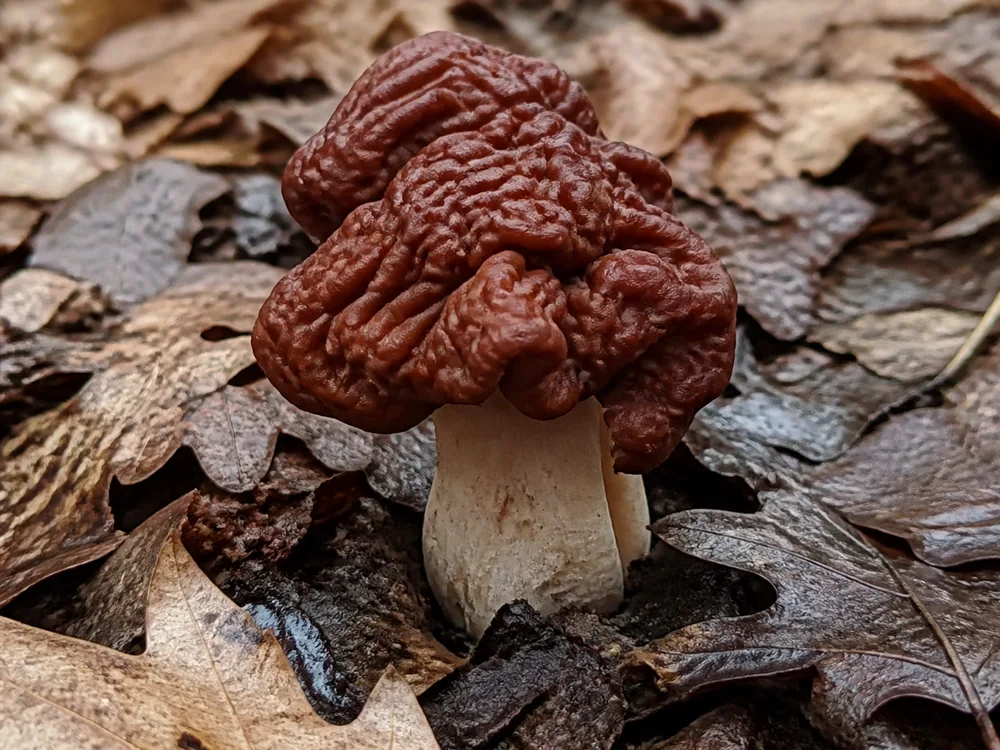
Color is the weakest evidence of all, and it is what most people reach for first. Young true morels can be very dark and some false morels are pale, so the cap surface and the cut do the work instead.
Then cut it lengthwise, every time.
A true morel is one continuous hollow chamber from cap tip to stem base, and a false morel is packed with cottony tissue or divided into pockets.
The toxin behind that rule is gyromitrin, which the body converts to monomethylhydrazine. Cooking does not make a false morel safe, so a non-hollow specimen is a discard rather than a cooking problem.
| Check | True morel | False morel |
|---|---|---|
| Cap surface | Honeycomb pits with raised ridges | Wrinkled, folded and lobed like a brain |
| Cut lengthwise | One continuous hollow chamber | Cottony fill or separate pockets |
| Cap attachment | Joined to the stem near its base | Often hanging loose or irregular |
| Cooking | Safe only when thoroughly cooked | Not made safe by cooking |
Verpa adds a second trap in Minnesota woods. Its cap hangs free from the very top of the stem like a thimble rather than joining near the base, and cutting the stem shows cottony pith instead of an empty chamber.
Cooking still matters once the cutting is done.
Raw morels sicken people who identified the mushroom correctly, so cook every one thoroughly, eat a small portion the first time from new ground, and skip alcohol with that meal.
Eat conservatively the first time from any new tree. Cook a small portion, skip alcohol with that meal, and give it a day before making a habit of it.
If symptoms start hours after eating rather than minutes, treat that delay as the warning it is and call Poison Control at 1-800-222-1222.