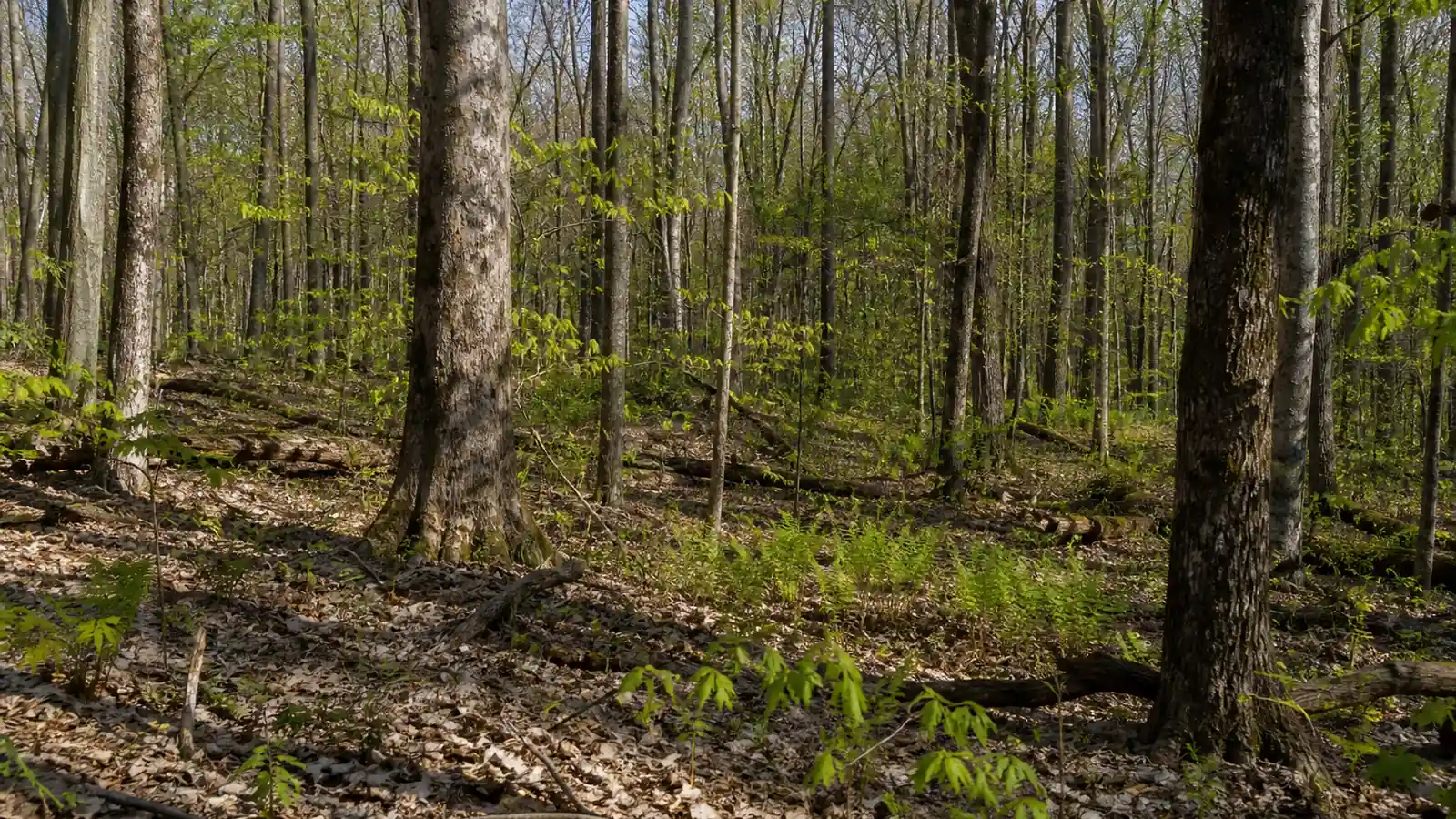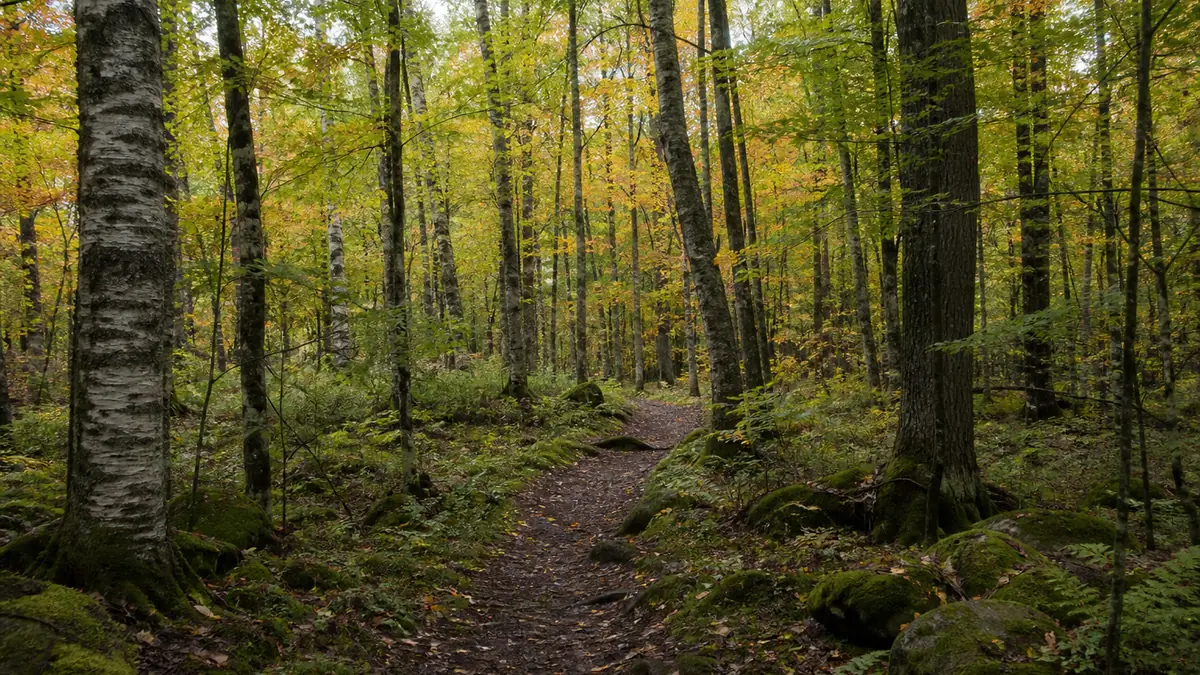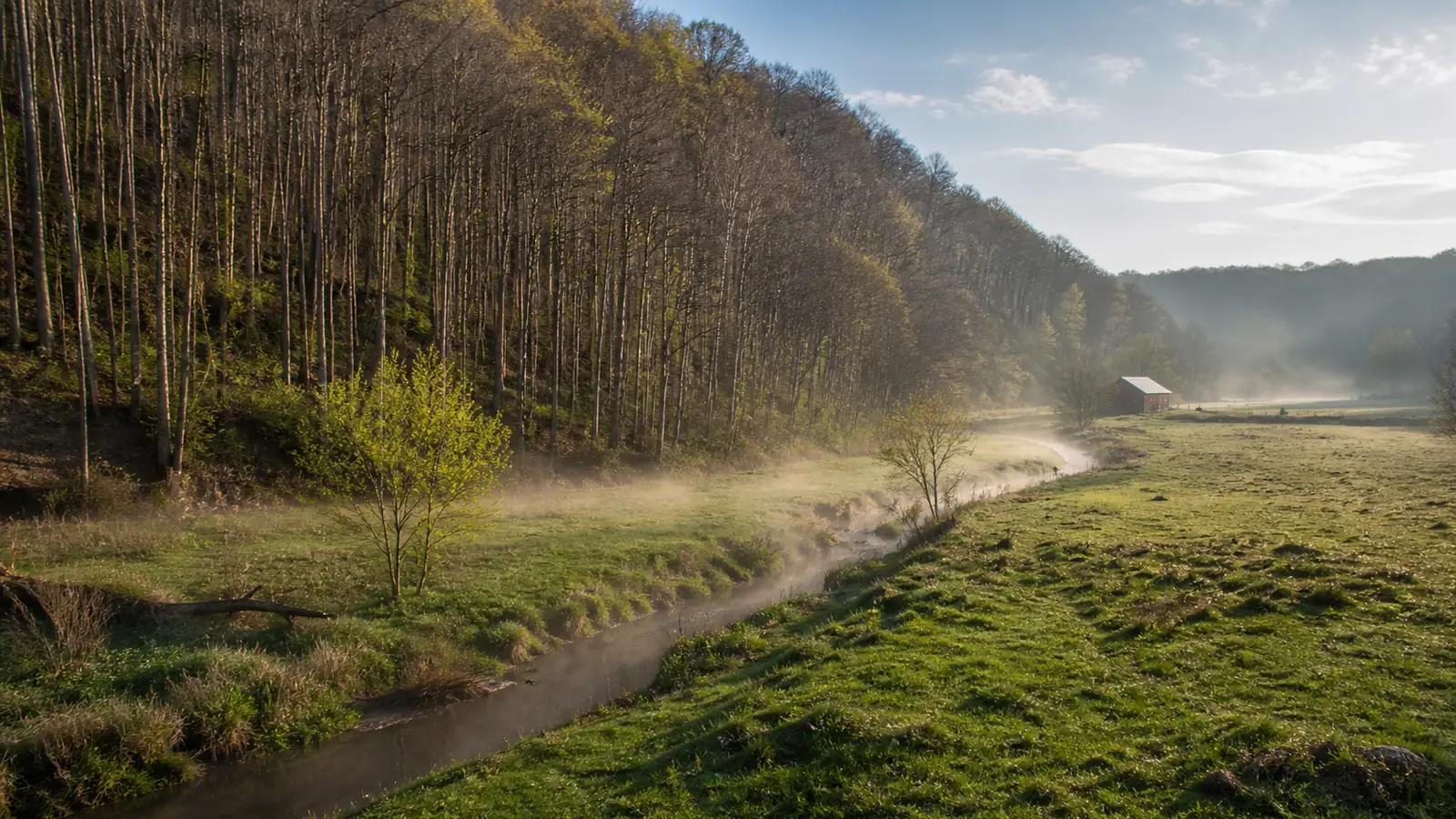
Wisconsin morels run from the Driftless southwest in late April to the northern forest in early June, close to six weeks of season. Because the state is long and split between coulee country, farm country, sand country and northern forest, the reliable clock is the spring bloom sequence in front of you rather than a date.
Wisconsin morels start in the Driftless southwest in the last days of April and finish in the northern forest in the first week of June. That is close to six weeks of season, which is why a single statewide date has never been much use to anybody.
Published Wisconsin ranges stretch from March to June depending on who you ask.
A range that wide is not a forecast. The better instrument is already growing in front of you, because the same soil warmth that wakes morels also drives the spring bloom you can see from a car window.
How the bloom calendar times a Wisconsin morel hunt
Watch what is flowering rather than what the date says. Wisconsin's spring runs in a fixed order even when it runs early or late, so the sequence holds in a cold year and a warm one alike.
The sequence is what holds, not the dates attached to it.
In a late spring every signal slides together, so lilac may open ten days behind its average and the morels slide with it.
The reason this works is not folklore. Lilac and apple respond to accumulated warmth in soil and air, which is the same signal that brings the ground into the roughly 50 to 55 degree range morels fruit in.
Squirrel-ear oak leaves are the marker most hunters wish they had learned sooner, because that one tells you the ground is already past its best.
By the time an oak leaf reaches the size of a squirrel's ear, the ground under it is warm and the best of the run on that site has usually passed. That signal closes a woodlot rather than opening one, and it is the cue to move north or uphill.
Wisconsin has unusually good grounds for trusting a spring bloom sequence.
Aldo Leopold recorded spring events on his Sauk County farm from 1936 to 1947, and his daughter Nina Leopold Bradley resumed the same records there from 1976 to 1998. Between them they built one of the longest continuous phenological records in North America, and the order of events in it held even as the dates moved.
The limitation is that a bloom signal is strictly local. Lilacs in a sheltered town yard open days ahead of lilacs on an exposed ridge ten miles away, so the signal worth reading is the one nearest the woods you intend to walk.
When two signals disagree, trust the ground over the flower.
A hard cold snap can stall morels for a week while a sheltered lilac carries on blooming to schedule. Bloom tells you the season has arrived in general, and soil warmth tells you whether it has arrived under that particular hillside.
ForagingMushroom foraging laws in France: what the five liter rule meansWhere Wisconsin's season starts and where it ends
The state opens in the southwest and closes in the far north, and the gap between those two is wide enough to hunt several times over.
Something different holds each of those bars back. Only the sunlit coulee walls are ready in the Driftless that early, southern farm woodlots sit on heavier soil and take the wind, sand warms quickly but dries just as quickly, Lake Michigan keeps the Door Peninsula cool, and the north waits on late snowmelt, cold nights and Lake Superior.
Six weeks of statewide season is the practical gift here, and a hunter willing to drive can follow the front from the coulees to the northwoods and walk fresh ground most weekends from late April into June.
Chasing that front is a real Wisconsin strategy rather than a thought experiment. Madison to Hayward is about five hours, and the season between those two points is worth the better part of a month.
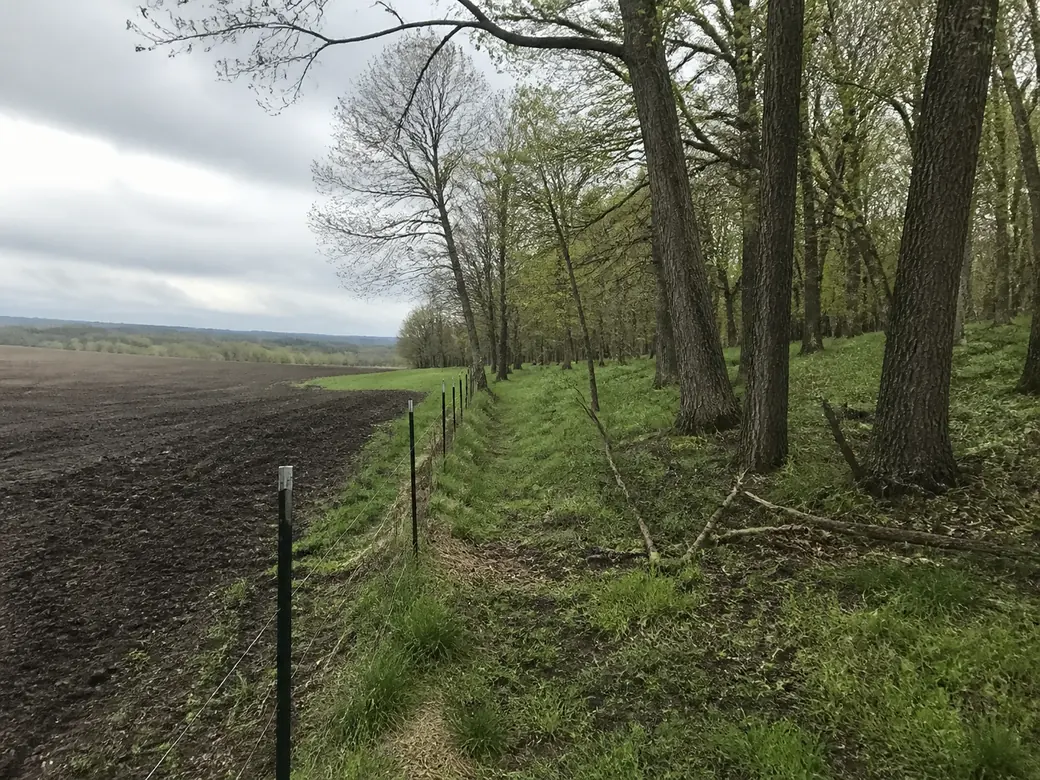
A season plan beats a spot list in Wisconsin. Pick one coulee, one farm woodlot, one sand spot, and one northern stand, and you have a route that stays productive from late April into June.
Shoreline counties are the ones people misjudge most often.
Cold water works against spring on both coasts of the state, so Door County and the Lake Superior counties stay behind inland ground at the same latitude. The lag can run a week or more, and it shrinks steadily as you move away from the water.
Door County deserves its own note, because it has water on three sides. That peninsula stays cool well into May, and its season sits behind the Wisconsin mainland even where the map says the two are level.
Northern hunters usually see their first morels in early to mid May rather than in June.
The far north finishes in June, but it does not wait until June to begin, and treating the whole northern half as a June proposition throws away its best two weeks. Snow lying in shaded stands is the exception worth respecting, since the ground beneath it stays cold long after open woods have thawed.
Driftless coulees carry the earliest morels
The southwestern corner of Wisconsin was never covered by the last glaciers. Everything around it was flattened and filled, and the Driftless kept its steep valleys, its exposed rock, and its narrow winding coulees.
Those coulees are the reason the region runs first.
A coulee has two walls facing opposite directions, and they do not share a season. The wall facing south and west takes direct spring sun and reaches fruiting warmth first, while the wall facing north and east sits in shade and stays cold and damp for another week or more.
Aspect beats elevation here. A hundred feet of climb changes very little, while turning to face the opposite wall can change a week.
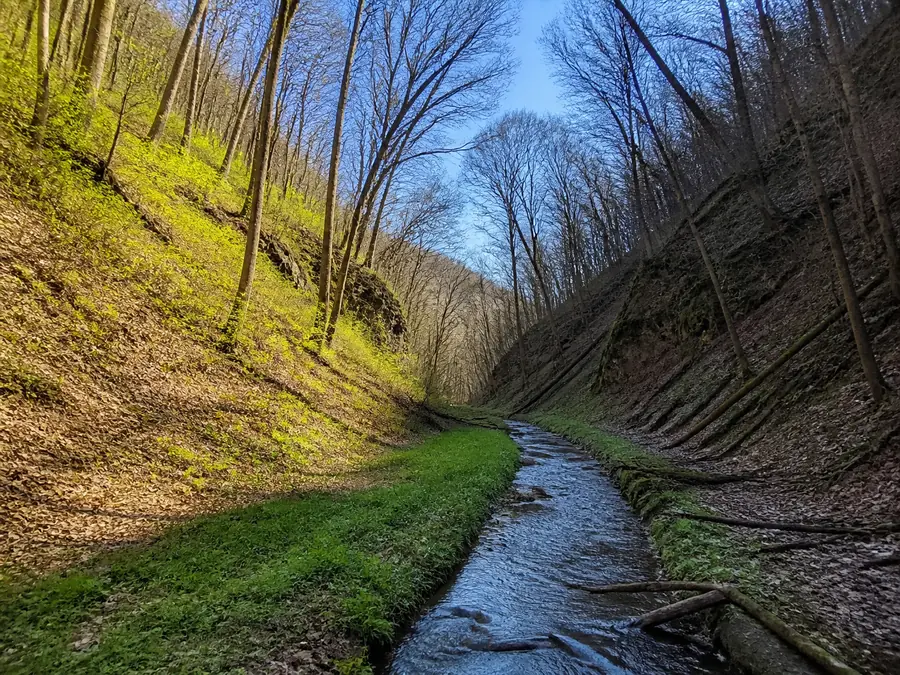
That split turns a single valley into a route rather than a stop.
- Walk the sunlit wall first, in the last days of April into early May
- Move to the valley floor and the creek benches about a week later
- Finish on the shaded wall, which often holds the largest morels of the three
- Return to the same coulee rather than driving to a new one
The valley floor is the middle act of that sequence. It warms after the sunny wall and before the shaded one, and its creek benches hold damp ground through a dry week that would finish the slopes above.
Coulee walls also carry features flat country simply does not have.
Rock outcrops, spring seeps, and old slump benches each hold water differently, and morels tend to concentrate on the flat benches just below a seep.
Those benches are worth learning by name on ground you return to, because they produce in years when the open slopes do not.
The shaded wall pays for its lateness, because it produces after the open slopes have quit. It holds moisture when the sunny side has gone dry and papery, so its morels come up larger and stay in condition longer.
None of this stops at the state line. The same unglaciated ground runs on into northeast Iowa and southeast Minnesota, so reports from just across the Mississippi arrive before the Wisconsin coulees turn.
ForagingMushroom foraging laws in Germany: protected species and small quantitiesWhich trees to walk in Wisconsin woods
Dead and dying elm is still the first thing to look for, and Wisconsin farm country left an unusual number of them standing. Fencerows, pasture edges, and the untidy corners between fields were never cleared, so elms there died in place and stayed upright.
An elm worth walking announces itself from a distance.
The bark hangs off in long vertical strips, the crown is bare while everything around it is leafing out, and the root flare sits clear of brush. That tree is worth twenty minutes of slow circling, and it is worth marking for next spring.
Ash has become the second story, and in Wisconsin it is a large one.
Emerald ash borer was first confirmed in the state in Ozaukee County in July 2008, and it has since been confirmed in all 72 Wisconsin counties. It kills more than 99 percent of the ash in a forest it reaches, which means standing dead ash is now available in nearly every corner of the state.
A dying ash is easy to read once you know what to look at.
The canopy thins from the top down, shoots sprout low on the trunk where the tree is trying to save itself, and woodpeckers strip patches of outer bark to reach the larvae underneath. That stripping leaves pale blond flecking on the trunk that is visible from a long way off.
Timing matters more than the species. An ash dead for five years has usually finished producing, while one that died last season is worth walking every spring until it goes quiet.
The rest of the Wisconsin list is worth walking in roughly this order.
- Old farm orchards, especially apple trees at abandoned or half-kept homesteads
- Cottonwood and silver maple on bottoms along the Wisconsin, Chippewa, and Mississippi
- Aspen stands through the central and northern counties
- Pasture edges and untilled field corners where single large trees were left alone
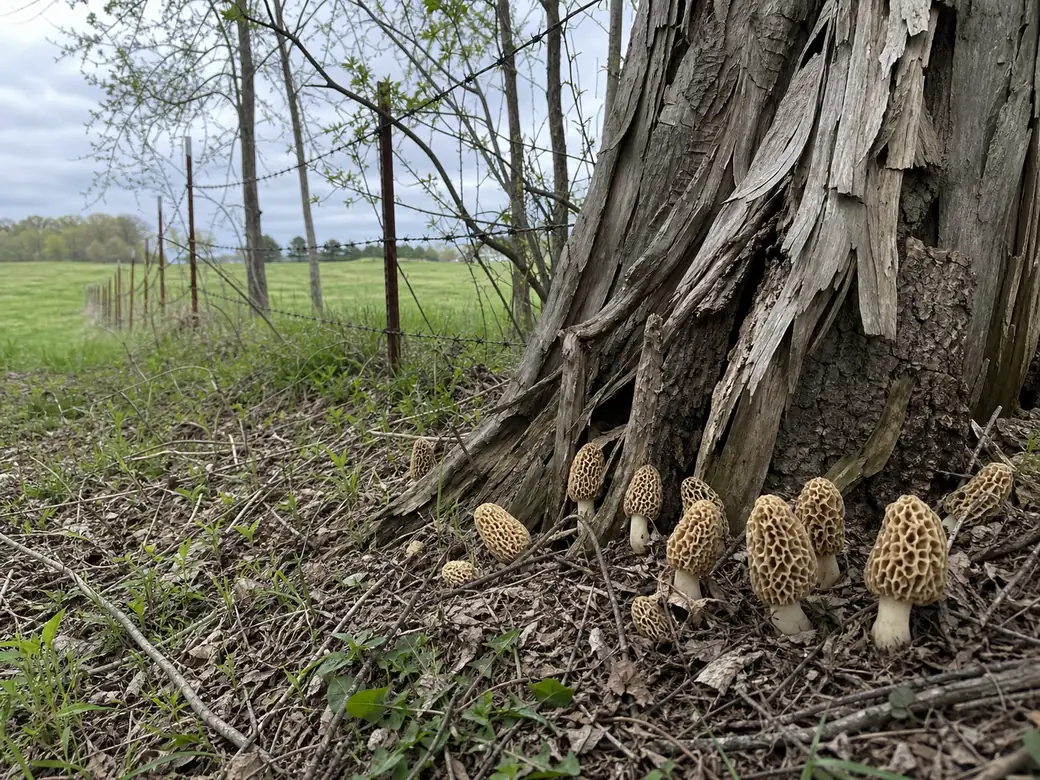
Orchards are the quiet Wisconsin option. Old farmsteads across the state left apple trees standing at yard edges and fence lines, and a neglected orchard with dying trees can produce for several years running.
Cottonwood and silver maple bottoms work on flood timing rather than on how long the trees have been dead. Spring high water drops fresh silt and leaves the ground damp and loose well after the uplands have drained out.
Wisconsin's true morels are the same handful of species from Kenosha to Bayfield, so the trees change across the state while the mushroom does not.
Ground cover matters as much as the tree above it. Thick sod and heavy brush hide morels and slow the soil warming underneath, while open leaf litter and thin grass let you see and let the ground warm.
ForagingMushroom foraging laws in the UK: what is actually legalSandy ground gives a shorter, sharper window
Central Wisconsin's sand counties behave unlike anywhere else in the state. Sand takes on heat quickly, so that ground can be ready while heavier soil at the same latitude is still cold.
The same property that opens sand country early also closes it early.
Sand holds almost no water, so a warm dry week that a clay woodlot would shrug off will end a sand-country flush outright. A spot that produced heavily on Saturday can be finished by the following Wednesday.
- Check sandy ground within days of a soaking rain, not a week after
- Expect darker, smaller morels than the yellows of the southern woodlots
- Favor the shaded edges of pine stands, which lose moisture more slowly
- Write the spot off for the year once the litter is dry and crisp underfoot
Pine changes the picture as much as the sand does. Needle litter is thinner and lighter than hardwood leaves, so morels sit more exposed and dry out faster once direct sun reaches them.

Dark early morels are the characteristic sand and pine-country find, and they are easy to walk over because they match the litter almost exactly.
The compensation is that sandy ground is easy to read. You can see mushrooms from further off in thin needle litter, and you can tell at a glance whether the surface still holds any moisture.
Sand country forgives a late arrival less than any other ground in the state.
Sand-country hunting is therefore a scheduling problem rather than a searching problem.
Pick fewer spots, check them far more often, and accept that each one gives you a few days rather than a few weeks.
What you may pick on Wisconsin public land
Wisconsin is unusually open about this. On state park system land you may pick wild mushrooms by hand for personal consumption, and no permit is involved.
- Permit
- None required for wild mushrooms on state park system land
- Method
- Picked by hand, for personal consumption
- Named in the rule
- Morel, oyster, lobster, chanterelle, giant puffball, hen of the woods
- County land
- Counties set their own rules, and some prohibit foraging outright
- The boundary
- Personal consumption, which does not extend to selling
Access is the part of Wisconsin that surprises visiting hunters most. Few states hand over this much walkable ground with this little paperwork.
The rule rewards close reading rather than skimming.
It says by hand, and it says personal consumption, which together rule out digging tools and rule out selling what you carry home.
The state park system is also broader than its name suggests. It takes in state parks, state forests, recreation areas, and wildlife areas, which together account for a large share of the walkable public ground in Wisconsin.
Warning
County land does not follow the state rule, and Milwaukee County parks prohibit foraging while Dane County parks allow it. Two counties an hour apart can give opposite answers on ground that looks identical, so check the county before you walk rather than after.
Rules also cover how you take a morel, and pinching or cutting at ground level is the accepted method on most public land.

State natural areas sit inside the system but carry a stricter conservation purpose, so confirm the rules for a specific property rather than assuming the general rule reaches every corner of it.
Federal ground and private land answer separately again. County forests, national forest, and a neighbor's back forty are three different permissions, and none of them is granted by the state park rule.
A permit-free rule is not an unsupervised one.
Wisconsin trusts foragers with open access, which puts the entire weight of the identification on the person holding the bag. It also means the person beside you in the woods may be in their first season, and that nobody checked their work before they filled it.
Every Wisconsin morel earns one cut before the pan
False morels fruit in the same Wisconsin weeks, in the same woods, and often within sight of the real thing. That overlap is the reason a good year produces poisonings alongside good meals.
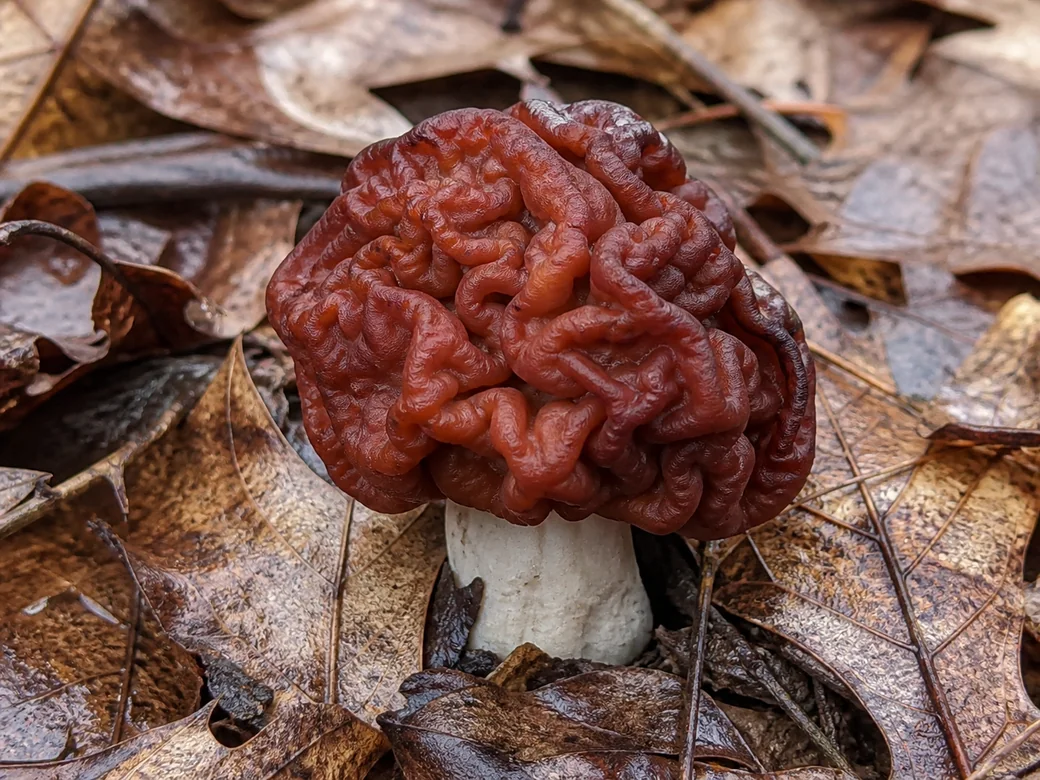
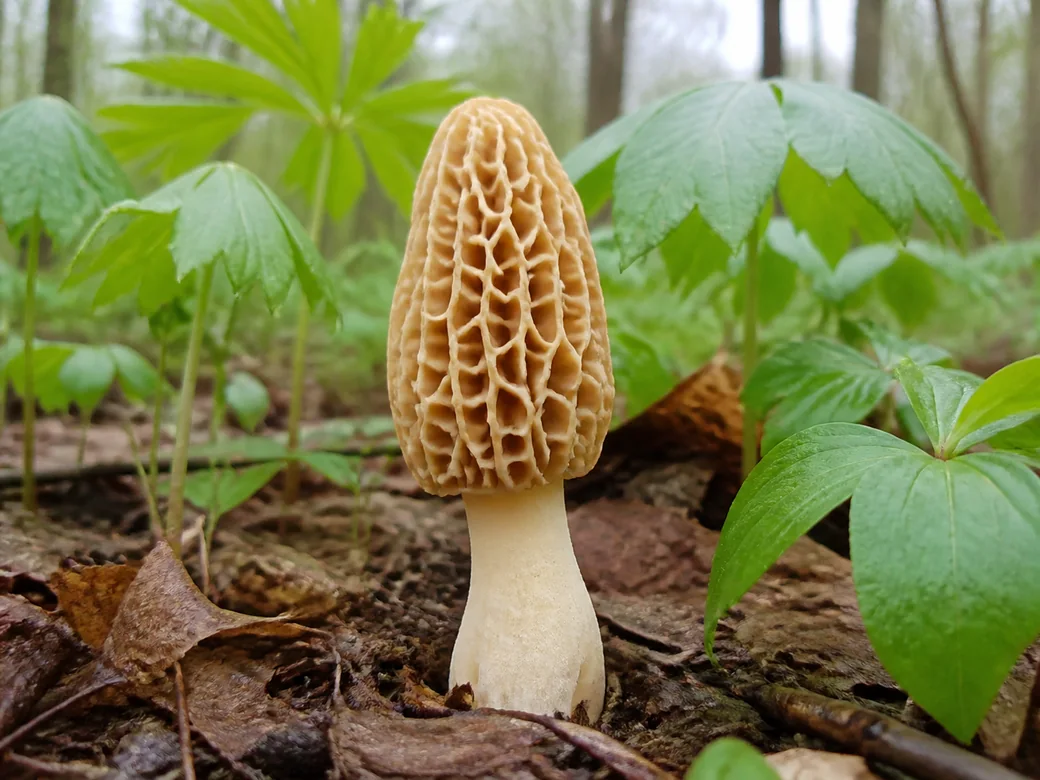
The cap tells you most of it at a glance. A true morel is covered in honeycomb pits with ridges between them, while a false morel is wrinkled, folded, and lobed like a brain, with no real pits at all.
Then cut it, every time.
Slice from the tip of the cap straight down through the stem. A true morel is one continuous hollow chamber the whole way, and a false morel is filled with cottony tissue or divided into irregular pockets.
Wisconsin carries the same handful of morels from Crawford County to Bayfield, and they arrive in an order.
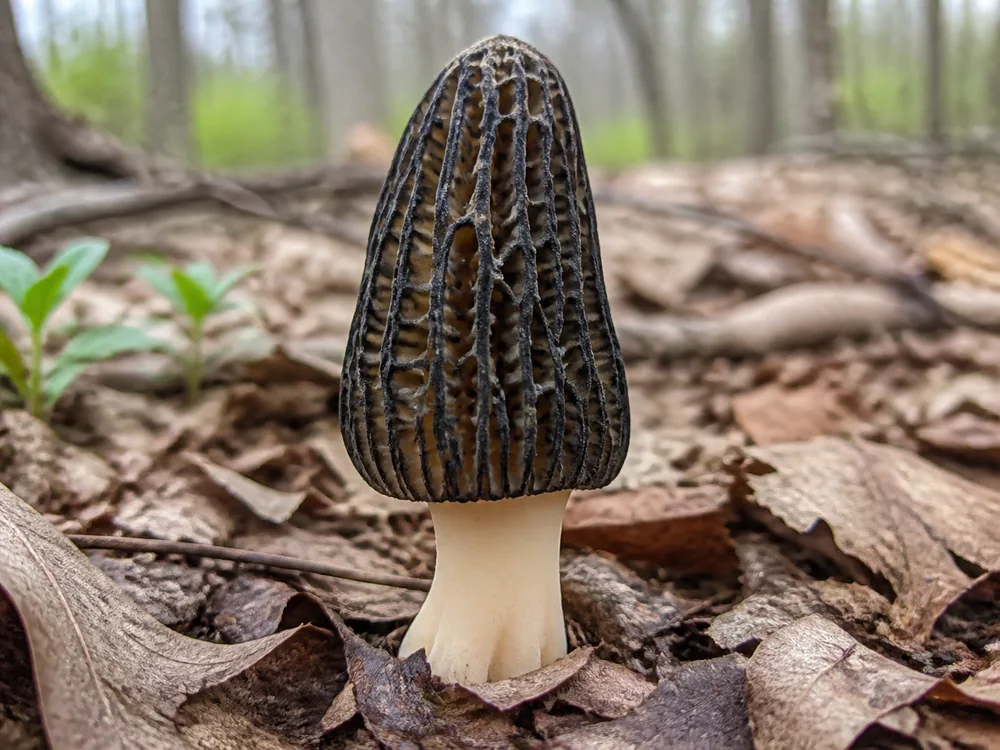 First upBlack morelEarliest of the run, and easy to walk over in dark litter
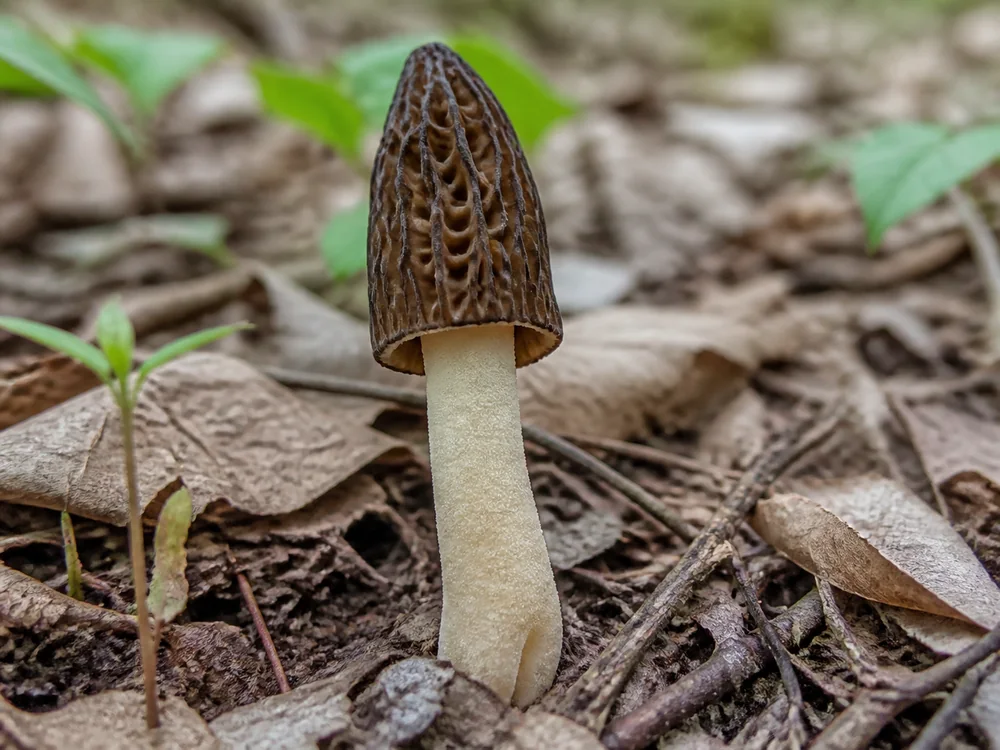 Middle of the runHalf-free morelCap hangs loose below where it joins the stem
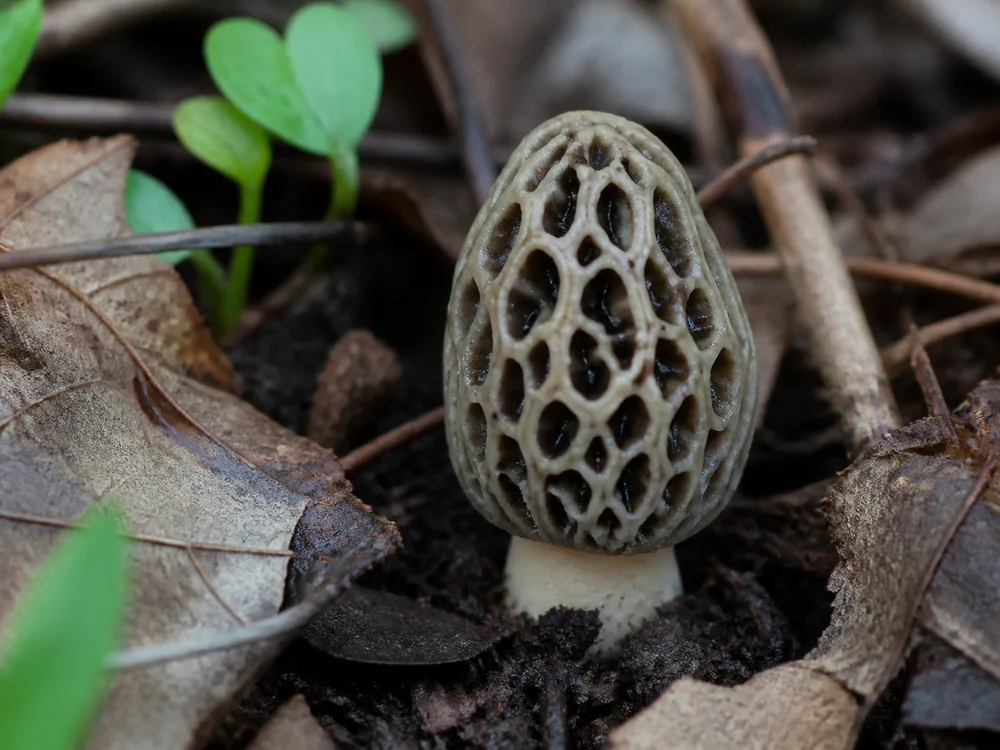 Early to middleGray morelThe young form most people find first
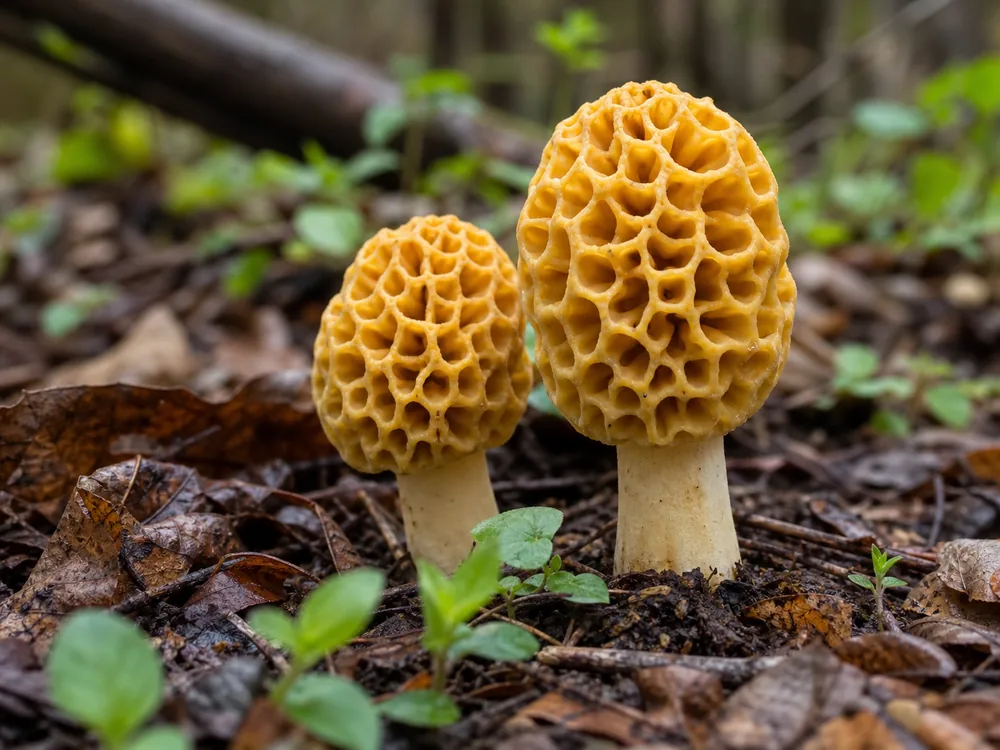 Last and largestYellow morelCarries the end of the season
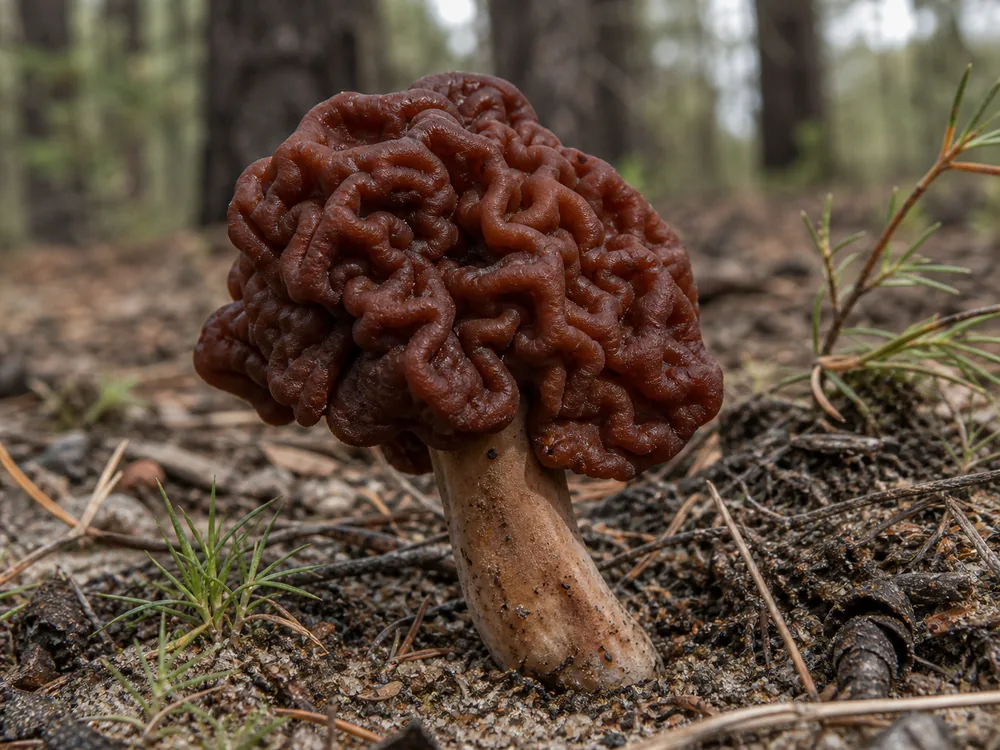 Same weeks, never edibleFalse morelWrinkled and lobed, with no honeycomb pits
Half-free morels cause an annual scare in Wisconsin. Their cap hangs loose below the point where it joins the stem, which looks alarming to somebody who has just learned that a false morel's cap can hang free.
A hollow interior is only one feature. Check the cap attachment and the complete specimen with an experienced identifier.
The toxin behind all this caution is gyromitrin, and a false morel carries it whether or not the cap looked convincing. The body converts gyromitrin to monomethylhydrazine, which damages the liver and the nervous system, and severe cases have progressed to seizures.
Symptoms from a false morel usually arrive hours after the meal rather than minutes, which is exactly why people talk themselves out of worrying. Treat a delayed reaction as the signal it is, call Poison Control at 1-800-222-1222, and keep any uncooked mushrooms so they can be identified.
Cooking is the last gate, and it applies to morels you identified correctly.
Raw morels make people sick even when the identification was perfect, so every one of them goes into the pan thoroughly cooked before it reaches a plate.
Eat conservatively the first time you take morels from new ground. Cook a small portion, skip alcohol with that meal, and give it a day before making a habit of it, because a few people react badly to morels that everyone else handles without trouble.
Sources & References
- Gathering in state parks and forests, Wisconsin Department of Natural Resources
- Find Your Food: Foraging in Wisconsin, Wisconsin Natural Resources Magazine
- Emerald Ash Borer, Wisconsin Department of Natural Resources
- Phenological changes reflect climate change in Wisconsin, Proceedings of the National Academy of Sciences