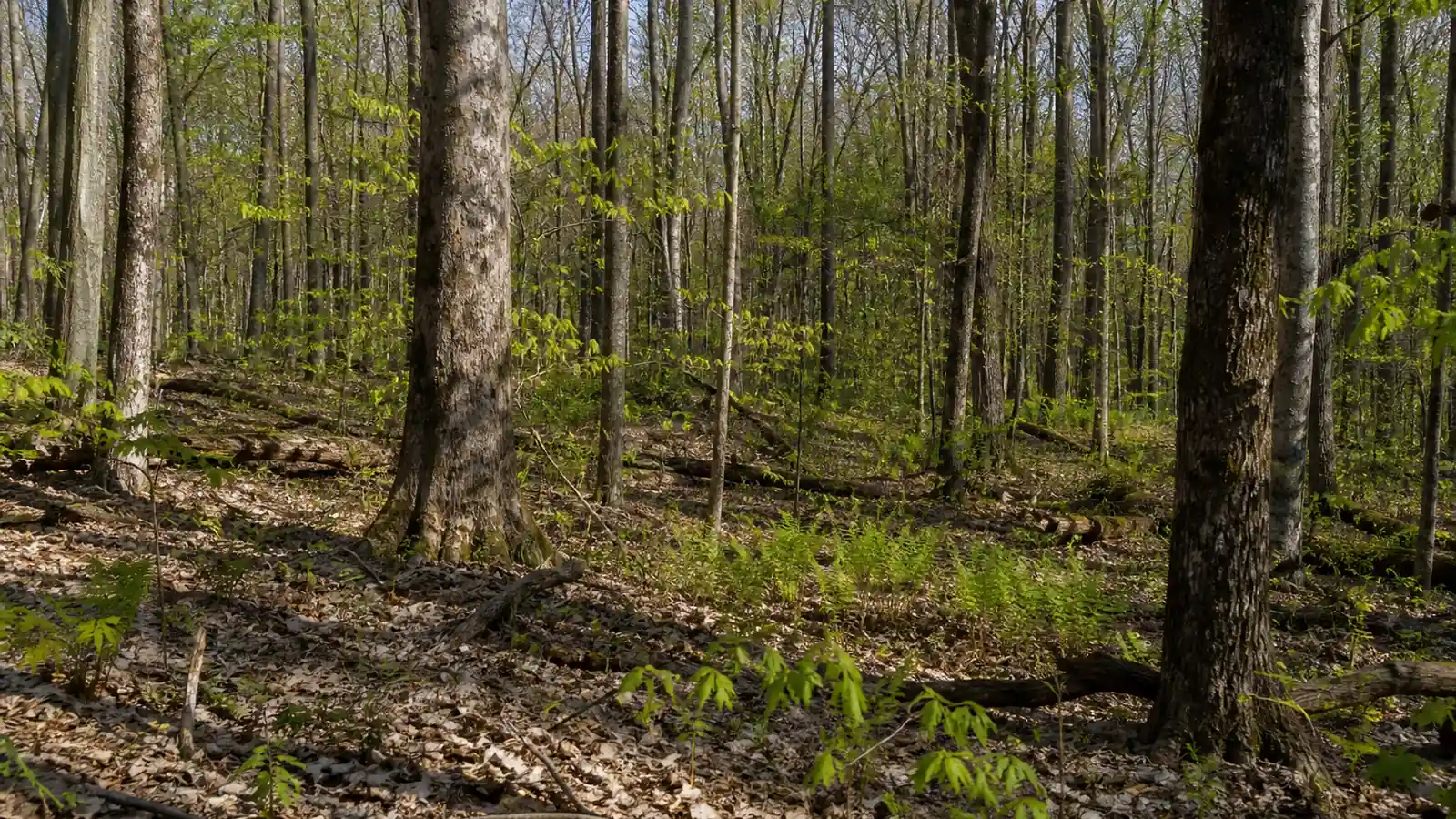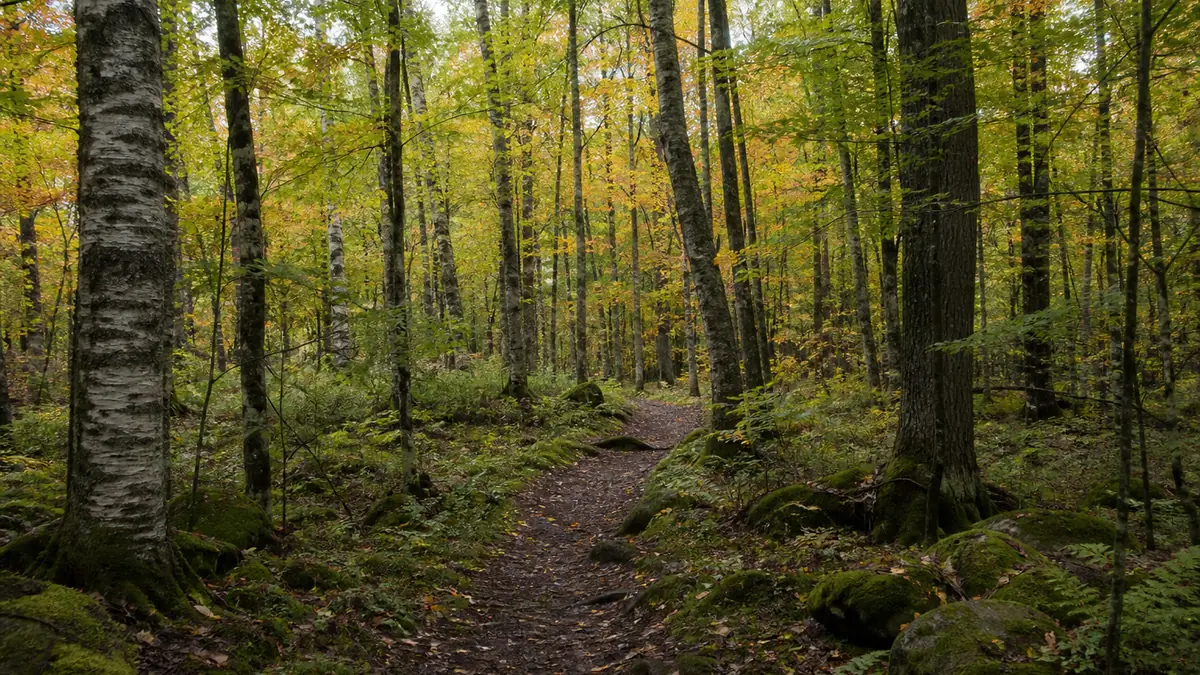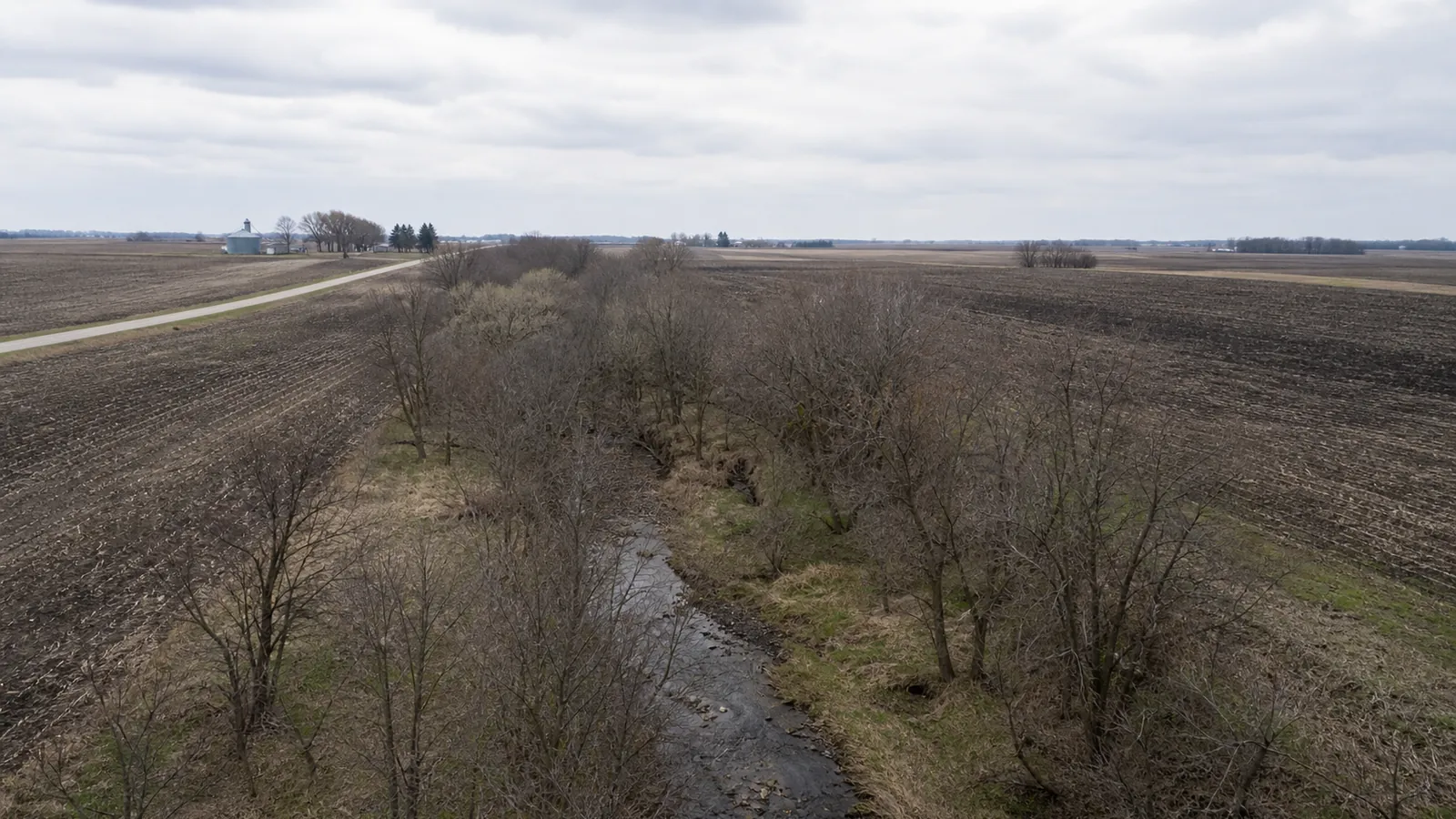
Iowa morels run from early April through mid May, and the Iowa DNR gives 53 degree soil temperature as the point to start looking. The harder problem is timber, because only about eight percent of Iowa is forest and nearly all of it is privately owned, so an Iowa season is planned around access first and weather second.
Iowa morels run from early April through mid May, and the Iowa DNR gives a single number to start from. When soil temperature reaches 53 degrees, begin looking.
The harder question in Iowa is not when. It is where.
Iowa grows corn on ground that used to be woods, and what timber remains is scattered, narrow, and almost entirely owned by somebody.
A morel season here is built on access first and weather second.
Iowa's woods are the scarce part
Key takeaway
Plan an Iowa season around landowners and maps before you plan it around weather. Roughly eight percent of the state is timber, nearly all of it private, so the limiting input is permission rather than rainfall.
Iowa holds about 2.9 million acres of forest, which works out to roughly eight percent of its land area. Most states in the region carry several times that share.
That timber is not distributed evenly either.
It survives where the plow could not go, which means creek bottoms, steep river bluffs, and the awkward corners of farms. A satellite view of Iowa shows woods as thin green threads running through a grid of fields.
Iowa was tallgrass prairie before settlement, with its timber concentrated along the rivers.
What survives today follows those same drainage lines, minus the parts that were cleared for crops and pasture. That is why an Iowa timber map looks less like a forest and more like a river network drawn in trees.
Ownership compounds the problem. Iowa woodland is overwhelmingly private, much of it still attached to working farms, and public ownership accounts for only around eight percent of the forest land area.
The whole state forest system runs to under 45,000 acres across ten units.
Set that against the 2.9 million acres of forest statewide and the shape of the problem is clear. An Iowa hunter with no family timber is competing for a very small amount of open ground, or knocking on doors.
For a hunter that means driving. Timber in central Iowa comes in thin strips that can sit twenty minutes apart, so a productive season is usually three or four small spots rather than one good woods.
None of that makes Iowa a poor morel state. Thin timber concentrates the mushrooms and the hunters into the same narrow strips, which is part of why Iowa morel culture runs as hot as it does.
The upside is that the northeast corner shares the unglaciated Driftless country that runs on into southwest Wisconsin, and that corner holds more timber and steeper ground than the rest of the state.
ForagingMushroom foraging laws in France: what the five liter rule meansWhen 53 degrees reaches your county
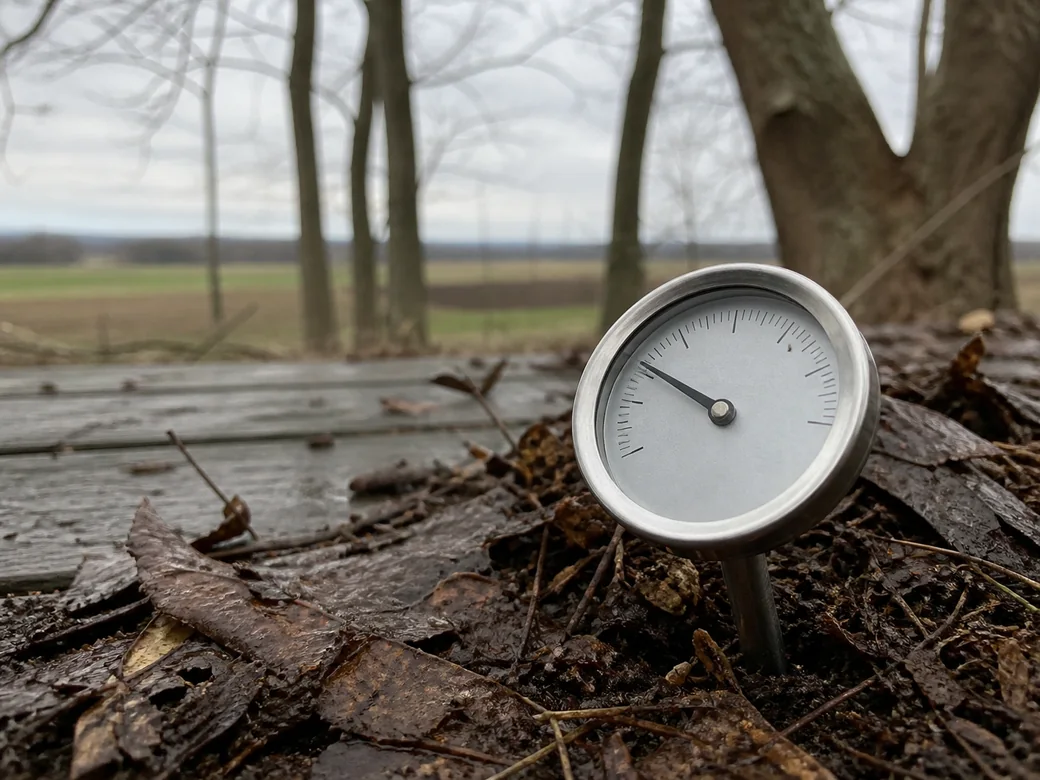
Take a soil reading rather than watching a calendar. The Iowa DNR names 53 degrees as the temperature to start looking, and that number is more useful than any published date.
- Soil trigger
- 53 degrees, per Iowa DNR
- Air pairing
- Days in the sixties with nights in the fifties
- Statewide window
- Early April through mid May
- The release
- A warm spring rain once the other conditions are already met
- Plant cues
- Squirrel-ear oak leaves, budding lilac, opening mayapple
Air temperature is the number people quote and the one that misleads them. A single warm afternoon does very little to ground that spent the night near freezing, which is why the DNR pairs sixties by day with fifties at night.
Warm rain is the release rather than the trigger.
Rain falling on ground that has not reached temperature does nothing, and rain on ground that has been sitting at 53 degrees for several days can bring a flush within the week.
Take the reading where you actually intend to hunt. A shaded north bottom and a sunny south bank on the same eighty acres can sit several degrees apart in the same hour.
Expect a lag once the rain arrives. Morels answer a warm soaking over several days, so the weekend after the rain usually beats the morning after it.
The plant cues the DNR lists are worth learning because they cost nothing to check.
Budding lilac and opening mayapple are the cues that sit at roughly the right moment, and oak leaves at squirrel-ear size mean that ground is closing rather than opening.
One reading is not a season either. Check the same ground every few days once it is close, because spring soil moves faster than most people expect.
Small gray morels are the usual first find. They are young, and on damp shaded ground they will keep growing, so leaving some and returning is often worth more than a full basket taken early.
How to read a dying elm
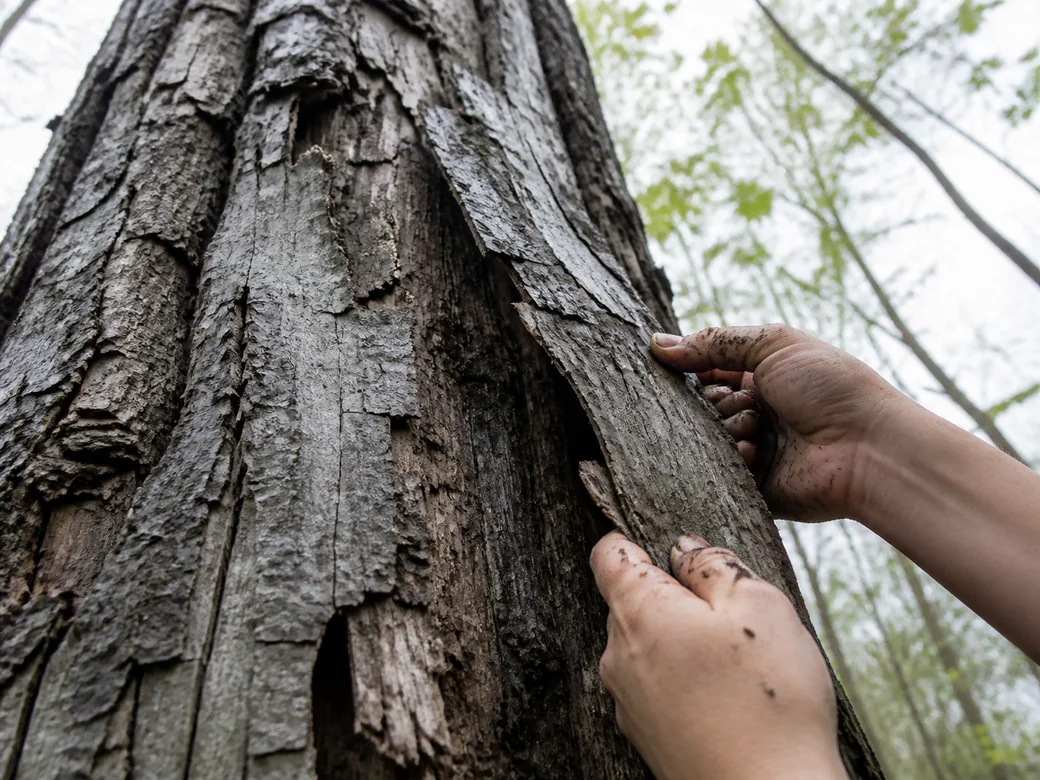
The elm is still the best tree in Iowa, but only for a narrow stretch of its death. The DNR is specific about which ones pay, and the mark is easy to read from thirty feet.
A tree that still carries bark but almost no leaves is the one to work.
That combination says the elm died recently enough that the ground around it has not moved on.
Once the bark has fallen away and the trunk stands bare and gray, that elm has usually finished. Hunters lose seasons returning to the same skeleton because it produced three springs ago.
Work the tree rather than the woods. Start at the trunk and spiral outward to about the width of the crown, since that is the ground the root system occupied.
An elm that produced last spring deserves one more check and rarely a third.
Noting the year it went bare tells you roughly how many springs it has left.
Orchards behave differently, and the DNR says so directly. An old apple orchard can stay productive longer than an elm does, which makes an abandoned farmstead worth more attention than its size suggests.
Iowa's true morels are the same handful of species across the state, so a tree that works in Allamakee County works the same way in Fremont.
Where the timber actually is
Iowa timber survives in a small number of shapes. Learning those shapes narrows a search far faster than learning more tree species.
| Iowa terrain | What it gives you | When to walk it |
|---|---|---|
| Creek and river bottoms | Moisture that holds after uplands dry, and the longest window in the state | Through the whole season, and last once uplands quit |
| Driftless northeast corner | Steep unglaciated ground with real slope aspect and more timber per square mile | Early on sunny faces, later in the shaded hollows |
| Loess Hills along the Missouri | Sharp west-facing bluffs that warm fast | Early, and briefly |
| Farm timber and fencerows | Scattered elm and old orchards nobody else walks | Whole season, if you have permission |
| Sandy bottoms, locust groves, pine plantings | DNR-named ground most hunters skip entirely | Mid-season, after a soaking rain |
River bottoms are the backbone of Iowa morel hunting. They hold moisture when the open ground has dried out, which stretches a short state season by a week or more at the end.
Black morels turn up in the sandier bottoms and the pine plantings earlier than the yellows do elsewhere in the state.
The Loess Hills are their own case in a state with little steep ground. Wind-blown soil piled into steep bluffs along the Missouri, and those west-facing slopes warm fast and dry out just as fast.
Northeast Iowa is the exception to most of this article. Allamakee, Clayton and Winneshiek hold the steepest and most heavily timbered ground in the state, and a hunter there works slope aspect the way any Driftless hunter does.
Creek islands and timber edges are on the DNR's own list, and both are ground most hunters walk straight past. An island takes effort to reach, and an edge looks too exposed to bother with, so both stay unpicked.
The same handful of morels turns up across Iowa timber, and which one is in your hand tells you where the season stands.
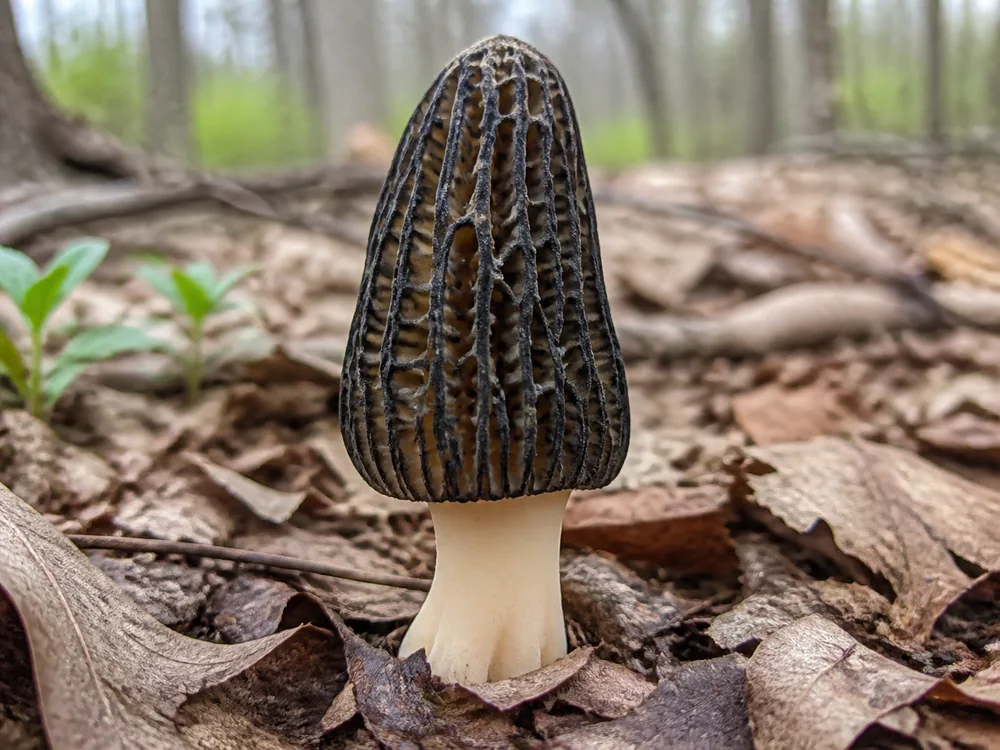 First upBlack morelEarliest of the run, and easy to walk over in dark litter
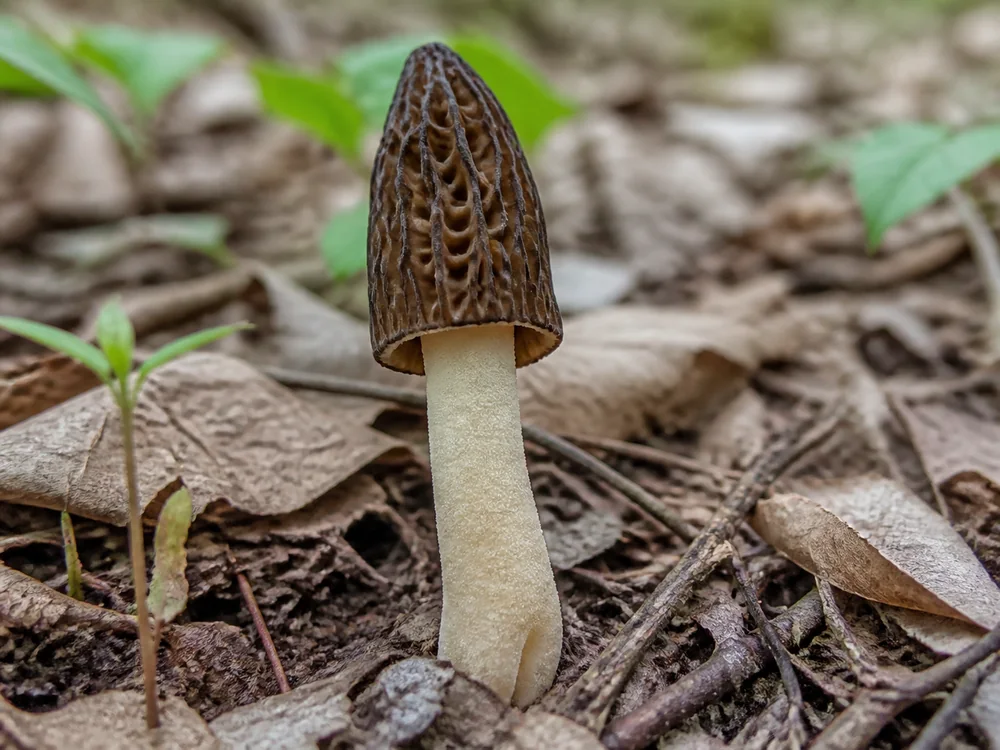 Middle of the runHalf-free morelCap hangs loose below where it joins the stem
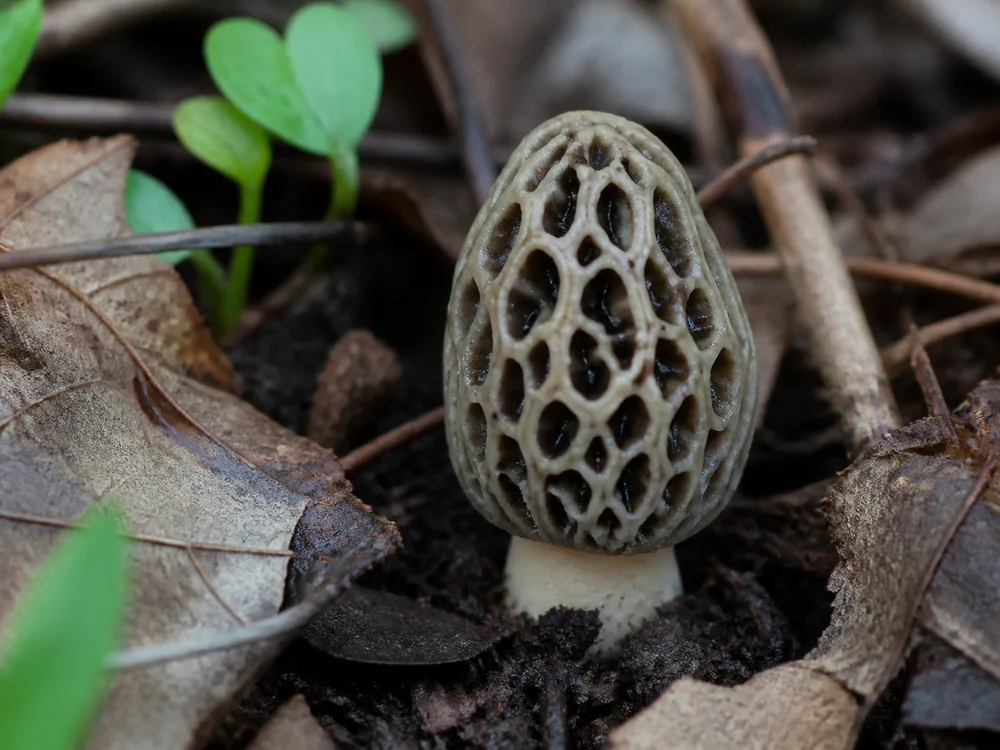 Early to middleGray morelThe young form most people find first
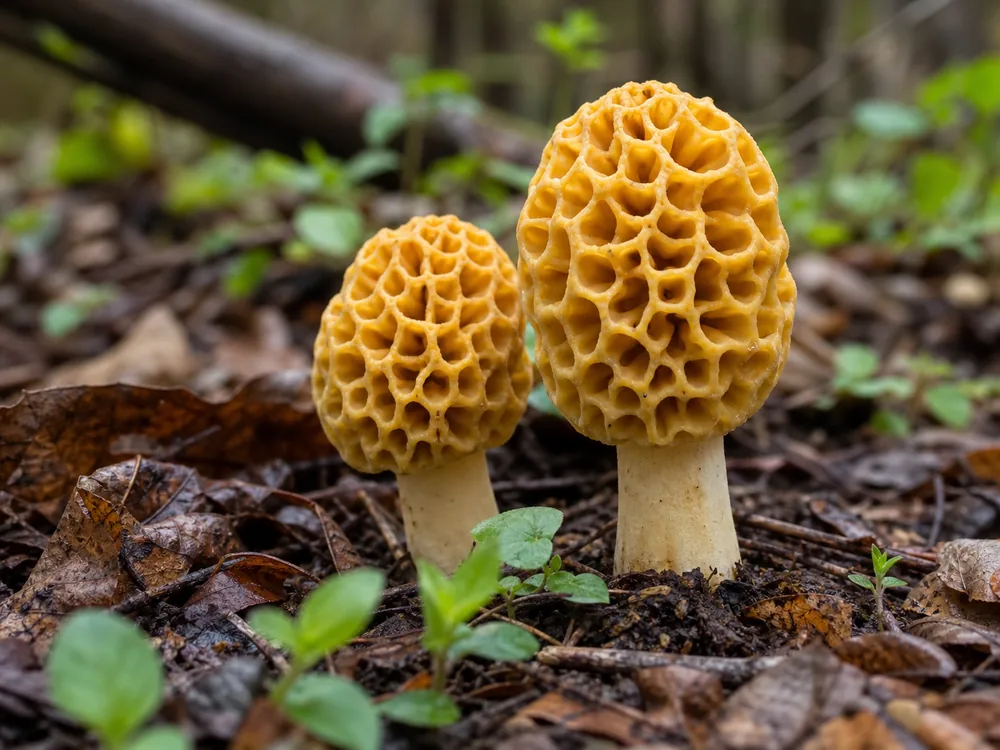 Last and largestYellow morelCarries the end of the season
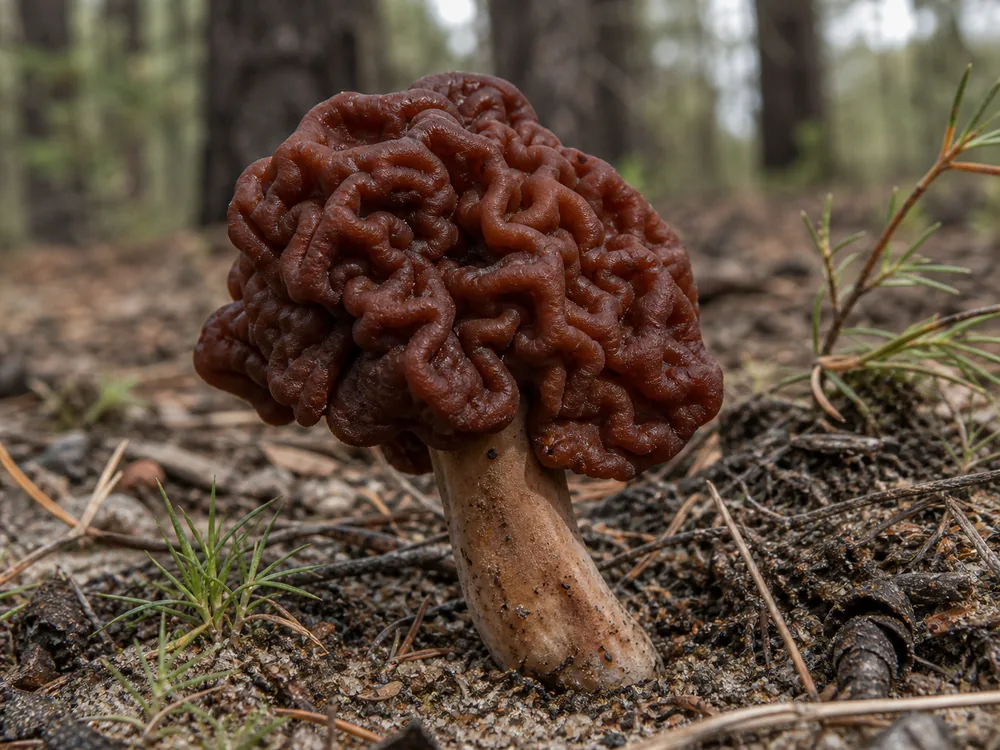 Same weeks, never edibleFalse morelWrinkled and lobed, with no honeycomb pits
Half-free morels show up in the same bottoms through the middle of the run, and finding them usually means the largest yellows on that ground are still ahead.

How to get onto ground you may legally walk
Iowa access divides into four kinds of ground, and they do not follow one rule.
- State forests and state parks, which are open and small, totalling under 45,000 forest acres
- County conservation board parks, which are common in Iowa and set their own rules locally
- The public hunting atlas, covering roughly 764,000 acres of ground open to public hunting
- Private farm timber, which is most of the state's woods and needs a conversation
The walk-in access program is the trap worth knowing about. Iowa enrolls private tracts for public walk-in hunting, and those contracts cover hunting only, with other activities prohibited.
That means a walk-in tract is not a morel permission. The sign at the gate is about deer and turkeys, and picking mushrooms there is outside what the landowner agreed to.
County conservation ground is the underused option.
Iowa counties run their own parks and wildlife areas, the rules vary by county, and a phone call to the county board answers the question in a minute.
The four major state forest units sit on ground that was too rough or too sandy to plow, which is exactly why the state was able to buy it. Public timber in Iowa is largely the land nobody wanted.
Private permission is still where most Iowa morels come from.
Ask in February or March rather than the week you want to walk, be specific about mushrooms rather than hunting, and the answer is yes more often than people expect.
Ask in a way that is easy to say yes to. Name the mushrooms, name the weeks, offer to share what you find, and make clear you will not be driving on the ground or leaving gates open.
Timing the ask matters as much as the wording, and on farm ground it matters more. A landowner asked in March has time to think it over, while the same question on a Saturday morning in late April sounds like somebody already standing in the driveway.
Basic foraging safety rules apply once you are through the gate, and on borrowed ground they matter more, because the next hunter's permission depends on how this one behaves.
What farm country adds to the safety check
Row-crop country puts one hazard in front of a forager that timbered states do not. The Iowa DNR advises collecting away from ground treated with pesticides or exposed to heavy metals.
Field edges are where that caution bites. A timber margin against a sprayed field is exactly the sort of warm, open ground that produces early, and it is the ground most likely to have caught drift.
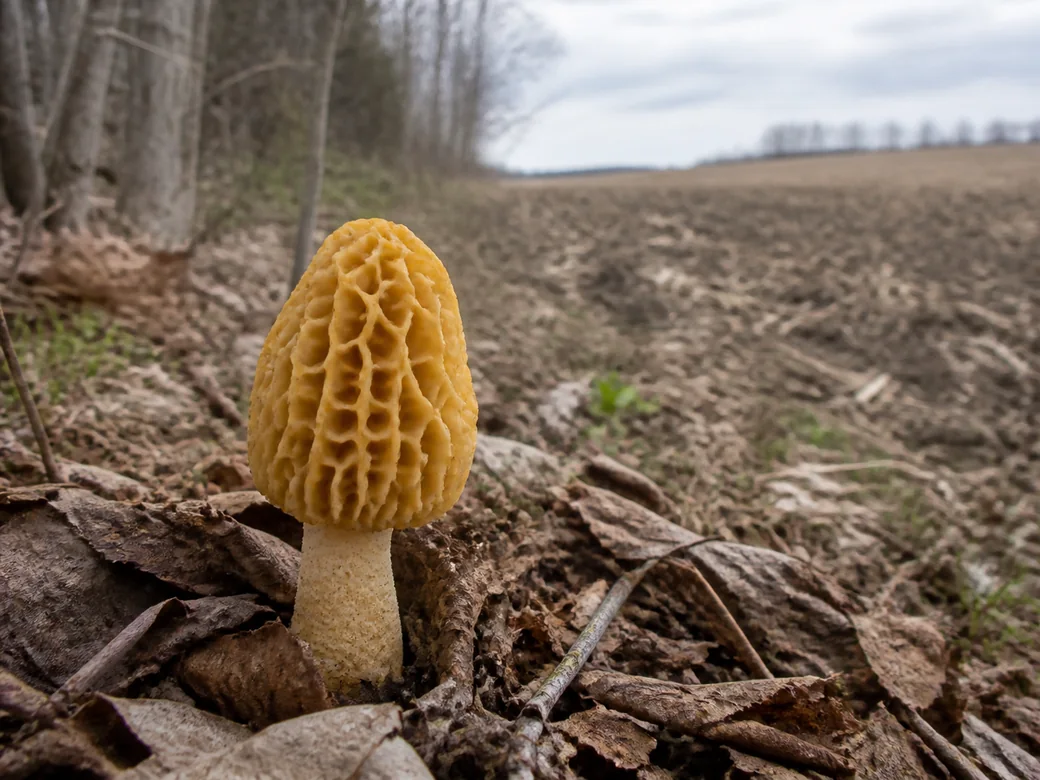
Walking twenty yards deeper into the timber costs almost nothing and removes the question entirely.
The deeper timber is better hunting anyway. Interior ground holds moisture longer than a wind-exposed edge, so walking in usually pays twice.
April also puts armed hunters in the same woods. Iowa DNR tells mushroom hunters to wear blaze orange and to avoid red, white and blue, the colors of a tom turkey's head.
Then there is the mushroom itself. A false morel is wrinkled, lobed, or brain-like rather than pitted, and cutting one open reveals cottony tissue instead of an empty chamber.
Iowa DNR is blunt about raw morels, and the point is worth repeating.
Morels are unsafe raw, they must always be cooked, and they should be cooked before freezing rather than after.
Eat a small portion the first time you take morels from new ground, and skip alcohol with that meal. A few people react badly to well-cooked morels that everyone else at the table handles without trouble.
If mushroom poisoning symptoms begin hours after a meal rather than minutes, treat the delay as the warning it is and call Poison Control at 1-800-222-1222.