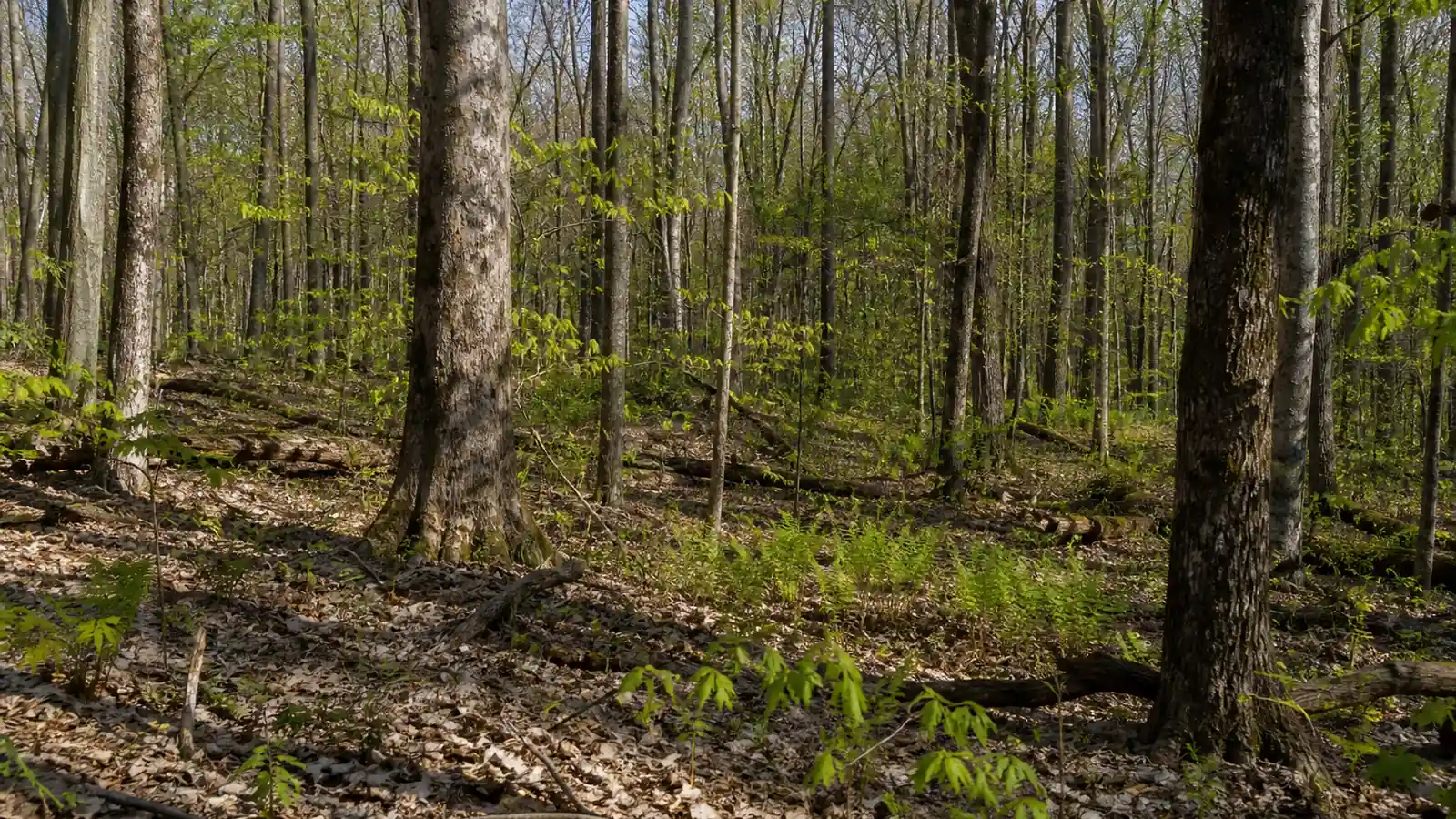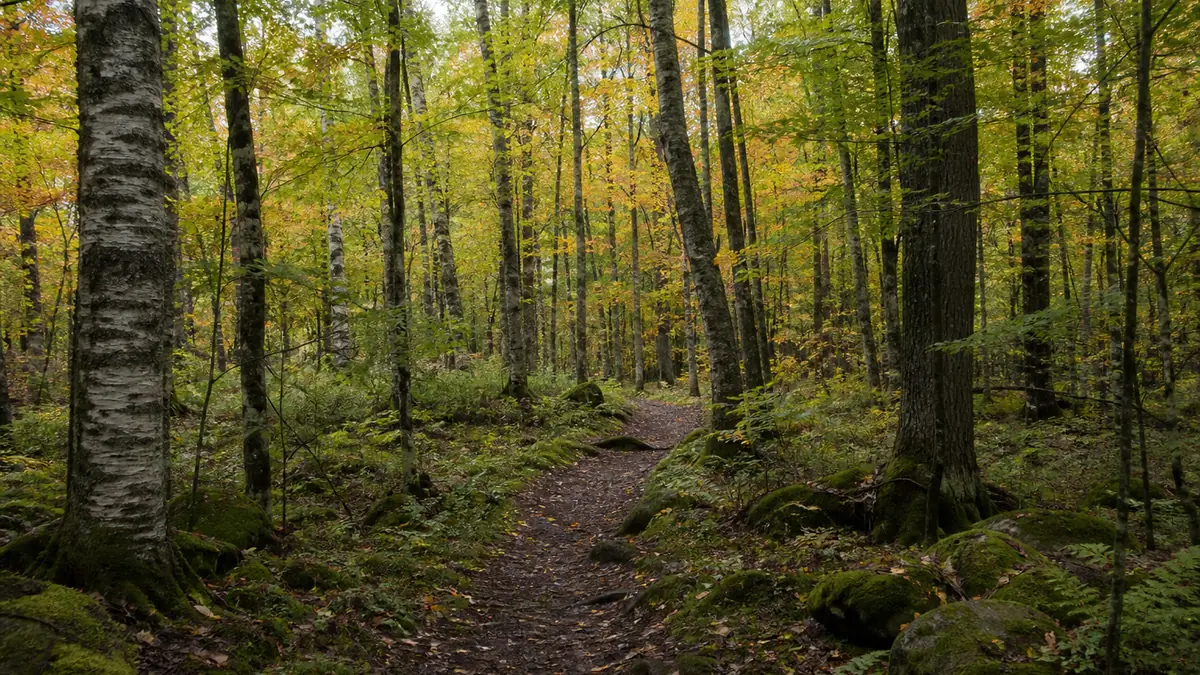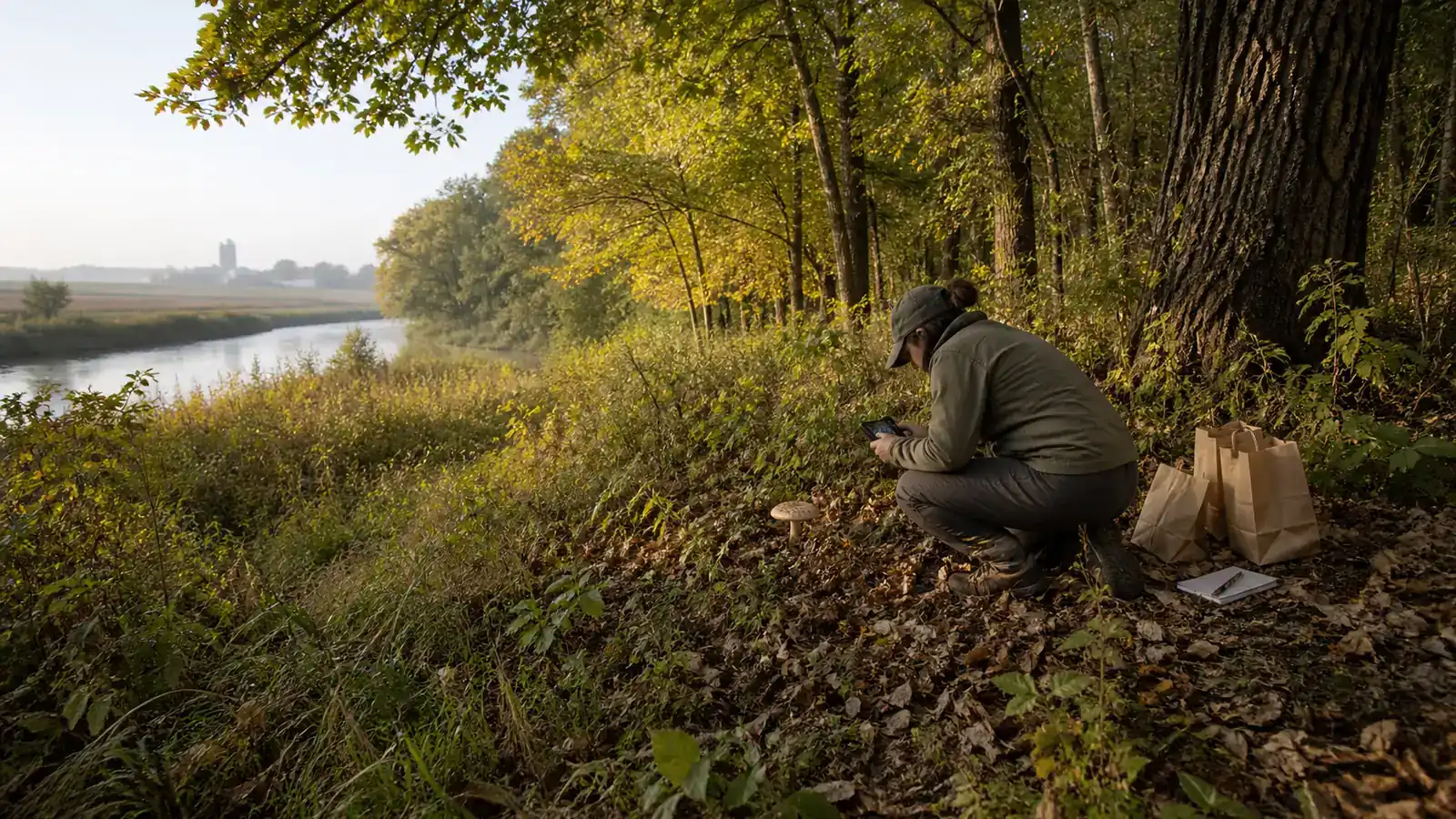
A practical Midwest field plan for following spring warming north, switching habitat after morel season, checking property rules, and preserving complete identification evidence.
Midwest mushroom foraging can begin with morels in the lower part of the region during early spring and continue into June near the northern Great Lakes. The useful date changes with soil warming, recent rain, wind, tree condition, and the property you can legally enter.
That moving season is more useful than a regional month printed on a calendar.
Follow spring north, then change the search after leaf-out. Summer rain shifts attention to shaded hardwood soil and dead wood, while autumn concentrates the walk around mature oaks, wounds, stumps, and fallen logs.
- Spring signal
- Morels can begin when 4-inch soil temperatures reach roughly 50 to 60 degrees Fahrenheit
- Regional spread
- Southern Illinois can start in March while northern Minnesota may continue into June
- Summer reset
- Useful rain matters only when suitable soil or wood retains moisture
- Fall search
- Oak bases and dead hardwood support different searches than spring river timber
When does morel season start in the Midwest?
Treat spring as a front moving across the Midwest rather than an opening day. Southern Missouri and Illinois usually warm first, Iowa and southern Wisconsin follow, and northern Minnesota, Wisconsin, and Michigan close the regional run.
Illinois Extension reports that morels can appear in southern Illinois as early as March and then move across the state over the following weeks. Minnesota Extension places the usual southern Minnesota window from late April through May, with northern finds possible into June.
Those endpoints do not create a promise for the states between them.
Iowa State Extension identifies roughly 50 to 60 degrees Fahrenheit at a 4-inch soil depth as a range where morels can begin appearing. Winter chilling, the speed of spring warming, and available moisture still influence whether a site produces.
Follow the warming front, but test the woods under your boots. A town weather station can show warm air while a shaded river bank, north-facing slope, or leaf-covered woodlot remains cold.
- Start south or on exposed low ground when the season is early.
- Shift north, uphill, or toward shaded aspects after southern reports become frequent.
- Compare soil warmth with several days of rain and drying wind.
- Treat nearby verified observations as timing evidence, never as proof that your site or specimen matches.
The best redirect may be one county away rather than one state away because a sheltered bottom and an exposed upland can occupy different parts of spring during the same afternoon.

Record when a promising site is still cold instead of writing it off. That negative observation gives you a reason to return after several mild nights rather than driving randomly the next weekend.
ForagingMushroom foraging laws in France: what the five liter rule meansWhere do you look in farm country?
Much of the Midwest is agricultural ground broken by narrow river corridors, farm shelterbelts, old orchards, and isolated woodlots. These fragments reward a focused loop because every tree edge, drainage line, and patch of dead wood is close enough to inspect deliberately.
Begin with the features that carry the most useful spring information.
- Walk wooded edges where sun warms the ground but leaf litter still holds moisture.
- Check declining elm, ash, poplar, and old apple without assuming the tree proves a nearby mushroom's identity.
- Follow sandy or silty river terraces above active floodwater.
- Inspect disturbed woods, old logging edges, and recent tree decline while avoiding unstable snags.
University of Minnesota Extension lists woodland edges, declining elm, ash, poplar, apple, burns, logged woods, and disturbed areas among reported morel settings. Missouri guidance also points to sandy river bottoms with cottonwood, sycamore, and ash.
Note
A tree association tells you where to spend attention. It cannot confirm a mushroom name, edibility, or safety.
Use a loop instead of wandering across the entire parcel. Walk the sunny edge, circle selected declining trees, follow the drainage line, then return through the shaded side where warming will arrive later.
One complete specimen carries more information than a bag of detached caps.
Photograph the mushroom in place, the underside or cap attachment, the full stem base, nearby trees, and the growth pattern before disturbing it. If collection is legal, keep the specimen connected to a numbered field note.

A true morel has a pitted cap and one continuous hollow interior from the cap through the stem. False morels can share the same spring woods, so a hollow section supports a complete identification rather than serving as a stand-alone eating test.
What can you find after morel season ends?
Once the canopy closes and the ground warms beyond the local morel window, stop repeating the spring search and ask whether rain reached habitat where shade protected the moisture.
Chanterelle candidates move the search onto hardwood soil and leaf litter. Missouri Department of Conservation guidance places them on the ground in hardwood forest, often in scattered groups, and reports a broad May through October fruiting period in suitable moist habitat.
Leaf-out changes the habitat job by requiring a summer search to separate soil-associated candidates from fungi attached to wood instead of grouping every colorful find under one seasonal label.
- Search shaded hardwood soil for chanterelle and black trumpet candidates.
- Scan dead or dying hardwood for chicken-of-the-woods and oyster candidates.
- Use protected drainage lines when sun and wind have dried open edges.
Orange color does not identify a chanterelle. Its underside has blunt, forked ridges that continue down the stem, while jack-o'-lantern mushrooms have sharp true gills and grow from wood, sometimes from buried wood that makes the cluster appear terrestrial.
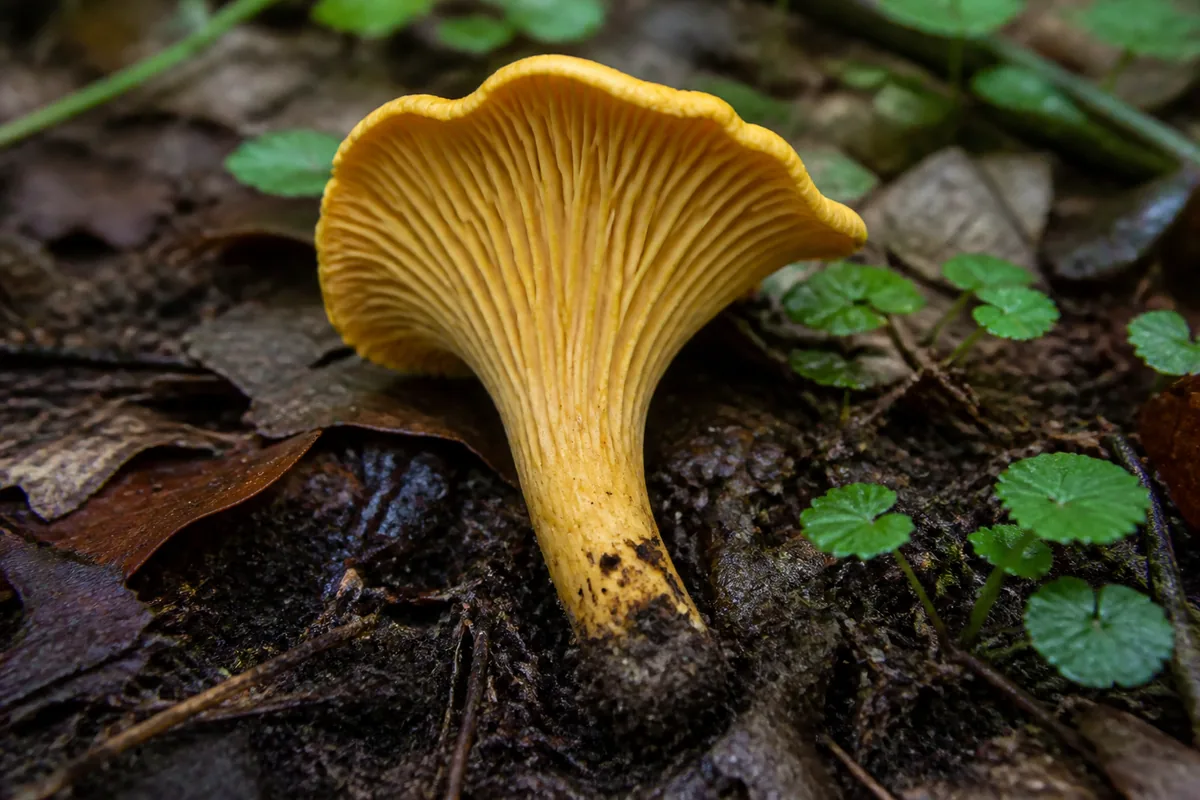
The image in your field record should also show whether the fruit body arose from soil, a root, or decaying wood. That connection can overturn a first impression that looked convincing from above.
Summer rain can produce several unrelated species within a few yards.
Keep each candidate separate and label it where it was found. Mixing specimens removes the connection between one stem, one cap, one substrate, and one set of photographs.
ForagingMushroom foraging laws in Germany: protected species and small quantitiesWhat grows in the Midwest in autumn?
Autumn replaces the broad summer moisture search with a repeatable substrate circuit. Cooling weather slows evaporation, and familiar oaks or logs can be checked again after each useful rain.
Start at the root flare of mature or declining oaks, where hen-of-the-woods can develop as a branching cluster. Continue to standing deadwood, wounds, stumps, and fallen hardwood for chicken-of-the-woods, oyster, and lion's mane candidates.
Marked substrate creates the fall circuit, and revisiting six known oaks plus three deadwood sites after changing weather can be more informative than covering several miles of unfamiliar forest once.
The circuit works because the search questions stay separate.
- Circle the oak base without kicking away all surrounding litter.
- Scan the standing trunk from ground level to visible wounds.
- Walk both sides of fallen hardwood and inspect the shaded underside.
- Photograph the attachment before removing one representative specimen where collection is allowed.
Hen-of-the-woods grows as a broad rosette at an oak base or from buried roots. Chicken-of-the-woods forms shelves on wood, while oyster mushrooms form their own attached clusters and still require a complete local identification.
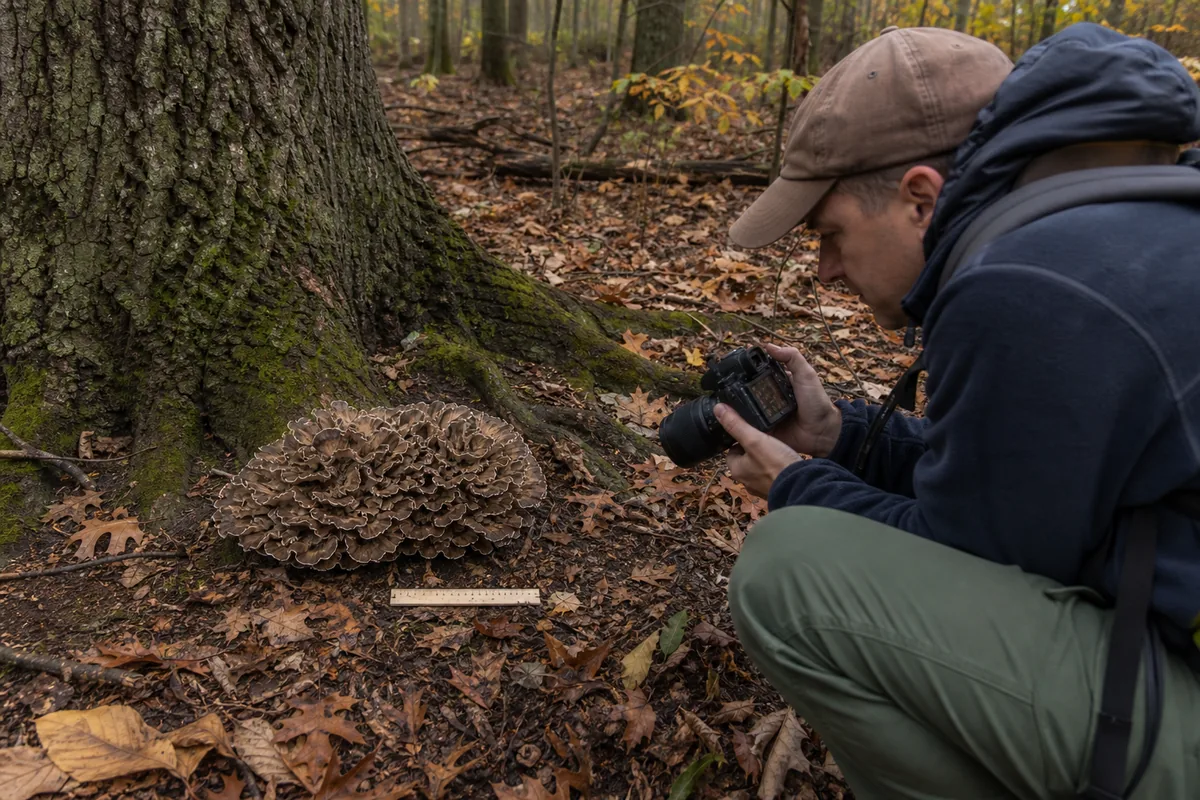
Do not cut away every old or damaged portion to make a specimen look clean. Age, insects, color change, and attachment remain useful evidence for an expert even when they make the find less attractive.
Return timing matters as much as the circuit itself.
A small firm cluster can change rapidly after mild rain, while an old waterlogged specimen will continue to lose useful characters. Record both outcomes so the next visit follows the site rather than a generic fall date.
ForagingMushroom foraging laws in the UK: what is actually legalHow does a cold front change the search?
A Midwest cold front can stop fruiting, damage exposed mushrooms, or preserve moisture while lowering activity. The correct response depends on what happened to the specimen, not on a rule that every frost ends the season.
Cold and dry springs can nearly eliminate a local morel crop, while warm wet conditions improve the chance of emergence. Later in the year, a hard freeze can leave fruit bodies translucent, waterlogged, split, or collapsing after they thaw.
Warning
Leave a specimen when frost, decay, insects, or handling have erased the underside, stem base, attachment, odor, texture, or color changes needed for assessment.
Poor condition means missing evidence because a recognizable outline is not enough when the characters that separate local lookalikes have already broken down.
- Leave mushrooms with collapsing or glassy tissue after a freeze.
- Reject waterlogged specimens that tear before the full base or attachment can be preserved.
- Skip dried caps whose underside and bruising response can no longer be assessed.
- Keep insect-damaged or moldy material out of every food container.
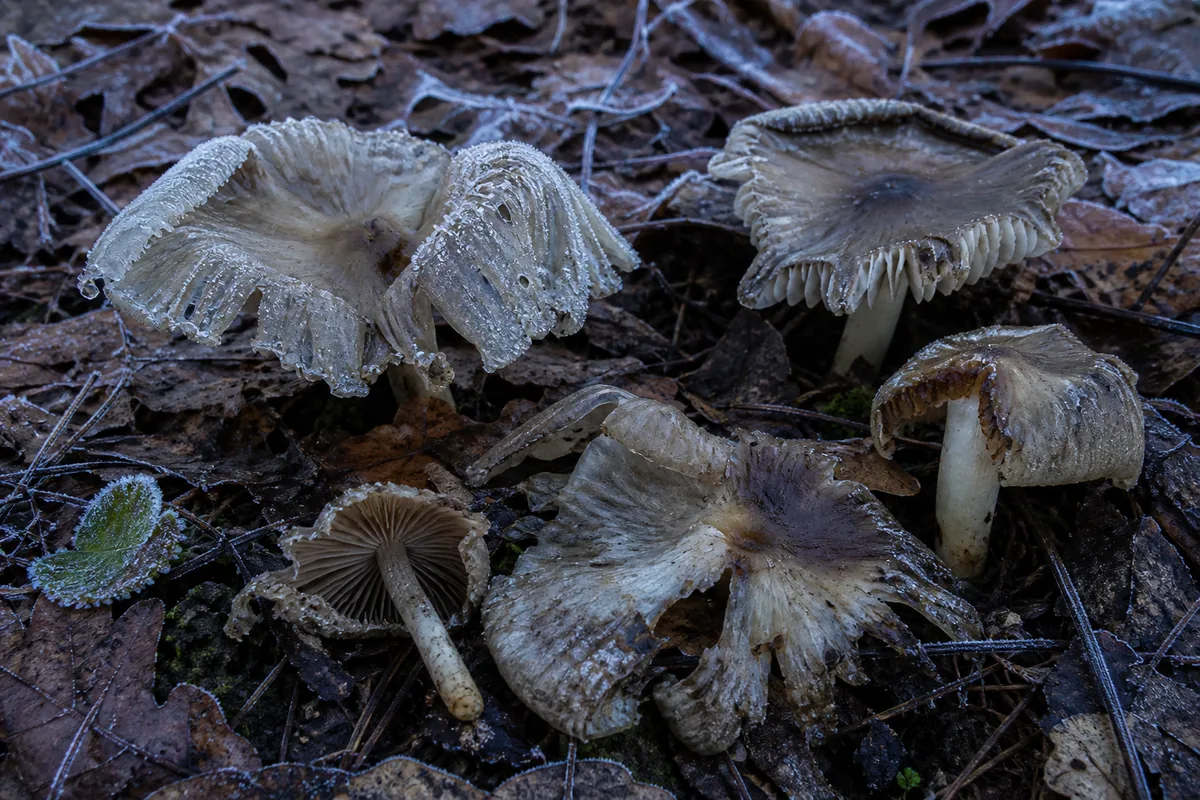
Cooking cannot repair an uncertain identification, and it does not make every poisonous mushroom safe. Poison Control also warns that serious symptoms can be delayed for hours, including poisonings that damage the liver.
If a damaged specimen is ecologically interesting, photograph it and leave it in place. Observation remains useful even when the material no longer supports collection or eating.
Can you pick mushrooms on public land here?
Public access may let you enter, but it does not automatically let you remove mushrooms.
Minnesota state parks allow edible fruits and mushrooms for personal consumption and prohibit commercial harvesting. Wisconsin's state park system also permits wild mushrooms to be picked by hand for personal consumption.
Those examples are narrow, not a Midwest rule.
Minnesota Scientific and Natural Areas generally prohibit collection except at specifically named sites, while nature centers, municipal parks, preserves, trails, and individual state properties can impose their own restrictions. Missouri guidance also tells visitors to check the current rule for the exact area and notes that some sites prohibit taking wild edibles.
Tip
Confirm the named property, managing authority, collection rule, personal-use limit, protected zones, and current closure before using weather or habitat to plan the trip.
Run the permission check in this order.
- Identify the legal landowner and management unit on the current official map.
- Read the current rule for fungi, natural materials, personal use, quantity, and commercial activity.
- Check for preserve boundaries, research areas, trail-only rules, and temporary closures.
- Contact the property office when the published language is silent or unclear.
- Obtain permission from the current private owner and keep a written record.
No clear collection authority means no collection. Photography and observation may still be possible where the access rule allows them, but a productive fruiting does not create permission.
Commercial intent changes the legal question again. Mushrooms gathered for personal use often cannot be sold, and separate training, licenses, or permits can apply to wild mushrooms entering commerce.
How should you plan a Midwest trip?
Use two legal stops that answer different habitat questions, such as a river woodlot and an upland oak stand, instead of repeating the same failed bet at two dry trailheads.
The first stop tests the leading seasonal signal. The second gives you a redirect when soil warmth, moisture, wind exposure, or substrate differs from the forecast.
Separation protects the evidence chain from the forest to expert review. It also prevents one uncertain cap from being paired with the stem, substrate, or photograph of another mushroom.
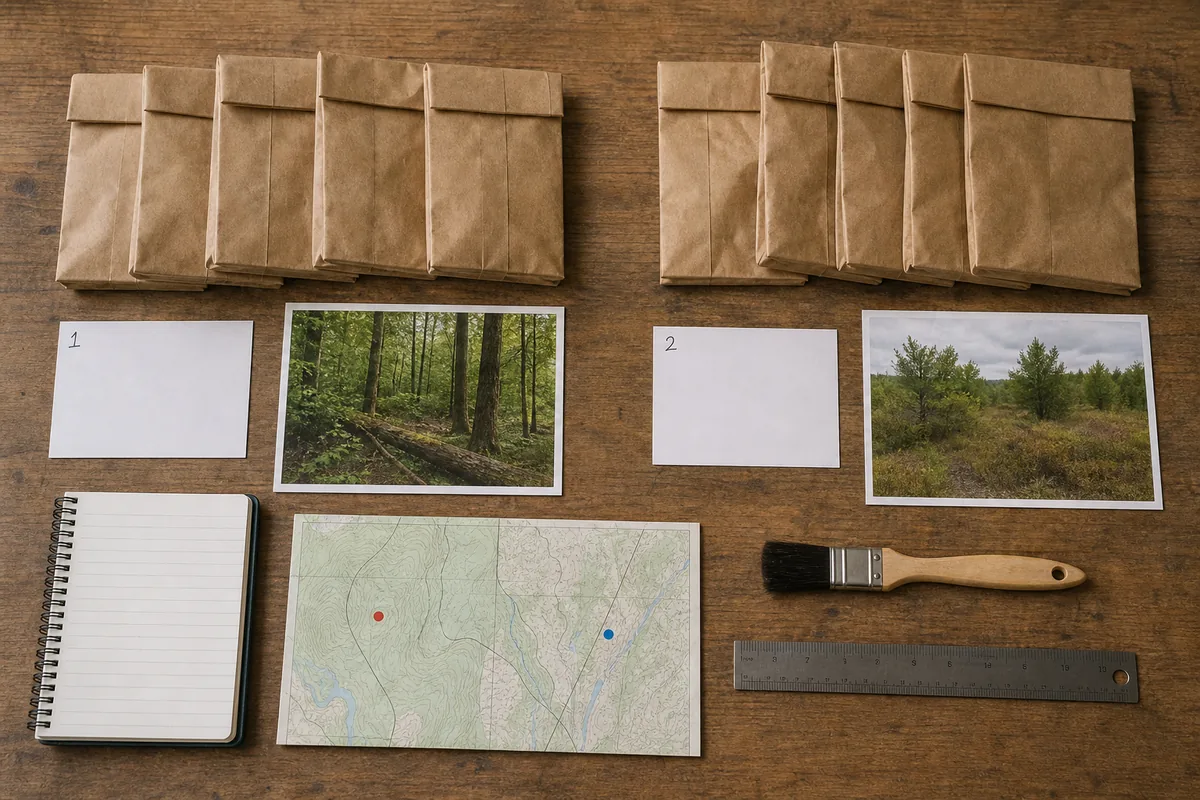
The field day can end successfully without an edible collection.
Use the evidence to choose the honest outcome.
Legal site and complete specimen
DocumentPreserve every character before seeking local confirmation
One stop still holds moisture
RedirectChange habitat without changing the safety standard
Rule or boundary remains unclear
LeaveAccess does not prove collection authority
Specimen is frozen, mixed, decayed, or incomplete
LeaveMissing characters prevent a defensible assessment
Someone may have eaten an unknown mushroom
Call Poison ControlContact U.S. Poison Control immediately at 1-800-222-1222
Habitat and weather tell you where to look. They never prove a species name or make an edibility decision.
If anyone may have eaten an unknown wild mushroom, call Poison Control immediately at 1-800-222-1222 in the United States. Keep uncooked material, photographs, field notes, cooking details, the amount eaten, and the exposure time for the specialists.
Sources & References
- Iowa State University Extension, Soil Temperatures as Predictors for Mushroom Emergence Four-inch soil warmth, chilling, spring warming, and moisture as morel emergence signals.
- University of Minnesota Extension, Harvesting Morel Mushrooms Minnesota spring timing, tree associations, woodland edges, disturbance, and safety.
- University of Illinois Extension, Spring Brings Opportunity to Forage Wild Mushrooms Illinois northward spring progression, seasonal species, and property-rule caution.
- Missouri Department of Conservation, Chanterelles Hardwood-soil habitat, May through October fruiting, and blunt ridges versus true gills.
- Missouri Department of Conservation, Good Shoes and Curiosity River-bottom habitat, post-rain searches, autumn substrates, identification, and land rules.
- Wisconsin Department of Natural Resources, Gathering in State Parks and Forests Personal-use mushroom collection in the Wisconsin state park system.
- Minnesota Department of Natural Resources, State Park Rules Personal-use mushroom collection and commercial-harvest restriction in Minnesota state parks.
- Poison Control, Wild Mushroom Warning Expert identification, cooking limitations, delayed symptoms, and emergency contact guidance.