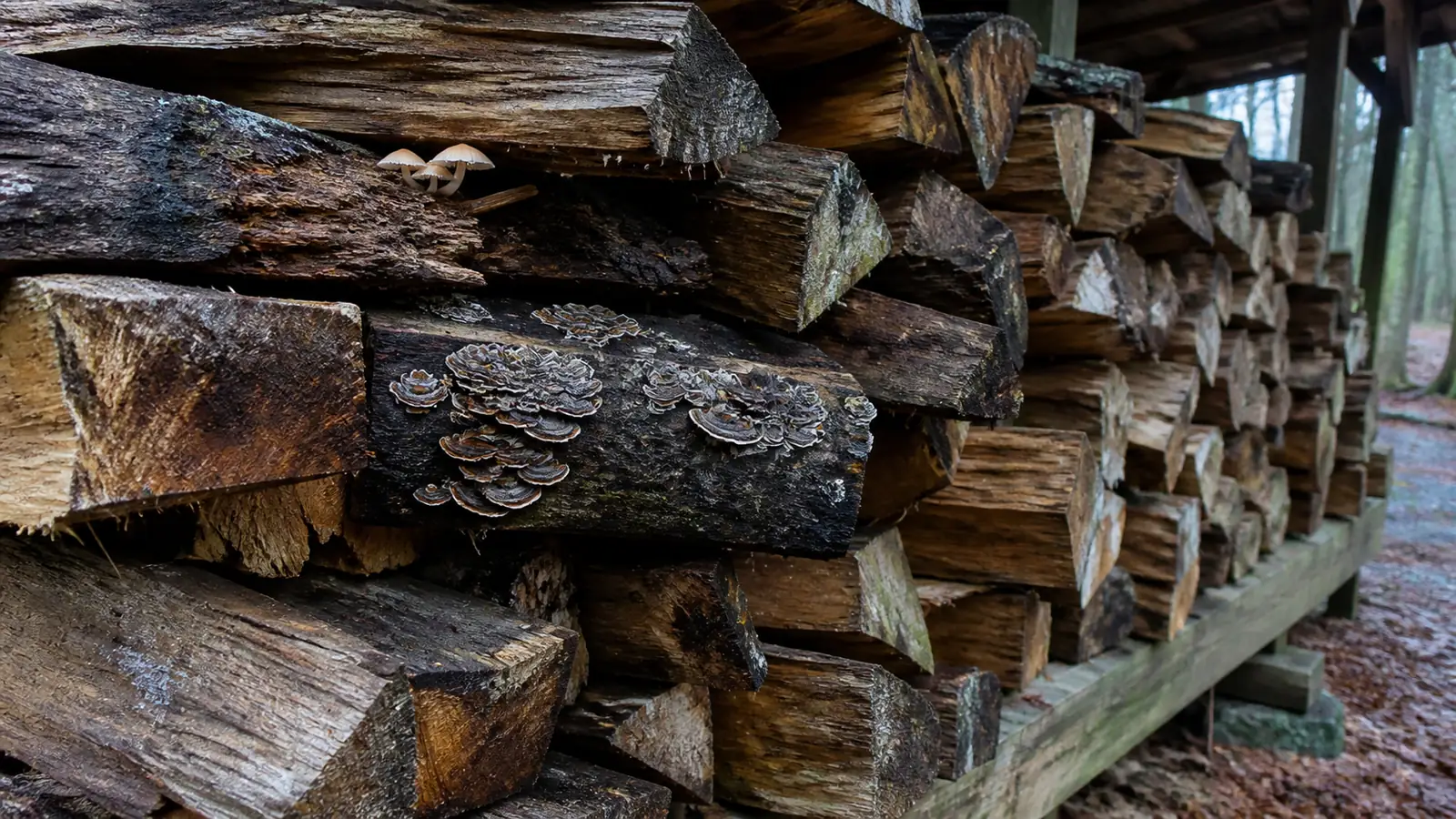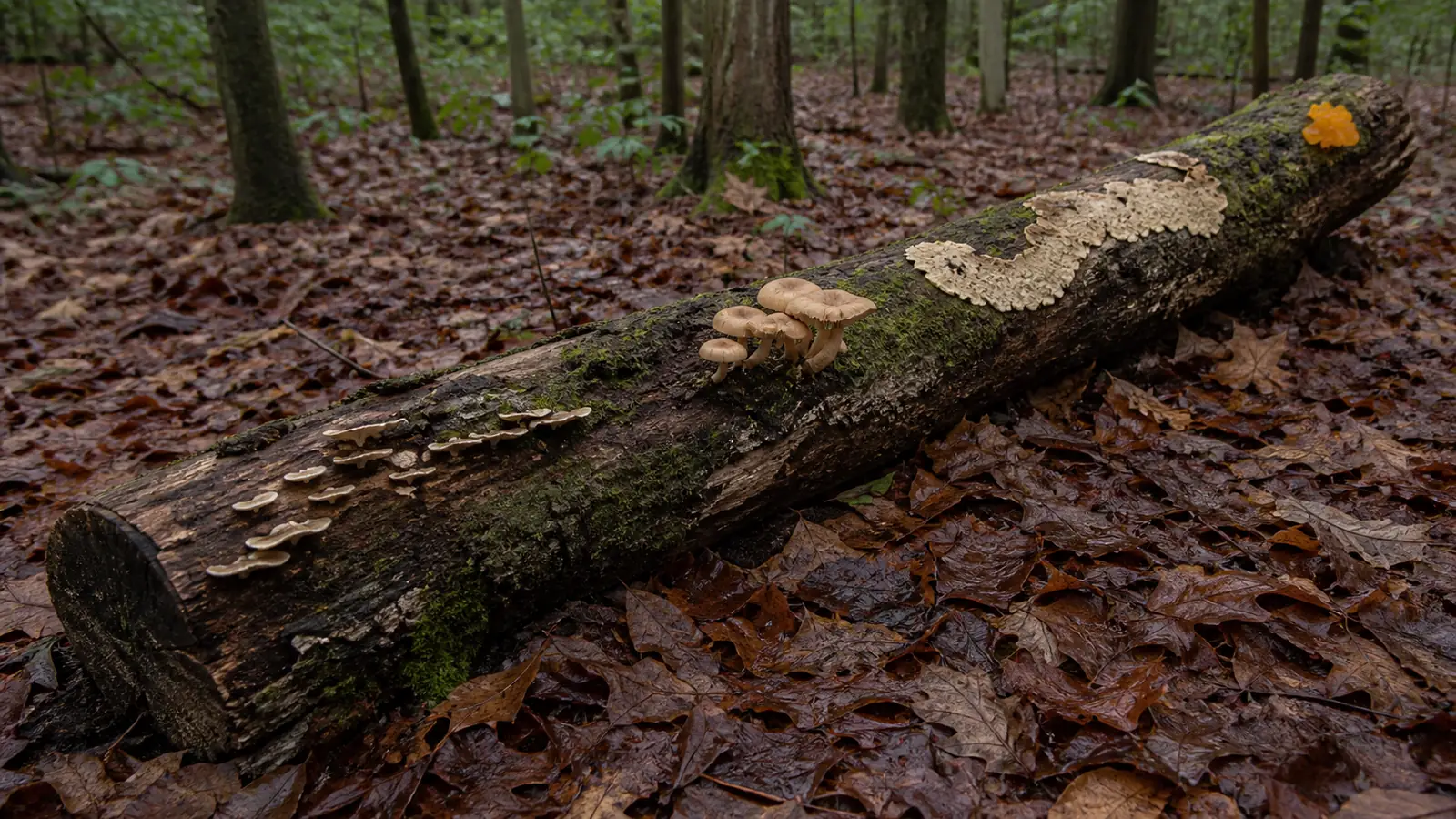
Mushrooms on a dead log change as bark loosens, wood softens, and the log settles into the forest floor. Identify the fruiting form first, then use host tree, decay stage, rot pattern, and attachment as supporting evidence.
A dead log can support many fungi during its long breakdown, so the fruiting bodies visible after one rain are only a snapshot. The useful first questions are what form each fungus has and what condition the wood has reached.
Those observations can narrow an identification, but the substrate cannot name the species. A hard bark-covered log and a soft mossy log are different habitats even when they came from the same kind of tree.
Read the log and the fungus together because neither one supplies a safe food verdict on its own.
What Fungi Grow on Dead Logs?
Fallen wood can carry thin shelves, thick hoof-shaped conks, gilled caps, tooth fungi, cups, crusts, and gelatinous lobes. These shapes are reproductive structures produced by fungal mycelium that has already colonized some part of the wood.
Six familiar profiles show why a log should be read as a set of possible body forms rather than as one mushroom habitat.
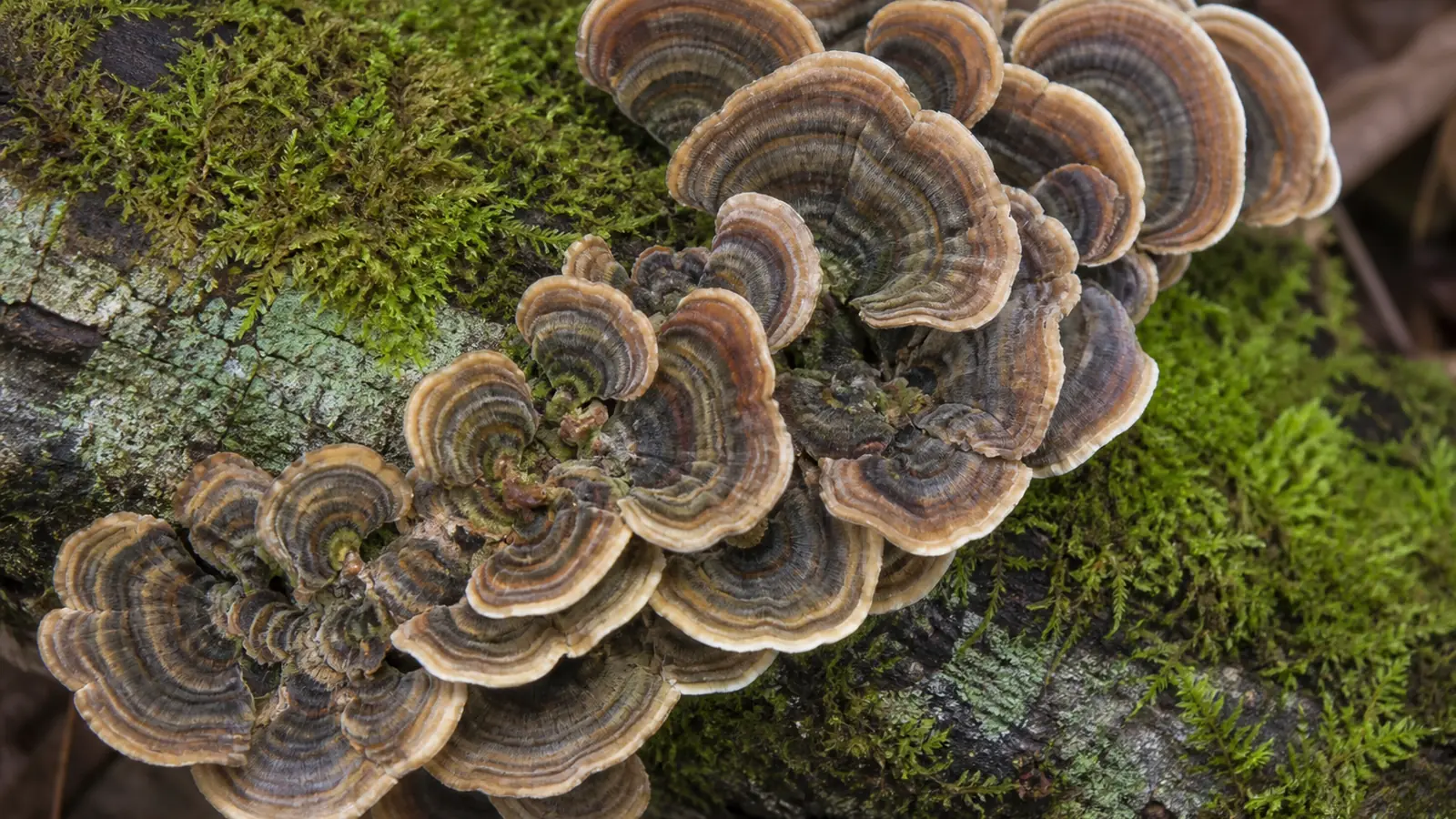 Thin pore-bearing shelvesTurkey TailConcentric zones on top matter only after minute pores are confirmed underneath.
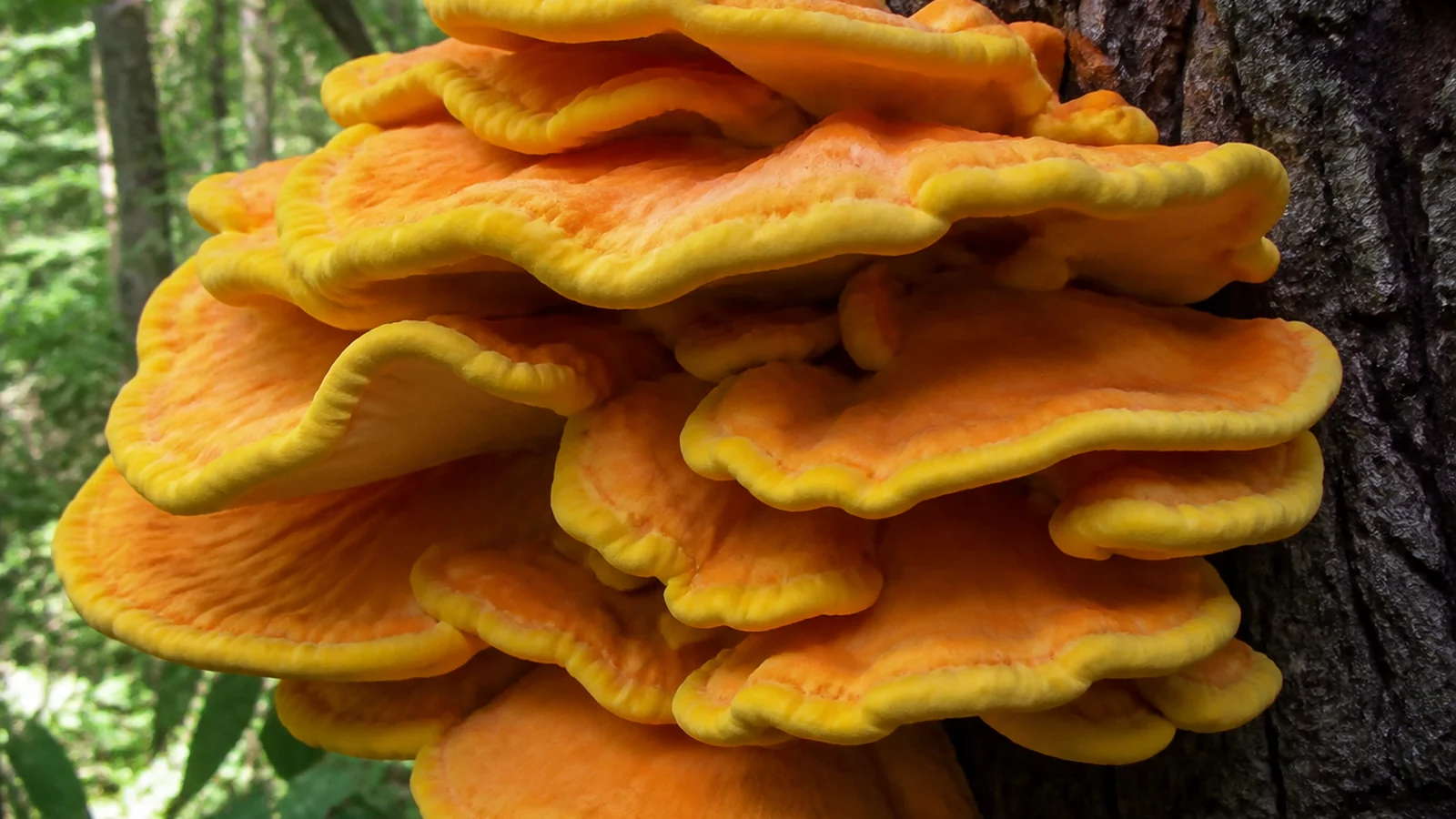 Thick orange pore-bearing shelvesChicken of the WoodsFresh fans are fleshy and brightly colored, but the host, underside, age, and regional species still need confirmation.
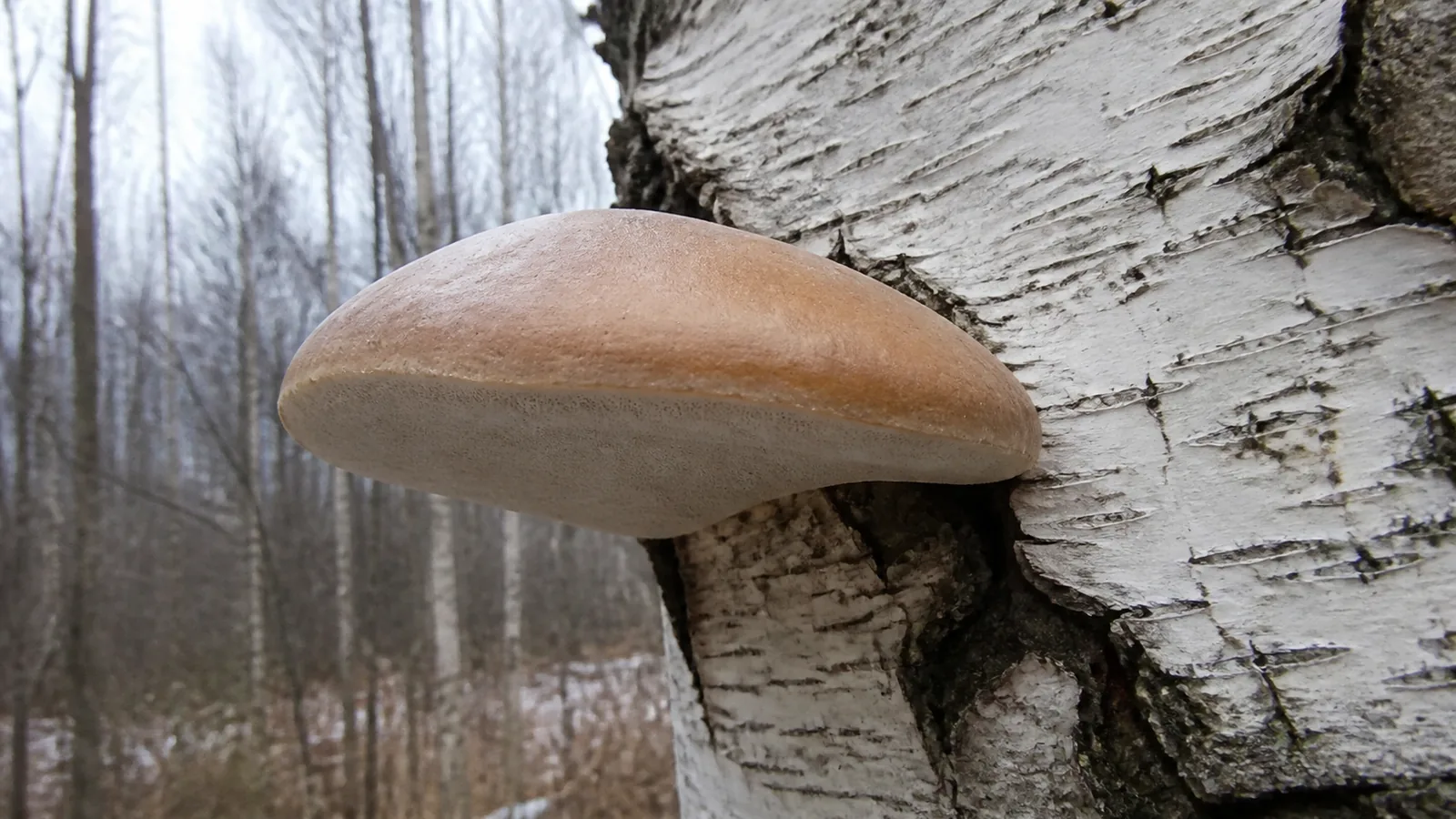 Single thick bracket on birchBirch PolyporeA smooth unzoned cap, fine pale pores, thick corky flesh, and a confirmed birch host point toward this annual polypore.
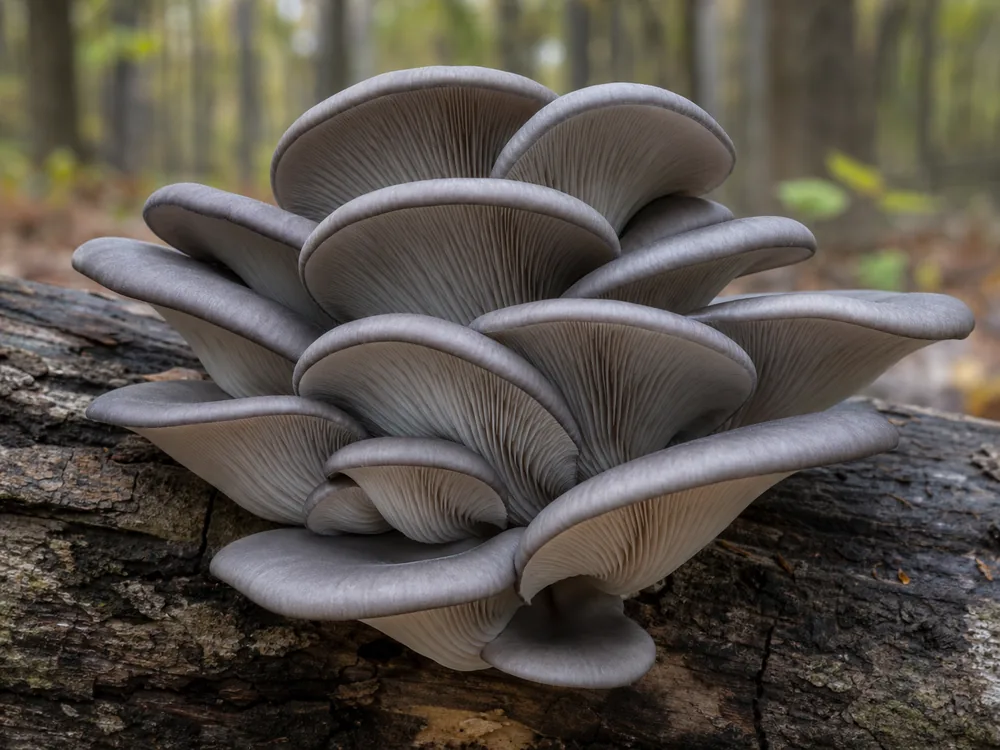 Gilled shelf clustersOyster MushroomWhite to gray caps usually have decurrent gills and a short off-center stem or none.
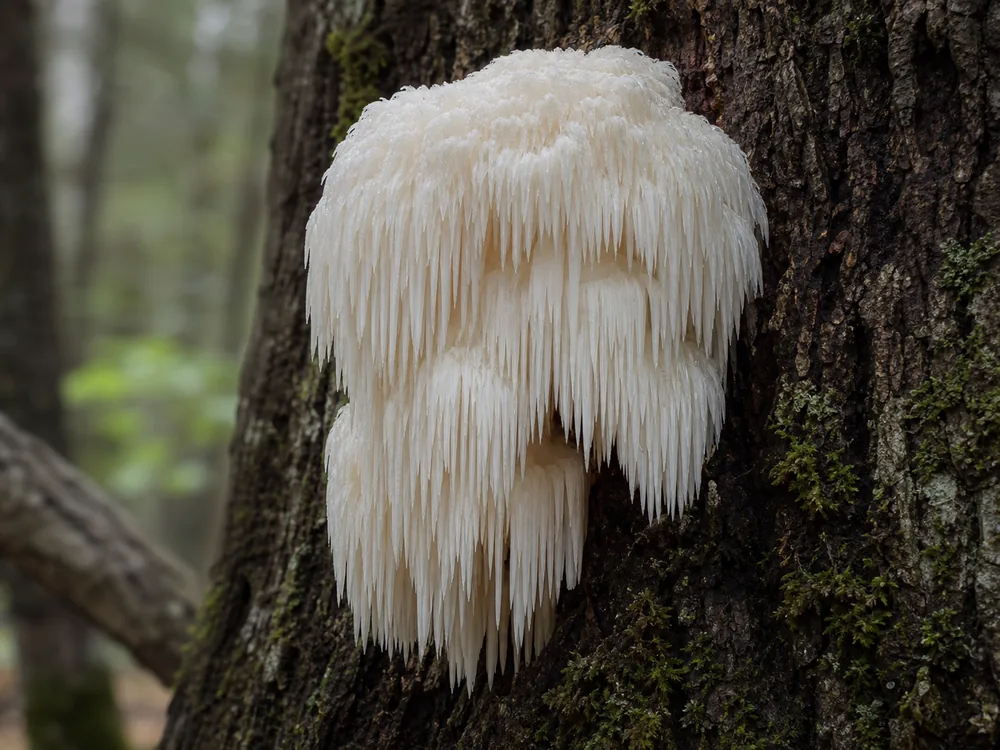 Hanging teethLion's ManeA young fruiting body forms one white unbranched mass of downward-pointing spines on hardwood.
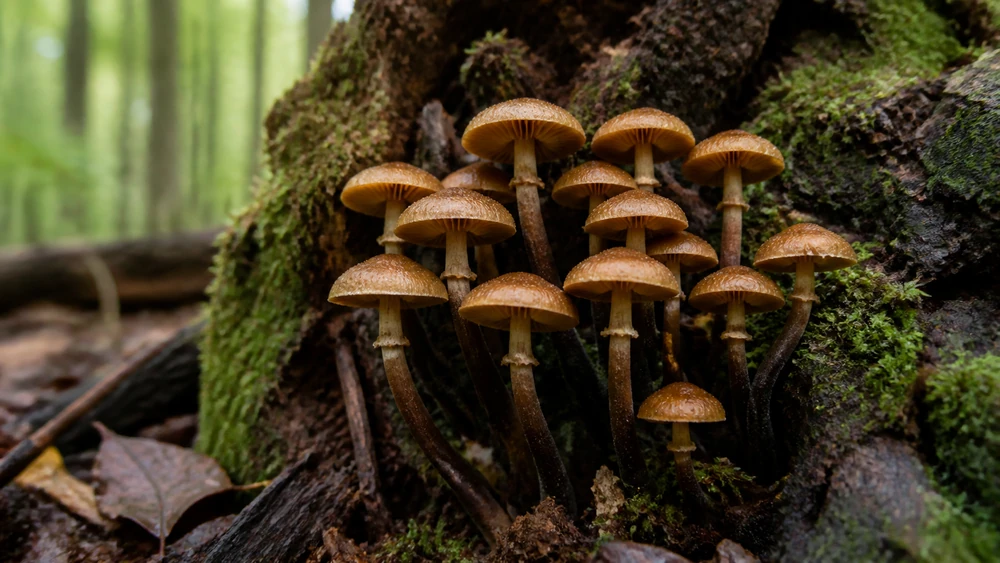 Deadly small brown mushroomDeadly GalerinaRusty gills, a rusty spore print, and a stem ring can occur on hardwood or conifer logs.
The cards give you six contrasting starting points, but every one still needs its complete field characters checked. A photograph of the top surface cannot establish pores, gill attachment, tooth structure, spore color, or the condition of the stem base.
Use the visible form to choose the next check rather than jumping directly from color to a species name.
| What you see on the log | Structure to verify | Candidate direction | Evidence that sends you elsewhere |
|---|---|---|---|
| Thin flexible fans with colored zones | Minute round pores on a pale underside | Turkey Tail and other thin Trametes-like polypores | Gills, teeth, or a smooth underside |
| Thick orange or yellow overlapping shelves | Fine pores, soft young margin, and broad attachment to wood | Chicken of the Woods group | True gills, a toothed underside, or a hard perennial context |
| One thick pale hoof or kidney-shaped bracket | Fine pale pores, thick corky flesh, and a confirmed birch host | Birch Polypore | A non-birch host, strong cap zoning, or repeated tube layers |
| White to gray shelves with a lateral attachment | True gills running toward the attachment point | Oyster Mushroom group | Rusty spores, a central stem, or gills that do not run down |
| One white mass covered in hanging spines | Unbranched body with downward-pointing teeth | Lion's Mane group | Branching coral form, pores, or separate caps and stems |
| Small brown caps with true gills | Stem surface, veil remnants, and a spore deposit | Galerina and other small brown wood mushrooms | No safe shortcut exists, and rusty evidence keeps amatoxin risk in view |
The table narrows the correct comparison set. It does not identify a meal, and weathered or incomplete specimens may not retain enough structure to enter any row confidently.
Start with the fertile surface rather than the color seen from above.
Tiny pores under a shelf place it with the polypores, while true gills, dangling teeth, a smooth crust, or an enclosed jelly-like body lead to different groups.
Turkey tail's thin, concentrically zoned shelves have a surface of minute pores, while several similar zoned fungi have gills or a nearly smooth underside.
Oyster mushrooms illustrate a different architecture because their gills run down toward a short lateral stem or the attachment point. Lion's Mane moves the observation again, from blades or pores to a single unbranched mass of hanging teeth.
Deadly Galerina's small brown gilled caps can grow scattered or clustered on deciduous and coniferous logs, so neither a tidy cluster nor dead wood separates it from danger.
A cap-and-stem cluster may be growing from exposed wood, softened bark, or a buried section of the same log. Cups and small jellies often appear only after wet weather, then shrink or vanish before the tougher brackets nearby change much.
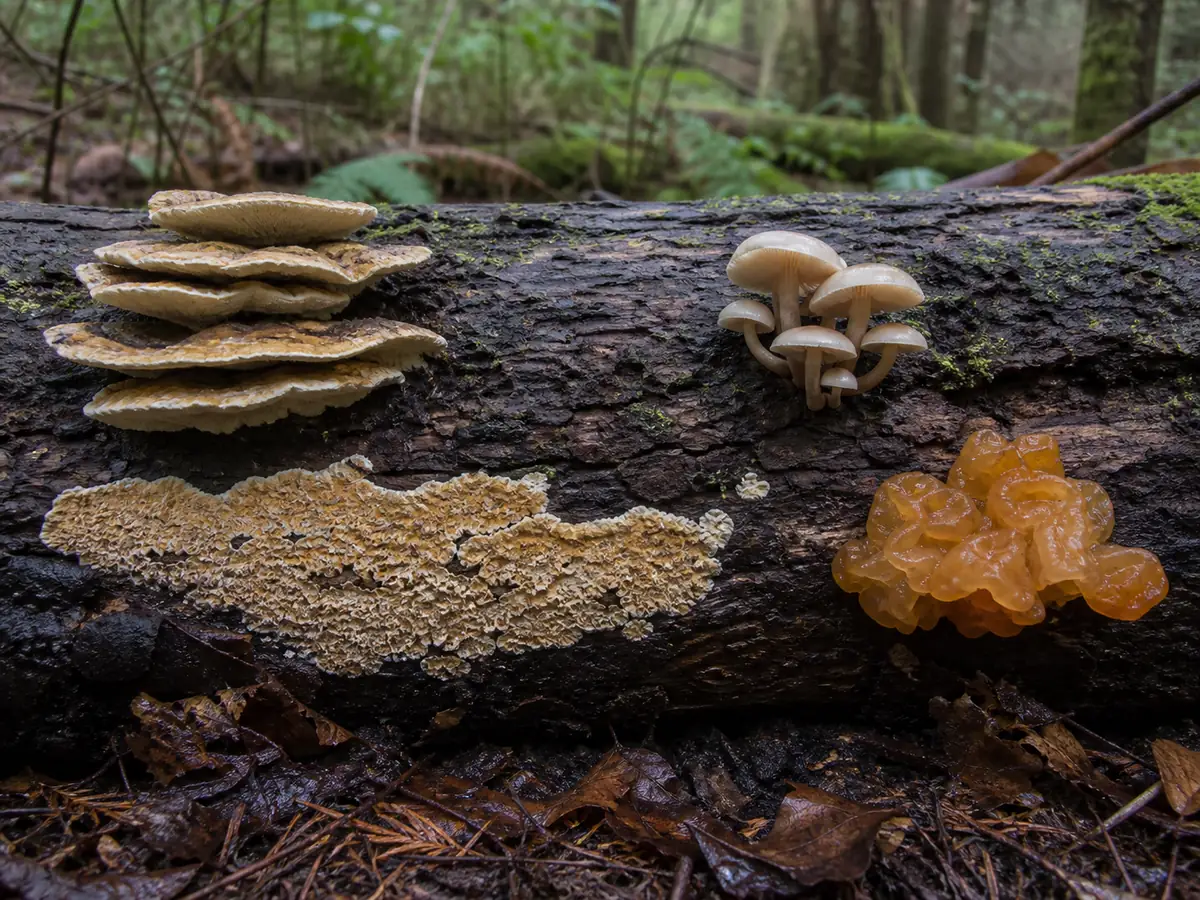
Do not assume every fruiting body on the log belongs to one organism. Separate fungi can occupy different volumes of sapwood, heartwood, and bark, then fruit close together when temperature and moisture suit them.
The reverse is also possible when one mycelial colony spreads through a large section of wood and produces disconnected groups of mushrooms along the bole.
The visible crop is a partial community record, and a second visit after a weather change may reveal a different set without any new log arriving.
IdentificationWhat Are the Tiny Bird's Nest Fungi in Your Mulch?Why Does Decay Stage Change Which Mushrooms Appear?
There is no reliable year-one, year-three, and year-six mushroom calendar for dead logs. Tree species, diameter, climate, ground contact, and the fungi already inside the tree can move decomposition along at very different rates.
Early-stage wood still holds its cylindrical shape, much of its bark, and firm sapwood. Fungi may already be active inside it even when few fruiting bodies are visible, so a clean surface does not mean the log is uncolonized.
In the middle stage, bark loosens, the outer wood softens, and more moisture enters through checks and insect galleries. The changed structure opens new territory while early occupants continue altering lignin, cellulose, and other wood compounds.
Advanced decay appears when the log begins to flatten into the forest floor, bark is mostly gone, and rotten portions pull apart or crumble beneath mosses and small plants.
Those conditions change what part of the log deserves attention next. They do not assign an age or a species.
Bark tight and wood firm
Inspect wounds, broken branches, bark gaps, and every attached fruiting bodyFungi can be active inside sound-looking wood before the surface carries many mushrooms.
Bark loose and outer wood soft
Map each fruiting zone, test rot texture gently, and keep separate collections separateMid-decay logs often contain overlapping occupants in bark, sapwood, and heartwood.
Log flattened and ground-contact side wet
Check the underside and soil interface without rolling apart the habitatAdvanced wood holds moisture and can hide crusts, cups, and short-lived soft fungi below the visible top.
The boundaries overlap, so describe an uncertain log as between two physical states instead of forcing it into one box. That honest range is more useful than a precise year that the wood cannot support.
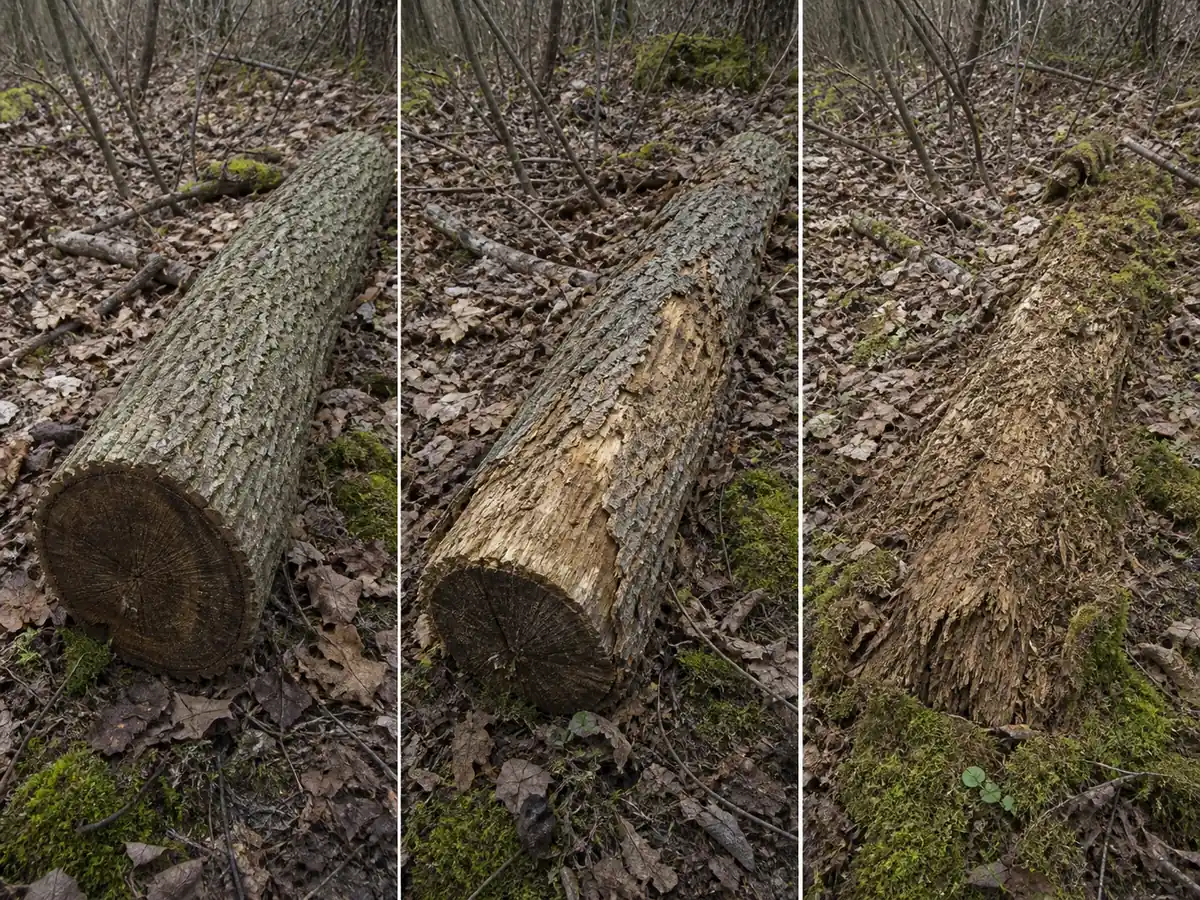
USDA field systems divide this continuum into decay classes using bark, texture, shape, and contact with the ground. Those classes describe the substrate in front of you, which makes them more portable than a date remembered by a landowner.
Peer-reviewed work on fir and beech deadwood followed fungal succession across more than 40 years. The communities changed with decay stage, wood properties, and tree species, rather than advancing through one universal roster.
Later fungi encounter wetter, less dense wood that earlier decomposers have already modified. Some arrive after those changes, while others were present earlier but become visible only when conditions favor fruiting.
Two neighboring logs can therefore show different mushrooms despite falling in the same storm. Diameter, shade, contact with soil, host chemistry, insects, wounds, and the fungi already present all change the path through decay.
A stage narrows ecological possibilities without assigning a species, so use decay as context before matching the complete fruiting body with a regional key or qualified identifier.
IdentificationWhat Should You Do About Mushrooms in a Horse Pasture?Which Log Clues Narrow the Identification?
Host identity is often the strongest log-level clue, so record the tree before decay erases whether it was a hardwood, conifer, or member of a smaller favored genus.
When bark is incomplete, combine what remains with nearby attached twigs, branching pattern, end grain, fallen leaves, needles, and cones. One loose leaf resting on the log proves little, but several consistent features can support a hardwood or conifer determination.

Next examine the damaged wood without tearing apart the habitat. Pale, stringy, or fibrous decay often reflects white rot, while brown rot commonly leaves darker wood that cracks into cubical pieces.
Rot type filters possibilities and supports the body-form and host evidence, but it still covers too many fungi to supply a name.
Build one field record for each distinct fruiting body or cluster, using observations that another person can verify later.
- Host evidence such as attached twigs, bark, end grain, leaves, needles, or cones
- Fruiting form and fertile surface, including pores, gills, teeth, folds, cups, crusts, or enclosed jelly
- Exact attachment point in bark, sapwood, heartwood, a crack, the underside, or buried wood
- Wood condition, including firmness, bark coverage, pale fibrous decay, brown cubical cracking, and ground contact
- Cap, stem, flesh, bruising, odor, spore color, and dimensions when those structures are present
- Date, recent rain, local habitat, log position, photographs at scale, and which specimens were collected together
This list records evidence without pretending that every clue has equal weight. A clear fertile surface and intact specimen usually carry more identification value than one loose leaf or the apparent color of weathered wood.
Position on the log changes the microhabitat too. An exposed upper surface dries faster, while the ground-contact side can stay damp and may support soft crusts, tiny cups, or short-lived mushrooms missed from a standing viewpoint.
Look along the full length before collecting anything. A thick perennial conk near one end, fresh gilled caps in a bark split, and a crust underneath may represent three separate occupants with three identification records.
Return after a weather change and photograph the same marked sections from the same angles. A new flush can then be separated from growth or aging of the earlier fruiting bodies.
Keep samples from separate zones in separate containers and label them to match the photographs because mixing caps destroys their connection to the supporting part of the log.
A candidate becomes stronger when its fruiting form, host, decay preference, season, and microscopic or spore characters all fit, while one contradiction should send the identification back for review.
Can Mushrooms on Dead Logs Be Eaten?
No mushroom is safe to eat because it grew on a dead log. Edible oysters and other collected species use fallen wood, but poisonous fungi also occupy dead hardwood and conifer logs.
Even a species generally described as edible still needs a complete identification, suitable condition, regional confirmation, and the correct preparation. Old, waterlogged, moldy, or insect-damaged fruiting bodies add a separate quality problem after the species question is resolved.
Deadly Galerina is the high-consequence example because some species in the genus contain amatoxins, and peer-reviewed research found that appearance alone does not reliably separate all toxic members from their relatives.
One identified mushroom does not clear everything growing beside it. Several species can fruit from the same log, so each specimen in a food collection must belong to the same confirmed species and retain the characters used for that confirmation.
Do not use insects, animal feeding, taste, smell, silver-spoon tests, or cap discoloration as a universal toxicity screen. None of those observations replaces a species-level identification and an edibility reference for that species.
Cooking does not neutralize every mushroom poison, so keep wild specimens out of the kitchen until a qualified local identifier has confirmed the species and its edibility for your region.
Warning
Unknown log mushroom ingestion | In the United States, call Poison Control at 1-800-222-1222 immediately after a suspected ingestion. Do not wait for symptoms, and save uncooked specimens and photographs if doing so does not delay the call.
Delayed illness can still be serious. The correct response is professional poison advice, not a home test based on taste, discoloration, animals, cooking, or where the mushroom grew.
Sources & References
- Microorganisms: Successional Development of Fungal Communities in Deadwood
- USDA Forest Service: Ecological Characteristics of Dead Wood
- USDA Forest Service: Wood-Decay Type and Fungal Guild Dominance
- Missouri Department of Conservation: Turkey Tail
- USDA Forest Service: Wood Decays and Stains of Alaska
- Missouri Department of Conservation: Missouri's Mushroom Bounty
- Mycologia: Amatoxin Distribution Among Galerina Mushrooms
- Poison Control: Wild Mushroom Warning