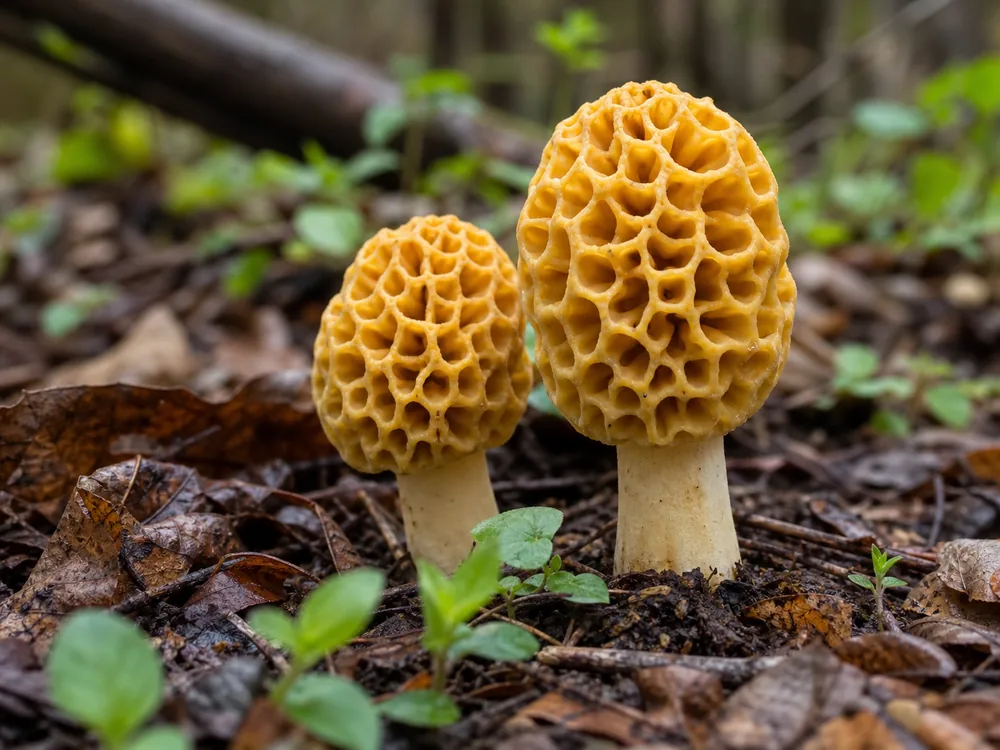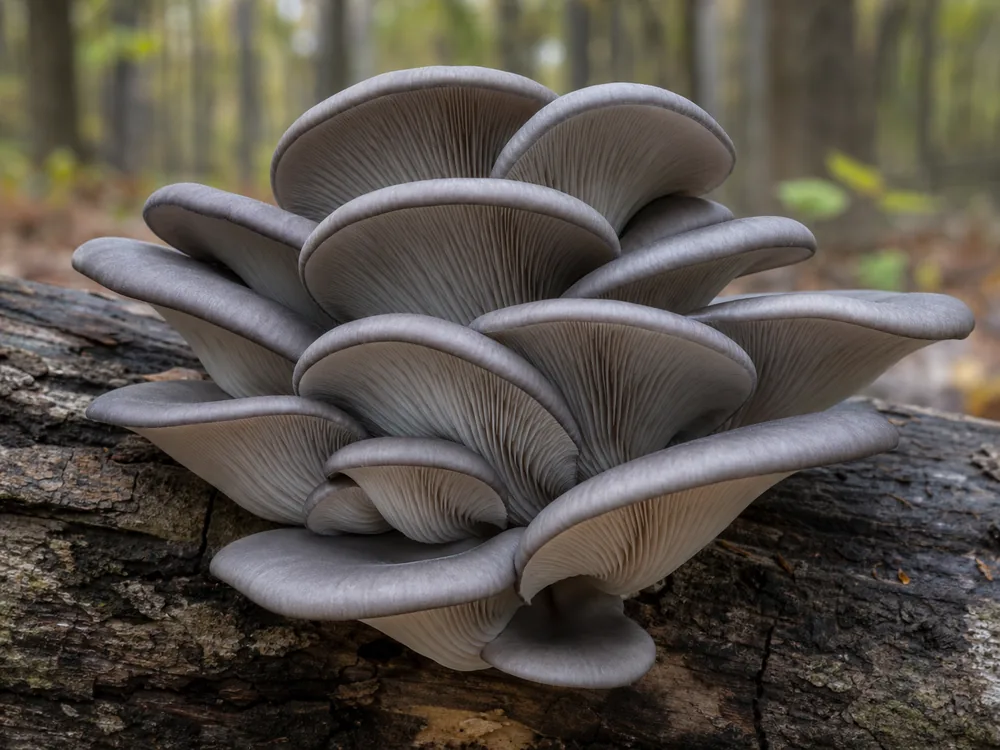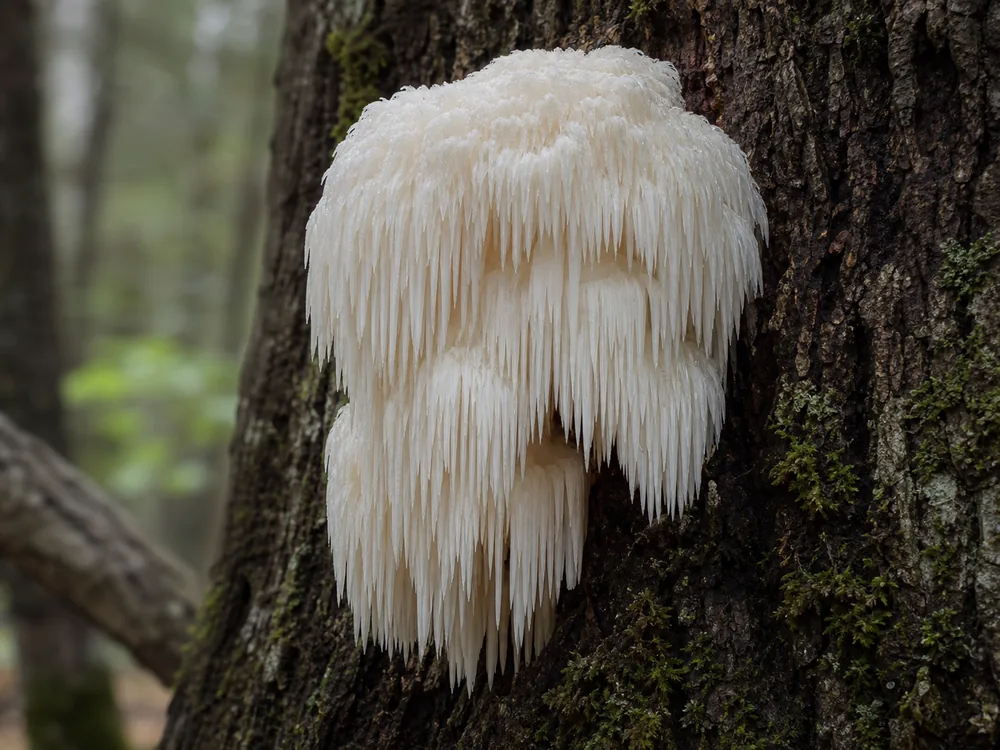
Is Lion's Mane food, medicine, or both?
Lion's Mane has two audiences. Foragers want to know if the white shaggy growth on a log is safe. Supplement shoppers want to know if the brain claims are real.
The food answer is the simpler one. A fresh Lion's Mane has hanging white spines, no gills, and grows from hardwood.
The supplement answer is slower. Human studies are small, product formulas vary, and the evidence is not strong enough to treat it like medicine.
The good news for beginners is that the classic white pom-pom is one of the safest wild mushrooms to name. There is no common deadly white-tooth lookalike in its typical form.
That safety is why some foragers start here. The mushroom is bold, pale, and hard to confuse once you know to look for hanging spines instead of gills.
The page should not turn that easy food ID into medical certainty. Fresh Lion's Mane can be a good edible mushroom. A capsule label is a different product, with a different dose, part of mushroom, and quality-control problem.
| Question | Safe answer |
|---|---|
| Is the white tooth fungus edible? | Fresh, white Hericium on hardwood is generally cooked as food. |
| Is every Hericium exactly Lion's Mane? | No, branched relatives can look different and may need local review. |
| Are brain claims settled? | No, human evidence is still limited and product quality varies. |
| Should supplements replace care? | No, use clinician advice for symptoms or medication questions. |
How do you identify Lion's Mane?
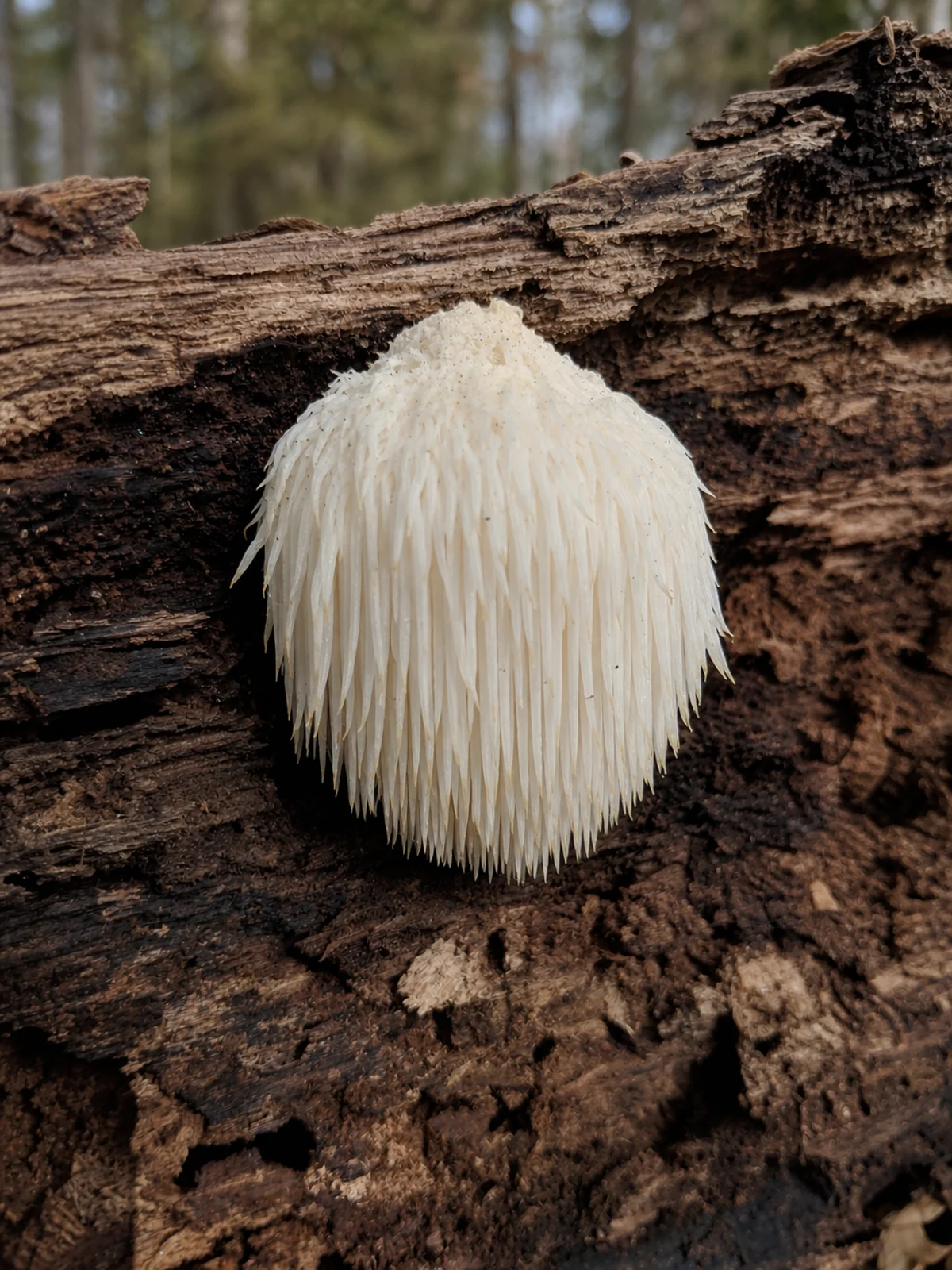
No true cap. A rounded white mass of cascading icicle-like spines, 5 to 40 cm across.
No gills. Spores form on downward teeth or spines.
Attached directly to wood, no distinct stem.
White and firm. Cooks to a texture often compared to crab or lobster.
Look for teeth, not gills. Lion's Mane has soft downward spines packed into a rounded white mass.
Fresh specimens are white to cream and firm. Avoid yellowing, sour-smelling, waterlogged, or bug-damaged growths because age hurts both texture and safety.
Related Hericium species can branch or form tiered clusters instead of one pom-pom. They are generally treated as edible, but the classic Lion's Mane shape is the single shaggy mass on hardwood.
The spines get longer as the mushroom matures, sometimes reaching several centimeters. Young specimens carry short, dense teeth and the firmest flesh.
Color works as a freshness gauge. Bright white means fresh, cream is fine, and yellow to brown fringes mean it is aging and worth passing over.
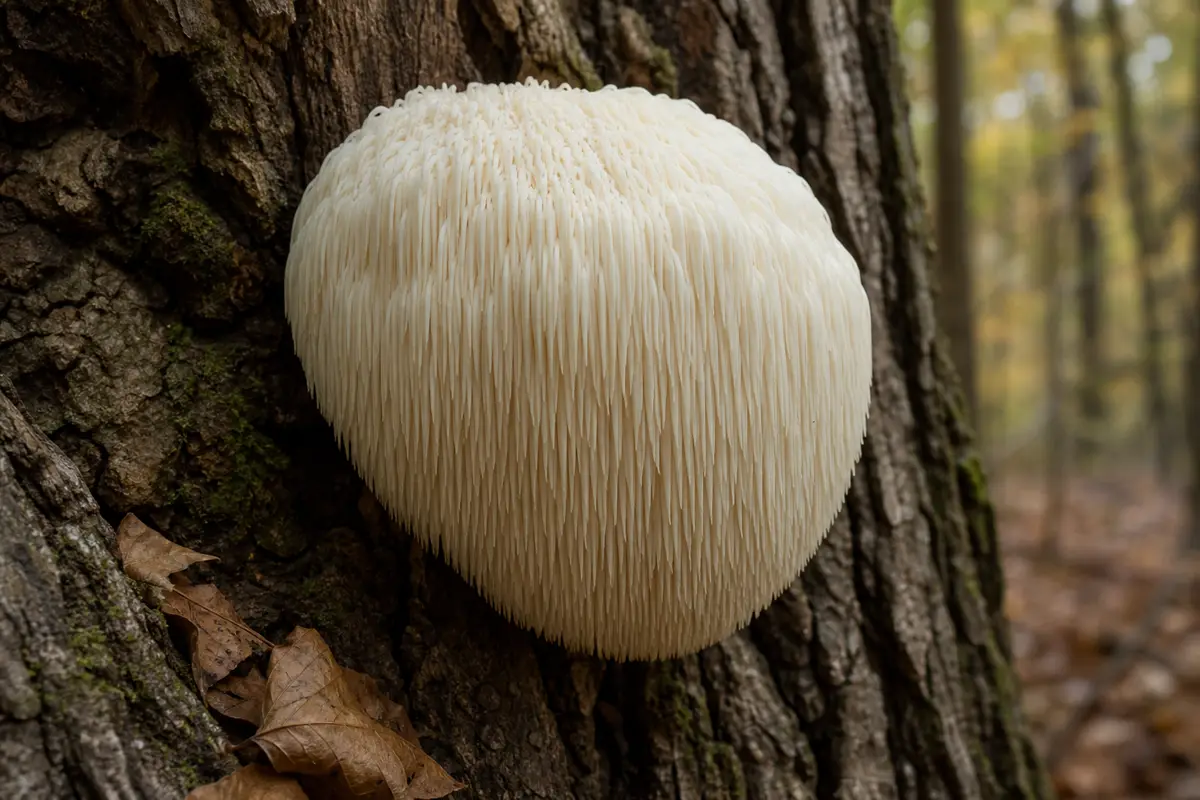
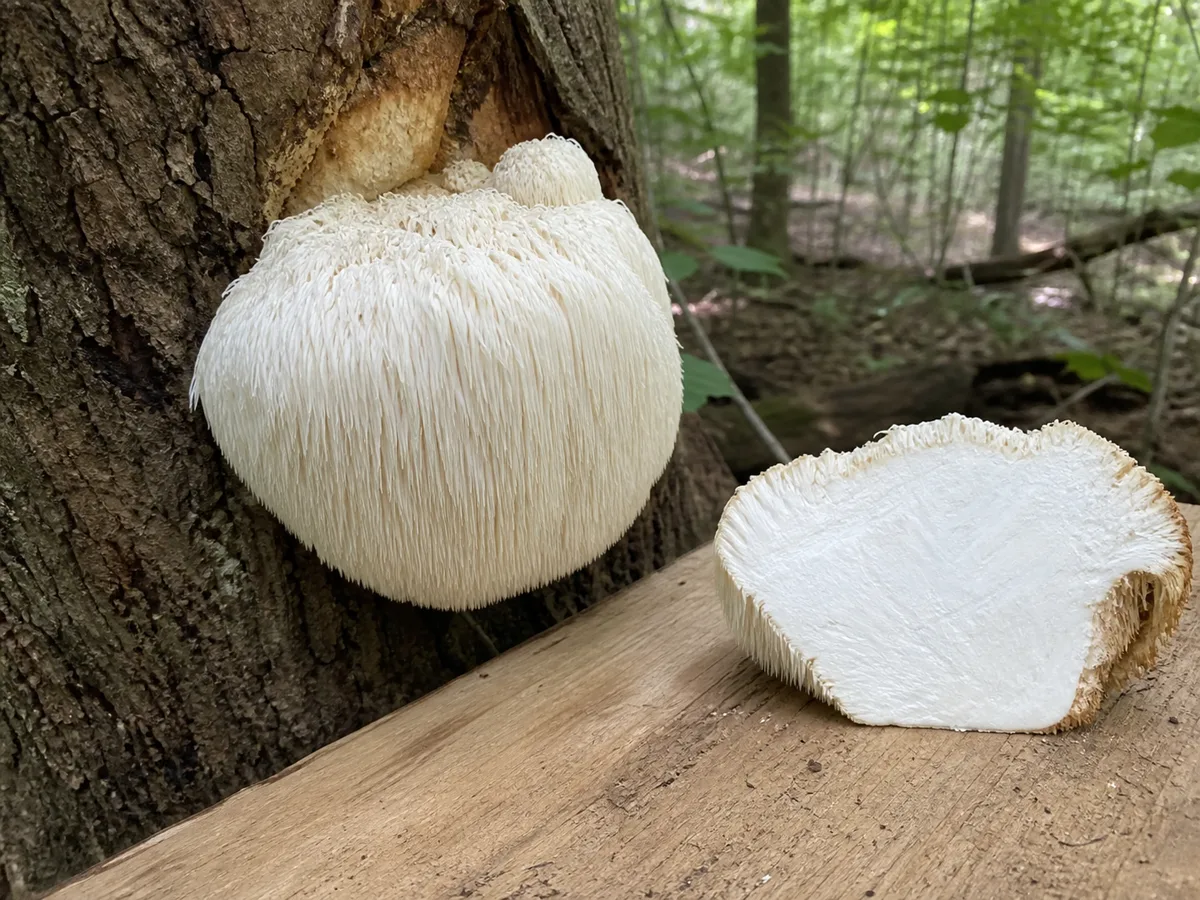
White hanging teeth instead of gills, growing straight from hardwood, is the whole Lion's Mane signature.
Teeth, not gills
No North American tooth fungus of this shape is dangerously toxic, which is what makes the genus unusually safe for a beginner. The mistakes people make here are about condition, not identity.
A yellowing, browning, or slimy specimen has passed its window.
Older growths also host insect larvae deep inside the mass, so tear one open before you commit a large find to the pan. A clean interior is white all the way through.
One unrelated growth is worth naming. A white shelf fungus with pores on its underside is a polypore rather than a Hericium, and it does not belong in the basket.
Do Lion's Mane brain claims hold up?
Lion's Mane contains compounds studied for nerve-growth pathways. Human trials remain small and mixed, so the mushroom is not a proven cognitive or mood treatment.
A cooked portion and a concentrated supplement are different exposures. Product type and dose matter, and anyone using medication or managing a health condition should discuss a supplement with a clinician.
Lion's Mane trial evidence has to separate study doses, fruiting body versus mycelium, product testing, and who should avoid supplements. Pregnancy safety is a separate question from ordinary cooked lion's mane.
The profile-level point is simpler than the trial evidence. Eating Lion's Mane as food and taking a concentrated extract are two different decisions, and only the first one is settled.
As food it behaves like any other culinary mushroom, so a portion on the plate needs no more justification than a portion of oyster mushrooms.
As a supplement it becomes a dose question, and dose is where the uncertainty sits. Products vary in whether they use fruiting body or grain-grown mycelium, and that difference changes what you are actually swallowing.
If you are buying capsules rather than mushrooms, the label detail worth checking is which part the extract came from. A product that does not say is a product that has decided not to tell you.
How do you cook Lion's Mane?
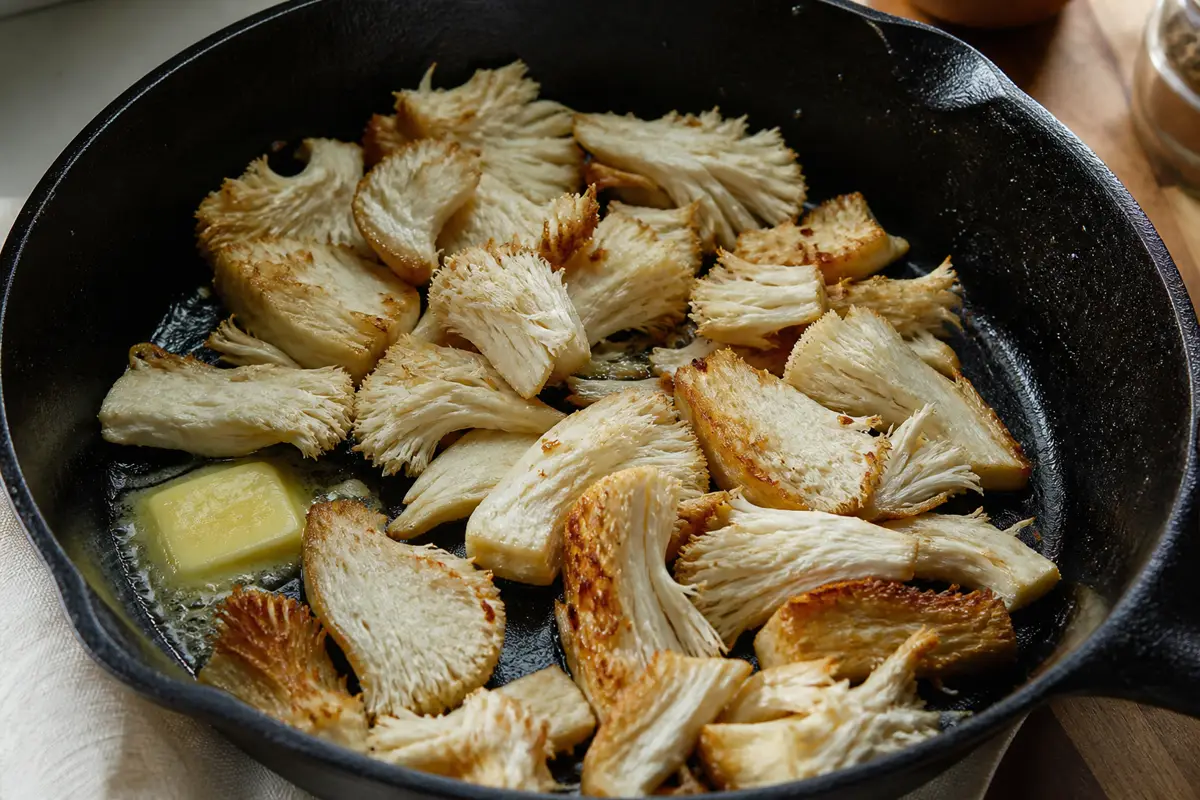
Cook Lion's Mane like a sponge that needs browning. Slice or tear it, press out excess moisture in the pan, then add butter or oil once the surface starts to dry.
The texture can lean crab-like when browned. Keep seasoning simple the first time, so you can tell whether the mushroom is fresh and sweet or already past its prime.
Do not wash it under a running tap. Lion's Mane drinks water fast, and a soaked piece will steam and go soggy instead of browning.
Cut it into thick slabs or pull it into shreds for a crab-like feel. A hot pan and a little patience give the best result, so let each side brown before you move it.
Tip
Shred cooked Lion's Mane, bind it with egg and a little breadcrumb, and pan-fry small cakes for a crab-cake style dish.
Fresh Lion's Mane keeps about a week in a paper bag in the fridge, and it degrades from the spine tips inward. Once those tips yellow the texture turns spongy no matter how carefully you cook it.
For longer storage, cook it first and then freeze.
Freezing it raw ruptures the water-heavy flesh, so it thaws to mush. Drying works but changes the mushroom into a different ingredient, better suited to stock or powder than to a centre-of-plate portion.
Can you grow Lion's Mane at home?
Lion's Mane grows well on supplemented hardwood sawdust blocks rather than straw. It is less forgiving than oyster mushrooms, but easier than many slow log-grown species.
The main home-grow mistake is waiting too long to harvest. Pick it while the spines are still pale and tender, before the fruiting body yellows or dries.
Lion's Mane likes fresh air and high humidity. Too little air makes it grow coral-like fingers instead of a tidy rounded mass.
A sawdust block kept in a humid space with a few daily airings will usually fruit within weeks. Mist around it rather than soaking it directly.
If the block makes thin fingers instead of a rounded mass, adjust fresh air before blaming the culture. Lion's Mane often shows its grow problem in the shape of the fruiting body.
Compared with oyster mushrooms, Lion's Mane is slower to tell you what it needs. Oysters often show fresh-air problems with long stems. Lion's Mane may form coral-like fingers or yellowing tips when air, humidity, or timing is off.
Compared with cultivated shiitake, it is faster than a log project but less patient with dry air. A good block can fruit in weeks, while a shiitake log may ask for months before the first harvest.
Harvest while the teeth are white and tender.
Give the block humid air, not a sealed wet box.
Wait until the whole mass yellows or dries at the tips.
Sell a home-grown mushroom as a supplement claim.
The shape of the fruiting body is the clearest signal a home grower gets. A tidy rounded mass means the air is moving, and branched coral fingers mean carbon dioxide is building faster than the space can clear it.
What nutrition does Lion's Mane add?
As food, Lion's Mane is low in calories and provides fiber and fungal beta-glucans. Treat that as nutrition, not a medical dose.
The flesh is mostly water, so a cooked portion shrinks a lot on the plate. What is left is filling for few calories.
It carries small amounts of potassium and other minerals. Think of it as a light, savory food rather than a nutrient powerhouse.
For a meal, Lion's Mane is best paired with a protein or starch if you want fullness. Its job is texture and mild sweetness, not replacing a balanced plate.
That food role matters because it keeps claims in proportion. A browned slab can make a good sandwich or rice bowl. It does not become a clinical dose because the label on a capsule uses the same mushroom name.
The final decision is practical. If you want dinner, buy or collect fresh white teeth and cook them. If you want a supplement, slow down and treat the product like a health decision, not a recipe ingredient.
That is why Lion's Mane sits in the medicinal mushroom lane on this site even though it is also food. The label signals evidence caution, not a promise that the mushroom treats a condition.
For a beginner, the best first use is still culinary. Learn the white teeth, cook one fresh specimen well, and keep supplement decisions separate from dinner.
The tooth mushroom shape is the key reason this ID feels different from gilled mushrooms. Teeth tell you where the spores form and where to look for freshness problems.
Where does Lion's Mane grow?
Lion's Mane grows from living wounds and dead hardwood, often on oak, beech, maple, or similar trees. It is part decomposer and part wound colonizer.
A fruiting body may appear high on a trunk, not just on fallen logs. That matters for foragers because the cleanest specimens are not always reachable.
Because it favors wounds on standing trees, the same tree can fruit in the same spot for several years. A scar from a broken branch is a good place to check each fall.
The fungus works slowly through the heartwood, so a single trunk may host it long after the first flush. Note the tree and return in later seasons.
That wood-bound habitat is a useful filter because a ground-level mushroom is usually not Lion's Mane. The fruiting body attaches to wood, sometimes high enough that you only see a pale shaggy patch from below.
A good field note records the tree, the height, the wound, and freshness. That is more useful than another cap-color note, because Lion's Mane does not have a cap in the usual gilled-mushroom sense.
Note
If the teeth hang from branched shelves instead of one rounded mass, compare related Hericium species before calling it Lion's Mane.
In most of its range it fruits from late summer through autumn, and the flush usually follows a drop in night temperature after rain.
Because the fungus works through a wound rather than the whole trunk, one scar can produce for several years running. A spot worth marking is worth returning to each season.
It also fruits higher on standing trunks than most edibles, so a good year still leaves specimens out of reach.
Taxonomy & Naming
Genus Hericium. Named for the cascading mane of spines that hangs from a single attachment point.
Hericium erinaceus is the classic single-headed species, one solid white mass rather than a branched frame. The species name means hedgehog, a nod to the spiny surface, and older common names include bearded tooth and pom pom mushroom.
Two relatives turn up in the same woods and confuse beginners.
Hericium coralloides opens into coral-like tiers with short spines running along the branches. Hericium americanum sits between the two, with long spines hanging from a branched frame instead of a single head.
All three are treated as edible, which makes this a forgiving genus to learn. The practical difference is texture rather than safety, because the branched species carry more surface and less dense flesh.
Field guides have reshuffled these names more than once. If an older guide calls your find erinaceus and a newer key disagrees, the eating decision does not change.