
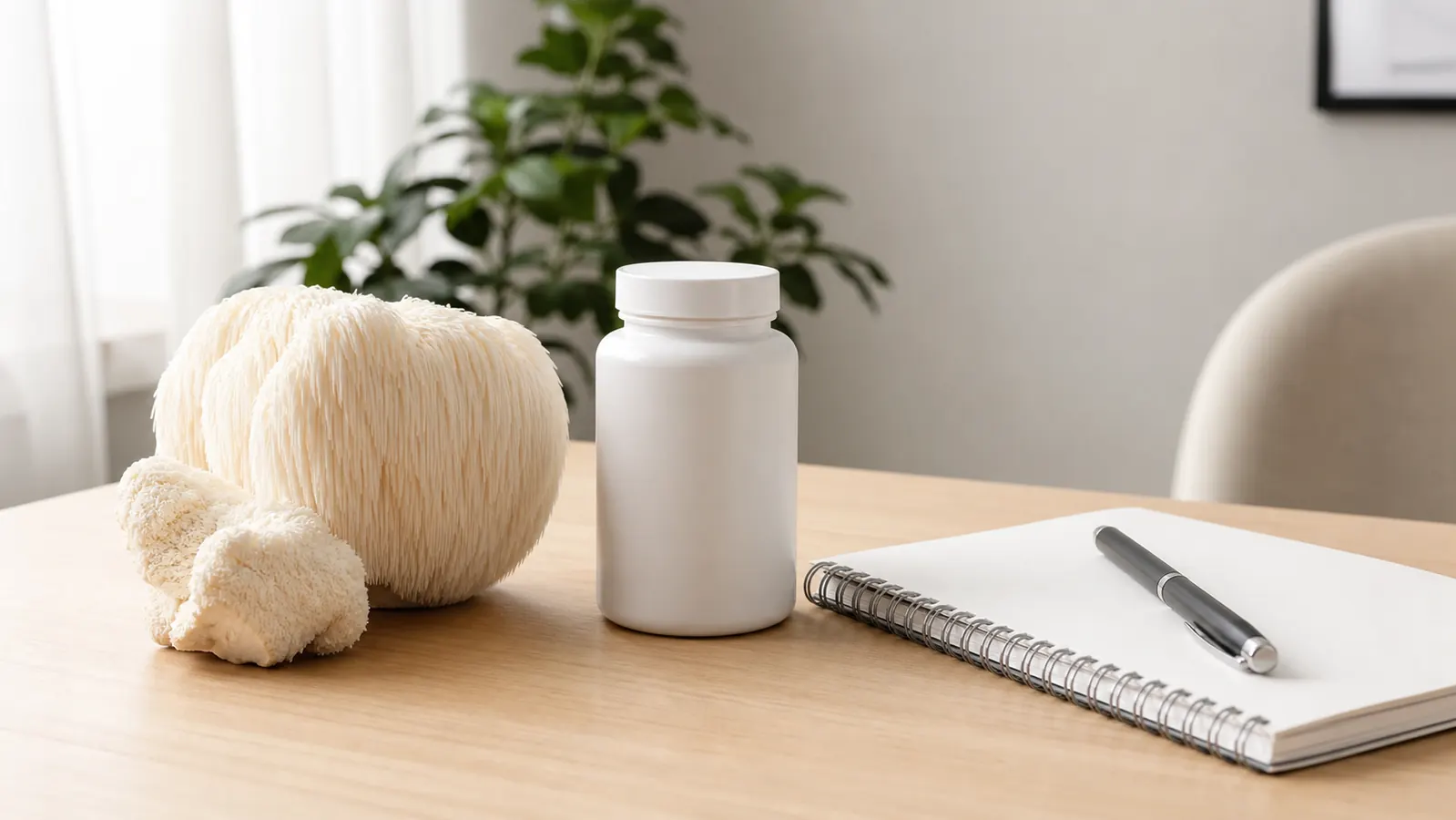
Lion's mane is a popular cooking and supplement mushroom, so it is fair to ask whether it belongs in your routine while you are pregnant. The honest answer is that we do not have the studies to call it proven safe, which is why caution wins.
Is lion's mane safe during pregnancy?
The truthful answer is that no one can promise you it is safe, and no one can prove it is harmful either. High-quality human studies on lion's mane during pregnancy simply do not exist, so anyone who tells you it is definitely fine is going past the evidence.
Missing pregnancy evidence calls for a conservative decision without turning uncertainty into panic. A cooked dinner portion and a concentrated daily capsule create different exposures.
Bring both forms into the conversation with the clinician who knows your pregnancy and medical history.
Plenty of people eat mushrooms through pregnancy without a second thought, and cooked culinary mushrooms are a normal food. The questions get harder when a mushroom is sold as a supplement with health claims, because that is a different product at a different dose.
Interest in lion's mane comes largely from nervous-system and memory research that can make supplementation feel worth continuing, but pregnancy deserves a fresh review because ordinary adult studies did not assess exposure to a developing baby.
| Form | Decision |
|---|---|
| Cooked food | Ask provider |
| Extract | Pause |
What the evidence actually says
Most lion's mane evidence comes from laboratory work, animal studies, and small trials in adults who were not pregnant. Those findings may suggest effects on nerves or mood, but lion's mane benefit claims still depend on the human evidence and the product tested.
Researchers rarely test new supplements during pregnancy because an unknown fetal effect makes such trials difficult to justify. The resulting evidence gap does not prove that lion's mane is dangerous.
The same gap also cannot serve as permission because the pregnancy safety study has not been done.
The decision therefore rests on caution in the absence of pregnancy evidence, not on proof of harm. Go slowly, ask specific questions, and use the judgment of the clinician following the pregnancy.
Culinary lion's mane versus supplements
The single most useful distinction here is between food and concentrated products. They are not the same question, and blending them causes most of the confusion around this topic.
Here is how the two compare.
- Culinary lion's mane is the whole cooked mushroom eaten as food, in the same modest amounts you would eat any mushroom at a meal.
- A supplement is a concentrated extract or powder that packs far more active compound into a daily dose than a plate of mushroom ever would.
- Cooked food amounts have a long, ordinary history of being eaten, while high-dose extracts are new and largely untested in pregnancy.
- Supplement quality varies a lot, because these products are not held to the same checks as food or medicine.
- A cooked culinary portion is easier to discuss with your provider than a capsule whose exact contents you cannot see on the plate.
Note
This article is educational and is not medical advice. It cannot replace a conversation with your own obstetrician or midwife, who knows your history and can weigh your situation. Ask them before you start or continue lion's mane in any form during pregnancy.

Dose separates a modest meal from a concentrated product because one extract capsule may represent far more mushroom than a small cooked portion. A dinner serving and a daily supplement therefore need separate advice.
Learning that you are pregnant while using an extract is a reason to pause the product and contact your provider, not a reason to assume that harm occurred.
Even with food, cook lion's mane fully and buy it from a seller you trust. Raw or poorly stored mushrooms are a needless risk when you are pregnant, and thorough cooking is the simplest safeguard you can give yourself.
SafetyDeadly Mushrooms: The Most Lethal SpeciesHow should you read a supplement label?
Start with the serving size, amount per serving, and suggested frequency because a capsule count alone does not reveal the daily exposure. Note whether the ingredient is whole mushroom powder, mycelium, an extract, or a blend, but do not treat an extract ratio as proof of pregnancy safety.
Read every added herb, vitamin, source of caffeine, sweetener, and flavoring because the product may raise several questions, while a proprietary blend that hides individual amounts gives the clinician less information and is a practical reason to pause.
Third-party testing can help confirm identity or contaminants, but a certificate does not replace missing pregnancy research. Photograph the front label, supplement-facts panel, lot number, and directions so the exact product can be reviewed even if the package is not available during the appointment.
The same evidence limit applies to other concentrated medicinal mushrooms, including reishi during pregnancy.
SafetyPoisonous Mushrooms: The Toxic Species to KnowWhat belongs in a culinary-food decision?
Confirm that the mushroom came from a reliable cultivated source, remained fresh in storage, and will be cooked as food rather than concentrated into a daily dose. A lion's mane cooking method can resolve preparation, while the lion's mane nutrition profile describes ordinary food and cannot establish pregnancy safety.
Home-grown lion's mane may avoid a supplement blend, but growing lion's mane does not answer whether a particular pregnancy should include it. The care provider still needs to weigh the person's allergies, medicines, health history, and reason for eating it.
What to ask your doctor or midwife
A few plain questions can give the clinician the necessary details without requiring the patient to use medical vocabulary.
Ask whether there is a medical reason to start a lion's mane supplement now or whether waiting until after birth is more appropriate. Many clinicians avoid optional products that lack pregnancy testing.
Discuss an occasional cooked portion separately and ask whether lion's mane could interact with any medicine, supplement, or condition already in the care plan.
Bring the actual product label if you use a supplement, so your provider can see the dose and the other ingredients. If a product hides its full contents, that alone is a reason to hold off until you know more.
Use an early prenatal visit to list every supplement, tea, powder, and extract before an unreviewed product becomes routine. Bring written questions because short appointments make specific product details easy to forget.
A household may need separate answers for pregnancy, supplements, ordinary food, and kitchen scraps eaten by a dog, so use sources that address each exposure instead of carrying one safety answer across them.
Lion's mane while breastfeeding
Breastfeeding raises the same evidence problem because strong human studies of concentrated lion's mane in nursing parents are missing. Without product-specific data, an effect through breast milk cannot be ruled out.
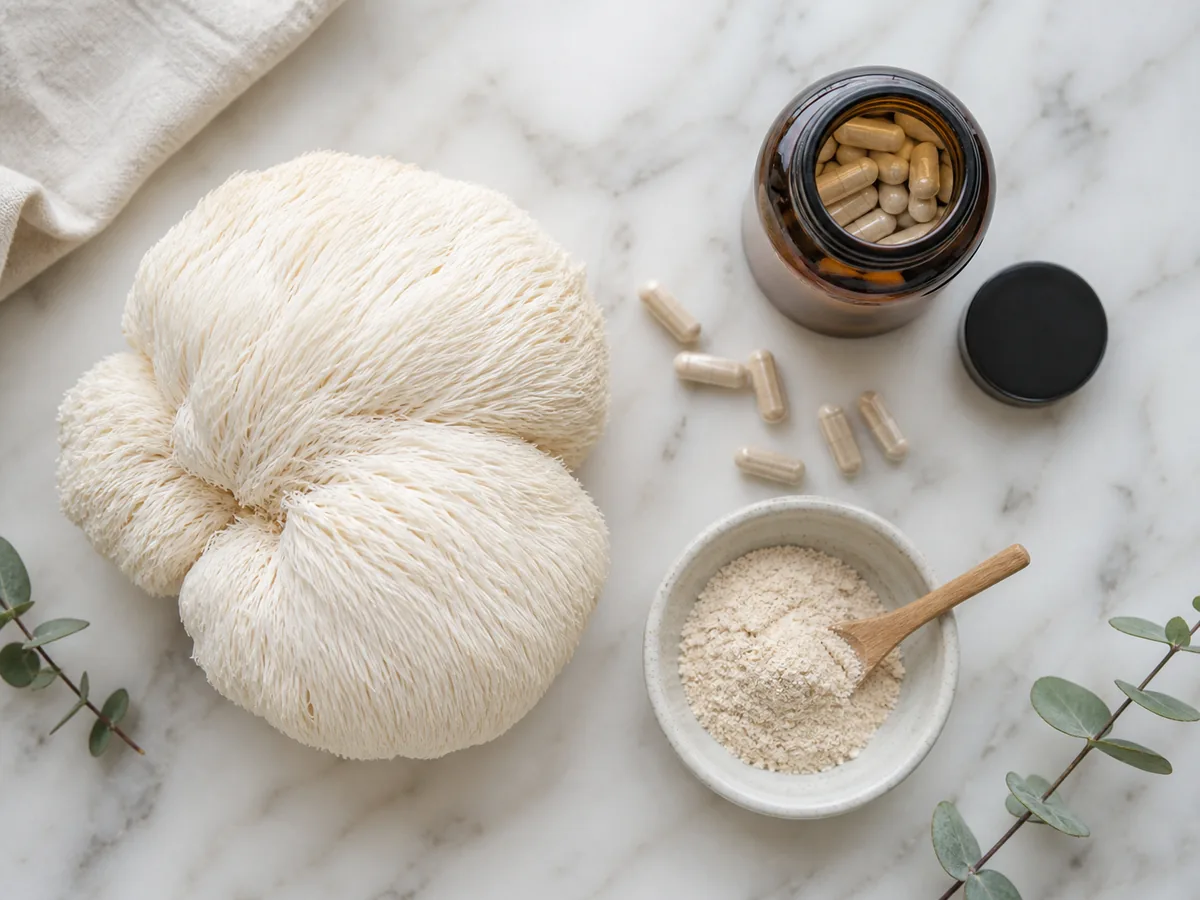
Cooked culinary lion's mane eaten as an occasional food is a smaller question than a daily extract, just as it was during pregnancy. Still, the safest move is to raise it with your provider before you add any supplement while you nurse.
Because newborns process substances more slowly than adults, caution continues after birth and there is no need to add an optional supplement while the body is already supporting breastfeeding.
Foraged lion's mane adds identification and spoilage risks that are separate from pregnancy evidence. Confirm the species and condition before considering it as food.
Foraging safety rules and the local lion's mane season help document a specimen, but uncertainty still keeps it off the plate during pregnancy.
The bottom line stays measured. Lion's mane is not known to be dangerous in pregnancy, but it is not proven safe either, so let your obstetrician or midwife make the call with you rather than guessing on your own.
Note
Supplements need clinician approval.