Wild, gifted or unidentified mushroom
Call Poison Control at 1-800-222-1222 now and say you are pregnantThe most dangerous mushrooms can seem harmless for many hours, and doctors plan early care around the pregnancy

CDC's list of riskier foods in pregnancy does not name mushrooms, and store-bought mushrooms cooked all the way through are an ordinary pregnancy food. The risk sits in four narrower places. Raw or barely warmed mushrooms are one, and wild mushrooms that no qualified person identified are another. The last two are packets of dried or imported mushrooms whose contents you cannot see, and supplements nobody has tested in pregnancy.
The same four conditions apply to every species, whether the label says porcini, chanterelle or oyster. Pregnancy does not change which mushrooms are edible. It does raise the cost of a Listeria infection or a misidentified wild mushroom, for you and for the baby.
Button, cremini, portobello, oyster, shiitake, maitake, king oyster and fresh lion's mane from a grocery shelf are all cultivated. You do not have to wonder what they are, as you would with a wild pick. Even so, Denmark's food agency advises cooking every mushroom, store-bought ones included. Many cause stomach upset when eaten raw. Heat also kills Listeria, the germ behind the enoki outbreaks described below.
Two species show what happens when people skip that step. Raw or undercooked shiitake can cause an intensely itchy, streaked rash. The likely cause is lentinan, a compound that heat breaks down. So shiitake during pregnancy comes down to cooking it fully.
In 2023, a Montana restaurant served cultivated true morels raw or only partly cooked, and the outbreak made 51 people ill. Two of them, both with chronic illnesses, died. People who ate more became ill more often, so morels during pregnancy need the same full cooking, with no raw or marinated pieces.
Fresh lion's mane cooked for dinner belongs in this food answer. Lion's mane capsules and extracts are separate products with no pregnancy safety data, and the supplement section below covers them.
The one trial of mushrooms as a pregnancy food points in a reassuring direction. In a randomized trial in China, researchers split 1,162 women into two groups. One group ate 100 grams of mushrooms a day from before conception to week 20, and the other served as the control group. The mushroom group had less gestational hypertension, preeclampsia and gestational diabetes. One trial supports cooked mushrooms as a normal part of a pregnancy diet, though it cannot show they prevent those conditions.
SafetyIs Lion's Mane Safe During Pregnancy? Food vs SupplementsListeria is the reason raw mushrooms count for more in pregnancy than at other times. CDC puts pregnant women at 10 times the usual risk of Listeria infection. Even when the infection feels like mild flu to you, it can still lead to miscarriage, stillbirth, early delivery or a life-threatening infection in the newborn. Those outcomes span the whole pregnancy, so the rule does not relax after the first trimester.
Enoki is where that risk has actually reached pregnant people. CDC traced the first raw enoki outbreak in 2020 to enoki imported from the Republic of Korea. Its patient samples dated from late 2016 to December 2019.
CDC declared a second enoki outbreak over in April 2023. All five people it sickened went to the hospital, one of them pregnant. FDA placed enoki imported from China and the Republic of Korea under an import alert. CDC's advice after that second outbreak is direct: people who are pregnant should not eat raw enoki, and everyone should cook it thoroughly.
Cold storage does not make raw enoki safer, because Listeria keeps growing on cold food, while heating it high enough kills the germ. Yet enoki often reaches the table barely heated. It shows up as a crisp salad topping, a garnish laid on noodle soup, or strands swirled for a few seconds in hot pot broth. In pregnancy, eat enoki only after cooking it until every strand is limp and see-through down to the base.
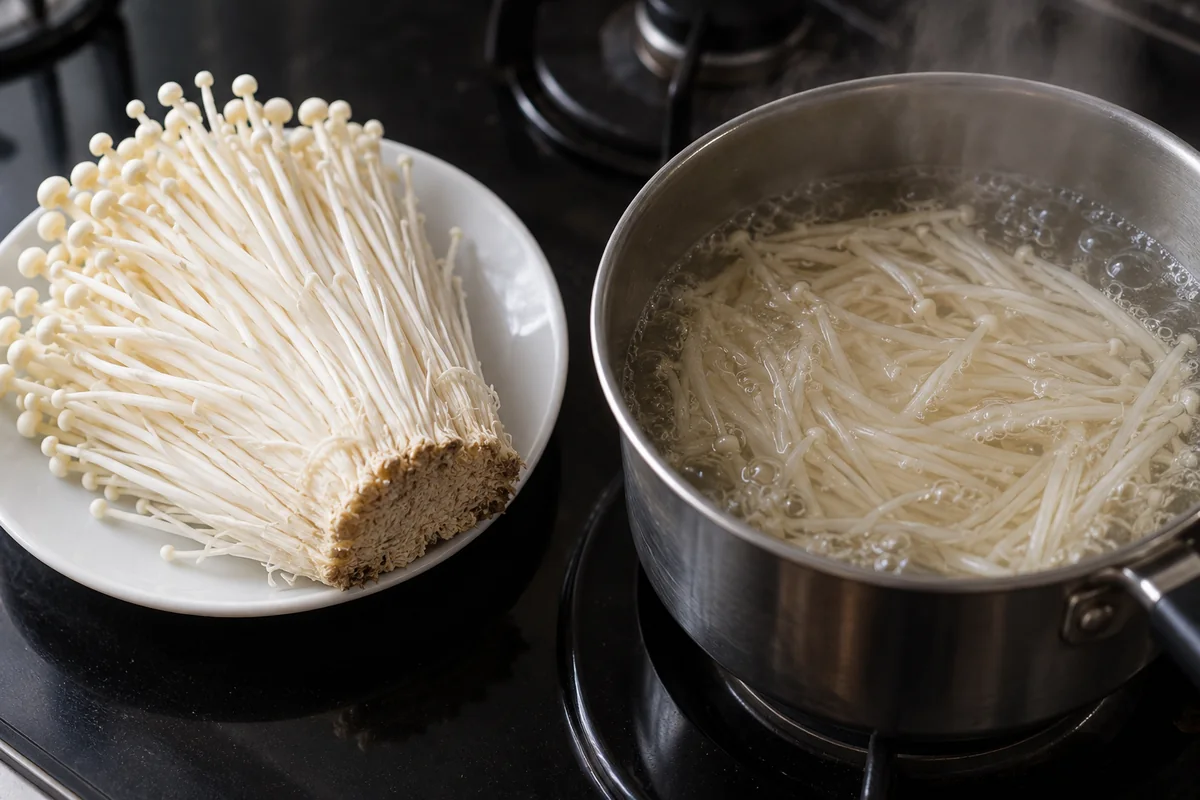
No outbreak report found so far ties raw button or cremini mushrooms to Listeria. Cooking still answers the question for them, and it is the same step that prevents shiitake rash and morel illness. One rule for every mushroom is simpler than tracking which species has a record.
SafetyIs Morel Safe During Pregnancy? Cooking and Source RulesWild mushrooms are no harder to identify in pregnancy, yet a mistake costs more. Poison Control's position is that you cannot safely identify a wild mushroom unless you are very experienced. Lookalikes fool people, and knowledge from one region does not carry to another. Cooking will not rescue a mistake either, since heat does not make a poisonous mushroom safe.
The FDA model Food Code counts about 15 deadly North American species and about 60 more that are toxic raw or cooked. Through its 2009 edition, it required an approved identification expert to inspect each wild mushroom individually and find it safe before a food business could sell it. That standard is the one worth holding to in pregnancy.
Each mushroom checked whole by a qualified local identifiersomeone who can name the species, the lookalikes ruled out, and where it grew
Wild mushrooms bought from a store or restaurantcurrent food codes let only an approved business sell them, so ask where the kitchen sourced them and whether it cooked them into the dish
Picks identified only by you or the friend who found thempregnancy is a poor time to rely on one person's field guide, course or hunch
App results, photos posted online or a stranger's guessa photo loses the stem base, odor, spore color and habitat
Treating a species name as permissionporcini, chanterelle, hedgehog and slippery jack all meet the same test
Tasting a bit to check the flavortasting exposes you before anyone knows what the mushroom is
If a wild mushroom does turn out to be poisonous, the pregnancy becomes part of the treatment. The largest series found covers 22 women treated for mushroom poisoning while pregnant at a Budapest clinic between 1960 and 1993. Their babies had lower average birth weight than in comparison births. Birth defect rates were similar to controls, but only five of those poisonings happened in the first trimester, too few to answer that question.
Single case reports show what care looks like. One woman had amatoxin poisoning from death cap mushrooms in week 11. Doctors gave her intravenous fluids, silymarin and N-acetylcysteine, and her child later developed normally. Another woman, poisoned by Amanita mushrooms in week 23, had ultrasound and obstetric checks through the acute illness and gave birth to a healthy baby at week 38.
Two reports cannot give odds. They do show that hospital care for a poisoned patient and fetal monitoring run together. That only happens when you name the pregnancy at the first call.
Three problems can hide inside a dried or imported packet where nobody can see them through the plastic. The mushroom inside may be the wrong one, bacteria may have survived the drying, and the mushrooms may carry metals from the ground they grew in.
| Problem | What has been documented | What it changes in the kitchen |
|---|---|---|
| Wrong species | Poisonings in Hong Kong from porcini products mixed with inedible or poisonous species, and one London packet of dried porcini holding three species unknown to science | Buy sealed packets with a named supplier and lot, prefer large slices to powder, and keep the packet until the meal is eaten |
| Bacteria that survive drying | A 2020 Salmonella outbreak from dried wood ear mushrooms with 55 people ill in 12 states, and lab drying that left Listeria and Salmonella on enoki after 24 hours | Rehydrate in boiling water, then cook, and never cold-soak for a salad |
| Metals and radiocesium | Bay boletes from polluted soil holding higher metal levels, orange birch bolete mercury varying tenfold between sites, and German bay boletes above 1,000 Bq/kg of cesium-137 | Keep dried wild boletes an occasional ingredient rather than a daily one |
Drying removes the stem base, the color of cut flesh and the habitat an identifier relies on. That leaves the name on the packet to carry the identity. In January 2018, health officials reported that four people in Hong Kong vomited after eating porcini, and investigators suspected the mushrooms held a mix of edible and inedible or poisonous species. The city's Centre for Food Safety also noted European alerts about poisonous mushrooms in dried porcini since 2001.
A 2014 DNA study of one packet of dried Chinese porcini bought in London found three species, none of them previously described by science. Nobody showed those species were poisonous. The label still could not say which mushroom was inside, and a powder hides even more than slices do.
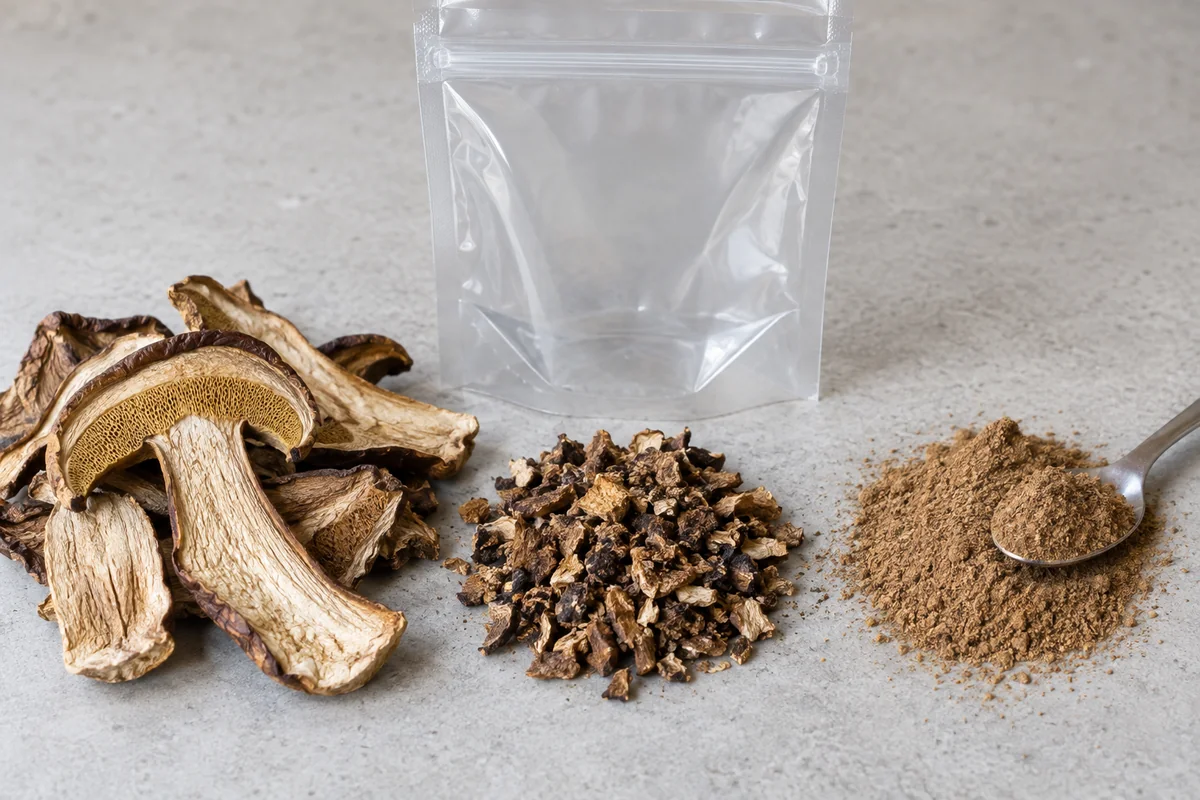
Drying is not a kill step. After the wood ear outbreak, CDC advised always rehydrating dried mushrooms in boiling water to kill any pathogens. A 2023 lab study also found Listeria and Salmonella still on enoki after 24 hours of drying at 158°F to 176°F (70°C to 80°C).
So put dried porcini, shiitake and wood ear into boiling water, never a cold soak, and then cook them in the dish. Cold salads of soaked wood ear skip both steps. That makes them the dried version of raw enoki.
Wild mushrooms also take up metals from the soil they grow in. In a 2017 study, bay boletes from polluted ground held significantly higher metal levels than those from clean sites. Across 19 Polish sites, the median mercury in orange birch bolete caps ranged from 0.20 to 2.0 mg per kg dry weight. By the Polish researchers' estimate, one cap meal from an average or heavily polluted site supplied 20 to 60 percent of the tolerable weekly intake for mercury. More than one such meal a week could go over that limit.
Radiocesium follows the same map. Germany's radiation protection office still measures bay boletes above 1,000 becquerels per kg of cesium-137 in parts of southern Germany. That is above the EU limit of 600 for mushrooms offered for sale, while cultivated mushrooms carry very little.
The office judges wild mushrooms eaten in usual amounts harmless from a radiation standpoint. It still advises anyone who eats them often to stay within 200 to 250 grams a week, because of lead, mercury and cadmium. No agency found sets a separate pregnancy limit, so dried wild boletes fit best as an occasional ingredient from a named supplier.
SafetyIs Reishi Safe During Pregnancy? Evidence and Reported RisksNobody has pregnancy safety data for them. Capsules, tinctures, gummies, extract powders and mushroom coffees are a different exposure from a cooked mushroom, often concentrated and taken every day. MotherToBaby notes that researchers have not studied many herbal supplements in pregnancy. No standards fix their ingredients or strength, and some contain metals, pesticides, microbes or ingredients missing from the label.
FDA has no power to approve a dietary supplement before it goes on sale. The label rests on the maker alone. Mushroom labels can also hide something else entirely. In 2024, mushroom chocolates and gummies sold for microdosing made 179 people ill in 34 states. FDA testing found muscimol, psilocin and a prescription drug, with different substances in samples of the same product and flavor.
Lion's mane and reishi show why the answer stays with your clinician. For lion's mane during pregnancy, the one developmental study found tested a single enriched mycelium preparation in rats, and rat data cannot stand in for human data. Reishi can raise bleeding risk in people taking blood thinners, and the same Memorial Sloan Kettering summary lists liver injury among the harms reported after reishi use. One reported case of liver failure after reishi powder ended in death. So reishi during pregnancy is a question for the clinician who knows your medicines.
Bring the product itself, or photos of its label and lot number, to the clinician managing your pregnancy before you start or continue it. Cooked shiitake or lion's mane eaten as dinner stays under the food answer. The line falls at products that makers concentrate, dose or sell for an effect.
After a doubtful mushroom meal, one of two clocks starts. Eating a wrong or unknown mushroom raises a poisoning question that starts now. Raw enoki or a recalled product raises a Listeria question that can surface weeks later.
The most dangerous mushrooms can seem harmless for many hours, and doctors plan early care around the pregnancy
With no symptoms CDC advises no test or antibiotics, but the date starts a two-month watch
CDC advises blood cultures and treatment once a fever passes 100.6°F (38.1°C) after an exposure
These are emergency signs whatever caused them
On the poisoning clock, feeling fine proves nothing. The most dangerous mushrooms usually cause symptoms that start many hours late, and a companion who ate less and feels well does not clear the meal. While you wait for Poison Control's advice, take the steps for someone who ate a poisonous mushroom, and do not treat yourself at home.
On the Listeria clock, waiting is the normal course. CDC asks exposed people to seek care for symptoms within two months. In one case series, the 12 pregnancy-related infections took a median of about four weeks to appear, and the longest took 67 days.
Mention the meal for any fever in the months that follow. Tell every clinician about the pregnancy, including the poison specialist on the phone, because it adds fetal checks to the plan.
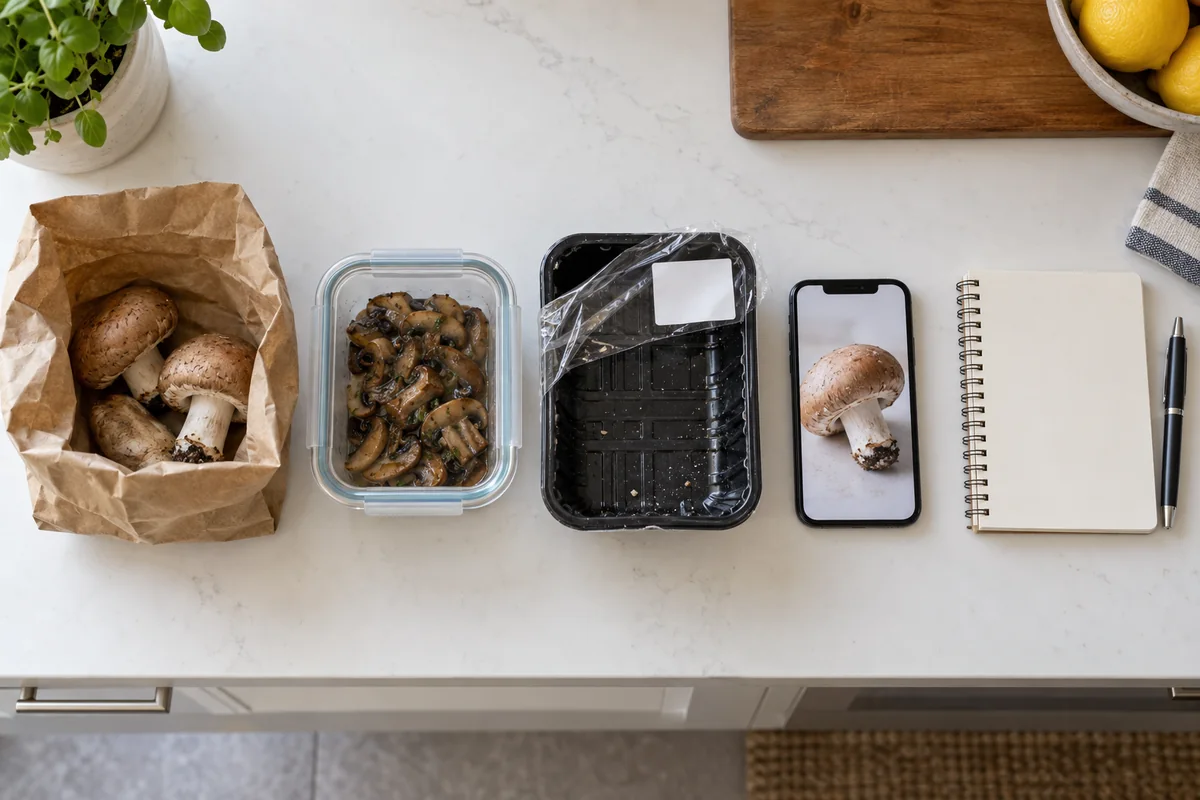
Keep what a specialist may need to identify the mushroom or trace the product.
Yes, when the kitchen cooks the mushrooms into the dish. Ask whether any mushroom goes on raw at the end, and skip raw enoki in salads and as a garnish. In hot pot, cook the enoki until the strands are limp before you eat them.
Yes, if they went into the refrigerator promptly and you reheat them until steaming hot. Listeria can keep growing at refrigerator temperatures, and reheating is what kills it.
If the meal was within the last two months, tell your prenatal clinician the date. Call the same day for any fever above 100.6°F (38.1°C) or flu-like illness. If it was longer ago and you have had no such illness, mention it at your next visit.