
Is Reishi Safe During Pregnancy? Evidence and Reported Risks
Nobody has established that reishi is safe during pregnancy. The clinical guidance gives no pregnancy dose. It names no trimester in which reishi supplements are safe to take. Before you start one, talk it through with your prenatal clinician.
Unlike kitchen mushrooms, reishi is not food. Its flesh is corky when young, woody when old and bitter throughout, and it never gets soft enough to chew. So people simmer dried slices into a bitter tea, or they take reishi as powder, capsules or liquid extract. The cooking advice for ordinary food mushrooms during pregnancy does not carry over, because it would skip the product and medicine issues that apply here.
If you have already used reishi, the question changes. What counts then is what the product held, how much you took, when you took it and which medicines you took with it. No general warning can predict how one pregnancy will turn out.
What reishi studies measure
Most reishi research looks at an effect in adults, such as a change in immune activity or a possible health benefit. Whether a product affects a pregnancy or a growing baby is a separate question. Studies can report a response in the body without measuring any pregnancy outcome. Who took part, what they took and what the team measured set the limits of each result. The familiar name on your bottle cannot stretch that result to other people.
The Merck Manual reports a lack of information on reishi use during pregnancy and breastfeeding. That gap leaves the product, the amount and the timing of exposure as open questions. Missing evidence is not proof of harm to the baby. Nor does it make a product safe just because a study never reported a pregnancy problem it never looked for.
Traditional use and claims about reishi benefits give no reliable pregnancy dose either. Taking less, starting later in pregnancy or stopping sooner still needs evidence about that exact use before anyone can call it safe. Your reason for taking reishi belongs in the talk with your clinician too. Any benefit you hope for sits next to these open safety questions, so reishi is no automatic add-on to prenatal care.
SafetyCan You Eat Mushrooms While Pregnant? Types and CautionsReishi tea, powder and extracts
Reishi comes as capsules, tablets, powders, teas and liquid extracts. Each name is a way of preparing the fungus, and no single standard product has evidence that covers every brand. Ground whole reishi and a concentrated reishi extract deliver different material, so the form on the label changes what you actually took. Your count of capsules or scoops gives the amount of that product, but it does not show whether another product has the same contents at the same strength.
| Form on the label | Detail that helps identify the exposure | What the form does not establish |
|---|---|---|
| Tea or dried pieces | Ingredients, amount used and whether the drink contained other herbs | That brewing establishes pregnancy safety |
| Powder, capsule or tablet | Preparation, serving information and actual amount taken | That every capsule or powder has an equivalent composition |
| Liquid extract or tincture | Ingredients, concentration information and whether alcohol is present | That a liquid is gentler or a concentrated product is safer |
| A blended drink or supplement | Every listed ingredient and its amount where disclosed | That evidence about reishi alone covers the entire blend |
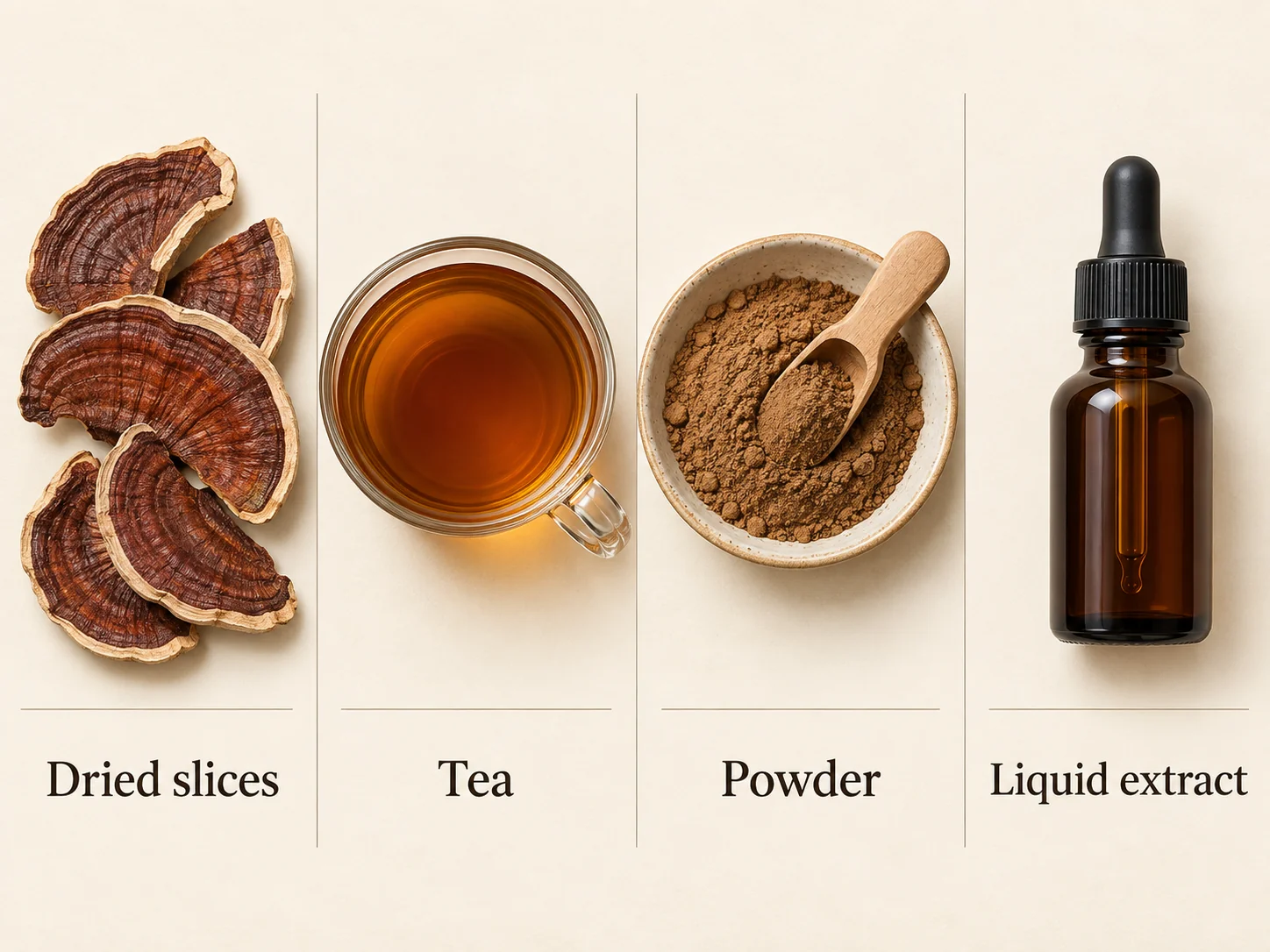
Tea is not automatically a lower-risk choice than a capsule. People simmer dried reishi slices for a long time and throw away the solids, which differs from swallowing a powder. Calling it a drink changes how you take it. The questions about what is in it and what the pregnancy evidence shows stay the same.
MotherToBaby notes that herbal products can vary in ingredients and strength. It adds that some may contain contaminants or ingredients the label leaves out. Those are general quality concerns. They do not mean that any one reishi bottle has a problem.
Some tinctures also contain alcohol, which MotherToBaby advises you to avoid in pregnancy. An "alcohol-free" claim answers only that question. It says nothing about the safety of the reishi or the rest of the bottle. Lab results on the lab sheet a reishi brand publishes list what the lab checked in that product. Good lab numbers are a different kind of evidence from a study of pregnancy outcomes, so they cannot fill in the missing safety answer.
SafetyIs Lion's Mane Safe During Pregnancy? Food vs SupplementsDoes reishi interact with medicines?
Your medicine list belongs in any reishi decision, even though you can buy reishi without a prescription. Reishi can add a concern on top of a treatment your doctor picked for a specific medical reason.
Blood-thinning medicines
Memorial Sloan Kettering warns that reishi may raise bleeding risk with anticoagulants or antiplatelet medicines. Its patient page names warfarin as an example, and its professional page covers the wider drug groups. Before you add reishi, the warning gives you reason to check for a drug interaction. It does not say that everyone taking reishi will bleed, and it does not measure the risk of one pregnancy exposure.
The exact medicine tells your clinician more than a broad label such as "blood thinner." They need the names of the treatments and other products you actually use. If you assume every medicine in a group acts the same way, you leave out the detail they need.
Medicines that suppress immune activity
MSK also notes that reishi can boost immune response, and it flags a concern with immunosuppressants. If your treatment is there to hold down immune activity, the immune boost on the label becomes a concern for that treatment and no simple benefit. MSK's note does not show how reishi affects the immune changes of pregnancy itself. Turning it into a claim that reishi causes miscarriage would go beyond the evidence cited here.
Warning
Prescription decisions belong to your care team
Do not stop or reduce a prescribed medicine to make room for reishi. Your prenatal clinician and the clinician who manages that treatment need the supplement details before they decide whether any change is right.
What the liver-injury reports can and cannot show
MSK lists liver injury among the reported side effects of reishi. That warning is about harm to you, the person taking it, so weigh it apart from the question of the baby's safety. Reports of suspected injury do not prove that reishi caused it. Other exposures, illnesses and product ingredients can blur the cause, mainly when a report did not rule them out well.
The indexed LiverTox review calls reishi a possible rare cause of clinically apparent liver injury. It also notes weak points in many reports. That wording supports caution and keeps the cause uncertain. It does not support calling every reported injury a proven effect of reishi.
Collected reports also cannot give you a reliable percentage for your own pregnancy. Without a proper study of exposed pregnancies, how bad one reported case was cannot become your chance of having one. Nor does a switch in form point to a safer swap. One powder's reported problem does not prove that all powders act alike, or that tea and extracts are safe alternatives.
Warning
Yellow eyes or skin need urgent assessment
Seek urgent medical help if the whites of your eyes or your skin turn yellow. Darker urine can come with jaundice. These symptoms have several possible causes, so mention the supplement without assuming it is the diagnosis.
The urgent step follows the symptom, and it does not wait until you know which product caused it. Sorting out the cause first would not meet the need for a medical check right now.
SafetyIs Morel Safe During Pregnancy? Cooking and Source RulesWhat if you already took reishi while pregnant?
Seeing reishi on a label after you used the product does not mean it harmed the pregnancy. It also does not tell you enough to call the exposure harmless, because the name alone leaves the amount, form and other ingredients unknown. For example, one capsule from a single-ingredient bottle and repeated servings of a blended drink are different histories. The comparison shows what needs a closer look, and it does not rank which made-up case is safe.
Keep the packaging if you can, because it tells far more than your memory of a "mushroom supplement." Its ingredient list can show that you took several ingredients at once. Its serving details let your clinician tell the labeled serving from the amount you actually took.
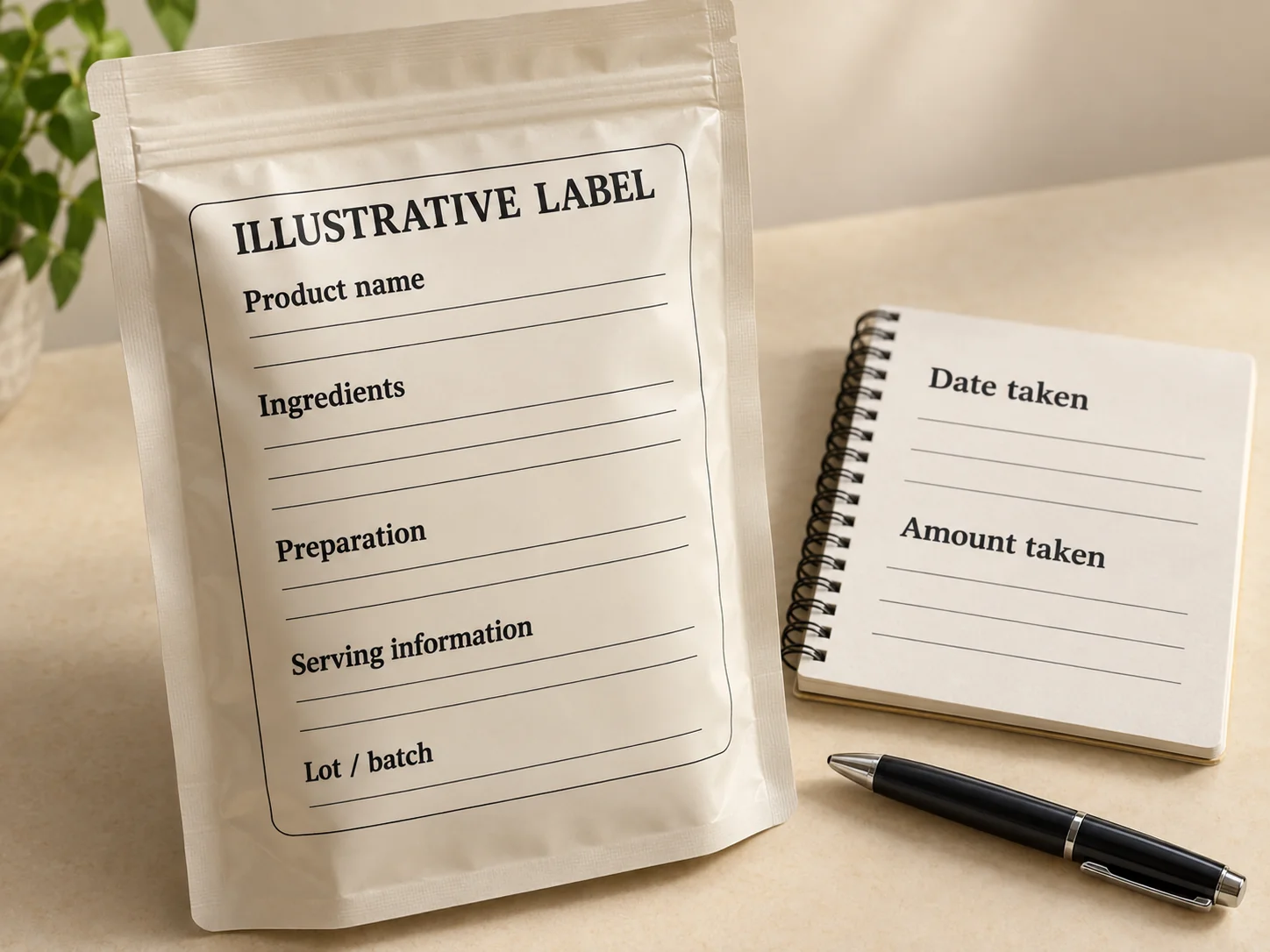
Gaps on the label are worth reporting as well. They mean nobody can describe the product as exactly as a clearly labeled one, though they do not prove it holds a hidden substance. MotherToBaby recommends talking with your healthcare providers about herbal products and why you use them. For a past reishi exposure, that talk can start from the actual package and your history, not a yes-or-no answer about all mushroom supplements.
The label gives your clinician exposure information, and it predicts nothing. Choices about going on with reishi, or about any further checks, stay specific to you and the product.
Is reishi safe while breastfeeding?
Delivery does not answer the reishi question for nursing. Breastfeeding raises its own question about what passes into milk and how it might affect your baby. The Merck monograph gives no information on reishi use while breastfeeding. For herbal products in general, MotherToBaby reports little breastfeeding data. Those gaps show neither that reishi reaches milk in a harmful amount nor that no exposure happens.
How well adults put up with reishi does not stand in for evidence about babies. Each ingredient in a blend needs a fresh look, mainly if the product or your medicine list has changed since pregnancy. Advice you got about one product cannot cover a different blend you use after the birth.
The sources cited here give no evidence-based waiting time and no pump-and-discard schedule. Your breastfeeding choice needs the product details and your care team's judgment, not a made-up interval that only looks safe.
Sources5
- Merck Manual Professional Edition: Reishi No information on reishi use in pregnancy or breastfeeding; product forms
- Memorial Sloan Kettering Cancer Center: Reishi Mushroom Bleeding risk with anticoagulants and antiplatelets; immunosuppressant concern; reported liver injury
- MotherToBaby: Herbal Products Herbal products vary and may hold contaminants or unlisted ingredients; tincture alcohol; discuss with providers; little breastfeeding data
- NIH LiverTox: Lingzhi, Reishi (indexed assessment) Reishi a possible rare cause of liver injury; many reports weak (index excerpt only)
- NHS: Jaundice Yellow skin or eyes need urgent help; dark urine can accompany jaundice