An evidence audit of mushrooms and the liver, the one organ in this cluster where the better-documented literature is about harm. It traces the benefit claim to a cross-sectional study whose odds ratio belongs to a six-food dietary pattern, records that no randomized trial has tested a mushroom on a liver endpoint, reports three published cases of liver injury including one that recovered fully, identifies the preparation change both early patients shared, and gives the case reports a denominator from a prospective injury network.
This is the one organ where the strongest published evidence about mushrooms is about harm rather than benefit, and the difference between the two comes down to how the mushroom was prepared.
Two very different readers arrive here, and that sentence is bad news for one of them and good news for the other.
The direction of this evidence is not the one you expect
Most pages on this subject argue about which species is best. The published record does not support that argument in either direction.
That is an uncomfortable set of lines, and it is what the literature actually contains.
One reader arrived here hoping to find out which mushroom repairs a liver, and there is no such mushroom in any trial. The other arrived frightened by a warning about reishi, and needs to know whether the mushrooms in their fridge are the thing being warned about.
Distinguish ordinary food use from taking a concentrated product. Eating mushrooms as food and taking a concentrated mushroom product are two different exposures, and the evidence attaches to them very differently.
It is worth saying what the organ actually does, because the word detox does most of the damage on this subject.
A liver processes what arrives in the blood from the gut and turns fat-soluble compounds into water-soluble ones the kidneys can remove. It runs continuously and it does not queue up work waiting for a supplement to release it.

So there is no state a healthy liver sits in that a product unlocks. What can be damaged is the tissue doing that processing, and every documented event on this page is damage rather than a failure to be cleansed.
Poisoning from misidentified wild mushrooms is a separate emergency. Acute poisoning from eating a toxic wild species destroys liver tissue by a completely different mechanism, on a timescale of hours, and it belongs with amatoxin poisoning rather than here.
Medicinal MushroomsLion's Mane Benefits: What Human Trials Actually FoundWhere the good-for-your-liver claim comes from
The claim is not invented, and it traces to real work.
Laboratory findings do not establish a liver benefit in people.
A cross-sectional study looked at 281 Japanese men going through health screening, of whom eighty-nine had fatty liver disease on ultrasound and 192 did not, all of them non-drinkers.
The men with fatty liver disease ate fewer mushrooms than the men without it. That single comparison is where almost every mushrooms-and-liver page begins and ends.
Warning
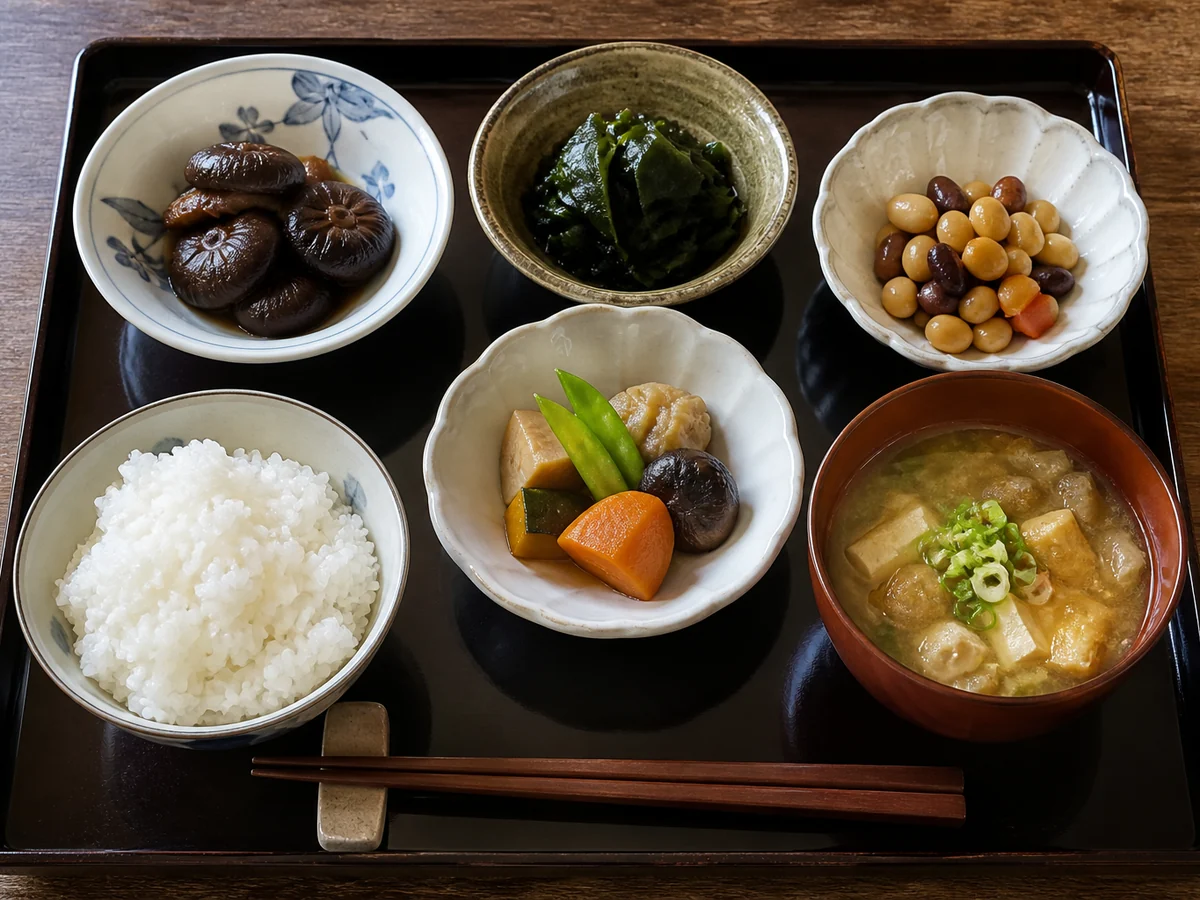
The adjusted result in that study does not belong to mushrooms. The authors identified three dietary patterns and the protective one was a healthy pattern made of seaweeds, vegetables, mushrooms, pulses, potatoes and starches together. Its middle tertile carried an odds ratio of 0.47 against the lowest, and 0.46 after further adjustment for body mass index. The authors concluded that the pattern, which they compared to the traditional Washoku diet, was associated with lower risk.
Mushrooms are one of six things in that list, and the study cannot separate them from the other five.
There is a second limit built into the design. A cross-sectional study measures the diet and the disease at the same moment, so it cannot tell you which came first.
People who already feel unwell change what they eat, so a man told his liver looks fatty may have altered his diet before anybody wrote down what he was eating.
None of that makes the study bad. It is a reasonable piece of nutritional epidemiology, and it supports a sentence about a diet rather than a sentence about a mushroom.
What it cannot do is what the search results claim it does, which is establish that adding a mushroom product to an unchanged diet does anything at all.
What has actually been reported to hepatologists
Against that one association sit three specific, named, checkable reports, published across nineteen years in three countries.
They are worth listing in date order, with what happened to each patient.
- 2004, Hong Kong
- Hepatotoxicity from a Ganoderma lucidum formulation, in the Journal of Hepatology
- 2007, Thailand
- Fatal fulminant hepatitis associated with Ganoderma lucidum powder
- 2023, United States
- Acute hepatitis with significant transaminitis after reishi powder with alcohol
- Outcome of the 2023 case
- Complete resolution of symptoms and blood results at two weeks
- What three reports establish
- That this can happen, and nothing about how often
The 2007 report is the serious one. It deserves to be read exactly as its authors wrote it.
A patient developed fulminant hepatitis, which means liver failure arriving fast in someone whose liver was working, and did not survive it. The report is a page and a half long in a national medical journal, and it is not a rumor circulating on forums.
The 2023 case is the one that gets left out of alarming summaries, and it belongs in an honest one. A 47-year-old man arrived with headache and abdominal pain, was found to have acute hepatitis with badly raised liver enzymes, was treated supportively, and was completely back to normal a fortnight later.
Transaminitis is the word doing the work in that third report, and it is worth unpacking.
- ALT and AST are enzymes that live inside liver cells and leak into the blood when those cells are damaged
- A liver panel measures them, alongside bilirubin, which rises when the liver stops clearing a pigment properly
- Raised enzymes mean cells are being injured, and they do not by themselves say what is doing the injuring
- Bilirubin rising alongside them is the finding that turns a mild abnormality into a serious one
That is why the 2023 patient could be sent home and rechecked, and why the 2007 patient could not.
Most drug-related liver injury looks like that second case rather than the first. That is not a reason to relax, and it is a reason to keep the fatal case in proportion.
Three case reports across nineteen years tell you that something can happen. They tell you nothing whatever about how often it does, which is a separate question with a separate answer further down.
Medicinal MushroomsWhich Reishi Benefits Hold Up in Human Studies?The preparation changed, and that is the whole finding
Buried in the 2007 report is the single most useful sentence anybody has written about this subject.
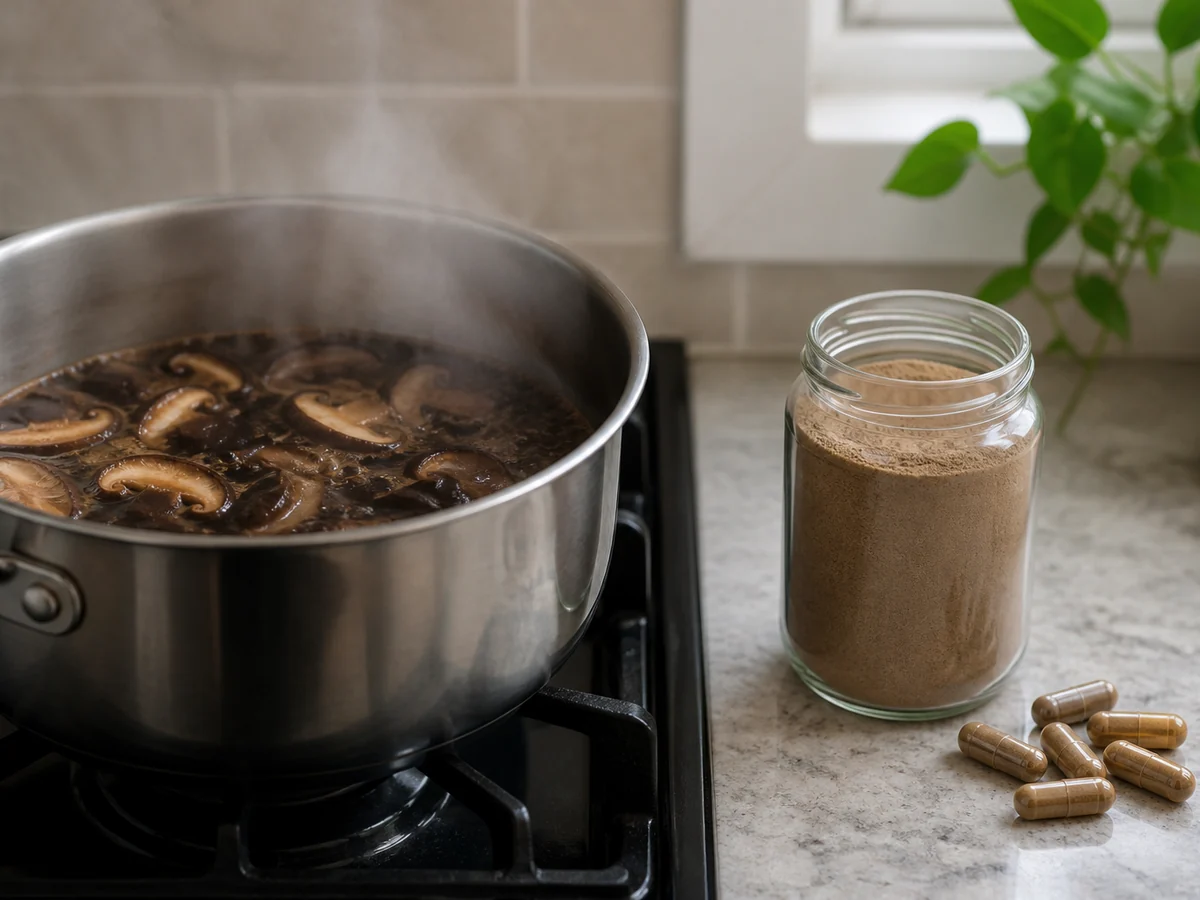
The authors noted that both their patient and the earlier Hong Kong patient had taken traditionally boiled lingzhi without any toxic effect at all.
The injury arrived in both of them only after they switched to taking lingzhi in powder form, and within one to two months of doing so.
That preparation change is the whole of it. Two preparations of the same species are not the same product, and this is the clearest illustration of it anywhere in the literature.
Boiling pulls out what hot water can dissolve and leaves the rest in the pot. Swallowing a powder delivers the entire milled fruiting body, including everything hot water would have left behind, and usually far more material by weight per serving.
That is a real mechanical difference and it is the obvious candidate for what changed. It is a candidate rather than a proven cause, because two patients cannot establish a mechanism.
What that mechanical difference does license is a distinction, and a plain one.
A reader drinking a mushroom decoction is doing what both patients did safely for a long time, and a reader swallowing spoonfuls of powder is doing what preceded both injuries.
Medicinal MushroomsMushrooms for Brain Health, Ranked by EvidenceHow often does this actually happen
Case reports get published because they are unusual, so to know whether to worry you need a denominator, and one exists.
The United States runs a national network that enrolls patients with liver injury prospectively at eight referral centers. Cases are collected as they arrive rather than dug out of records afterwards.
| Herbal and dietary supplements | Prescription medications | |
|---|---|---|
| Cases in the 839 enrolled | 130, or 15.5 percent | 709 |
| Share at the start of the period | 7 percent | The remainder |
| Share by the end | 20 percent | The remainder |
| Death or liver transplant | 13 percent of non-bodybuilding supplement cases | 3 percent |
Read the last row twice. Check that risk before adding a supplement.
When a supplement does injure a liver badly enough to reach one of these centers, the outcome is worse than for a prescription medicine, not better. Roughly one in eight of those cases ended in death or a transplant.
That is the argument against the intuition that a natural product must be a gentler one.
Nobody is monitoring it, nobody assayed the batch, and there is no reporting system watching for a pattern.
Now the limits of that table, which are substantial.
These figures cover herbal and dietary supplements as a whole category, and mushroom products are a small part of it. Nothing in this dataset says that mushrooms caused a particular share of those 130 cases.
The denominator is also missing at the other end. These are the cases that reached a specialist liver center, and there is no count of how many people took a supplement uneventfully.
There is a reason this category is hard to measure at all, and it cuts both ways.
- A prescribed medicine has a known ingredient and a known amount, and a supplement batch may have neither
- Nobody reports a supplement to a regulator the way a prescriber reports a suspected drug reaction
- Patients often do not mention supplements when asked what they take, because they do not count them as medicine
- Which means the recorded cases are the ones somebody thought to ask about, and the true count is unknown in both directions
The last of those is the honest caveat. Under-reporting can hide cases, and it can equally hide the vastly larger number of people who took the same product and were fine.
So the honest reading is narrow. Supplement-associated liver injury is uncommon, it has become a larger share of a real clinical caseload over time, and when it does happen it is more dangerous than the equivalent injury from a prescription drug.
Who is carrying more risk than the average reader
The reports name their circumstances, and those circumstances are worth knowing even though three cases cannot make a rule.
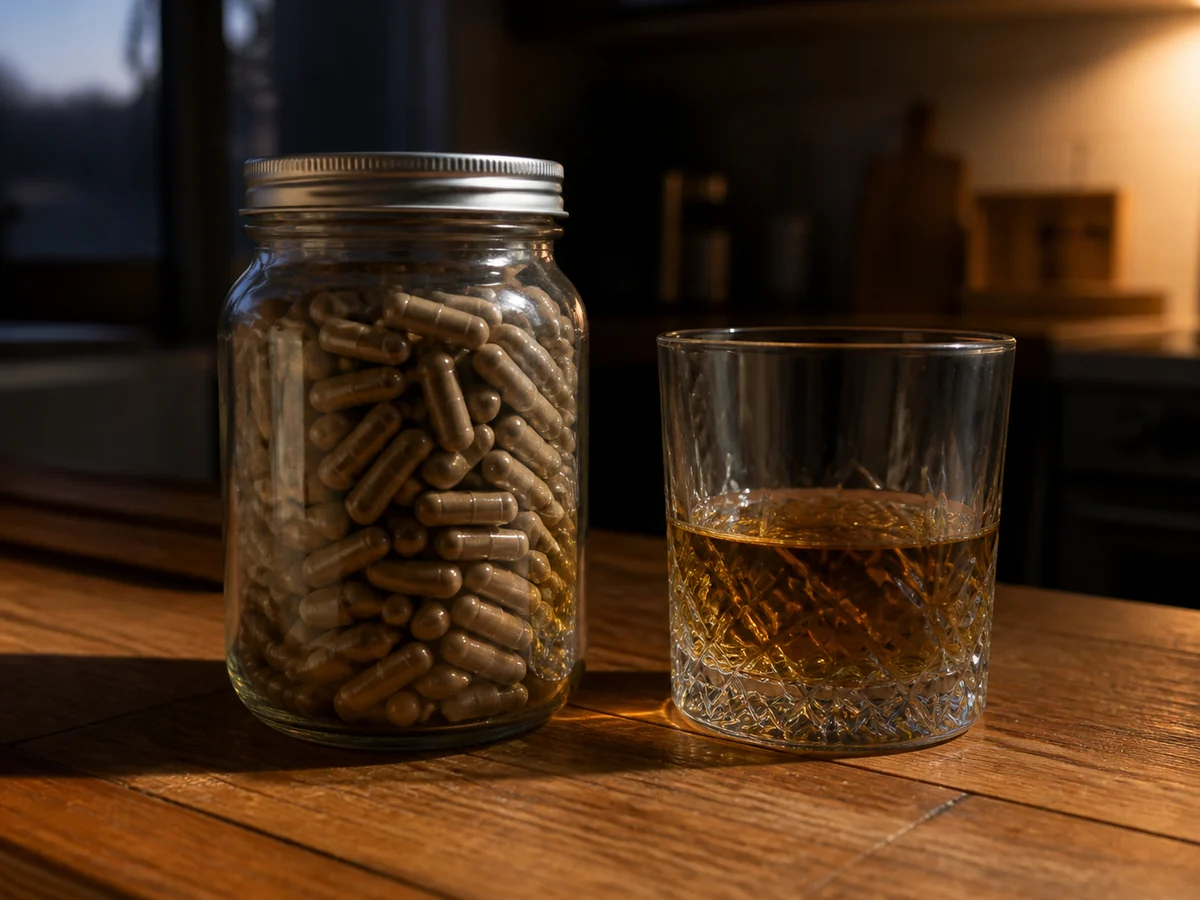
Alcohol is the first one, and it appears in the most recent case directly.
The 2023 patient had taken reishi powder together with alcohol, and the authors closed their report by noting how little research exists on what mushroom supplements do alongside other substances. That is an admission of ignorance rather than a finding, and it is the honest position.
Other medicines are the second. Both early patients were taking other therapeutic agents at the time, and the 2007 authors specifically asked for monitoring of the powder in combination with drugs.
- Anything already prescribed for you belongs on the list before a supplement is added to it
- The injury network found this pattern predominantly in middle-aged women, which is an observation and not a screening rule
- An existing liver condition is a reason to ask first rather than to read a page
- Nothing here is a reason to stop a prescribed medicine, at any dose, for any reason
Existing liver disease is the third and it changes the arithmetic rather than the risk.
A liver already working with reduced capacity has less margin when something injures it, so the same insult lands harder. That applies to fatty liver disease, hepatitis and anything alcohol-related.
An abnormal liver result is a reason to discuss the cause with a clinician before adding a supplement.
None of those is a threshold anybody has validated. They are the circumstances that happened to be present, which is a much weaker thing, and they are still the best guide available.
What to do with all of this
The useful residue is short and most of it costs nothing.

Set against everything above, the list of things worth doing is short.
| What the evidence supports | |
|---|---|
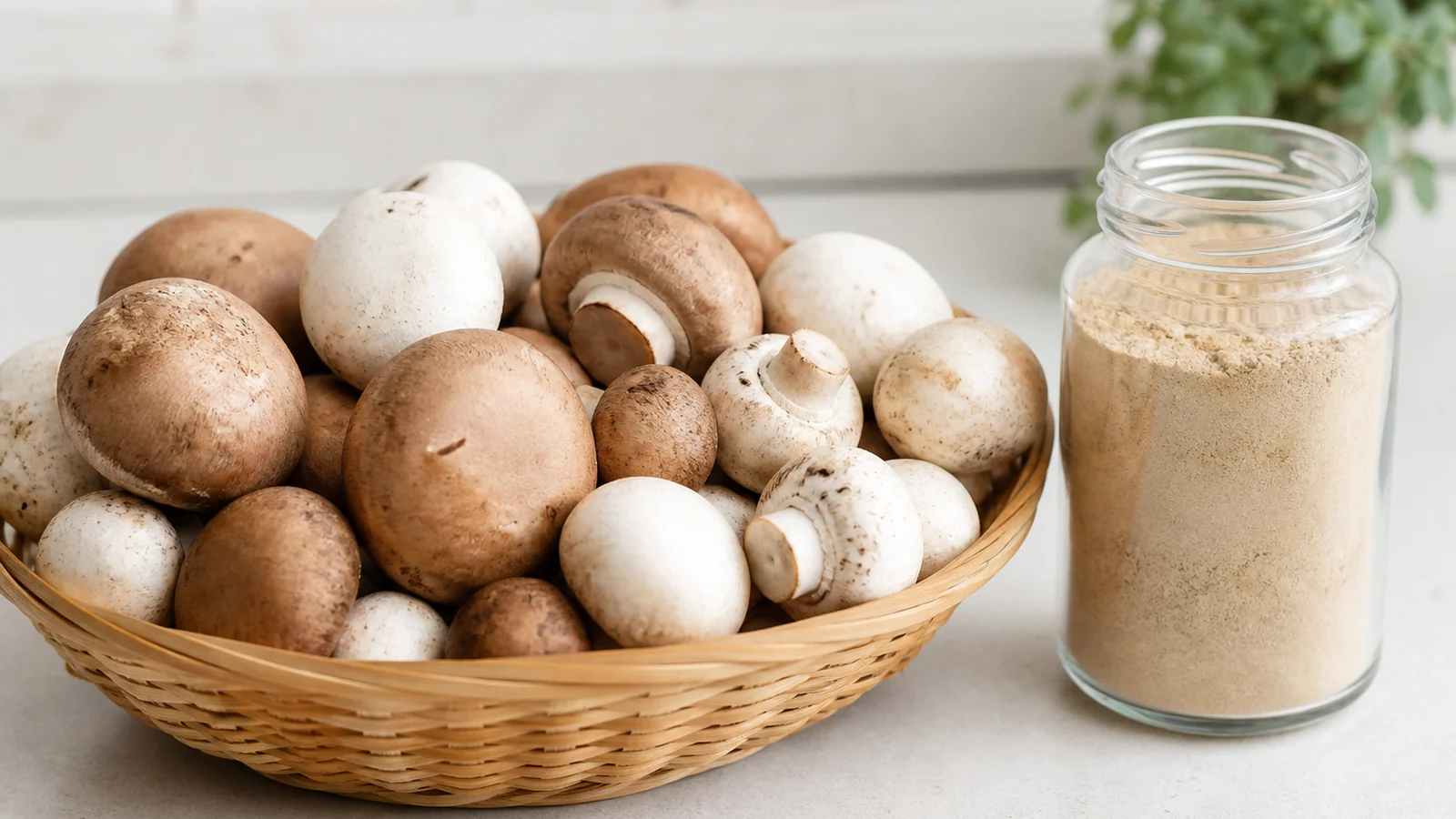
| Eating mushrooms as food | Nothing on this page is a reason to stop, and no case report involves culinary quantities |
| Taking a concentrated product for a liver | No trial supports it, and the documented injury reports involve exactly this |
| Wanting to know where you stand | A liver panel is inexpensive and gives a real answer |
| Already taking something and worried | Tell whoever prescribes for you, and ask whether a panel is worth running |
| New symptoms while taking a supplement | Fatigue, dark urine, pale stools or yellow eyes are a same-week matter |
The last row is the one to remember if nothing else survives.
Liver injury announces itself late and vaguely, which is why the reports involve people who arrived at hospital rather than people who noticed something early. Yellowing in the whites of the eyes is not a wait-and-see symptom.
If you like mushrooms, eat them. The cited literature does not support taking a concentrated mushroom product to improve liver health, and several published reports describe injury.
Sources & References
- Impact of dietary compositions and patterns on the prevalence of nonalcoholic fatty liver disease in Japanese men, BMC Gastroenterology 2021 The 281 participants, the raw mushroom comparison, and the adjusted odds ratios of 0.47 and 0.46 that belong to the whole healthy dietary pattern.
- Hepatotoxicity due to a formulation of Ganoderma lucidum (lingzhi), Journal of Hepatology 2004 The first published description of liver injury attributed to a Ganoderma lucidum formulation.
- Fatal fulminant hepatitis associated with Ganoderma lucidum (Lingzhi) mushroom powder, Journal of the Medical Association of Thailand 2007 The fatal case, and the observation that both this patient and the Hong Kong patient had used boiled lingzhi safely before switching to powder.
- Ganoderma lingzhi (Reishi Mushroom)-Induced Acute Liver Injury in the Setting of Alcohol Use, Cureus 2023 The 47-year-old patient, the alcohol co-ingestion, the supportive treatment and the complete resolution at two weeks.
- Liver injury from herbals and dietary supplements in the U.S. Drug-Induced Liver Injury Network, Hepatology 2014 The 839 enrolled patients, the 15.5 percent supplement share, the rise from 7 to 20 percent, and the 13 percent against 3 percent death or transplant comparison.