Research on mushrooms in cancer care concerns specific preparations used alongside treatment. Check whether a finding applies to a licensed product or a food supplement, and discuss any supplement with the treating team before using it.
No mushroom treats cancer, and the strongest evidence in this field is not about anything you can buy in a shop.
Both halves of that sentence matter. There is real research here, some of it good, and almost every page that cites it quietly swaps the thing that was studied for the thing being sold.
The boundary, before anything else
Warning
Nothing on this page is a reason to delay, change, refuse or stop any cancer treatment. No mushroom and no mushroom product treats cancer. If you are taking or considering any supplement while under oncology care, tell the treating team before using it.
With that fixed, the useful distinction is an old one in medicine.
A therapy is called complementary when it is used in addition to conventional treatment. It is called alternative when it is used instead of conventional treatment.
Everything credible in the mushroom literature sits in the first category, and it sits there specifically. The survival data that exists comes from patients who had surgery and chemotherapy and also received something else.
Registered trials and systematic reviews report findings with uncertainty. Product claims need to preserve those limits. It states no dose and recommends no product, because those decisions belong to a treating team who knows the diagnosis, the stage, the drugs and the person.
Medicinal MushroomsLion's Mane Benefits: What Human Trials Actually FoundWhat is approved, and where
Start with the fact that decides how to read everything else, because it is not a fact about a species.
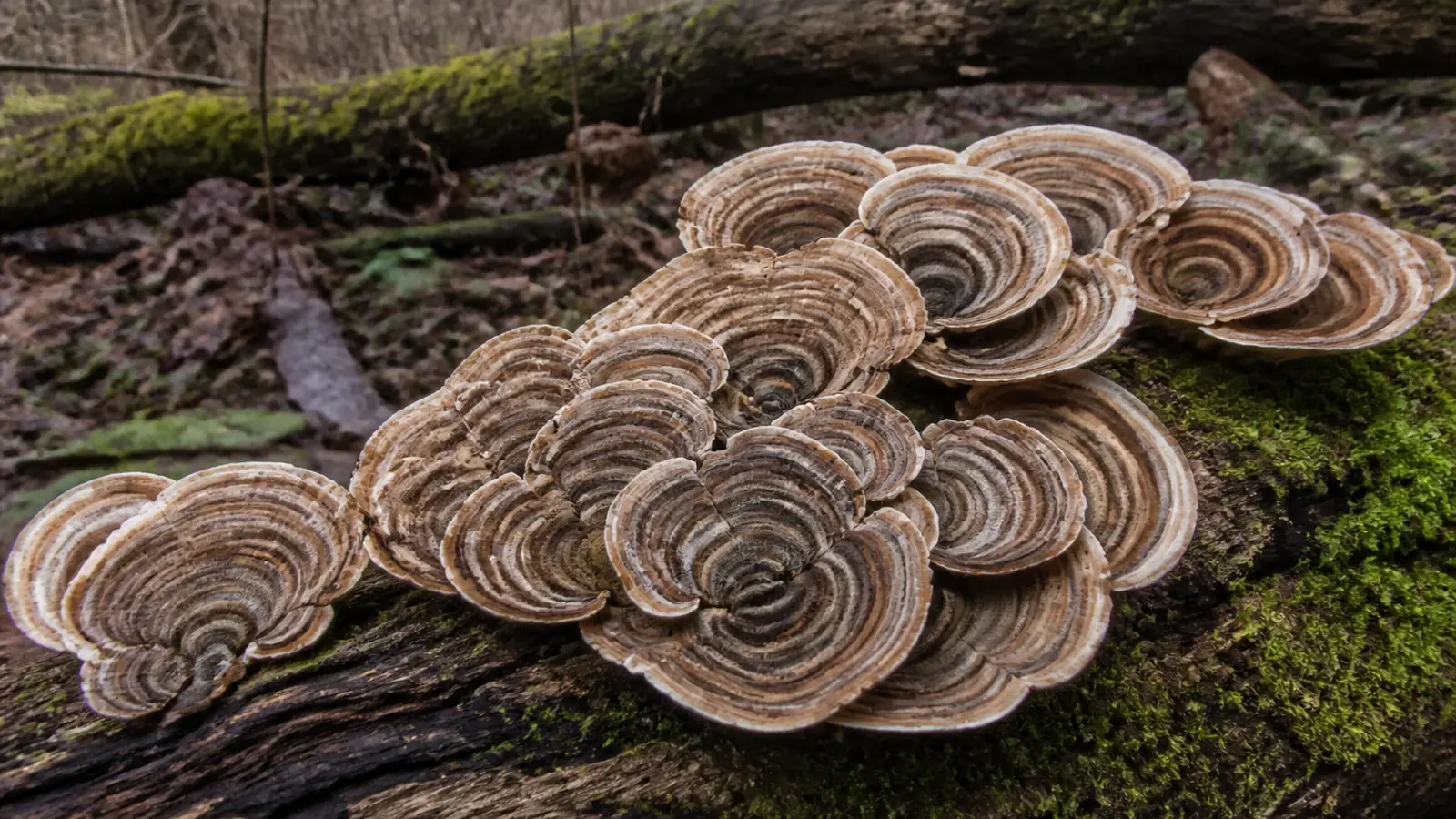
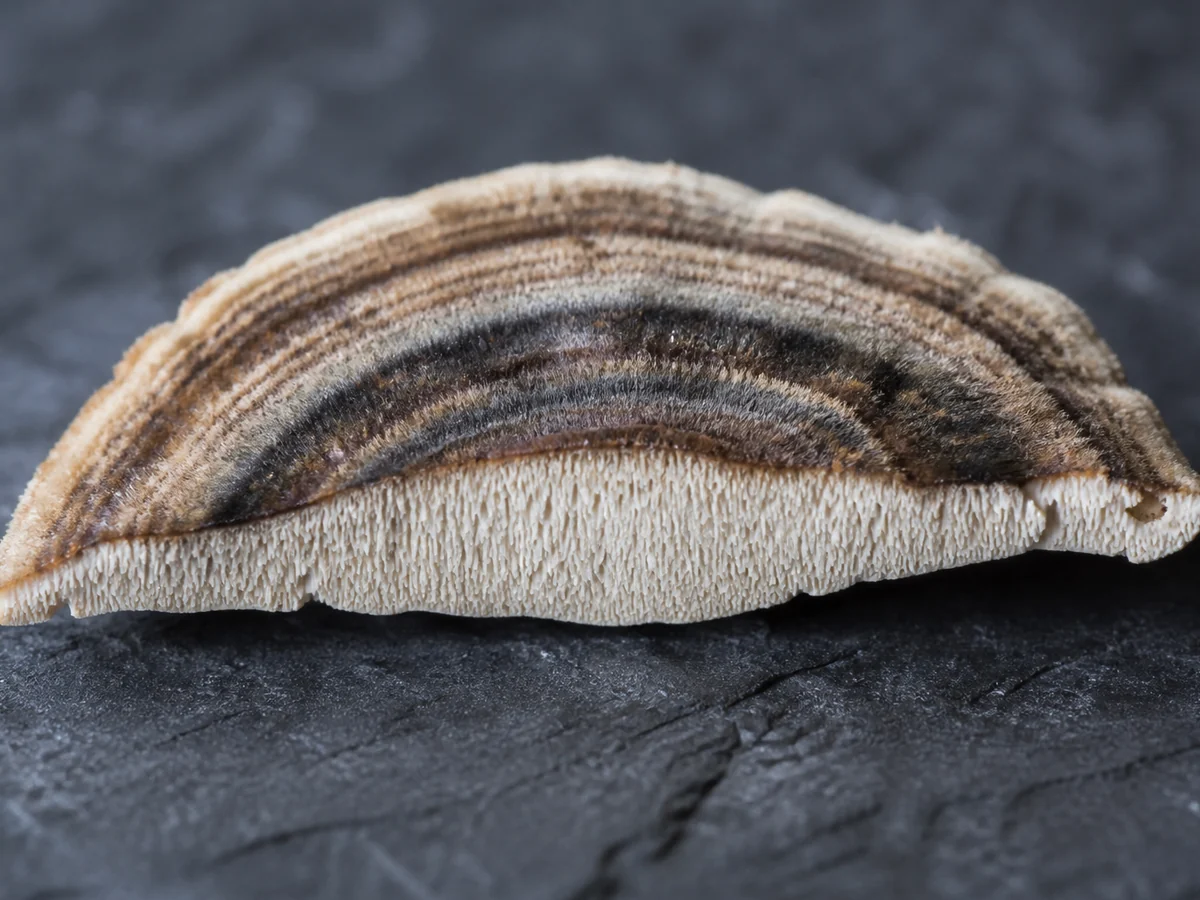
Polysaccharide K, usually written PSK, is a protein-bound polysaccharide prepared from a strain of Trametes versicolor. In Japan it is an approved mushroom product used to treat cancer, given alongside surgery and chemotherapy rather than instead of them.
The United States regulator has taken a different view of the same compound.
| Product | Status in Japan | Status in the United States |
|---|---|---|
| PSK, from Trametes versicolor | Approved for use in cancer treatment | Not approved as a treatment for cancer or any other condition |
| Lentinan, from shiitake | Used as an injectable adjuvant | Not licensed in the same way |
| Turkey tail food supplement | A food supplement | A food supplement, not evaluated before sale |
| Reishi food supplement | A food supplement | A food supplement, not evaluated before sale |
Approval is a fact about a specific preparation, in a specific country, not a property that the species carries around with it.
That is the sentence to hold on to when a page says a mushroom is approved to treat cancer in Japan and then offers you a jar. Both halves can be true and they are about different objects.
It helps to know what these two compounds physically are, because neither is a mushroom.
PSK is a protein-bound polysaccharide, meaning a long-chain sugar with protein attached, isolated from cultured mycelium of a particular strain and purified. Lentinan is a purified beta-glucan given by injection rather than swallowed.
Both were developed as pharmaceuticals in Japan in the 1970s and 1980s, went through that country's approval process, and have been given to large numbers of patients since. That history is the reason a real dataset exists at all.
Other species come up constantly in this conversation and none of them changes that picture.
- Turkey tail carries the licensed compound, and the approval belongs to the compound rather than the mushroom
- Shiitake carries lentinan, which is injected in a hospital and has nothing to do with eating shiitake
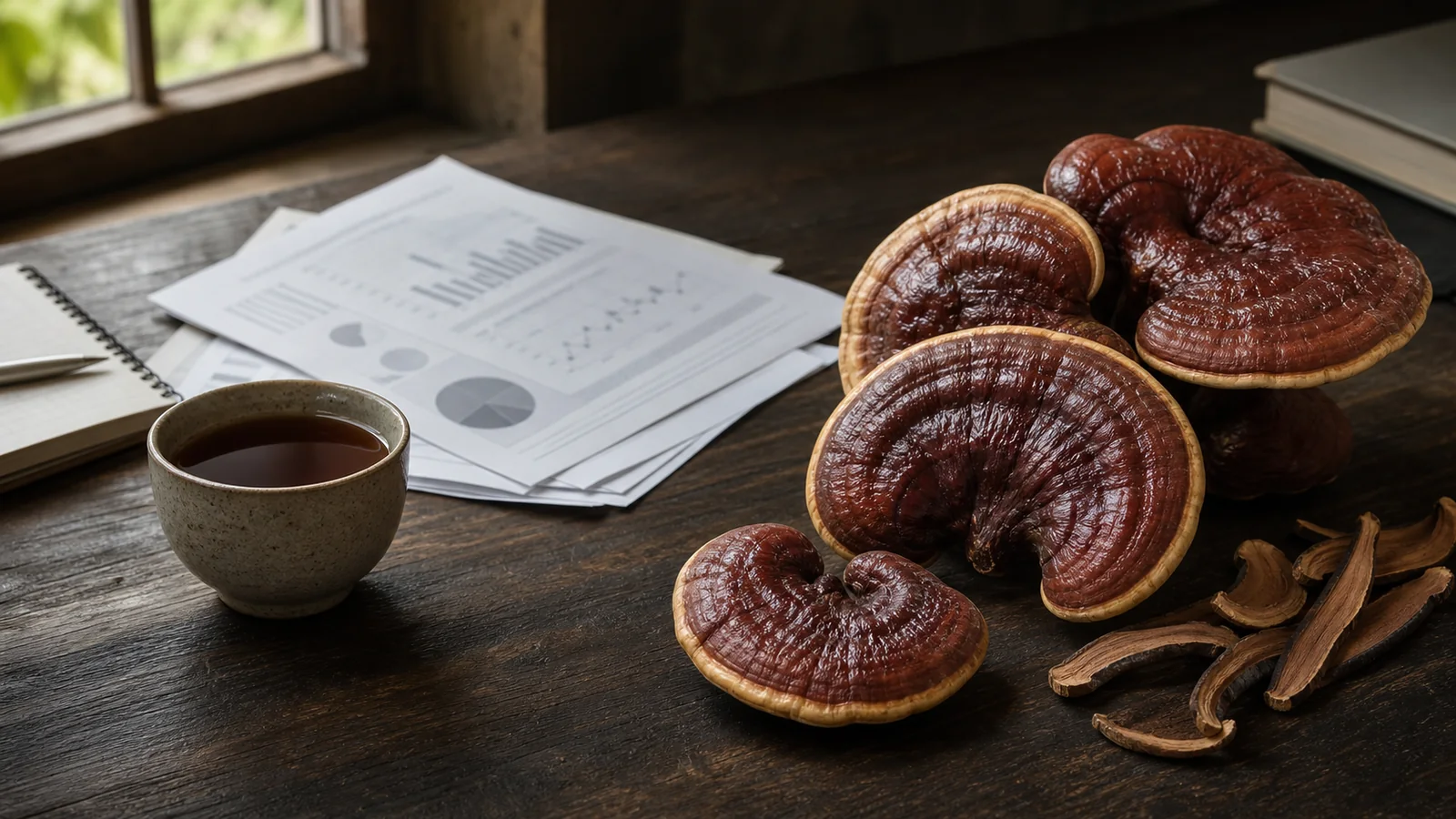
- Reishi has a Cochrane review rather than an approval, with findings that need to be read alongside their uncertainty
- Chaga, cordyceps and lion's mane have no approved cancer preparation behind them at all
What each one has behind it is worth checking individually rather than assuming the category shares a reputation.
What the pooled survival data shows
This is the strongest dataset in the field and it deserves to be reported at full strength, including its limits.
Ten thousand patients across twenty-three randomized trials is not a small literature. Prospective registration is a quality marker most supplement evidence never reaches.
Two words in that description are worth unpacking, because they are the reason this dataset outranks the rest of the field.
A network meta-analysis pools trials that did not all compare the same two things. That lets it rank several treatments against each other rather than only the pairs somebody happened to test directly.
Prospective registration means the authors published what they intended to measure before they looked. It is the ordinary defense against deciding what counted as a result once the results were in.
The two survival words in that block are also not synonyms.
Overall survival counts whether a person is alive. Disease-free survival counts whether they are alive without the cancer having come back, which is the measure that moves first when an adjuvant does anything.
Both moved here, and that consistency is part of why this dataset is taken seriously.
Read that third line twice, because it is the condition the whole result rests on.
The finding is about an addition to chemotherapy, not about PSK by itself.
A person who took a supplement in place of treatment would not be doing a weaker version of this study. They would be doing something the study never tested.
The fourth line matters just as much. A survival result in gastric cancer says nothing about a different cancer, and a result for a licensed compound says nothing about a jar of powder.
Medicinal MushroomsWhich Reishi Benefits Hold Up in Human Studies?What the reishi review actually concluded
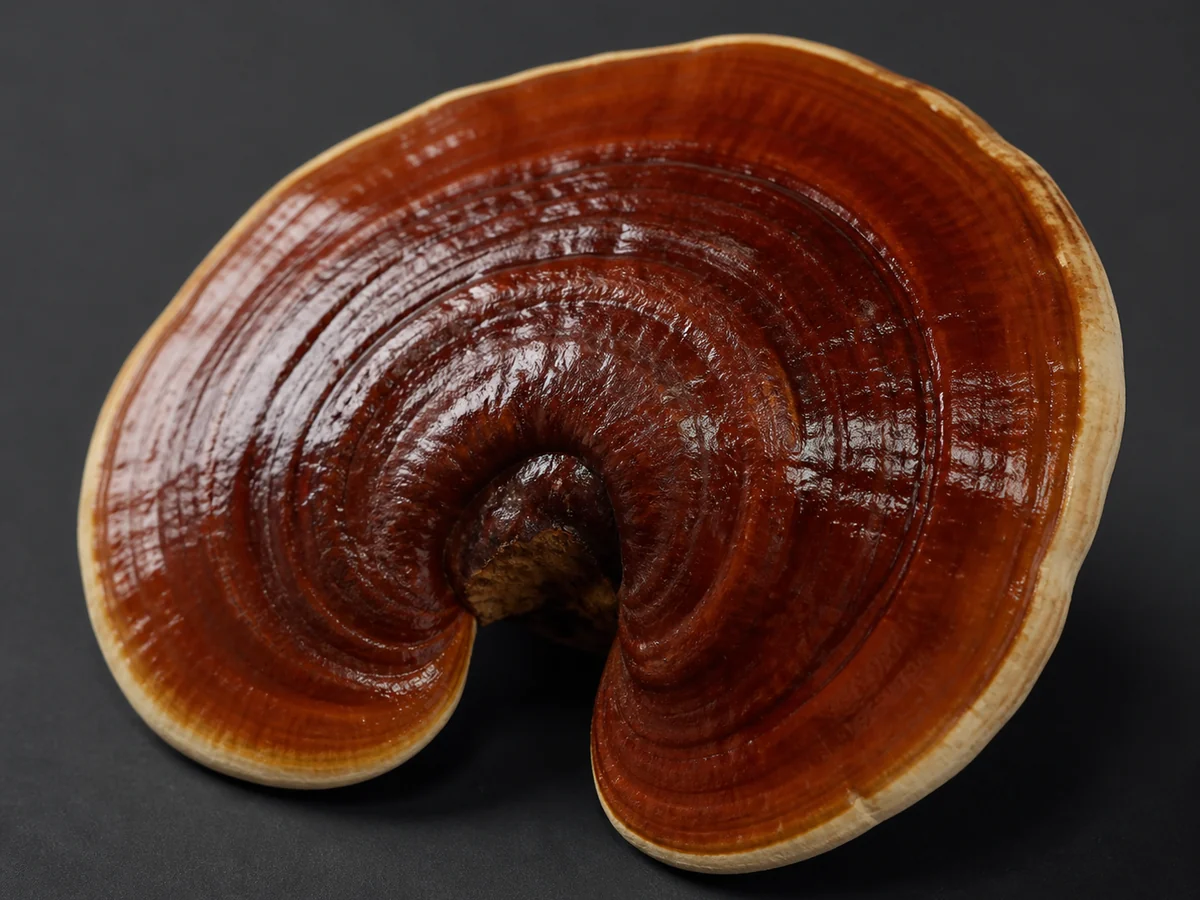
Reishi is the other name that dominates this search, and the citation everyone reaches for is a Cochrane review. It is worth reading rather than quoting.
- Included
- 5 randomized controlled trials, 373 participants
- Quality
- The methodological quality of the primary studies was judged generally unsatisfying
- Long-term survival
- No trial in the review had recorded it at all
- Tumor response
- Relative risk 1.50, 95 percent confidence interval 0.90 to 2.51
- On its own
- Ganoderma alone did not show the response rate seen in combination
That relative risk is the number that travels, usually stripped of the interval beside it.
A relative risk of 1.50 sounds like a fifty percent improvement. The confidence interval of 0.90 to 2.51 includes 1.0, and 1.0 is the value that means no difference at all, so the data are compatible with a substantial benefit and also with none.
The missing outcome is the more important omission. No trial in that review recorded long-term survival, which is the thing a person reading this page actually wants to know about.
The review did find modest immune movement, with CD3 up 3.91 percent, CD4 up 3.05 percent and CD8 up 2.02 percent, four studies reporting better quality of life than controls, and side effects limited to nausea and insomnia in one study with no significant blood or liver toxicity.
The authors then said plainly what the evidence supports. They did not find sufficient evidence to justify use as a first-line treatment for cancer, said it remains uncertain whether it prolongs long-term survival, and allowed that it could be given as an adjunct alongside conventional treatment, judiciously and after weighing cost and preference.
That is a careful conclusion and it is not the one that appears on most pages citing it.
Cochrane reviews are worth understanding as a genre. They are deliberately conservative, they grade the studies they include rather than counting them, and their conclusions are written to say exactly how far the evidence reaches.
So when a Cochrane review says it cannot justify first-line use but allows an adjunct role, both halves are load-bearing. The first half is not a formality and the second is not an endorsement.
Medicinal MushroomsMushrooms for Brain Health, Ranked by EvidenceThe supplement is not the studied product
Here is where the gap between the research and the shelf does its damage.
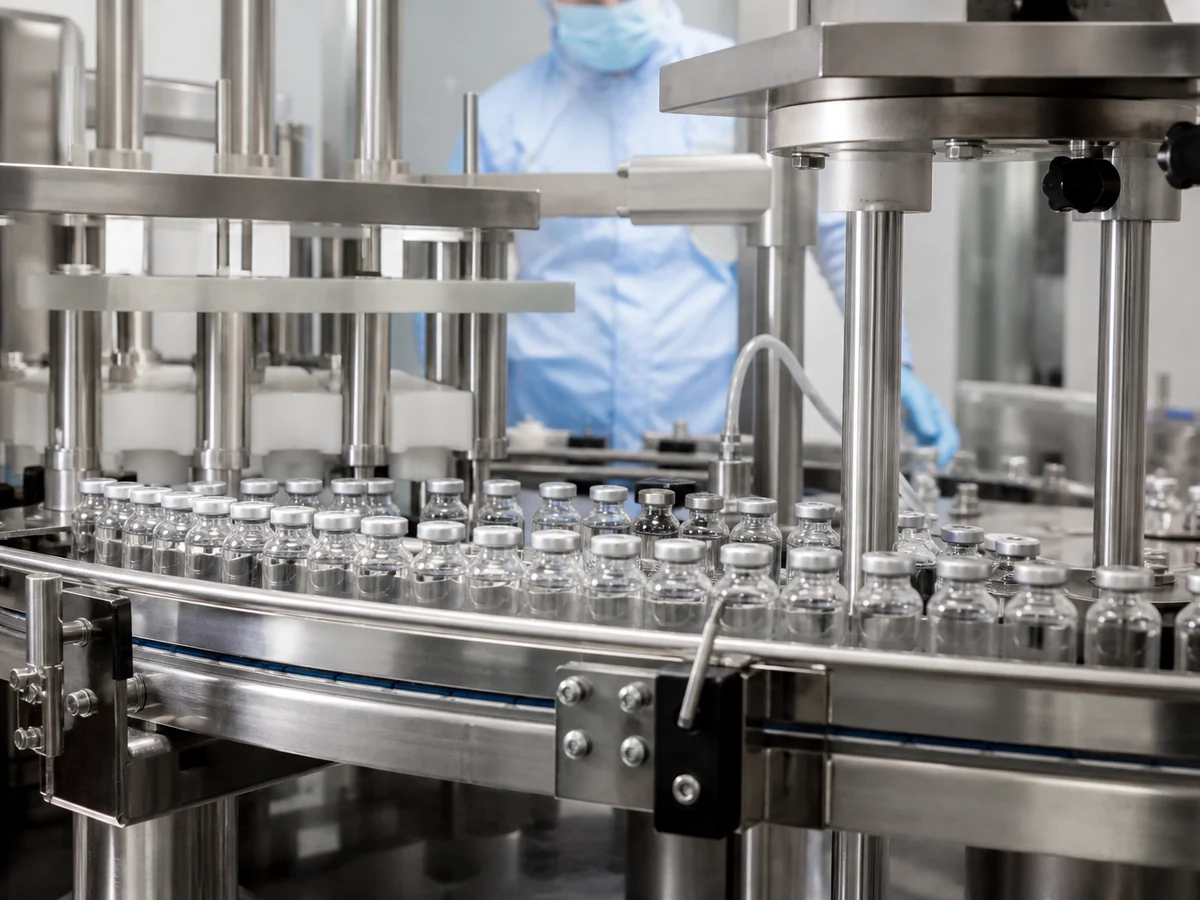
A licensed preparation is made from a defined strain by a defined process to a specification a regulator holds on file. If a batch misses the specification it does not ship.
A food supplement is a different arrangement entirely. It is not approved before sale, its manufacturer evaluates its own safety and labeling, and a benefit claim on the label carries a required disclaimer precisely because nobody evaluated it.
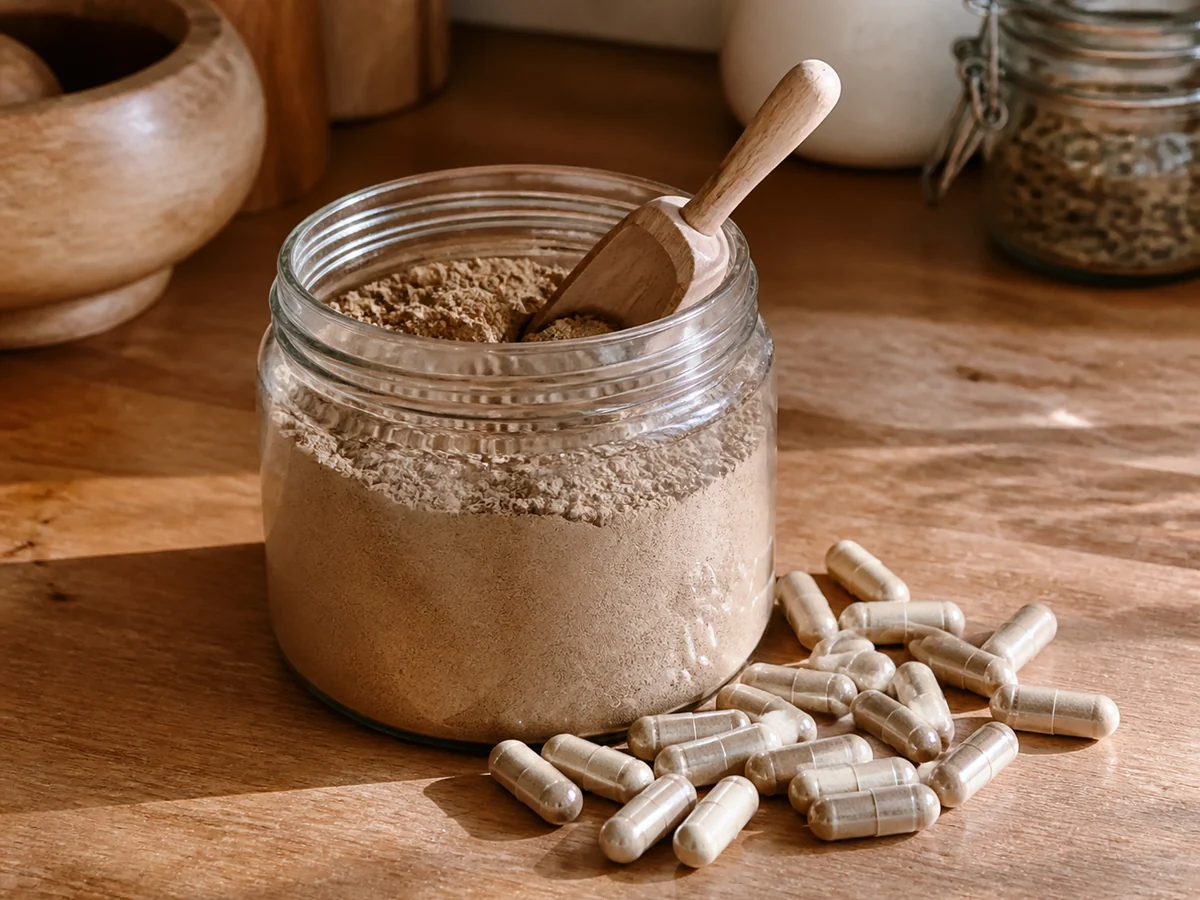
Two jars naming the same species can differ in which part of the organism is inside and in what was done to it, which is a separate subject with its own page.
Quoting survival data from a licensed adjuvant on a page selling a food supplement is not a citation. It is a substitution of one product for another with the evidence carried across, and it is the mechanism by which an accurate set of facts becomes a misleading page.
- The species can be the same and the preparation completely different
- The compound studied can be absent from the product, or present in an unstated amount
- The way the trial gave it can be one the supplement does not use
- The regulatory category is different, which is what "approved in Japan" was describing in the first place
The specific version of that gap for turkey tail is worth naming.
PSK is a purified fraction, isolated and standardized. A capsule of turkey tail is milled mushroom or a crude extract of it, and the amount of the studied fraction inside is usually neither stated nor measured.
None of that means a supplement is worthless. It means the survival research does not transfer to it, and a reader deciding what to do deserves to know which of those two things they are being shown.
What the trial doses were, and what that is not
People ask what the studies used, and the honest answer needs its context attached or it turns into a recommendation by accident.

The most quoted figures come from a phase 1 dose escalation study, and phase 1 is the stage that asks what a body will tolerate rather than whether a substance helps.
The stated conclusion was that up to nine grams a day was safe and tolerable in that setting, with the immune findings described as trends.
Every clause in that sentence limits it. Nine women, six weeks, one cancer, one point in a treatment pathway, and an endpoint about tolerability rather than outcome.
The trial phases exist precisely to keep those questions apart.
Phase 1 asks whether a substance can be given safely and at what amount. Phase 2 asks whether it looks like it does anything at all.
Phase 3 asks whether it beats the current standard in a group large enough to be sure.
A phase 1 result is the first rung. Treating it as evidence of benefit skips two stages that exist because most things that look promising at this point do not survive them.
One severe adverse event in a group of nine is also part of the record, and it belongs in any honest summary of a study that gets cited for its dose ceiling.
So the amount question has an answer and the answer is not advice. Amounts, and where the numbers in circulation come from, are covered on their own page.
The interaction question is the real one
An undisclosed supplement can interfere with decisions about cancer care.
An oncology team plans treatment around a known list of substances. Timing, dosing and monitoring are all set against that list, and something taken daily that is not on it is a variable inside somebody else's calculation.
That matters more here than in most supplement conversations, because several of these products are described by their own sellers as immune-modulating, and parts of cancer treatment depend on a specific immune or blood state at a specific time.
Four questions are worth writing down before an appointment rather than trying to remember.
- Could anything in this interfere with the specific drugs I am on
- Is there a point in the cycle when I should stop taking it
- Does it affect any of the blood results you are using to make decisions
- If you would rather I did not take it, is that a firm no or a preference
That last question is the useful one, because it separates a real contraindication from a general caution and tells you which you are being given.
If the answer to any of them is uncertain, uncertainty is a reasonable reason to wait. Nothing in the evidence on this page is strong enough to be worth taking against a treating team's hesitation.
One reader case sits outside all of this and deserves its own sentence. Somebody who finished treatment years ago, or who has no diagnosis and is reading out of worry, is not in the population any of these trials recruited.
The survival data came from patients having surgery and chemotherapy, and the phase 1 data came from women in the weeks after radiotherapy.
Neither says anything about preventing a cancer that does not exist. No study on this page was designed to answer that question.
Anything already causing a symptom is a different conversation again, and adverse effects have their own page. The interaction detail belongs with the oncologist and the pharmacist holding your chart.
Sources & References
- National Cancer Institute, PDQ Medicinal Mushrooms summary That PSK is an approved mushroom product used to treat cancer in Japan, that the FDA has not approved turkey tail or PSK for any condition, and the definitions separating complementary from alternative therapy.
- Can polysaccharide K improve therapeutic efficacy and safety in gastrointestinal cancer, Oncotarget 2017 The 23 randomized trials, 10,684 patients and 13 intervention arms, the overall and disease-free survival findings, the colorectal and gastric subgroups, the combination with chemotherapy, and the prospective registration.
- Ganoderma lucidum (Reishi mushroom) for cancer treatment, Cochrane Database of Systematic Reviews 2016 The 5 trials and 373 participants, the quality rating, the absence of long-term survival data, the relative risk of 1.50 with its confidence interval, the immune percentages, and the authors' conclusions.
- Phase 1 Clinical Trial of Trametes versicolor in Women with Breast Cancer, ISRN Oncology 2012 The dose escalation design, the 11 recruited and 9 completed, the 3, 6 and 9 gram cohorts over six weeks, the nine adverse events including one severe, and the tolerability conclusion.
- Questions and Answers on Dietary Supplements, US Food and Drug Administration That dietary supplements are not approved before marketing, that the manufacturer evaluates its own safety and labeling, and why a structure and function claim carries a required disclaimer.