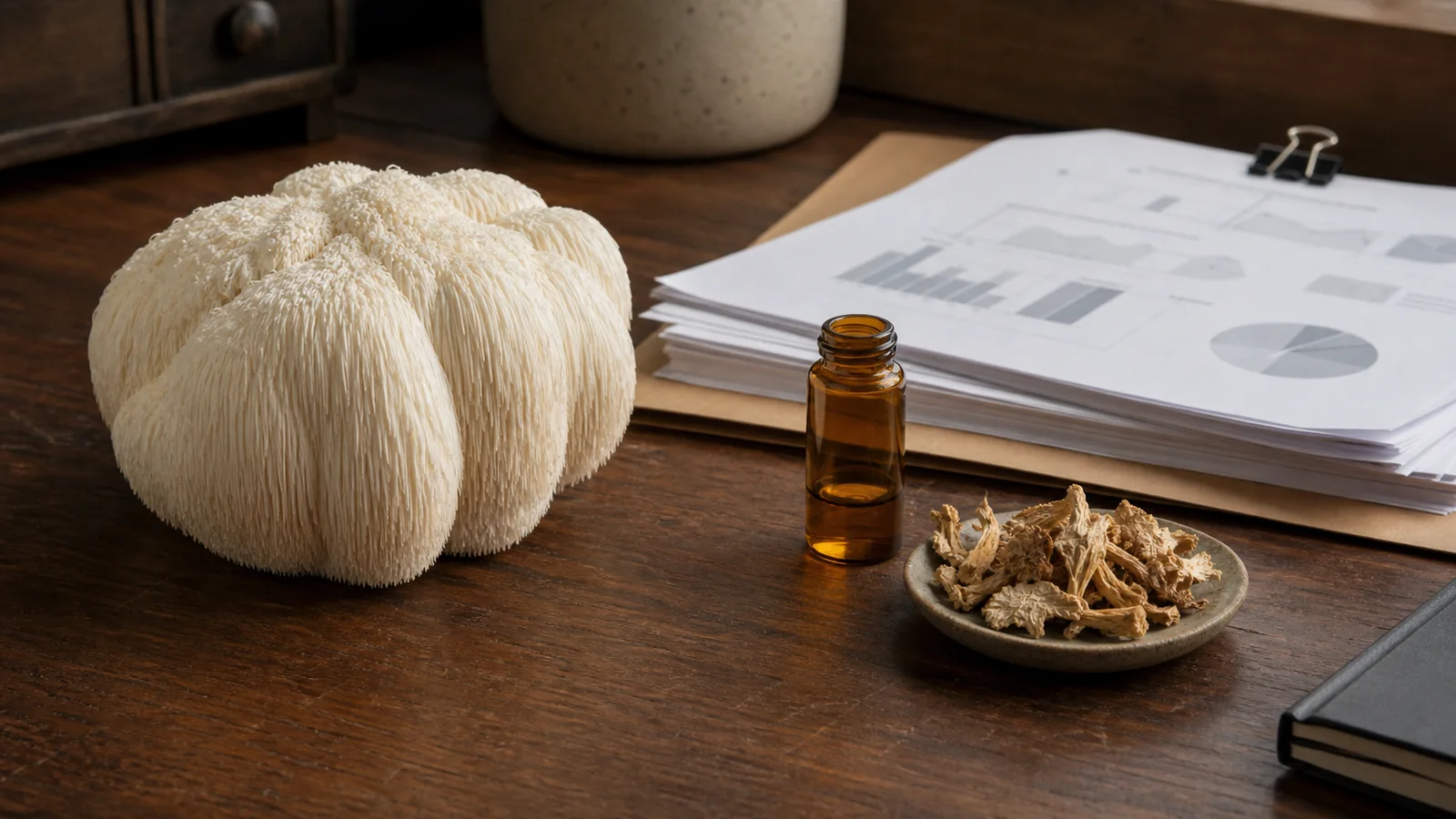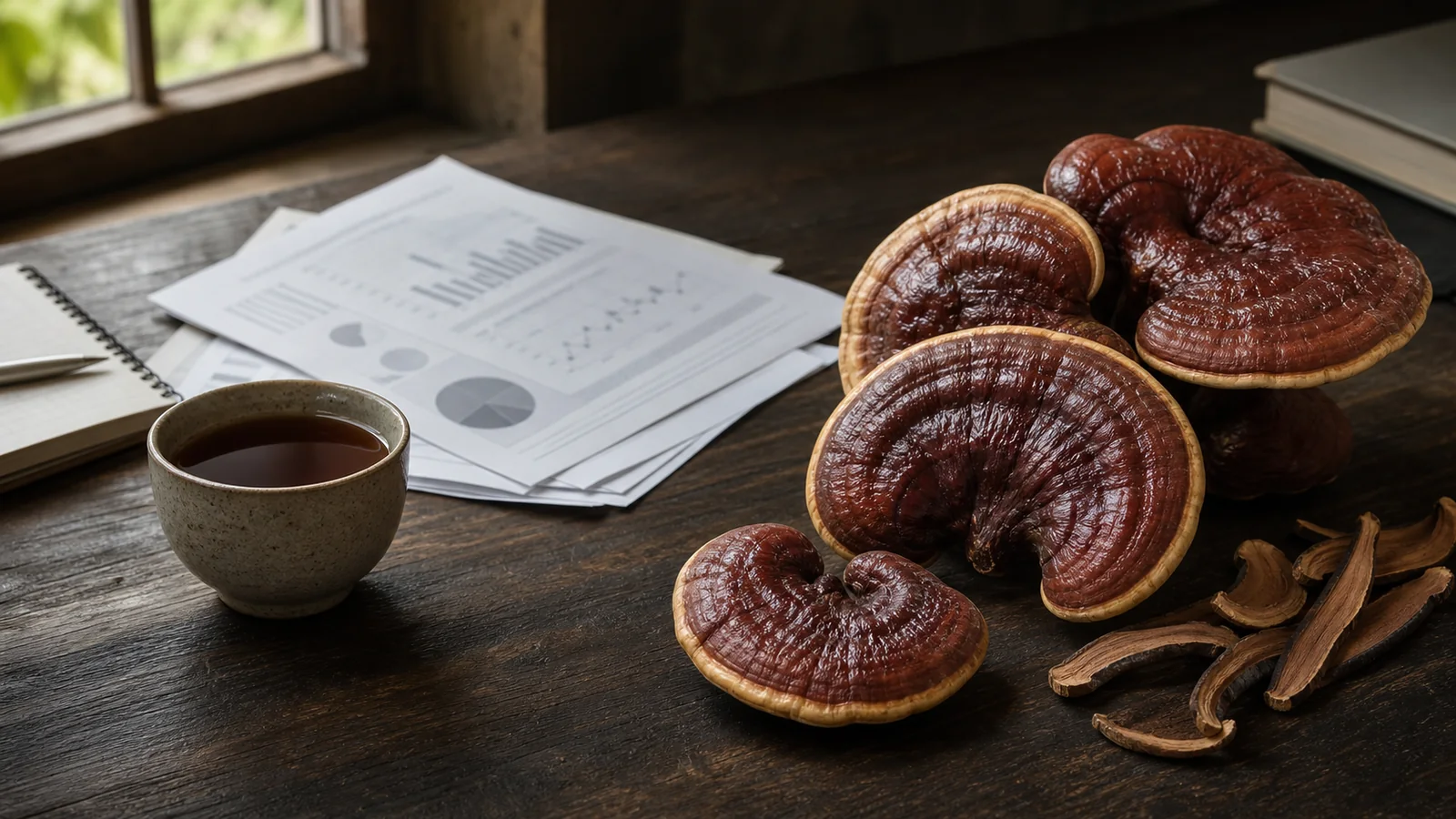
For brain health, lion's mane has the most research behind it. The science is early and promising, not settled. No mushroom is a proven cognitive treatment.
Medicinal mushroom comparisons give lion's mane the lead for direct human cognitive research, but the lead is still narrow. That first-place ranking is relative, not a seal of proof.
Its trials are small and mixed, while reishi, cordyceps, and broad mushroom blends have even less direct evidence for memory or thinking.
Which mushroom has the best evidence for brain health?
Lion's mane ranks first because several human trials measured cognitive outcomes after people took a defined preparation. Some results were positive, some were mixed, and at least one recent acute trial found no significant global cognitive benefit.
Whole culinary mushrooms rank differently. Observational studies have found associations between mushroom intake and lower odds of cognitive impairment, but those studies cannot show that mushrooms caused the difference.
People who eat more mushrooms may also differ in diet, activity, income, education, health care, or other factors.
Reishi and cordyceps sit lower for this question. They have research programs around immune markers, fatigue, exercise, metabolism, and laboratory neurobiology, but little convincing direct human evidence for better memory, attention, or long-term cognitive function.
Key takeaway
"Best evidence" means the closest available human evidence, not a proven treatment. No mushroom supplement has been shown to prevent dementia or reliably improve cognition in the general population.
The ranking gives direct cognitive outcomes more weight than laboratory or biomarker findings and separates defined trial products from retail products that merely share a common name.
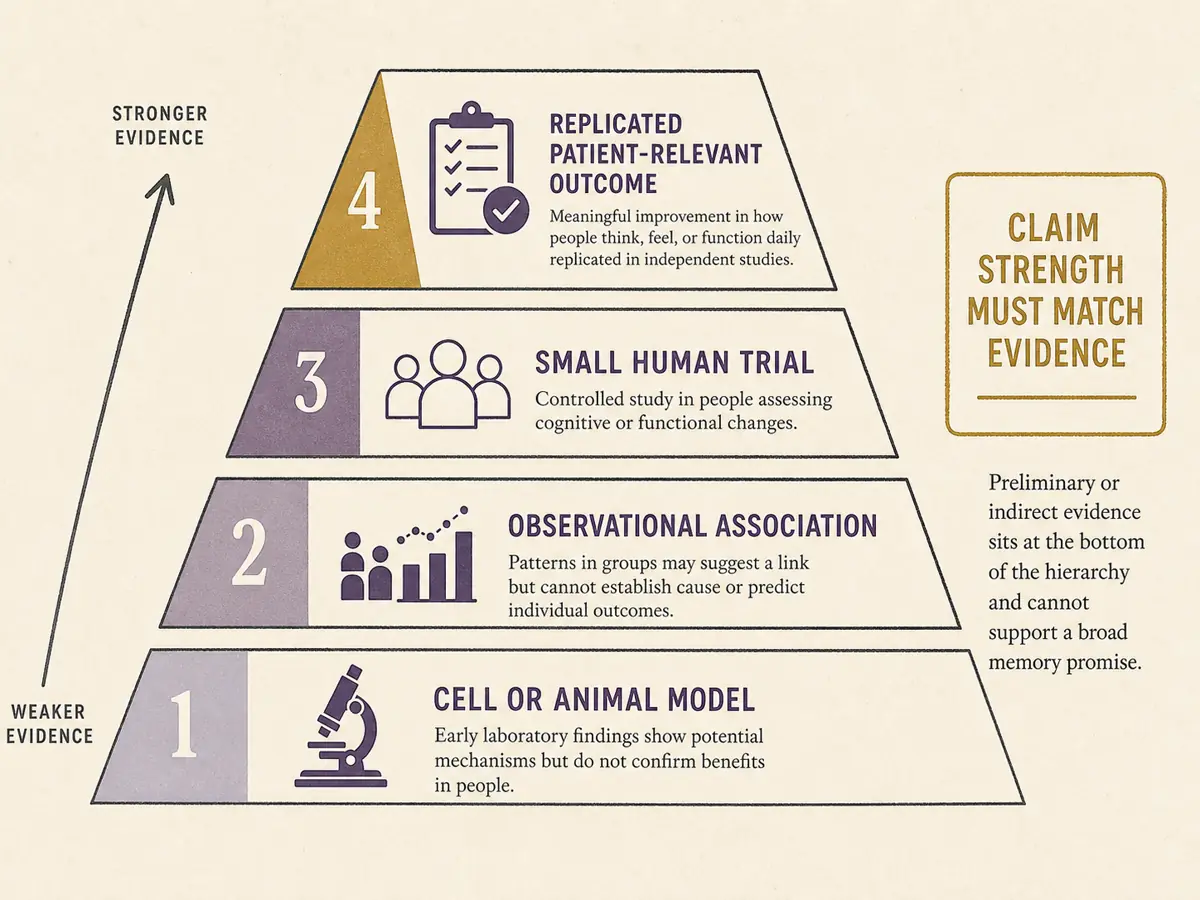
Lion's mane leads a weak field. That is useful for deciding what deserves further research, but it is a poor reason to promise that any capsule will sharpen memory.
Brain health also covers more than memory. It includes learning, attention, planning, emotional function, movement, sensation, and the ability to complete daily tasks.
A product that changes one laboratory task has not proved a broad brain benefit.
Outcome size matters alongside statistical significance. A small score difference can be real while remaining too small to notice in work, conversation, or independent living.
Trials should report both the size of change and whether it crosses a threshold that matters to patients.
Duration matters as well. An effect measured 90 minutes after one serving answers a short-term performance question.
It cannot show protection over years, which is the time scale implied by many brain-health claims.
Lion's mane leads, but the lead is narrow
Lion's mane ranks first because several small trials measured cognition after a defined preparation, which is more direct evidence than reishi or cordyceps provide. The inconsistent record includes a mild-cognitive-impairment result that faded after use, a narrow young-adult signal, and an acute study with no global benefit.
Differences in population, dose, and persistence make the lion's mane lead a summary of a few small mixed trials rather than a settled cognitive result.
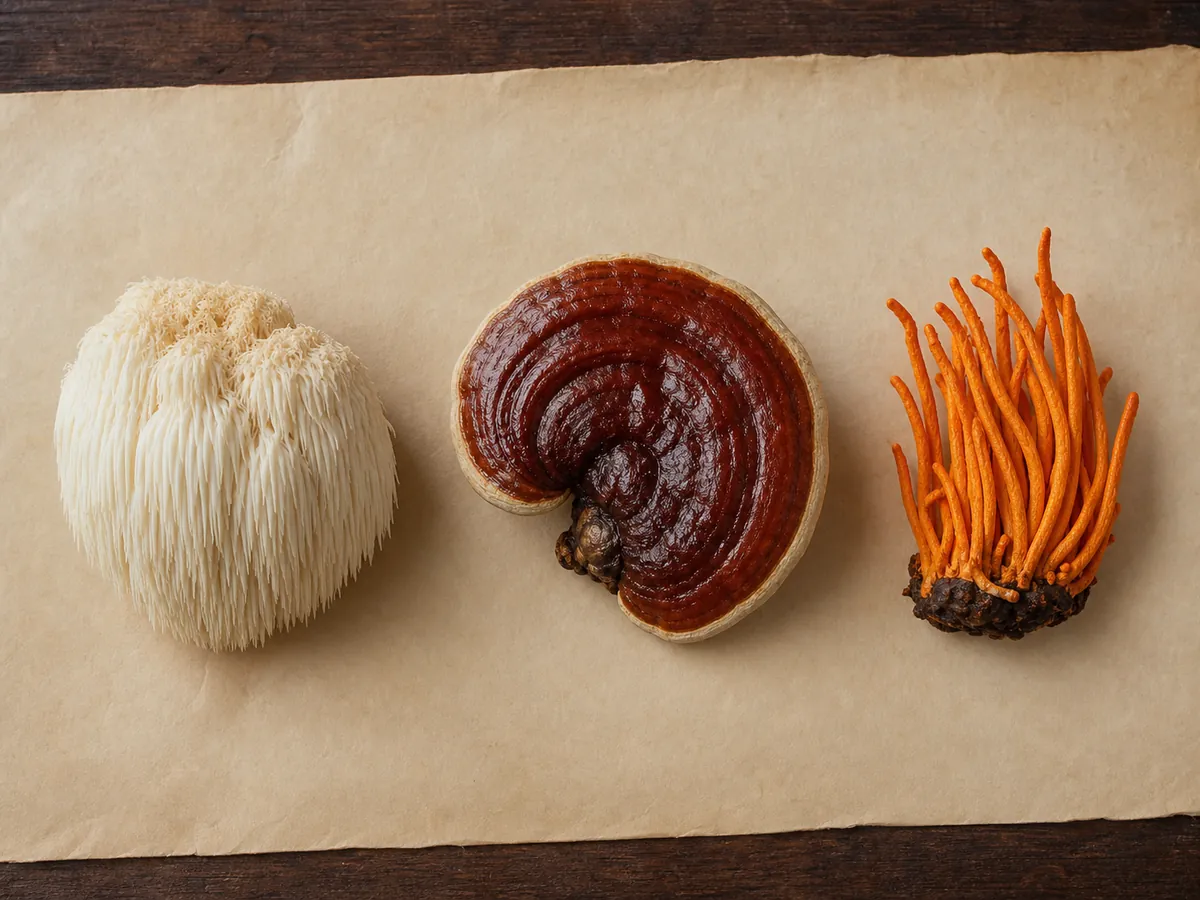
Preparation limits every comparison because powders, extracts, and enriched mycelium do not deliver equivalent material at the same milligram dose. Proposed nerve-growth mechanisms justify further study but cannot settle a clinical question.
Medicinal MushroomsLion's Mane Benefits: What Human Trials Actually FoundReishi and cordyceps do not have strong cognitive evidence
Reishi is often placed on brain-health lists because it is marketed for stress, sleep, and immune support. The evidence behind reishi health claims does not establish a direct cognitive effect.
Cordyceps appears because fatigue and exercise claims are translated into mental energy, which is another indirect route.
A person can feel foggy after poor sleep or physical exhaustion, so improving either problem might help daily thinking. That possibility does not prove that a mushroom acts on cognition, and it does not tell us whether the advertised sleep or energy effect is real.
| Mushroom | Common brain-related pitch | Direct human cognitive outcome | Main evidence gap |
|---|---|---|---|
| Lion's mane | Memory, focus, nerve support | Several small trials with mixed cognitive results | Larger replicated trials using comparable products |
| Reishi | Calm, sleep, stress resilience | No strong consistent evidence for better cognition | Direct sleep and cognition trials with patient-relevant outcomes |
| Cordyceps | Energy and mental stamina | Little convincing evidence for memory or attention | Direct cognitive trials rather than exercise or fatigue measures |
| Mixed mushroom blends | Broad focus and clarity | Product-specific evidence is usually absent | Each ingredient amount, preparation, and combined safety profile |
Animal research can explore neuroinflammation, oxidative stress, nerve injury, and learning behavior. These models help researchers choose mechanisms to test.
They cannot establish that a retail dose improves human memory.
- Reishi immune markers do not count as cognitive outcomes.
- Cordyceps exercise measures do not count as attention or memory outcomes.
- A calmer evening does not prove better sleep architecture or long-term brain protection.
- An ingredient blend cannot borrow the strongest study attached to each name when the blend itself was never tested.
Product mixtures make interpretation harder. A powder may combine lion's mane, reishi, cordyceps, chaga, caffeine, herbs, and flavoring.
If someone feels different, the blend offers no clear way to identify which ingredient, interaction, or expectation caused it.
This broad article therefore keeps memory and focus promises in one comparison rather than prescribing stacks for each symptom. Narrow changes in memory or attention deserve their own medical context and should not be collapsed into a product list.
Eating mushrooms and taking extracts answer different questions
A mushroom meal and a concentrated extract create different exposures. Whole mushrooms add fiber, protein, minerals, and other food compounds within a meal.
Extracts select and concentrate certain fractions, and their composition depends on species, mushroom part, solvent, and manufacturing.
Food studies usually ask whether people who eat mushrooms differ from people who rarely eat them. Supplement trials ask whether a defined preparation changes an outcome under controlled conditions.
Neither design can validate the other product automatically.
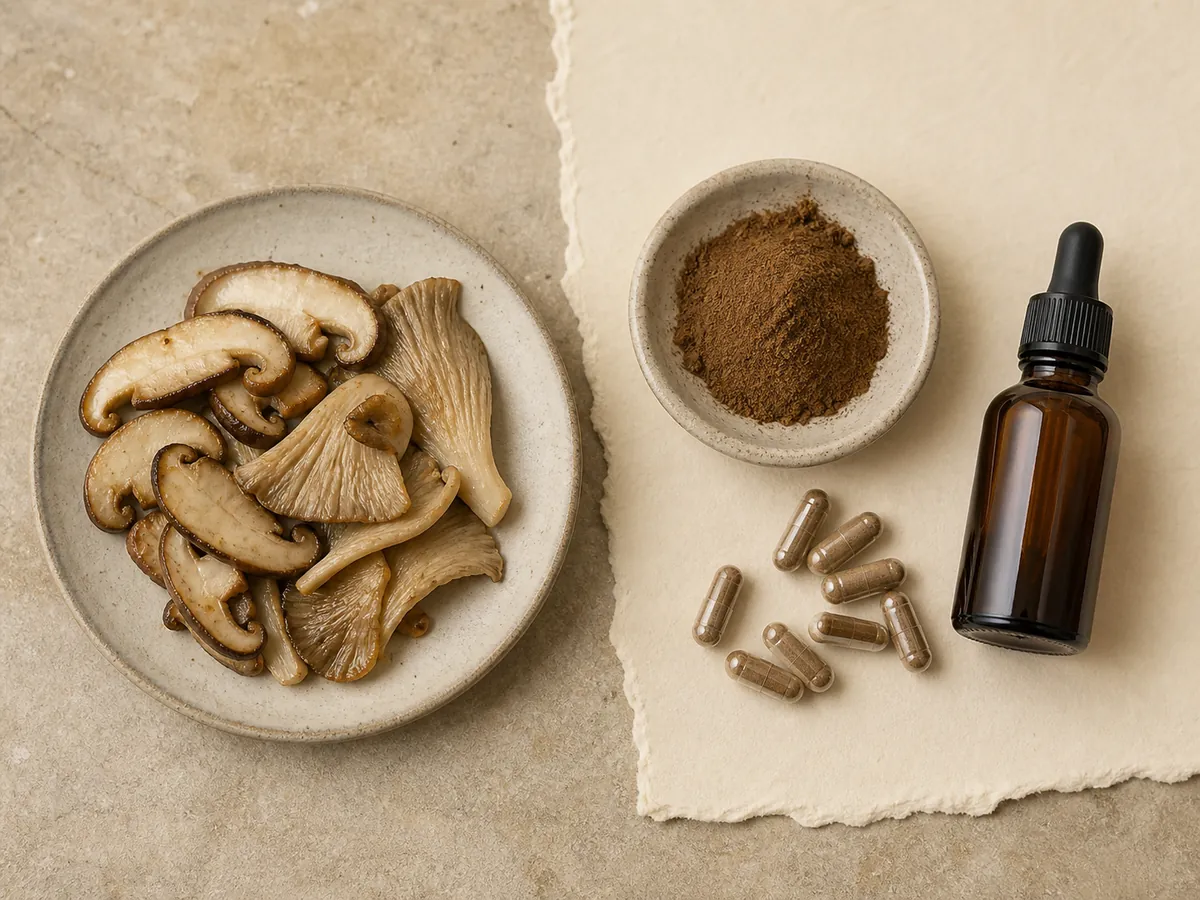
Fresh lion's mane fruiting bodies are edible when correctly identified and cooked. Reishi is woody and is generally brewed or extracted rather than eaten as a normal serving.
Cordyceps products may contain cultivated Cordyceps militaris fruiting bodies, mycelium, extracts, or ingredients sold under a traditional name.
- Food portions include water and a complete food matrix.
- Dried powders concentrate the original material by removing water.
- Hot-water extracts favor water-soluble compounds such as beta-glucans.
- Alcohol extracts recover a different mix, including more triterpenes from some species.
- Mycelium grown on grain may include residual growth substrate.
The label must match the evidence. If a trial used 3 grams of dried lion's mane fruiting body, it does not establish the effect of 500 milligrams of an unspecified mycelium extract.
A high extraction ratio also does not prove clinical strength.
Regardless of extraction claims, culinary mushrooms can remain nutritious meal ingredients without acting like drugs.
A meal does not need a cognition claim to belong in a balanced diet.
Supplements face a different standard because people take them for a promised effect at a concentrated daily dose. The stronger the promise, the closer the supporting evidence should match the product, population, outcome, and duration.
What food studies can and cannot tell us
A 2019 Singapore study of 663 adults aged 60 and older associated more than two mushroom portions per week with lower odds of mild cognitive impairment than intake below once per week.
The association was substantial and remained after researchers adjusted for several health and lifestyle factors. It is still cross-sectional, which means diet and cognition were assessed around the same period rather than assigning diets and following participants under controlled conditions.
Direction is uncertain. Mushroom intake might contribute to a healthy pattern, but people with early cognitive changes might also shop, cook, or vary their diet differently.
This observational mushroom-intake analysis can retain unmeasured dietary, health, or social differences even after statistical adjustment.
The study included commonly eaten species such as cultivated shiitake and oyster mushrooms rather than one standardized medicinal extract. It therefore cannot prove that lion's mane, reishi, or another single supplement prevents cognitive impairment.
A six-month randomized trial in 436 healthy adults aged 60 and older compared vitamin D3, vitamin D2-enriched mushrooms, standard mushrooms, and placebo. It did not establish a clear cognitive or mood benefit from the mushroom interventions.
That controlled result tempers a simple causal reading of observational associations.
- Association tells us that two things appeared together more or less often.
- Causation requires stronger evidence that changing one exposure changes the outcome.
- Adjustment reduces known differences but cannot remove every hidden difference.
- A food-pattern result does not validate a concentrated extract.
Observational research still has value. It can reveal patterns worth testing and can study years of ordinary eating that would be difficult to reproduce in a tightly controlled trial.
Its conclusions must stay at the association level.
The fairest food verdict is modest. Edible mushrooms can contribute to a varied diet, and some population data are encouraging.
No study justifies eating or taking a specific mushroom as a guaranteed way to prevent decline.
Medicinal MushroomsWhich Reishi Benefits Hold Up in Human Studies?The brain-health actions with stronger evidence
The largest practical error is letting a supplement displace care that has better support. Blood pressure control, physical activity, sufficient sleep, hearing and vision care, medication review, smoking cessation, and management of diabetes and depression all connect to cognitive health.
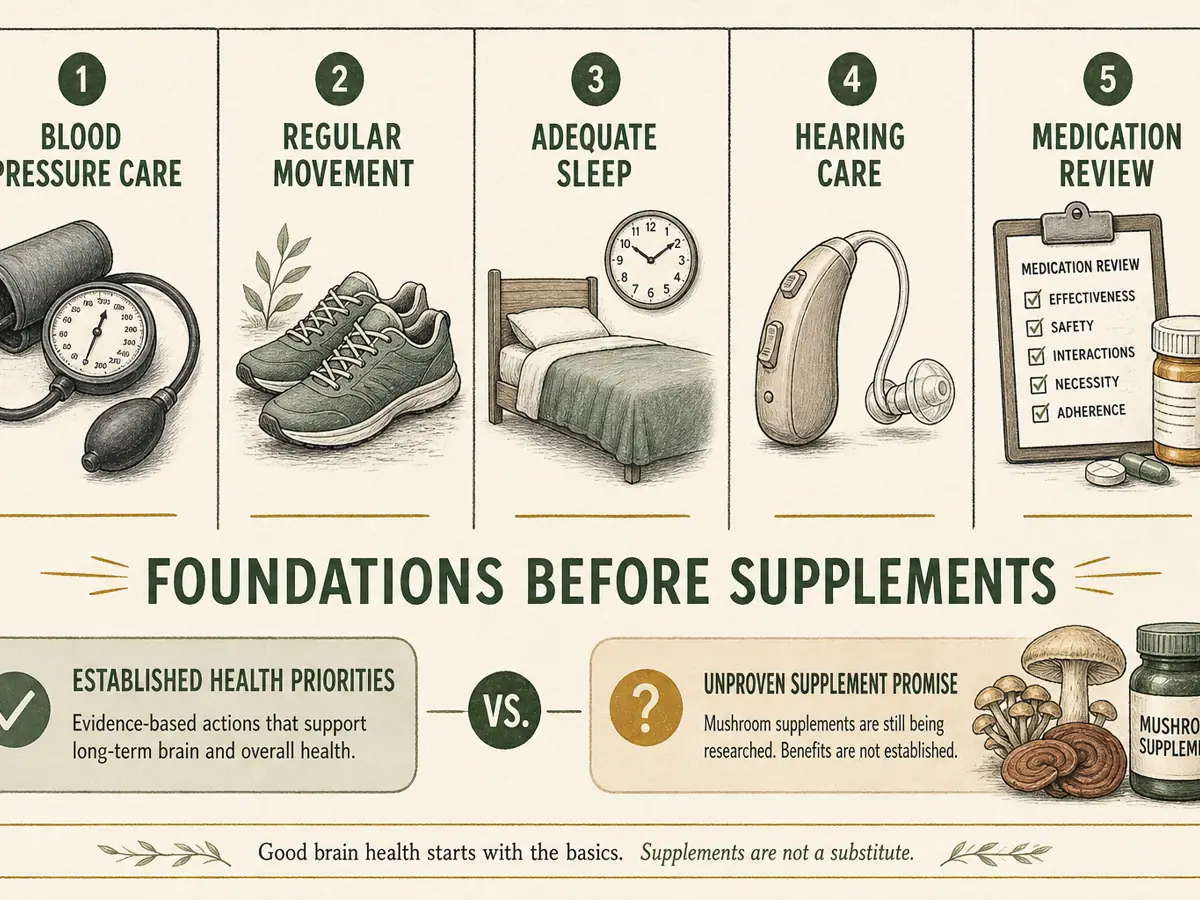
High blood pressure can damage vessels in the brain over time. In the SPRINT MIND research cited by the National Institute on Aging, intensive systolic blood-pressure treatment reduced the risk of mild cognitive impairment in adults aged 50 and older.
That is a direct clinical result from structured medical care.
Physical activity supports cardiovascular health, strength, mood, balance, and sleep. Research also links activity with brain changes and selected cognitive outcomes.
Physical activity has established cardiovascular, strength, mood, balance, and sleep benefits even though its exact dementia-prevention effect remains under study.
Sleep supports attention, learning, memory formation, reaction time, and decision-making. Ongoing sleepiness or insomnia can point to sleep apnea, pain, depression, medication effects, or another condition that deserves evaluation.
Hearing deserves attention because a person who cannot hear instructions or conversation clearly may appear forgetful or confused. Treating sensory loss also helps communication and reduces the cognitive load required to follow daily life.
Keep blood pressure, diabetes, cholesterol, and other vascular risks under medical care.
Make regular movement, adequate sleep, hearing care, and a balanced diet the foundation.
Ask a pharmacist whether medicines or supplements can affect memory, alertness, or sleep.
Replace prescribed treatment with a mushroom product.
Assume that normal blood tests rule out sleep, mood, hearing, or neurological causes.
Spend heavily on a supplement while delaying an assessment of meaningful cognitive change.
These actions are not a guarantee against dementia. Age, genes, injuries, and disease still matter.
They are recommended because they address known health needs and several modifiable risk factors at once.
Social connection and mentally engaging activity also belong in a broad plan. Their exact effects on dementia risk are still being studied, but they support mood, function, and participation without requiring an unproven product.
Those social and mental activities support a brain used in daily context, alongside nutrition, without relying on one compound.
Nutrition works the same way. A varied eating pattern can support vascular and metabolic health even when no individual mushroom has a proven cognitive effect.
Foods should be judged as part of that pattern rather than advertised as a treatment on their own.
The order matters. Build and maintain the foundation first.
A mushroom supplement, if considered at all, belongs after the medical and lifestyle questions are addressed and after its risks have been reviewed.
Memory and focus changes can be medical clues
Occasional forgetfulness is common. Misplacing an item or taking longer to recall a name does not automatically mean disease.
Concern rises when changes are new, progressive, or interfere with driving, cooking, medication use, finances, work, navigation, or self-care.
Several treatable problems can affect thinking. Poor sleep, depression, anxiety, alcohol, medication side effects, hearing loss, thyroid disease, kidney or liver problems, and low vitamin B12 can contribute.
Finding the cause changes what useful care looks like.
Warning
Sudden weakness or numbness on one side, confusion, trouble speaking, trouble seeing, loss of balance, or a severe unexplained headache can be signs of stroke. Call emergency services immediately instead of taking a supplement and waiting for the symptom to pass.
Gradual changes deserve an appointment when they persist or disrupt daily tasks. Repeating the same questions, getting lost in familiar places, missing bills, struggling with familiar recipes, or becoming confused about time and place are reasons to speak with a clinician.
- Write down when the change began and whether it is steady or fluctuating.
- List all prescription medicines, over-the-counter drugs, and supplements.
- Note sleep quality, snoring, mood, alcohol use, hearing, recent illness, and major stress.
- Bring a trusted person who has observed the changes when possible.
- Ask which causes can be tested or treated and when follow-up should occur.
A supplement can muddy the picture. It may add side effects, interact with medicine, or create false reassurance while the underlying cause progresses.
Starting several products together makes attribution harder.
Brain symptoms also deserve precise language. "Fog," "focus," and "memory" can describe different problems.
A clinician may ask whether the difficulty involves attention, storing new information, retrieving words, planning, sleepiness, or mood.
These claims stay inside medical-use boundaries and do not diagnose those changes. It sets the threshold for choosing evaluation over shopping, because an accurate cause is more useful than the name of a fashionable ingredient.
A claim-checking method for brain supplements
Start with the exact promise. "Supports brain health" is broad enough to avoid a measurable commitment.
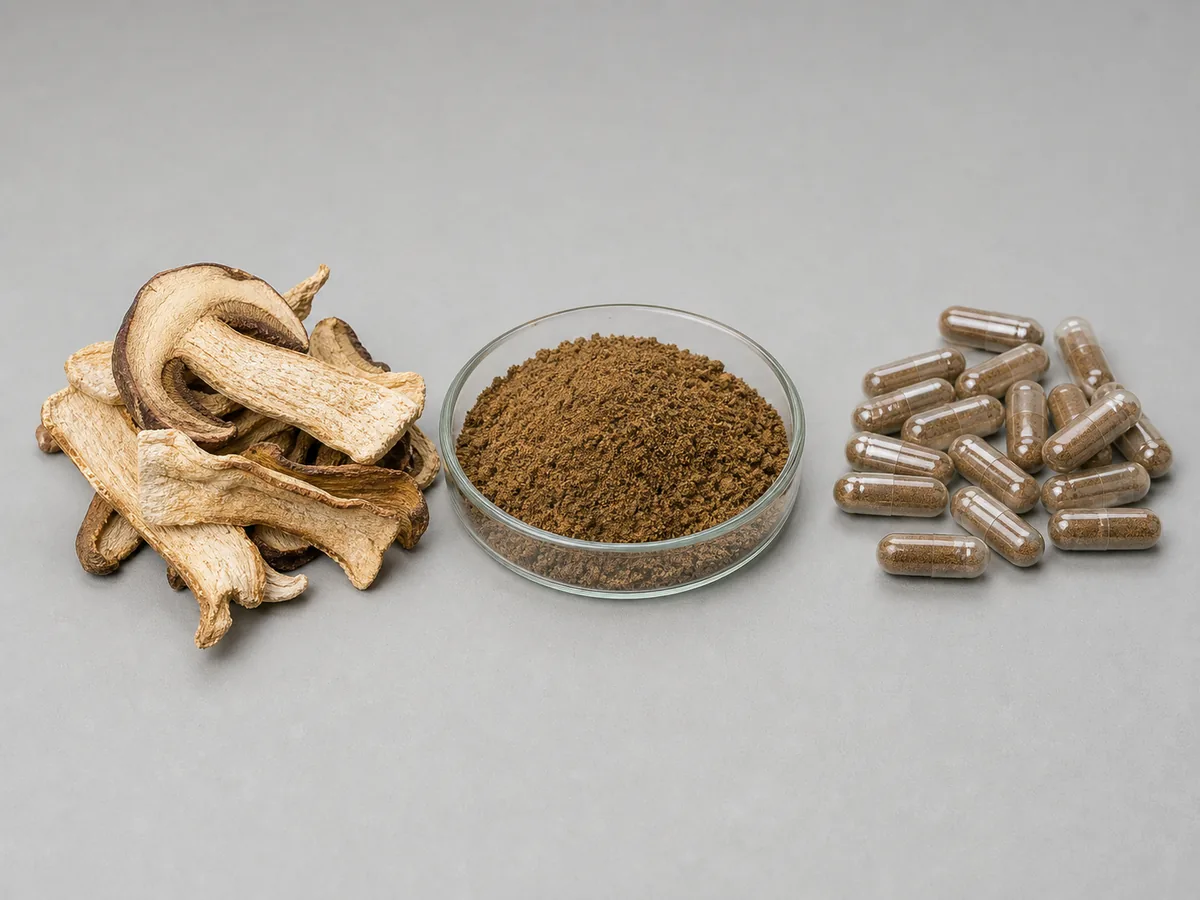
A useful claim names a population, preparation, outcome, and time period that can be compared with a study.
Next, identify the evidence level. Human randomized trials sit closer to a personal decision than animal studies.
A systematic review can summarize several trials, but its confidence is limited when the underlying studies are small or inconsistent.
Dietary supplements are not approved by FDA for effectiveness before they are sold. Structure and function claims can appear on labels without the kind of evidence required for a drug claim.
The required disclaimer does not tell you whether the product works.
Quality seals have a narrower job. Programs such as USP and NSF can check manufacturing, ingredients, and contaminants for participating products.
They do not run cognition trials and do not certify that a capsule improves memory.
Beware of outcome switching. A company may cite a study that changed an immune marker, then advertise focus.
A label may cite a fruiting-body powder study and then sell mycelium, weakening the connection between evidence and product.
Also check who funded the study and whether the product supplier helped design, analyze, or publish it. Industry funding does not make a result false, but independent replication becomes especially important when one small trial supports a commercial claim.
Read the comparison group. A study without placebo cannot separate natural change and expectation from the product effect.
A study against an active control answers a different question from a study against an inert capsule.
If a clinician agrees that a supplement trial is reasonable, use one clearly identified product and one defined goal. Keep ordinary treatment stable unless the clinician changes it, record adverse effects, and decide in advance when the trial ends.
No result from personal use proves that the product caused the change. Sleep, workload, mood, diet, and expectation move at the same time.
A personal log can reduce confusion, but it cannot replace a controlled trial.
Sources and evidence
The ranking uses randomized lion's mane trials, observational and randomized research on culinary mushroom intake, and reviews of reishi evidence. KnowTheSpore's source selection standards require each evidence type to keep its own limits.

FDA and the NIH Office of Dietary Supplements explain how supplement claims and independent quality seals work. CDC stroke guidance supports the emergency warning signs.
Sources & References
- Phan, C.W. et al. (2017). Journal of Medicinal Food Review of neurotrophic properties of culinary-medicinal mushrooms.
- Lai, P.L. et al. (2013). Journal of Medicinal Food Neurotrophic properties of Hericium erinaceus mycelium.
- National Institutes of Health, Office of Dietary Supplements Dietary supplement safety and evidence grading context.