What exactly is a caterpillar fungus?
Cordyceps is the strangest thing on this site. The fungus infects the buried larva of a ghost moth, consumes it from the inside, and then pushes a single slender club up through the soil.
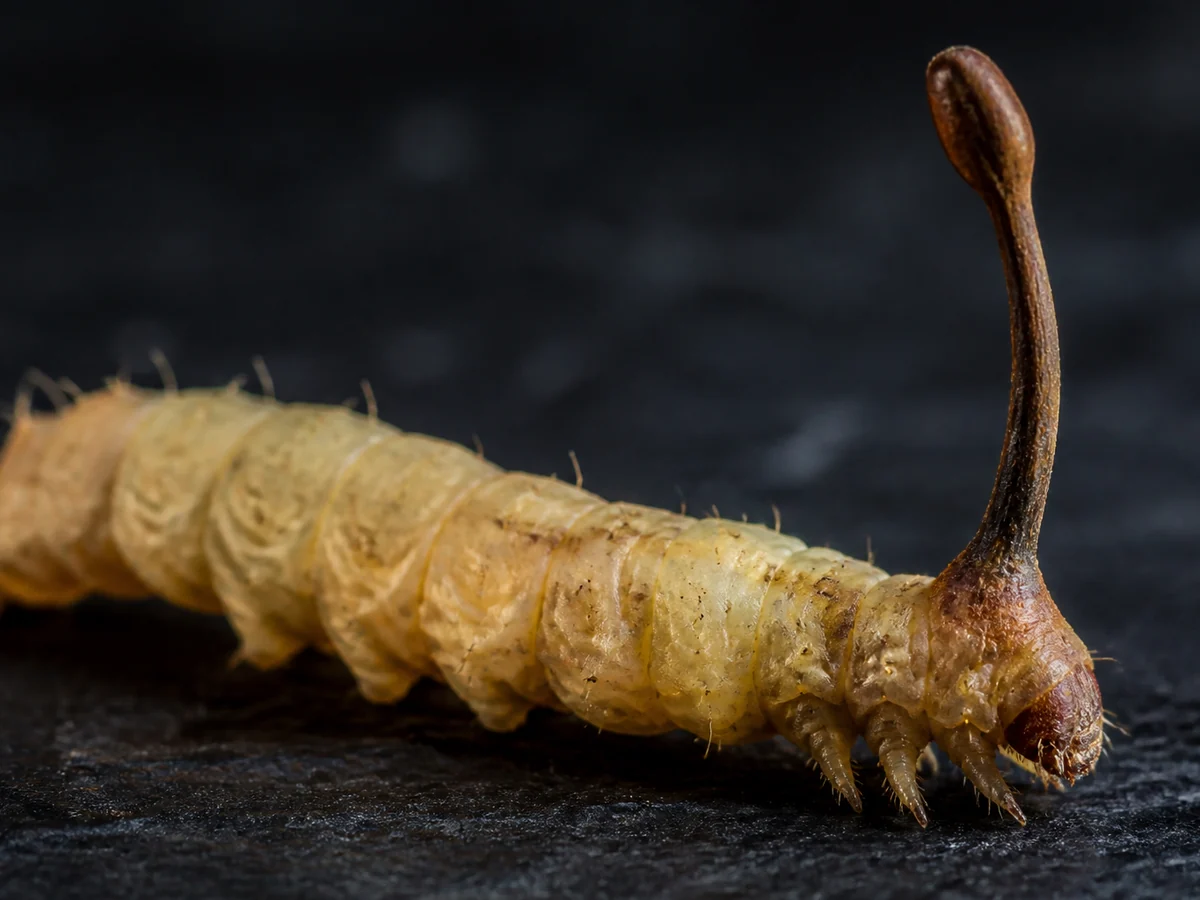
What gets harvested is both halves together. The mummified caterpillar stays intact, pale tan and firm with its segments and legs still visible, and the dark club rises from the head end.
Key takeaway
The specimen is one organism wearing another. The caterpillar is dead host tissue filled with fungus, and the club is the fruiting body, so there is no separating them and no part of it is a vegetable.
The club carries no gills and no pores.
Spores develop in flask-shaped chambers embedded just under its surface, which is an ascomycete arrangement rather than the gilled anatomy most of this site describes.
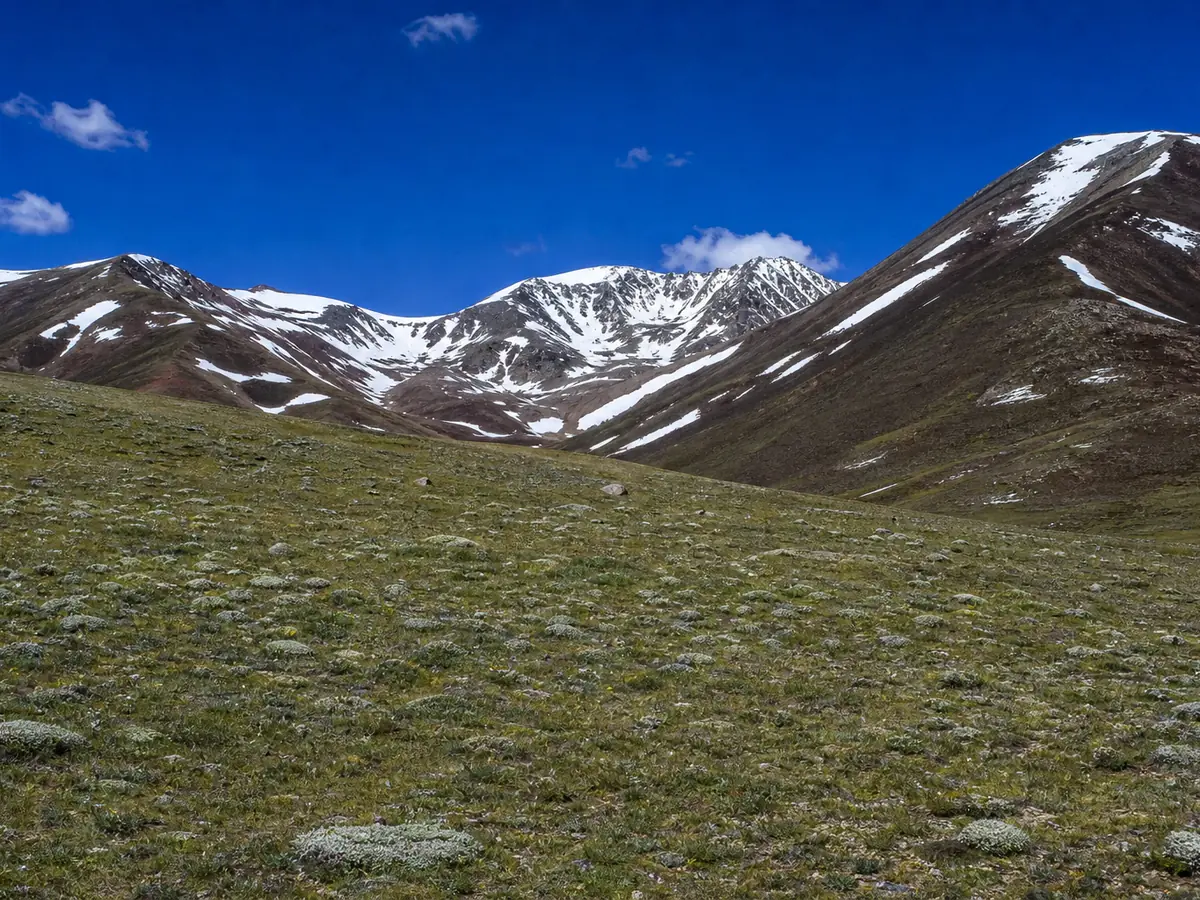
It grows only in high alpine meadow, above roughly three thousand meters, and only where its host moth lives. That combination is why it cannot simply be farmed the way an oyster mushroom can.
How do you recognize a genuine wild specimen?
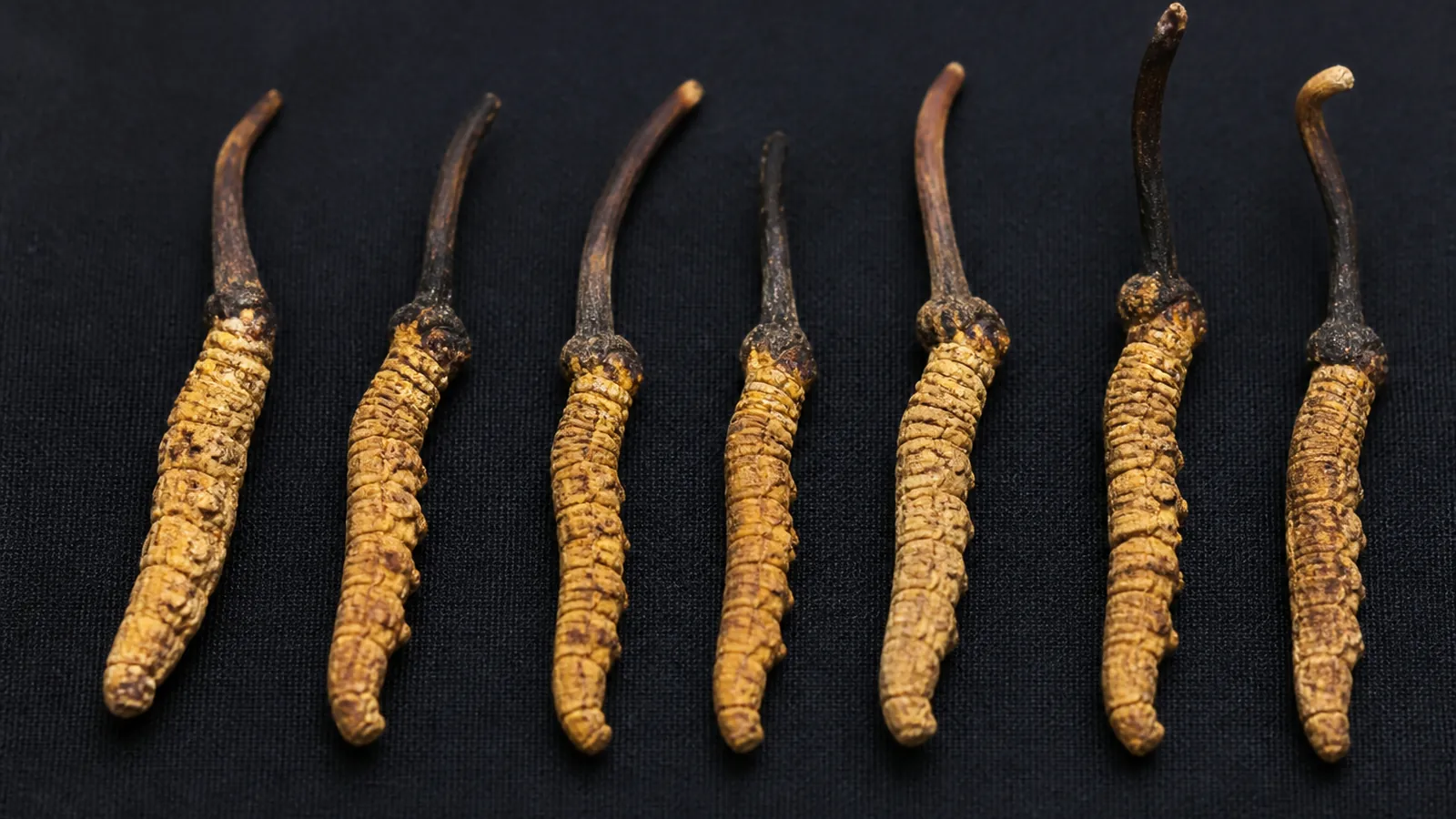
No cap. The fruiting body is a single slender club, 4 to 11 cm, dark brown and slightly swollen toward the tip, rising from the head of a buried caterpillar.
None. Spores form in flask-shaped chambers embedded in the surface of the club rather than on gills or pores.
The club itself is the stalk, emerging from the host and reaching the surface of the soil, with the caterpillar staying underground.
The caterpillar body is pale tan, mummified and firm, keeping its segments and legs. The attached club is tough and fibrous.
A specimen identifies itself, which is unusual, because nothing else looks remotely like a caterpillar with a stick growing out of its head.
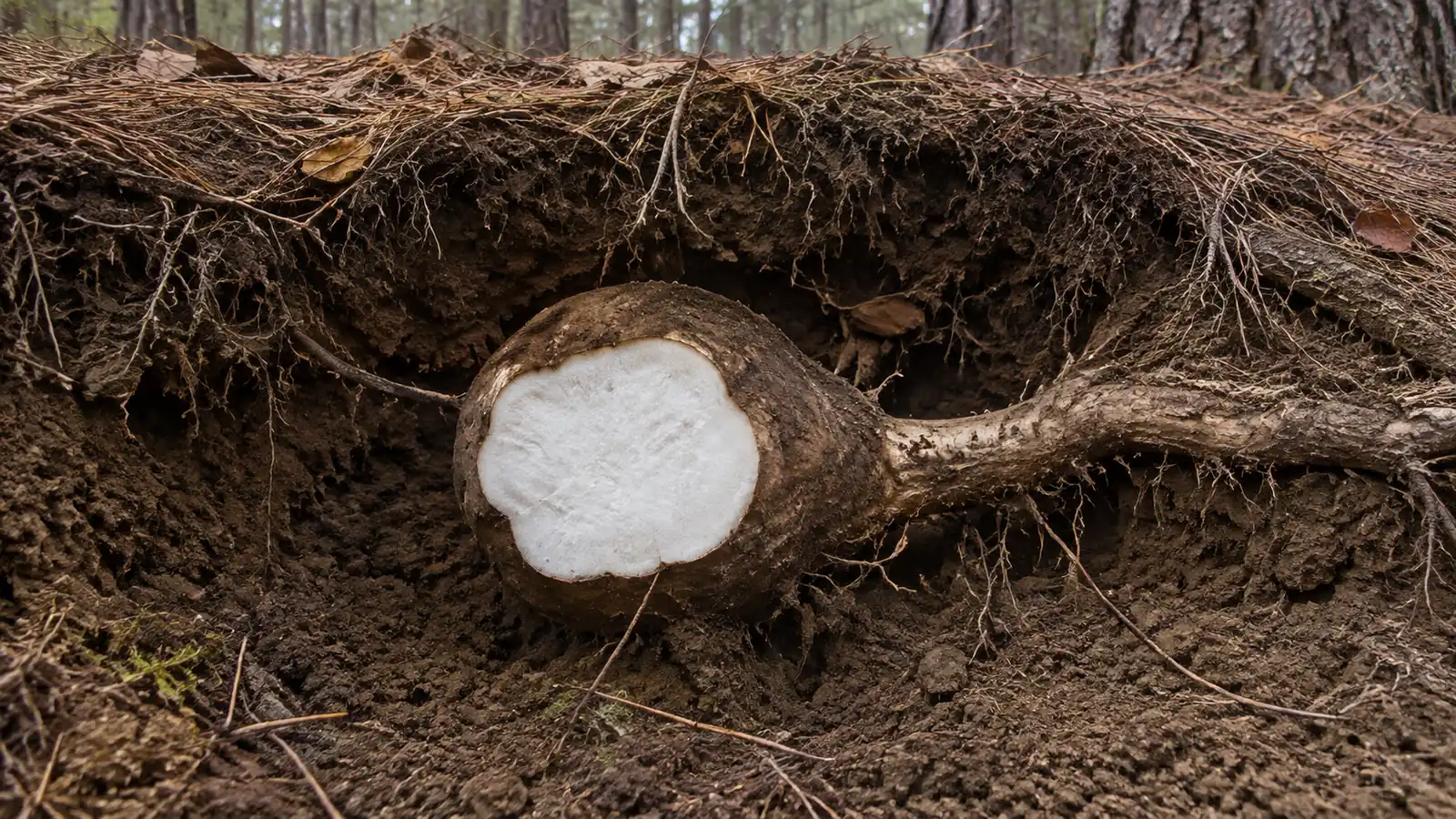
The interior test is the one that matters commercially. A genuine specimen is packed with white fungal tissue, and a faked one made from molded dough or from a different insect is not.
Note
Because the value is so high, counterfeits are a documented part of this trade. Inserted wires to add weight, molded look-alikes and substituted species all circulate, so a specimen's price is not evidence of what it is.

The other identification problem is not in the meadow at all. Almost every product using this name contains a different fungus, and that is the subject of the taxonomy section below.
A second check separates a specimen from a convincing fake, and it is worth doing before money changes hands rather than after.
Genuine material breaks with a clean snap and shows solid white tissue right through the caterpillar, with no dark gut line and no hollow. A molded imitation crumbles or shows a seam, and an inserted wire is obvious the moment a specimen is bent, usually by weight before anything else.
It is worth understanding why the fakery is worth the effort. Wild caterpillar fungus trades by weight at prices that put it among the most valuable biological commodities on earth, so a few grams of added wire or dough returns more than the labor of making it.
That economics is also why powdered products are the harder purchase. A whole specimen can be snapped and inspected, and a powder can be anything, which is the practical argument for buying material you can still see the shape of.
What safety details matter for Cordyceps?
Two different fungi and one fermented laboratory strain all travel under the name, so a product label and this profile may describe entirely different organisms. Nothing here supports treating any of them as a treatment.
The interactions are the part worth taking seriously, because they are documented rather than theoretical.
Laboratory work shows cordyceps inhibits platelet aggregation, and there is a case report of excessive bleeding after a dental extraction in someone taking it. Anyone on anticoagulant or antiplatelet medication, or facing surgery or dental work, should raise it with their clinician first.
It can also lower blood glucose, which matters for anyone already taking insulin or an oral hypoglycemic, since the combination can push further than intended.
One exclusion is named rather than general. Cordyceps should not be used by people with myelogenous type cancers, on the basis of animal studies showing proliferation of progenitor red blood cells.
The full interaction picture covers those alongside the other medicinal species and names the clinical database the claims come from.
None of that makes a concentrated product dangerous for most people. It makes it a thing to declare, in the same way a prescription is declared, rather than a food to add quietly.
Which cordyceps is actually in the jar?
In the field this species has no meaningful lookalike. Other Ophiocordyceps and Cordyceps species do parasitize insects, and none of them produces the same combination of a Himalayan alpine meadow, a ghost moth caterpillar and a single dark club.
The confusions that matter to a buyer happen after harvest, and there are three of them.
Telling them apart on a shelf comes down to reading the Latin rather than the English. A label saying Ophiocordyceps sinensis is claiming the wild species, one saying Cordyceps militaris is naming the cultivated orange clubs, and one saying mycelium or a strain designation is describing the fermented preparation.
Price is the second signal and it is blunt but reliable in one direction. Wild caterpillar fungus cannot be cheap, so an inexpensive product claiming it is claiming something the price contradicts.
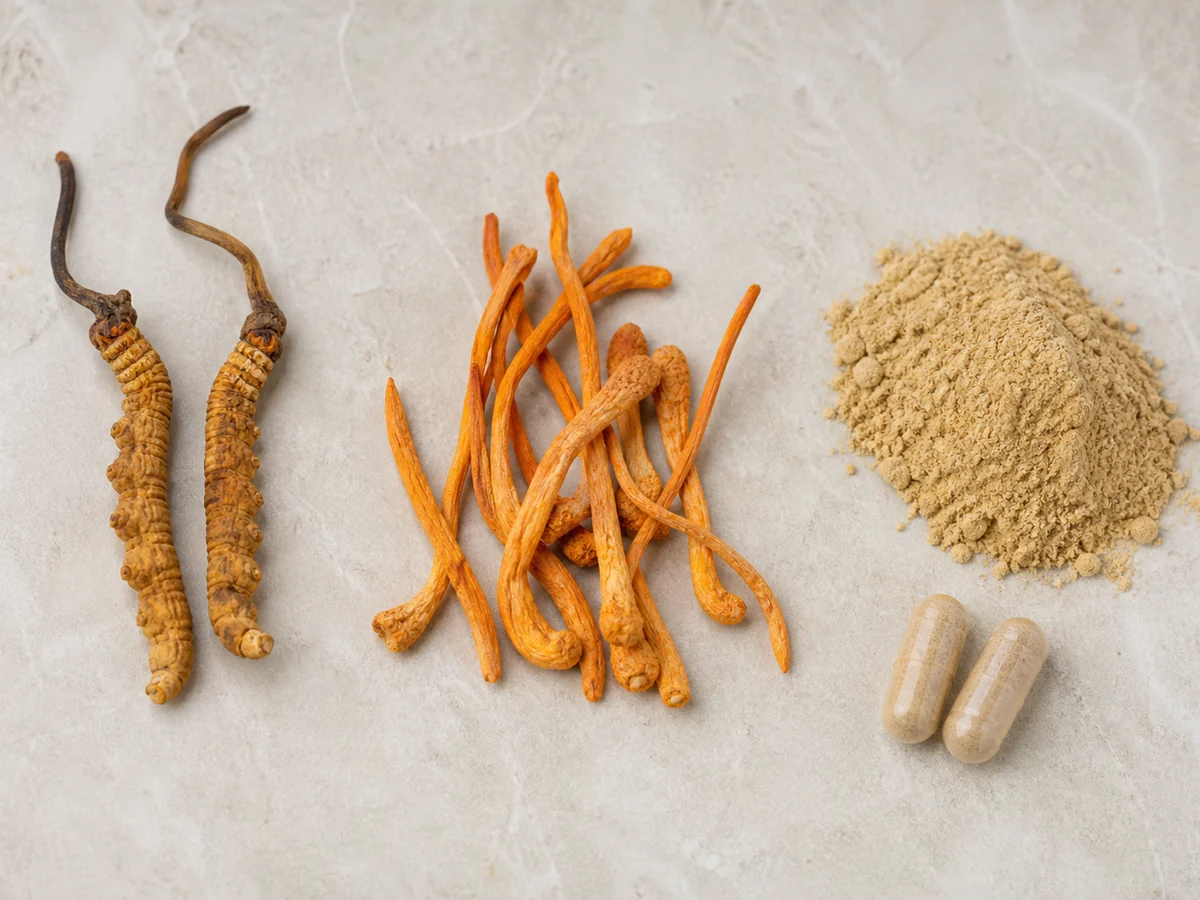
Do not treat the three as interchangeable. They are different species and different preparations, they are grown in completely different ways, and evidence collected on one does not transfer to another simply because a marketing word is shared.
Why does it only grow in high alpine meadow?
This fungus has one of the most specific life cycles of any organism people collect.
Spores infect the larva of a ghost moth in the genus Thitarodes, which lives buried in alpine turf. The fungus grows through the larva over months, kills it, and mummifies it in an upright position near the soil surface.
In late spring the club emerges, pushes through the turf and releases spores, and that brief window is when collectors search.
The habitat is narrow in every direction. It needs high altitude, the right turf, the right moth, and a climate found across the Hengduan mountains and the Himalaya and almost nowhere else.
That specificity has an economic consequence that is hard to overstate. In one district of far-western Nepal, a study of the medicinal product trade found that this single species accounted for 85 percent of total trade value, and that the district's trade value rose 17.2-fold over seventeen years.
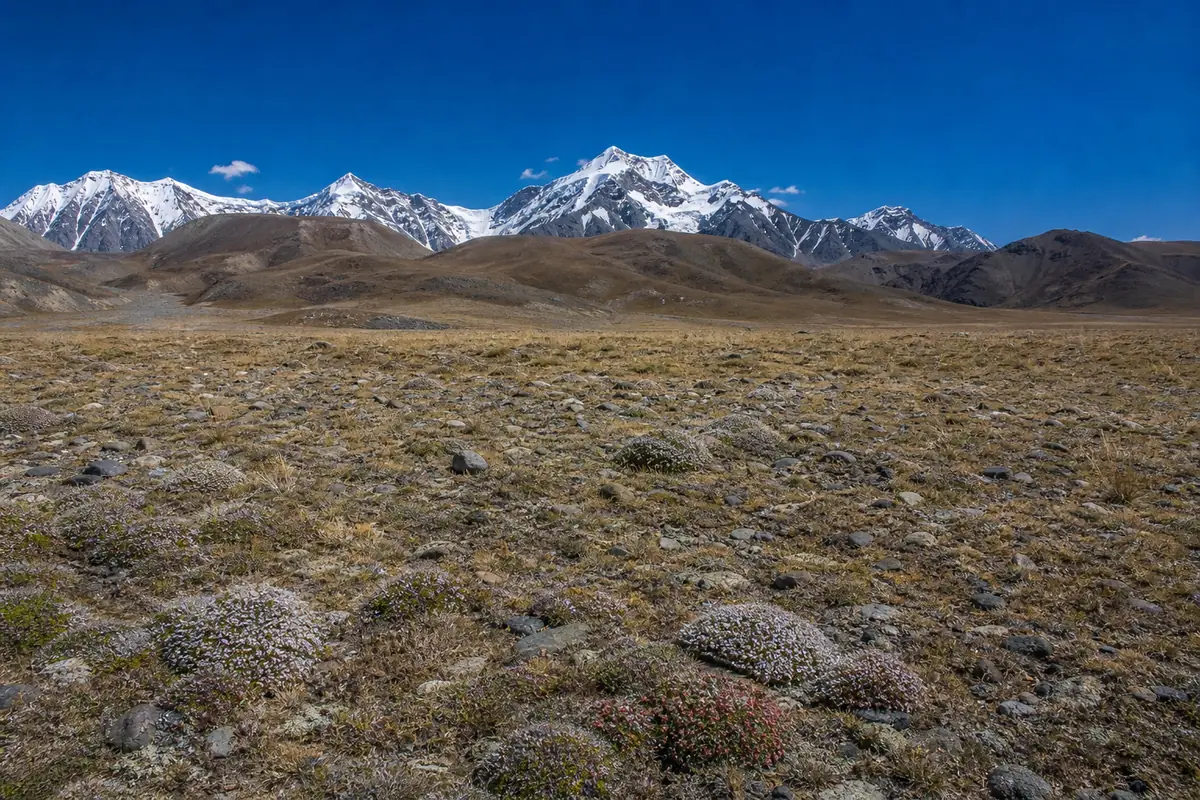
Ground like that is the whole supply constraint, because it cannot be extended and it cannot be substituted.
A harvest that valuable in a habitat that narrow creates obvious pressure, and sustainability is an active question rather than a hypothetical one across the whole range.
How is cordyceps used, if it is not food?
Cordyceps is not cooked and not eaten as food in any ordinary sense.
Wild specimens are used whole, most often simmered into broths and soups, in preparations where the material is treated as an expensive addition rather than an ingredient with a flavor of its own.
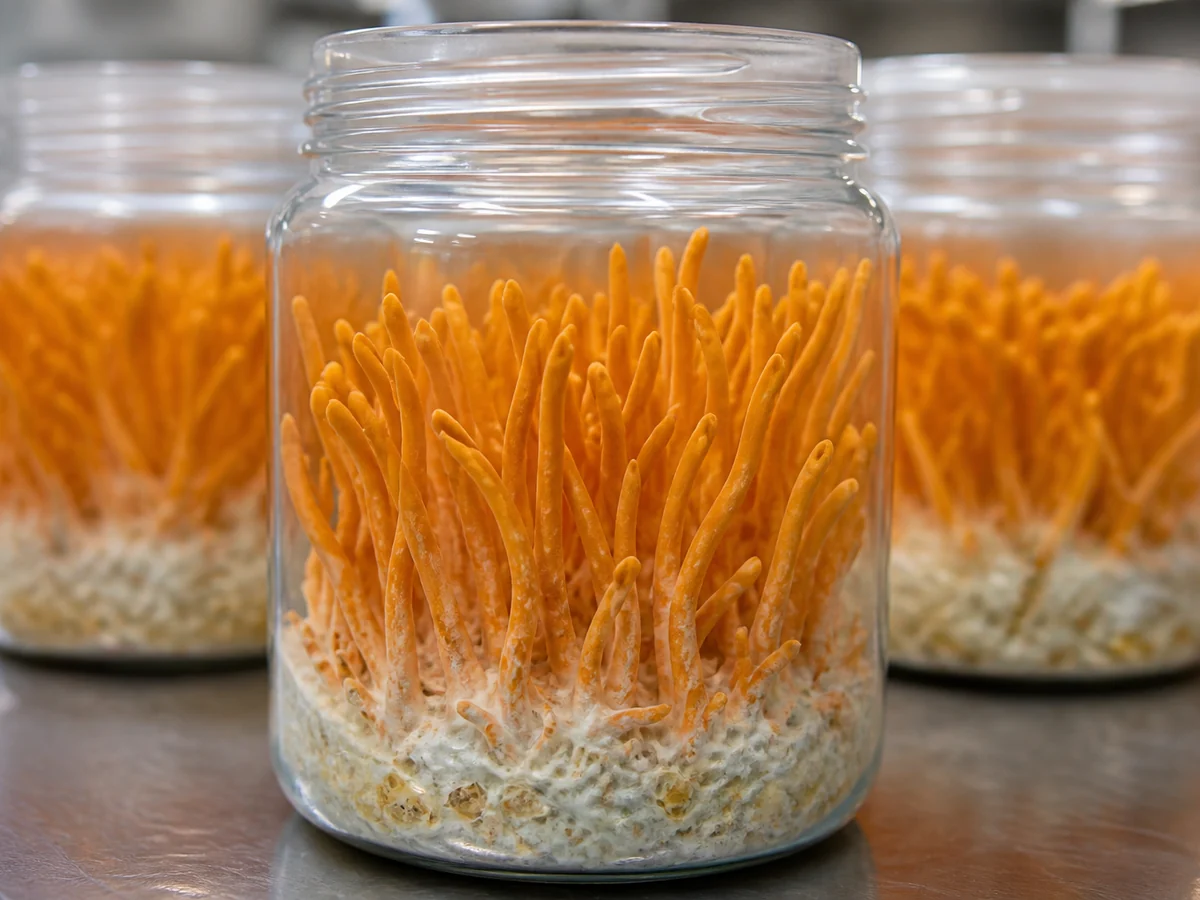
The cultivated orange species is different in kitchen terms. It is soft enough to be handled like a mushroom, and it appears in broths and teas, though it is still not a vegetable anybody eats a plate of.
Extraction is the usual route for both, and how a preparation is made changes what reaches a person, which is covered on the page about powder against extract.
What did the stamina trials actually measure?
Cordyceps is sold hardest for stamina, and the human trials point somewhere narrower than the marketing.
A double-blind placebo-controlled trial gave 20 healthy adults aged 50 to 75 a fermented preparation designated Cs-4 for twelve weeks. Their metabolic threshold rose 10.5 percent and their ventilatory threshold rose 8.5 percent, with no change in either measure on placebo.
Warning
Maximal oxygen uptake did not change in either group of that trial. It is the number every advertisement quotes and it is the one that did not move, and the authors described the study as a pilot.
The same designated product was then given to 22 endurance-trained male cyclists at three times the dose for five weeks. Peak oxygen uptake, ventilatory threshold and a work-based time trial were all unchanged, and the authors concluded it had no effect on aerobic capacity or endurance performance in trained cyclists.
Set against each other, those two results say something narrower than either says alone. Two submaximal thresholds moved in untrained older adults, nothing moved in trained athletes at triple the dose, and maximal oxygen uptake never moved in anybody.
It is also worth naming what neither trial used.
Both were run on the fermented laboratory preparation rather than on wild caterpillar fungus or on cultivated orange clubs, so the evidence attaches to the third material and not to the two people actually buy.
What would change the picture is a trial in untrained adults using material a shopper can obtain, powered for the outcome people care about, and large enough not to be described as a pilot. That study does not exist yet.
The population is doing the work in that comparison, not the dose. The fuller audit of what this evidence supports sits on the page about mushrooms and athletic performance.
Why can the wild species not be farmed?
The wild species has never been cultivated at scale, and that failure is the reason the trade looks the way it does.
Growing it would mean rearing the host moth through a multi-year larval stage at altitude and then infecting it, which has been achieved experimentally and never economically.
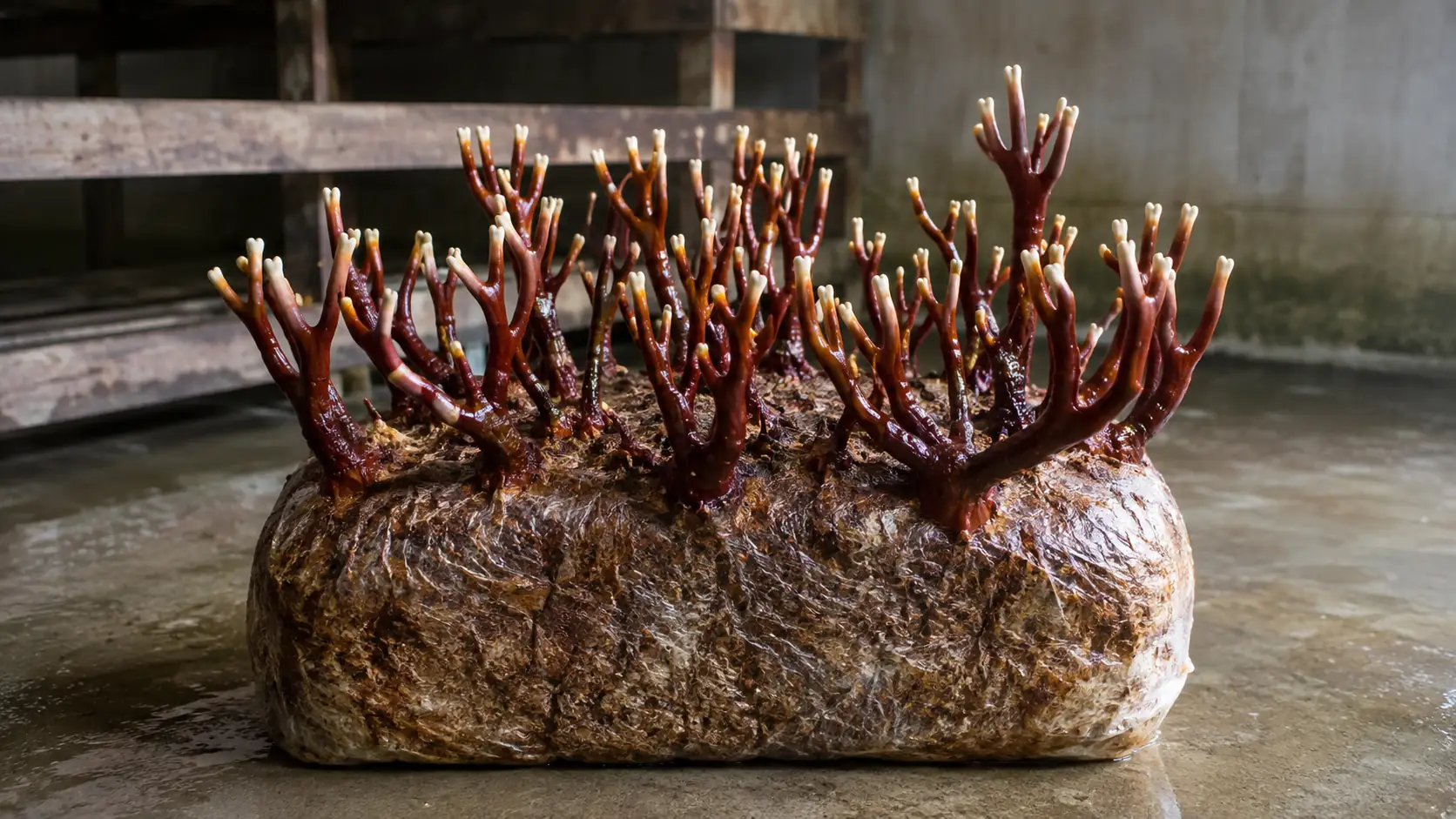
What is farmed instead is the orange species, Cordyceps militaris, and it is genuinely easy. It fruits on sterilized grain in a jar within weeks, needs light to color properly, and is produced in bulk.
Anybody comparing products is really comparing which of those three processes made the contents, and that is more useful than which brand printed the jar, which is what choosing a supplement turns on.
Why is a nutrient figure meaningless here?
There is no useful nutrition table for cordyceps, because none of the three materials is a food.
The wild specimen is dead insect tissue packed with fungal material, consumed in gram quantities at most and priced in a way that rules out eating it for nutrients. The cultivated orange species is closer to an ordinary mushroom in composition, and it is still used as a small addition rather than a portion.
What is actually measured in this literature are extractable fractions, and their amounts differ between the three materials and between growing conditions, so a figure quoted for cordyceps describes one preparation rather than the name.
Why does one name cover three different things?
One common name covering three materials is the central fact about this fungus, and it is worth setting out plainly.
Ophiocordyceps sinensis is the wild caterpillar fungus of the Himalaya and the Tibetan plateau. It was long placed in the genus Cordyceps and moved to Ophiocordyceps, so older sources use the other name for the same organism.
Cordyceps militaris is a separate species entirely. It parasitizes other insects, it grows readily on grain, it produces bright orange clubs, and it is what almost every affordable product contains.
Note
A jar labeled cordyceps most often contains Cordyceps militaris or a fermented mycelium strain, not Ophiocordyceps sinensis. Nothing on the label is required to distinguish them, and the price gap between wild specimens and cultivated clubs is enormous.
For a reader checking evidence, the practical rule is to find the species and the preparation in the methods section of a study, and then to ask whether the product in hand matches both.
The genus move is worth knowing when reading older sources. What is now Ophiocordyceps sinensis appears throughout earlier literature and much current marketing as Cordyceps sinensis, which is the same organism under a superseded name.
That leaves a trap in plain sight. A label reading Cordyceps sinensis is using the old name for the wild species, and a label reading Cordyceps militaris is naming a different species entirely, and the two differ by one word.
Cordyceps identity and product questions
What is cordyceps actually made of?
Is the cordyceps in supplements the caterpillar fungus?
Does cordyceps improve VO2 max?
Why is wild cordyceps so expensive?
Can cordyceps be farmed?
Are fake cordyceps specimens a real problem?
Sources & References
- Report on the Emergence Time of a Species of Thitarodes Ghost Moth, Host of the Caterpillar Fungus Ophiocordyceps sinensis, Journal of Economic Entomology 2020 That Thitarodes ghost moths are the hosts, and that the caterpillar fungus is harvested in high mountain meadows across the Hengduan mountains and the Himalaya.
- Patterns of change: The dynamics of medicinal plant trade in far-western Nepal, Journal of Ethnopharmacology 2018 That yarsagumba accounted for 85 percent of total trade value in Darchula District, and that the district's medicinal trade value rose 17.2-fold across seventeen years.
- Effect of Cs-4 (Cordyceps sinensis) on exercise performance in healthy older subjects, Journal of Alternative and Complementary Medicine 2010 The 20 participants aged 50 to 75, the 10.5 and 8.5 percent threshold increases, and the maximal oxygen uptake that did not change in either group.
- Cordyceps Sinensis (CordyMax Cs-4) supplementation does not improve endurance exercise performance, International Journal of Sport Nutrition and Exercise Metabolism 2004 The 22 endurance-trained cyclists, the 3 grams a day for five weeks, and the unchanged peak uptake, ventilatory threshold and time trial.