A verification guide to buying mushroom supplements, covering what is and is not required before a product reaches the shelf, which fields make a certificate of analysis useful, what third-party certification actually tests, how often a species name is wrong and why, where metal contamination comes from, what a proprietary blend hides, and the four questions worth sending to a company.
No outside party has looked inside the jar in your hand, and nobody was required to.
That is not a scandal, it is how the category is built, and it decides what choosing well actually involves.
Choosing well means finding out which company can show you a laboratory result for the batch you are about to buy, and knowing what that result can and cannot settle.
Are mushroom supplements regulated before sale?
Dietary supplements are not approved before they are sold. Most reach a shelf without the regulator ever learning they exist.
The company that makes a product is the party responsible for evaluating its own safety and its own labeling.
- Who approves it
- Nobody, because no pre-market approval exists for this category
- Who assesses safety
- The manufacturer or distributor, before it goes on sale
- What good manufacturing practice covers
- Whether the maker consistently meets its own written specification
- What the label disclaimer signals
- That the claim beside it was never evaluated by an agency
None of those four lines describes a failure of the system. They describe the system.
The third of those lines is the one people misread, so it is worth slowing down on. Current good manufacturing practice is a real requirement, codified in federal rules, and it governs whether a factory can hit its own targets repeatedly, in a clean building, with records.
Read that sentence again, because the word doing the work is its own. A perfectly compliant facility can produce, batch after batch, exactly the material the company specified, whatever that specification happened to say.
So compliance is evidence about process control rather than about how much of anything is in the capsule.
The small print under a benefit claim exists for the same reason. A structure and function claim carries a required disclaimer precisely because no agency reviewed it, and the company is expected to hold its own substantiation on file.
None of this makes the products illegitimate. Before buying, check the evidence behind the product claim yourself.
Medicinal MushroomsLion's Mane Benefits: What Human Trials Actually FoundWhat should a certificate of analysis show?
There is one document that answers most of the questions a buyer actually has, and it is ordinary enough that any serious company already has it.
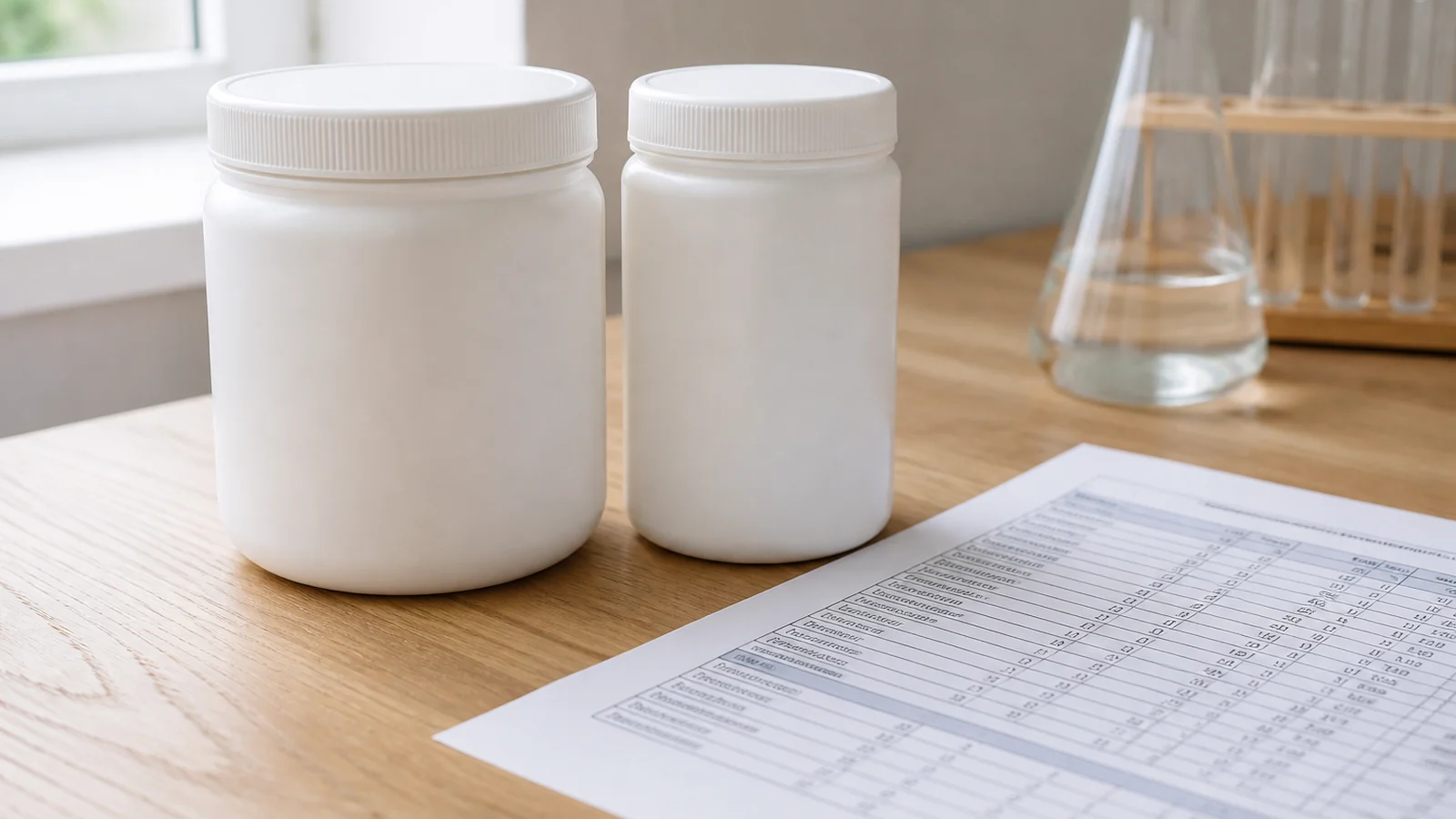
A certificate of analysis is a laboratory report on a specific quantity of material. It states what was measured, by what method, and what the result was.
For a mushroom product that normally means the beta-glucan content, a panel of toxic elements, and a microbial screen.
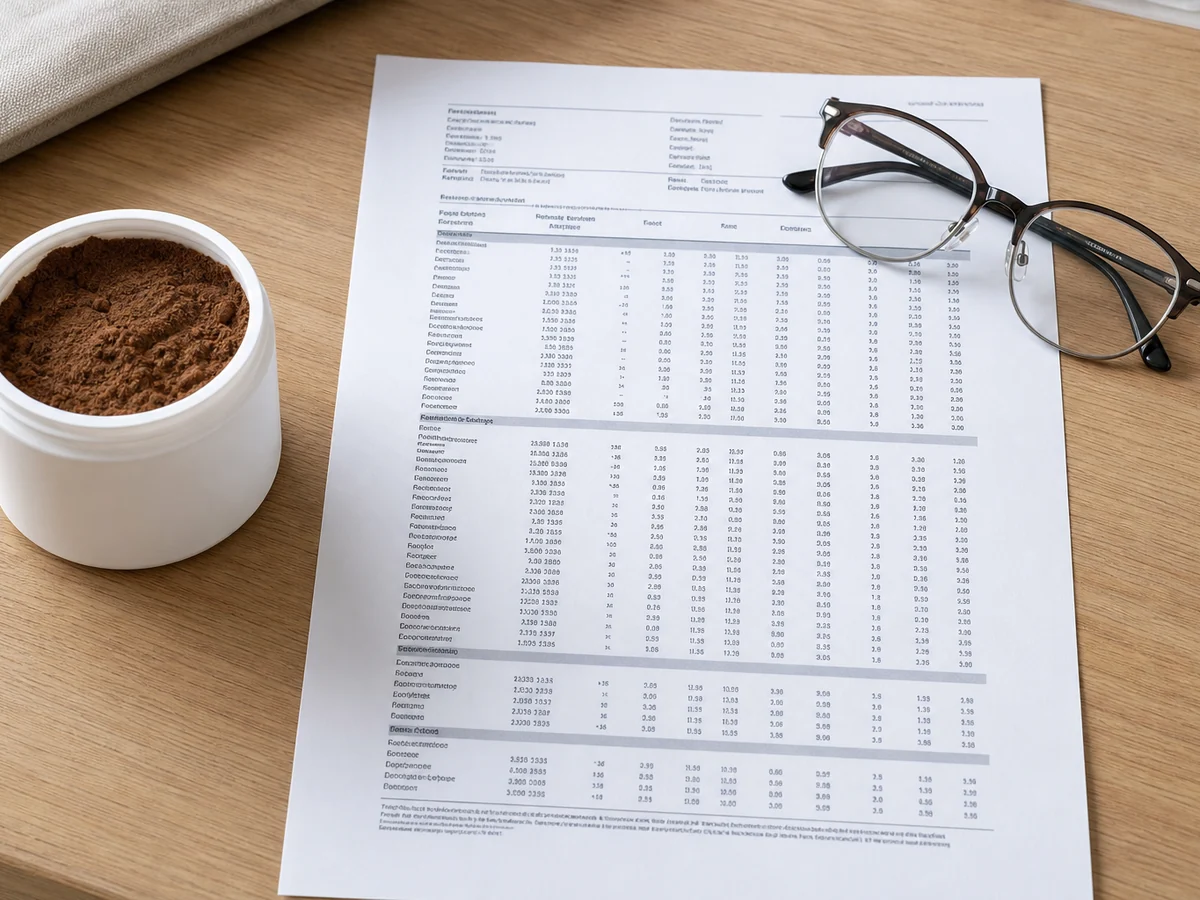
Four fields decide whether that report is evidence or decoration.
- A batch or lot number, which is what ties the result to one production run rather than to the product name in general
- The name of the laboratory that ran the work, so the result belongs to somebody
- The method used for each measurement, because a number without a method cannot be compared to another number
- The date, which tells you whether this describes material made anywhere near the time your jar was filled
The batch number is the field that most often decides it. A jar carries a lot code stamped on the base or the shoulder, and a report that names a different lot is a report about somebody else's purchase.
Key takeaway
Match the lot code on the jar to the lot number on the report. If a company publishes one report for a product line rather than one per batch, it is showing you a representative sample, which is a weaker thing than it looks.
Representative reports are not worthless. They demonstrate that a company tests at all, that it uses a named laboratory, and that its specification is a real number somebody has measured against.
They just cannot tell you about the specific material you are buying, which was made later, possibly from a different crop, and possibly at a different site.
If you can find a full panel that names your lot, you are close to done. Most of what follows is about what to do when you cannot.
What do third-party seals actually certify?
A certification mark is a genuine signal, and it is narrower than almost anybody reads it as being.
The standards behind the main dietary supplement programs test a defined list of things about what is in the container. Each item on that list is a factual question with a laboratory answer.
Five of them, in the order a laboratory would work through them.
| What is tested | What it establishes | What it leaves open |
|---|---|---|
| Ingredient identity | The material is the thing the label names | Nothing about how much of it does anything |
| Declared quantity | The stated amount is actually present | Whether that amount is a useful amount |
| Toxic elements | Lead, mercury, arsenic, cadmium and hexavalent chromium sit within limits | Contaminants outside the panel |
| Microbial screen | No unacceptable count of organisms, and specific pathogens absent | Nothing about composition |
| Pesticide residues | Botanical material screened for residues | Whether the growing conditions were otherwise good |
Nowhere in any of that is there a question about whether the product does anything for anyone.
What that leaves a buyer with is a short list of settled points.
- The species named on the label is the species in the container
- The amount printed on the panel is the amount present
- The five toxic elements on the standard panel came back inside their limits
- No pathogen turned up in the microbial screen
That is not an oversight. Efficacy is a clinical question, certification is a manufacturing question, and a program that tried to answer both would be answering neither well.
So a seal is worth something specific. It says the contents match the container and the contaminant panel came back clean, which happens to be exactly the pair of things a buyer cannot check alone.
Medicinal MushroomsWhich Reishi Benefits Hold Up in Human Studies?How do you check the species on a supplement label?
The species name is the field most buyers trust without thinking, and it is measurably less reliable than the rest of the label.
One published study generated genetic barcodes for thirty-three fungal samples in commercial use, taken from powdered mycelium products, grocery mushrooms and companies selling supplements. Five of those thirty-three carried a completely incorrect Latin binomial on the package.
The last of those four lines is the one that makes the other three possible.
That last line is the reason the problem exists at all. A whole mushroom can be identified by somebody competent, and a brown powder cannot be identified by anyone, including the person who bought it wholesale.
Before you conclude that the industry is lying to you, look at the most studied case.
Seven commercial reishi products from seven separate suppliers were all labeled as one species and all sequenced as a different one. The researchers who found this attributed it to a taxonomic revision rather than to anybody swapping material.
The species had been split and renamed by mycologists, and the trade kept using the older name, which is what trades do.
So a wrong name has two very different causes, and they need separating. Naming lag follows a scientific revision, applies to every supplier at once, and involves closely related material.
Real substitution is cheaper material standing in for expensive material, shows up unevenly between suppliers, and usually appears alongside a missing test report.
The practical test is whether the company can name its material at all. A supplier that answers a species question with a genus and a shrug is telling you it does not know, and that is the same answer whichever cause applies.
Can mushroom supplements contain heavy metals?
Fungi are efficient at taking up elements from whatever they are growing in, and they can end up carrying more of some metals than the surrounding material does.
That is a neutral fact about how fungi live, and it becomes a buying question because the metals that concentrate best are the ones that matter at low doses.
Every one of those four is set before the mushroom is picked. None of them can be washed off afterwards.
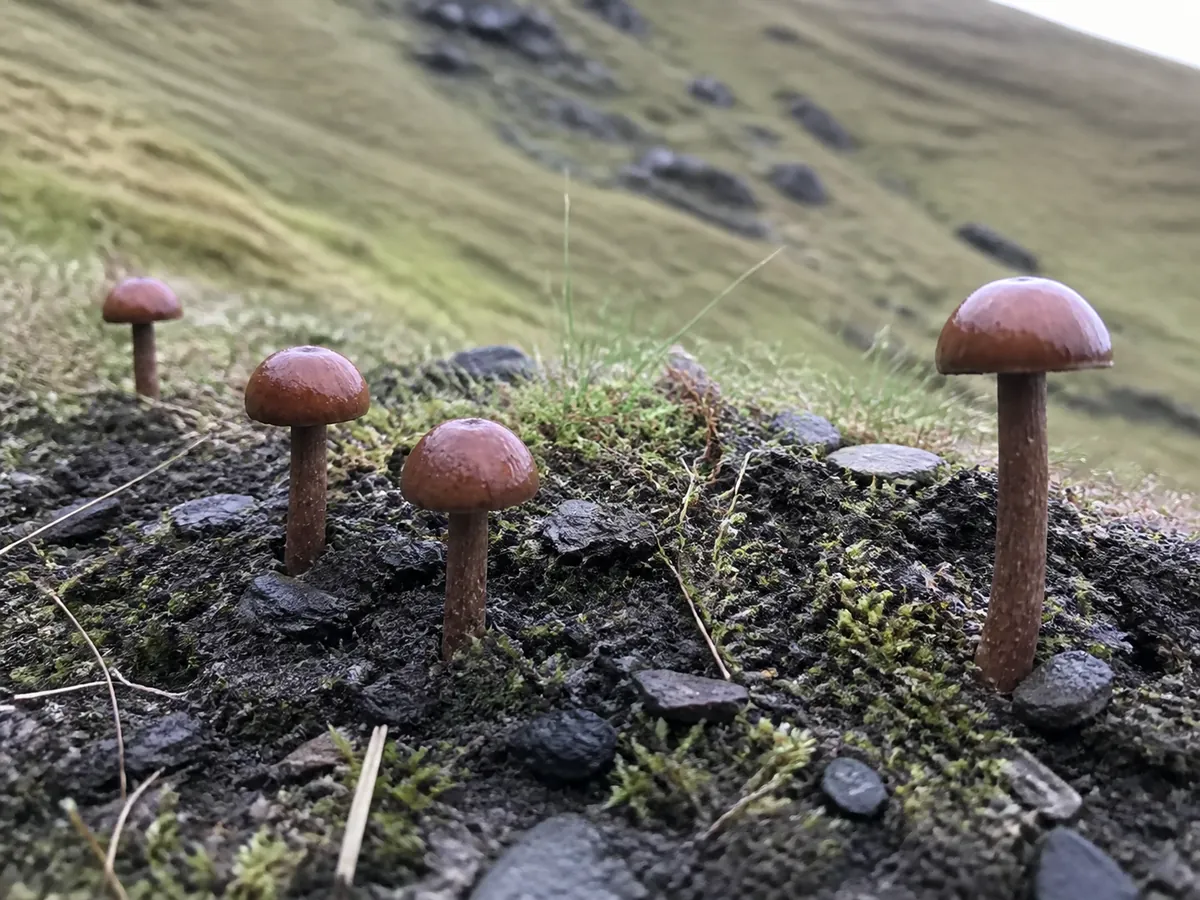
The clearest published illustration of where contamination actually sits comes from wild cordyceps, which grows out of an insect host.
Five specimens is a small study and it does not settle the category. What it does show is that the contamination was not evenly spread through the product, and that the part carrying it was the part that was not the fungus.
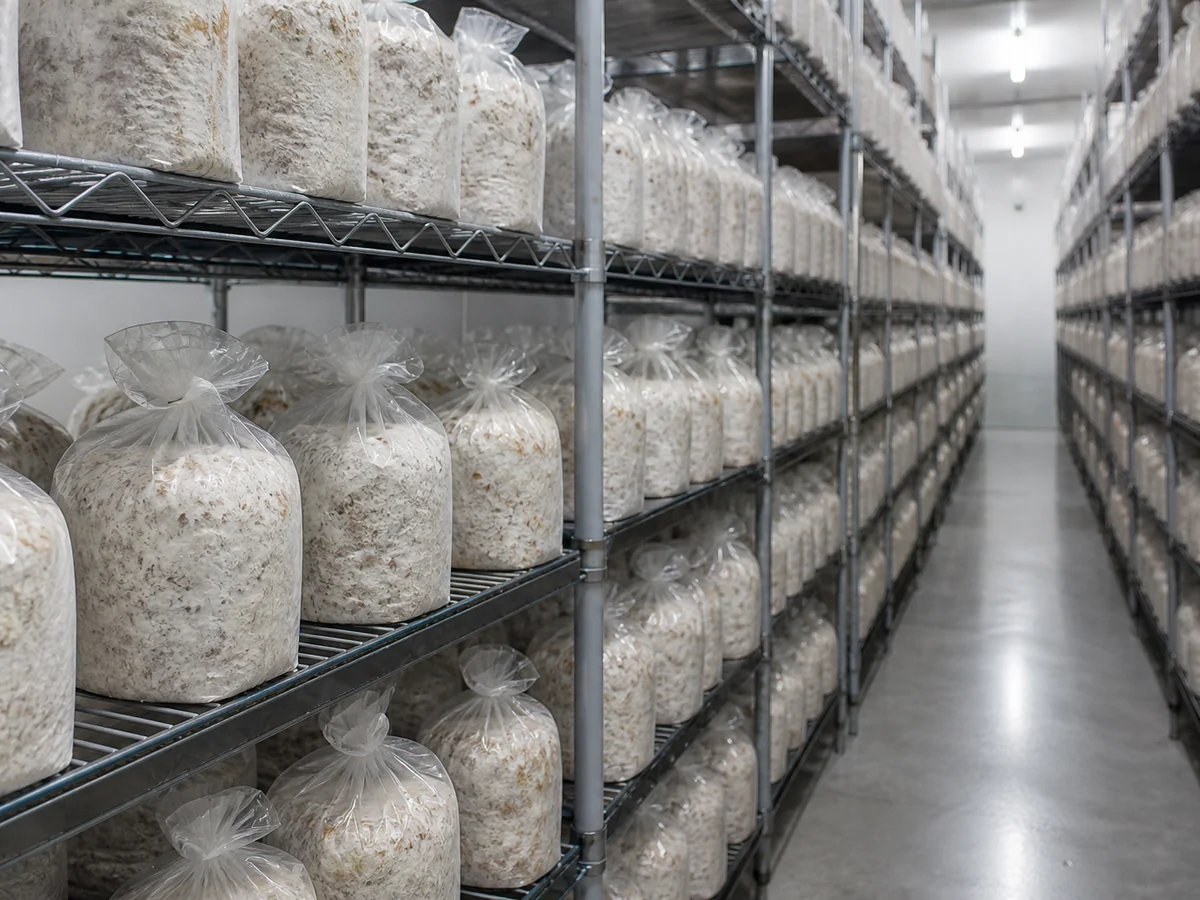
This is where wild-harvested marketing gets things backwards. Wild material comes from ground nobody chose and nobody tested, and its metal load is whatever that ground contained.
Indoor cultivation on a prepared substrate is less romantic and far more measurable, because somebody knows what went into the bag.
Neither is safe or unsafe on principle. The difference is that one of them can be specified in advance, and the other has to be tested after the fact or trusted.
Medicinal MushroomsMushrooms for Brain Health, Ranked by EvidenceWhat does a proprietary blend hide?
Six species, one weight, one line. It is the most common way for a label to be technically complete and practically useless.
A blend may be declared as a single total rather than as an amount for each ingredient. That total is real, and it tells you nothing about the distribution underneath it.

That format still preserves one usable piece of information, which is that ingredients inside a blend are listed in descending order by weight.
So the first name in the list is the biggest component and the last name is the smallest, even though you cannot see by how much.
That ordering is enough to catch the common pattern. When the species a buyer came for sits at the end of a long list, it is the smallest part of a total that may itself be modest.
Warning
A blend total cannot be compared against a single-species product. One number describes a mixture in unknown proportions and the other describes a known quantity of one thing, and treating them as equivalent is how an underdosed blend wins a comparison it should lose.
There is a legitimate version of this. Some formulators genuinely do not want to publish a ratio they spent time developing, and they compensate by declaring the active content of the blend as a whole.
If a company will not break out the ingredients but will state what fraction of the total is the compound the product is sold for, it has given you something usable.
Does a higher price mean a better supplement?
Two products, one twice the price of the other, and the comparison is meaningless until you fix the unit.
Capsule counts differ. Fill weights differ, serving sizes differ, and the number of capsules a label calls a daily serving differs by a factor of three across ordinary products.
- Work out the total amount of material a bottle contains, which is fill weight multiplied by capsule count
- Divide the price by that, which gives cost per gram of product
- Then divide again by the declared content of whatever the product is sold for, which gives cost per gram of the thing you actually want
- Compare that last number, and only that one
Liquid formats break that arithmetic somewhere else. A tincture is priced by volume, so there is no fill weight to divide by and the concentration is doing all the work.
A brewed tea has the opposite problem, since the material is weighed but nobody knows how much of it left the dried mushroom and ended up in the cup.
The last step is where most comparisons stop, because the declared content is missing on one of the two products.
That absence is not a gap in your research. It is the comparison result, since a product that will not state its content has removed itself from any argument about value.
A cheaper product that states its content plainly can be better value than an expensive one that does not, and it is frequently the same product with less spent on the box.
What should you ask a supplement brand before buying?
Everything above turns into four things you can send in one email, and companies that are worth buying from answer them without drama.
The lot report
Ask for the certificate of analysis matching the lot code printed on the jar, not the product line
Origin and substrate
Ask where the material was grown and on what, since that is where a contaminant load is set
Laboratory and method
Ask which laboratory ran the analysis and by which method, because a number without a method is a claim
Declared content
Ask for the content of the fraction the product is sold for, stated as a figure
A good reply is short and specific. It names a laboratory, attaches a document, and answers the substrate question with a material rather than an adjective.

A poor reply is longer. It restates the marketing copy, describes the sourcing in words like premium and traditional, and answers a question about method with a sentence about quality.
Partial answers are common and they are not a red flag by themselves.
A company that sends three of the four and explains why the fourth is missing has told you more than one that sends a brochure, and a company that says its blend ratio is confidential but gives you the total active content has answered the question that mattered.
Silence is the clearest result of all. A company that will not send a test report for its own product has decided that the report is worse for sales than the silence is, and you can act on that.
Sources & References
- US Food and Drug Administration, Questions and Answers on Dietary Supplements That supplements are not approved before marketing, that manufacturers evaluate their own safety and labeling, and that a structure and function claim carries a required disclaimer.
- US Food and Drug Administration, Current Good Manufacturing Practices for Food and Dietary Supplements That good manufacturing practice governs whether a maker meets its own established specifications.
- DNA barcoding for identification of consumer-relevant mushrooms, Food Chemistry That five of thirty-three barcoded commercial fungal samples carried a completely incorrect Latin binomial on the label.
- The ITS region provides a reliable DNA barcode for identifying reishi from herbal supplements, PLOS ONE That seven reishi products from separate suppliers all carried a species name superseded by taxonomic revision rather than evidence of substitution.
- Profiling metals in Cordyceps sinensis by inductively coupled plasma mass spectrometry, Analytical Methods That arsenic in five wild specimens sat in the caterpillar host at roughly three to thirty-two parts per million while the fungal part stayed below two.
- NSF, Dietary supplement and vitamin certification What identity, declared quantity, toxic element, microbial and pesticide testing a certification program covers, and that efficacy sits outside it.