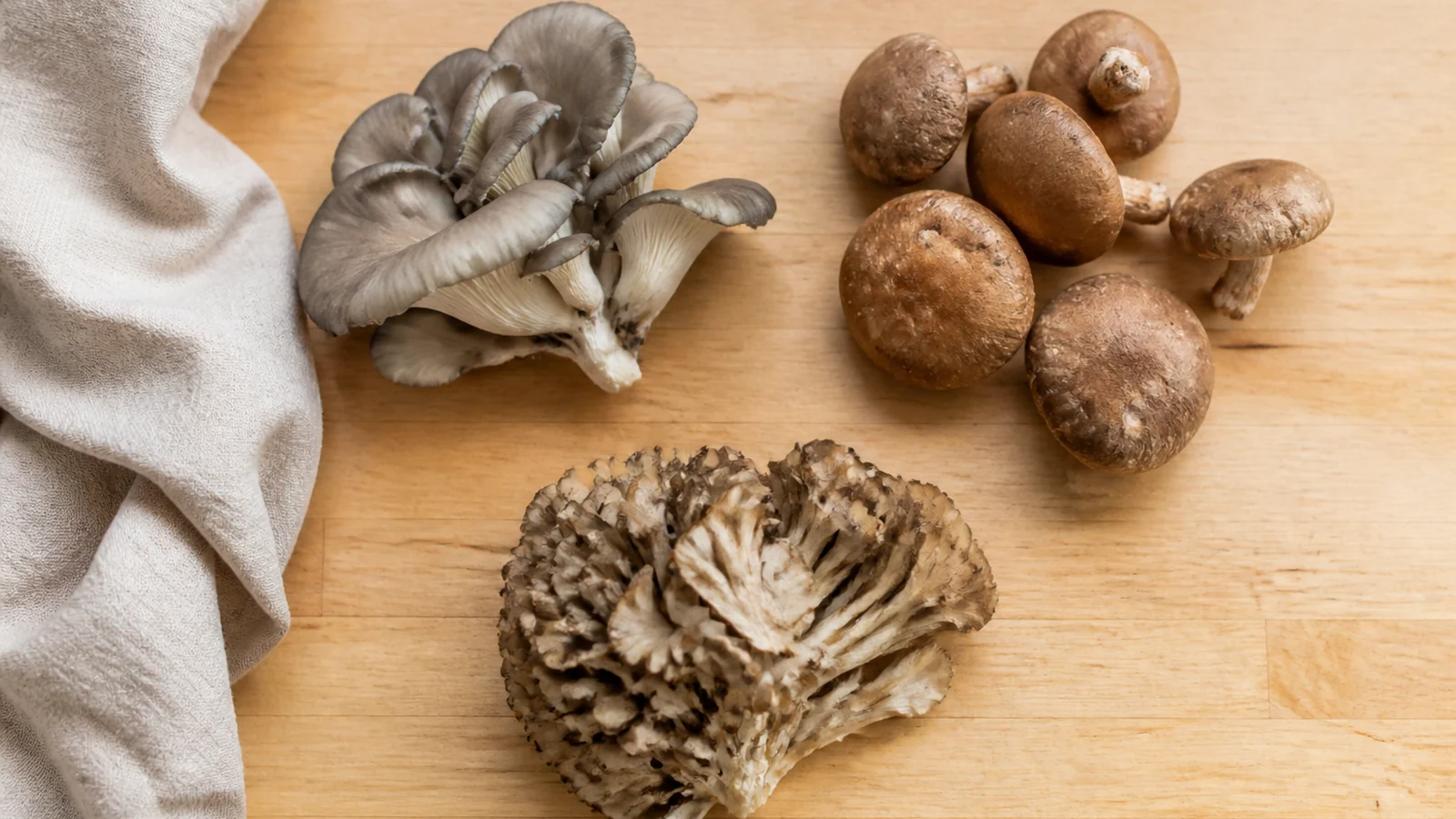
An evidence audit of mushrooms and blood lipids, separating the triglyceride result the trials actually produced from the LDL result most readers are looking for, and covering lovastatin, beta-glucan structure, dose forms and the statin conflict.
Mushrooms do change one number on a lipid panel with reasonable consistency, and it is not LDL.
Across the human trials, triglycerides fall while total and LDL cholesterol mostly sit still.
That is a real finding. It also answers a narrower question than the one most people arrive with.
Compare the proposed mechanisms with measured cholesterol results before choosing a supplement.
What the trials actually moved
A 2023 systematic review pulled together the human evidence on mushroom intake and cardiometabolic risk. It covered eight placebo-controlled parallel randomized trials plus three further experimental studies.
Reading it outcome by outcome is far more useful than reading its abstract.
Total cholesterol was neutral in five of the seven reports that measured it, and lower in two. LDL split exactly the same way, five neutral against two reductions.
HDL was unchanged in six reports and higher in two, which is closer to the pattern you would expect from noise than from an effect.
Triglycerides behaved differently. Six experimental reports found a reduction, and the reviewers treated that as the finding that survived the collection.
It is worth being precise about what a neutral result means here.
These trials are small, short, and use wildly different products, so a neutral finding says an effect was not detected at that size rather than that no effect exists. A trial of thirty people over three weeks would miss a change that matters clinically over years.
That cuts in both directions, though. A body of evidence too small to rule an effect out is also too small to justify buying one.
Who was enrolled matters as much as what was measured.
Several of the strongest entries in this literature studied people selected for a metabolic condition rather than people with an isolated LDL problem.
The Cochrane evidence on reishi was confined entirely to participants with type 2 diabetes. The closest oyster mushroom trial to a real clinical question ran in people whose cholesterol had been raised by antiretroviral medication.
Neither population is a middle-aged reader with a single flagged LDL and no other diagnosis.
If your panel is flagged for high triglycerides, what follows is at least pointing at your problem.
If it is flagged for LDL, keep reading with that mismatch in mind.
Medicinal MushroomsLion's Mane Benefits: What Human Trials Actually FoundWhy oyster mushrooms keep coming up
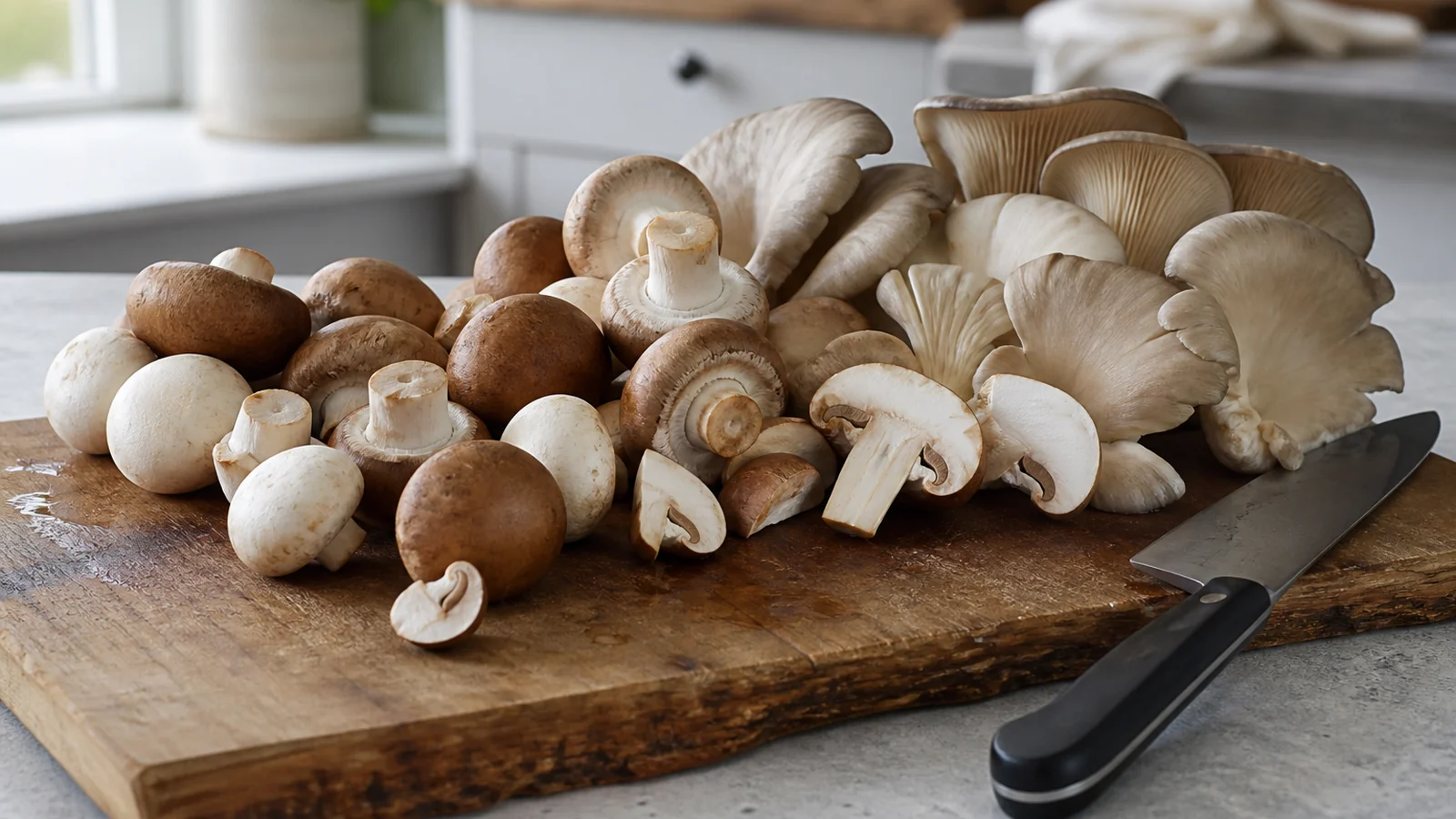
There is a genuine pharmacological reason this one species dominates the conversation. Oyster mushrooms have been reported to contain lovastatin, also called mevinolin, which inhibits HMG-CoA reductase in exactly the way a prescription statin does.
That is not folklore or an extrapolation from a cell line, because where it is detected it is the same molecule pharmacies dispense.
Whether it is there at all is less settled than the claim suggests. Several research groups have looked for lovastatin in this species and found none, while others have reported it, and one analytical review put the disagreement down to cultivation conditions and measurement method.
- Compound
- Lovastatin, an HMG-CoA reductase inhibitor, reported in Pleurotus ostreatus by some groups and not detected by others
- Measured content
- 1.11 mg per kg of dry sample by LC-MS in one 2021 analysis, against much higher figures in some earlier reports
- Why the spread
- Strain, substrate, cultivation conditions and the analytical method all move the result
- Prescription comparison
- A usual starting dose of lovastatin is 20 mg a day
The problem is arithmetic rather than pharmacology.
At 1.11 mg per kilogram of dry sample, a 20 mg starting dose corresponds to something close to eighteen kilograms of dried mushroom. Fresh oyster mushrooms are around ninety percent water, so the fresh-weight equivalent runs into the hundreds of kilograms a day.

The disagreement between studies makes the position worse rather than better.
When published figures range from nothing detected to values orders of magnitude apart, no serving delivers a dose anybody can predict. Predictability is most of what a prescribed statin is for.
Trials have tested the species directly rather than leaving it at the mechanism.
A review of oyster mushroom intake found eight trials in roughly 190 participants, using doses from 3 g a day of powder up to 200 g a day of fresh mushrooms. Triglycerides fell by between 9 and 36 percent across them.
HDL did not move, and the reviewers graded the overall evidence as low, citing a small study count and a high risk of bias from methodological shortcomings.
One of the better-designed entries gave twenty participants a daily soup containing 30 g of dried oyster mushrooms, against a tomato soup placebo, for 21 days. Three weeks is long enough to move triglycerides and much too short to say anything about cardiovascular outcomes.
There is a useful comparison one shelf over. Red yeast rice is rice fermented with a Monascus mold, and its active compound, monacolin K, is chemically identical to lovastatin.
That product does deliver a statin dose, and regulators have treated it accordingly.
The European Commission capped monacolin content in food supplements at under 3 mg per daily portion in 2022, after safety assessors linked intakes at and above that level to muscle injury and liver harm. A later opinion went further and reported that no daily intake could be identified as free of safety concern.
The lesson runs in both directions. A fungal product potent enough to work like a statin also carries statin risks and attracts statin-grade regulation, while a culinary mushroom that never reaches that dose carries neither the benefit nor the restriction.
Natural is not a safety category here, and it is not a dosing category either.
Another trial sits closest to the situation of a reader with a bad panel.
Researchers gave 15 g a day of freeze-dried Pleurotus ostreatus for eight weeks to people whose cholesterol had been raised by antiretroviral medication. Non-HDL cholesterol did not fall.
The beta-glucan claim belongs to oats
Mushroom supplement labels advertise beta-glucan content, and beta-glucan is genuinely a cholesterol-lowering fiber. Both statements are true, and setting them next to each other produces a false one.
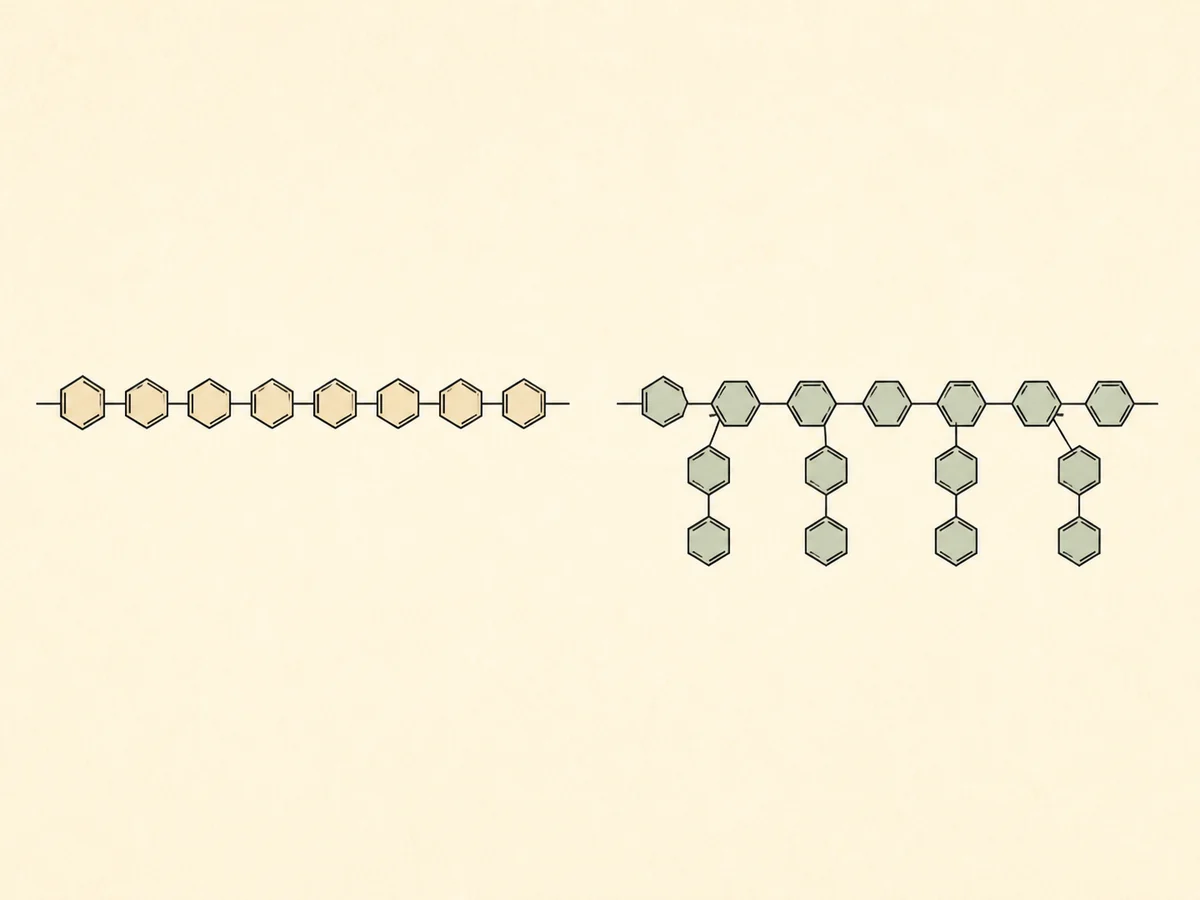
The word covers two structurally different polysaccharides.
- Cereal beta-glucans, from oats and barley, are built from 1,3 and 1,4 linkages running in an unbranched chain with no 1,6 links at all.
- Mushroom beta-glucans are 1,3 backbones carrying short 1,6 side branches, which changes how the molecule behaves in the gut and how the body recognizes it.
- The European authorized cholesterol claim attaches to oat and barley beta-glucan at 3 g a day, with a labeling condition of at least 1 g per stated portion.
No equivalent authorized cholesterol claim covers the mushroom form.
Reviewers of mushroom beta-glucans say plainly that the lipid effects observed with the cereal version still require confirmation in human studies of the fungal one. That is a regulator and a research literature both declining to accept that two molecules do the same job on the strength of a shared name.
A beta-glucan figure on a mushroom jar is still a real measurement of a real compound. It is simply a measurement of a different compound from the one in the oat claim.
There is a practical consequence for anybody who came here wanting the fiber effect.
- The authorized amount is 3 g a day of oat or barley beta-glucan, which is roughly 70 to 80 g of raw oats, or a large bowl of porridge.
- That target is cheap, well-studied, and does not depend on which strain or extraction method a manufacturer used.
- Mushrooms and oats are not competing choices, since one is a vegetable and the other is a specific fiber dose, and a person can do both.
Which other species have anything behind them
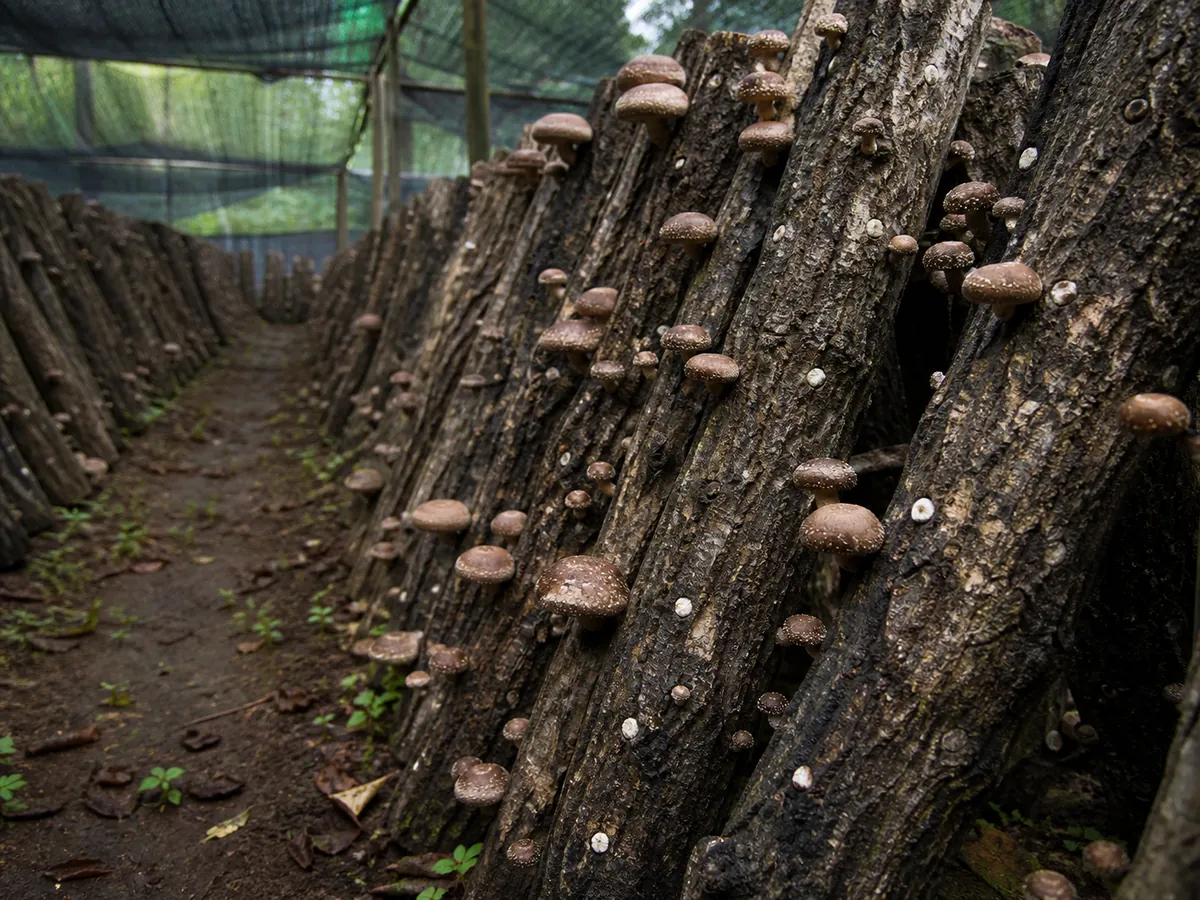
Shiitake is the next species with a named mechanism rather than a vague one. It carries eritadenine, an adenosine analog that has been isolated and quantified across cultivated strains.
Eritadenine does not touch HMG-CoA reductase at all. It acts through methionine and hepatic phospholipid metabolism, which is a genuinely different pathway and one reason shiitake and oyster mushrooms should not be lumped together as statin-like foods.
Only one of those four rows describes a human result on a lipid anybody came here to lower, and it is the row about triglycerides.
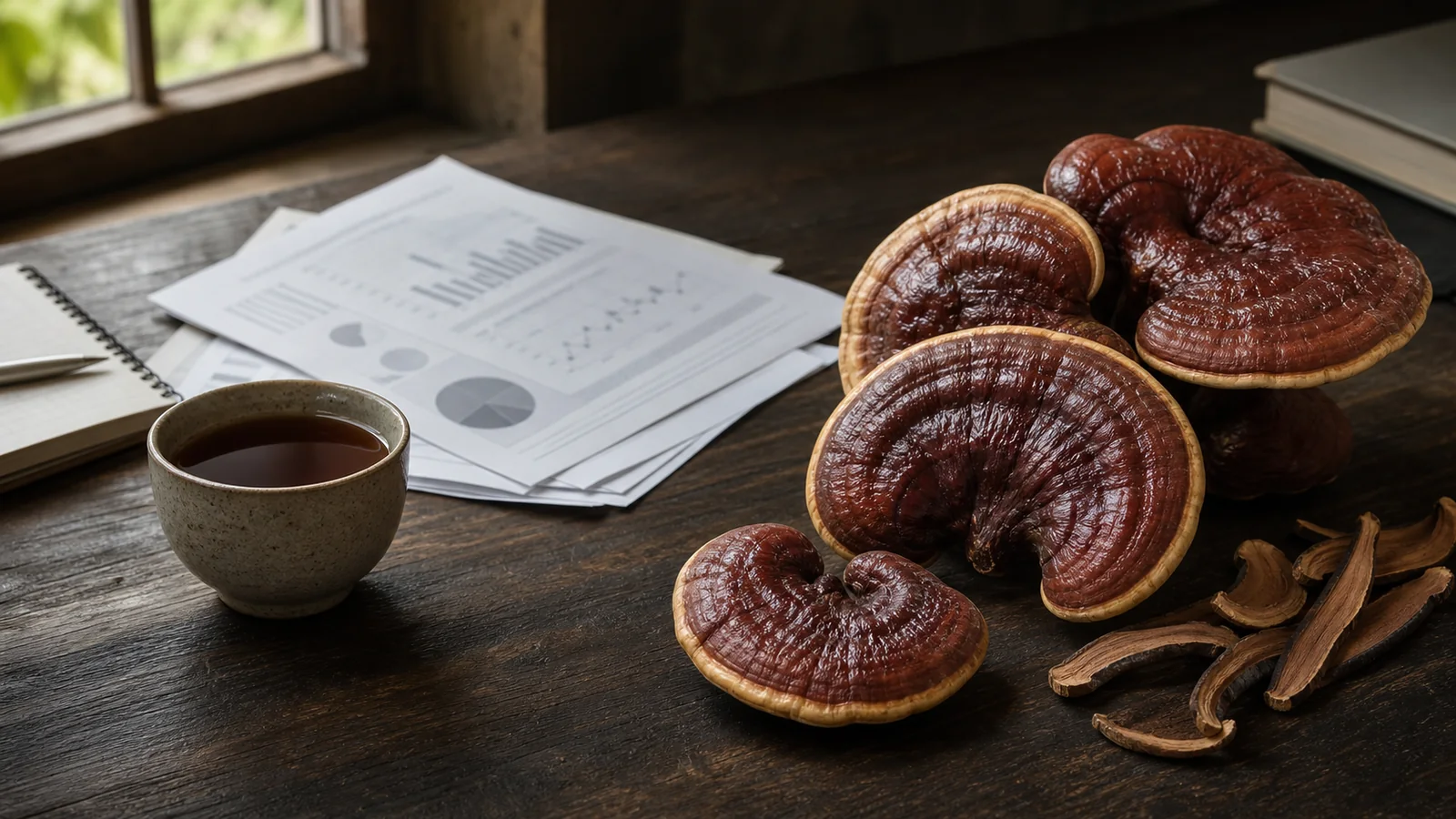
Examine the reishi findings alongside the proposed mechanism.
Those Cochrane reviewers noted the available evidence was confined to participants with type 2 diabetes, which limits what the conclusion covers as much as what it supports. A negative in one population is not proof of nothing anywhere, and it is still the best-quality answer currently available.
Ranking these four species by promise is tempting and mostly meaningless.
The tiers separate by which species was studied, human or rodent, rather than by how large an effect anybody measured. A mushroom with animal-only data is not a weaker option than one with human data, it is an unmeasured one.
Medicinal MushroomsMushrooms for Brain Health, Ranked by EvidenceHow food and supplements answer different questions
The trials did not test a single thing.
In the oyster mushroom review alone, interventions ran from 3 g a day of powder to 200 g a day of fresh mushrooms, over periods from 7 days to a full year. A result from 200 g of fresh mushrooms cooked into soup and a result from a capsule are not the same claim about the same product.
| Form | What the trials used it as | What it can tell you |
|---|---|---|
| Fresh mushrooms | Up to 200 g a day, usually cooked into a meal | Whether a food change helps, mixed with everything else that changed |
| Dried or freeze-dried | 15 to 30 g a day in several trials | The closest thing here to a controlled food dose |
| Whole powder | From about 3 g a day | Concentration is modest and beta-glucan content is rarely stated |
| Fruiting body extract | Rarely the tested form in lipid trials | Extract ratio describes starting material, not delivered compound |
| Mycelium on grain | Not the tested form | Sold in the same category, with a substantially different composition |
Only two of those rows describe something a lipid trial actually put in front of a participant, and neither is the form most people end up buying.
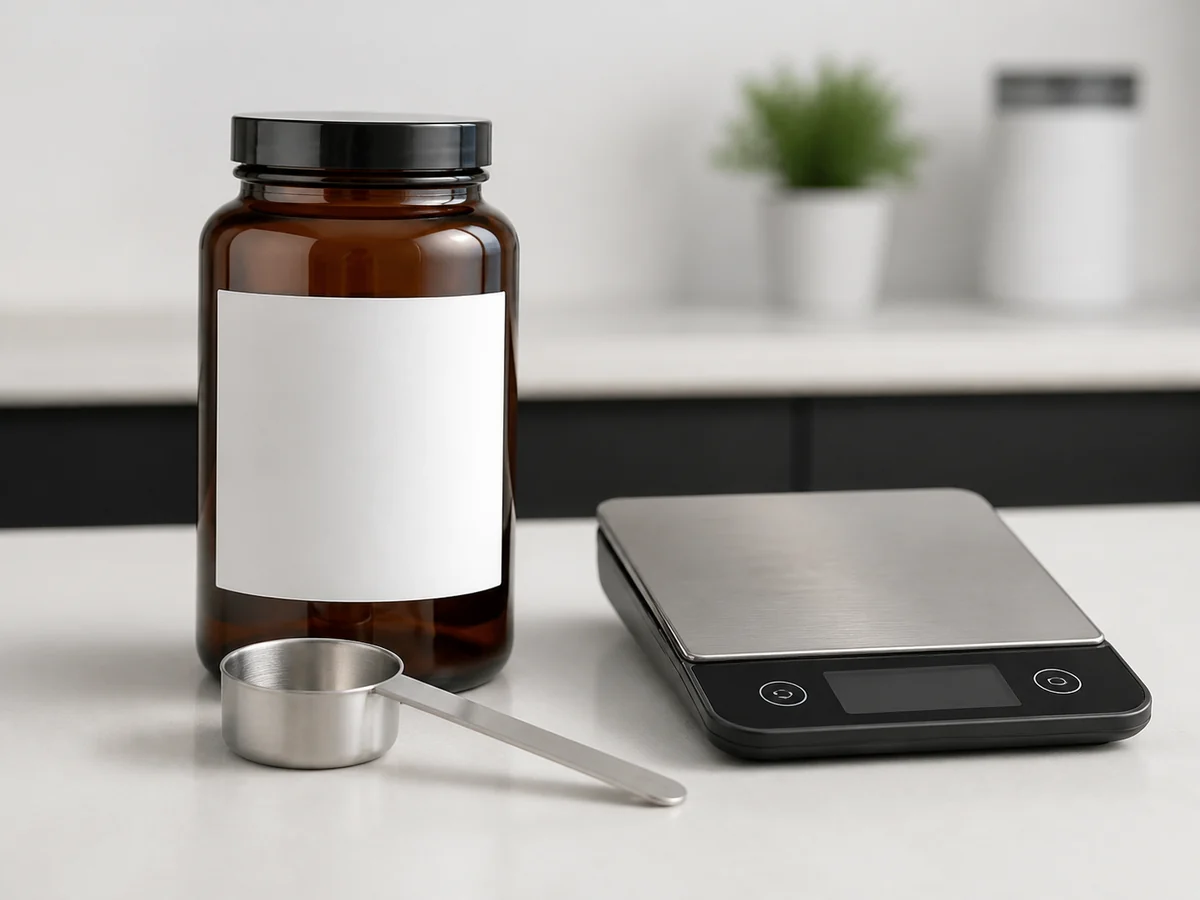
The extract ratio is the field that misleads most often.
A 10:1 ratio describes how much raw material went in, so two jars carrying the same number can deliver quite different amounts of anything you care about. A declared beta-glucan percentage is more informative, and it is also the figure most often absent from the label entirely.
Two questions settle most of what a label leaves open. Ask whether the beta-glucan figure was measured on the finished product or estimated from the raw material, and ask whether the contents are fruiting body, mycelium, or a blend.
A manufacturer that cannot answer either question in writing is not selling a tested product, whatever the ratio on the front says.
There is one framing that survives all of this intact.
Replacing a higher-saturated-fat component of a meal with mushrooms changes the composition of the whole meal, which is a different intervention from adding a capsule to an unchanged diet. It is also the version with the least to go wrong and the lowest cost of being wrong.
Where this gets dangerous
Delaying effective cholesterol care is a risk even when a supplement itself causes no symptoms.
It is somebody reducing or stopping a prescribed lipid-lowering medication because a supplement seemed like a gentler option. That decision has a well-understood consequence, and nothing in the trial set above offsets it.
Warning
Do not stop, reduce, or space out a prescribed statin or other lipid-lowering medication in order to try a mushroom product. If you want to test one, keep the prescription unchanged and tell the prescriber what you are adding.
A second issue is specific to oyster mushrooms and worth stating honestly.
Taking a product containing a real HMG-CoA reductase inhibitor alongside a prescribed statin is an additive exposure that nobody has quantified. The accurate position is that the combination is unstudied, not that it is safe.
Muscle pain, unusual weakness or dark urine while taking a statin are the signals that warrant a same-day call rather than a wait-and-see. Those are the same adverse effects that put monacolin limits on red yeast rice, which is worth remembering if a product markets itself on statin-like potency.
The pattern to distrust is a supplement claiming a drug-sized effect while sitting outside drug-grade oversight.
Anyone on anticoagulants, immunosuppressants or diabetes medication has separate documented conflicts with medicinal mushroom products, and those belong in a conversation before a purchase rather than after one.
Supplements are not required to demonstrate efficacy before they are sold. On a shelf, a product that does nothing and a product that conflicts with your prescription look identical.
What actually answers the question for you
Population evidence cannot tell you whether something worked for you. Only a repeat panel can show whether the measurement changed.
Lipid responses to a dietary change are normally assessed after about eight to twelve weeks, not after a fortnight of feeling virtuous.
- Change one thing, and hold alcohol, weight and the rest of the diet as steady as you reasonably can, because a panel cannot separate three simultaneous changes.
- Book the repeat before you start, so the interval is fixed by the plan rather than by how the experiment feels at the time.
- Write down what you took and how much, since a result you cannot attribute to a specific product and amount is not a result.
It is also worth knowing which line to read. The oyster mushroom trial in medication-raised cholesterol used non-HDL cholesterol as its outcome, which is total cholesterol minus HDL and a better summary of the atherogenic fractions than LDL alone.
Most panels report it, and it moves less erratically than LDL between draws.
Set expectations against the right fraction.
Triglycerides respond strongly to alcohol, refined carbohydrate and weight change, all of which move further and faster than any mushroom in the reviewed trials. A triglyceride drop after twelve weeks of eating differently is therefore hard to credit to the mushrooms specifically.
Key takeaway
If the repeat panel shows nothing, that is an answer and a reason to stop rather than a reason to raise the dose. The evidence in this article predicts a triglyceride change at best, so an unchanged LDL after twelve weeks is the expected result and not a sign the product was too weak.
Take the panel and the plan to whoever manages your lipids.
That conversation is the one part of this whole exercise that has been shown to change outcomes.
Sources & References
- Systematic review of mushroom consumption and cardiometabolic disease risk factors, Nutrients 2023 Outcome-by-outcome results for total cholesterol, LDL, HDL and triglycerides across the human trials.
- Effect of the intake of oyster mushrooms on cardiometabolic parameters, a systematic review of clinical trials Eight trials in roughly 190 participants, dose and duration ranges, triglyceride reductions, and the low evidence grade.
- Antihyperlipidemic effects of Pleurotus ostreatus in people on antiretroviral therapy 15 g a day of freeze-dried oyster mushroom for eight weeks did not lower non-HDL cholesterol.
- Klupp and colleagues, Ganoderma lucidum for the treatment of cardiovascular risk factors, Cochrane Database of Systematic Reviews 2015 Randomized evidence does not support reishi for cardiovascular risk factors, with evidence confined to type 2 diabetes.
- Quantification of the bioactive compound eritadenine in selected strains of shiitake mushroom Eritadenine is a measurable shiitake compound acting outside the statin pathway.
- Edible mushrooms and beta-glucans, impact on human health Mushroom beta-glucan structure and the statement that cereal lipid effects still require confirmation in the fungal form.
- Identification and quantification of ergothioneine and lovastatin in various mushroom species Measured lovastatin content in Pleurotus ostreatus and the conflicting reports, including non-detection, across strains and analytical methods.
- Commission Regulation (EU) 2022/860 on monacolins from red yeast rice The monacolin K limit for food supplements and the safety basis for it.