An audit of the four human trials of mushrooms and exercise capacity, organized by training status rather than by species. It reports the positive trial in adults aged 50 to 75 including the maximal oxygen uptake that did not change, the negative trial in endurance-trained cyclists at three times the dose, the concurrent training trial in which both groups improved identically, and the widely quoted cycling study that had seven participants, no control group and no performance measurement.
The same cordyceps product has been tested in untrained older adults and in trained cyclists, and the result flipped.
That is the most useful fact in this whole literature, and almost nobody reports both halves of it.
The same product, two groups, opposite results
Two placebo-controlled trials used a preparation designated Cs-4. One found a measurable change and one found nothing at all.
Warning
The trial that found something gave 1 gram a day to twenty people aged 50 to 75 for twelve weeks. The trial that found nothing gave 3 grams a day to twenty-two endurance-trained cyclists for five weeks. The higher dose is in the negative trial, which removes the explanation people usually reach for first.
So this is not a story about dose, and it is not a story about product quality either.
Both trials used the same designated preparation. The participants differed, so compare their training status and baseline fitness before interpreting the results.
That also settles the question people usually ask first, which is which mushroom is best for stamina.
No mushroom has been shown to be best for stamina, because only one has been tested for it. Every human trial with an exercise endpoint used cordyceps, alone or blended with something else, so there is no ranking to give and nothing to compare it against.
The honest short answer to whether mushrooms help endurance is that one preparation helped two laboratory thresholds in untrained older adults, and nothing has helped endurance in anybody who trains.
Nothing below ranks species. The useful question is not which mushroom but which group you are in.
Medicinal MushroomsLion's Mane Benefits: What Human Trials Actually FoundThe trial that found something, and what it did not find
The positive study is real, it was double-blind and placebo-controlled, and it is worth reporting more carefully than its own marketing does.

Twenty healthy people aged between 50 and 75 took 333 milligrams three times a day, or a matching placebo, for twelve weeks.
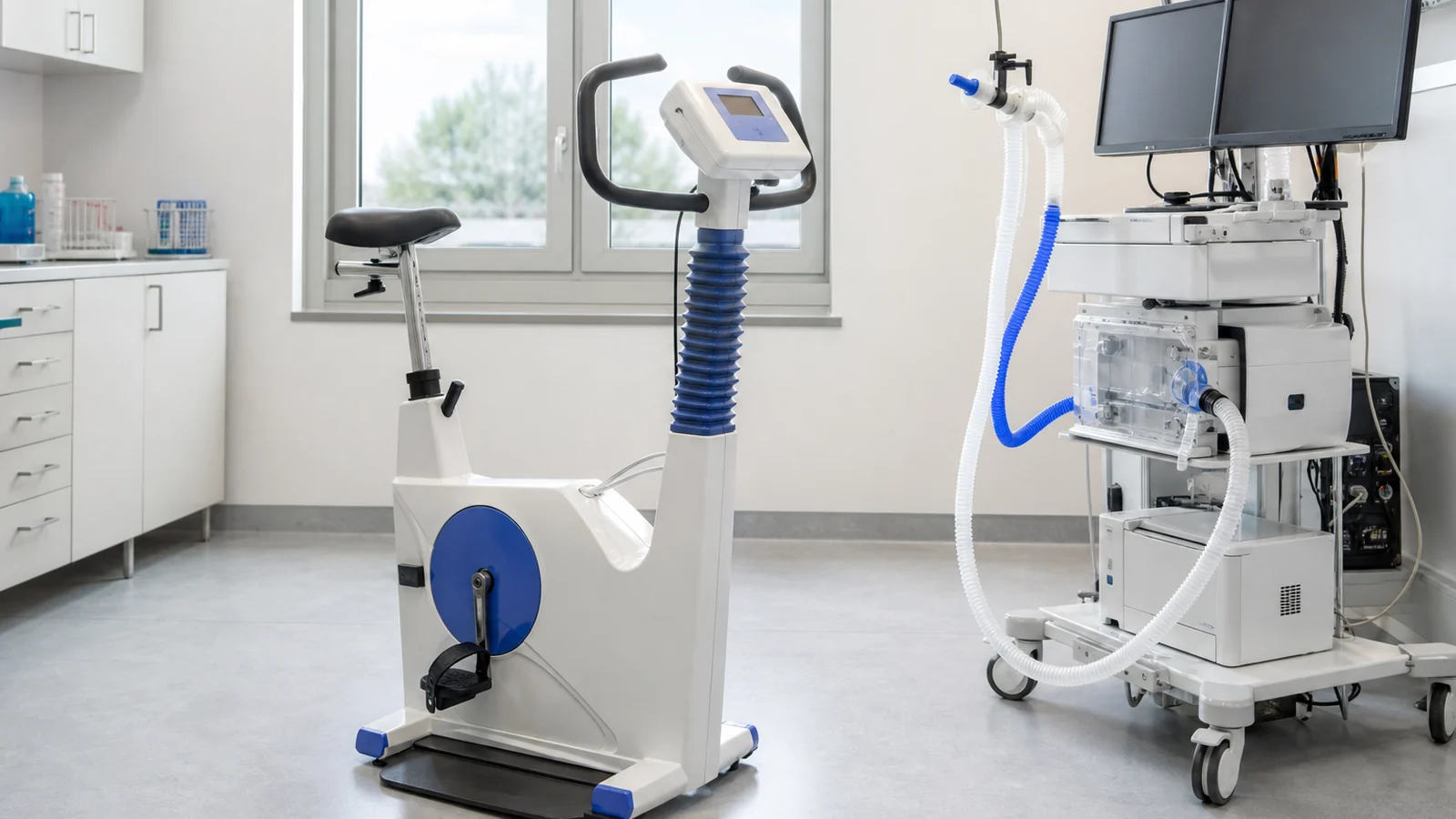
Everybody did a maximal incremental test on a cycle ergometer with breath-by-breath analysis, before and after.
- Metabolic threshold
- Up 10.5 percent, from 0.83 to 0.93 liters per minute
- Ventilatory threshold
- Up 8.5 percent, from 1.25 to 1.36 liters per minute
- Placebo group
- No significant change in either threshold
- Maximal oxygen uptake
- No change in either group
- Authors' own description
- A pilot study
The first two lines are what gets quoted. The fourth line is what does not.
Maximal oxygen uptake is the number in every advertisement for this ingredient, and it is the number that stayed exactly where it was in both arms of the trial that supposedly established the claim.
That is not a small omission. It is the difference between the marketing and the paper.
The last line matters too.
A pilot study in twenty people is designed to find out whether a bigger trial is worth running. No bigger trial has followed in the fifteen years since.
That silence is information of a kind. A positive pilot in a commercially valuable ingredient is normally followed quickly, and this one was not.
- Twenty people split into two arms is ten per arm, which cannot separate a modest effect from chance
- Two thresholds and one ceiling were measured, so some movement somewhere is unsurprising
- No performance outcome was recorded, so nothing was tested that a reader would recognize as performance
- A confirmatory trial would need to name one outcome in advance and recruit enough people to test it
What a threshold is, and why it is not VO2 max
Dismissing the threshold result would be as wrong as inflating it, and separating the two requires knowing what was measured.
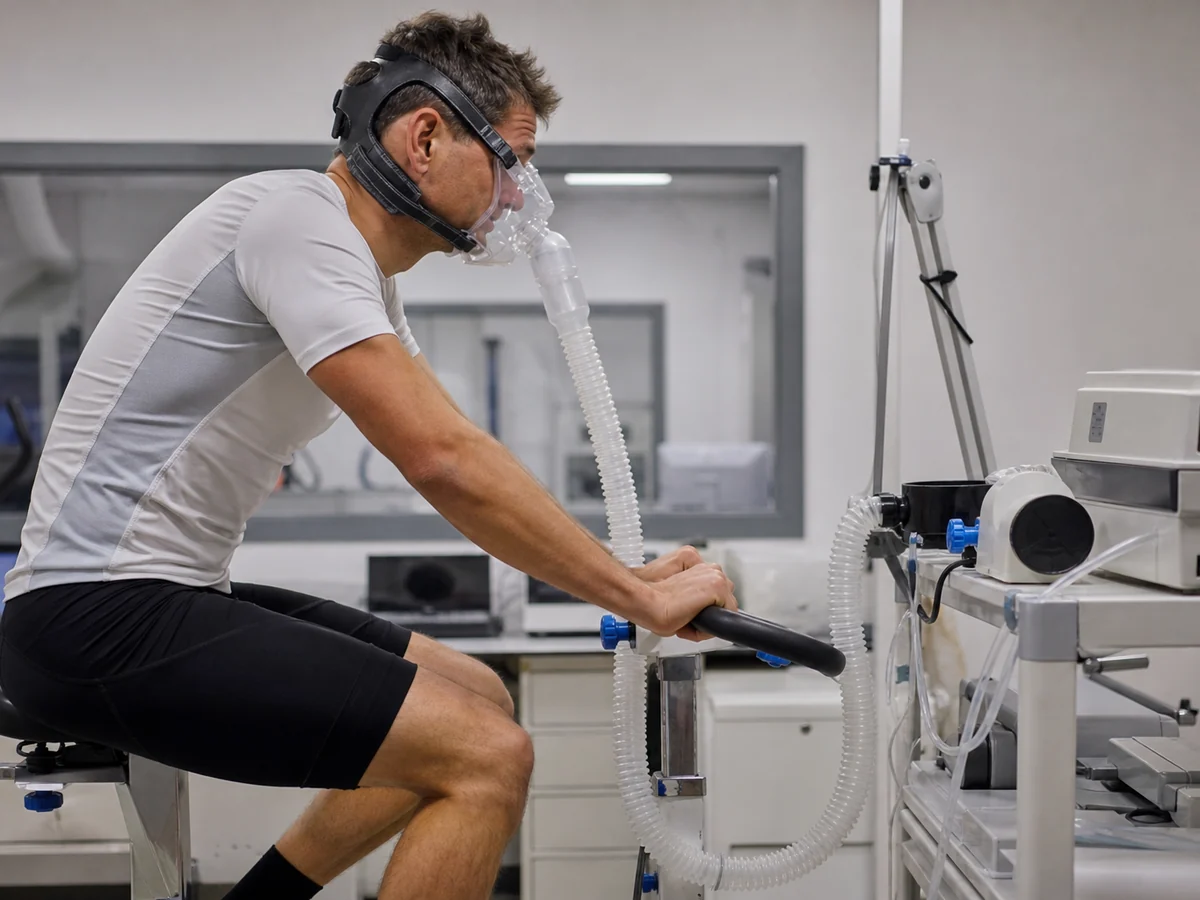
Maximal oxygen uptake is a ceiling. It is the most oxygen your body can use per minute at full effort, and it barely moves in most people without months of hard training.
A threshold is different and sits below that ceiling.
For somebody in their sixties who is not training, a ten percent threshold gain is a real change in what a day feels like. Stairs, hills and shopping all sit below the ceiling and near the threshold.

That is a genuine gain. It is also a completely different claim from the one printed on the packet.
So the finding is not nothing.
It is a plausible, modest, physiologically coherent result in a group with a great deal of room to improve, which is exactly where a real effect would be easiest to see.
What it is not is a performance result. Nobody in that trial was timed over a distance, raced anybody or was asked to hold a pace, and the study measured capacity rather than performance.
Medicinal MushroomsWhich Reishi Benefits Hold Up in Human Studies?The trial in trained cyclists
If you already train, there is a study in people like you. It is also the one nobody links to.
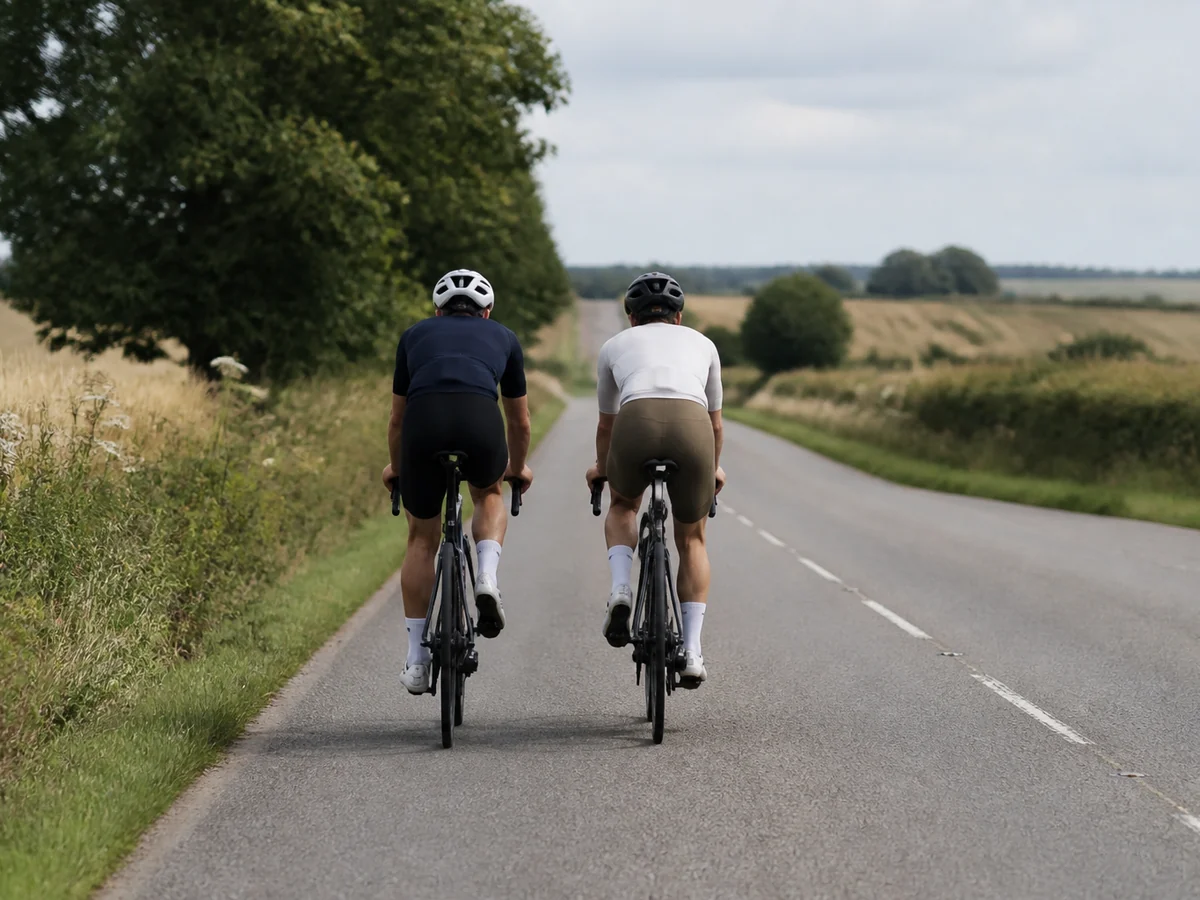
Twenty-two endurance-trained male cyclists took 3 grams a day of the same designated product or placebo for five weeks. Their training intensity was documented weekly so that neither group could quietly drift.
They did a peak oxygen uptake test and a work-based time trial at both ends.
It is worth knowing how trained these men were, because it decides who the result applies to. A peak uptake near 60 milliliters per kilogram per minute puts them well above a general population average and squarely in the range of serious club racers.
The supplement group finished with a lower average peak uptake than they started with, at 57.1 against the 59.1 they began at.
That should not be read as evidence of harm. Differences that small in groups that small are noise, and the authors did not claim otherwise.
What it does mean is that there was no signal to find. Not a small effect that needed more subjects, not a trend in the right direction, just nothing on any of three separate measures.
The authors' conclusion was as plain as conclusions get. Five weeks of supplementation has no effect on aerobic capacity or endurance exercise performance in endurance-trained male cyclists.
One more thing is worth saying about the negative result before moving on.
A null finding in twenty-two people is not proof that nothing happens. It rules out an effect large enough to matter to a competitive cyclist, which is the only effect worth paying for, and it leaves a very small one possible and undetected.
That is the correct way to hold it. Not proof of nothing, but no reason to expect anything you would notice.
There is a second trial in trained people, and it agrees.
It is a different design, a different supplement and a different kind of training, which makes the agreement more interesting rather than less. Twenty-one active young men took a multi-ingredient supplement containing cordyceps and rhodiola, or placebo, through fourteen weeks of resistance and interval training.
- Both groups lost the same body fat, 1.3 percentage points
- Both groups added the same strength, 4 percent on bench press and 8 percent on squat
- Cortisol fell 11 percent in both groups, with no difference between them
- Some weekly measures favored the supplement, and none of the outcomes the study was built to test did
That last line is the one to keep.
A study that measures many things weekly will find some of them moving. Naming the real outcomes in advance is exactly what stops that from becoming a finding.
Medicinal MushroomsMushrooms for Brain Health, Ranked by EvidenceThe study everyone quotes measured no performance at all
Search this subject and one cycling study comes up again and again. It is worth knowing what it was.
Seven amateur cyclists aged between 30 and 40 took three cordyceps capsules and two reishi capsules a day for three months.
| What the study had | What it did not have | |
|---|---|---|
| Participants | 7 | Enough to detect anything modest |
| Control group | None, everybody took the supplement | A placebo arm |
| Outcomes measured | Salivary testosterone to cortisol ratio, and an antioxidant assay on serum | Any timed or measured performance |
| What can be concluded | That two biomarkers changed over three months | That anybody rode faster or longer |
None of that makes the study fraudulent.
It set out to look at markers of overtraining in a small group of amateur riders and it reported what it found, which is a legitimate thing for a small study to do.
The distortion is in the citing. A study with no control group cannot separate its supplement from three months of training, seasonal changes, or the simple fact that everybody knew what they were taking.
The shape is common enough to be worth recognizing on sight, in any supplement subject.
- Everybody in the study receives the active product, so there is nothing to compare against
- The outcome is a biomarker rather than the thing the reader cares about
- The number of participants is small enough to fit in one room
- The write-up is careful and the citation of it is not
None of those four is a flaw in the paper. All four become flaws the moment the study is presented as evidence that a supplement improves performance.
And a hormone ratio in saliva is not a performance measure. It is a proposed marker of a training state, which is a claim of its own that would need its own validation.
What you would actually be buying
Suppose you read all of the above and still want to try it.
There are a few things worth knowing before you start comparing labels. None of them is about which brand you pick.

Both cordyceps trials used a specific named preparation rather than a generic powder, which is why they could be compared with each other at all.
| What the trials did | What a typical purchase does | |
|---|---|---|
| The material | One designated preparation, the same in both studies | Varies by brand, species and process |
| The amount | 1 or 3 grams a day, stated | Often stated per capsule, rarely matched to a trial |
| The duration | 5 weeks and 12 weeks, continuous | Frequently taken as a single dose before training |
| The claim tested | Capacity measured in a laboratory | Performance felt in a session |
That third row is the one that catches most people out.
Almost every product in this category is sold for the session in front of you. Almost every trial ran for over a month with no session in sight.
No trial on this page tested a dose taken before exercise. Both ran continuously for over a month, so nothing here speaks to whether anything happens in the hour before a session.
Look at the first row again before the third one, because the wording there is doing quiet work too.
Two jars carrying the same species name can hold material from different strains, grown on different substrates, processed in different ways and standardized on different compounds, or on nothing at all. A trial can only tell you about the material it used.
That is why the two cordyceps trials in this article can be compared with each other and neither can be compared with a jar you have not opened yet.
The multi-ingredient point applies here too. A product containing six ingredients cannot tell you which one, if any, did something, and the trial of exactly that design found the answer was none of them.
Amounts, labels and how to verify what a product actually contains are separate subjects with their own pages.
What follows from all of this
Trained athletes and previously inactive adults should not assume that the same result applies to both groups.
| If you already train | If you do not train and are older | |
|---|---|---|
| The relevant trial | 22 trained cyclists, five weeks, no effect on anything | 20 people aged 50 to 75, twelve weeks, thresholds up |
| What was tested | Peak uptake, threshold and a timed trial | Two thresholds in a laboratory |
| What moved | Nothing | The thresholds, but not the ceiling |
| Reasonable conclusion | Nothing here supports spending money on it | A single small pilot suggests it is worth a larger trial |
| What nobody has shown | An improvement in maximal oxygen uptake, in any group | An improvement in maximal oxygen uptake, in any group |
There is a third reader that table leaves out, and it is a large group.
Somebody young and healthy who does not train seriously has never been studied here at all. The positive trial recruited people aged 50 to 75 and the negative ones recruited trained athletes, and nobody has tested the middle.
So the honest answer for that reader is that there is no answer, rather than a small one.
That gap is worth naming rather than papering over, because it is the group most of the marketing is aimed at.
Back to that table, and to its bottom line, which is identical on both sides on purpose.
Across every trial on this page, in trained and untrained people, at one gram and at three, over five weeks and over twelve, maximal oxygen uptake has never improved. That is the single claim the marketing rests on and the single result nobody has produced.
Two practical notes close this out, and neither of them is about a species.
Anything taken alongside prescribed medicine belongs on the list whoever prescribes for you holds, and the documented side effects and interaction picture are worth reading first if that applies to you.
And if you compete under an anti-doping code, checking a supplement against your governing body's guidance is a separate exercise from anything on this page.
Cordyceps itself is not a prohibited substance. Supplement contamination is a recognized cause of a positive test, and that risk attaches to the product rather than to the ingredient.
Sources & References
- Effect of Cs-4 (Cordyceps sinensis) on exercise performance in healthy older subjects, Journal of Alternative and Complementary Medicine 2010 The 20 participants aged 50 to 75, the 333 mg three times daily for 12 weeks, the two threshold improvements, and the unchanged maximal oxygen uptake in both groups.
- Cordyceps Sinensis (CordyMax Cs-4) supplementation does not improve endurance exercise performance, International Journal of Sport Nutrition and Exercise Metabolism 2004 The 22 endurance-trained cyclists, the 3 grams a day for 5 weeks, and the unchanged peak uptake, ventilatory threshold and time trial.
- Effects of Concurrent Training and a Multi-Ingredient Performance Supplement Containing Rhodiola rosea and Cordyceps sinensis, Journal of Dietary Supplements 2021 The 21 active men, the identical body composition and strength gains in both groups, and the absence of any difference in the outcomes the study was designed around.
- Improving Training Condition Assessment in Endurance Cyclists, Evidence-Based Complementary and Alternative Medicine 2014 The 7 amateur cyclists, the absence of a control group, and the salivary hormone ratio and antioxidant assay used in place of any performance measure.