A provenance guide to mushroom supplement dosage, covering why no established dose exists for any of these species, what published human trials actually used with their durations and sample sizes, the fifty-six fold spread across pooled trials and the very low certainty attached to it, how an animal dose converts to a human equivalent, why a gram of powder and a gram of extract are different quantities, how body weight and timing are handled in practice, and why escalating the amount has no support.
Nobody has set a dose for any of these, which is why every page you have read gives a different one.
That is not evasion on their part or yours. It is the actual state of the question, and it changes what a useful answer looks like.
Trial amounts describe the specific products and populations studied. They are not personal dosing instructions.
Is there an official dose for mushroom supplements?
There is no recommended amount for any medicinal mushroom, in the sense that there is a recommended amount for vitamin D.
No regulator has established one, no approved dose exists, and the figure on the side of a jar was chosen by the company that filled it.
Only the third of those four is worth anything, and only if you can see which trial it came from. The fourth is where most of what circulates actually originates.

That last row is where most of the confusion lives. A figure gets quoted, loses its source over two or three repetitions, and arrives at a reader as though it were settled.
So the useful question is never how much should I take. It is where did this number come from, and what was it measured on.
Two jars of the same species can print servings that differ several times over without either of them breaking a rule, because neither is claiming to follow a standard that exists.
It is worth being precise about what that absence does and does not mean.
It does not mean these products are unusually dangerous, and it does not mean nothing is known about them. It means the specific question of how much has never been answered by anybody with the authority to answer it.
Whether the company behind either jar can show you what is actually in it is a separate question, and it is covered under choosing a supplement.
Medicinal MushroomsLion's Mane Benefits: What Human Trials Actually FoundWhat doses did the clinical trials actually use?
Published human trials are the only anchor available, so it is worth seeing what they actually did rather than what gets quoted from them.
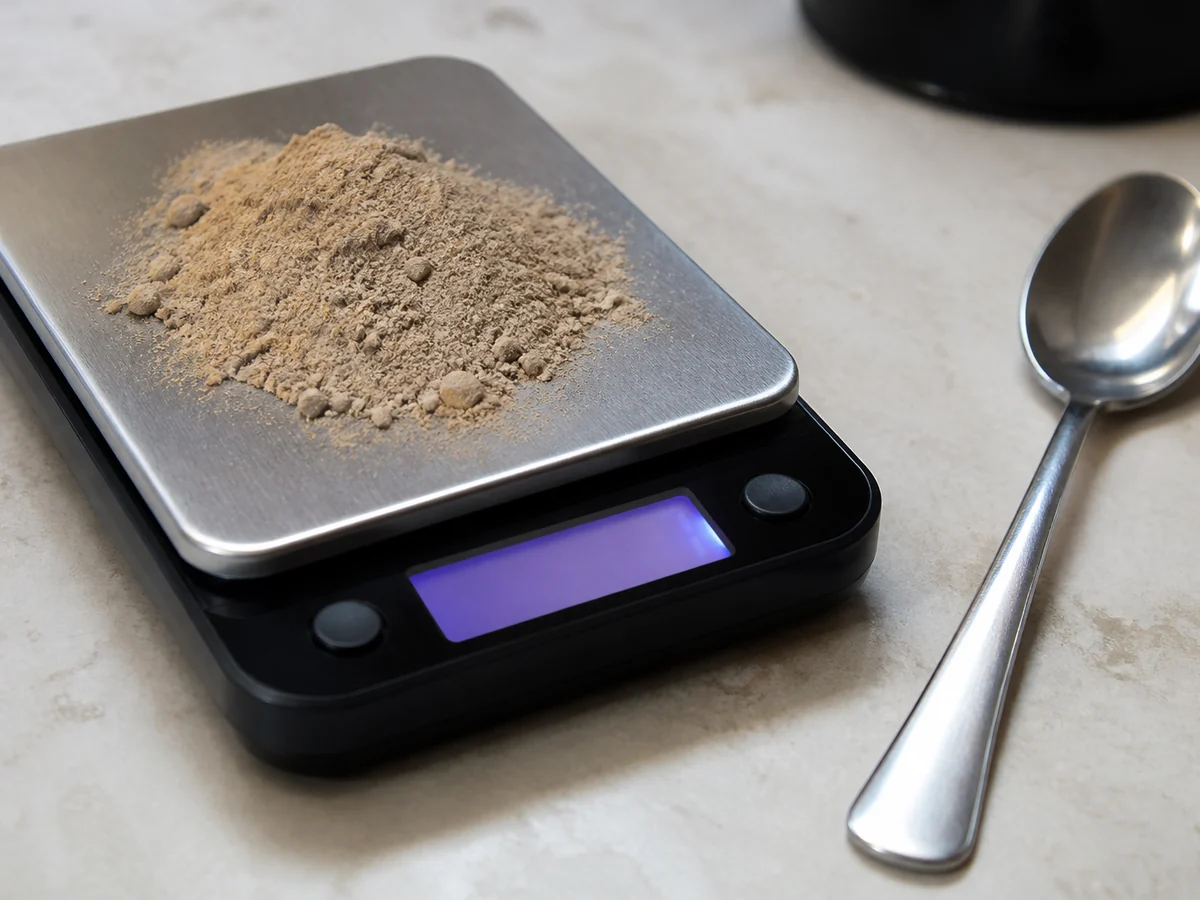
Three of them are worth setting out in full. All three used gram-scale daily amounts, which is already a useful thing to know.
| Trial | Preparation and amount | Duration | Participants |
|---|---|---|---|
| Cognition in mild impairment | Dried fruiting body powder, 3 grams daily in three divided doses | 16 weeks | 30 |
| Exercise capacity in older adults | A fermentation product of a cordyceps species, 3 grams daily | 6 weeks | 37 |
| Cardiovascular risk in metabolic syndrome | Whole material, 3 grams daily | 16 weeks | 84 |
The cognition trial is the one most often cited, and it deserves both halves of its result.
Scores on the cognitive scale rose against placebo while participants were taking it, which is the half that gets quoted. Four weeks after the treatment ended the scores had fallen back, which is the half that does not.
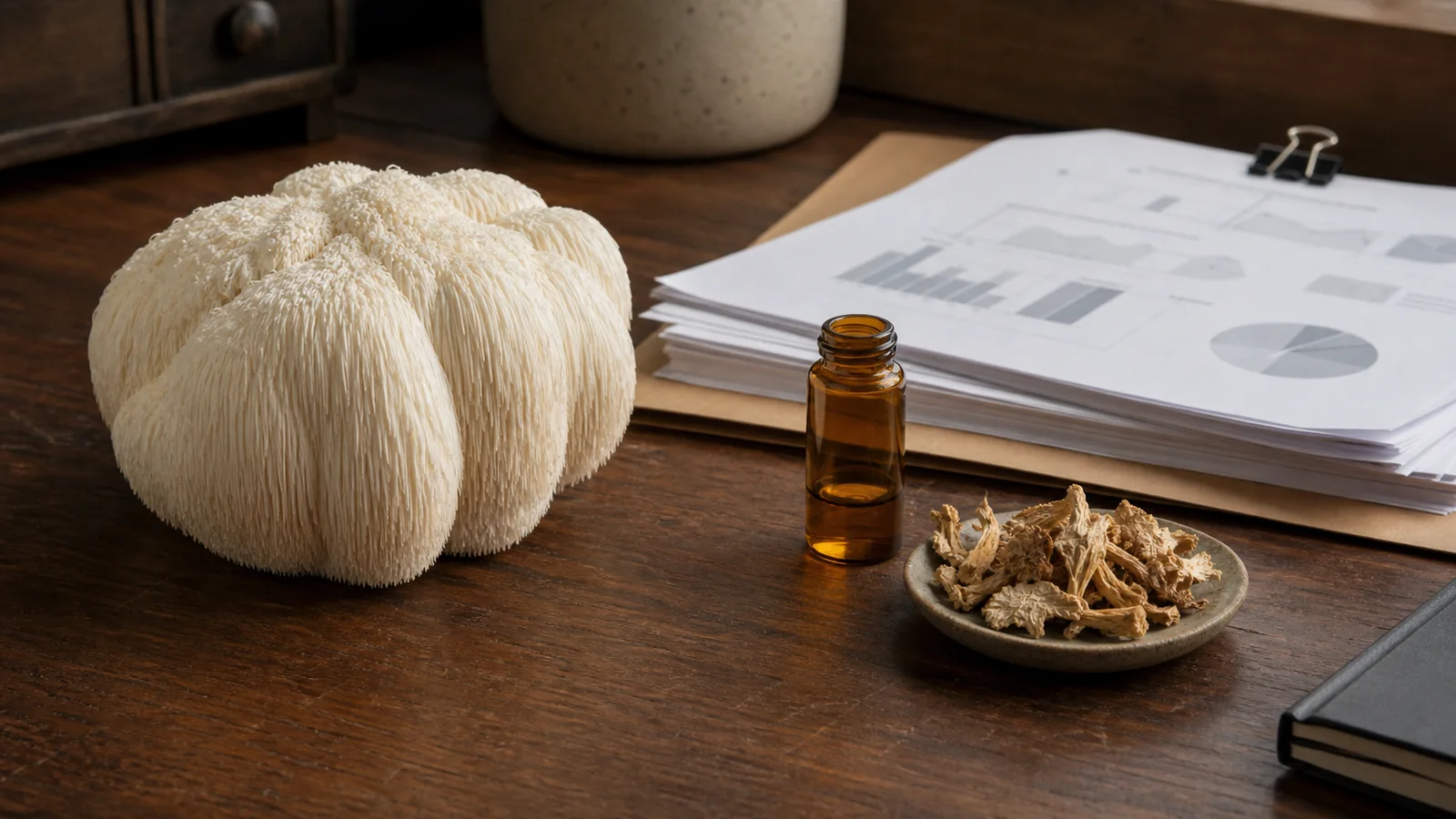
That trial used lion's mane as dried powder in twelve tablets a day, which is a detail worth holding onto when a capsule product cites it.
The exercise trial used a fermentation product rather than the wild material, which is a different substance from most things sold as wild cordyceps even though the species name on the label is the same.
Three things are true of all of them. The sample sizes are in the tens, the durations run to weeks or months rather than days, and every one used a specific preparation that a reader would have to match to use the number.
A trial dose also carries the population it was tested in, which is easy to lose.
The cognition figure came from adults aged fifty to eighty who already had measurable impairment. The exercise figure came from older adults in a cycling test, and the metabolic figure from people with type 2 diabetes.
None of those groups is a healthy adult taking a supplement as a general measure, which is the person most likely to be reading the number.
If the species you are asking about is not in that table, that is usually because a trial does not exist rather than because it was left out. The medicinal mushroom category is where the individual species sit, with whatever evidence each of them has.
Why do dose recommendations vary so widely?
One species has been studied often enough to pool, and pooling it shows the size of the problem.
Two of those figures deserve to be looked at rather than read.
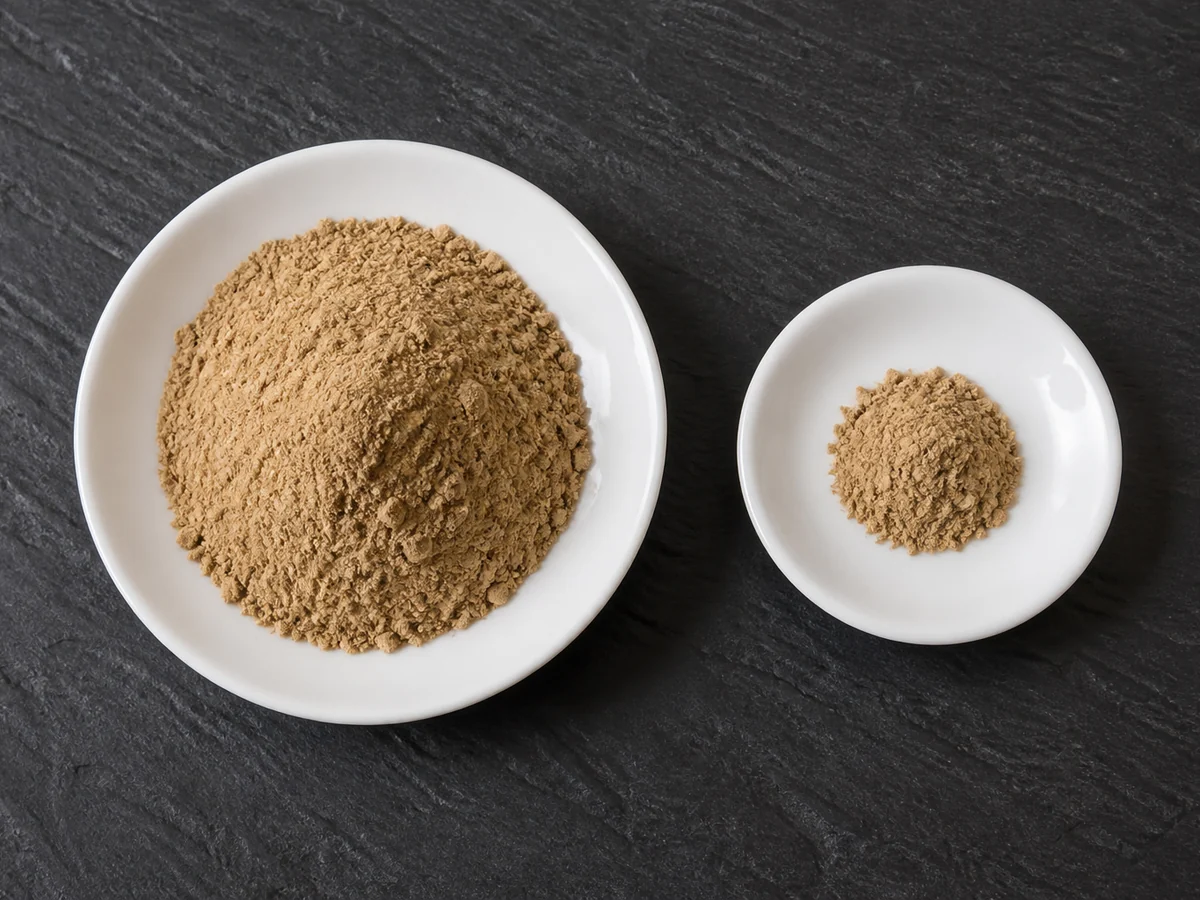
Two hundred milligrams and eleven thousand two hundred milligrams are both real doses from real trials on the same species. Neither was an error.
The larger is fifty-six times the smaller, which means any figure a label prints between those two can point at a published study and be telling the truth about it.
Key takeaway
A citation is not a settled number. When a product says its dose is study-backed, the honest reading is that some study somewhere used something in that region, not that the amount was established by anybody.
The range is that wide for reasons that are mostly boring rather than sinister.
- The trials measured different outcomes, and a study aimed at blood pressure has no reason to use the amount a study aimed at fatigue used
- They used different preparations, so a low milligram figure for a concentrated extract may represent more material than a high figure for a raw powder
- They ran across several decades and different research traditions, with no coordinating body setting a common protocol
- Several were pilot studies choosing a dose to see what happened, which is a legitimate thing to do and not a recommendation
The certainty rating matters as much as the range. Very low certainty is a formal grade, and it means the reviewers judged that further research would very likely change the estimate.
None of that makes reishi supplements an empty product. It means the literature is not currently in a position to tell anybody how much of it to take, and pages that speak with confidence about that are not drawing on something the rest of us cannot see.
Medicinal MushroomsWhich Reishi Benefits Hold Up in Human Studies?Where do the numbers on the label come from?
A great deal of published work on these species is in mice and rats, and those figures reach readers unchanged.
A milligram per kilogram number sounds like it converts by multiplying by your weight. It does not.

Regulatory practice converts an animal dose by normalizing to body surface area, because metabolic rate scales with surface area rather than with mass. A small animal runs hotter per gram than a large one and clears things faster.
- Rat to human
- Divide the rat figure in milligrams per kilogram by 6.2
- Mouse to human
- Divide the mouse figure by 12.3
- Worked example
- A mouse study at 500 milligrams per kilogram becomes about 40 milligrams per kilogram in a person
- What that comes to
- Roughly 2.8 grams a day for an adult of 70 kilograms
Run that arithmetic on a few of the figures you have seen quoted and the results are informative in both directions.
Some animal doses convert to amounts a person could plausibly take, which is why the species ended up in trials at all. Others convert to amounts nobody would swallow, and those are the studies being quoted at you without the conversion.
The conversion tells you whether a figure is in a human range. It does not tell you that the animal result applies to people, which is a separate and much larger question.
Is a gram of extract the same as a gram of mushroom?
Here is the mistake that quietly wrecks most comparisons between a study and a jar.
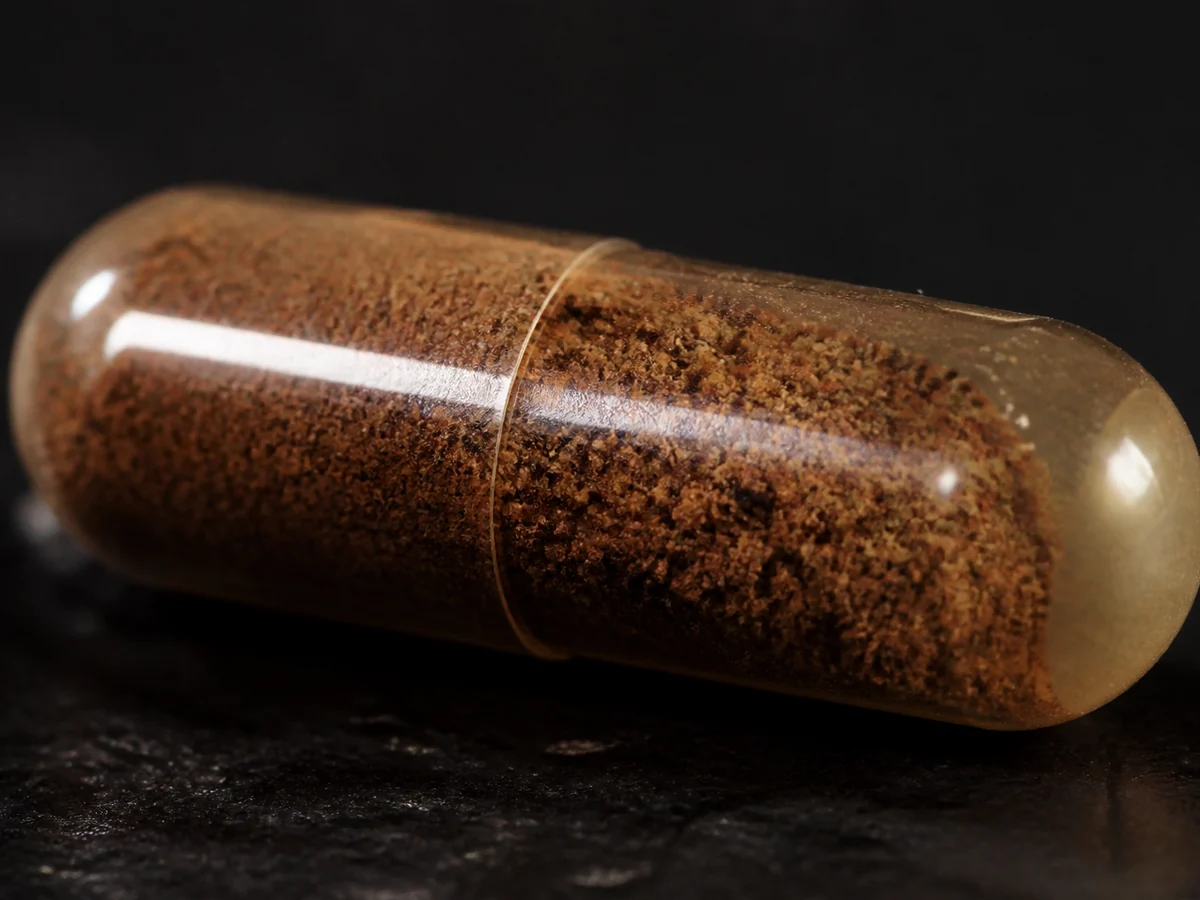
The same unit is doing three different jobs across this category.
- A gram of dried fruiting body powder, which is whole milled material with nothing removed
- A gram of extract, which is the concentrated fraction that came out of a much larger quantity of that material
- A gram of a declared active fraction, which is the only one of the three that describes a specific compound class
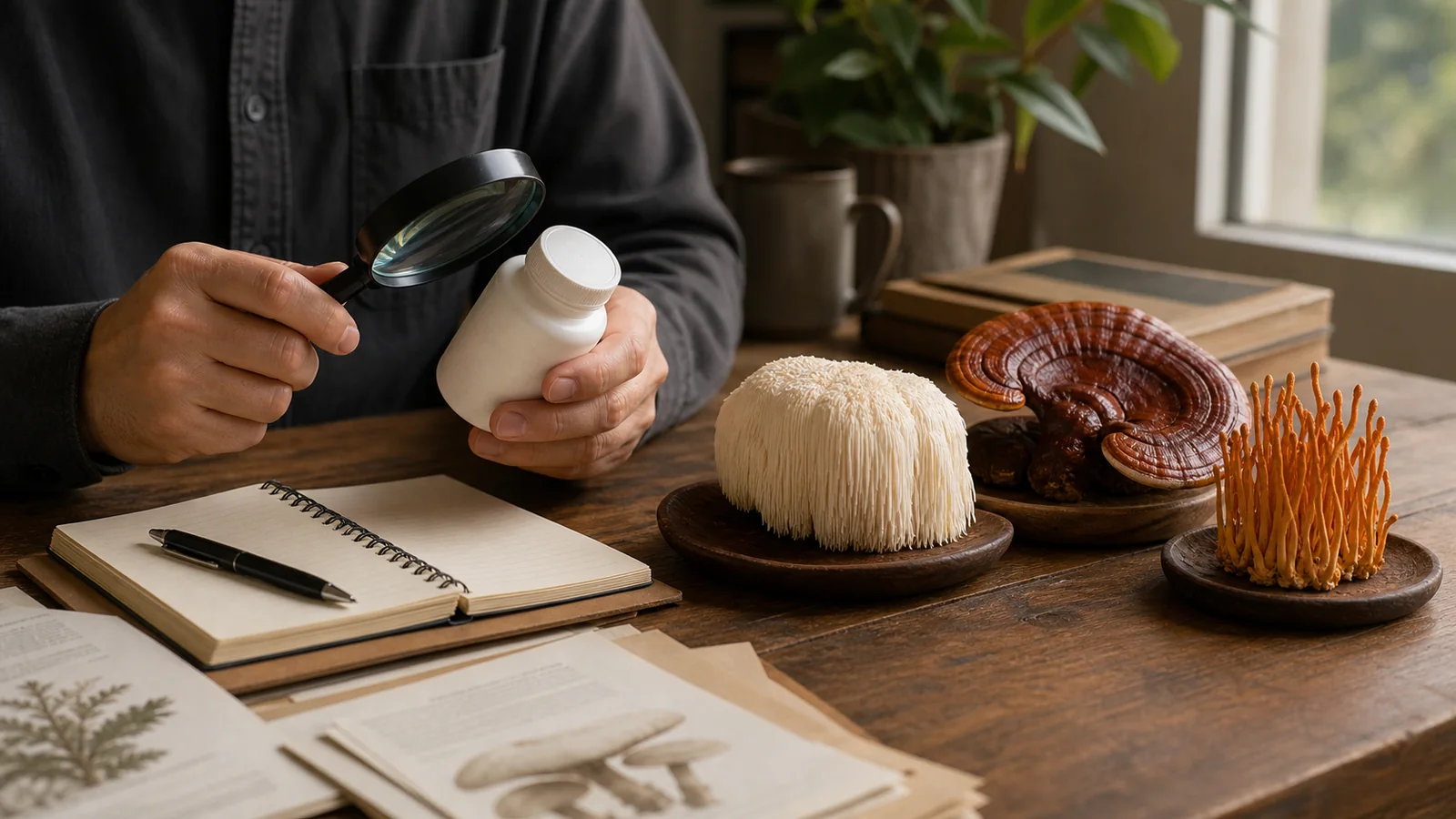
A trial that gave participants three grams of dried powder has said nothing directly about three grams of an extract. The second is a different substance at the same weight.
The only figure that transfers between formats is the content of the fraction the product is sold for, which is why a product that does not declare it cannot be lined up against a trial dose at all.
What that field means, and why so many labels avoid it, is the subject of powder against extract rather than this page.
The comparison is possible when both sides declare the same thing.
If a trial used three grams of dried powder and that material typically carries a low single-digit percentage of the fraction in question, the trial delivered something in the region of tens of milligrams of it. A concentrated extract declaring thirty percent reaches the same place from a few hundred milligrams.
Those two products look nothing like each other on a shelf and may be closer than either label suggests, which is the entire reason the unit matters.
The same problem applies at home. A cup of decoction contains an unknown quantity of extracted material, which is why a home preparation is measured in cups rather than in grams of anything.
Medicinal MushroomsMushrooms for Brain Health, Ranked by EvidenceShould you adjust the dose for body weight?
The logic seems obvious. A person of a hundred kilograms is twice the person of fifty, so surely the amount should follow.
Trials do not do this. They give every participant the same fixed amount, which means every published figure is already an average across whatever range of body sizes walked into the study.
There is a practical reason the practice does not follow the logic, and it is not a scientific one.
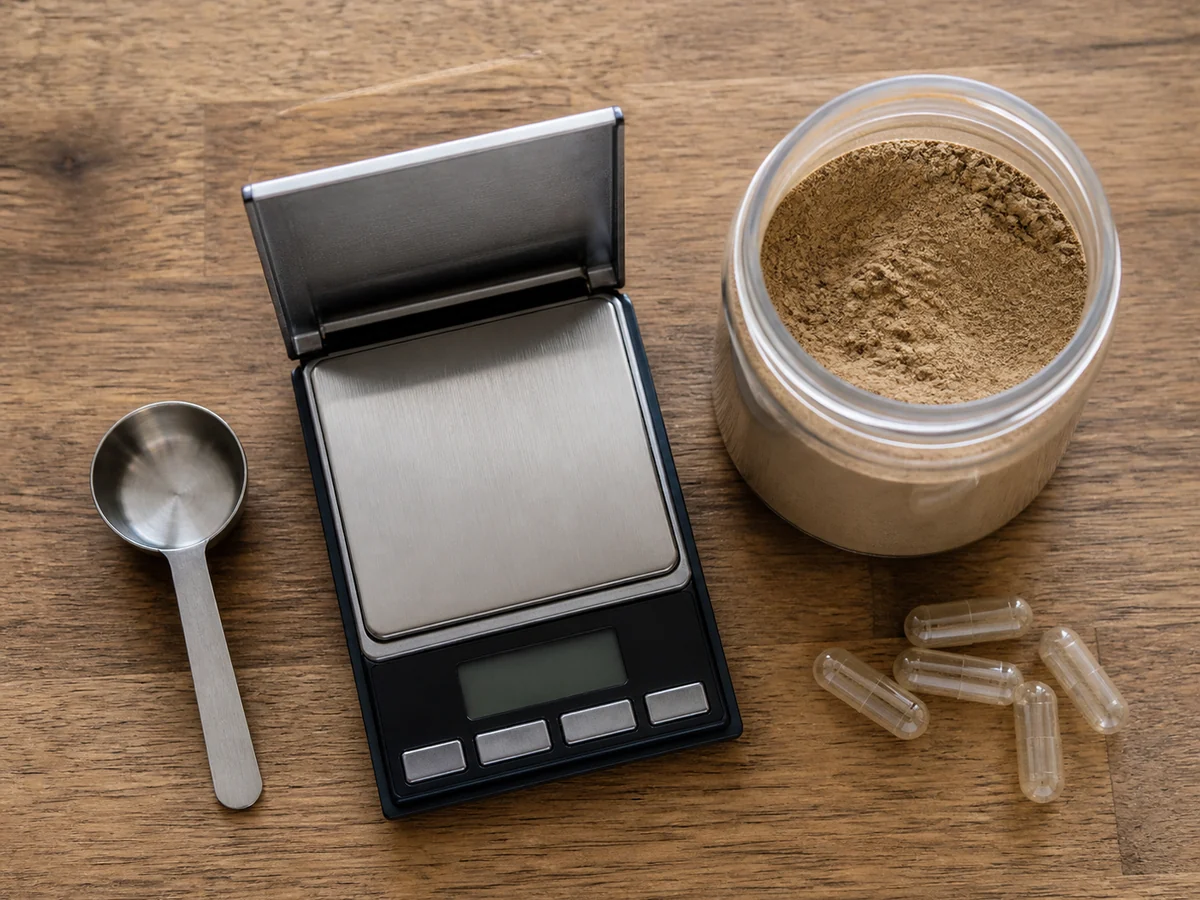
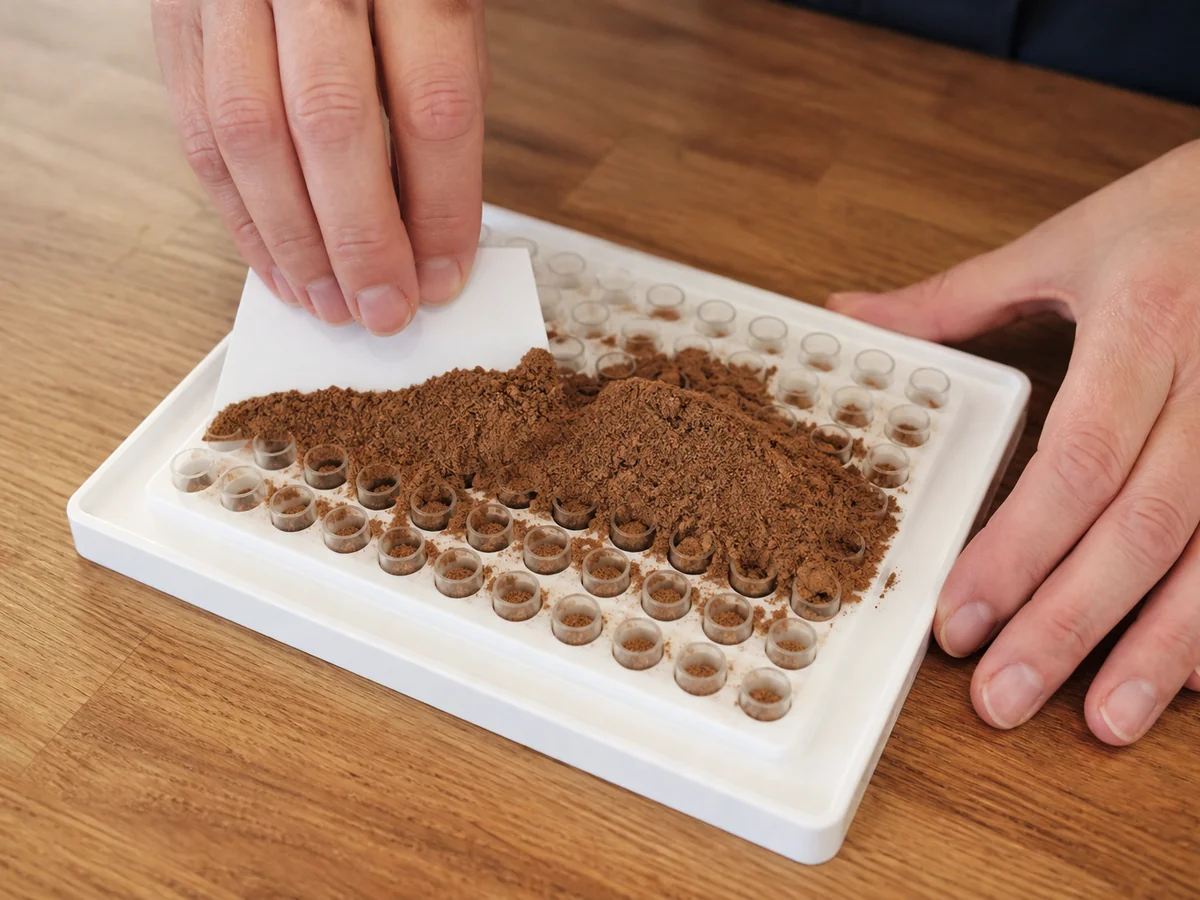
Acting on a weight-adjusted figure means weighing out an amount every day, which is possible with a loose powder and impossible with a capsule. Most people are taking capsules.
The place the simplification is least comfortable is the low end. A fixed amount aimed at an average adult is proportionally a larger amount for a small one, and a fixed amount is proportionally smaller for a large one without anybody noticing.
That does not make fixed dosing wrong. It makes it a rounding of a real variable, and worth knowing about if you sit a long way from the middle of the distribution.
There is one group where the rounding stops being cosmetic.
An amount worked out for adults is not a smaller amount for a child, it is a much larger one relative to their size, which is part of why none of these trials enrolled children and why nothing on this page is addressed to them.
When should you take a mushroom supplement?
Some of what gets said about timing has a mechanism behind it and some of it is invention, and the two are worth separating.

The trials that produced the quoted figures generally split the amount across the day. The cognition trial gave four tablets three times daily rather than twelve at once.
- Splitting an amount has a rationale where a compound clears quickly, and none where it does not
- Taking a preparation with food reduces stomach discomfort, which was reported by several participants in that same trial
- Consistency across weeks has more support than any hour of the day, because the trials ran for months
- Morning and evening recommendations for particular species do not appear in the protocols they claim to follow
The stomach point is the most practical one on this list. Mild discomfort and loose stools were reported in that trial by roughly half the treatment group, and by a similar share of the placebo group, so it is worth taking with food but not worth alarm.
Warning
If a preparation consistently causes discomfort at any amount, that is information rather than an obstacle to push through. What to do about it belongs under side effects rather than being solved by changing the hour you take it.
The honest summary is that timing is mostly about adherence. A habit attached to breakfast survives longer than one attached to nothing, and duration is the variable with actual support behind it.
Does taking more of it work better?
The instinct when something seems to be working slightly is to increase it, and the literature gives no support for that move.
No study in this area has established a dose response curve. Nothing shows that twice the amount produces twice the effect, or any effect, and the pooled analysis found modest results across a fifty-six fold range without a pattern connecting size to outcome.
What the trials do consistently show is that they ran for a long time. Six weeks, sixteen weeks, twenty-four weeks, with fixed amounts throughout.
Only the last of those four is entirely in your hands.
The cognition result fading four weeks after treatment stopped points the same way, since whatever was happening depended on continuing rather than on the size of each dose.
So the practical stance that follows from all of this is unglamorous. Stay inside the range that published trials have actually used, match the preparation to the trial you are citing, give it the duration the trials gave it, and write down what you took.
Writing it down means four things rather than one.
The species and the preparation, the amount in grams rather than in capsules, the date you started, and whatever you were hoping to notice. Without the last of those, three months later you have no way to judge the first three.
That last step is the one nobody does and the one that costs nothing. A number you wrote down is a number you can compare against next time, which is more than the jar was ever going to give you.
Sources & References
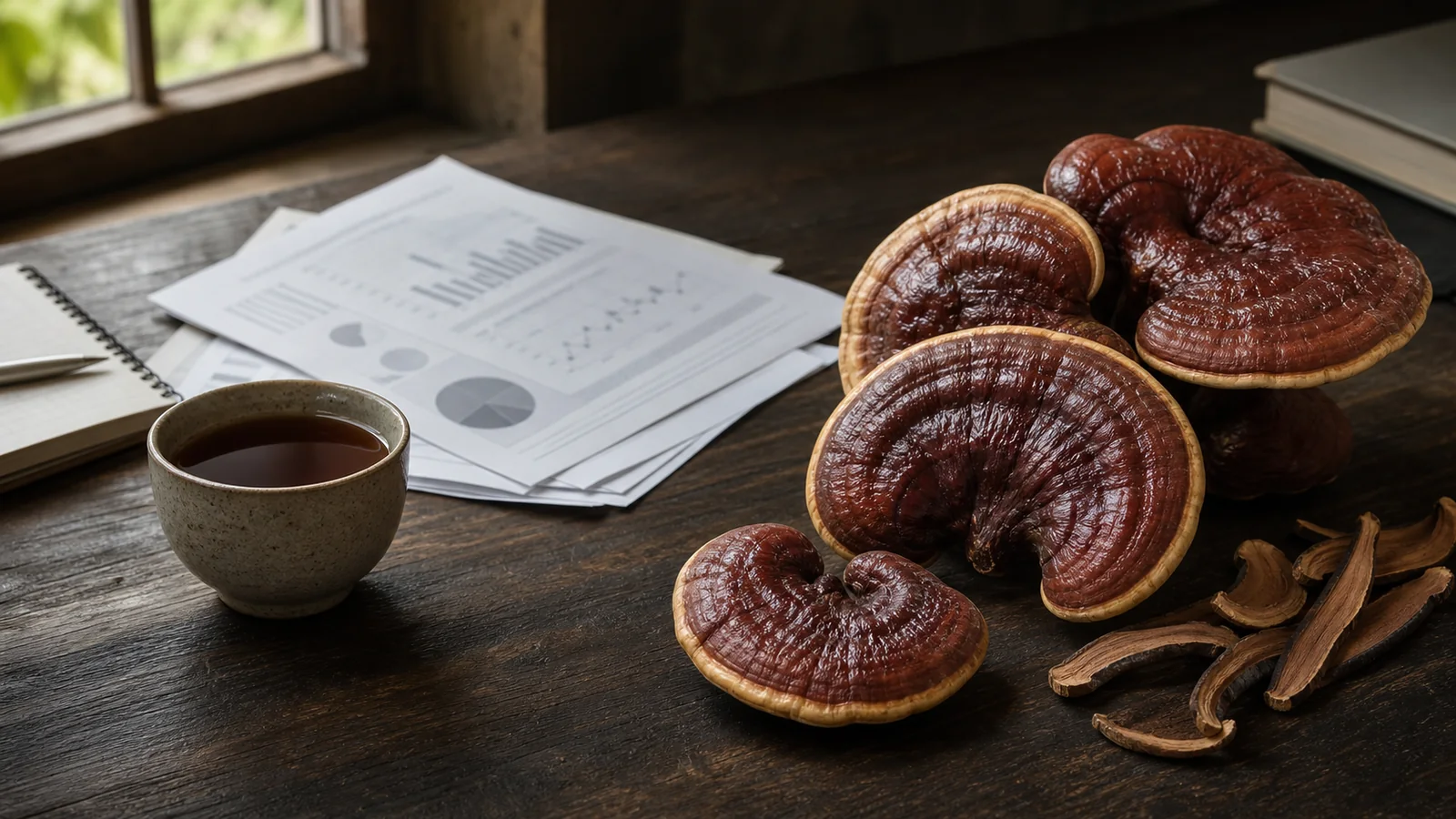
- The Nutritional Significance of Ganoderma lucidum on Human Health, a GRADE-assessed systematic review and meta-analysis, Food Science and Nutrition That seventeen trials covering 971 participants used doses from 200 to 11,200 milligrams a day over one to twenty-four weeks, with certainty rated very low across all outcomes.
- Improving effects of the mushroom Yamabushitake on mild cognitive impairment, Phytotherapy Research The 3 grams a day of dried powder given to thirty adults for sixteen weeks, and that scores had fallen back four weeks after treatment ended.
- A double-blind randomised placebo-controlled trial of Ganoderma lucidum for cardiovascular risk factors of metabolic syndrome, Scientific Reports The 3 grams a day given to eighty-four participants for sixteen weeks.
- Randomized placebo-controlled trial of a fermentation product of Cordyceps sinensis in healthy elderly volunteers, Chinese Journal of Integrative Medicine The 3 grams a day given to thirty-seven older adults for six weeks.
- A simple practice guide for dose conversion between animals and human, Journal of Basic and Clinical Pharmacy That conversion normalizes to body surface area, dividing a rat dose by 6.2 and a mouse dose by 12.3.
- US Food and Drug Administration, Questions and Answers on Dietary Supplements That supplements are not approved before marketing and that a printed serving size is a manufacturer decision.