An outcome-first audit of mushrooms and cardiovascular health, covering the pooled cohort risk ratio and the single-cohort result whose interval crosses one, the Korean cohort where the cardiovascular association appeared only in men and only below three servings a week, the one randomized feeding trial in which 84 grams a day for eight weeks left blood pressure unchanged, why ergothioneine is a plasma marker rather than an ingredient with a proven effect, and the two substitution levers, salt and meat, that the evidence actually supports.
Mushrooms have never been tested against a heart attack, and almost everything written about them and the heart comes from asking people what they ate.
That sounds like a dismissal and it is not one. There is a real signal here, it is small, and it points somewhere more useful than the shelf it usually gets used to sell.
The size of the signal, before anything else
Those four lines are the whole ceiling of the evidence, and everything below them is detail.
The first two numbers are about death from any cause, not about hearts specifically. The third and fourth are the ones that decide what a reader can honestly do with the rest.
Medicinal MushroomsLion's Mane Benefits: What Human Trials Actually FoundWhat the cohorts found, and where they stop
Nearly every heart claim made for mushrooms traces back to the same kind of study, so it is worth knowing what that kind of study is.

A prospective cohort asks a large group what they usually eat, waits years, and records who dies of what. Nobody is given anything and nobody is assigned to a group.
That design can find a pattern across hundreds of thousands of people. It cannot separate the mushrooms from the person who chose them.
Statistical adjustment removes what the researchers thought to measure and nothing else.
- People who eat mushrooms tend to eat more vegetables, and the adjustment for diet quality is only as good as the questionnaire behind it
- Mushrooms are more common in home cooking than in takeaway food, so the pattern may be tracking who cooks
- Reported intake is what somebody remembered on the day they were asked, not what they ate for the following decade
- Nobody can be blinded to whether they eat mushrooms, so belief about health cannot be separated from the behavior
None of that makes a cohort useless. It means a cohort produces a question worth testing rather than an answer.
| Study | What it covered | What it found |
|---|---|---|
| NHANES, 30,378 people, 6.7 years | 2,855 deaths, all causes | Hazard ratio 0.84, interval 0.67 to 1.06, not significant |
| Pooled meta-analysis, 5 cohorts | 601,893 people, all-cause death | Risk ratio 0.94, interval 0.91 to 0.98 |
| Korean cohort, 152,828 people, 11.6 years | 7,085 deaths, cause-specific | Lower cardiovascular death in men only, at lower intakes |
Read the first row before the second one, because it is the row that usually gets left out.
The authors' own cohort did not reach significance. The interval ran from 0.67 to 1.06, and 1.06 is a slightly higher risk, so that dataset alone is compatible with a benefit, with nothing, and with a small harm.
The pooled figure of 0.94 is the one that travels. It means roughly six percent lower relative risk of dying of anything, in people who reported eating mushrooms, compared with people who reported eating fewer.
Six percent relative is not six percent of a person's risk. It is six percent of whatever their risk already was, which for a healthy forty-year-old is a very small number made slightly smaller.
Blood lipids are a separate question with its own trials, and they have their own page on mushrooms and cholesterol.
More was not better
The Korean cohort is the largest study here and the one with the most interesting shape, which almost nobody reports.
- Size
- 152,828 participants aged 40 and over, followed a mean of 11.6 years
- Deaths
- 7,085 recorded from national death records
- Cardiovascular death, men
- Hazard ratio 0.767 under one serving a week, 0.762 at one to three servings
- Cardiovascular death, women
- No association found at any intake level
- Three or more servings a week
- No association in either sex, for cardiovascular death
The middle of the range is where the finding lives.
Men eating mushrooms less than once a week, and men eating them one to three times a week, had lower cardiovascular mortality than men eating none. Men eating them three or more times a week did not.
That is not the shape of a dose that works. A substance that lowered cardiovascular risk would normally show more effect at more exposure, not less.

There are ordinary explanations for a shape like that. The highest-intake group may be small enough that the estimate is unstable, or may differ from the others in ways the adjustment did not capture.
The point is not that the finding is wrong, but that a page telling you to eat more mushrooms for your heart is not reading the study it is citing.
The women's result deserves the same care. The same cohort found lower all-cause mortality in women at the same two intake levels, and no cardiovascular association in women at all.
Medicinal MushroomsWhich Reishi Benefits Hold Up in Human Studies?The one trial that measured blood pressure
Cohorts describe, while a randomized trial gives people the food and watches, which is the only design that can say a mushroom did something.

One such trial exists for this question, and it was generous in every way that matters.
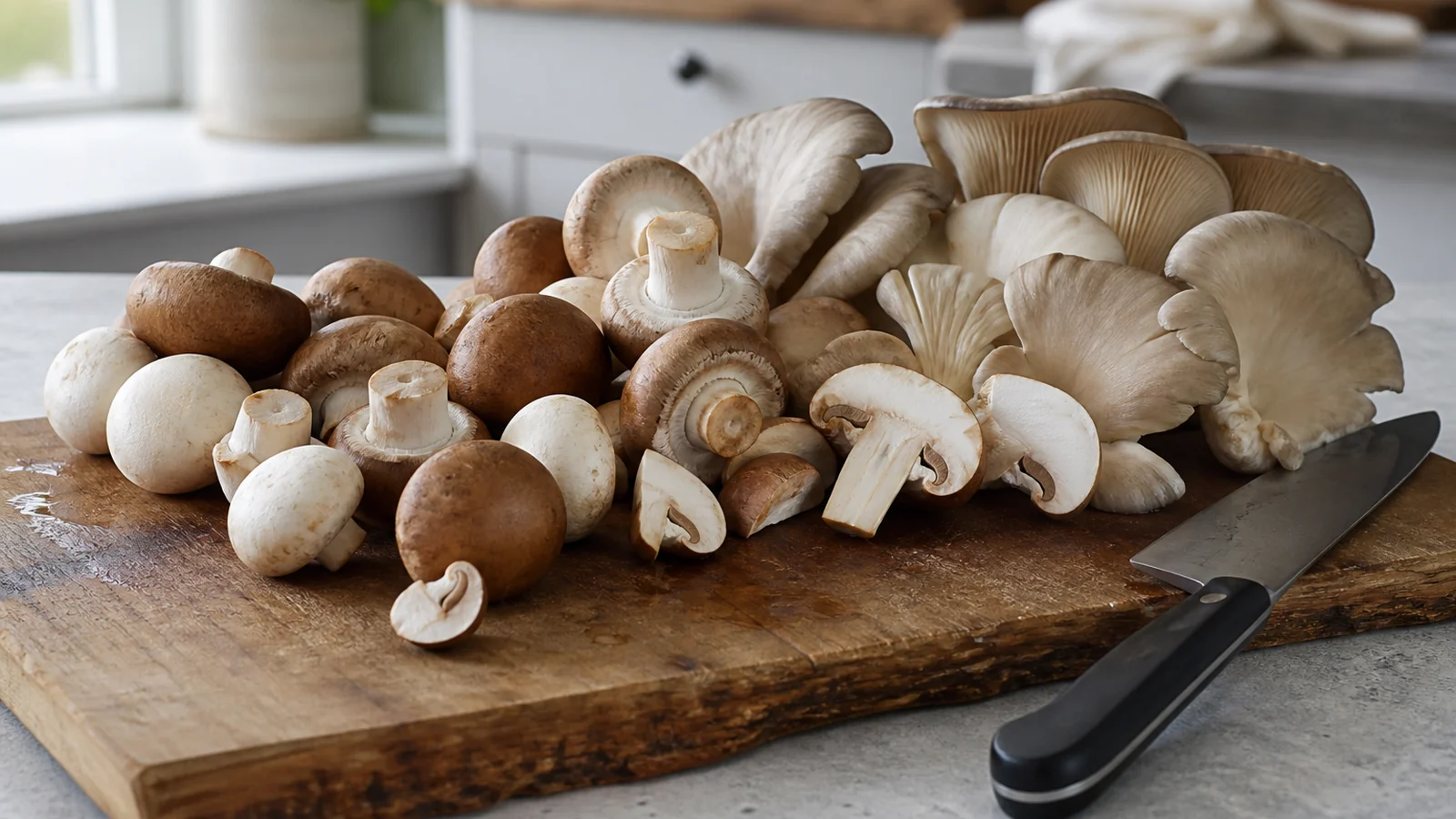
Sixty adults were put on a Mediterranean-style eating pattern with all food provided for eight weeks. Half also received 84 grams of mushrooms a day, white button on four days and oyster on three, and half received breadcrumbs instead.
Warning
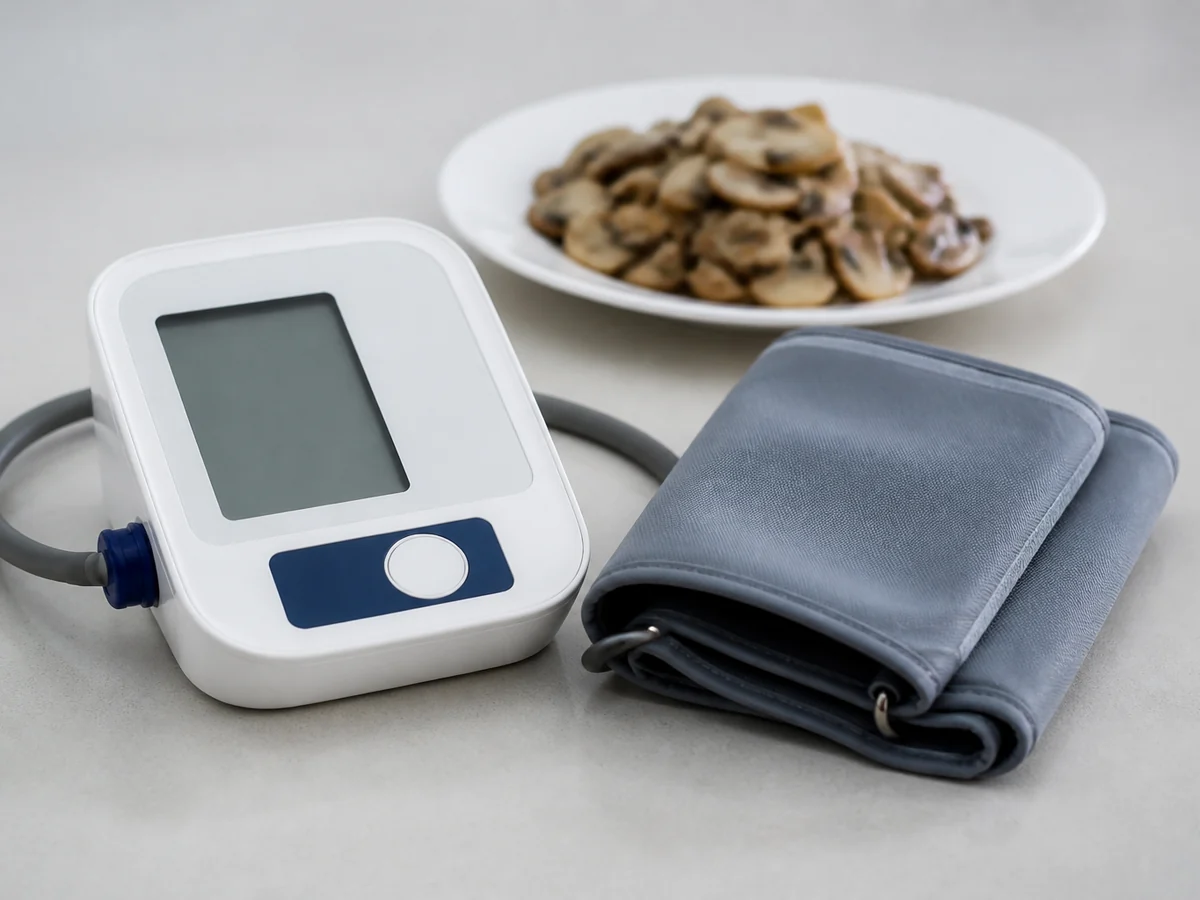
One outcome improved in the mushroom arm and it was fasting glucose, by minus 2.9 against plus 0.6 milligrams per deciliter. Blood pressure did not differ between the arms. Neither did fasting lipids, lipoproteins or insulin. The authors concluded that mushrooms did not influence the other established or emerging cardiometabolic risk factors they measured.
The glucose result is real and it is not a heart result, so it should not be reported as one.
The rest of the trial is worth reading for a different reason. The Mediterranean pattern itself lowered total cholesterol by 10.2 milligrams per deciliter in both arms, mushrooms or no mushrooms.
It also lowered HDL cholesterol and apolipoprotein A1 and raised lipoprotein(a), which is a reminder that even a well-regarded diet moves several markers at once and not all of them in the direction you want.
A null result in sixty people needs reading carefully in the other direction too.
Sixty people can detect a large effect and can easily miss a small one. What this trial rules out is a blood pressure change big enough to matter over eight weeks, not every conceivable effect.
That is still the honest position. A food that has not been shown to move blood pressure in the one trial designed to check should not be sold as something that moves blood pressure.
Eight weeks is short and sixty people is not many, so this is one trial rather than a settled answer. It is still the only interventional answer anyone has, and it says the thing most pages leave out.
The second species in that trial was the oyster mushroom, which is the one that appears most often in the older lipid work as well.
Medicinal MushroomsMushrooms for Brain Health, Ranked by EvidenceErgothioneine is a marker, not a dose
Every enthusiastic page about mushrooms and the heart arrives at this compound, usually within two paragraphs of a purchase link.

The study behind the reputation is good and it is not the study people think it is.
The authors were explicit about what they had found. Ergothioneine was the metabolite most strongly connected to a health-conscious eating pattern, and they described it as a marker of that pattern.
A marker and a cause are different things. A compound that appears in the blood of people who eat well will predict the outcomes of people who eat well, whether or not the compound is doing any of the work.
Mushrooms are the richest dietary source of it, which is why the two subjects got welded together in the first place.
Welding them together is where the trouble starts. The gap between a marker and a cause is not a technicality, and it has a track record.
- Higher blood beta carotene predicted lower lung cancer rates in observational studies, exactly as ergothioneine predicts lower cardiovascular risk here
- When 18,314 people at high risk were randomized to take it as a supplement, the trial was stopped 21 months early with 28 percent more lung cancers and 17 percent more deaths in the treated group
- The marker was real, the vegetables it came from were fine, and the isolated compound turned out to be a different intervention altogether
That fact makes mushrooms a good reason to eat mushrooms, and it does not make an isolated compound a treatment.
If a reader decides to buy something anyway, what a label declares is a separate subject covered under powder and extract, and the verification method sits with choosing a supplement.
The lever is what the mushroom replaces
Here is the part of this evidence base that actually holds up. It is not about anything inside the mushroom.
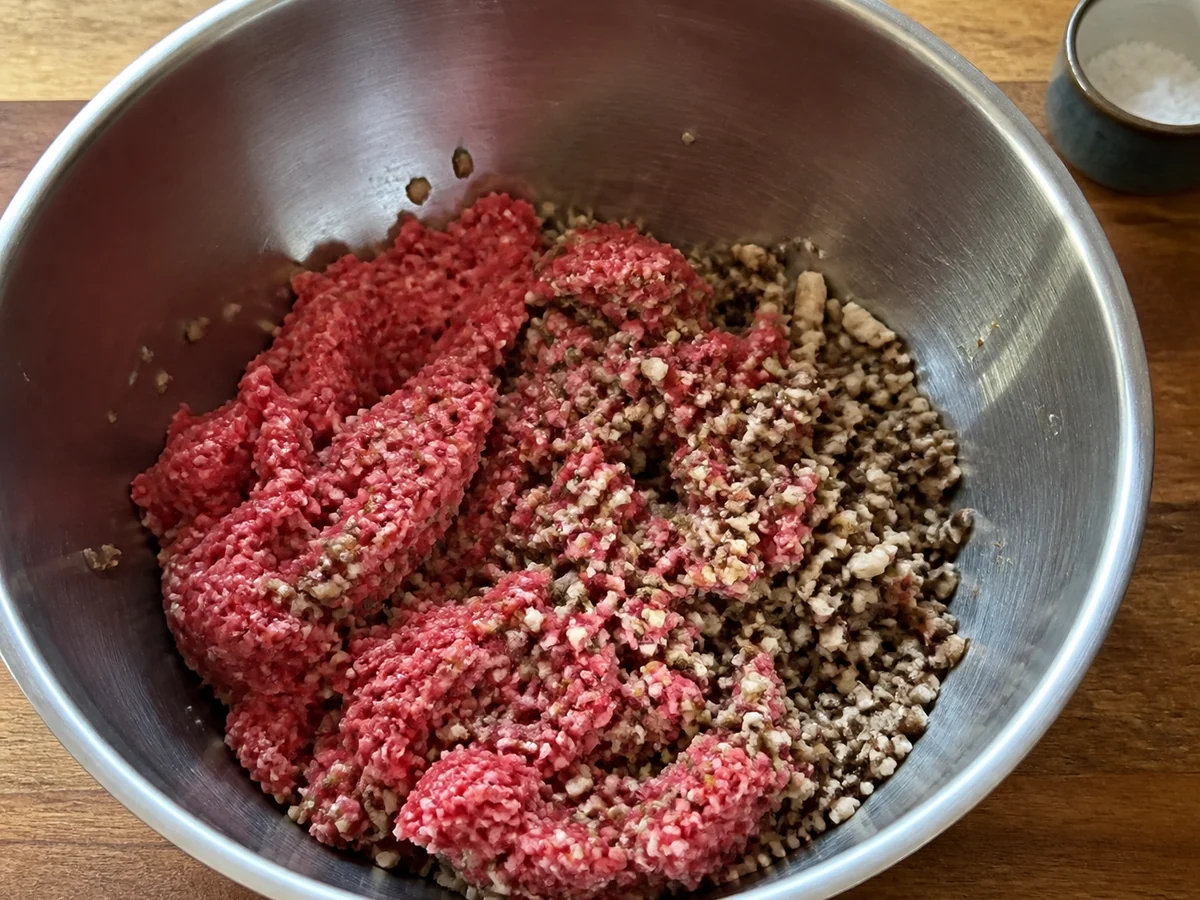
Salt is the first lever. It also has the better evidence of the two.
Cutting salt makes food taste worse, which is why most salt reduction fails. Umami, the savory taste mushrooms carry in quantity, partly restores what the salt was doing.
A blinded randomized experiment across nineteen regions of Japan had 584 people rate salt solutions at three concentrations, with and without added glutamate, on a visual analog scale.
| Solution | Saltiness rating | Palatability |
|---|---|---|
| 0.3 percent salt, no glutamate | Lowest of the three | Low |
| 0.3 percent salt, with glutamate | Rated significantly saltier than the same solution without | Twice as high, and highest of all six solutions |
| 0.9 percent salt | Highest | Lower than the low-salt solution with glutamate |
The finding held across sex, age and region, and the authors concluded that umami can carry a cut from 0.9 to 0.3 percent salt without losing palatability.
One step in that argument is an inference rather than a measurement, and it should be visible.
- The trial added purified glutamate to salt solutions, and it did not test mushrooms
- Mushrooms carry free glutamate naturally, which is the reason they taste savory, and dried ones carry more of it than fresh
- What transfers cleanly is the principle that umami restores palatability at low salt
- What has not been measured is how much salt a given weight of mushrooms lets a given dish lose
So the mechanism is supported and the exact exchange rate is not. That is a smaller claim than the one usually made and it is the one the evidence carries.
Three of that study's authors are employed by a glutamate manufacturer, which is disclosed in the paper and belongs beside the result rather than in a footnote.
That is a real conflict and it is not a reason to discard a blinded randomized tasting experiment with 584 participants. It is a reason to want the finding replicated by people with nothing to sell.
Meat is the second lever and the evidence for it is culinary rather than clinical.
A food-science comparison put white button mushrooms against textured soy as extenders in reduced-sodium beef patties. The mushroom version held sensory liking closer to the all-meat control than the soy version did, at substitution levels where the physical properties still behaved like meat.
That is a study about whether people will eat the thing, which is the step every dietary change actually fails at. In both cases, the white button mushroom replaces part of another food in the meal.
Neither lever requires a species, a supplement or a number. Both of them work through the food that comes off the plate rather than the food that goes on it, and mushroom nutrition facts explain why the swap costs so little.
What this changes, and what it does not
Set against the way this subject is usually written, the honest summary is short.
Pay particular attention to that last limitation.
Blood pressure and lipid targets are set against a whole clinical picture, and nothing in this evidence base is strong enough to sit anywhere near that decision.
A food change does not need permission. A medication change is not a food change.
A prescribed dietary restriction requires individual advice. Somebody with kidney disease, or on a potassium-restricted diet, is working under rules that override general dietary advice, and mushrooms carry a fair amount of potassium.
Follow your prescribed dietary restriction even when general nutrition advice suggests a different choice.
A prescription is the other kind of specific restriction. Anyone already taking cardiovascular medicine and thinking about a concentrated product should read the documented drug interactions first, and the recorded side effects alongside them.
The plainest version of all of this fits in a sentence. Eat mushrooms because they let you cook with less salt and less meat, and expect nothing from them beyond that.
Everything above rests on six published studies, and they are worth naming together so the weight of each one is visible.
Sources & References
- Prospective study of dietary mushroom intake and risk of mortality, Nutrition Journal 2021 The NHANES hazard ratio of 0.84 with its interval of 0.67 to 1.06, and the pooled risk ratio of 0.94 across 601,893 people in five cohorts.
- Edible mushroom intake and risk of all-cause and cause-specific mortality, Food and Function 2023 The Korean cohort of 152,828 participants, the cardiovascular hazard ratios in men, and the intake levels and sex where the association did not appear.
- Consuming Mushrooms When Adopting a Healthy Mediterranean-Style Dietary Pattern, The Journal of Nutrition 2024 The randomized design, the 84 grams a day for eight weeks, the fasting glucose result, and the absence of any difference in blood pressure, lipids, lipoproteins or insulin.
- Ergothioneine is associated with reduced mortality and decreased risk of cardiovascular disease, Heart 2020 The plasma metabolite design, the 21.4 year follow-up, the hazard ratios per standard deviation, and the authors' description of it as a dietary marker.
- Validation of preferred salt concentration in soup, Hypertension Research 2020 The blinded randomized tasting design in 584 participants, the saltiness and palatability results at reduced salt, and the manufacturer employment disclosed by three authors.
- Sodium reduction strategies through use of meat extenders in beef patties, Food Science and Nutrition 2019 That mushroom-extended reduced-sodium patties held sensory liking closer to the all-meat control than the textured soy version did.
- Risk factors for lung cancer and for intervention effects in CARET, Journal of the National Cancer Institute 1996 The 18,314 participants, the early stop, and the 28 percent more lung cancers and 17 percent more deaths in the group given the supplement, cited as a precedent for reading a marker as a cause.