Cook only whole Cordyceps militaris fruiting bodies sold as food. Fresh orange clubs need a brief rinse and two to four minutes in a hot pan, while dried fruiting bodies need a ten-to-twenty-minute soak before dry cooking or a fifteen-to-twenty-minute simmer in broth.
The useful answer starts on the package, not at the stove. Whole orange Cordyceps militaris fruiting bodies are food, while a capsule, extract, or unidentified powder follows a different set of directions.
Fresh fruiting bodies need brief heat. Dried ones need water first unless they are going straight into broth, and neither form benefits from being treated like a thick supermarket mushroom.
Which cordyceps can you actually cook?
Cordyceps is a commercial name spread across species and products that do not behave alike.
The words whole fruiting body are the kitchen test because they identify a physical fungus you can rinse, cut, and cook.
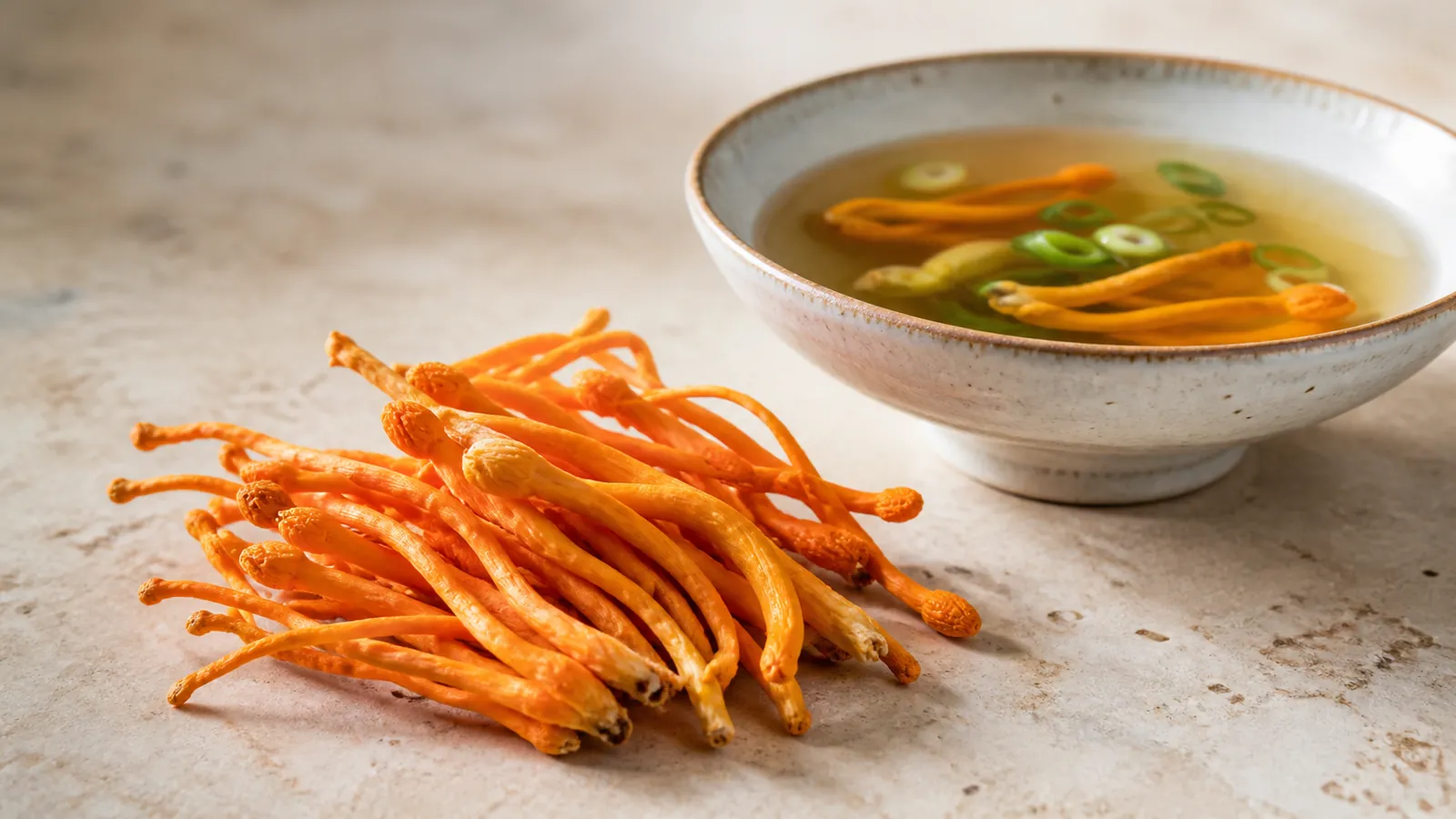
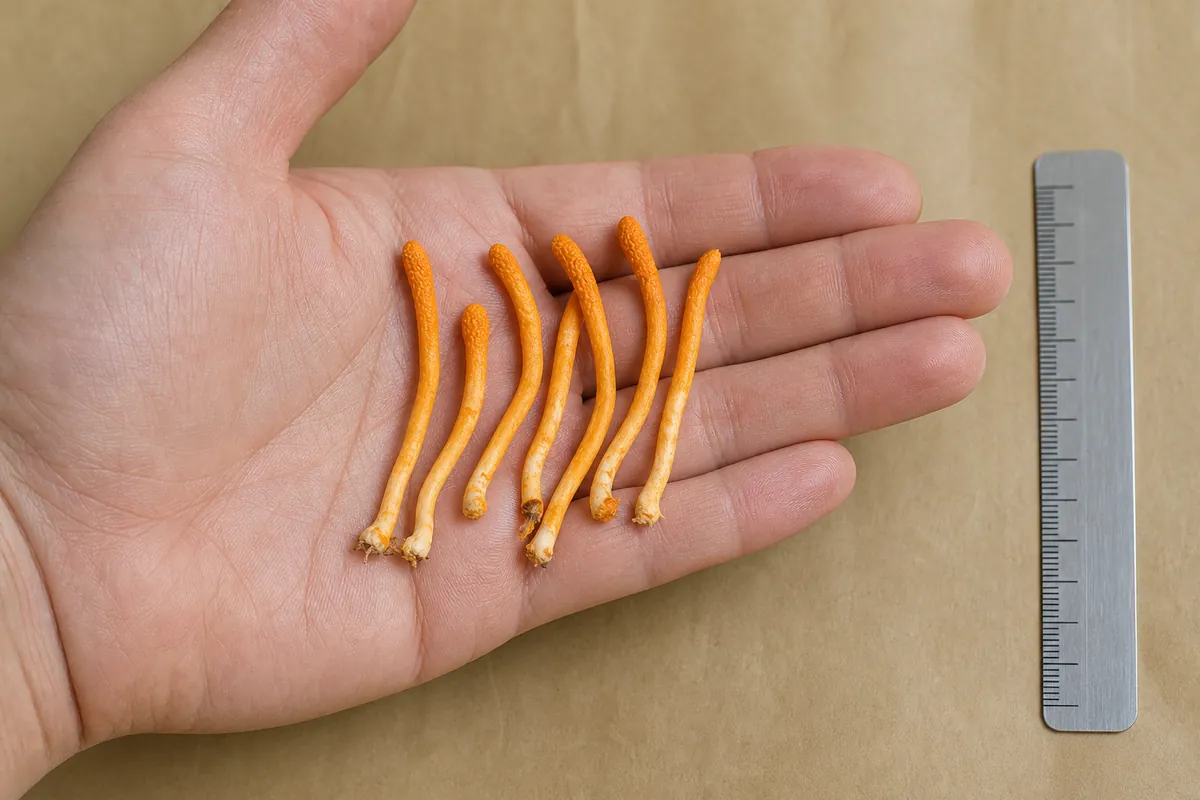
Cultivated C. militaris looks like a bundle of narrow orange clubs, usually a few centimeters long. It is the fruiting-body form most likely to appear in a produce case, a clear bag, or a tray from a specialty grower.
Wild Ophiocordyceps sinensis is a different species sold as a dried caterpillar-shaped body with a dark stalk. It is scarce, costly, and associated with traditional preparations, so directions for orange cultivated fruiting bodies should not be transferred to it.
Powders create the hardest label problem. A jar may contain ground fruiting body, mycelium grown on grain, a concentrated extract, or a blend, and orange color is no longer available as a clue.
China approved C. militaris as a food resource in 2009, and modern food studies cook the cultivated fruiting bodies by several methods.
That evidence supports their culinary use, but the ingredient list still decides what is inside a particular package.
When a label names only cordyceps and gives supplement serving directions, keep it away from the cutting board. Cooking cannot resolve an identity the manufacturer did not disclose.
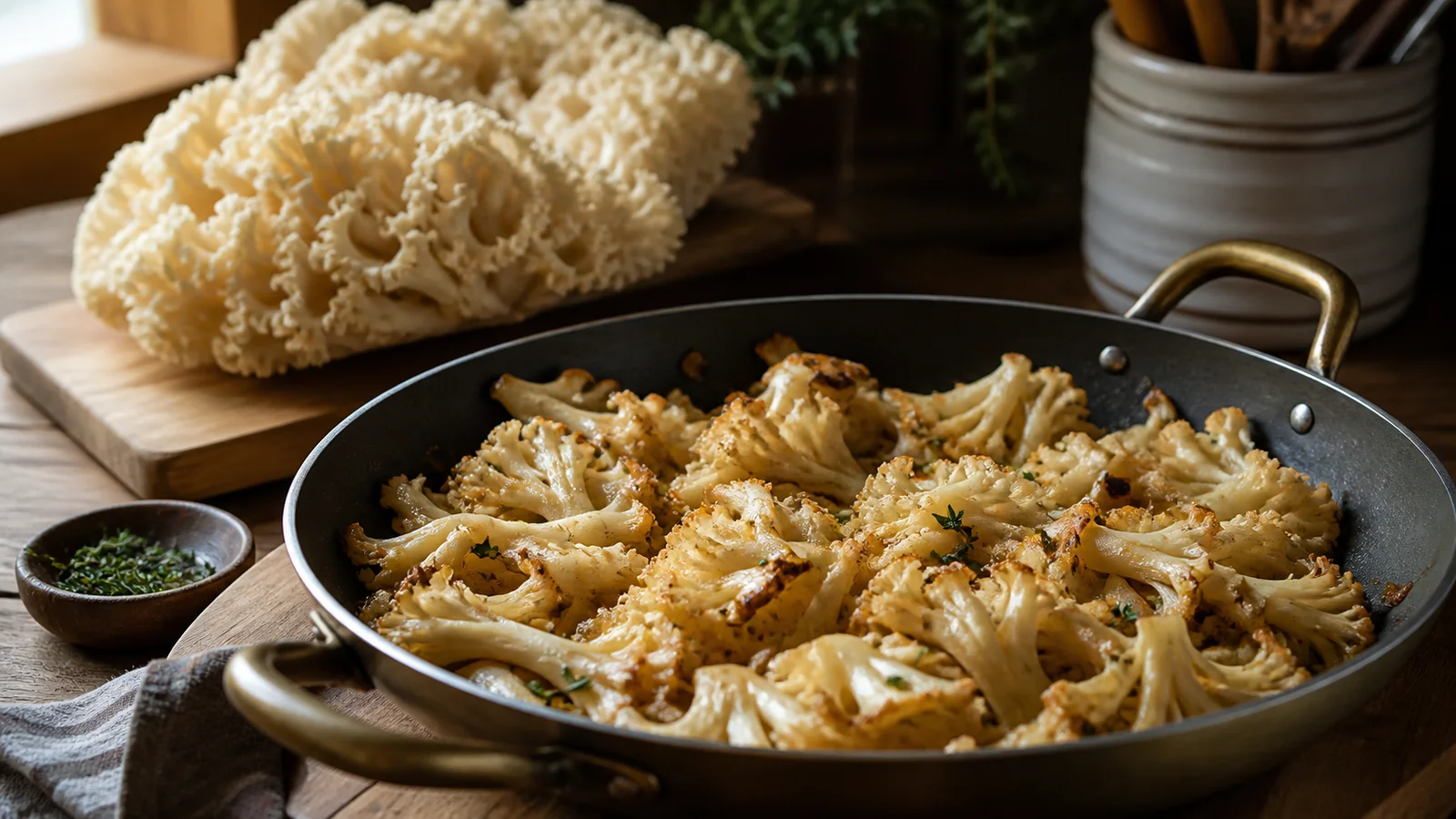
Cooking MushroomsHow to Cook Cauliflower Mushroom Without Trapping GritWhat fresh and dried cordyceps need
Fresh and dried fruiting bodies begin with the same species and reach the pan as different materials. Fresh clubs bend and hold water, while dried clubs are light, stiff, and more concentrated in aroma.
The distinction changes preparation more than flavor. Fresh fruiting bodies can go from a brief rinse to a hot pan, while dried ones snap if you try to toss them before they have taken up water.
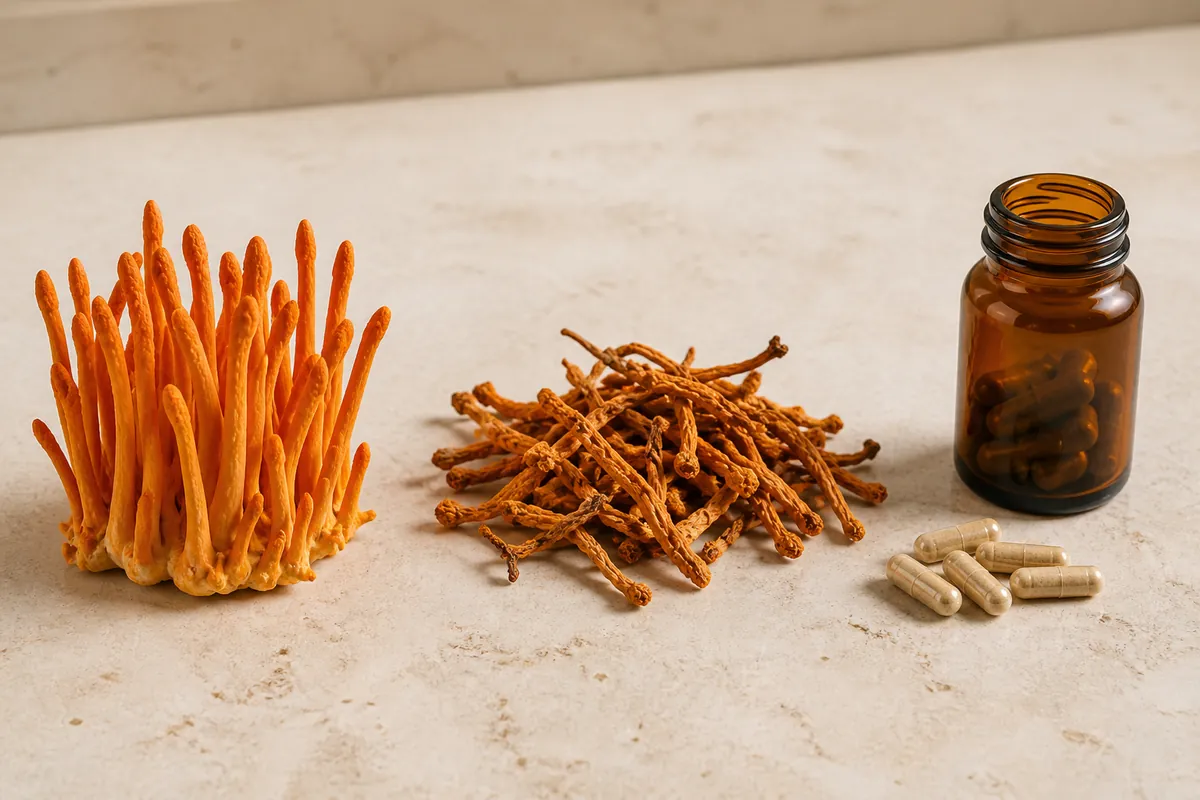
Before you buy, use three package checks to separate cookable fruiting bodies from supplements:
- The species line should name Cordyceps militaris when the package contains orange cultivated fruiting bodies.
- The ingredient line should say whole fruiting body without an extract ratio or added blend.
- The contents should be dry or properly chilled, clean-smelling, and free of damp clumps or fuzzy growth.
Fresh material gives a tender snap and a quieter aroma. Drying trades that snap for a firmer strand and a slightly deeper savory smell, which is why dried cordyceps fits a simmer better than a fast bare pan.
A bag of dried clubs also stores differently from a fresh tray.
Detailed keeping times belong with storage advice, but the immediate rule is simple enough for dinner, keep fresh fruiting bodies cold and dry, and keep dried ones sealed away from humidity.
Start by cleaning the form you bought
Fresh cultivated cordyceps usually arrives cleaner than a wild mushroom because it fruits in a controlled room. The part that needs attention is the pale compacted base where the cluster met its grain medium.
Trim that base with one shallow cut, then separate the orange clubs with your fingers. The rest of each fruiting body is edible, so peeling or scraping only throws away the slender part you bought.

Fresh clusters need only a quick cleaning sequence:
- Brush away loose grain or husk at the base before water touches it.
- Rinse briefly in cool water if grit remains between the clubs.
- Shake well and pat dry before a pan, because trapped water turns a saute into a steam.
Fresh cordyceps needs a rinse rather than a soak. The narrow clubs absorb water quickly, and a long bath costs the slight resistance that makes the fresh form worth seeking.
Note
Rinse dried whole fruiting bodies before soaking them. Do not wash powders, extracts, or capsules, since those products are outside this cooking method.
Inspect the smell while the package is open. A mild mushroom or grain aroma is normal, while mustiness, sourness, damp matting, or fuzzy growth means the product should be discarded.
When one club split lengthwise shows a wet translucent center or a dark mushy base instead of a firm, evenly colored interior, the problem is deterioration rather than an extra trimming step.
Rehydrate dried cordyceps before the pan
Dried cordyceps can enter a soup dry because the broth supplies both water and heat. A stir-fry, omelet, or steamed plate needs a separate soak so the mushrooms soften before the short cooking period begins.
Warm water speeds the change without extracting every bit of flavor before cooking. Boiling water works faster, but it can make the outside soft while a thick cluster base remains stiff.
For dried clubs, the bend test matters more than the clock.
Very thin dried clubs may soften in ten minutes, while dense bundled pieces can take twice as long.
The soaking liquid carries soluble flavor and orange pigment. Pouring it through a fine strainer keeps the useful liquid and leaves grit at the bottom, but discard it if the original package smelled stale or musty.
Dried clubs meant for soup can skip this process and simmer directly for about fifteen to twenty minutes. Give them enough time to become pliable, then stop before the strands lose their shape and disappear among noodles or shredded vegetables.
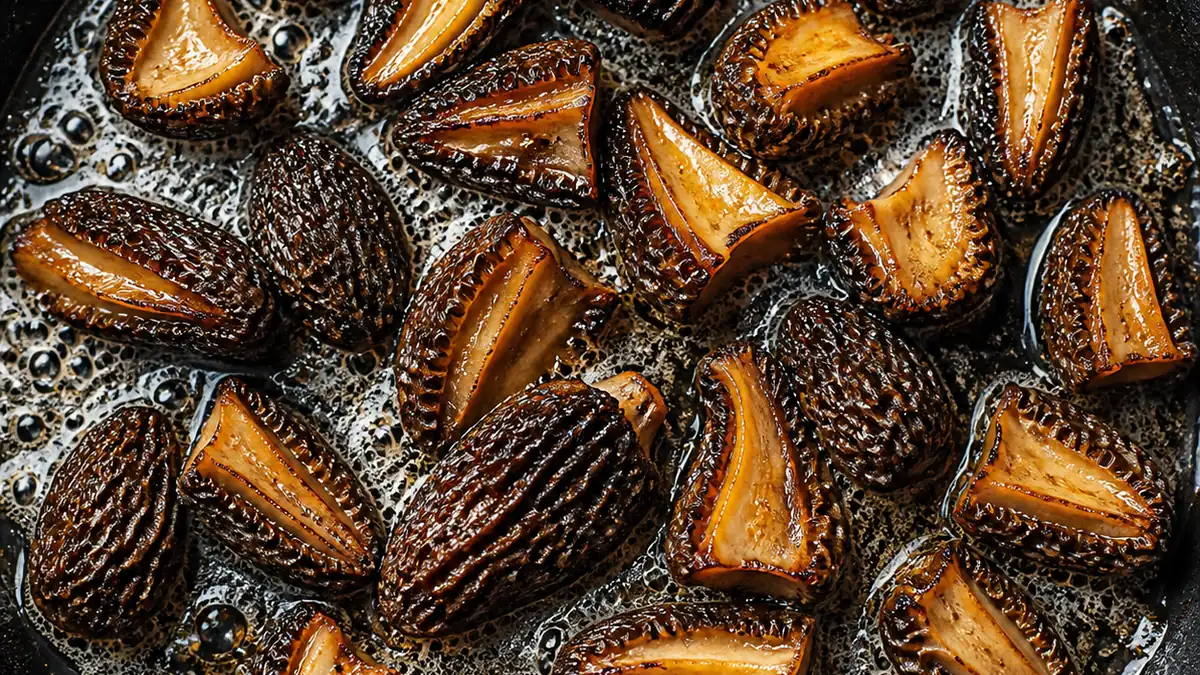
Cooking MushroomsHow to Cook Black Morels: Halve Them, Never Slice ThemChoose heat for the result you want
Cordyceps rewards a restrained method because the fruiting bodies are narrow.
A few minutes can heat a fresh club through, while a long simmer exists mainly to rehydrate a dried one.
| Method | Best form | Working time | Result |
|---|---|---|---|
| Hot pan | Fresh, or soaked and dried | 2 to 4 minutes | Light browning and a tender snap |
| Steam | Fresh, or soaked | 5 to 8 minutes | Soft texture and clear orange color |
| Soup or broth | Dried | 15 to 20 minutes | Pliable strands and savory liquid |
| Rice or congee | Dried, soaked | Add for the final 10 minutes | Soft clubs that keep their outline |
For a pan, heat a thin film of neutral oil until it moves easily, then spread the mushrooms rather than piling them. Leave them alone for the first minute, toss once, and add garlic, ginger, or a small amount of soy near the end.
Fresh cordyceps does not release a puddle like a thick cap mushroom, so the visual cue is subtle. The orange deepens slightly, the surface turns glossy, and the clubs bend without feeling limp.
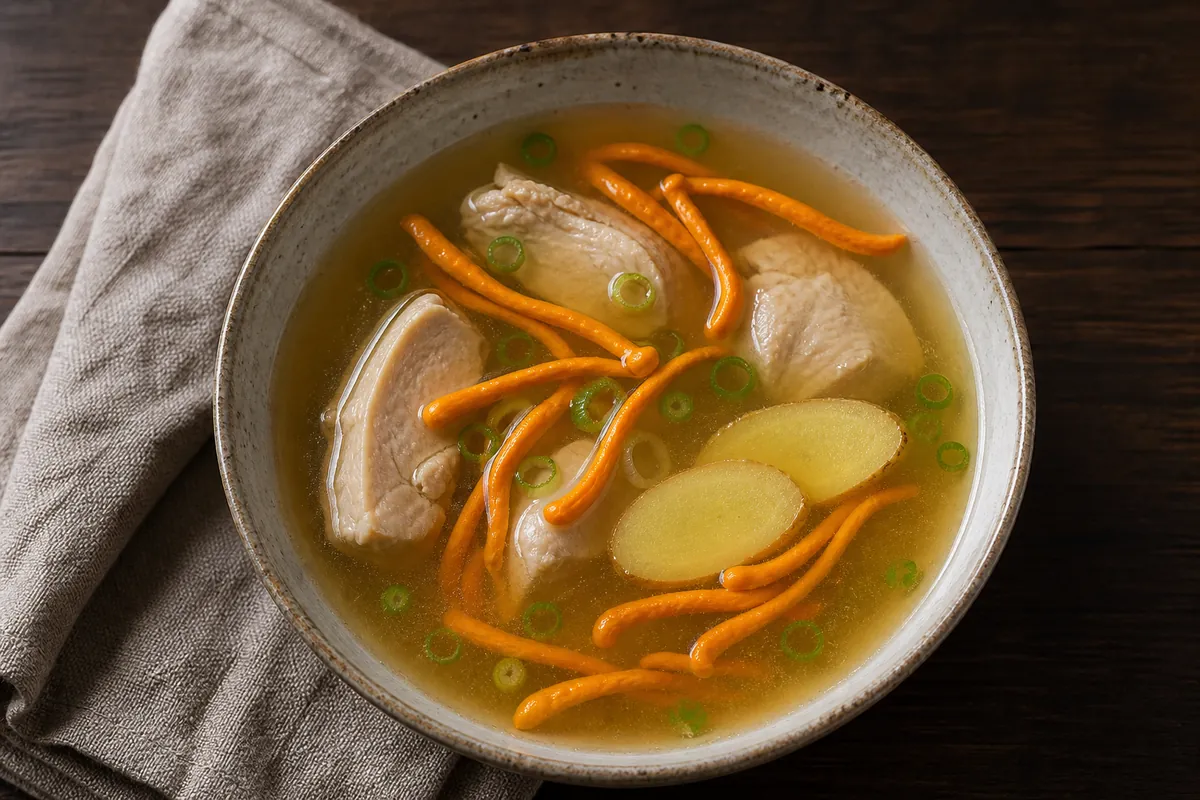
Steaming deserves more attention than it usually gets. A 2024 study compared boiling, steaming, roasting, microwaving, and deep-frying, and its sensory panel preferred the steamed samples while deep-fried cordyceps ranked last.
Rather than making steaming mandatory, the result shows that a moist, moderate method fits the ingredient better than a hard fry when pleasant texture and flavor are the goals.
Overcooked clubs flatten, fray at the tips, and lose their slight chew. At that point extra heat adds no browning worth having, so remove fresh cordyceps while it still keeps a distinct shape.
Cordyceps belongs in quiet dishes
The flavor is mild, savory, and faintly sweet, with less earthy depth than shiitake or porcini. Its color and slender texture often make a larger contribution to the dish than its aroma.
That makes restrained partners the useful ones:
- Clear chicken, pork, or vegetable broth with ginger and scallion.
- Soft eggs, steamed egg custard, tofu, or mild white fish.
- Rice, congee, noodles, or greens finished with a small amount of light soy.
In a finished dish, let the orange clubs stay visible. A dark reduced sauce, heavy smoke, or a thick coat of chili oil can bury the ingredient so completely that a less expensive mushroom would do the same work.
Texture determines when cordyceps joins a mixed dish. Put fresh clubs into a stir-fry after dense vegetables have softened, and add soaked dried clubs after the sauce is mostly built.
Once the ingredient is paired, three common combinations still fail for practical reasons:
- A long red braise softens the strands past recognition before the meat is ready.
- A crowded wok traps steam and removes the light browning from fresh clubs.
- A cream sauce covers the color and asks for a stronger mushroom flavor than cordyceps provides.
Quantities depend on the dish. A small handful can show clearly in broth while the same amount disappears among noodles, so scale the ingredient by visibility and texture.
If whole fruiting bodies are unavailable, substitution should follow the job in the dish. Enoki can copy the slender shape in a broth, while a mild oyster mushroom comes closer to the tender savory bite in a pan.
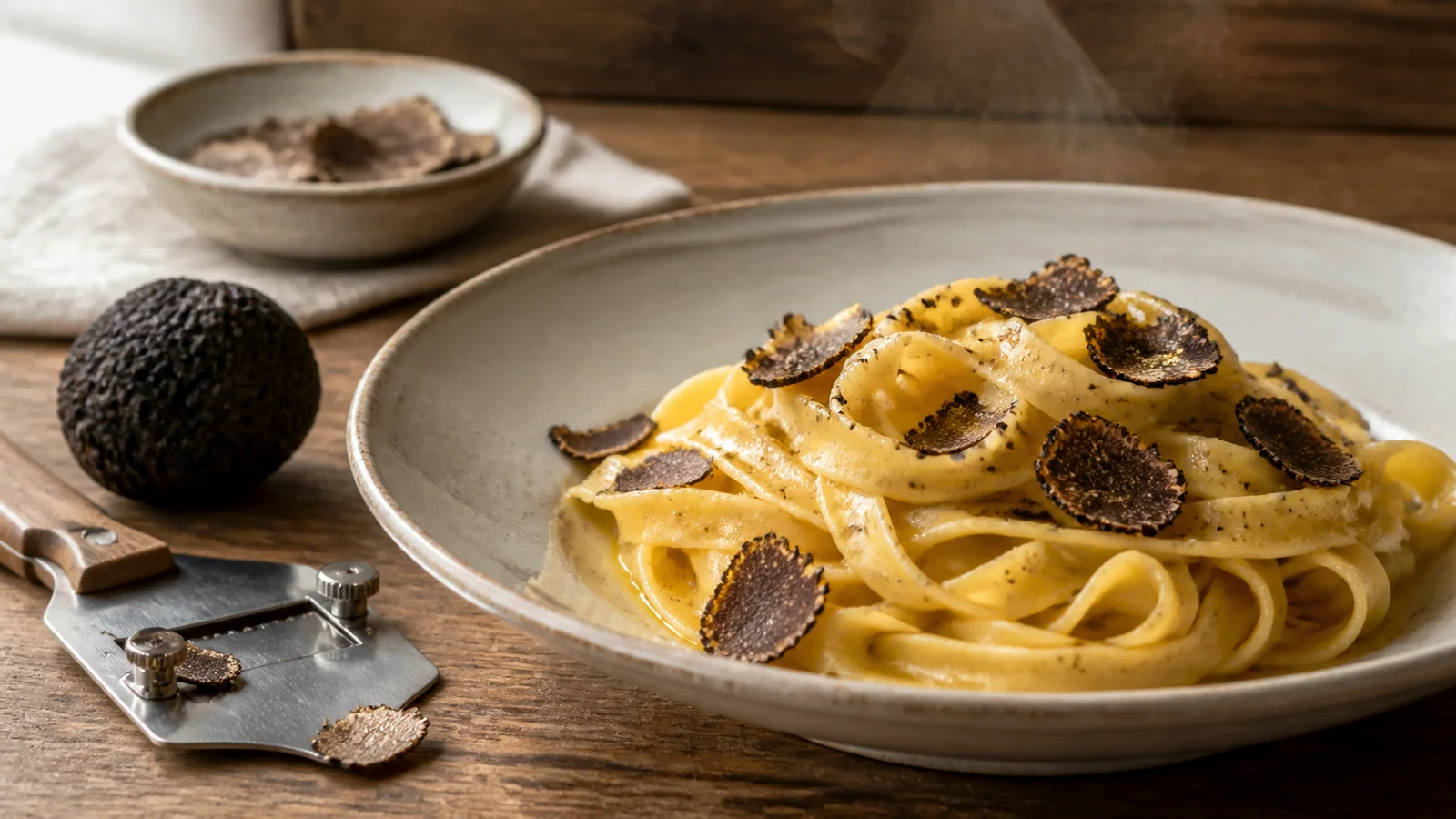
Cooking MushroomsHow to Cook Black Truffle Without Losing Its AromaCooking changes the ingredient, not the evidence
Because people often ask which method protects cordyceps compounds, the honest answer from cooking research is that each method changes a different set of measurements and no single technique preserves everything.
The 2024 comparison found less measured cordycepin after boiling, while roasted samples stayed closer to raw ones for that compound. Steaming won the sensory preference, which means the method people liked best was not the method that preserved every laboratory value best.
That distinction prevents a kitchen choice from becoming a health promise. A higher post-cooking measurement does not prove a clinical benefit from one serving, and nutrition totals belong in their own analysis rather than being guessed from a pan.
The study supports a practical choice because steaming is gentle, boiling moves water-soluble material into the liquid, and broth keeps that liquid in the dish instead of sending it down the drain.
This is also why the soaking water can be useful in food. It carries flavor and soluble material, but calling it a therapeutic dose would go beyond what the cooking evidence establishes.
Choose among pan, steam, and broth for texture, flavor, and the dish in front of you because no method turns an ordinary portion into a treatment.
Do cordyceps have to be cooked?
Cook fresh cordyceps before serving it. The recommendation rests on food quality and ordinary handling safety, not on a proven cordyceps toxin that heat must destroy.
Food studies use raw C. militaris as a comparison sample, but that does not establish raw fruiting bodies as a normal ready-to-eat food. Commercial cultivation, packing, transport, and handling still create the same hygiene questions that apply to other perishable mushrooms.
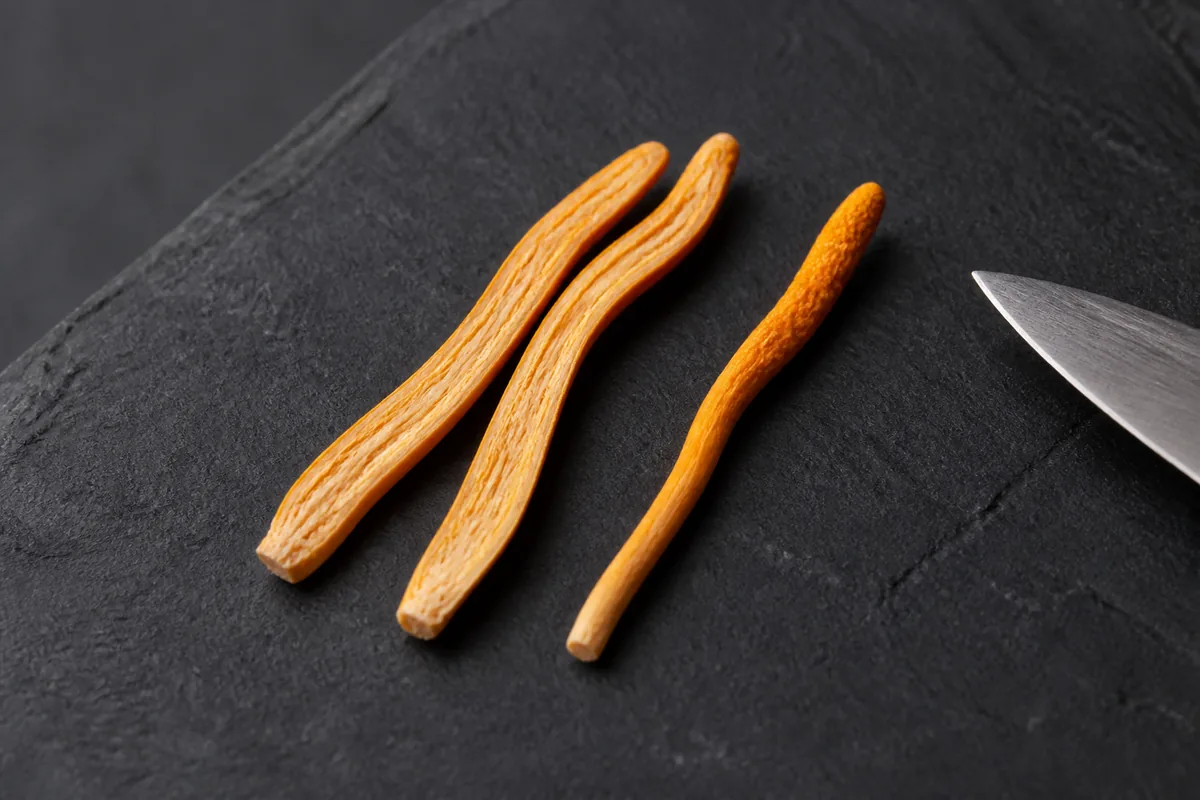
Heating softens the split fruiting body's fine longitudinal fibers, changing a slightly wiry raw club into a tender strand with a small bite.
For raw use, do not repeat the claim that cordyceps are poisonous. The evidence used here does not identify a raw toxin or a required neutralizing temperature for cultivated C. militaris.
Practical caution is still warranted with an unfamiliar edible fungus:
- Buy cultivated fruiting bodies labeled for food use rather than collecting a wild insect fungus.
- Cook them through by one of the methods above and serve a modest first portion.
- Stop eating if the flavor is sour, the texture is slimy, or the package condition was questionable.
A small first serving separates food tolerance from appetite. Anyone with a known mushroom allergy should treat cordyceps as a new fungal food and seek personal medical advice rather than testing it at dinner.
When cordyceps should stay out of the pan
A capsule never becomes a cooking ingredient because its common name matches a mushroom. The same applies to a standardized extract and to any powder whose label does not say what part of the fungus it contains.
- Whole fresh fruiting bodies
- Rinse, trim the base, and cook briefly
- Whole dried fruiting bodies
- Rinse, soak for dry methods, or simmer in broth
- Mycelial or fruiting-body powder
- Use only as the food or supplement label directs
- Standardized extract or capsule
- Keep out of recipes unless the manufacturer explicitly labels culinary use
Processed products can be much more concentrated than a handful of whole fruiting bodies. Adding an extract to soup does not recreate the food, and heat may alter a product designed around a measured concentration.
For supplements, medication use is a stop sign because Memorial Sloan Kettering notes potential interactions with anticoagulant or antiplatelet drugs and with insulin or other blood-glucose-lowering medicines.
That warning should not be inflated into a claim that a small serving of cultivated food has the same effect as a concentrated product. It does mean that someone using cordyceps for a health purpose should follow clinical and package guidance rather than kitchen intuition.
Leave these products out of the pan:
- Capsules, tinctures, gummies, and extracts with a stated concentration.
- Blends that combine cordyceps with other herbs or medicinal mushrooms.
- Powders that omit the species, fungal part, or intended use.
Whole C. militaris fruiting bodies sold as food are the clear boundary. Once the package crosses into supplement language, the recipe ends and the label takes over.
Sources & References
- Impact of Cooking Methods on Cordyceps militaris Food-science study used for the five-method comparison, the sensory preference for steaming, and the method-dependent changes in measured nutrients and cordycepin.
- Cordyceps militaris Fruiting Bodies, Mycelium, and Supplements Research reference used to distinguish fruiting bodies, cultured mycelium, and commercial supplement preparations.
- Cordyceps Adulteration Bulletin American Botanical Council reference used to separate cultivated C. militaris in trade from wild Ophiocordyceps sinensis and other cordyceps materials.
- Chinese National Health Commission 2009 No. 3 Official food-use reference for the approval of Cordyceps militaris as a new food resource in China.
- Cordyceps, Memorial Sloan Kettering Cancer Center Clinical reference used only for the supplement interaction cautions involving blood-thinning and blood-glucose-lowering medicines.