
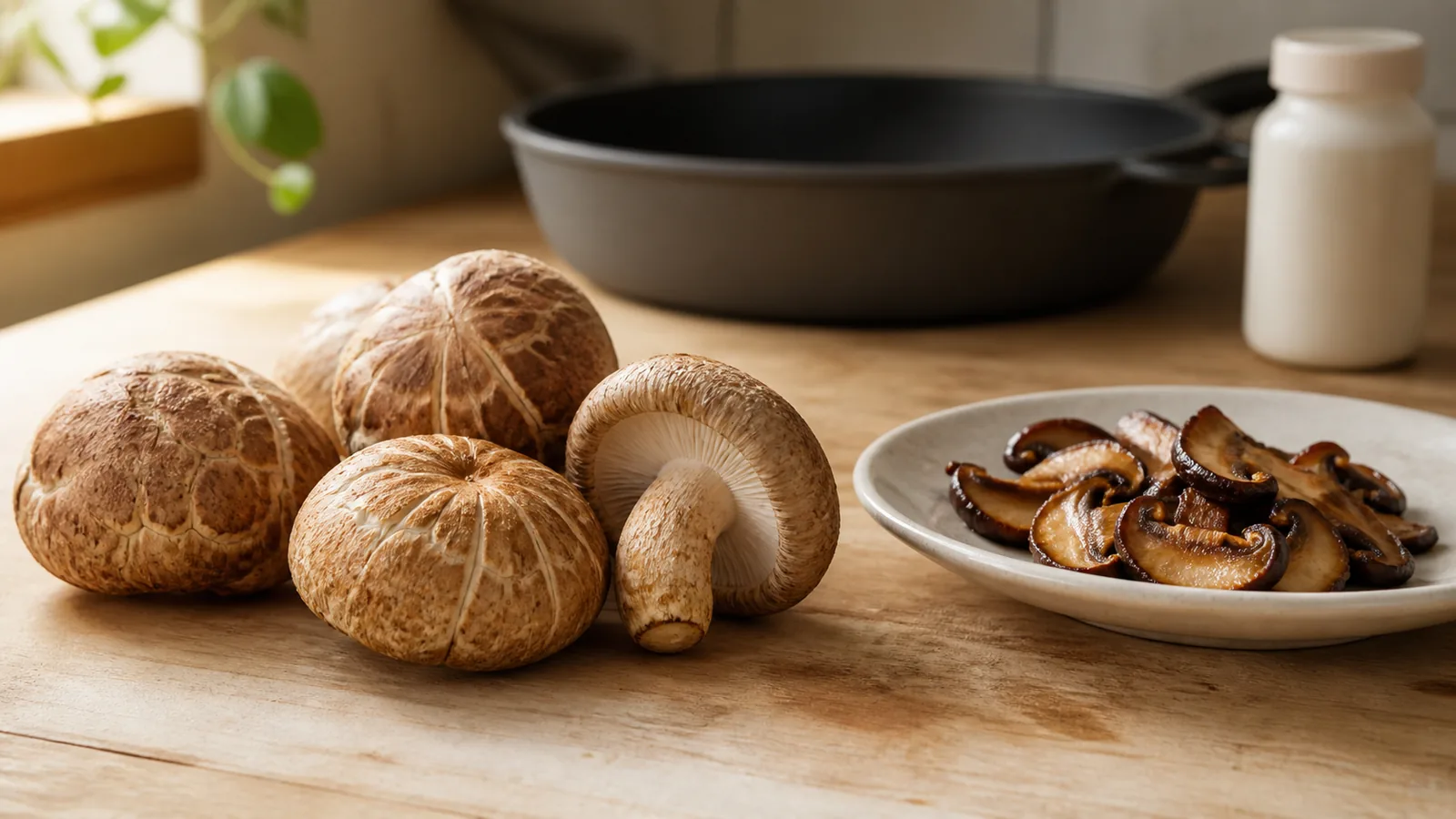
Cooked shiitake can fit a pregnancy meal when it is a normal culinary portion, the mushrooms are fresh or properly dried, and every piece is cooked through. Raw garnish, barely warmed caps, concentrated extracts, and capsules need a different answer.
The decisive species-specific issue is shiitake dermatitis.
Raw or undercooked Lentinula edodes can cause an intensely itchy streaked rash, while pregnancy evidence for high-dose supplements remains inadequate.
Which shiitake product are you actually eating?
Start by separating food from concentrated products. A cooked mushroom on a plate is not equivalent to an extract in a capsule, even when both labels say shiitake.
Those distinctions must remain visible because the same mushroom name can describe exposures with very different preparation and dose.
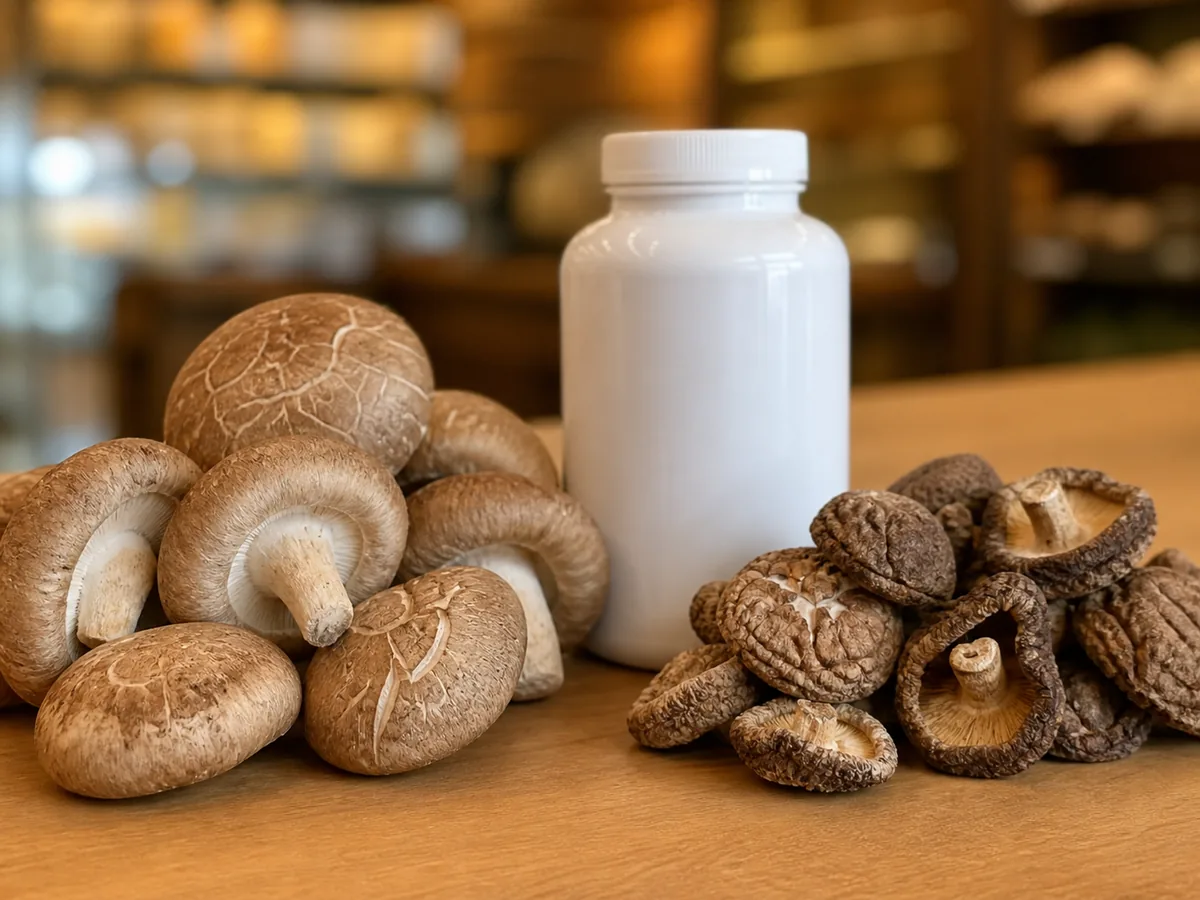
Fresh caps, dried whole caps, a culinary powder cooked into soup, a tea, and an extract all deliver different amounts and preparations. A product name alone cannot show whether heat controlled the raw-shiitake reaction or whether the exposure resembles an ordinary meal.
Choose a labeled food product with an intact package, producer, date, and storage directions.
If the product is marketed for immune support, standardized compounds, or daily dosing, treat it as a supplement rather than dinner.
SafetyAre Golden Oyster Mushrooms Safe During Pregnancy?Why can raw shiitake cause an intensely itchy rash?
Shiitake dermatitis is a distinctive eruption linked mainly to raw or undercooked shiitake. A clinical review describes red papules, plaques, or small blisters arranged in linear streaks with severe itching.
This likely trigger is lentinan, a beta-glucan that is inactivated by sufficient heat. It explains why a cold raw salad and a properly cooked stir-fry do not carry the same species-specific risk.
Published cases describe the eruption as delayed rather than an immediate measure of whether a bite tasted raw.
That timing means a diner may connect the rash to a later meal unless the shiitake exposure and cooking method are recorded.
The streaked pattern can follow scratching or pressure across itchy skin, but appearance alone cannot diagnose the cause. A clinician still needs the exposure history and must distinguish dermatitis from hives, infection, medication reactions, and other pregnancy-relevant conditions.

ANSES warns that the reaction can cover the body and face, with itching that lasts as long as three weeks.
Symptoms can appear within hours or days and may recur after another exposure.
Warning
Stop eating shiitake and seek medical advice if an intensely itchy streaked rash appears after a raw or undercooked serving. Breathing trouble, facial swelling, fainting, or rapidly worsening symptoms require emergency care.
The rash is not proof that the fetus was harmed, and its absence is not permission to eat raw shiitake again. During pregnancy, tell the clinician both the meal timing and the pregnancy so the actual reaction can be assessed.
How do you cook fresh shiitake all the way through?
Remove tough stem ends, wipe or briefly rinse visible soil, and cut thick caps into even pieces.
Equal thickness matters because a browned edge can develop before the center receives enough heat.
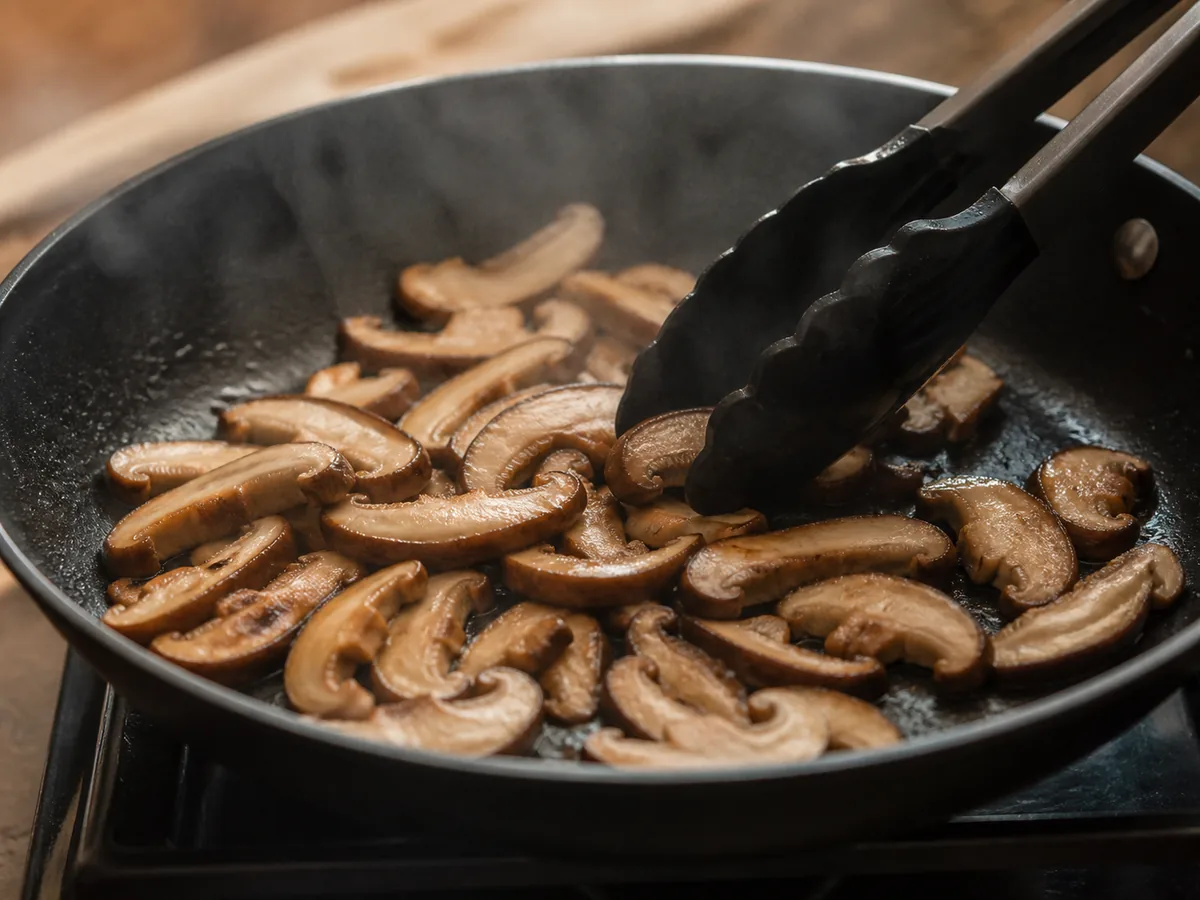
Use a pan large enough to keep the pieces moving through the wet stage. Let released moisture evaporate, then continue until every cap is hot, tender, and cooked through rather than rubbery in the middle.
- Cut thick caps evenly before heating.
- Avoid crowding several layers into one cool pan.
- Stir or turn pieces so both faces receive heat.
- Do not add raw slices or uncooked powder after the heat is off.
- Serve promptly and refrigerate leftovers within two hours.
No source reviewed here gives a shiitake-specific pregnancy temperature or serving size.
Visible browning and tenderness are practical checks, while the evidence-based boundary is to avoid raw and insufficiently cooked tissue.
For a restaurant dish, ask whether raw shiitake, uncooked powder, or a cold garnish is added after the main cooking step. A hot sauce around a barely warmed cap does not establish that the cap itself received complete heat.
Large dried caps and thick fresh caps need more attention than thin slices because their centers warm more slowly.
Cut one of the thickest pieces before serving and continue cooking if its interior remains cool or rubbery.
SafetyAre Hedgehog Mushrooms Safe During Pregnancy?Can dried shiitake be used during pregnancy?
Yes, dried shiitake can be used as food after rehydration and complete cooking. Drying preserves the mushroom but does not count as the heat treatment needed to address shiitake dermatitis.

ANSES includes dried and powdered shiitake in its warning because the relevant raw material can remain present. A softened cap from cool soaking water is hydrated, not cooked.
If you use soaking liquid for flavor, decant it away from sediment and bring the finished dish through a complete cooking stage.
Do not stir an uncooked mushroom powder into a warm drink and assume the cup supplied enough heat.
Rehydrate thick caps until they can be opened and inspected rather than leaving a dry core. Refrigerate soaking mushrooms when the process is prolonged, then discard moldy caps, sour liquid, or a batch with an uncertain room-temperature hold.
SafetyAre Oyster Mushrooms Safe to Eat During Pregnancy?Do shiitake powders and supplements share the food verdict?
No.
A measured culinary powder that cooks in a pot can remain a food ingredient, while capsules and extracts can change dose, concentration, processing, and the number of active compounds delivered.
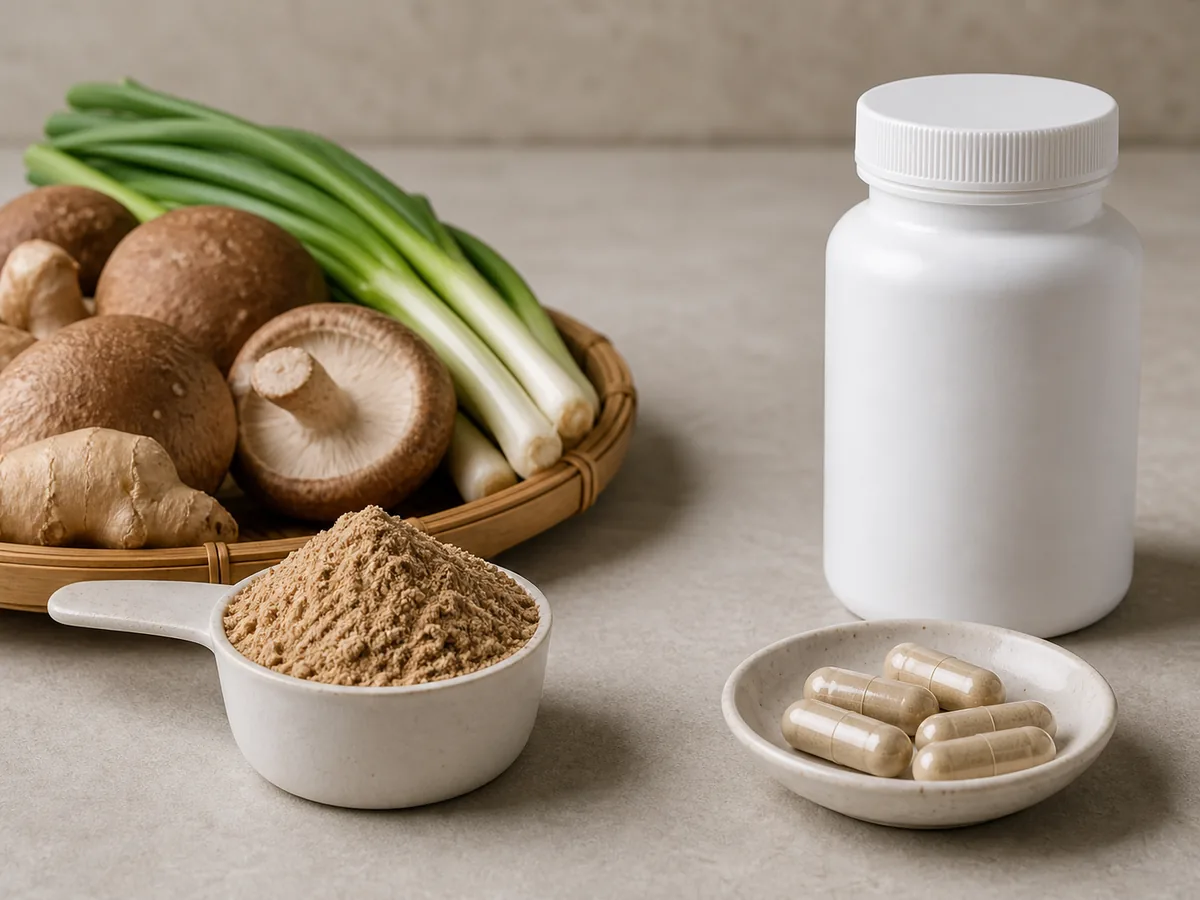
Pregnancy-specific safety data for concentrated shiitake products are inadequate. Multi-mushroom blends add further ingredients, and proprietary extracts may not disclose enough detail to compare their exposure with a serving of cooked caps.
Serving language on a supplement label does not create a pregnancy-tested dose. The clinician and pharmacist need the full ingredient panel, extraction ratio, amount per serving, planned frequency, and other medicines before they can assess the exact product.
| Product | Pregnancy decision |
|---|---|
| Fresh or dried whole shiitake | Cook completely and use as ordinary food |
| Culinary powder in a fully cooked dish | Use only when the source and ingredients are clear |
| Powder stirred into a finished drink | Skip because complete heat is uncertain |
| Capsule, tincture, or standardized extract | Avoid unless the obstetric clinician and pharmacist approve it |
| Multi-mushroom blend | Do not assume a shiitake food verdict covers the other ingredients |
Do not use a supplement to treat nausea, infection, immunity, or another pregnancy concern without professional review. The medicinal claim and the product dose both sit outside the evidence used to judge cooked food.
How should you buy and store fresh shiitake?
Choose firm caps with a dry surface and a mild mushroom smell.
Reject mushrooms that are slimy, moldy, collapsing, sour, or sitting in excessive package liquid.
Inspect the underside and the stem junction rather than judging only the brown cap top. Closely packed gills and creases can retain debris or reveal wet decay that a sealed top view hides.
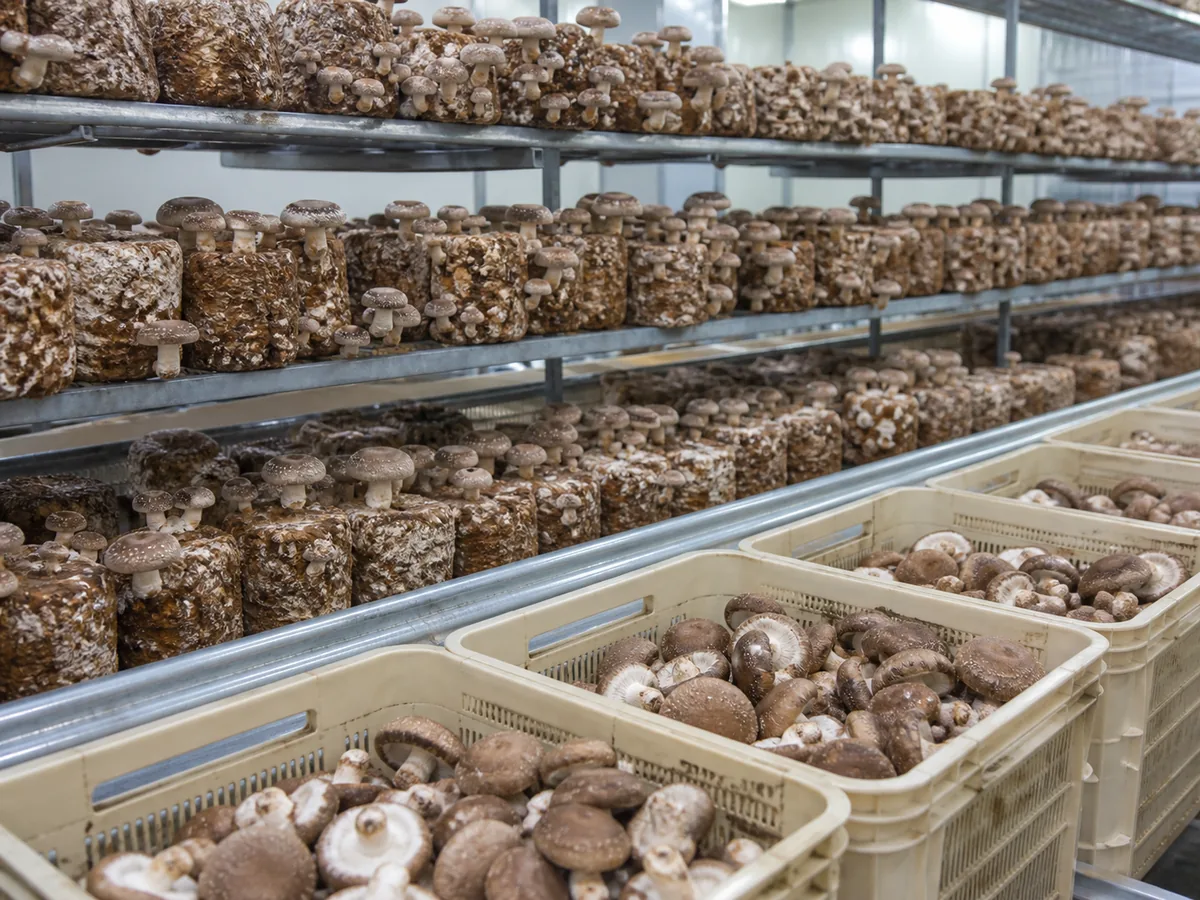
Keep fresh shiitake refrigerated in a ventilated package and wash only when you are ready to cook. Trapped water speeds deterioration, while an open dirty package can contaminate other foods.
This preventable pregnancy risk includes unwashed produce according to CDC and ACOG.
Rinse visible soil under running water, wash your hands, and clean the knife, board, and work surface before they touch ready-to-eat food.
A restaurant serving creates one extra uncertainty because the diner cannot inspect the original package or cold chain. Ask the kitchen to omit raw garnish and choose a different dish when it cannot confirm that whole or powdered shiitake entered a complete cooking step.
Use cooked leftovers promptly after refrigeration. Discard a dish left at room temperature for more than two hours, or one hour in temperatures above 90 F, rather than reheating an unknown hold time.
What should you do if a rash or illness starts?
Stop eating the product and record when the meal occurred, whether the mushrooms were raw, dried, powdered, or cooked, and when each symptom began.
Preserve the package, lot, remaining product, photographs, and a small sealed portion of leftovers.
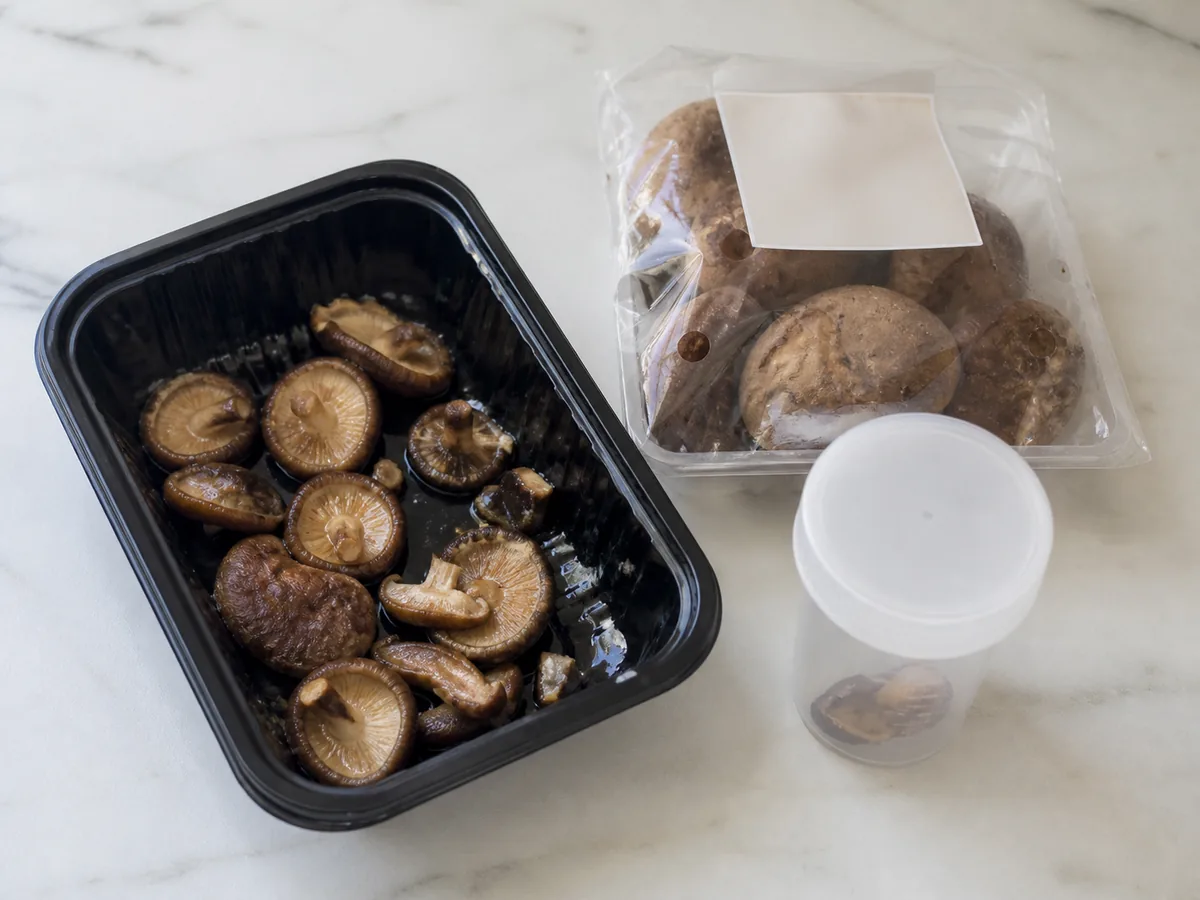
An itchy linear rash can fit shiitake dermatitis, while fever, chills, muscle aches, vomiting, or diarrhea can point to a broader foodborne problem. Contact the obstetric clinician promptly for fever or significant dehydration during pregnancy.
Do not induce vomiting or take a new antihistamine, steroid, or supplement without appropriate medical advice. The safest next step depends on the actual symptoms, pregnancy history, and product that was eaten.