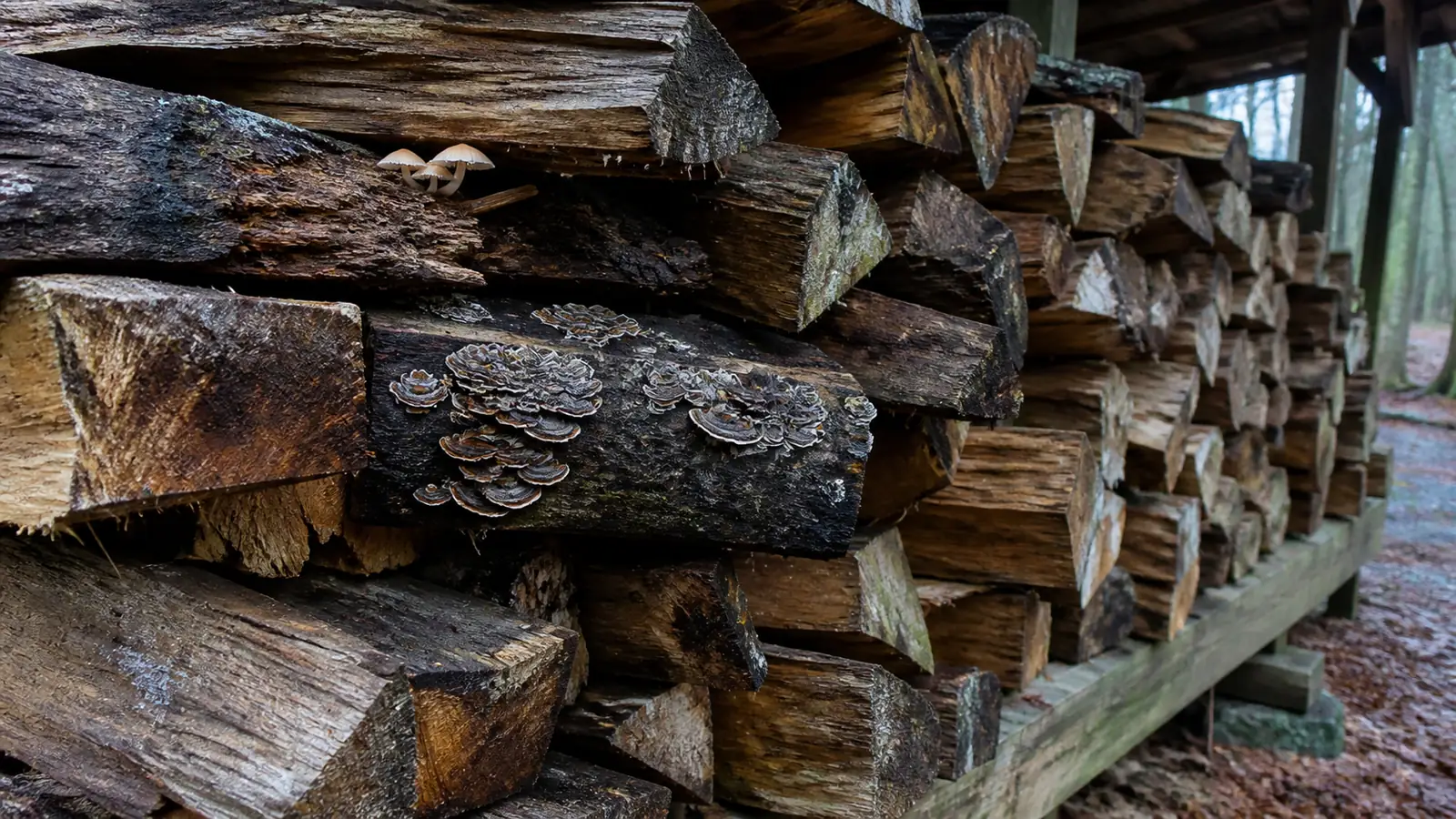
Fungi on stacked firewood can range from superficial mold to bracket or gilled fruiting bodies associated with decay. Burn only known untreated natural wood that remains sound and tests below 20 percent moisture on a newly split face.
Mushrooms on firewood show that at least part of the stack stayed wet long enough for a fungus to grow or fruit. They do not tell you by themselves whether the split is deeply decayed or dry enough to burn.
Treat identification and fuel quality as two separate checks. Describe the growth first, then split, probe, and measure the wood before deciding what belongs near the stove.
What Grows on Stacked Firewood?
Fuzzy gray, green, white, or black patches are often surface molds rather than mushrooms.
They form films or dusty colonies without a cap, stem, gills, pores, or a distinct bracket.
Is the growth a surface colony or a fruiting body?
Look for a repeatable body plan before reaching for a species name. A mushroom or bracket has organized anatomy, while mold and loose mycelium usually spread across the surface without a defined underside.
Crust fungi lie flat against bark or exposed wood and can look waxy, cracked, or painted on. Bracket fungi project outward as shelves, while gilled mushrooms may emerge in overlapping clusters from cracks, cut ends, or bark gaps.
Two familiar dead-wood groups provide useful comparisons when the anatomy fits. Neither card certifies that a fruiting from a fuel pile is edible.
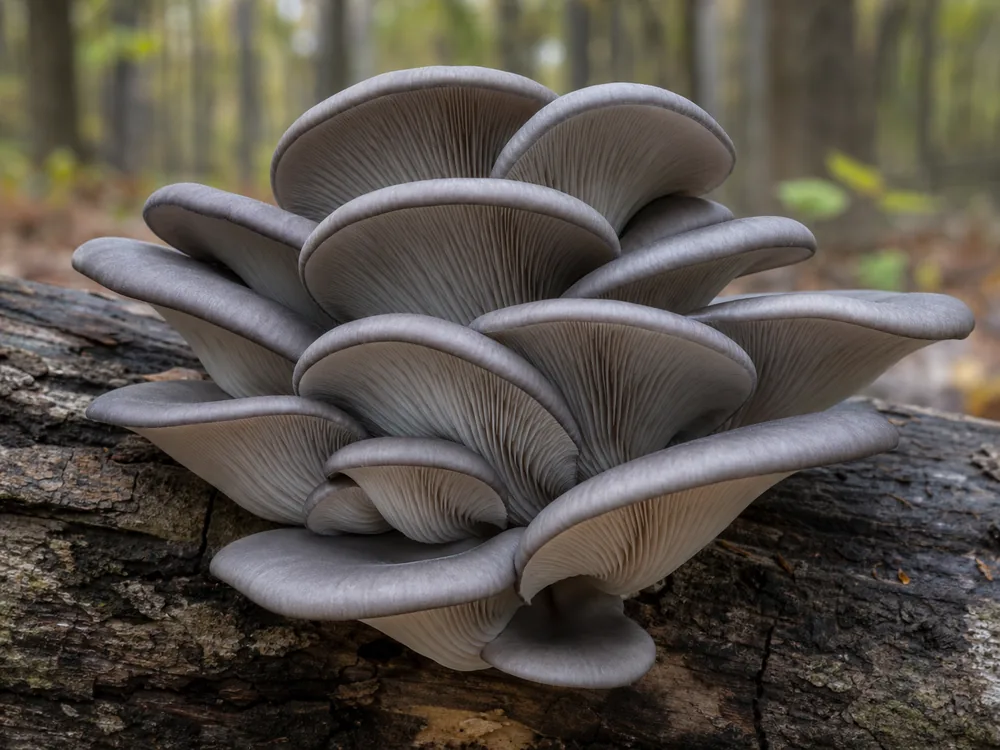 Overlapping gilled shelvesOyster MushroomWhite, tan, or gray caps usually have gills running down a short off-center stem or directly toward the attachment.
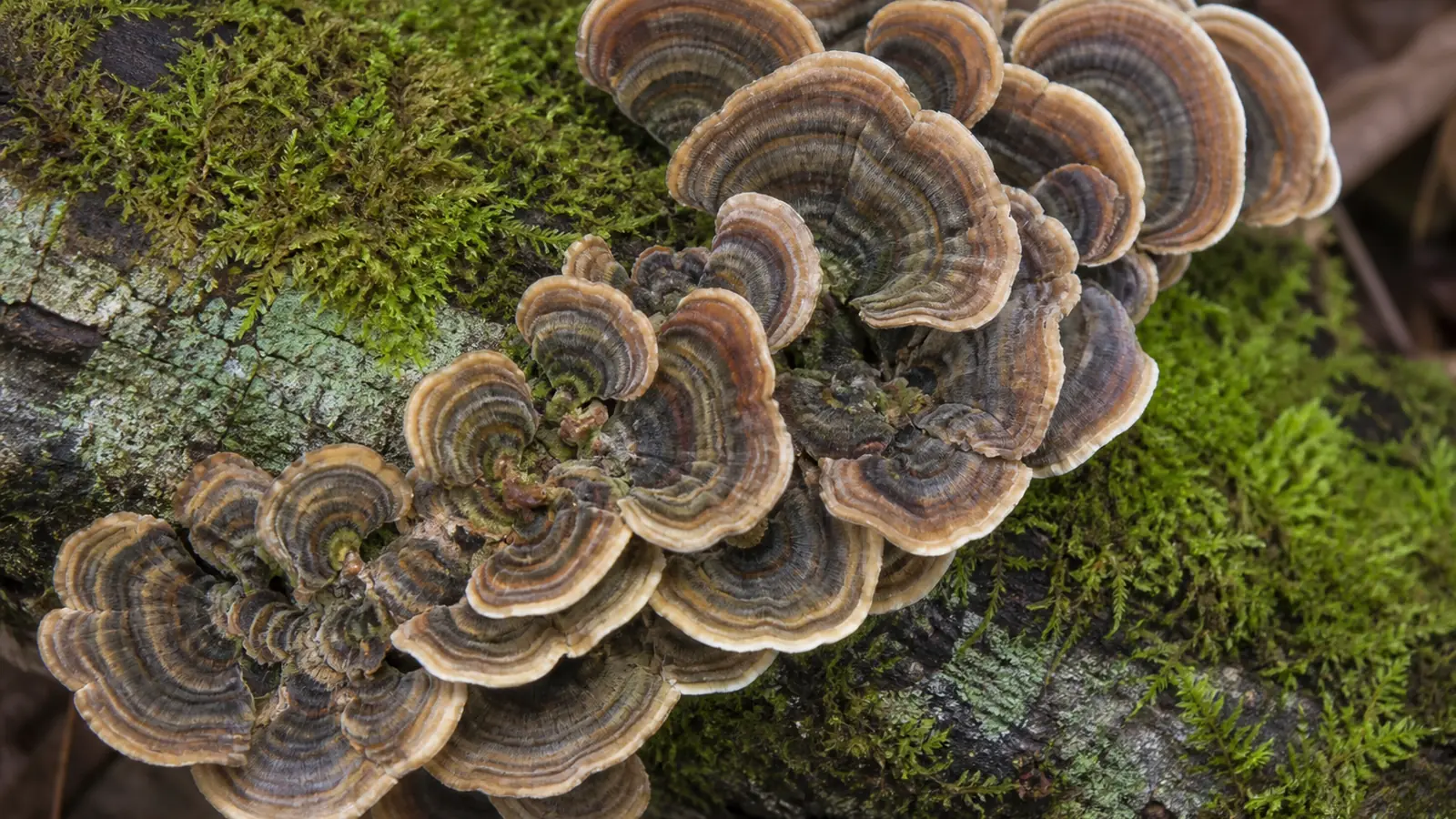 Thin zoned brackets with poresTurkey TailFlexible fans show concentric color zones above and a surface of tiny pale pores below.
Oyster-like caps need more than a shelf shape. Record the true underside, stem position, cap texture, spore deposit, wood type, odor, and complete attachment because other pale lateral mushrooms can overlap.
Turkey-tail lookalikes make the underside especially important. Smooth, toothed, or gilled surfaces do not become turkey tail merely because the top has colored bands.
- Photograph the entire stack before moving the affected pieces.
- Show whether the growth starts on bark, sapwood, a split face, or the ground-contact side.
- Record gills, pores, teeth, folds, or a smooth underside in sharp focus.
- Note whether one species of wood or one wet zone carries most of the growth.
- Keep any food identification separate from the decision to burn the fuel.
A wild log left on the forest floor has a different history from split fuel stacked against a shed. Provenance, cutting date, bark retention, and ground contact all change the most plausible explanation.
Does Fungus Ruin Firewood?
Surface growth does not automatically ruin a log. A firm heavy split can carry mold or a small fruiting body before decay has removed much wood substance.
Deep decay changes the material itself.
The split becomes unusually light, soft, stringy, spongy, brittle, or crumbly, which means it also holds less dense fuel than sound wood of the same size.
Press a screwdriver into the cut face and compare it with a clean split from the same batch. Sound wood resists pressure, while punky wood dents or breaks apart with little force.
Brown-rot damage often leaves brittle brown material that fractures into blocky or cubical pieces. White rot can leave a paler fibrous or stringy texture because different components of the wood have been removed.
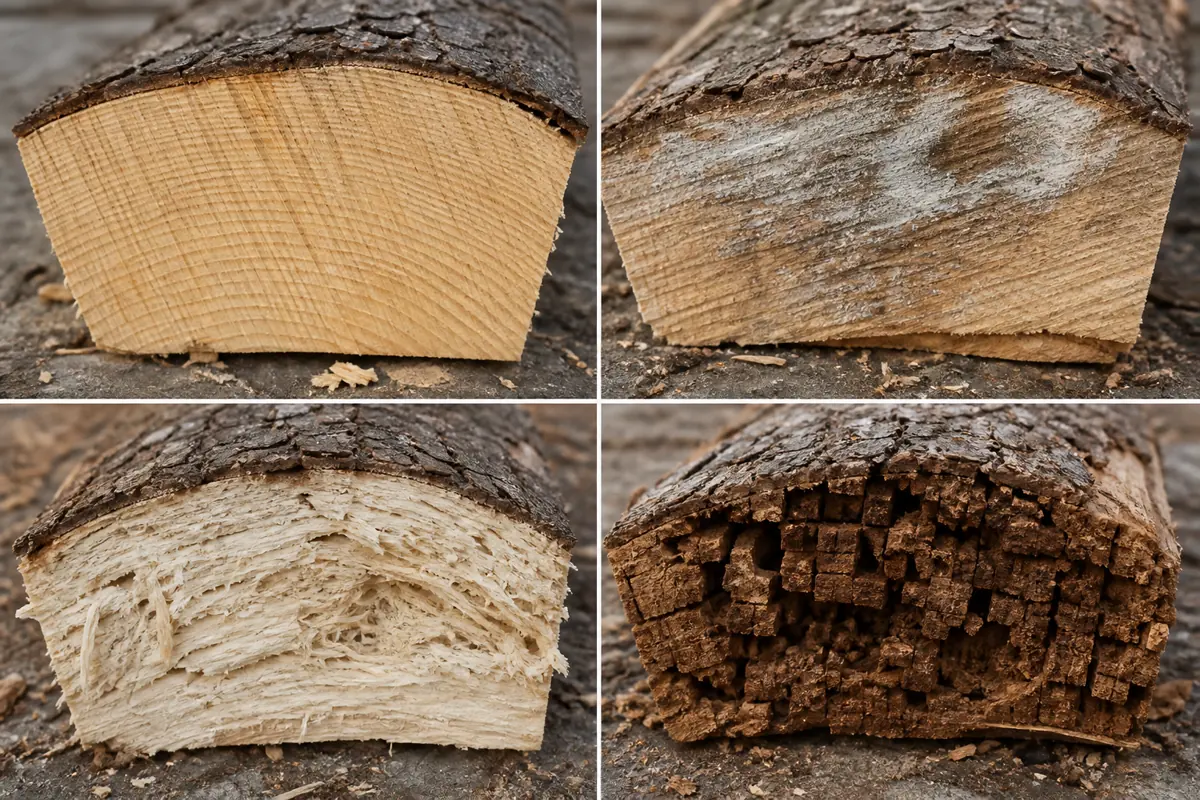
Check more than the outer bark.
Rain can wet the exposed ends and top layer while the stack interior remains sound, or a tarp can trap enough condensation that the apparently protected center decays first.
The practical consequence depends on extent. One softened corner can be trimmed from an otherwise sound outdoor-use piece, while a split that crumbles throughout is poor fuel and should be handled according to local yard-waste or disposal rules.
Do not move infested firewood long distances. Insects and pathogens can travel with bark and wood even when the visible mushroom is harmless to people.
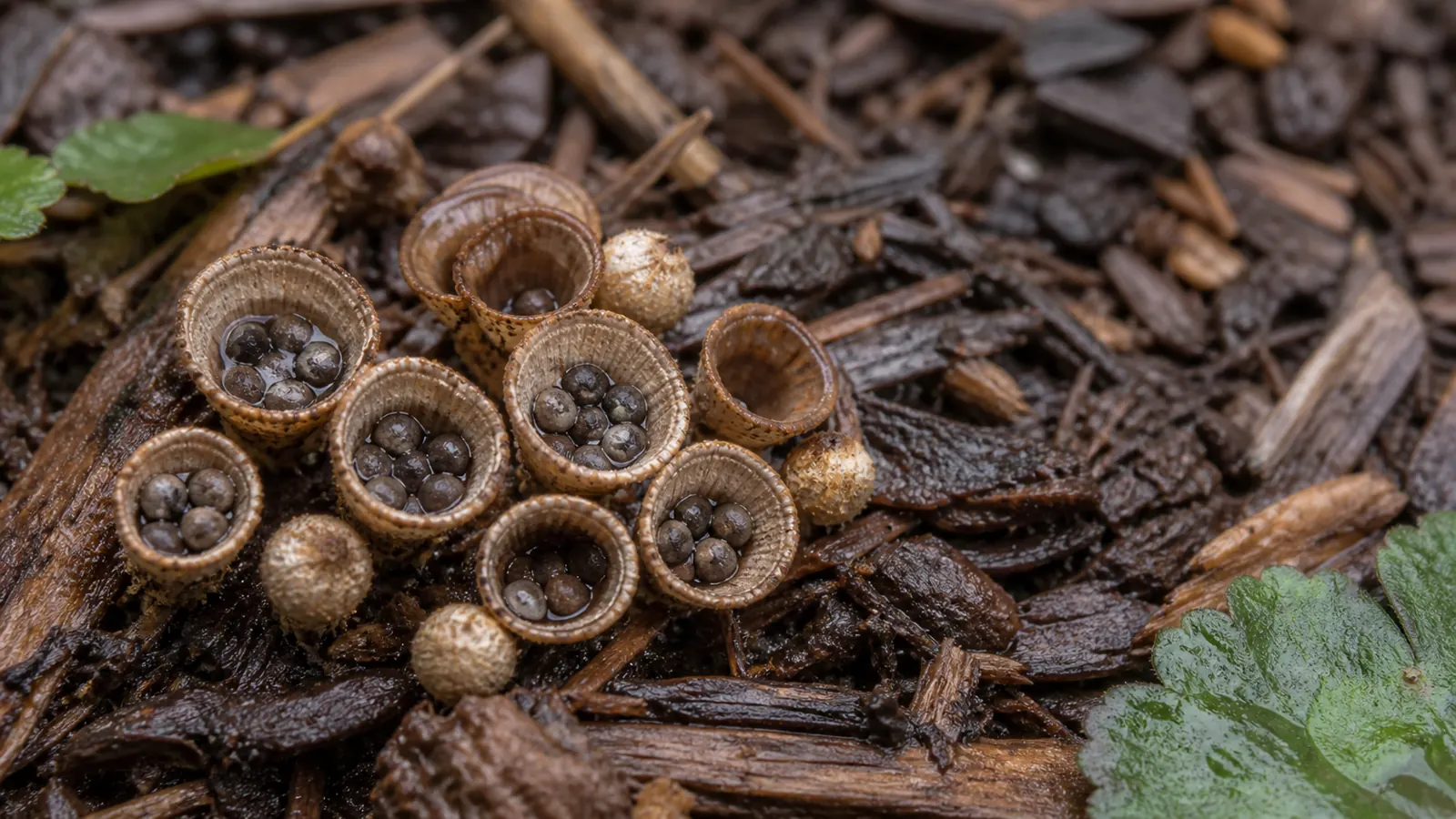
IdentificationWhat Are the Tiny Bird's Nest Fungi in Your Mulch?Is It Safe to Burn Firewood With Fungus?
The safest household fuel is known natural firewood that remains sound and tests dry on a newly split face.
Use known natural wood, solid structure, and fresh-face moisture as the three checks that determine whether a split belongs near the stove.
Warning
Keep unsuitable wood out of the fire | Do not burn painted, pressure-treated, glued, coated, saltwater-soaked, demolition, pallet, or chemically contaminated wood in a household stove or fireplace. A dry meter reading does not remove the chemicals or prove unknown salvaged wood is safe.
For ordinary natural firewood, moisture controls combustion more directly than a few old surface spots. The US Environmental Protection Agency advises burning wood below 20 percent moisture content.
Where should you test firewood moisture?
Split a representative piece immediately before testing and place the meter probes into the newly exposed interior according to the meter instructions. An old weathered end can be much drier than the center and can give false confidence.
Test more than the easiest piece at the edge of the pile. A lower course, shaded center, and large dense split reveal moisture pockets that a sunny outer face can hide.

Use that interior reading with the wood's provenance and structure because no single meter number clears treated, contaminated, or deeply decayed fuel.
| Fuel check | Ready for a household fire | Needs more drying or rejection |
|---|---|---|
| Provenance | Known untreated natural firewood | Painted, treated, glued, coated, or unknown salvaged wood |
| Structure | Firm cut face with useful weight and density | Soft, punky, crumbling, or extensively hollow material |
| Moisture | Below 20 percent on a fresh split face | 20 percent or higher in the interior |
| Storage condition | Dry surface without active dripping or heavy contamination | Wet stack, standing water, sewage, oil, or chemical exposure |
Wet wood spends energy boiling water instead of sustaining a hot clean fire.
The lower combustion temperature produces less useful heat and more smoke and creosote, which affects outdoor air, indoor leakage, and the chimney.
People with asthma, allergies, or other respiratory sensitivity should avoid carrying visibly moldy pieces through occupied rooms. Store the pile outdoors, bring in only the amount needed soon, and keep loose debris out of the living area.
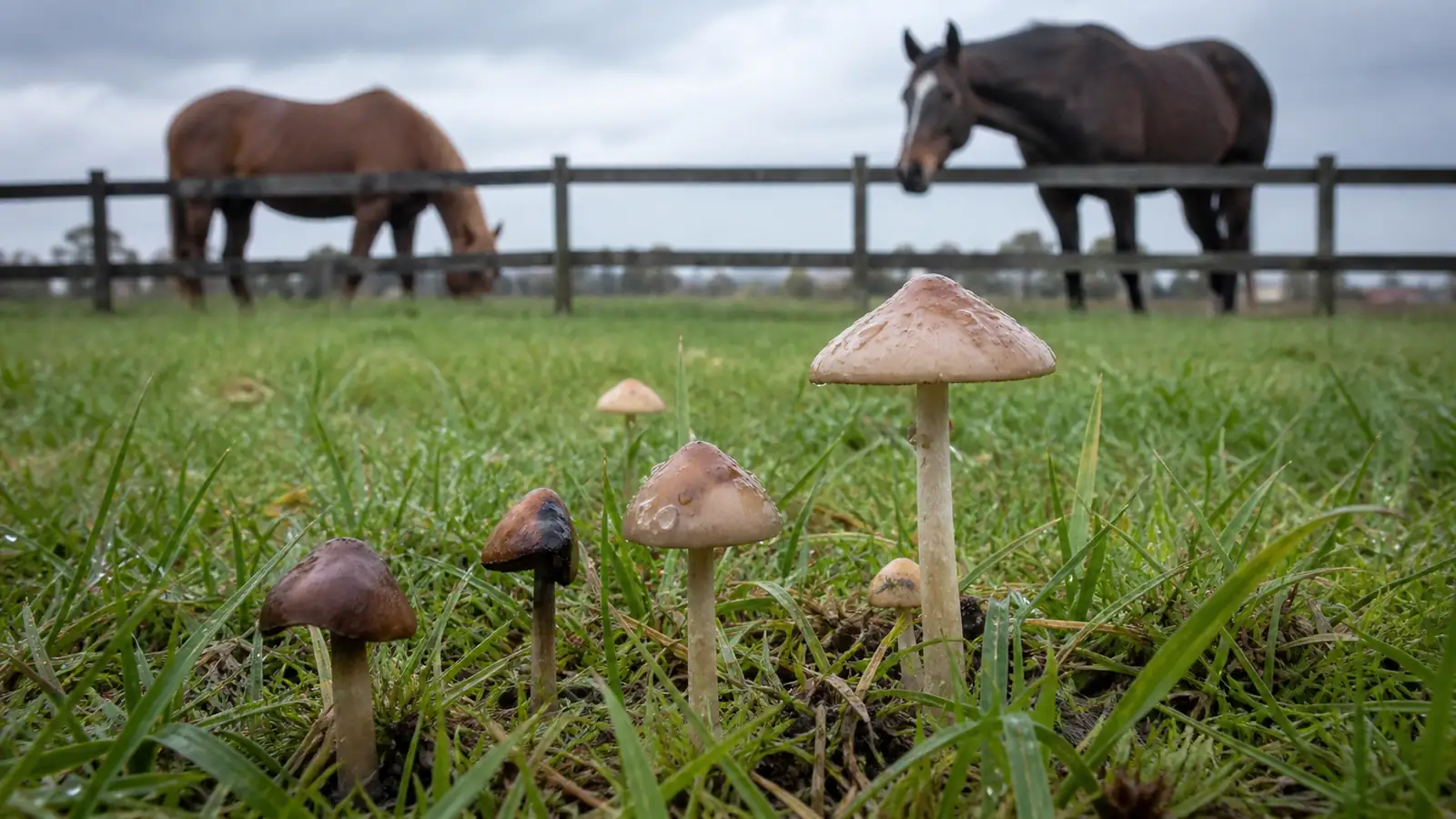
IdentificationWhat Should You Do About Mushrooms in a Horse Pasture?Should Moldy Firewood Be Stored Indoors?
Keep the main supply outside even when the wood tests dry. Indoor warmth can release musty dust and spores from bark, while a large reserve also brings insects and loose debris into occupied space.
A short staging supply is easier to inspect and clean around. Choose firm pieces, brush loose material outdoors without creating a dust cloud, and place them in a dry holder away from food preparation and soft furnishings.
Do not wash firewood before bringing it in because the added water works against clean combustion. If a piece smells strongly musty, sheds visible growth, or crumbles during handling, leave it out of the indoor supply.
- Move only the amount likely to be burned soon.
- Carry pieces in a rigid tub or log carrier that contains bark and dust.
- Keep the holder away from children, pets, and return-air vents.
- Clean fallen debris with a damp method rather than dry sweeping it into the air.
- Return unused pieces outdoors if they become damp indoors.
This handling decision is separate from species identification. A named harmless decomposer can still be dusty, wet, or attached to wood that makes poor household fuel.
How Do You Keep Firewood Dry Enough?
A stack dries when air can move around split surfaces and rain cannot keep replacing the water that leaves. Wrapping the sides in plastic often defeats that exchange.
Split rounds before stacking because smaller pieces expose more surface area and shorten the path moisture must travel. Raise the bottom course on rails, a rack, or another stable base that prevents soil contact.
Place the stack where wind and available sun can reach it without directing roof runoff onto the top. Cover the top against rain, then leave the sides open enough for vapor to escape.
The stack layout supports drying, but the fresh interior reading confirms whether drying actually reached the center.
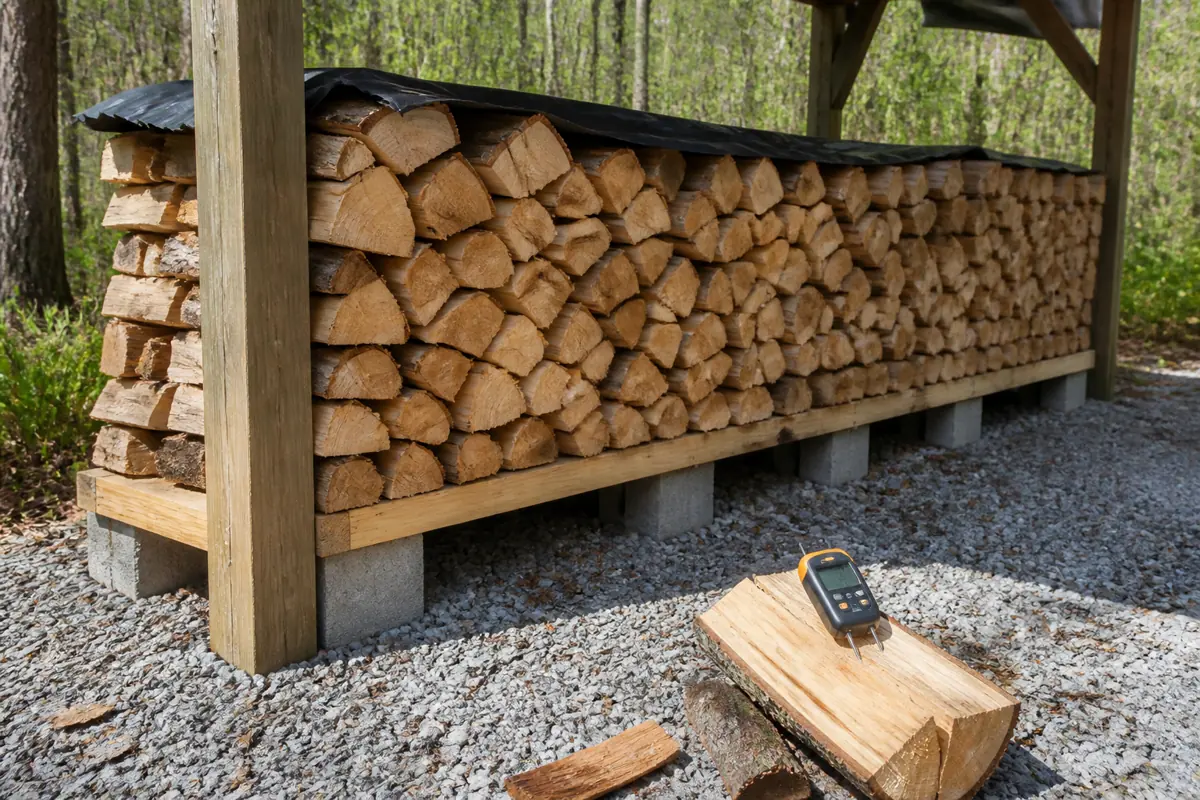
Seasoning time varies with species, split size, starting moisture, weather, and stack design.
Six months on a calendar cannot guarantee that a large dense round under a closed tarp is ready.
Recheck several pieces from different positions, including the shaded center and lower course. When those fresh faces stay below the moisture limit and the wood remains firm, the stack has produced evidence stronger than appearance alone.
Sources & References
- US Environmental Protection Agency Dry wood and safe burning practices.
- US EPA Burn Wise Below 20 percent moisture and fresh-split testing.
- US Forest Products Laboratory Moisture, mold, and wood decay conditions.
- Iowa State University Extension Oyster mushroom form on dead wood.