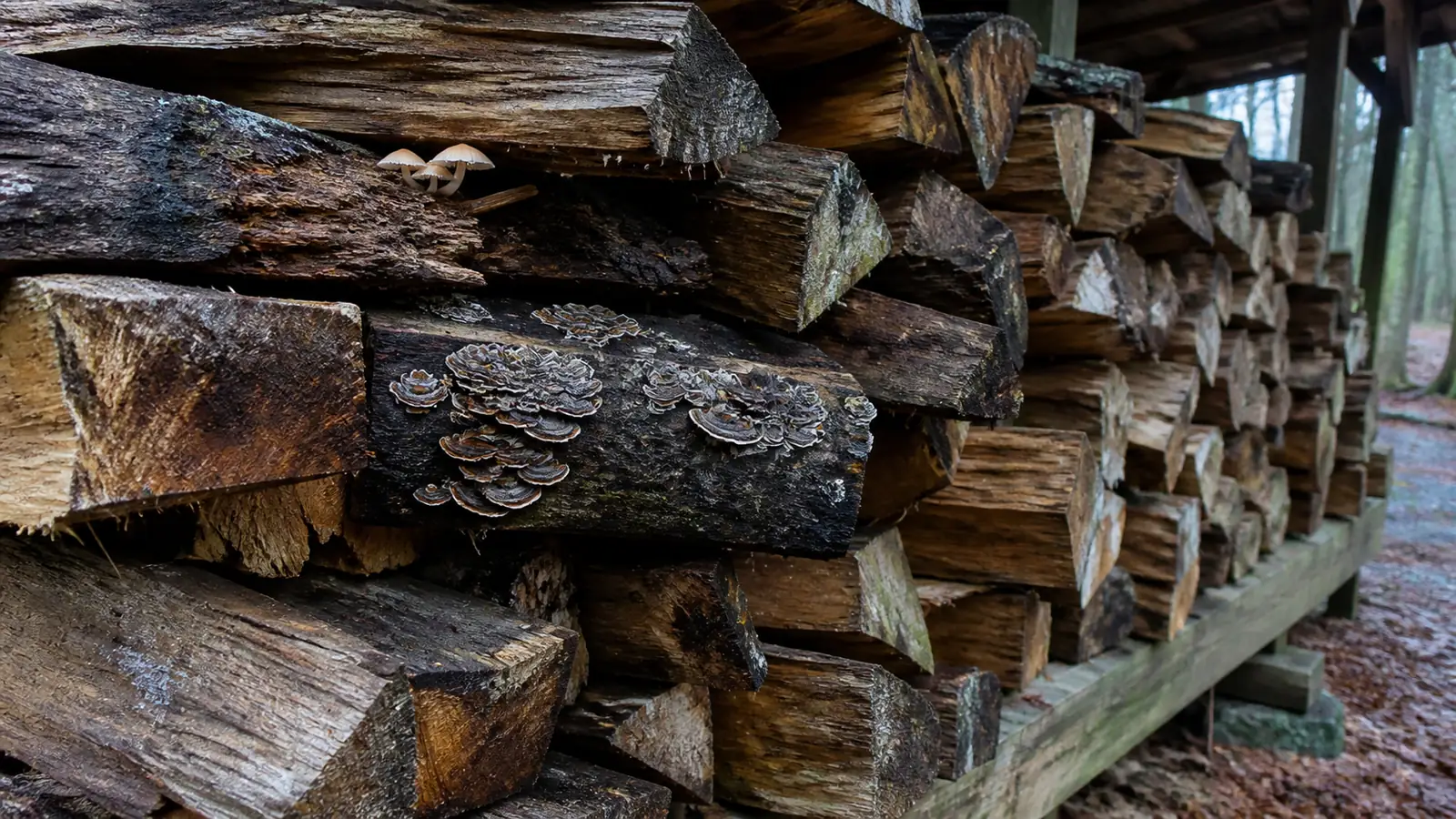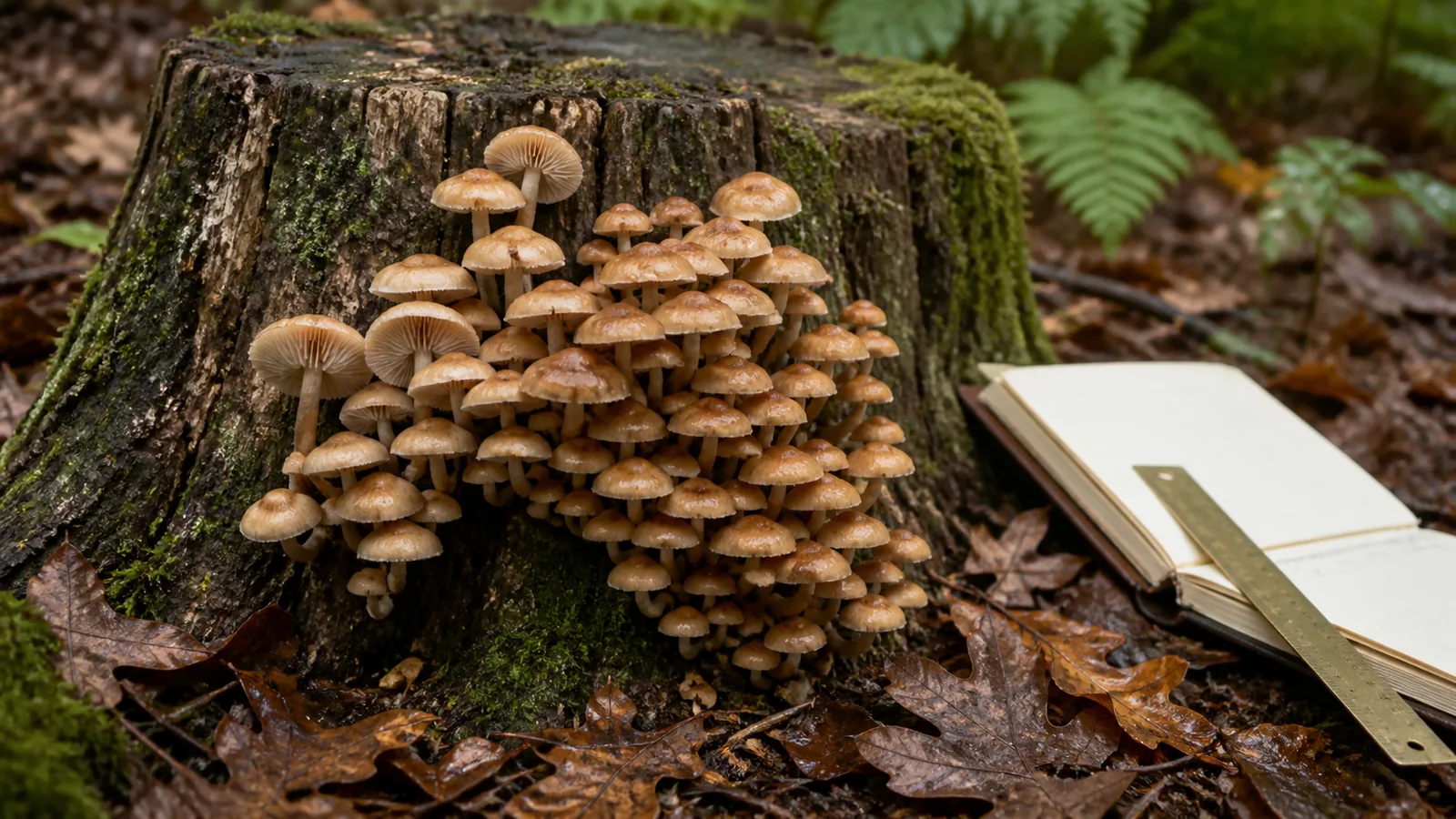
A stump tells you that a fungus uses wood, but it does not identify the species. Record the fertile underside, attachment, complete stem, and spore print before comparing the specimen with a regional key or asking a qualified identifier.
A stump proves that the fungus is using wood, but it does not identify the mushroom. Oyster mushrooms, honey mushrooms, puffballs, polypores, and deadly Galerina can all fruit from decaying stumps or buried roots.
So leave the cluster in place long enough to record it. The safest useful sequence is to sort the body form, photograph the attachment, collect complete specimens, and print several mature caps separately.
Do not use growth on a stump as an edibility test.
What Kind of Mushroom Is Growing on the Stump?
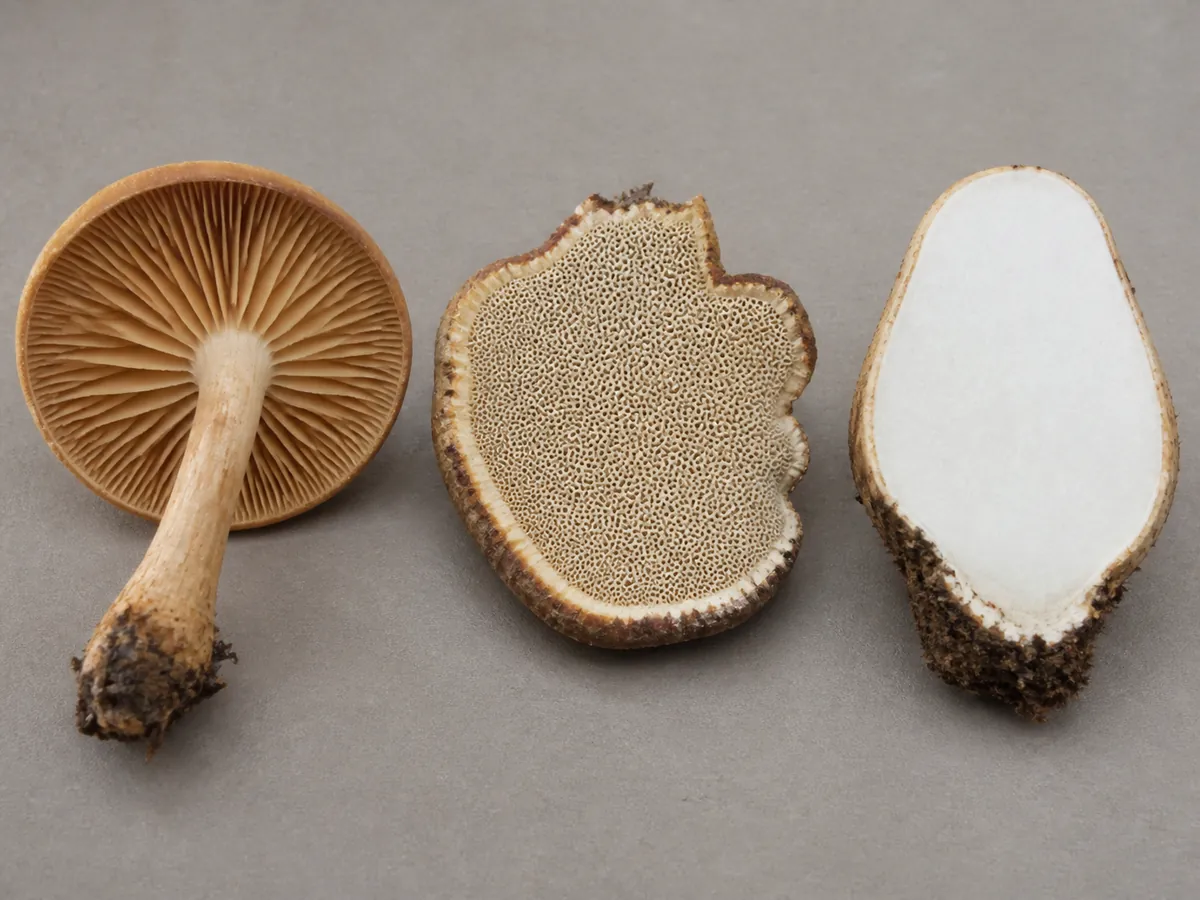
Look under a mature fruiting body before comparing cap colors. Gills, pores, teeth, or an enclosed spore mass place the find in different groups that require different keys.
A cluster of cap-and-stem mushrooms calls for a close view of the gills and stem base. Overlapping shelves may have gills, as oyster mushrooms do, or thousands of tiny pores, as many polypores do.
Instead, round or pear-shaped bodies can be puffballs when the interior is solid and uniform. Cutting one open for study may reveal chambers, a developing cap, or dark tissue that sends the identification elsewhere.
These six stump fungi show why the fertile surface and attachment matter more than a shared brown, orange, or white cap color.
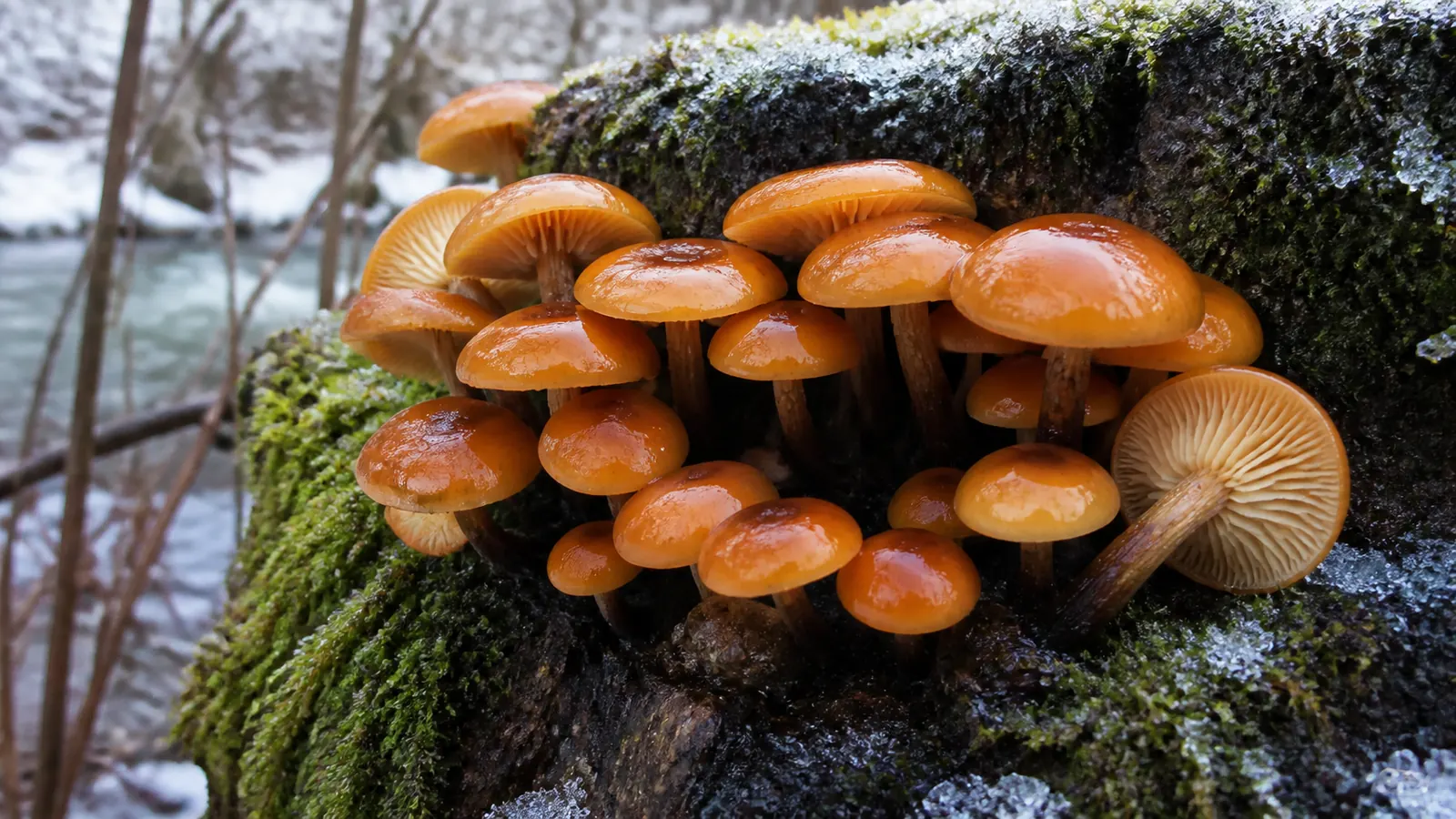 Cold-season gilled clustersVelvet ShankSticky yellow-brown caps, pale attached gills, white spores, and a dark velvety lower stem form one wood-growing pattern.
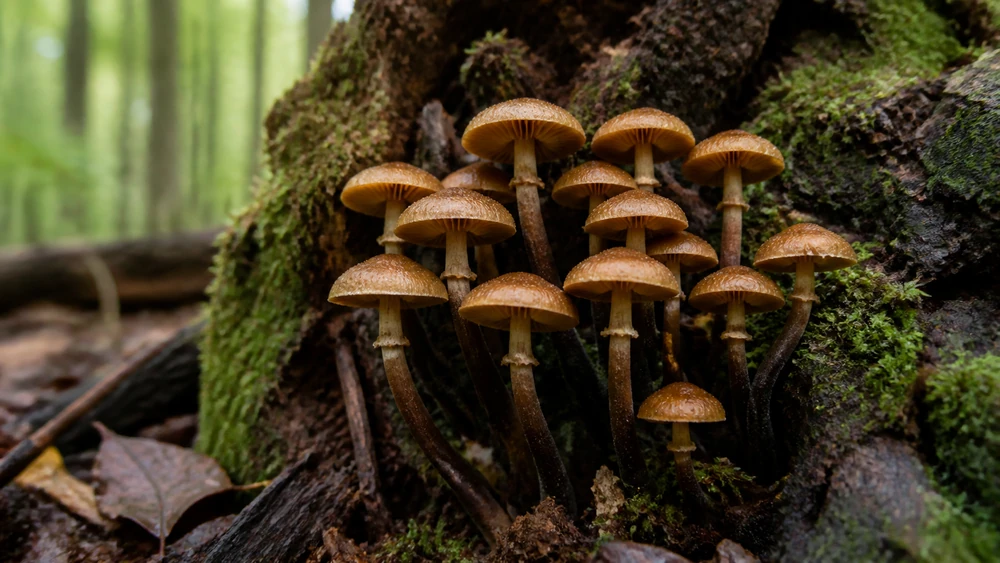 Deadly rusty-spored clusterDeadly GalerinaSmall brown caps on a stump require a spore deposit and complete stems because a fragile ring can disappear with age.
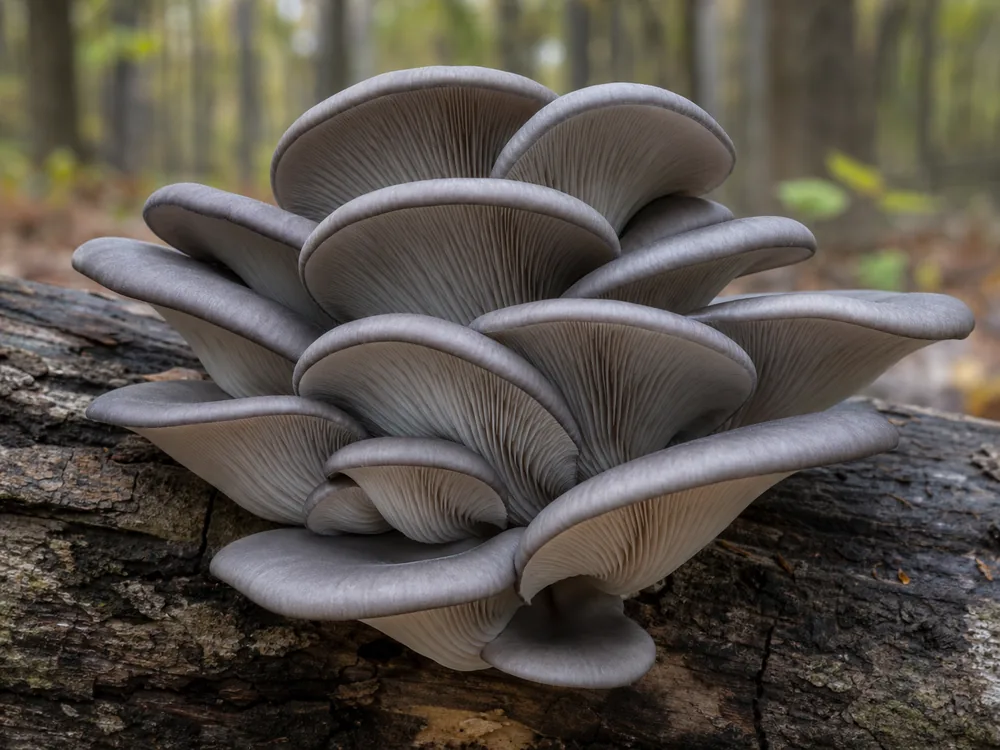 Lateral gilled shelvesOyster MushroomWhite to gray caps usually carry decurrent gills toward a short off-center stem or a broad point of attachment.
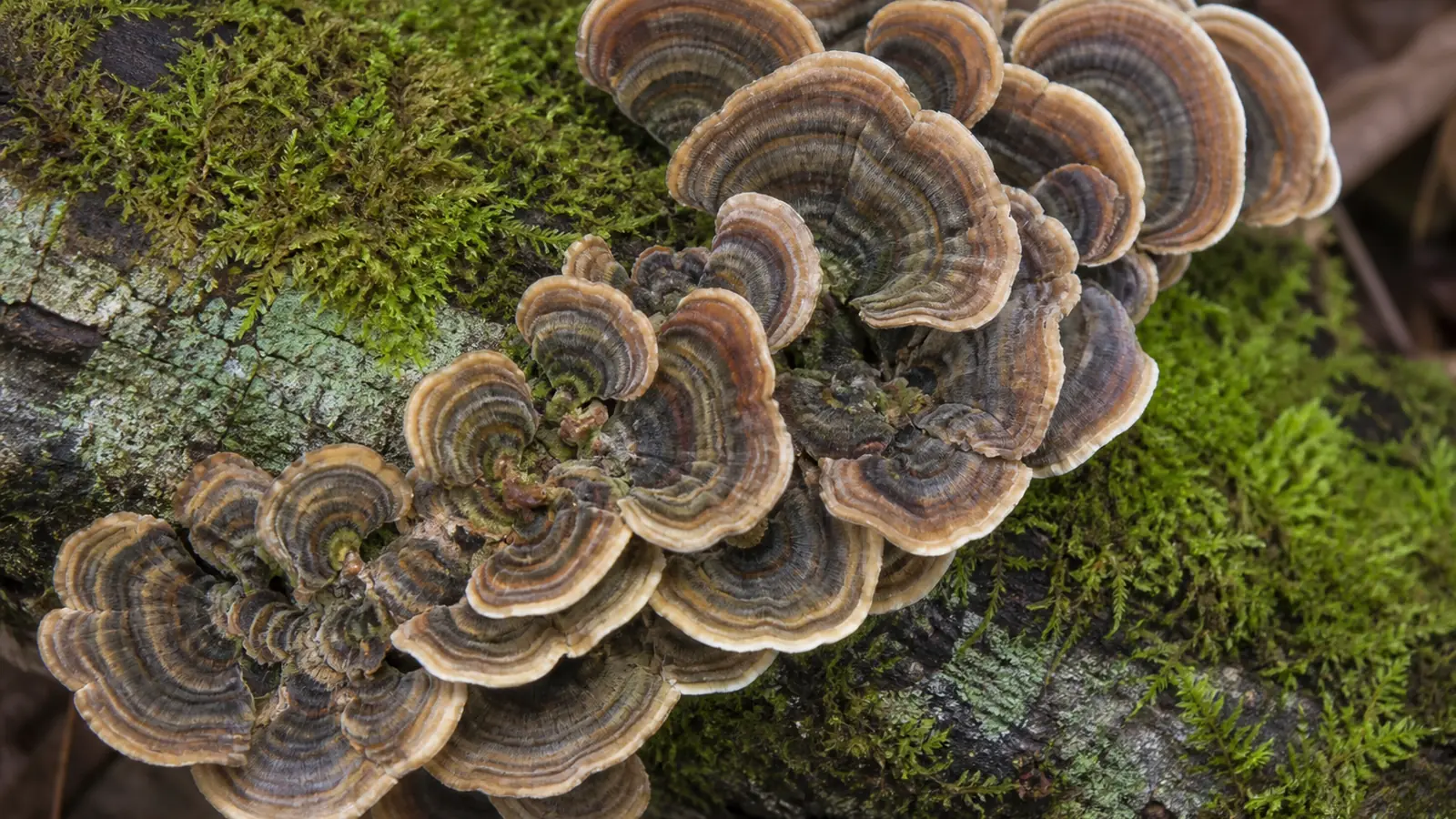 Thin overlapping pore fansTurkey TailColored zones on top support the match only when the pale underside has minute pores rather than gills or a smooth surface.
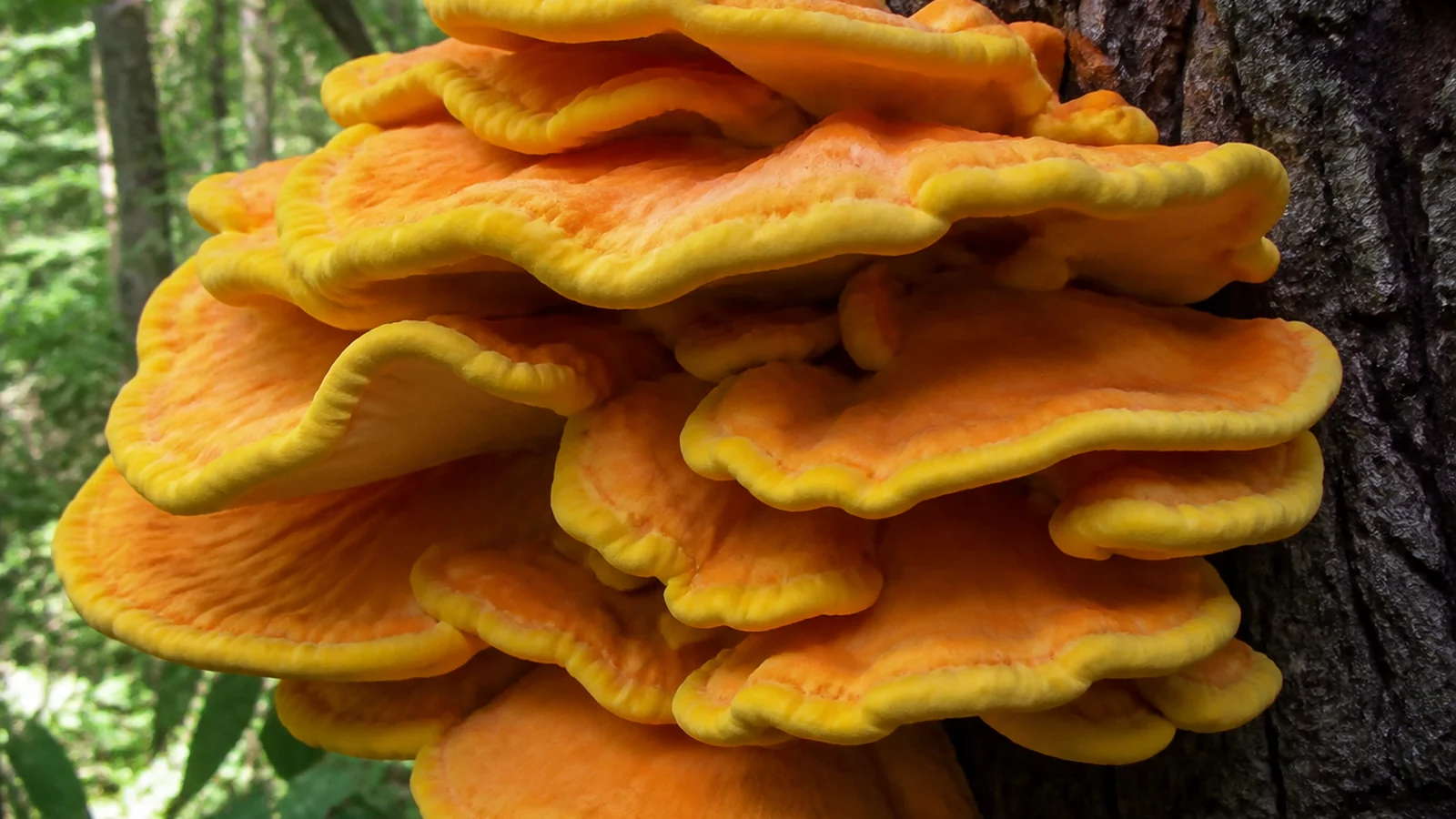 Thick orange pore shelvesChicken of the WoodsYoung overlapping fans are soft and brightly colored, while older shelves fade, harden, and lose useful recognition characters.
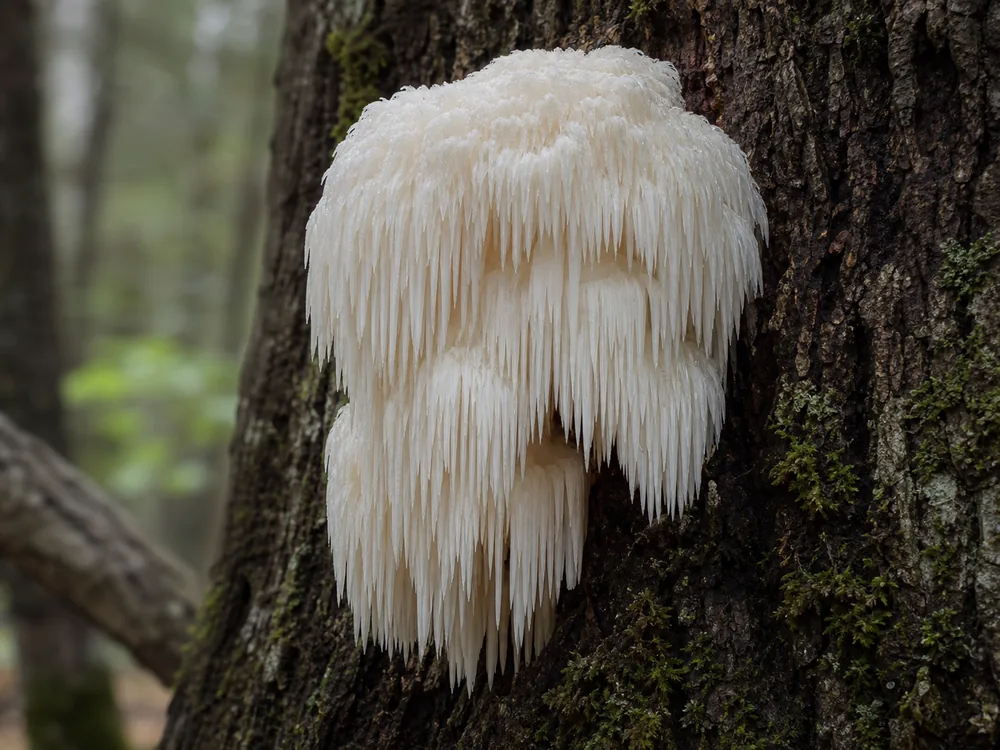 One mass of hanging teethLion's ManeA fresh specimen forms an unbranched white body covered in long downward-pointing spines on hardwood.
The cards are comparison starts rather than approvals. Confirm the host, underside, attachment, age, spore color when applicable, and every contradiction before using a species account.
The wood also belongs in the record. Note whether the stump is hardwood or conifer if you can identify it, whether the wood is freshly cut or deeply decayed, and whether mushrooms continue along buried roots.
Several common stump fungi are decomposers, while others can begin on living or stressed trees and continue fruiting after removal.
That history helps a regional key, but no host or decay stage settles the species by itself.
How Should You Document a Stump Mushroom?
Take the first photograph before touching anything.
Frame the whole stump and surrounding ground so the image preserves the cluster arrangement, the apparent host, and any mushrooms rising beyond the cut wood.
Then move close enough to show the cap surface, fertile underside, and exact attachment. Add a ruler beside the specimen without covering features, and photograph young, mature, and aging fruiting bodies when all three are present.
Lift at least one complete example with a small knife or trowel. A snapped stem can remove a ring zone, fibrous base, buried wood connection, or other character that an identifier needs.
Odor and color change are temporary observations, so record them promptly.
Make a gentle cut or bruise on one specimen, then note the immediate color and any change after several minutes without crushing the rest of the collection.
Keep specimens from separate points in individual paper packets. One bag can hide a mixed collection, especially when two brown clusters overlap at the edge of a stump.

Write the date, region, recent weather, tree species if known, and whether the wood was living, dead, buried, or treated. Those notes let a qualified identifier test the specimen against a regional key instead of guessing from a cap photograph.
IdentificationWhat Are the Tiny Bird's Nest Fungi in Your Mulch?How Do You Make a Spore Print from a Cluster?
Print more than one mature cap from different parts of the cluster. One white deposit cannot clear mushrooms that were growing nearby, because separate fungi can fruit from the same stump.
Use foil or place each cap across dark and light paper so pale and dark deposits both remain visible. Keep the caps separated and label each setup to match its collection point.
A fresh mature cap often drops enough spores overnight, while an immature, dried, or damaged cap may leave nothing.
Blank paper does not prove white spores.
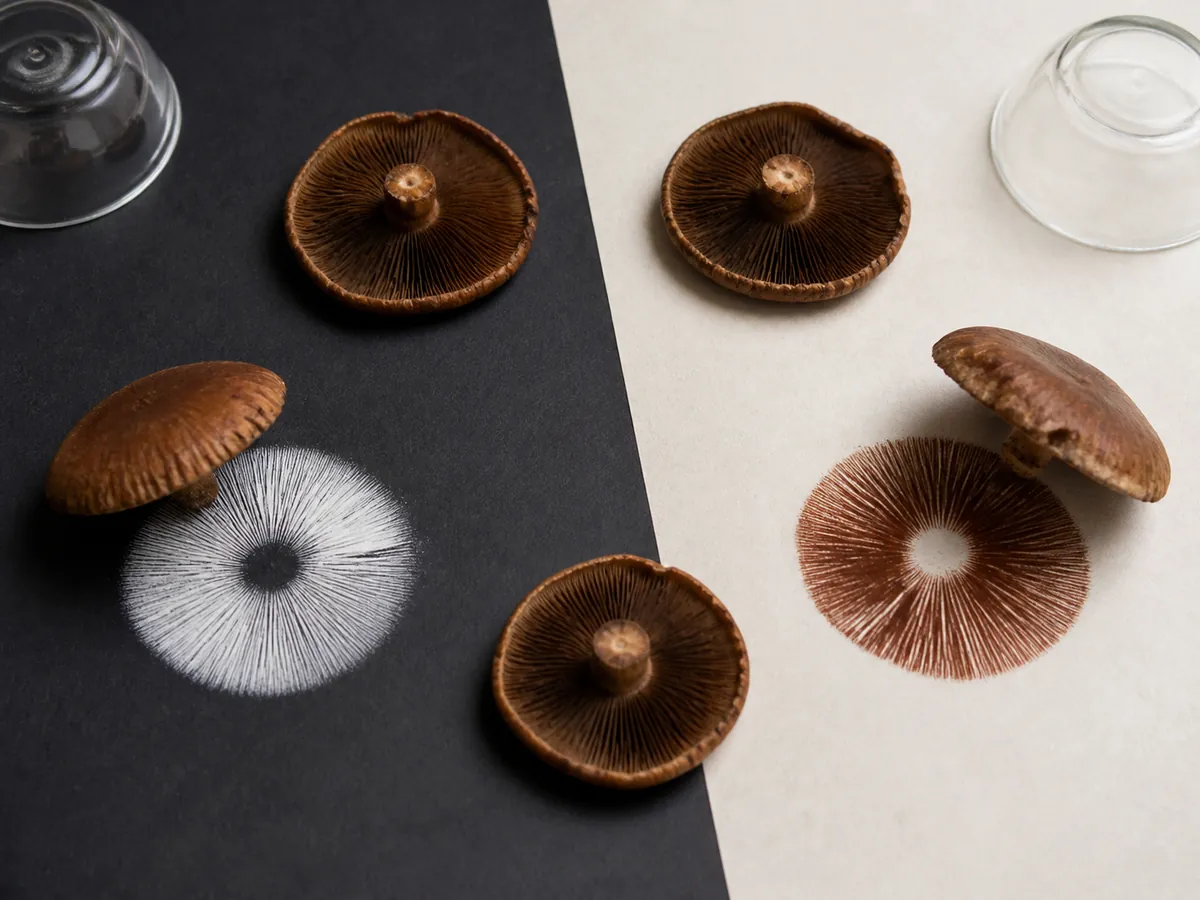
Spore color narrows the identification, but many unrelated mushrooms share a color family. Keep the cap, full stem, photographs, and substrate notes together so the print remains one character in a complete comparison.
IdentificationWhat Should You Do About Mushrooms in a Horse Pasture?How Do You Tell Honey Mushrooms from Deadly Galerina?
Typical honey mushrooms produce a white spore print, while deadly Galerina produces a rusty-brown print. A rusty deposit from any cap in a suspected honey mushroom collection rejects the batch.
Cap color cannot carry that decision because both can appear honey, tan, or brown. Young Galerina gills may look pale before rusty spores mature, and its thin stem ring can wear away.
| Character | Typical honey mushroom | Deadly Galerina |
|---|---|---|
| Spore print | White | Rusty brown |
| Growth | Often large clusters with stem bases joined | Small clusters, scattered groups, or single fruiting bodies on decaying wood |
| Gills | Whitish to pale cream | Pale when young, becoming yellow-brown or rusty with age |
| Ring | Often a whitish ring in ringed Armillaria species | A thin ring may be present when young and disappear later |
| Stem | Usually sturdier, often fibrous, with clustered bases | Slender and often darker toward the base |
| Cap | Variable honey to brown, sometimes with small scales | Smooth to finely fibrillose, often tawny or cinnamon and darker when wet |
The table is a rejection aid rather than a meal approval. Ringless honey mushrooms exist, honey mushroom caps vary, and a single cluster can contain mushrooms that do not share one character set.
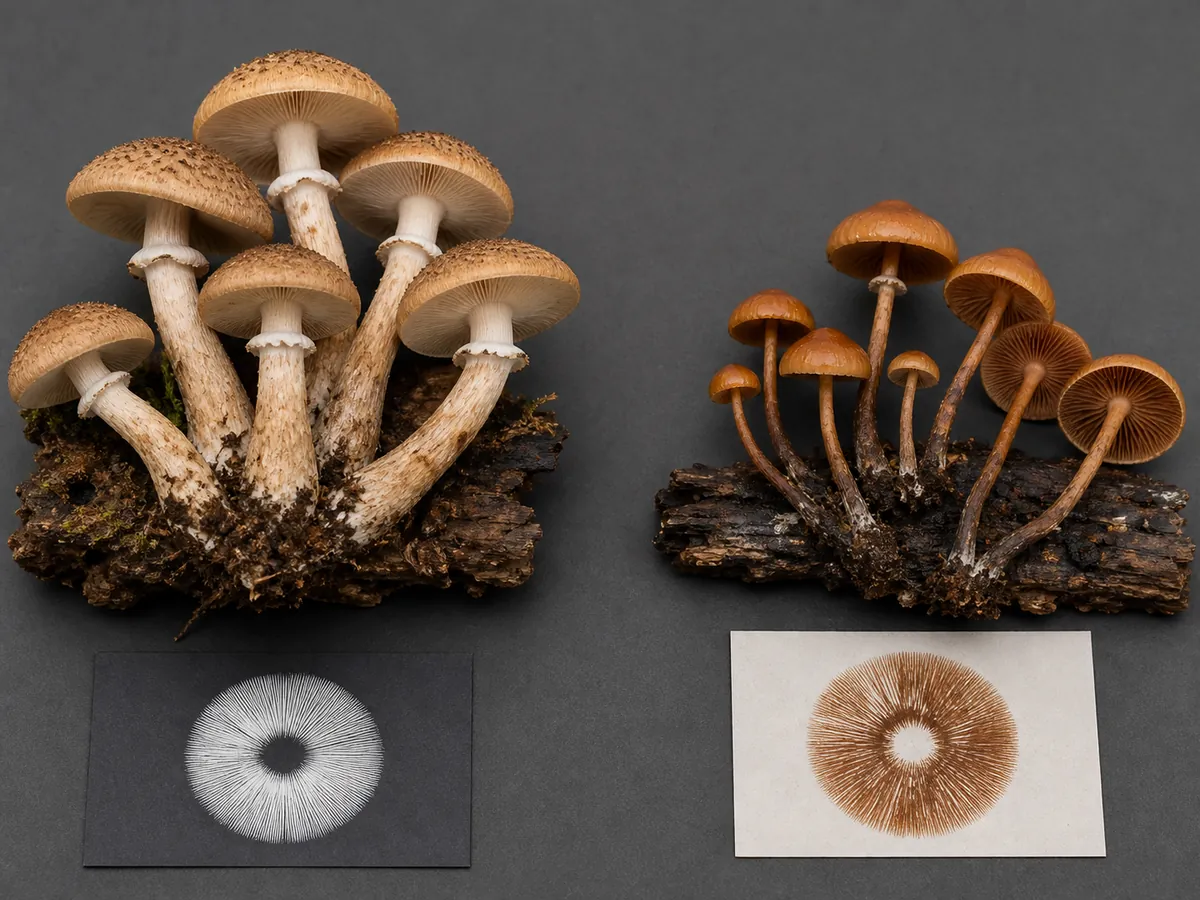
Print suspicious caps separately and compare every stem, not only the largest specimen.
A mixed white and rusty set stays out of the kitchen, even when most caps resemble honey mushrooms.
Deadly Galerina contains amatoxins that can cause severe liver injury. Cooking, drying, freezing, or soaking does not make an amatoxin-containing mushroom safe.
Are Mushrooms Growing on a Stump Edible?
Some stump mushrooms belong to edible species, but growth on wood never supplies the species-level identification needed for food.
A white print can exclude rusty-spored Galerina in the cap that produced it, yet it cannot prove honey mushroom, oyster mushroom, or any other edible identity.
Use a current regional key and confirm every required character. When consumption is the goal, a qualified local identifier should examine the complete collection because photographs cannot recover a missing stem base, unreadable print, or mixed batch.
Do not taste an unknown mushroom as an identification test. Small bites can still cause poisoning, and delayed symptoms do not mean the mushroom was harmless.
A suspected ingestion needs an immediate Poison Control call, even when symptoms have not started.
Warning
Do not eat any stump mushroom that has not been identified to species with a complete matching character set. If anyone may have swallowed an unknown wild mushroom in the United States, call Poison Control at 1-800-222-1222 immediately and save uncooked specimens and photographs when this does not delay the call.