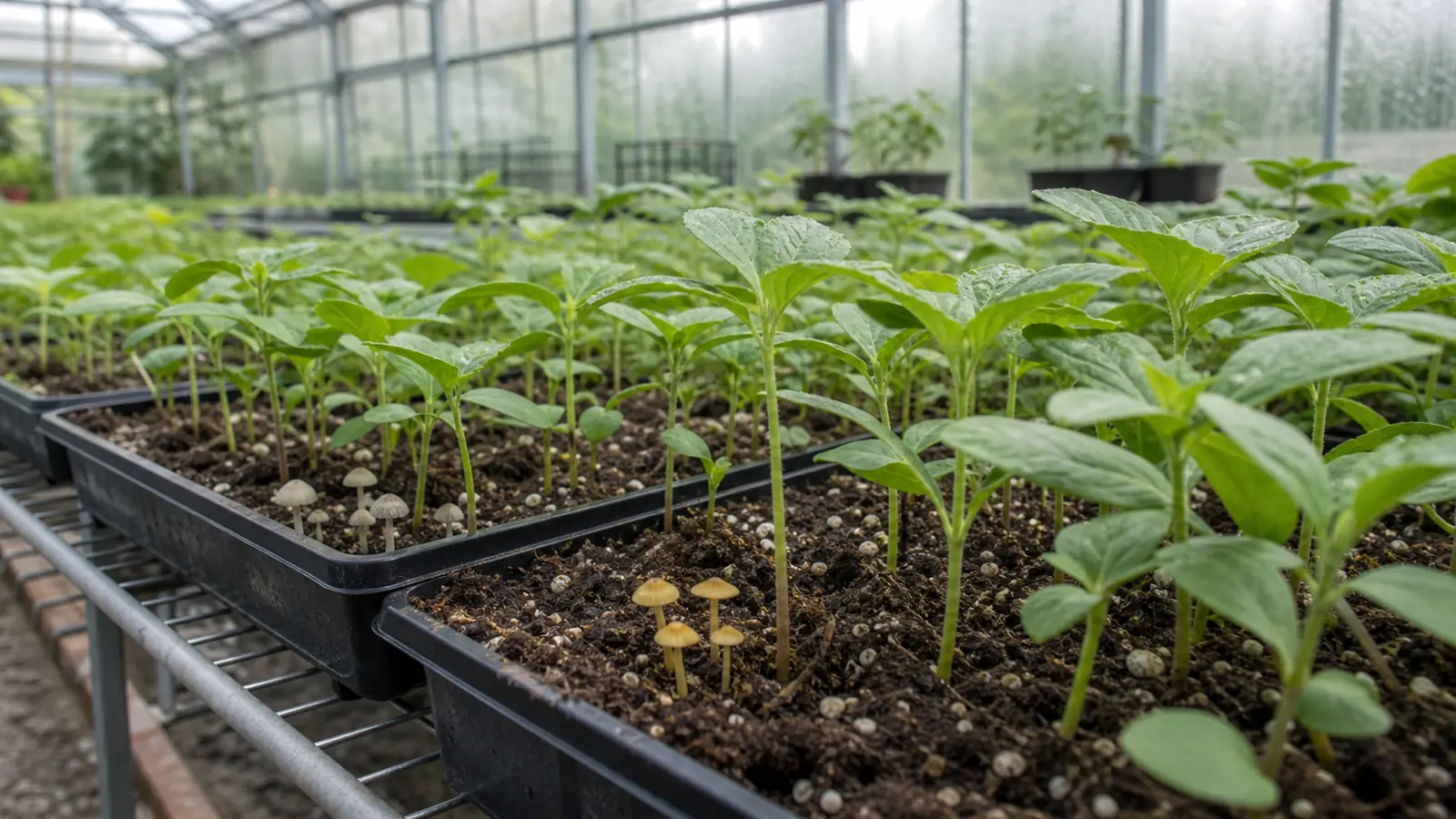
Beginners learn faster by recognizing broad mushroom forms, recording complete specimens, and studying a small local set repeatedly. Name the visible structures first, test candidates with a regional guide, and keep identification practice separate from eating.
Mushroom identification for beginners becomes manageable when you stop trying to memorize a wall of species photographs. Learn how a fruit body is built, make the same complete record each time, and compare a small number of local collections repeatedly.
The first goal is a description another person can check. A careful genus-level record is better work than an unsupported species name.
Learn Structure Before Species Names
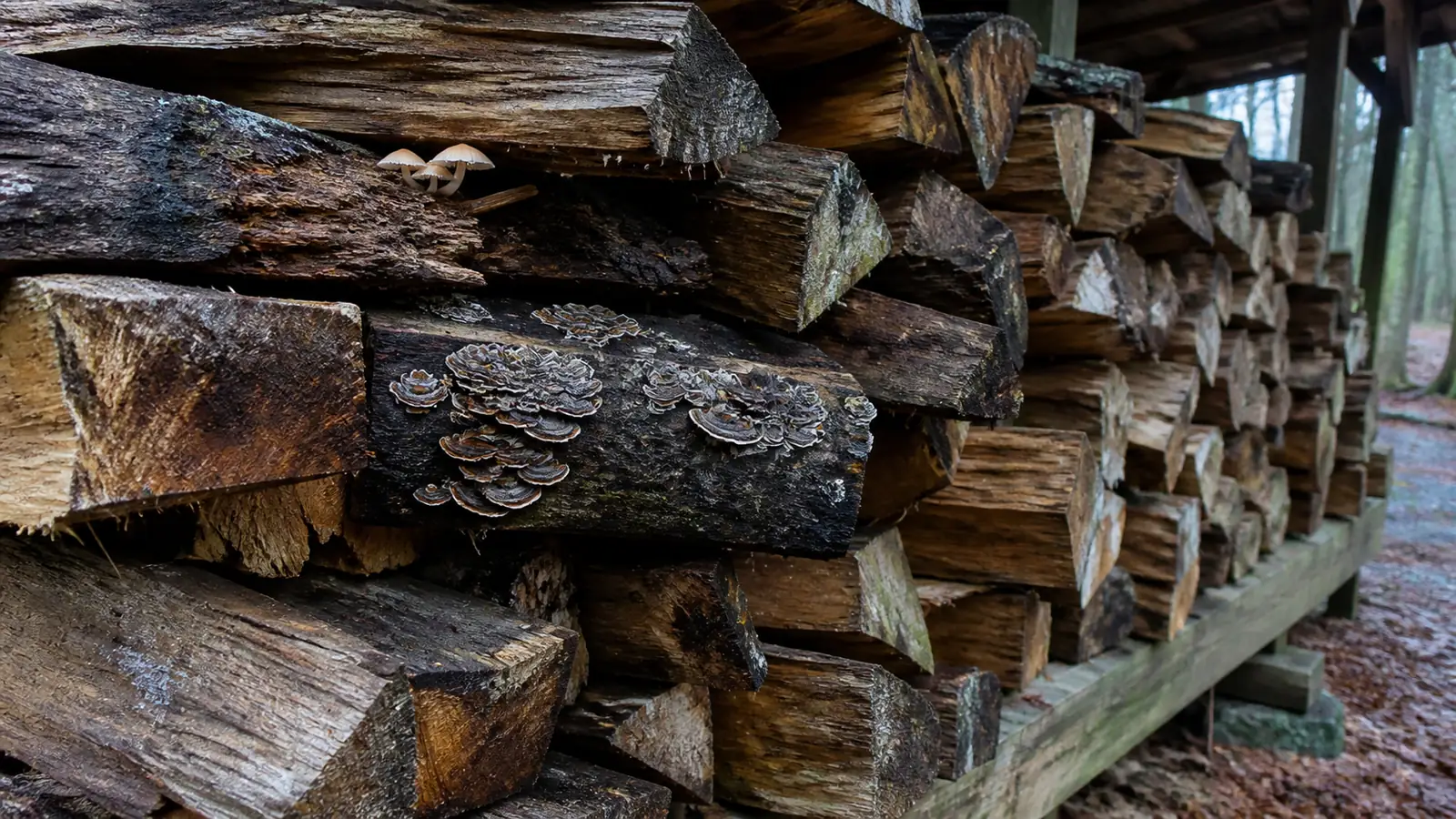
Begin with gross form and the spore-bearing surface. A gilled mushroom belongs in a different first branch from a bolete with pores, a tooth fungus with hanging spines, a cup fungus, a coral, a polypore, or a puffball whose spores mature inside.

Use the lineup to name the broad form first, then inspect the spore-bearing surface rather than jumping from cap color to species.
- list
- Gilled form | Thin plates radiate beneath a cap and require attachment, spacing, and color notes
- grid
- Pored form | A field of small tube openings replaces true gills
- chevrons-down
- Toothed form | Individual spines or teeth hang from the fertile surface
- circle-dot
- Enclosed form | Spores develop inside a puffball, earthball, or related fruit body
Do not force every line beneath a cap into the gill category. Chanterelle-like ridges are blunt folds of flesh, while true gills are thin plates with distinct faces and edges.
This first sort reduces vocabulary instead of adding to it. Once you know the form, you can learn the few observations that matter for that branch rather than carrying every mushroom term into every outing.
IdentificationWhat Are the Black Artillery Fungus Spots on Siding?Learn a Record You Can Repeat
Photograph the mushroom in place before collecting it, showing the surrounding habitat, exact substrate, growth pattern, cap from above, side profile, underside, complete stem and base, and a ruler or another standard scale.
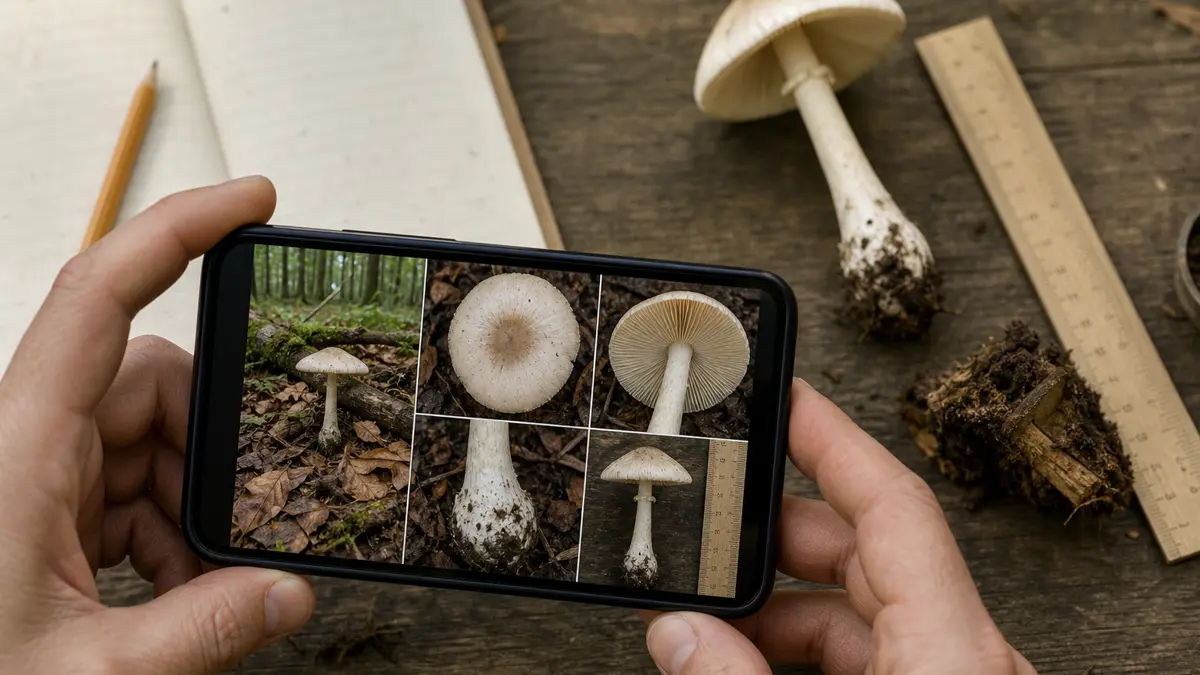
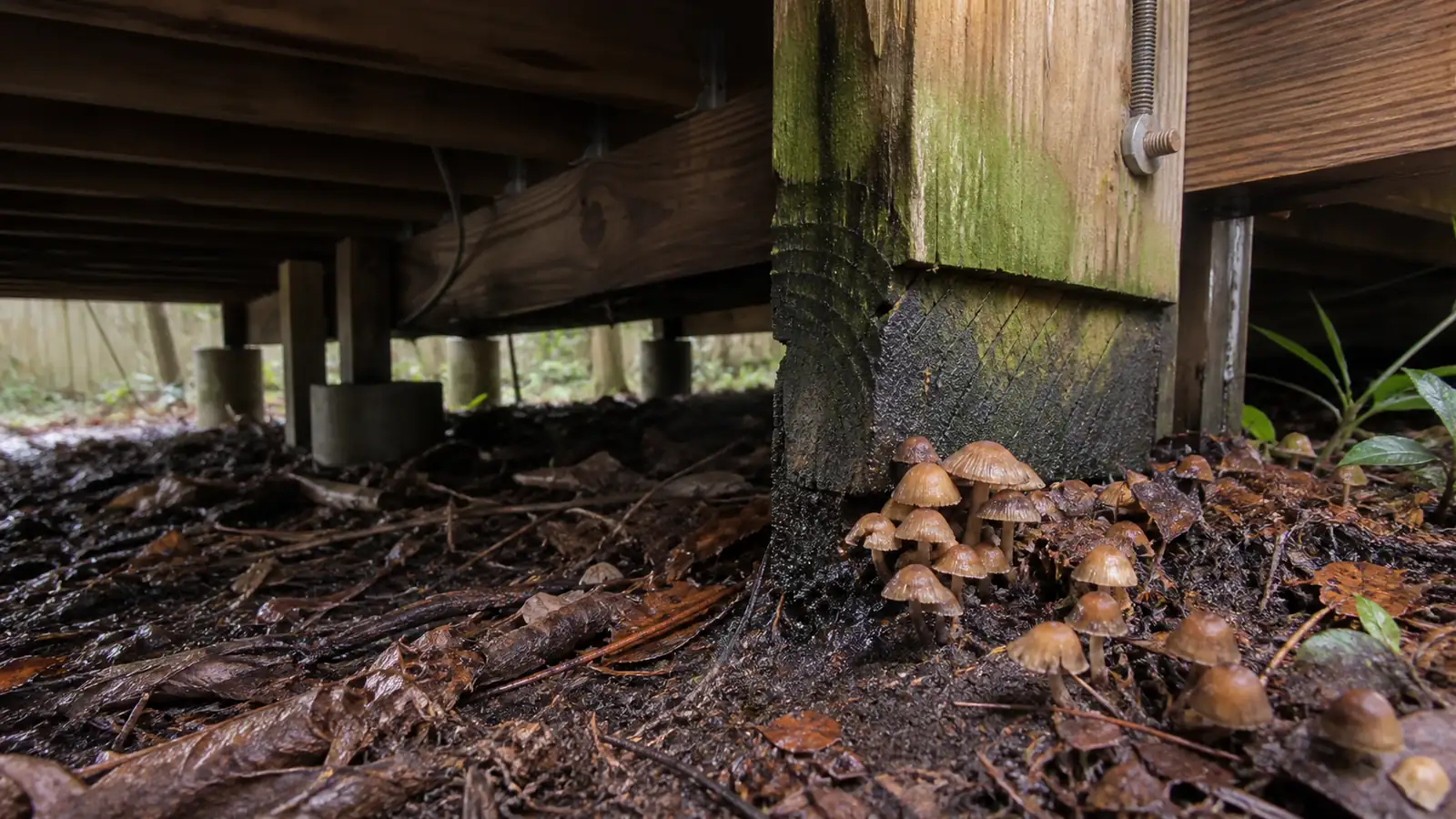
Write down nearby trees, whether the substrate is soil or wood, whether that wood is living or dead, and whether fruit bodies are solitary, scattered, grouped, or fused. A mushroom apparently growing from soil may be attached to buried wood, so inspect the base before recording substrate.
Excavate one complete specimen rather than snapping the stem at ground level. Bulbs, cups, rooting extensions, attached cords, and color at the base can be more useful than cap color.
Record fresh texture and any staining soon after collection. Slime dries, colors fade, veil fragments rub away, and odors change in a closed container.
A dependable record uses one specimen number across the photos, notes, spore deposit, packet, and later determination so a loose cap cannot acquire the wrong stem or habitat.
Add One New Technique at a Time
Choose one skill for an outing and use it on every suitable collection. Comparing the same character across several mushrooms teaches the boundary between terms more quickly than reading a glossary once.
Keep the name covered until the description is complete. Writing “oyster-like†before recording the underside encourages you to reinterpret any descending structure as evidence for the guess.
Repeat a term with live specimens at different ages.
Gill attachment can look different as a cap expands, and a young convex cap can become flat or depressed without changing species.
After each outing, choose one record and rewrite it without looking at a suggested name. The exercise exposes vague words such as normal, typical, or brownish and replaces them with observable shape, size, surface, attachment, and change.
Keep an error log with the character that changed your decision, not just the corrected name. Over several weeks, repeated errors reveal whether you are losing stem bases, overlooking substrate, misreading ridges as gills, or assigning color under poor light.
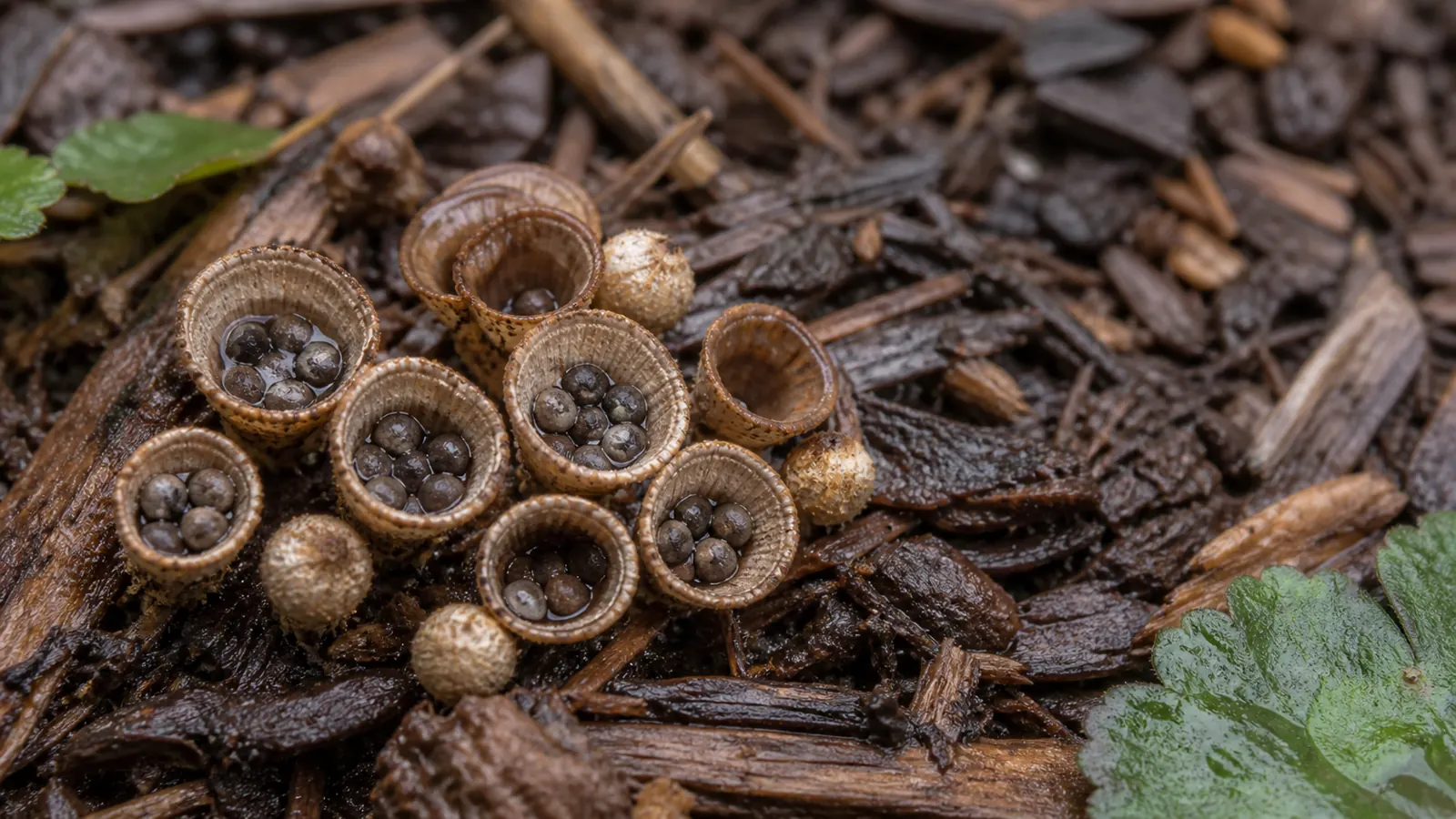
IdentificationWhat Are the Tiny Bird's Nest Fungi in Your Mulch?Build a Five-Specimen Local Study Set
Select five abundant local collections that represent different structural jobs, not five mushrooms advertised as easy edibles. Your regional mycological club can help choose material that actually occurs nearby and has suitable teaching value.
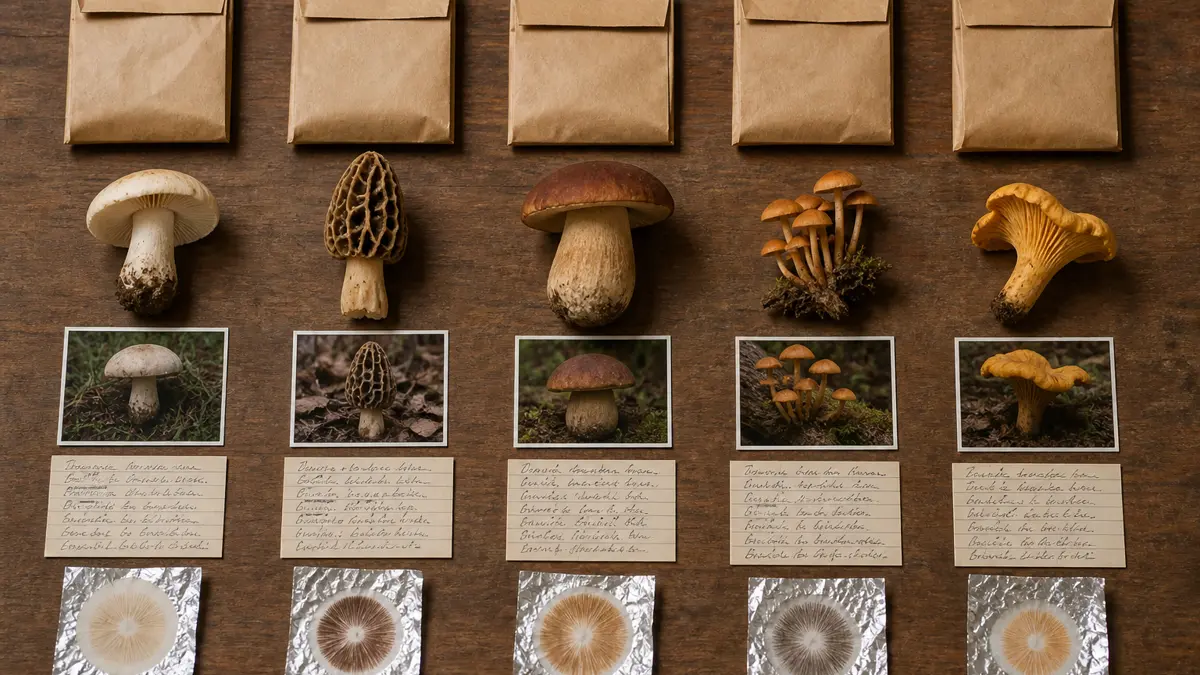
Each packet should preserve one teaching job and one collection number before the comparison matrix is filled.
| Study role | What to choose | What to practice |
|---|---|---|
| Form contrast | Two clearly different fertile surfaces | Broad branch selection before names |
| Age series | Several stages from one abundant patch | Cap expansion, veil loss, and color change |
| Substrate contrast | Soil, leaf litter, and wood collections | Recording the actual attachment point |
| Spore contrast | Mature caps with visibly different deposits | Surface choice, deposit density, and color family |
| Hard case | One unresolved local collection | Honest uncertainty and missing-character notes |
Keep each collection in its own paper packet or rigid box with the same number as its notes. Plastic can trap condensation, and a shared container can spread spores and fragments among specimens.
Revisit the determination after a week and again when another collection appears. Correcting a name is normal, and the changed decision reveals which character was overlooked the first time.
Rotate a specimen out only after you can describe its broad form, fertile surface, cap profile, stem base, substrate, and age changes without a photograph prompt. Replace it with a local collection that introduces one new structural problem rather than another mushroom that looks nearly identical.
The hard case is essential because some groups cannot be resolved from macroscopic characters, and recognizing that boundary breaks the expectation that every outing must end at species.
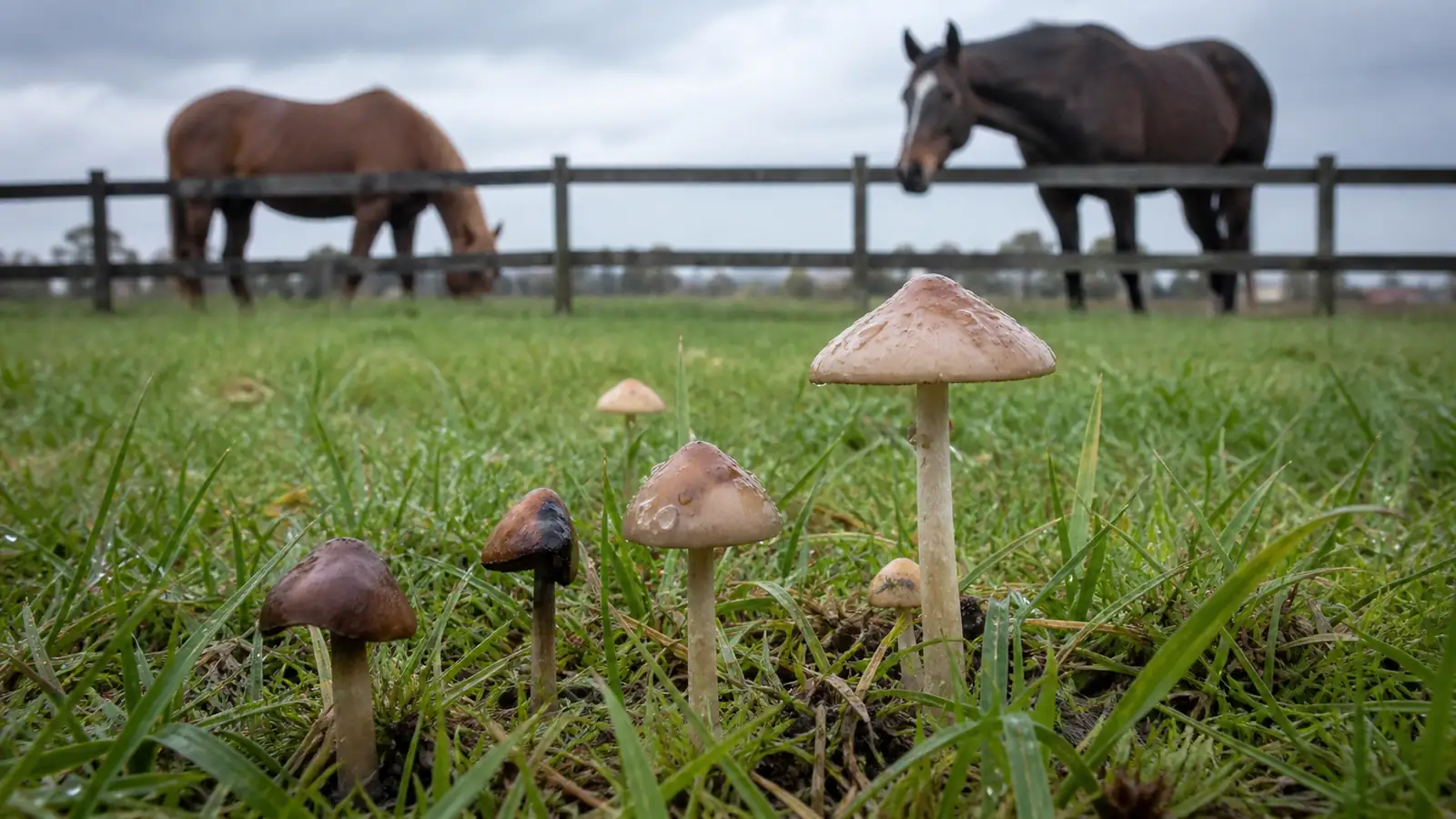
IdentificationWhat Should You Do About Mushrooms in a Horse Pasture?Use a Small Kit, Not a Shopping List
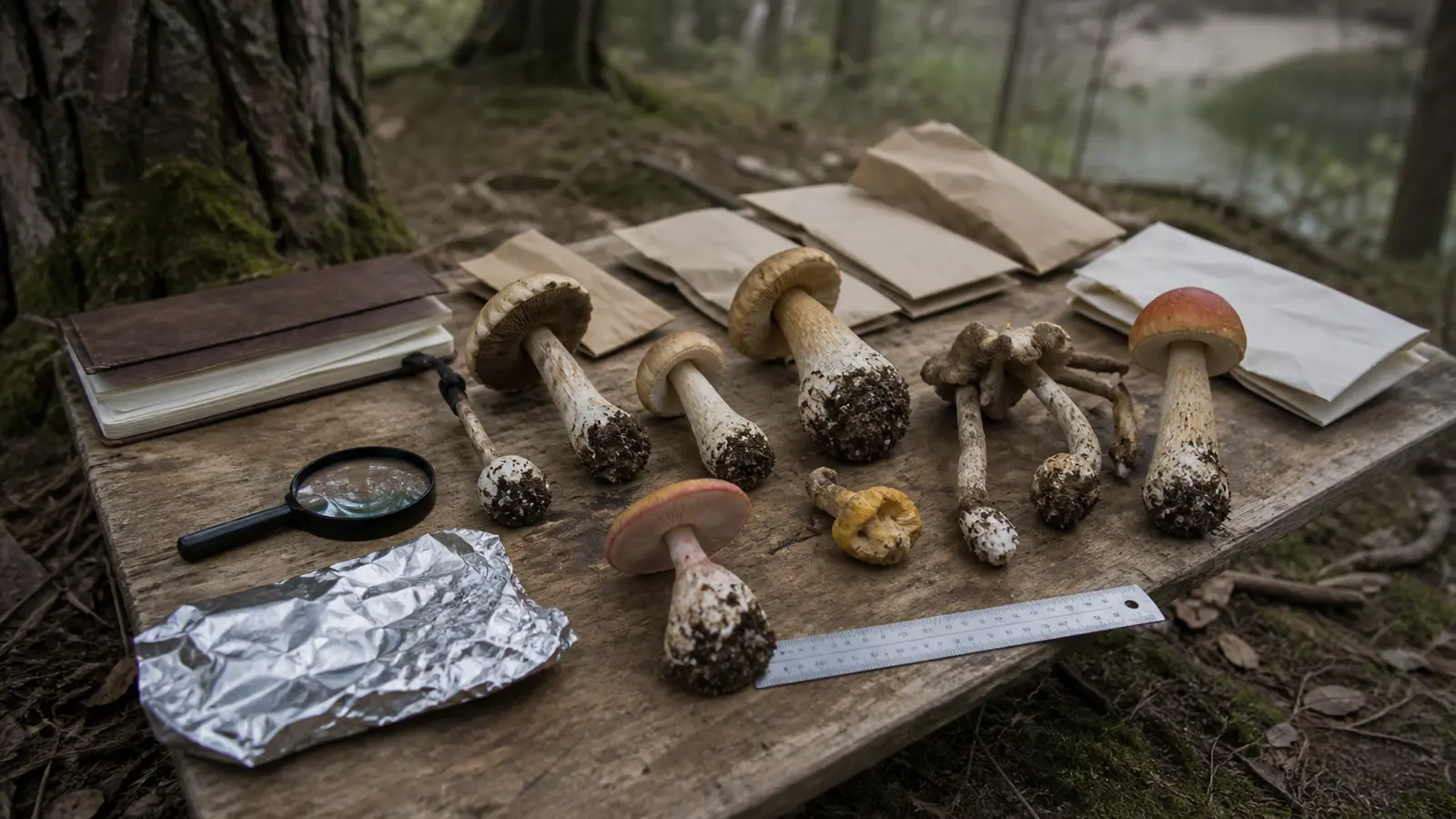
Carry tools that solve an observation problem:
- A current regional field guide narrows candidates to species that plausibly occur where you are.
- A notebook and pencil preserve habitat, measurements, time, and character changes.
- A ruler provides scale that coins, fingers, and camera perspective cannot standardize.
- A hand lens reveals gill edges, fine cap fibers, pores, hairs, and tiny veil remnants.
- Foil or clear glass shows both pale and dark spore deposits.
- Paper packets and labels keep collections separate while allowing moisture to escape.
- A small knife or trowel helps recover the complete base and make a clean vertical section.
A microscope becomes valuable only when you have a key that requests microscopic characters and know how to prepare the relevant tissue. Buying magnification before learning to make a complete macroscopic record creates more images without fixing the first missing evidence.
Field guides also have limits. Check the geographic scope, publication date, terminology, whether the book treats species complexes that later work has split, whether local species appear at more than one developmental stage, and whether diagnostic features are labeled clearly.
Use Apps and Communities as Candidate Sources
An app is useful for generating names to test. It is weak at characters that are hidden, tactile, olfactory, microscopic, dependent on age, or absent from the submitted photograph.
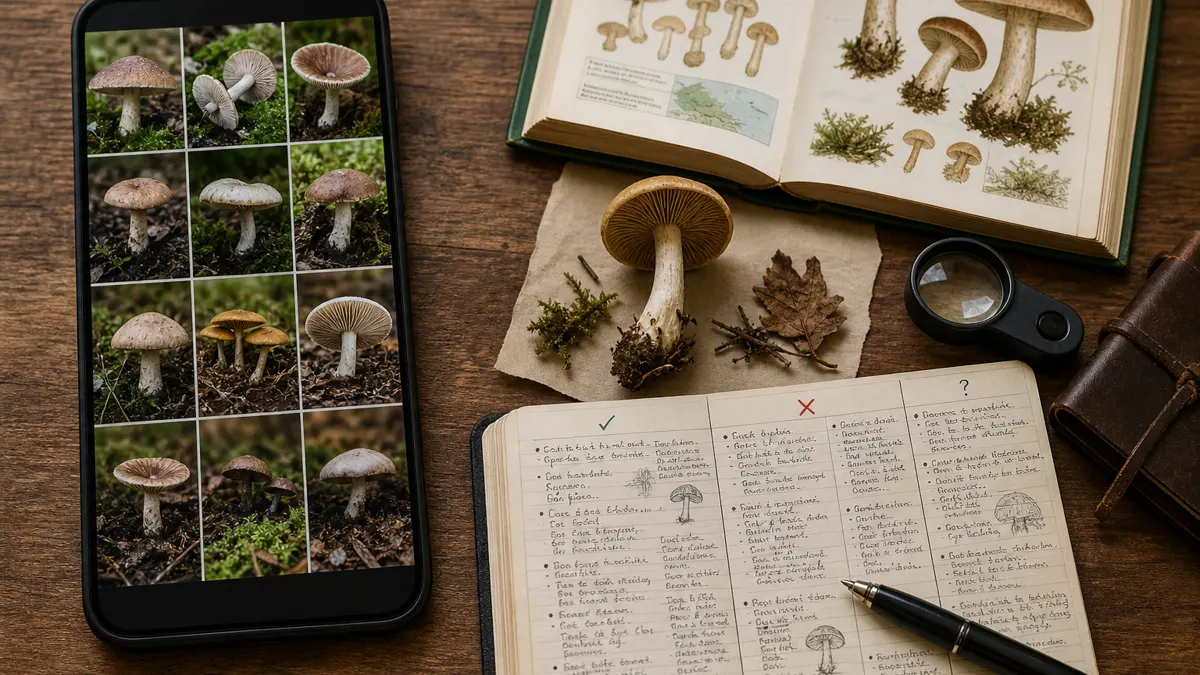
The useful output is the short candidate list on the left only after the ledger on the right records agreements and conflicts.
Write the top candidates in a small ledger, then add evidence that agrees, evidence that conflicts, and evidence you did not collect.
If one strong conflict appears, such as the wrong spore color, fertile surface, stem base, or geographic range, it can outweigh broad resemblance.
Ask an experienced identifier which observation would separate the remaining candidates, then collect that character on the next suitable specimen. This turns feedback into a repeatable skill instead of a one-time answer attached to a photograph.
Note
Do not upload one cap portrait and ask another person to infer the underside, base, substrate, or scale. Missing evidence remains missing even when several commenters agree on the same visual suggestion.
Local mushroom clubs add value because experienced identifiers know regional variation, fruiting seasons, current names, and lookalikes. Bring the specimen when rules permit, along with the full record, instead of requesting an edibility judgment from a compressed photograph.
Ask why a determination fits and what would disprove it. The explanation teaches a transferable character, while a bare name only solves one post.
Keep Learning Separate From Eating
Keep identification practice separate from foraging for food because a beginner study set should be chosen for structural variety and local repetition, not because a list calls the species edible.
Do not turn a corrected study name into permission to eat a later collection that merely resembles it. The later mushroom needs its own complete record, and any consumption decision needs the level of local verification appropriate to its dangerous lookalikes.
Keep toxic or unknown study specimens away from food containers, children, and pets, and wash hands after handling damaged tissue. Ordinary observation does not require fear, but physical separation prevents fragments from entering meals or another specimen packet.
Label unresolved material as unknown and keep it away from food. Never taste an unknown mushroom simply because a key mentions flavor, and wash hands and surfaces after handling decayed specimens.
Measure progress by whether your records name the fertile surface, preserve the complete base, describe cap and stem without a candidate in mind, include a usable spore deposit, and state which character still blocks a species name.
Keep an error log with three columns:
- The initial candidate and the observation that made it seem plausible.
- The character that contradicted or refined that candidate.
- The photograph, measurement, specimen part, or test to collect next time.
This turns a wrong guess into a better future method. Repeating confident names without tracking the miss teaches only familiarity with pictures.
Some collections will remain at form group, family, genus, or species group until microscopy or expert examination is available. Stopping at the evidence keeps the record honest and allows revision when better information arrives.
A useful first-season goal is consistency across records, not a fixed number of species names. When the same views, measurements, and uncertainty notes appear without prompting, later terminology has a stable foundation.