Begin where the mushroom grows, photograph it in place, collect the complete base, sort the fertile surface, record cap and stem structures, compare age stages, then use a regional key. Stop at the narrowest supported identification.
The first step in mushroom identification happens before you touch the specimen. Habitat, substrate, growth pattern, and the position of the complete stem base can disappear as soon as it is lifted.
Build an observation record first, then test possible names against it.
A photograph match is a candidate, not an identification.
Record the Site Before Touching the Mushroom
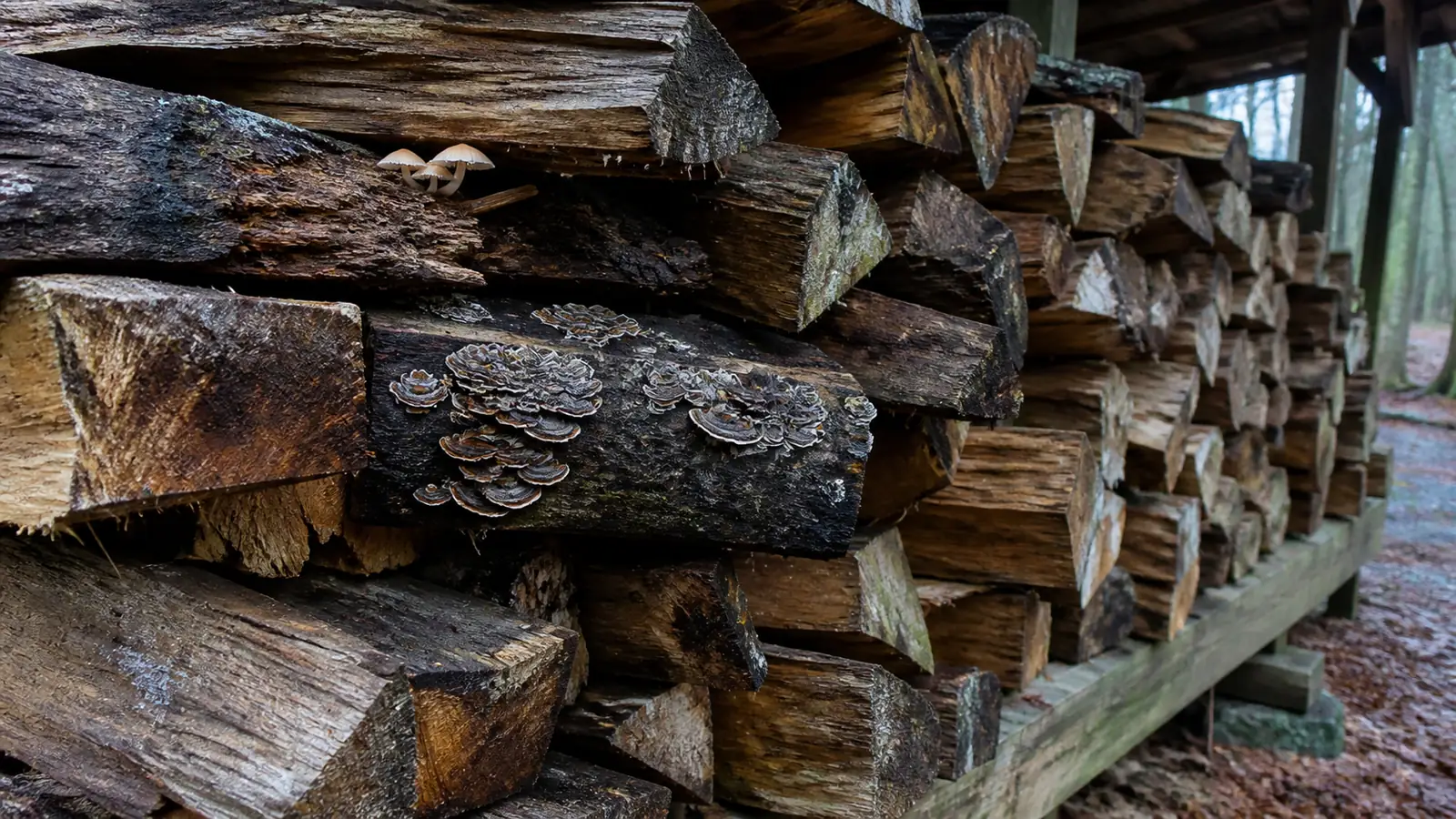
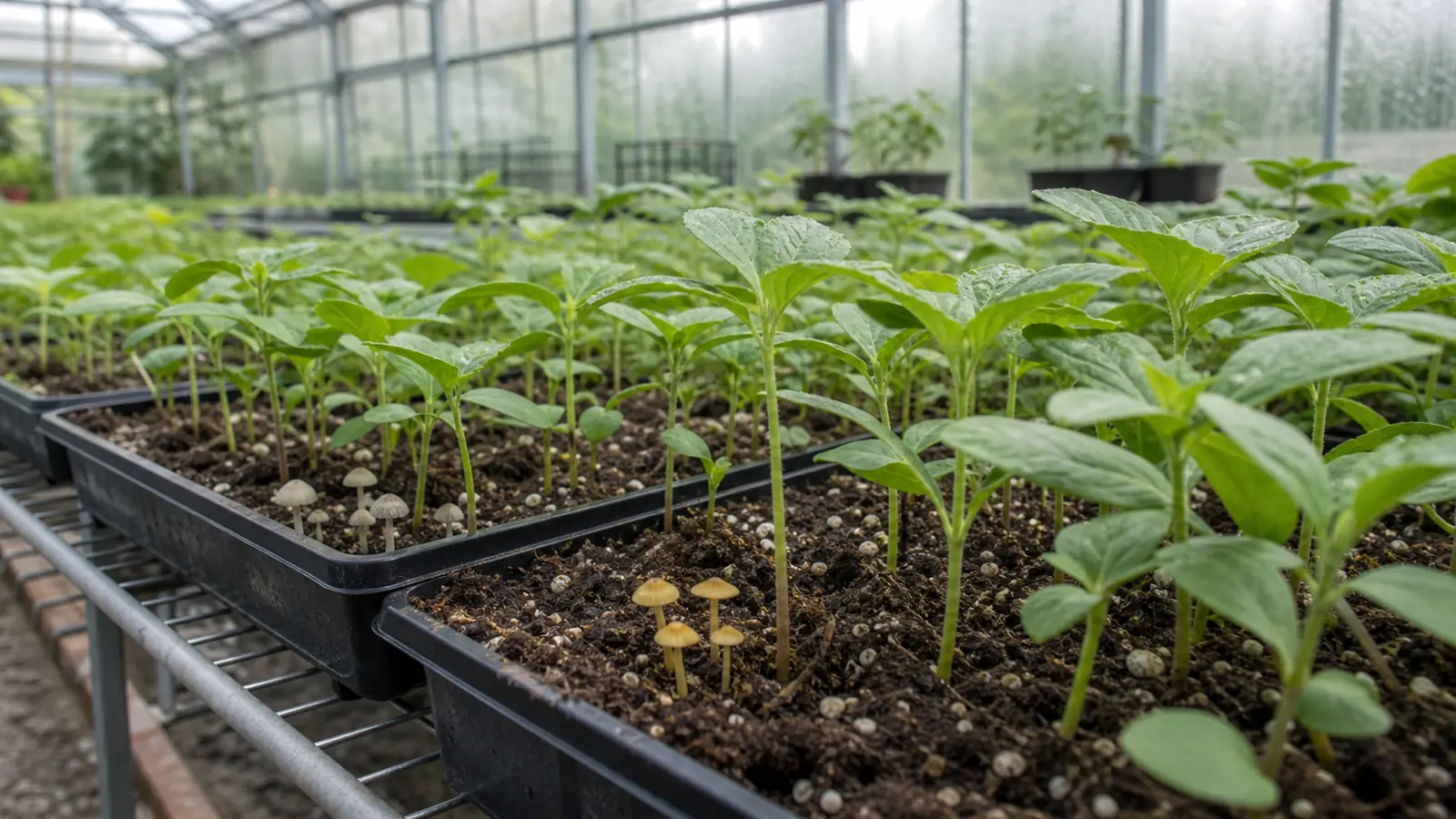
Take a wide photograph that shows whether the mushroom stands in lawn, leaf litter, moss, bare soil, dung, or wood. Include nearby trees when they can be recognized, since many fungi associate with particular plant groups.
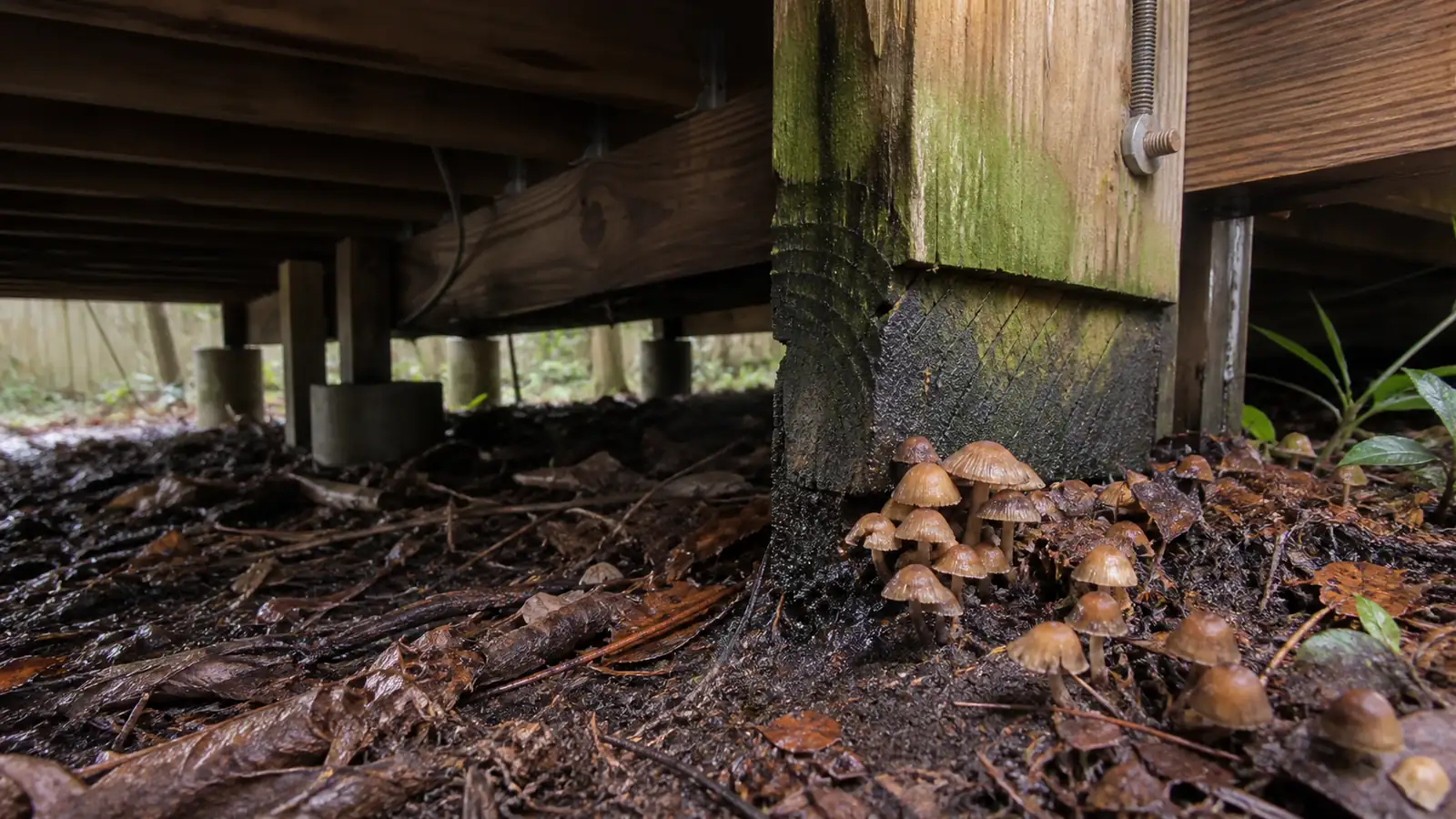
Move closer and photograph the exact substrate. A mushroom that appears terrestrial can rise from buried wood, while a cluster at a trunk may originate from roots beneath the soil.
- map-pin
- Locality | Country, state or province, site name, and coordinates when appropriate
- tree-pine
- Habitat | Forest type, nearby trees, slope, moisture, and disturbance
- layers
- Substrate | Soil, litter, living wood, dead wood, dung, moss, or buried material
- group
- Growth | Solitary, scattered, grouped, clustered, fused, or in an arc
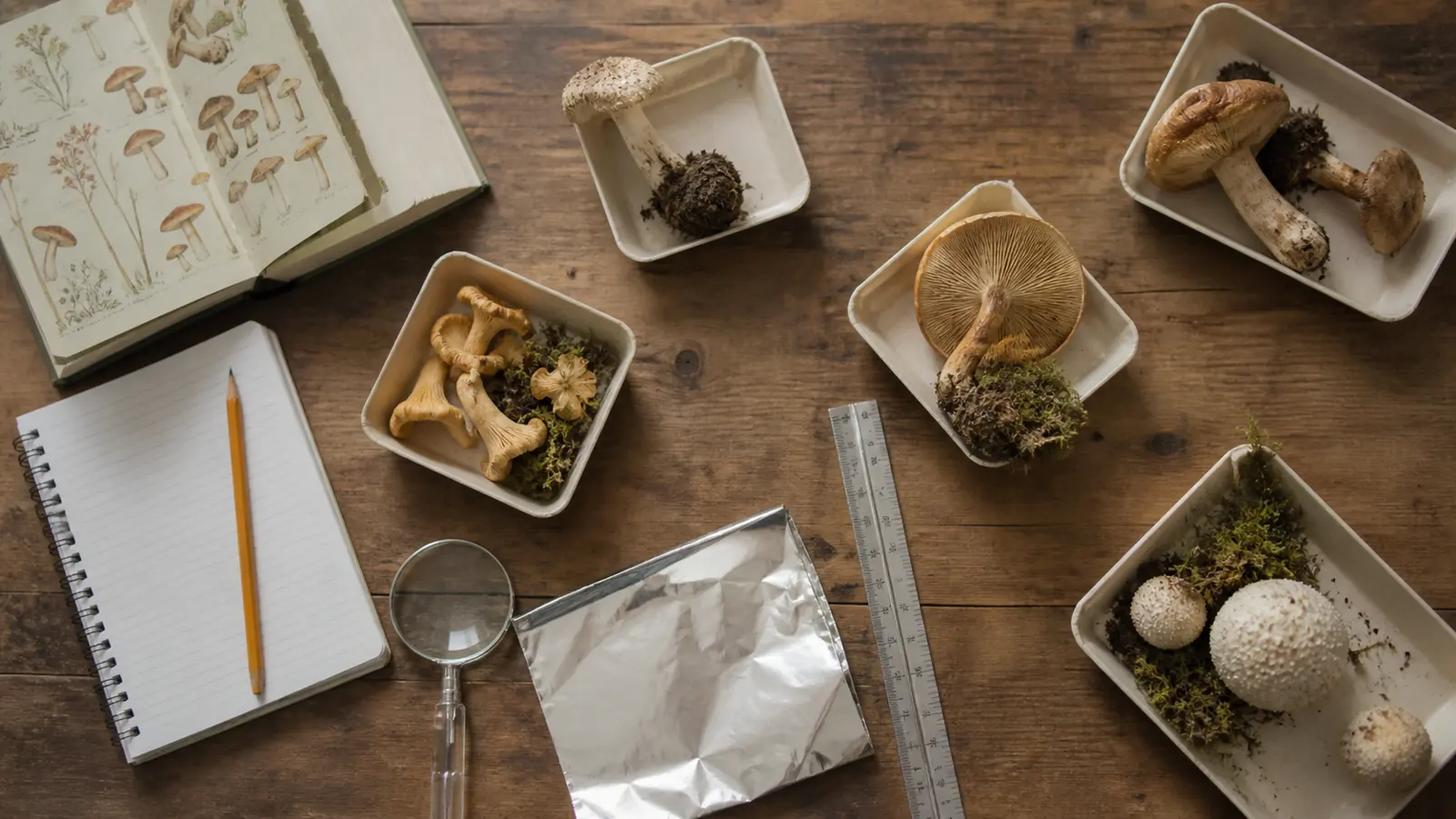
Then show scale with a ruler or another standard object, but do not cover diagnostic structures. Record date and recent weather because size, color, and texture change after heat, frost, heavy rain, or drying wind.
Give every collection a unique field number before taking close views, then include that number in the notebook and specimen packet because this association prevents a correct photograph from being assigned to the wrong mushroom after several collections reach the desk.

Photograph the cap from above and from the side before handling it. Surface bloom, loose veil patches, slime, fine fibers, and marginal striations can be rubbed away by fingers or a collecting bag.
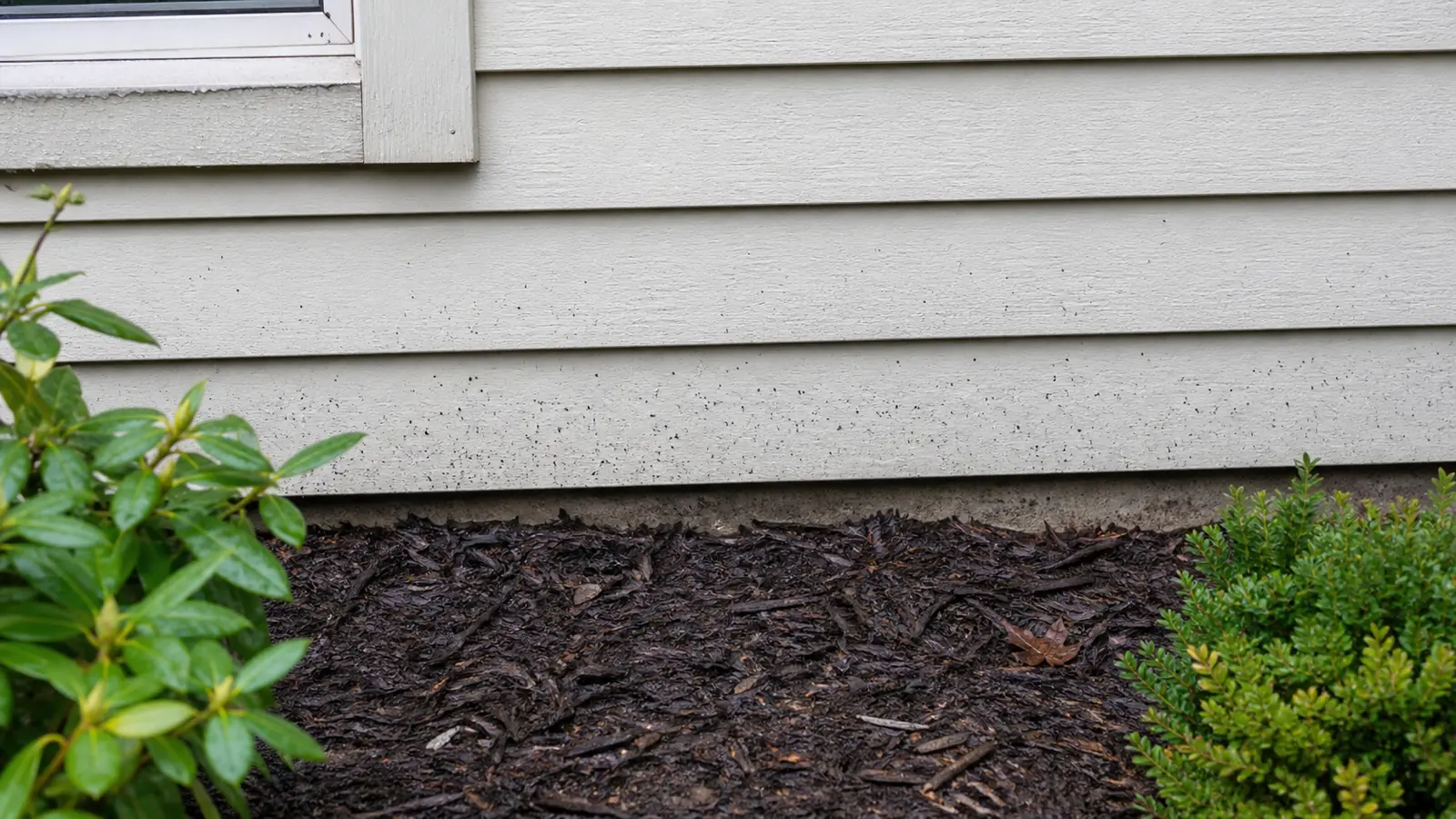
IdentificationWhat Are the Black Artillery Fungus Spots on Siding?Collect One Complete Specimen
Excavate beside the stem with a small knife or trowel, then lift soil around the complete base. Pulling straight upward can leave a volva, bulb, rooting extension, or attached substrate behind.
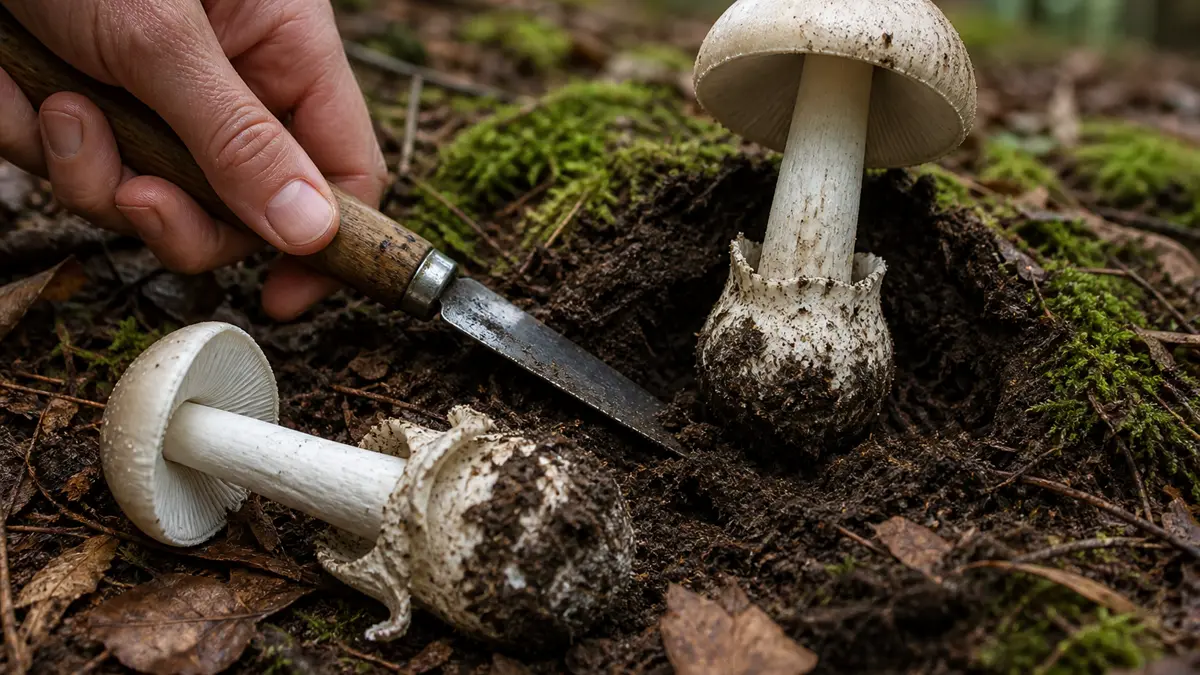
The intact base in the image shows why the collection method must preserve soil-level and below-ground structures.
When several fruit bodies are abundant, collect a young, mature, and older example from the same patch. Leave the rest in place and keep stages together only when their shared substrate and growth pattern support that association.
Small delicate mushrooms can be transported in rigid boxes so caps and stems do not crush. Never mix loose fragments from different collections, since an unmatched base or cap can create a false combination.
Sort the Fertile Surface Before the Cap
Turn the specimen over and identify the structure that bears spores. This choice determines which branch of a field key is relevant before cap color receives much weight.
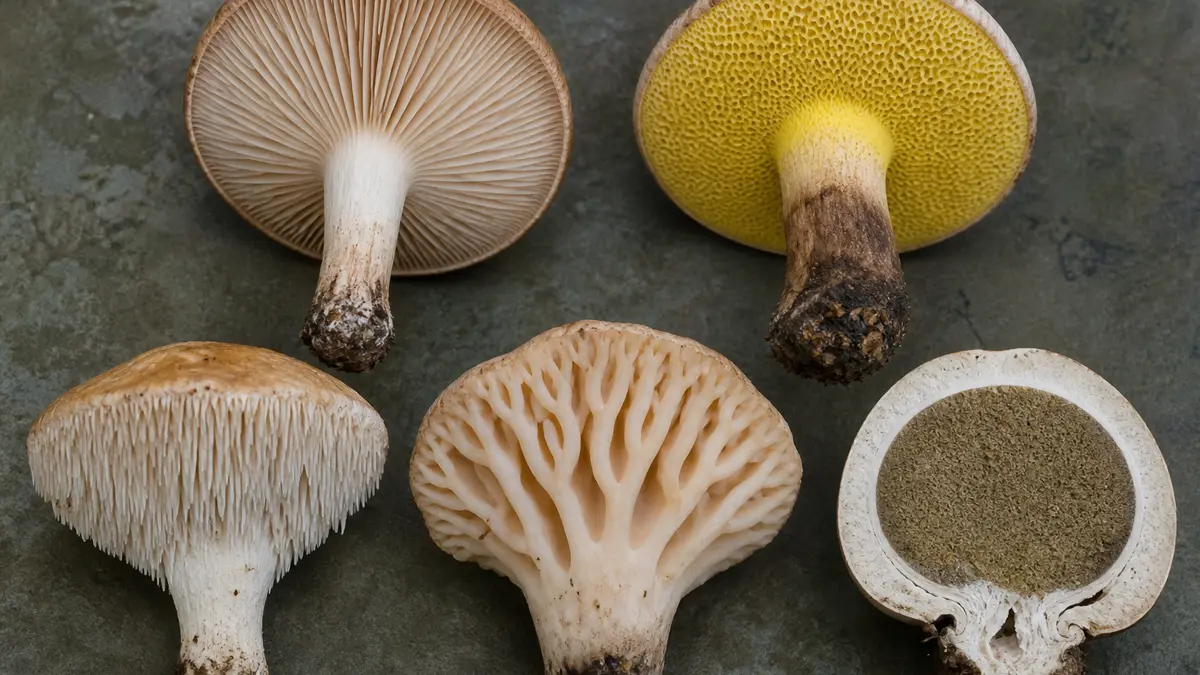
Choose the branch by physical structure before describing color or resemblance.
Thin blade-like plates
Record true gillsCheck attachment to the stem, spacing, thickness, edges, short gills, and color change
Tiny tube openings
Record poresNote pore shape, density, bruising, tube depth, and whether the layer separates from the cap
Individual hanging spines
Record teethMeasure length and note whether teeth descend along a stem or branch
Thick blunt folds
Record ridgesTrace whether folds fork and cross-connect rather than assuming every line is a gill
Spores enclosed inside
Record an internal spore massCut vertically to inspect chambers, immature structures, and changes from solid to powdery tissue
A chanterelle-like ridge is part of the mushroom flesh and is usually blunt, while a true gill is a separate thin plate with two faces. Confusing those structures sends the observation into the wrong key branch.
For gilled mushrooms, describe how the inner gill edge meets the stem. Free, adnexed, adnate, notched, and decurrent are geometric observations, not species names.
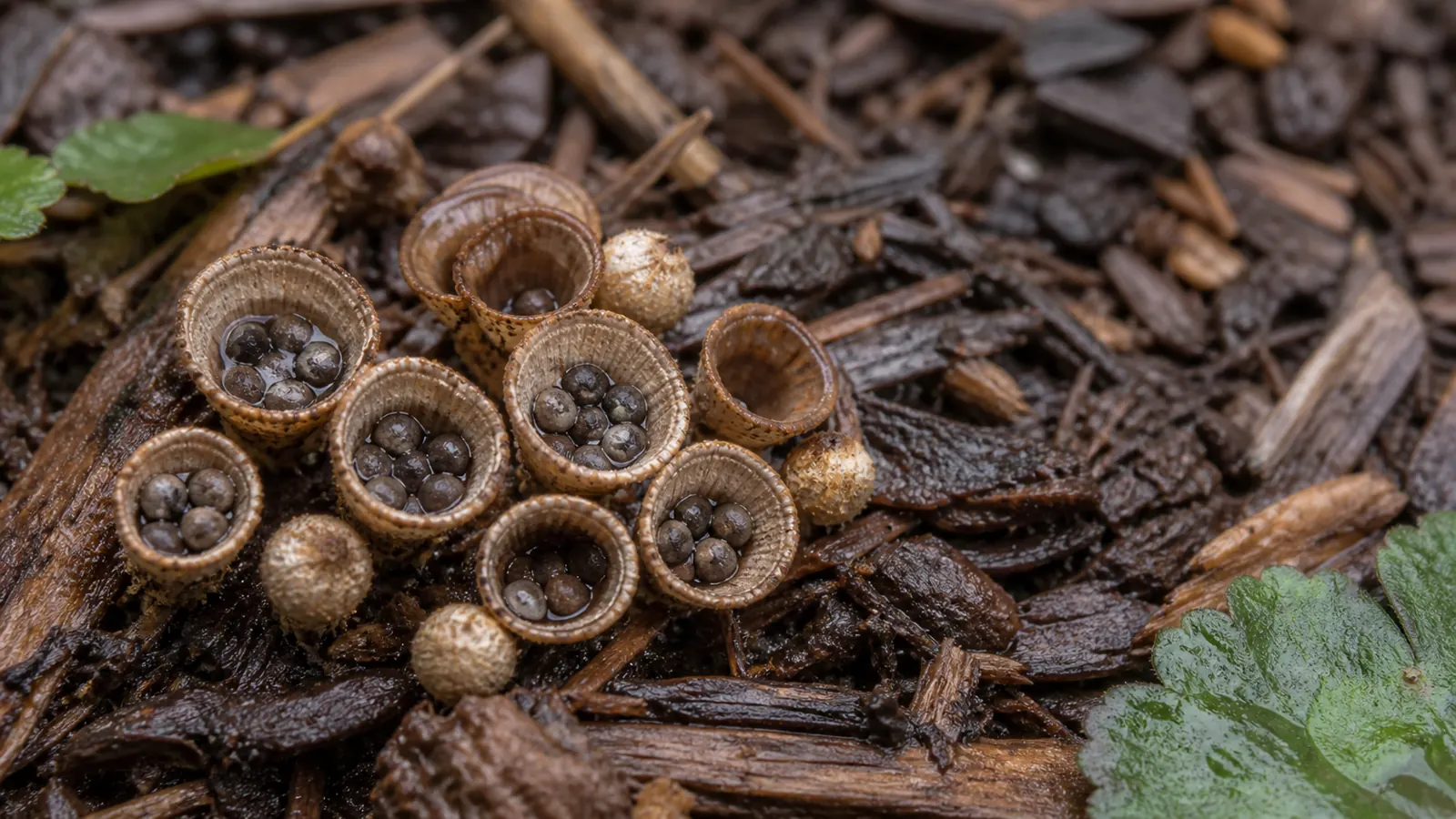
IdentificationWhat Are the Tiny Bird's Nest Fungi in Your Mulch?Describe the Cap and Stem Without Naming the Species
Measure cap width, stem length, and stem thickness before substituting words such as small or large. Record cap shape from the side because an overhead photograph cannot show whether the center is conical, umbonate, depressed, or funnel-shaped.
When the surface is fresh, record whether it is smooth, viscid, dry, fibrillose, velvety, scaly, cracked, or zoned because these visible or tactile structures may disappear during transport.
Record odor at the intact surface and again after a fresh cut, without tasting an unknown collection. Note whether the smell is absent, farinaceous, fruity, phenolic, garlic-like, or otherwise distinctive, and keep unusual comparisons literal enough for another person to understand.
Look at the margin for grooves, veil fragments, inrolling, splitting, translucence, or a sterile band. Then note whether the cap and stem bruise, stain, or exude latex after a controlled cut.
The stem record includes position, shape, interior, surface, base, and veil remnants. A central stem differs from an eccentric or lateral one, and a stuffed interior differs from a hollow tube even when the outside looks identical.
Make a vertical section through the cap and stem when the specimen can spare it because the cut reveals chambered flesh, color zones, internal veils, larval damage, and a young Amanita structure hidden inside an apparent ball.
Odor can support a description, but avoid inhaling fragments and never taste an unknown specimen merely because a key requests taste. Leave a character unrecorded when observing it would require an unsafe action.
Compare Young, Mature, and Old Specimens
Mushrooms change shape faster than many field-guide portraits suggest. A rounded cap can become convex, flat, uplifted, or depressed within the same collection.

Read the stage columns as a change record, not as three unrelated descriptions.
| Character | Young stage | Mature stage | Old stage |
|---|---|---|---|
| Cap | Closed or strongly convex | Expanded with useful margin and surface | Flattened, uplifted, faded, cracked, or waterlogged |
| Fertile surface | Covered or pale | Exposed and actively producing spores | Darkened, bruised, eaten, or collapsing |
| Veil | Intact between cap and stem | Torn into ring, cortina, or cap fragments | Collapsed, weathered, or missing |
| Stem relation | Attachment may be compressed | Geometry is usually easiest to judge | Gills can pull away and appear seceding |
Compare traits across specimens instead of choosing the prettiest one.
Stable substrate, spore color, flesh reactions, and microscopic characters may carry more weight than a cap color that fades after rain.
Age also explains apparent contradictions. White young gills can become pink, brown, rust, or black as spores mature, and a skirt-like ring can collapse against the stem until it resembles a faint zone.
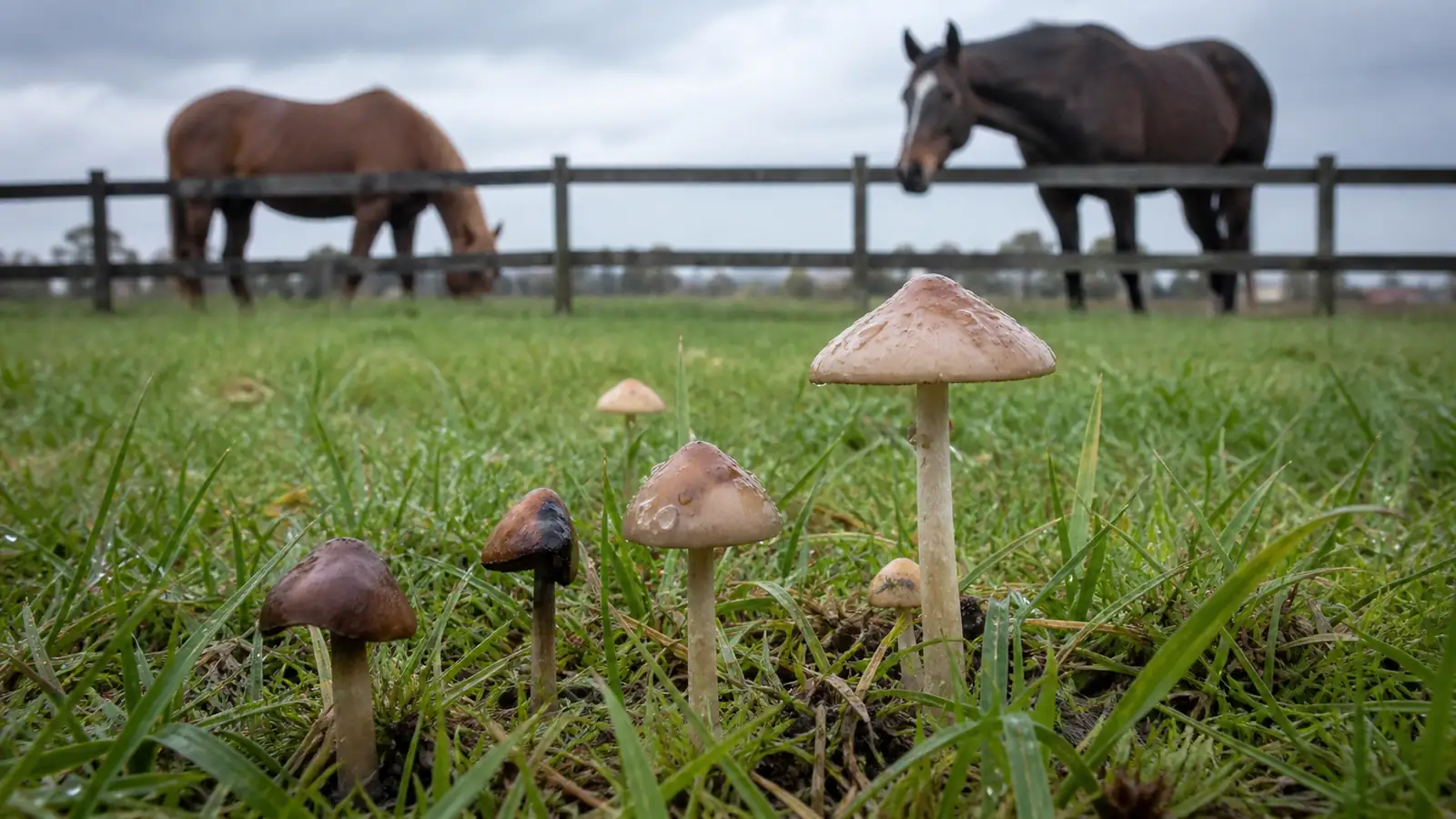
IdentificationWhat Should You Do About Mushrooms in a Horse Pasture?Add Tests Only After the Field Record
Later tests are most useful when they answer a specific unresolved distinction. A spore deposit can separate color groups, but it cannot recover a missing base or unknown substrate.
Make a spore print from a mature cap on foil or glass and keep it linked to the collection number. Record the dense mass color rather than assuming an empty pale surface represents white spores.
Record bruising and staining by location and time, noting what was cut or pressed, the initial color, the interval before change, and the final color instead of writing only “blue†or “brown.â€
Note
Chemical reagents and microscopy belong to methods that name the reagent, concentration, tissue, preparation, and expected reaction. Do not improvise household chemicals or treat an unlabeled color change as evidence.
Microscopy can be necessary for groups whose field characters overlap. Spore size, ornamentation, reaction, cystidia, and tissue structure require proper preparation and a relevant key, not a magnified photograph alone.
Use a Regional Key as Tests
Choose a current guide for the region where the specimen grew. A visually similar species from another continent does not become locally plausible because an image-search result ranks highly.
Read each key choice as a test of an observation already recorded. When a term is unclear, resolve the term before choosing the branch, since guessing at gill attachment or cap texture compounds at every later step.

The ledger makes contradicting evidence visible before familiarity with a name can bias the decision.
| Candidate | Evidence that agrees | Evidence that conflicts | Evidence still missing |
|---|---|---|---|
| Candidate A | Habitat, fertile surface, cap size | Spore color differs | Microscopy not completed |
| Candidate B | Spore color, stem base, bruising | Reported range excludes site | Mature veil stage absent |
Write contradictions down.
A candidate that needs the gills, substrate, region, and spore color all to be dismissed is weaker than a less photogenic candidate whose complete character set agrees.
Return to the key from the last choice supported by direct observation when a branch fails. Starting over from a favored name encourages circular reasoning, while backing up one tested character shows exactly where the evidence stopped agreeing.
Taxonomy changes, so compare scientific names, synonyms, publication date, and geographic scope. An old name can still lead to useful descriptions, but it should not conceal a newly separated species complex.
Set a Confidence Level and Stop
An identification can end at form group, family, genus, species group, or species. Stopping at genus is useful when that is the narrowest level supported by visible evidence.
When a species requires microscopy, chemistry, DNA, host confirmation, or comparison with a reference collection, missing that requirement is a reason to record uncertainty instead of raising confidence through more photographs of the same cap.
Separate confidence in the name from any decision to eat. A defensible label does not automatically establish edibility, and local in-person review is appropriate whenever a consumption decision or a toxic lookalike is involved.
Apps, forums, and image galleries can produce candidates for the ledger. They cannot inspect characters that were never collected, and agreement among several image tools may repeat the same visual bias.
Finish with the evidence, the unresolved character, the determiner, and the date. That record can be corrected later, while an undocumented confident name cannot be audited.