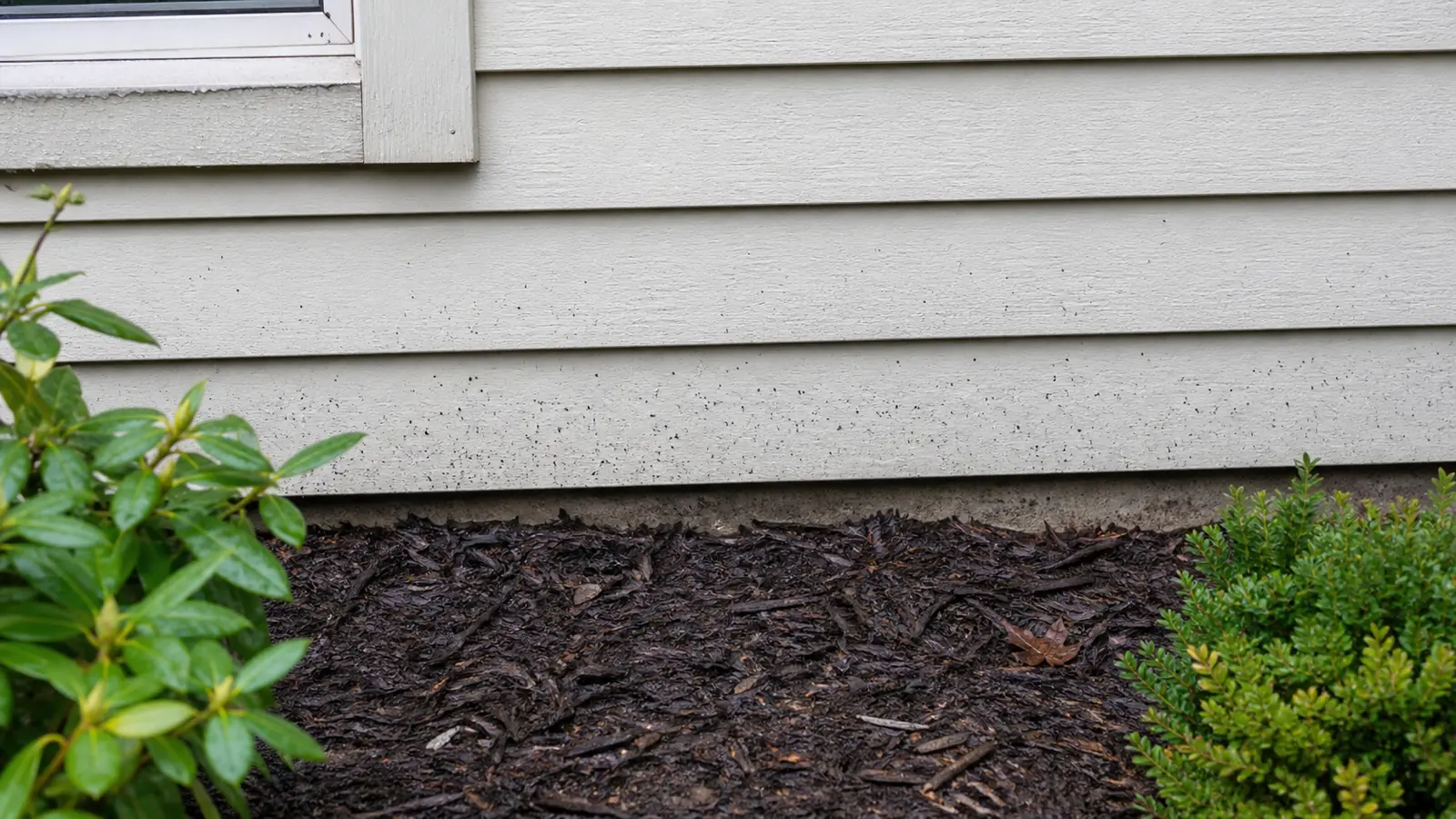
Artillery fungus usually grows in damp decaying mulch and launches sticky dark spore packets toward bright siding, cars, and other reflective surfaces. Confirm the nearby source before cleaning, then change the mulch or moisture conditions to prevent new spots.
Tiny black specks on light siding near a mulched bed can be sticky spore packets launched by artillery fungus. The fungus usually grows in damp decaying organic material below, while the wall or vehicle only catches what it ejects.
Dark dots have several possible sources, so color alone cannot identify them. Confirm the packet shape, distribution, nearby mulch, tiny fruiting cups, and recent wet weather before choosing a cleaning or landscape response.
What Causes Black Specks on Siding?
Artillery fungi in the genus Sphaerobolus grow on decomposing wood mulch, old wood, compost, and similar organic material. Their fruiting bodies are tiny cups that can escape notice even when hundreds of dark packets are visible on a wall.
Those hidden mulch cups create the distant wall symptom through a pressure-driven launch.
As a cup matures, it reveals one rounded spore packet called a peridiole. Water pressure builds inside the structure, then the cup turns inside out and launches that sticky packet through the air.
The fruiting body responds to light, which helps direct packets toward bright reflective surfaces.
White or pale siding, windows, cars, downspouts, fences, and glossy leaves therefore make the symptom conspicuous.
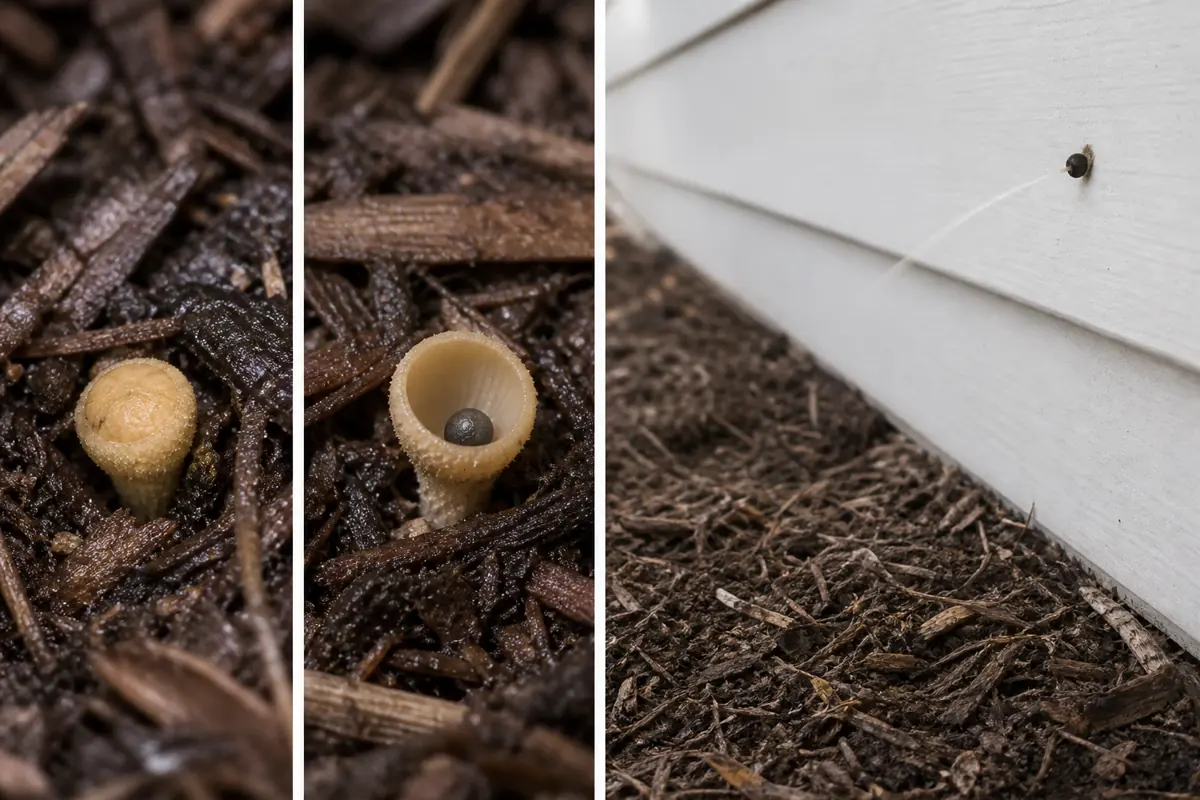
The wall itself does not need to be wet for packets to stick. That is why washing the siding without changing the source can be followed by a fresh crop of dots.
Where Is the Artillery Fungus Launching From?
Start at the marked wall and search outward rather than examining every garden bed equally. The densest dots and the direction faced by other marked objects can point back toward one damp source zone.
Extension sources report launch distances of several feet and sometimes up to about 20 feet. Treat that distance as a search radius because wind, surface angle, bed layout, and fences can change where packets land.
Inspect the decomposed layer below the newest mulch, the shaded side of edging, and wood buried against the foundation. Tiny fruiting cups are easiest to miss when they sit among similarly colored chips.
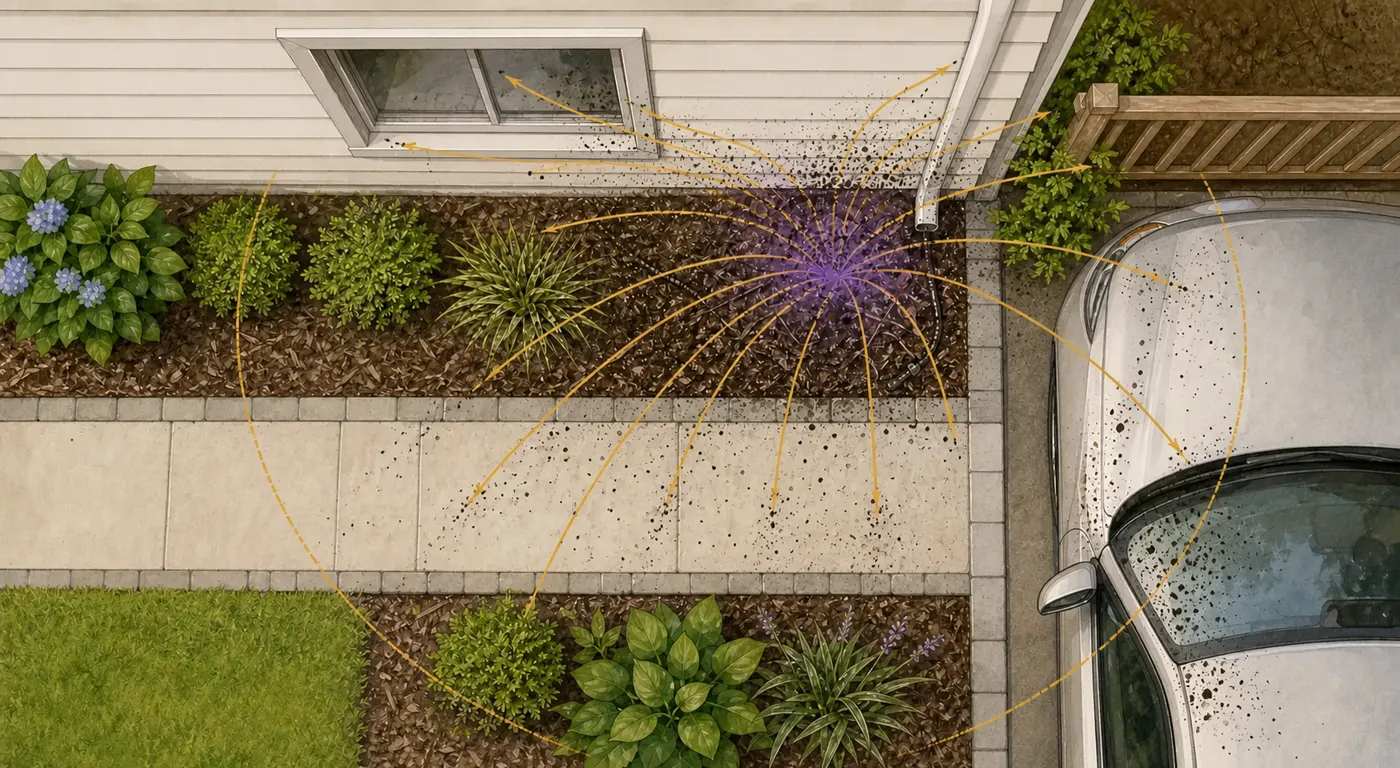
Cool wet material can produce repeated launches where shade, leaking downspouts, or irrigation slows drying. A north-facing bed is a common setting in some climates, but the water pattern matters more than the compass direction.
- Mark every affected wall, window, vehicle panel, fence, and plant leaf on a simple sketch.
- Note which face of each object carries the dots.
- Search the shared sight line within roughly 20 feet of those faces.
- Lift the loose top mulch and inspect the older damp layer beneath it.
- Recheck the suspected bed after the next cool wet period for fresh cups or new packets.
One isolated dot cannot establish a source. A matching distribution across several surfaces and active cups in nearby decaying material provide a much stronger explanation.
IdentificationWhat Should You Do About Mushrooms in a Horse Pasture?How Can You Tell Artillery Fungus From Other Spots?
Artillery packets are discrete, raised, dark dots rather than a fuzzy film spreading across the siding. They often adhere strongly enough that a dark or brown stain remains when the small body is disturbed.
Map the pattern before touching it.
Matching dots on a car, foundation, leaves, or windows facing the same mulch bed make a launched source more plausible.
- Look for many randomly scattered pinhead dots rather than runs following a roof edge.
- Search nearby decomposed wood mulch for tiny pale or orange-brown cups with a dark center.
- Compare the marked surfaces with the direction of the brightest reflected light.
- Ask whether the dots appeared after a cool wet period or frequent irrigation.
- Photograph one dot with scale and preserve a small sample if an Extension office requests it.

Fly specks can cluster near doors, lights, or sheltered resting places and may lack a matching mulch source. Roofing tar or asphalt droplets tend to follow work, heat, or an overhead source, while mildew develops as a film or patch rather than separate launched packets.
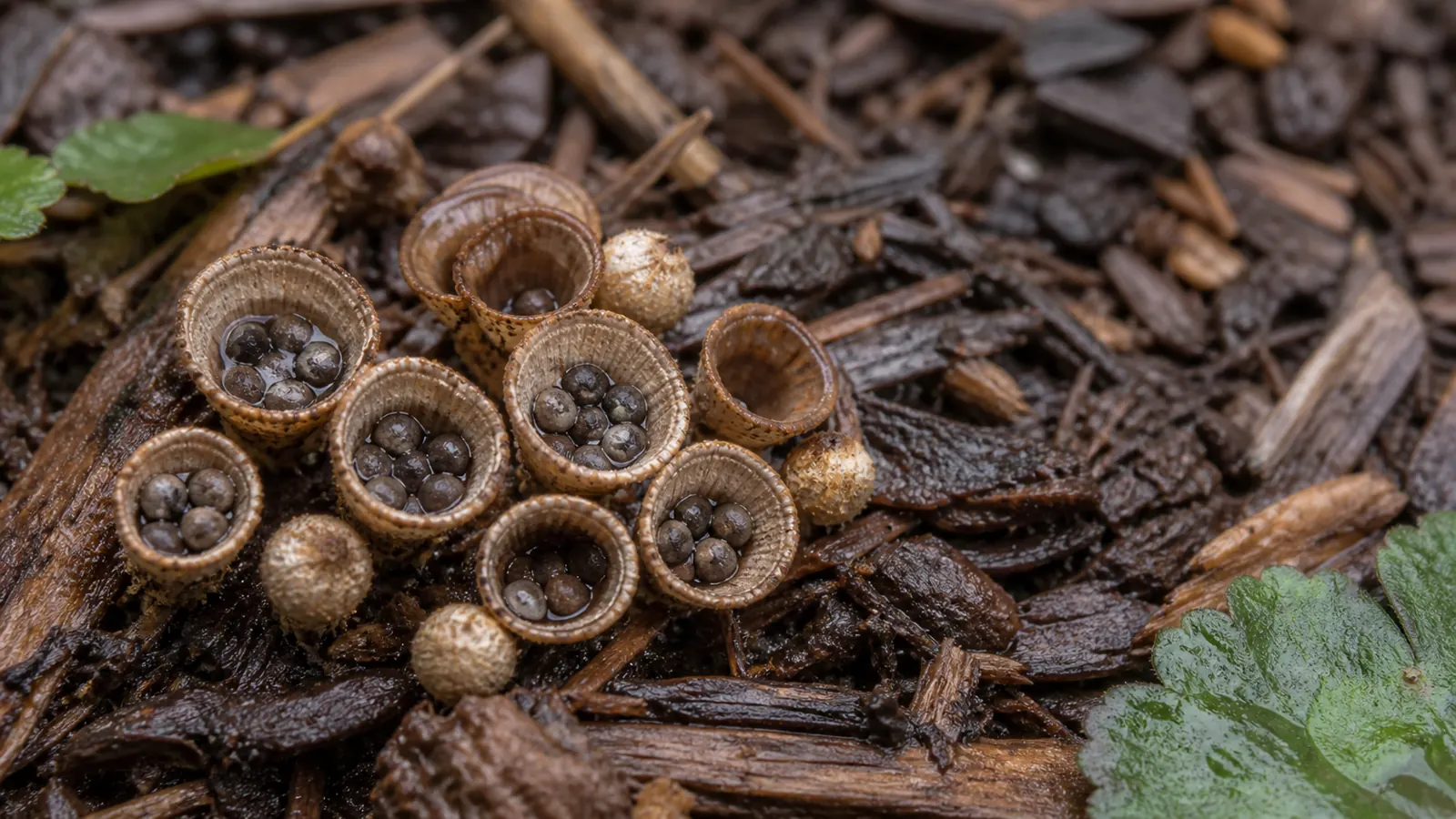
Scale insects belong on plant tissue and usually show a consistent body shape attached to stems or leaves. Bird's nest fungi form larger cups with several visible egglike packets, while artillery fungus cups are much smaller and carry one dark projectile.
No single clue is decisive. A firm identification combines the adhered packet with an active source and a pattern that makes physical sense between them.
IdentificationWhy Are Mushrooms Growing Under Your Deck?How Do You Remove Artillery Fungus From Siding?
Fresh deposits are the best opportunity for gentle removal.
Once a packet dries and bonds to a finish, complete removal can be difficult and the remaining stain can outlast the visible body.
Warning
Protect the finish before chasing the last dark mark | Test plain water, mild soap, and a soft nonabrasive tool in an inconspicuous area. Stop if the method dulls, scratches, discolors, or lifts paint, vinyl, coated metal, glass treatment, or vehicle clear coat.
Rinse loose dirt first so grit does not become an abrasive. Soften one fresh spot with water, use the surface manufacturer's approved cleaner when needed, and apply the least force that moves the deposit.

Which cleaning limit applies to the surface?
| Surface | Start with | Main reason to stop |
|---|---|---|
| Vinyl siding | Water, mild soap, and a soft cloth or brush approved by the maker | Scratching, gloss change, distorted panels, or water driven behind joints |
| Painted siding | Gentle washing in a hidden area | Color transfer, chalking, lifted paint, or a new bright patch |
| Brick or masonry | Water and a nonmetallic tool tested on one spot | Mortar erosion, surface scarring, or a cleaner stain |
| Window glass | Glass-safe cleaner and a nonabrasive implement | Scratched coatings, damaged seals, or contact with trim finishes |
| Vehicle finish | Automotive wash methods or a qualified detailer | Clear-coat haze, scratches, or solvent damage |
Do not assume a pressure washer is harmless. A strong jet can drive water behind siding, damage seals, strip paint, or etch softer materials even when it removes the dot.
Older dried packets create a tradeoff. A faint stain may be less damaging than aggressive removal that leaves a scuff, bright patch, or missing coating.
Vehicle paint deserves extra caution because household siding advice may damage automotive clear coat. Use the vehicle maker's guidance or a qualified detailer instead of testing a strong solvent on a visible panel.
Cleaning does not kill the colony in the mulch.
Finish the immediate surface work, then shift effort to stopping new packets.
Which Mulch Helps Prevent Artillery Fungus?
No organic mulch can guarantee that artillery fungus never appears. The practical goal is to make the area nearest vulnerable bright surfaces less favorable and to interrupt active fruiting.
Wood-rich mulch that has decomposed into a damp fine layer is a strong source candidate. Raking can break up cups, expose wet material to air, and help the surface dry between rain or irrigation.
Active fungus in a small bed
Remove the heavily decomposed material and clean up loose packets before they launchSource removal addresses the colony rather than only the receiving surface.
Organic mulch still needed near plants
Replace the high-risk strip with bark-rich material and keep it shallow enough to dry at the surfaceBark is generally less hospitable than finely shredded wood-rich mulch.
Siding or parked cars remain close
Use stone or another suitable inorganic material in the nearest splash and launch zoneRemoving organic food creates the strongest separation at a vulnerable surface.
Irrigation keeps the bed wet
Redirect emitters, repair leaks, and avoid watering the siding-side mulch unnecessarilyShorter wet intervals reduce conditions that support new fruiting cups.
Adding a fresh layer over old mulch can suppress fruiting temporarily, but it also leaves the food source in place. Remove or loosen heavily decomposed material when the problem is recurring rather than building an ever-thicker wet layer.
There are no registered fungicide treatments that reliably solve this landscape problem according to Extension guidance. Chemical spraying also leaves the moisture and decaying wood conditions unchanged.
Expect old marks to remain even after source control. Success means new packets stop appearing through later wet periods, not that every dried stain vanishes from the siding.
Sources & References
- University of Delaware Cooperative Extension Launch mechanism, early cleaning, and mulch management.
- University of Maine Cooperative Extension Source removal and chemical-treatment limits.
- University of Tennessee Extension Mulch habitat and light-directed packets.
- UMass Extension Wet weather and bark-rich mulch choices.