Yellow dog vomit slime mold is an amoeba-like decomposer that feeds on microbes in damp mulch. It usually does not harm plants, changes from wet yellow foam to a dry brown spore mass, and needs removal only when access, seedlings, or repeated wet conditions create a nuisance.
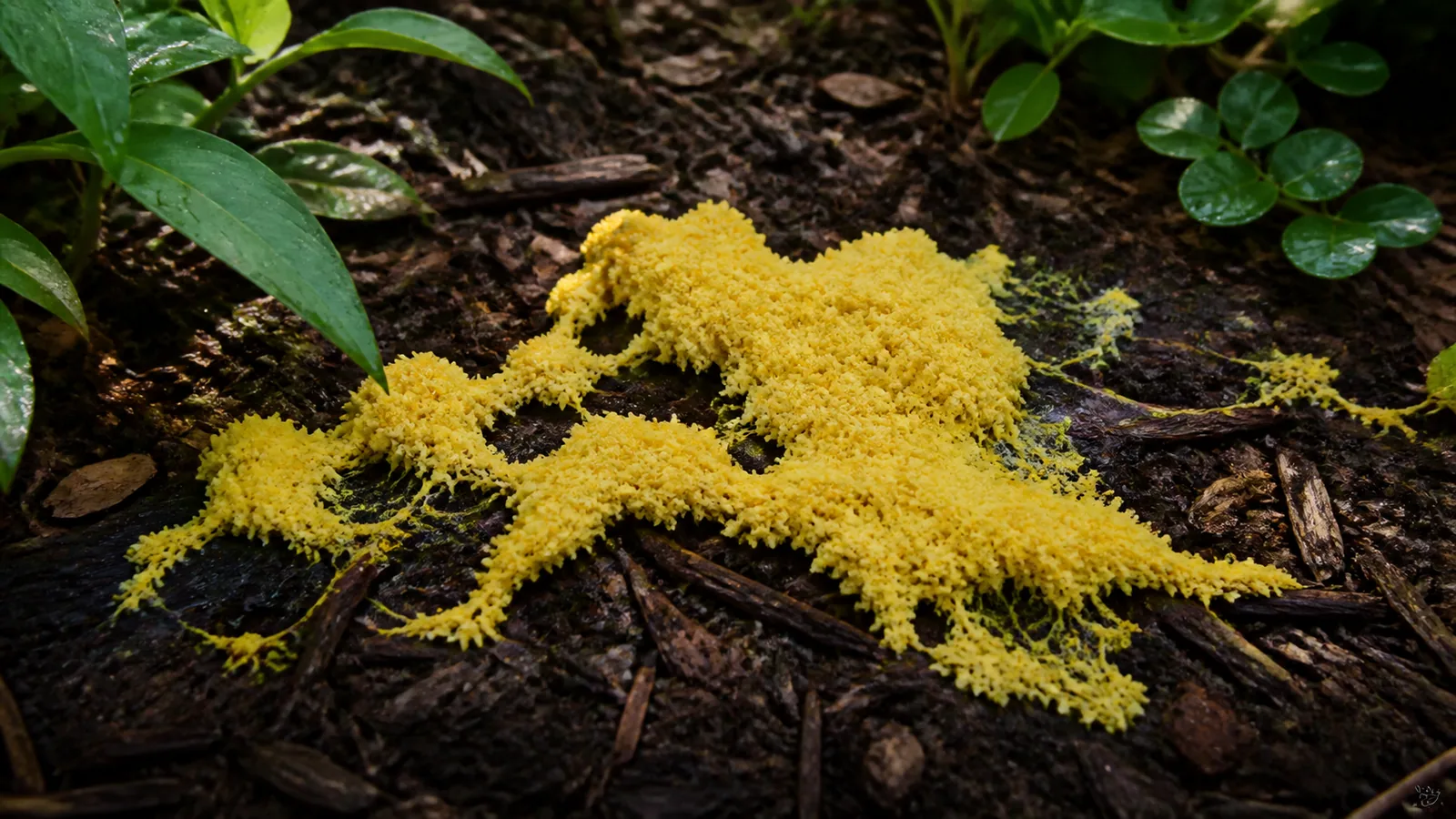
The yellow foam in mulch is usually dog vomit slime mold, Fuligo septica. It is a slime mold rather than a mushroom, and the bright mass normally feeds on microbes in damp organic material without infecting healthy plants.
Its alarming appearance comes from speed and scale. A patch can spread between one check of the garden and the next, then change from wet yellow foam to a dry brown spore mass within days.
What Is the Yellow Foam Growing in Mulch?
Fresh Fuligo often forms an irregular cushion or branching sheet across bark and wood chips. It has no cap, gills, stem, roots, or orderly cluster of separate bodies.
The yellow stage is a plasmodium, which can be one large cell containing many nuclei.
That biology places it closer to amoeba-like organisms than to the true fungi responsible for most mushrooms in mulch.
The plasmodium does not digest the wood chips in the same way a wood-decay mushroom does. It engulfs bacteria, fungal spores, and other microscopic food associated with decaying plant material.
Patch size varies from a few inches to a broad smear more than a foot across. The outer edge can look lobed, veined, or foamy, while the center becomes thicker as the organism gathers before producing spores.
A yellow mass resting partly on low leaves is not proof that the plant is diseased.
Fuligo can flow over stems, leaves, stones, and edging while searching the damp surface, but it does not grow into healthy plant tissue as a pathogen.
How Does Dog Vomit Slime Mold Change Day by Day?
The best identification clue is change through time. One still photograph shows color, but a second photograph several hours later can show the edge moving, the surface swelling, or the yellow fading.
The stages do not always last a full day each. Warmth, humidity, rainfall, shade, and the size of the mass change the pace, so use the order of changes rather than a fixed calendar.

Photograph the patch before disturbing it if the identity is uncertain.
Once the dry crust breaks, the original footprint and surface texture are difficult to reconstruct from scattered powder.
Avoid inhaling a visible dust cloud from a mature mass. Most garden encounters are brief, but gentle lifting on a still day is more sensible than pulverizing the structure with a rake beside your face.
IdentificationWhat Are the Tiny Bird's Nest Fungi in Your Mulch?What Else Can Look Like Yellow Slime Mold?
Color alone is weak evidence because many unrelated garden materials can be yellow, cream, tan, or orange. Body structure, attachment, change through time, and the presence of cups, threads, eggs, or food debris provide stronger separation.
Record the evidence before cleaning the bed.
- Show the entire patch and the surrounding mulch in one photograph.
- Place a ruler beside the edge without touching the mass.
- Photograph the wet surface close enough to show veins, bubbles, or a smooth crust.
- Check again later the same day and the following morning for movement or color change.
- Note recent rain, irrigation, shade, downspout runoff, and how deep the mulch remains wet.
- Look for fixed cups, stems, black packets, food fragments, plant lesions, or a sour liquid source.
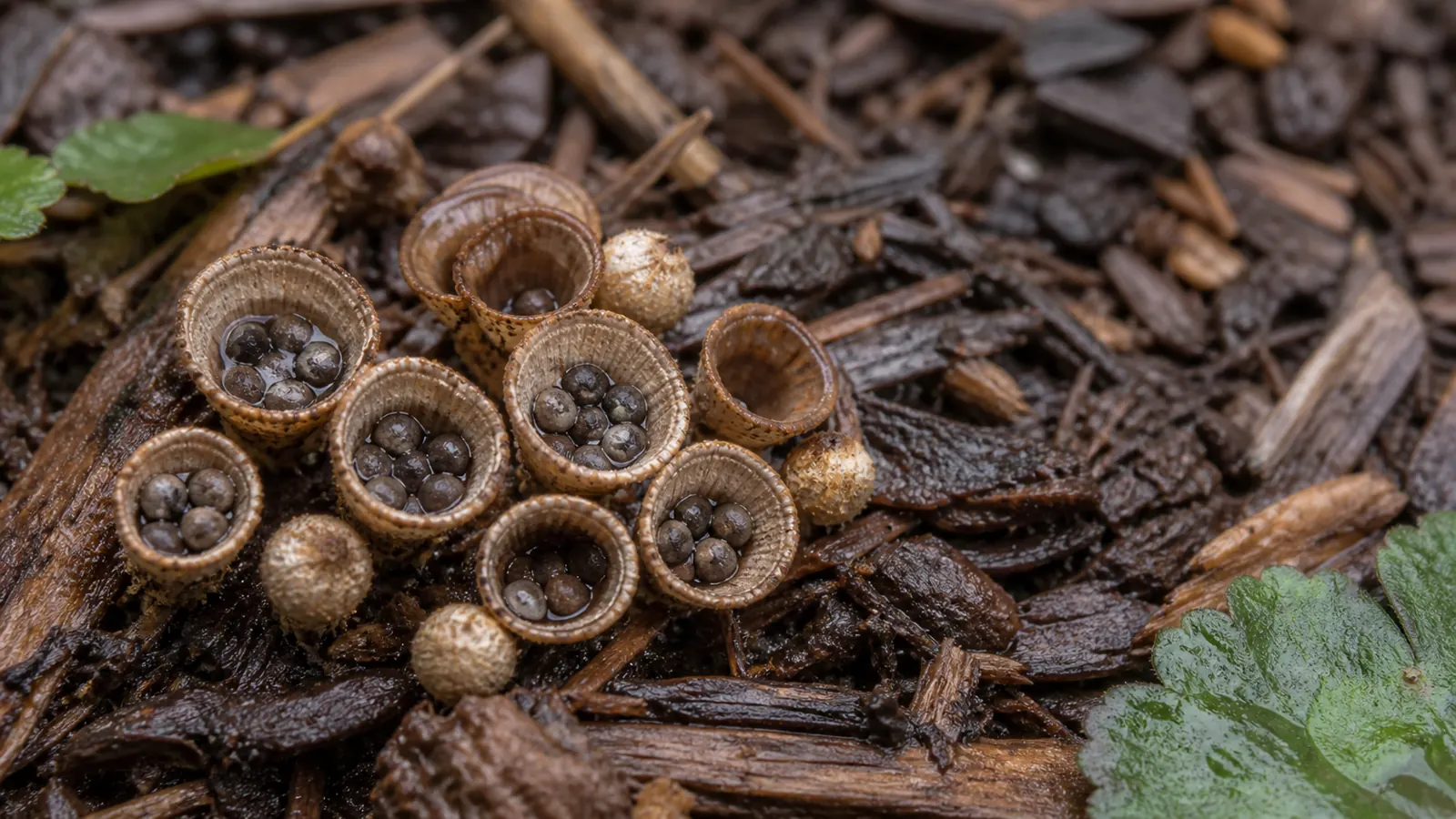
Bird's nest fungi are easy to separate once their miniature cups and several peridioles are visible.
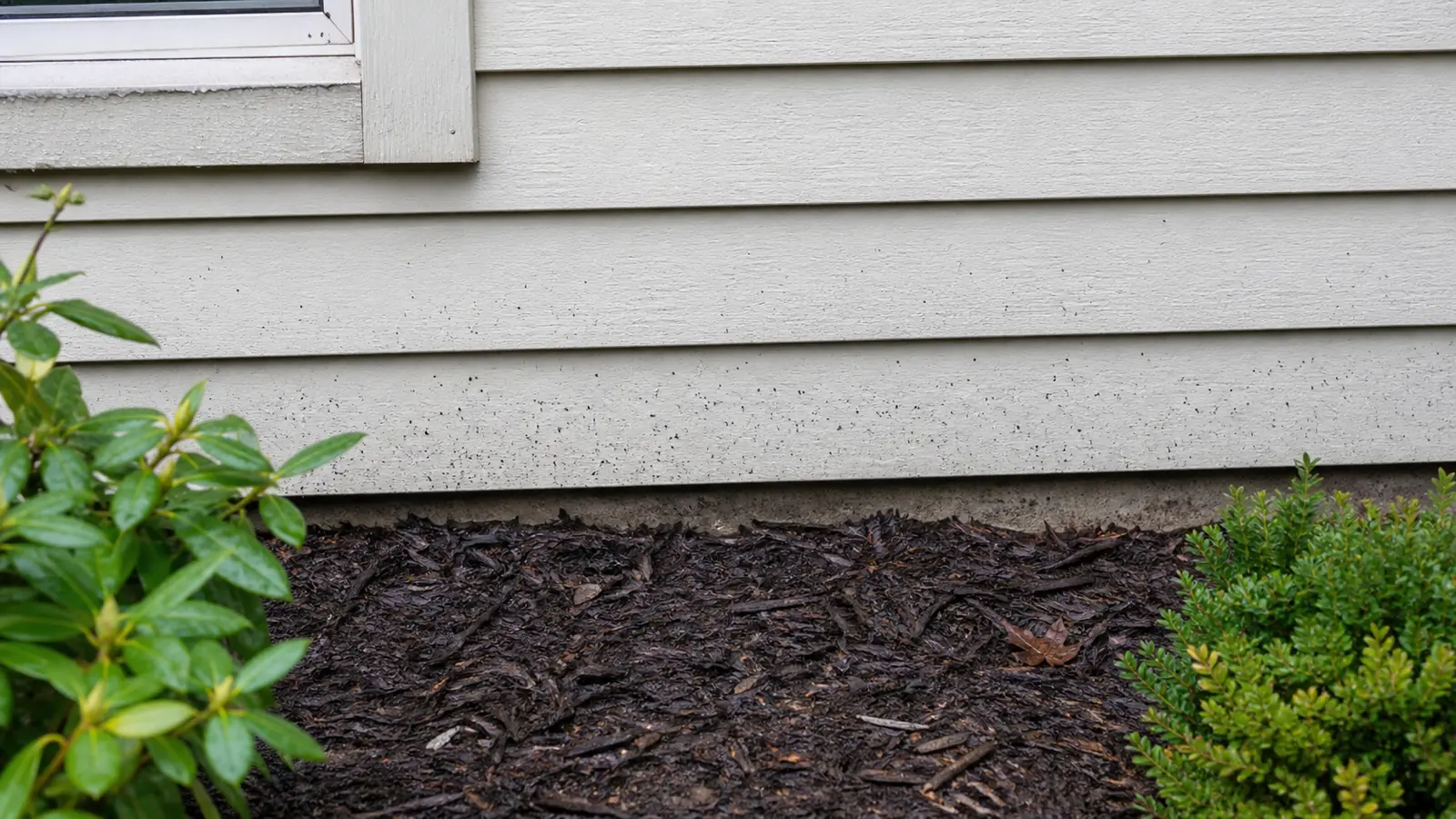
Artillery fungus matters near pale walls because its tiny packet-launching structures can create a property nuisance that Fuligo does not.

A yellow sheet that remains fixed, grows upright fruiting bodies, or coincides with rotting plant tissue needs a different assessment. Mixed mulch beds can support several organisms at once, so one likely Fuligo patch does not identify every structure nearby.
IdentificationWhat Should You Do About Mushrooms in a Horse Pasture?Can Slime Mold Move, and Is It Harmful?
Slime mold can move slowly enough to change its outline over hours. Internal cytoplasm streams toward a leading edge, which lets the plasmodium flow around chips and into moist spaces without legs, roots, or a stem.
That movement serves feeding.
The advancing mass surrounds bacteria and other microscopic particles, while dry light-exposed areas become less favorable than moist shaded channels.
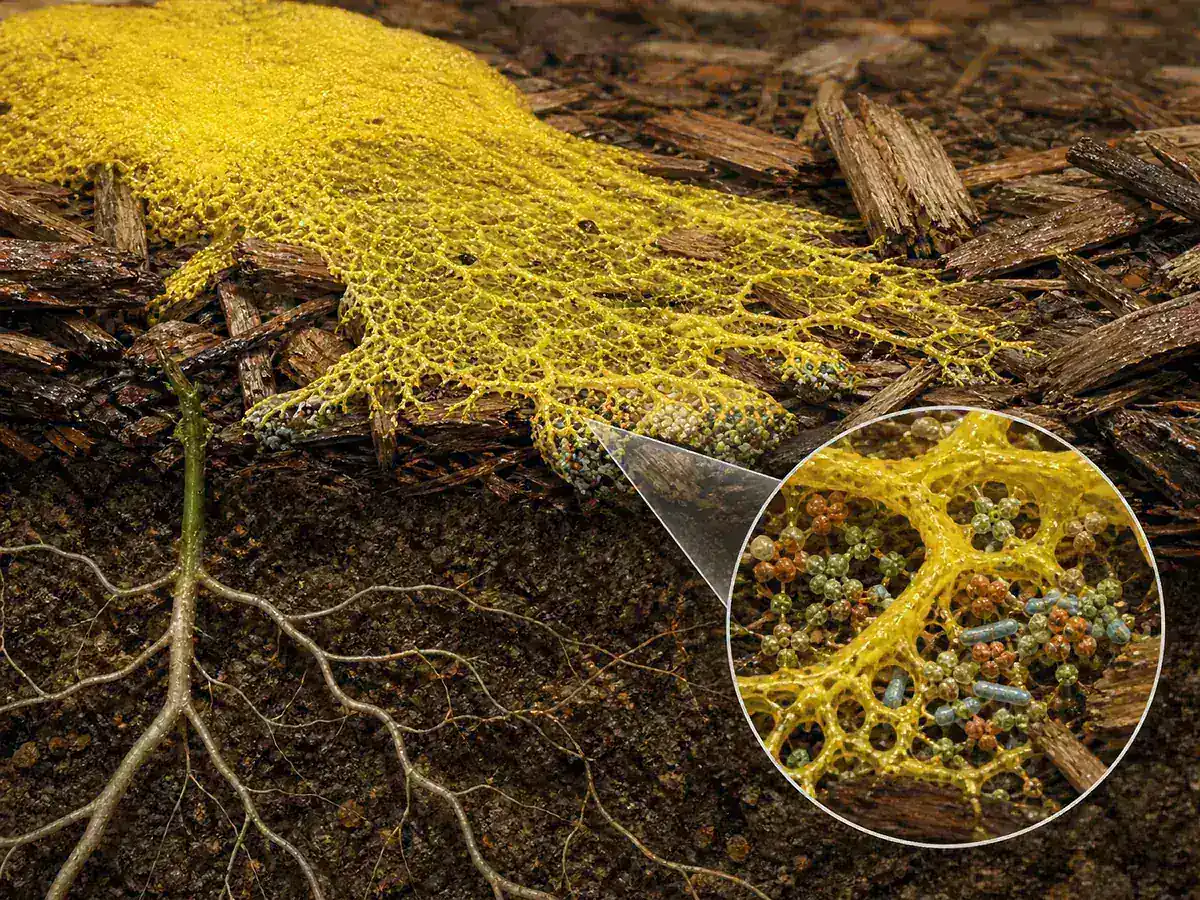
That feeding relationship explains why Fuligo normally does not injure established garden plants. It uses the microbial community on dead organic matter and can be left to finish its short visible cycle.
Heavy coverage can still create a physical problem for very small seedlings by blocking light or holding a wet layer against delicate leaves. Lift the mass gently when it blankets new growth, then improve air and drainage around the planting rather than treating the leaves with fungicide.
Warning
Do not use plant harmlessness as an edibility verdict | Do not taste a yellow garden mass or let a child or pet mouth it. If an unknown organism was swallowed, preserve a sample and contact the appropriate poison or veterinary service rather than relying on a photograph.
Touching the mass during ordinary removal is not the same as eating it.
Wear gloves if the texture or contamination is unpleasant, avoid rubbing your eyes, and wash exposed skin and tools afterward.
How Do You Remove Slime Mold and Keep It From Returning?
Removal is optional when the patch sits away from seedlings, paths, play areas, and buildings. It will usually dry, darken, and collapse on its own as the weather changes.
If appearance or access makes removal worthwhile, slide a shovel or piece of cardboard under the mass while it is still coherent. Lift the colonized surface material into yard waste or household trash according to local practice, and avoid shaking a mature powdery mass.
Repeated patches mean the bed still provides long periods of moisture and an active microbial food web.
Map the wet source before adding or replacing material.
- Check whether sprinklers wet the mulch late in the day or every day.
- Follow roof runoff and downspouts to low spots in the bed.
- Lift the top chips and inspect the dark fine layer that holds water below.
- Measure mulch depth near the patch and around plant crowns.
- Compare drying time with a sunnier or better-drained section after the same rain.
One fresh patch away from vulnerable areas
Leave it or lift it for appearanceThe visible cycle is brief and does not threaten established plants.
Patches return in one wet low spot
Redirect runoff and reduce unnecessary irrigationShorter wet intervals remove the condition that repeatedly activates the plasmodium.
Old mulch has become a deep compacted fine layer
Rake it open and remove only the saturated decomposed excessPiling fresh chips on top preserves the wet layer below.
The mass covers seedlings or a play path
Lift the patch intact and temporarily limit accessPhysical coverage and unknown ingestion matter even when the organism is not a plant pathogen.
Fungicide is not a useful routine response because slime mold is not a true fungus and the spray does not correct the wet habitat. Bleach, salt, vinegar, or concentrated soap can injure plants and soil organisms while adding no reliable long-term control.

Judge the result after later rainfall.
Fewer or smaller patches show that the bed dries more effectively, while an occasional new mass in a healthy wood-chip bed can be accepted as a temporary decomposer event.
Sources & References
- Texas A&M Plant Disease Diagnostic Lab Classification, movement, feeding, conditions, and management.
- Iowa State University Extension Recognition, plant safety, stage change, and optional removal.
- UConn Extension Mulch lookalikes, spore stage, fungicide limits, and drying practices.
- Oregon State University Extension Size, movement, wet-weather appearance, and garden impact.