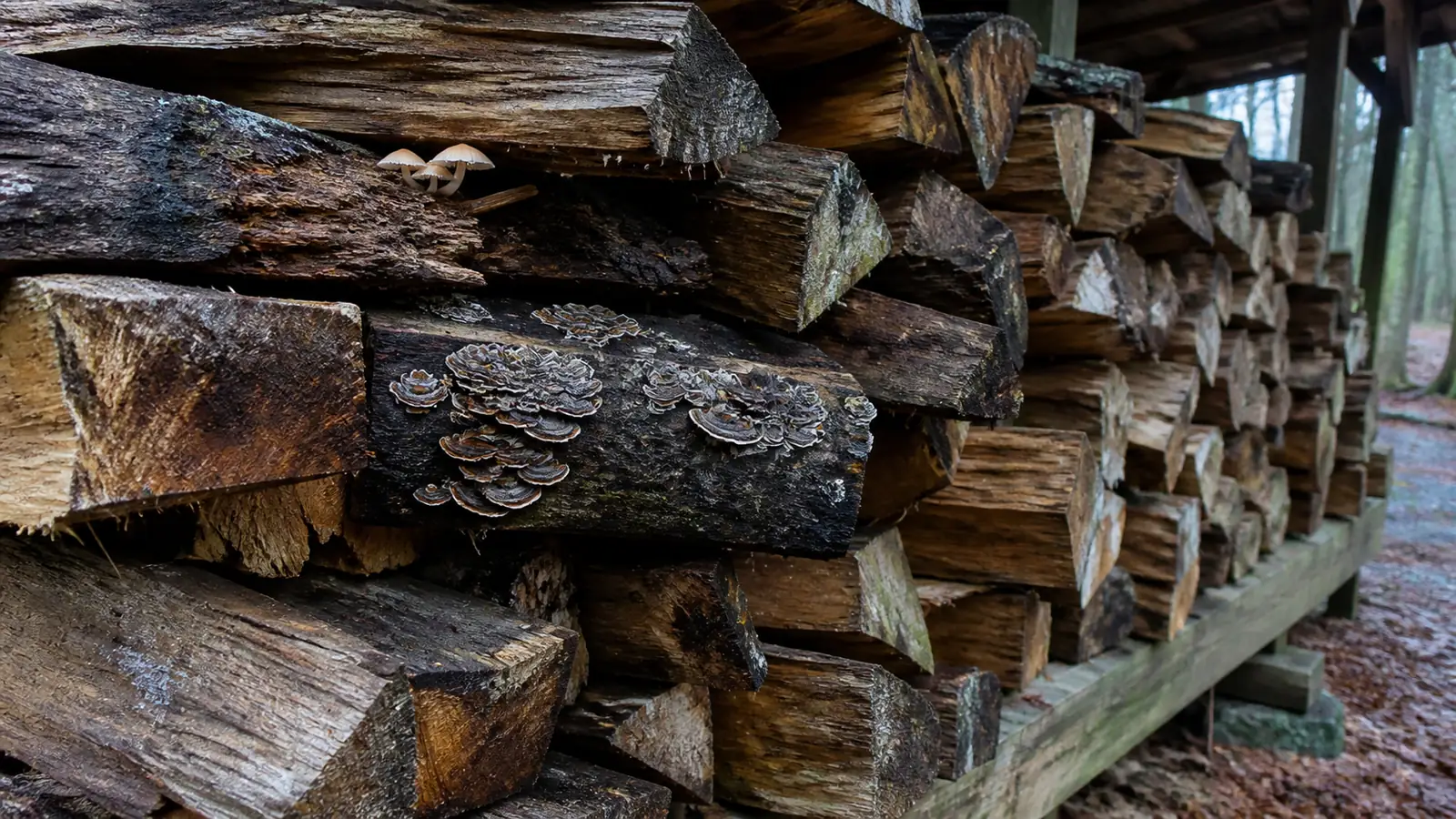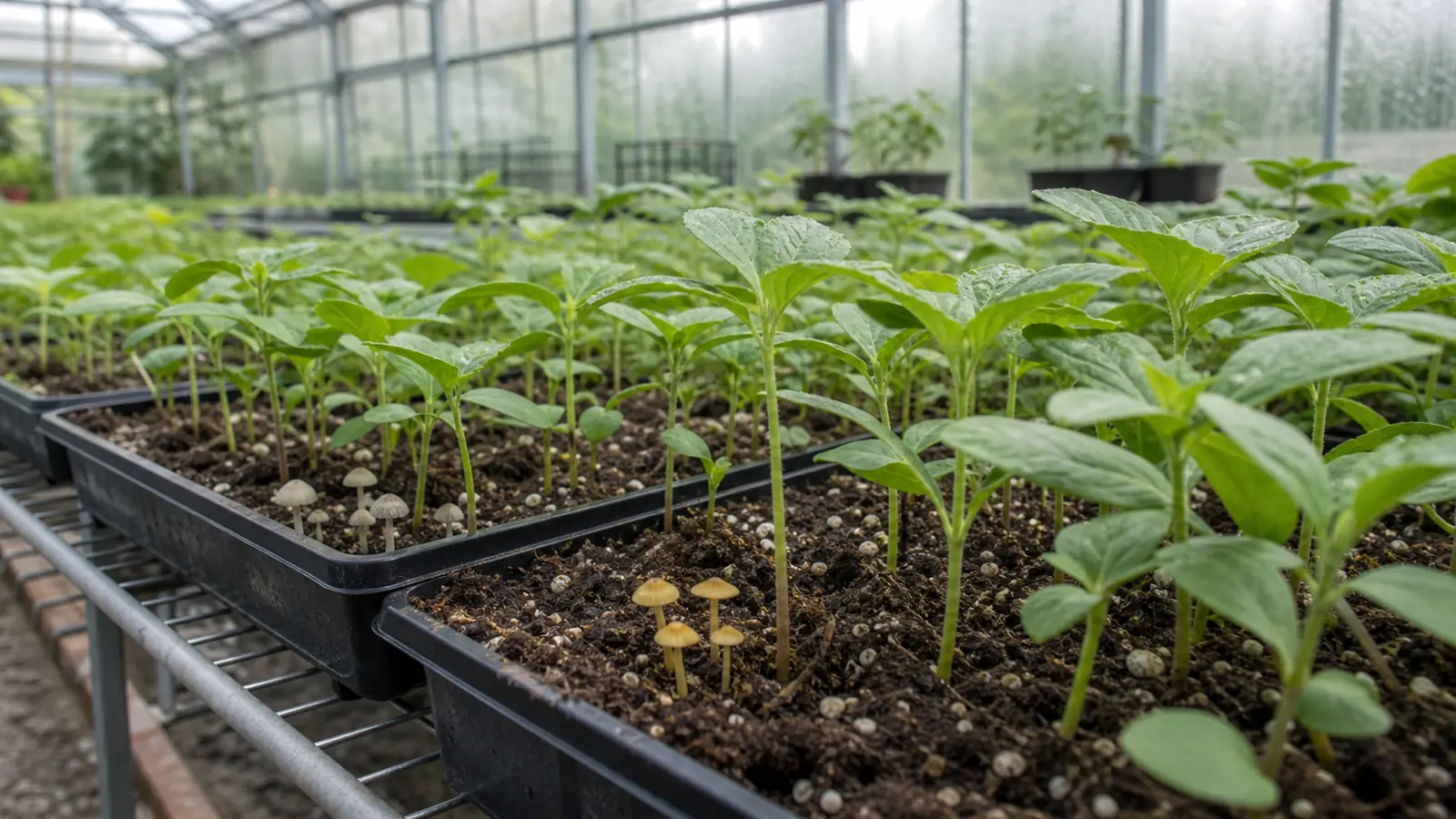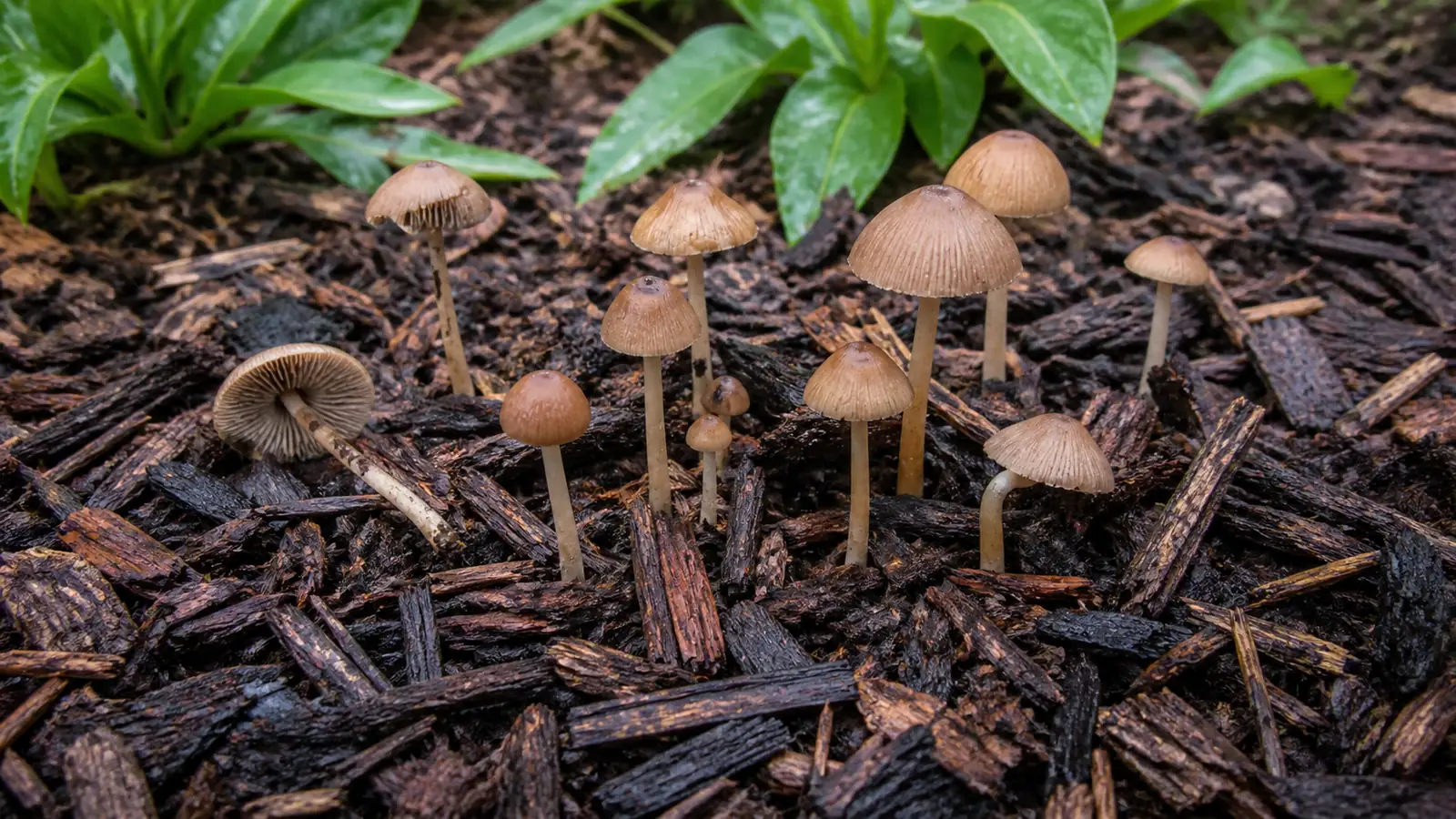
Most mushrooms growing in mulch are fruiting bodies of fungi decomposing bark, wood, or other organic matter. The mulch is a useful first clue, but a safe identification also needs the whole mushroom, its underside, growth pattern, and fresh changes.
Mushrooms growing in mulch usually belong to fungi that are consuming bark, wood, leaves, or other dead organic material.
Their sudden appearance is often a fruiting event after rain or irrigation, not evidence that the fungus has begun attacking nearby plants.
The mulch gives you a useful habitat clue, but it cannot name the species or establish whether the mushroom is safe.
Start by deciding what kind of fruiting body you have, then record the substrate, attachment, underside, complete stem base, and fresh changes before the specimen dries or collapses.
Treat the mulch as a filter, not a name tag. That distinction lets you narrow an identification without turning one photograph or one color into a safety verdict.
Why Mushrooms Grow in Mulch and What They Might Be
Shredded bark and wood contain cellulose, lignin, and simpler carbon compounds that decomposer fungi can use as food.
Fine fungal threads spread through this material as mycelium, usually out of sight, while the visible mushroom is a temporary structure for producing and releasing spores.
Rain does not create that network overnight. Water changes the moisture around established mycelium, and a suitable combination of temperature and humidity can trigger many fruiting bodies within a short period.
A bed that stays damp from frequent irrigation can support the same response without a storm. Shade, compacted mulch, poor drainage, and a thick layer that dries slowly can extend the wet interval near the surface.
New mulch and new mushrooms often appear close together, but timing alone does not prove the fungus arrived in the bag.
Spores and mycelium can already occupy the underlying soil, old mulch, buried roots, or small pieces of wood before a fresh layer changes the moisture above them.
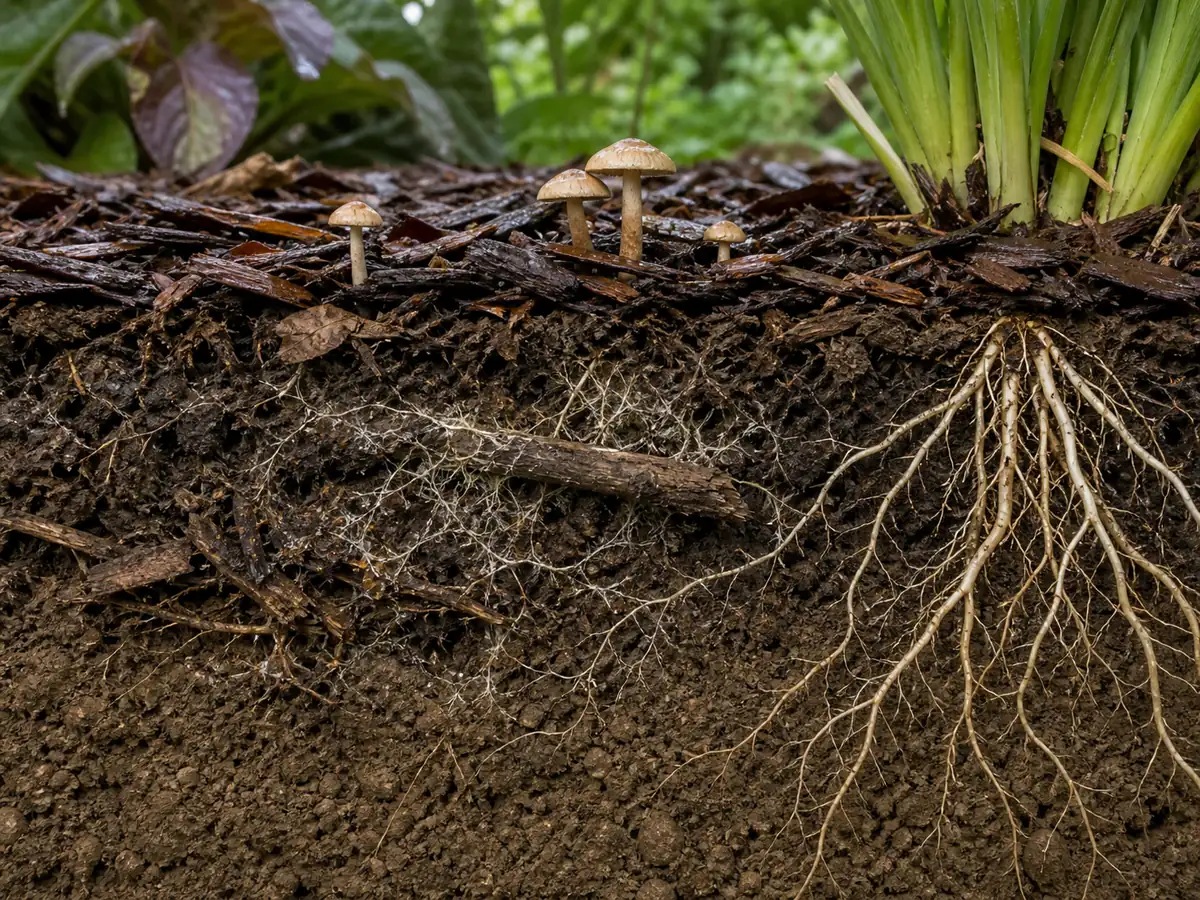
The useful conclusion is limited but practical. Visible mushrooms confirm active fungal decomposition under suitable conditions, while their source and identity still require physical evidence from the bed and the fruiting body.
What Is Actually Growing in the Mulch
Look at the whole patch before lifting anything.
Body shape, scale, odor, and the way the growth occupies the surface can separate several organisms that receive the same casual label of mulch fungus.
| What you see | Likely group | Separating clue | Immediate meaning |
|---|---|---|---|
| A cap on a stem, usually with gills underneath | Conventional mushroom | A distinct cap, underside, stem, and attachment point | Record the complete specimen before seeking a group or species name |
| An upright finger, lattice, or column with foul-smelling slime | Stinkhorn | Olive, brown, or dark slime attracts flies and carries spores | A decomposer and odor nuisance, not a sign that the plant is rotting |
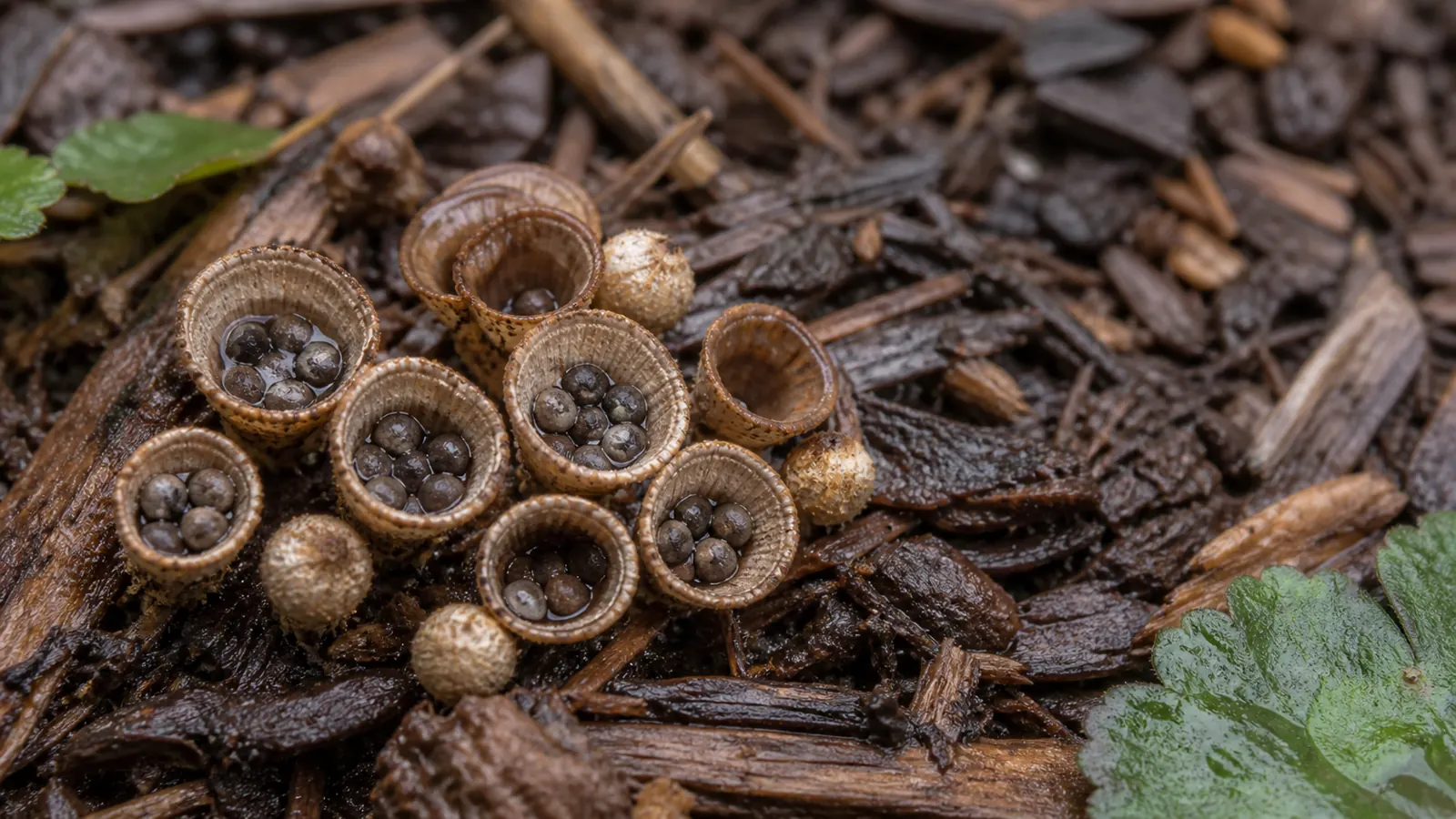
| Tiny cups containing beadlike eggs | Bird's nest fungus | Cups are often about 1/4 inch wide and raindrops splash out the spore packets | Usually harmless decomposition that can be left in place |
| A spreading yellow, orange, pink, or white foamy mass | Slime mold | The soft surface mass later dries into a powdery or crusted state | Not a mushroom and usually temporary |
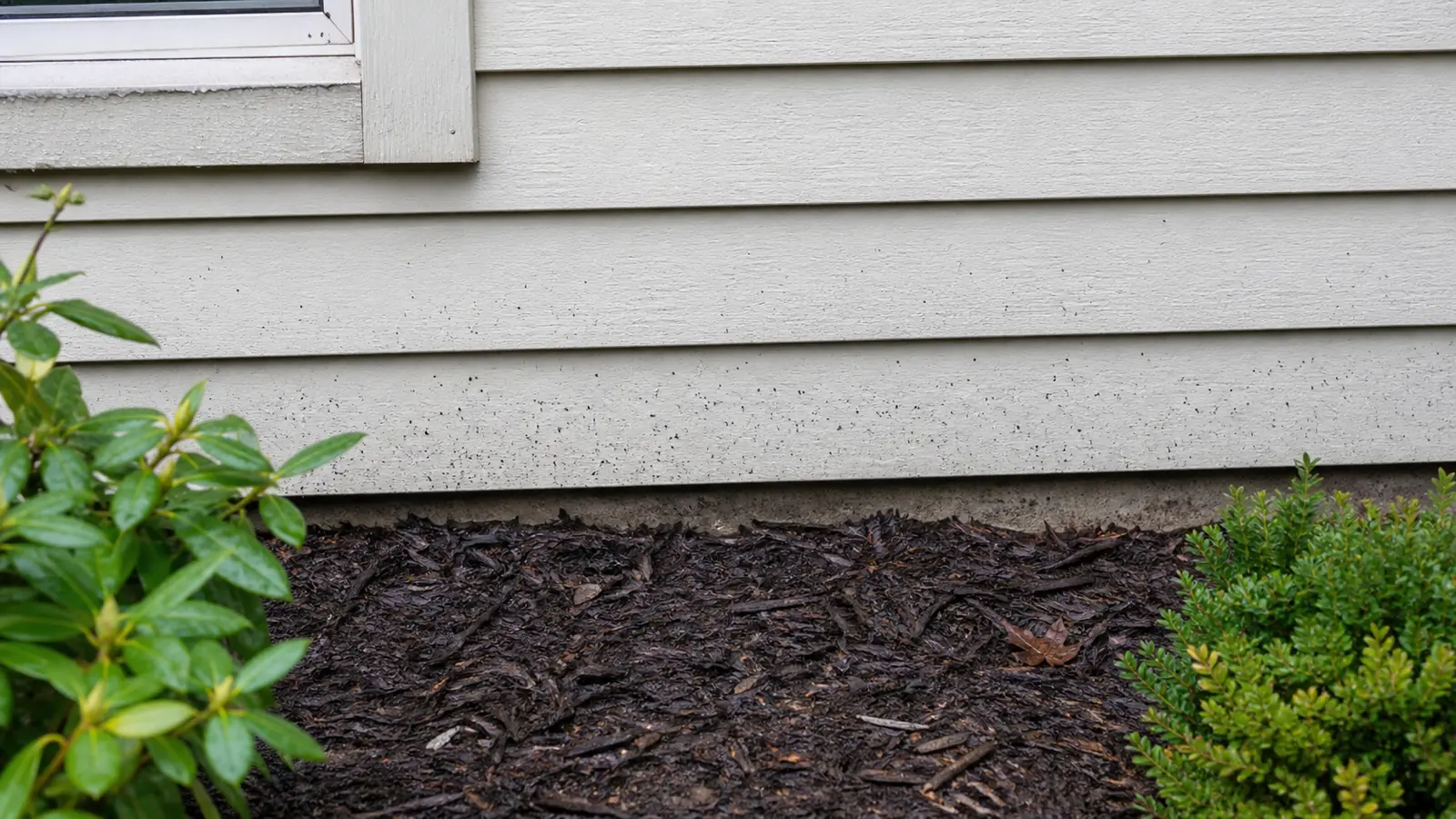
| Tiny pale cups near sticky black specks on siding or a vehicle | Artillery fungus | Dark spore packets adhere like small tar spots | The nearby surface, rather than the plant, is the main concern |
A stinkhorn can begin as an egglike ball below the surface, then extend into a horn within hours. Its odor is a dispersal method because flies and other insects contact the spore-bearing slime.
Bird's nest fungi and artillery fungus both make small cups, but scale and the result on nearby surfaces differ. Bird's nest cups hold several visible packets that splash out in rain, while artillery fungus is much smaller and can propel one sticky packet toward a bright surface.

The bright mass called dog vomit slime mold can alarm a gardener because it spreads quickly across chips and low plants.
It feeds on microorganisms around the mulch and normally disappears as the surface dries, so mushroom anatomy and fungicide advice do not fit it.
Choose the body plan before the name. A correct first split prevents a harmless bird's nest fungus from being treated like a poisonous cap-and-stem mushroom and prevents artillery spots from being dismissed as ordinary dirt.
Which Cap-and-Stem Mushrooms Commonly Use Mulch
Once the growth has a true cap and stem, mulch still supports many possible genera.
The groups below are useful starting patterns, not a complete inventory and not a list of mushrooms that are safe to eat.
Region, season, mulch material, and the trees around the bed change which candidates are plausible.
A group name remains provisional until the underside, base, spore deposit, and microscopic requirements of that group have been checked.
Tiny Bonnets After Rain
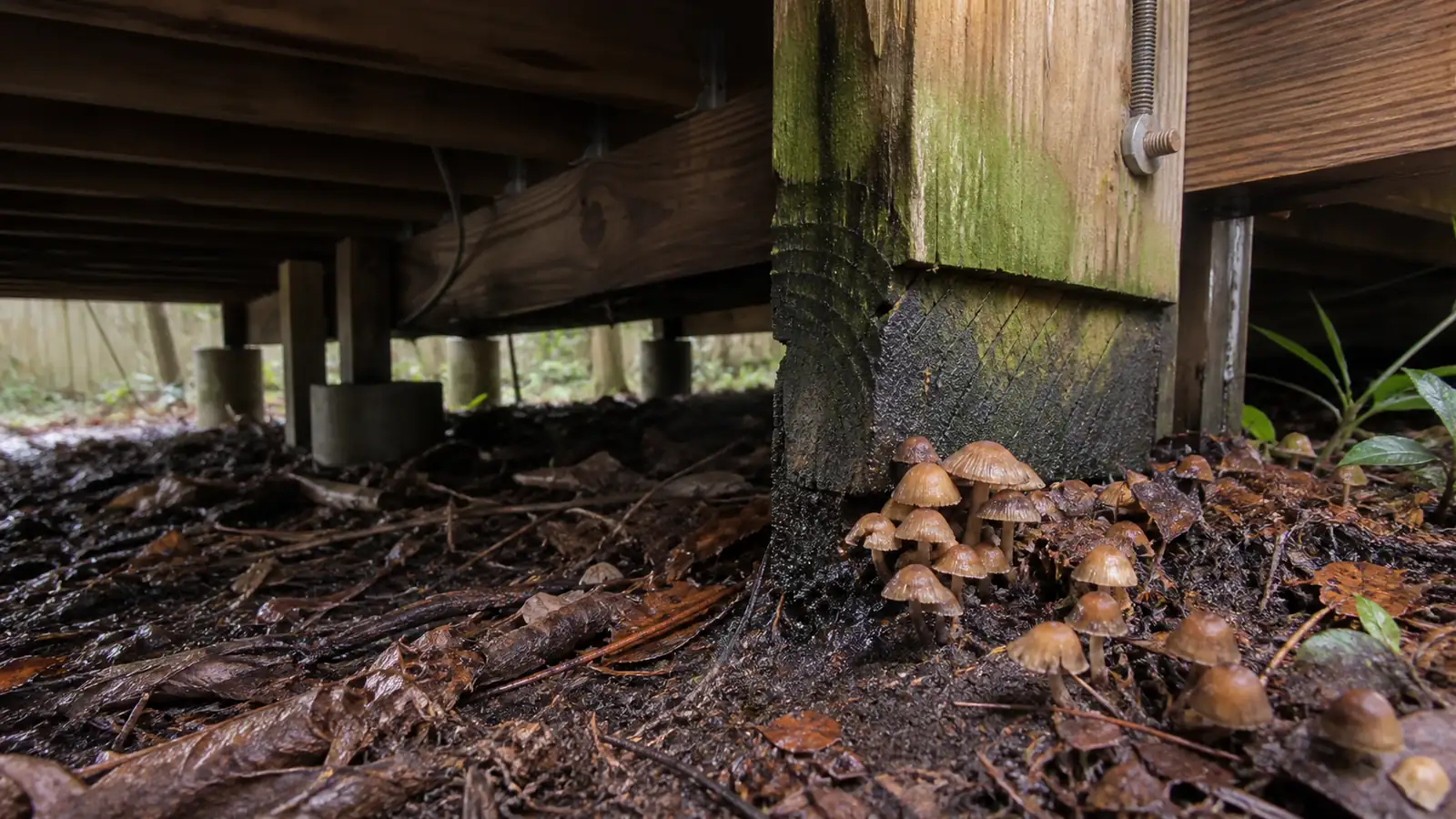
Mycena species often produce many fragile mushrooms with caps under one inch wide. Their slender stems and small bell-shaped or conical caps can appear across damp mulch after rain, then shrivel or vanish quickly when the surface dries.
Small size does not identify Mycena by itself because several unrelated brown or pale mushrooms share that scale. Gill attachment, cap surface, stem texture, odor, spore color, and microscopic characters separate the remaining candidates.
Inky Caps That Darken and Collapse
Coprinoid mushrooms include members of Coprinus, Coprinopsis, Coprinellus, and Parasola. Many begin with pale, tan, or gray caps, produce black spores, and change quickly as they mature.
Some blacken from the margin and liquefy into an ink-like material through a process called deliquescence. Other delicate relatives pleat and collapse without dissolving completely, so a dark ruined cap suggests a group but does not finish the identification.
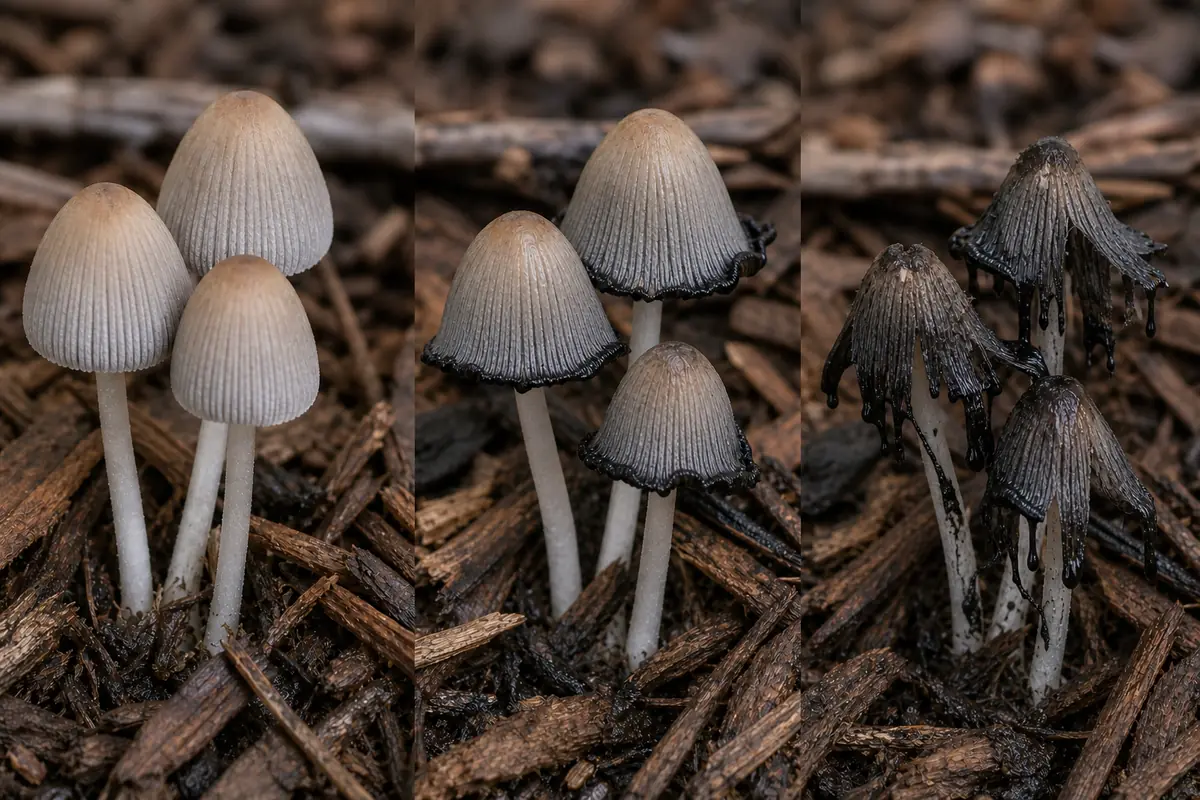
Photograph the patch while fresh and again as it changes. A timed change is evidence that one still image cannot preserve, especially when rain or handling has already damaged the oldest caps.
Tan Spring Fieldcaps
The Agrocybe praecox group is a familiar spring fruiting in bark mulch and wood chips. Typical candidates have tan to brown caps, brown spores, and a partial veil that can leave a ring on the stem, although weather and age can weaken that ring.
Several Agrocybe species overlap closely in appearance. Habitat and a brown spore deposit support the group, while measurements and microscopy can be needed before a species name is justified.
The resemblance to a brown cultivated mushroom proves nothing about edibility. A fieldcap found in landscaping should stay out of the kitchen unless a qualified local identifier has established the exact species and its condition.
Burgundy and Orange-Red Wood-Loving Mushrooms
Large burgundy caps with pale stems and gills that mature toward purple-brown can suggest wine cap or another member of the Strophariaceae. Intentionally inoculated wine caps can fruit from a managed bed of hardwood chips, but the appearance of a similar mushroom in ordinary landscaping does not prove cultivation.
Orange-red mulch mushrooms can belong to other wood-loving species, including regional Leratiomyces candidates. Cap color shifts as a mushroom dries, and several genera share darkening gills, so color belongs behind attachment, veil remnants, spore deposit, and location in the evidence order.
A package label or memory of what was planted can support provenance only when the bed was deliberately inoculated and monitored. It cannot certify every later fruiting in a mixed outdoor substrate.
IdentificationWhat Are the Tiny Bird's Nest Fungi in Your Mulch?How to Identify a Mushroom Growing in Mulch
Write down what the mulch actually contains instead of recording only the word mulch. Shredded bark, coarse hardwood chips, pine straw, leaf litter, compost, and a soil-rich blend offer different physical attachments and rates of decay.
Part the material beside one intact specimen. A stem can connect directly to a chip, a buried twig, a mat of fine roots, the soil below the bed, or a dense white mycelial layer between pieces.
That attachment can overturn the first impression. A mushroom that appears soil-borne from above can be a wood decomposer rising through the bed from a buried root or chip.
The distribution across the bed adds another clue. Record whether fruiting bodies are solitary, scattered evenly, packed into one tuft with joined bases, aligned along a buried root, or concentrated below a downspout or irrigation emitter.
- Name the mulch material and whether pieces remain firm or crumble when handled.
- Note the exact object attached to the stem base, including buried wood.
- Map one patch, line, ring, tuft, or bed-wide distribution.
- Compare wet shaded areas with the drier edge of the same bed.
Recently spread material is still useful context, but timing does not reveal where the fungus began. A fresh layer can carry fungal material, retain water for resident mycelium, or simply make a fruiting body easier to notice against a uniform background.
Mulch age also resists a simple rule. Weathered material contains more broken-down particles, while fresh chips offer larger wood pieces, yet both can host several decomposer groups under favorable moisture.
Use substrate evidence to remove impossible candidates and select the next observation. Do not turn it into a one-to-one lookup in which bark equals one genus and wood chips equal another.
How to Record a Mulch Mushroom for Identification
Begin with photographs before the patch is disturbed. Take one wide view showing the bed, plant, tree, path, or irrigation source, then move close enough to show individual fruiting bodies at several ages.
Lift one specimen with the entire stem base and a small amount of attached substrate. Pulling at soil level can leave a bulb, rooting extension, veil tissue, or the actual piece of buried wood behind.
A top-down cap photograph omits the surface that produces spores and often cuts off the stem base. Add a ruler or another fixed scale beside the specimen rather than relying on a close crop that makes every mushroom look large.

Keep different-looking mushrooms separate. Several species can fruit in one bed, and loose caps and stems from mixed collections can be recombined into a mushroom that never existed.
Paper or waxed paper allows a retained specimen to breathe better than a sealed plastic bag. Photograph rapidly changing mushrooms first because an inky cap or delicate bonnet can lose its useful characters before it reaches an extension office or local identifier.
A responsible identification request shows what could disprove the first guess. Location, date, substrate, complete anatomy, and fresh behavior give another person enough information to reject a tempting but incompatible name.
IdentificationWhat Should You Do About Mushrooms in a Horse Pasture?Are Mulch Mushrooms Poisonous to Children or Pets
Some wild mushrooms are poisonous, while many mulch decomposers are not known to cause poisoning. Habitat, clean appearance, insect feeding, odor, or resemblance to a grocery mushroom cannot establish which case you have.
Remove unknown fruiting bodies promptly from areas used by young children or animals that eat objects from the ground. Wear gloves or use a tool if the mushrooms are decaying, then bag them where they cannot be retrieved.
Warning
If a child or pet may have eaten an unknown mushroom, treat the exposure as urgent. For a person, call Poison Control at 1-800-222-1222 in the United States. For a pet, contact a veterinarian, emergency animal hospital, or animal poison-control service immediately.
Do not wait for vomiting, diarrhea, sleepiness, tremors, or other symptoms before calling. Onset varies among toxins, and a symptom-free interval does not establish safety.
Save an uncooked specimen from the same patch when you can do so without delaying the call. Keep clear photographs and record the time, estimated amount, animal or person's weight, observed symptoms, and any treatment already given.
Do not induce vomiting or give food, charcoal, salt, milk, or another home treatment unless the medical or veterinary professional handling the case directs it. The correct response depends on the exposure and the suspected toxin.
The safest preventive rule stays simple. An unknown mulch mushroom is not food, even when a matching cultivated species is commonly grown on wood chips.
When Mulch Mushrooms Need Action
Most fungi fruiting from loose landscape mulch are saprobes. They obtain energy from dead bark, wood, leaves, and associated organic matter, so their mushrooms do not by themselves show that a shrub or tree is infected.
Healthy plant growth, firm bark, and fruiting scattered through the bed support the ordinary decomposer explanation. White mycelium between decomposing chips also fits that process and does not need to be stripped from the root zone solely because it is visible.
Location changes the question when fruiting bodies arise from the root flare, woody crown, exposed root, or trunk. Inspect the plant itself for dieback, yellowing, wilt, loosened bark, wounds, soft tissue, or a change in stability.
Mushrooms near a sick plant can still be consuming dead tissue rather than causing the original decline. Drought, saturated soil, mechanical injury, and earlier root damage can kill wood that a decomposer later occupies.
Judge the plant from its own symptoms and the mushroom's attachment. A cap several inches away in loose mulch carries different evidence from a cluster fused to the base of a declining tree.
Do not pile more mulch against a trunk to hide the fruiting. Keep the root flare visible and seek an arborist or plant diagnostic service when structural roots, the trunk base, or progressive canopy decline are involved.
What to Do When Mulch Mushrooms Keep Returning
Picking removes a fruiting body, not the mycelium threaded through the organic material. The same network can fruit again when moisture and temperature become favorable, so permanent eradication is an unrealistic goal unless the food source itself is removed.
Decide whether you need immediate access control or simply fewer visible fruitings. A bed away from children, pets, siding, and paths can often be observed, while an accessible patch deserves prompt removal even if the decomposer is harmless to plants.
Water early enough for the surface to dry during the day, and direct emitters toward plant roots rather than the entire bed. Do not deprive a plant of needed water merely to eliminate a temporary mushroom flush.
Keep mulch in a useful landscape layer rather than a deep wet mound, especially around trunks and crowns. Where the layer has become fine, matted, and persistently saturated, loosen it or replace only the affected material instead of stripping every bed automatically.
Bleach, salt, vinegar, and household disinfectants can damage plants, soil organisms, finishes, or nearby surfaces without removing deep mycelium. Routine fungicide treatment is also a poor fit for decomposers living throughout an organic substrate.
Artillery fungus deserves a separate practical response when sticky black packets are reaching light siding or vehicles. Reducing the moist wood source nearest those surfaces or changing the material there addresses a property problem that ordinary cap removal will not solve.
The useful endpoint is a safer and less persistently wet bed, not sterile mulch. Organic material will continue to decompose, and occasional fruiting can return without indicating that the management failed.
Sources & References
- Penn State Extension Mulch decomposition and common visible growth forms.
- University of Kentucky Extension Plant Pathology Saprobic mulch fungi and common Mycena fruiting.
- University of Florida IFAS Extension Coprinoid changes and identification photo requirements.
- University of Wisconsin La Crosse Agrocybe praecox group in bark mulch and wood chips.
- University of Delaware Cooperative Extension Stinkhorn, bird's nest, slime mold, and artillery fungus distinctions.
- North American Mycological Association Immediate veterinary response after possible pet ingestion.
- UC Statewide IPM Program Fruiting-body removal, mycelium persistence, and moisture management.