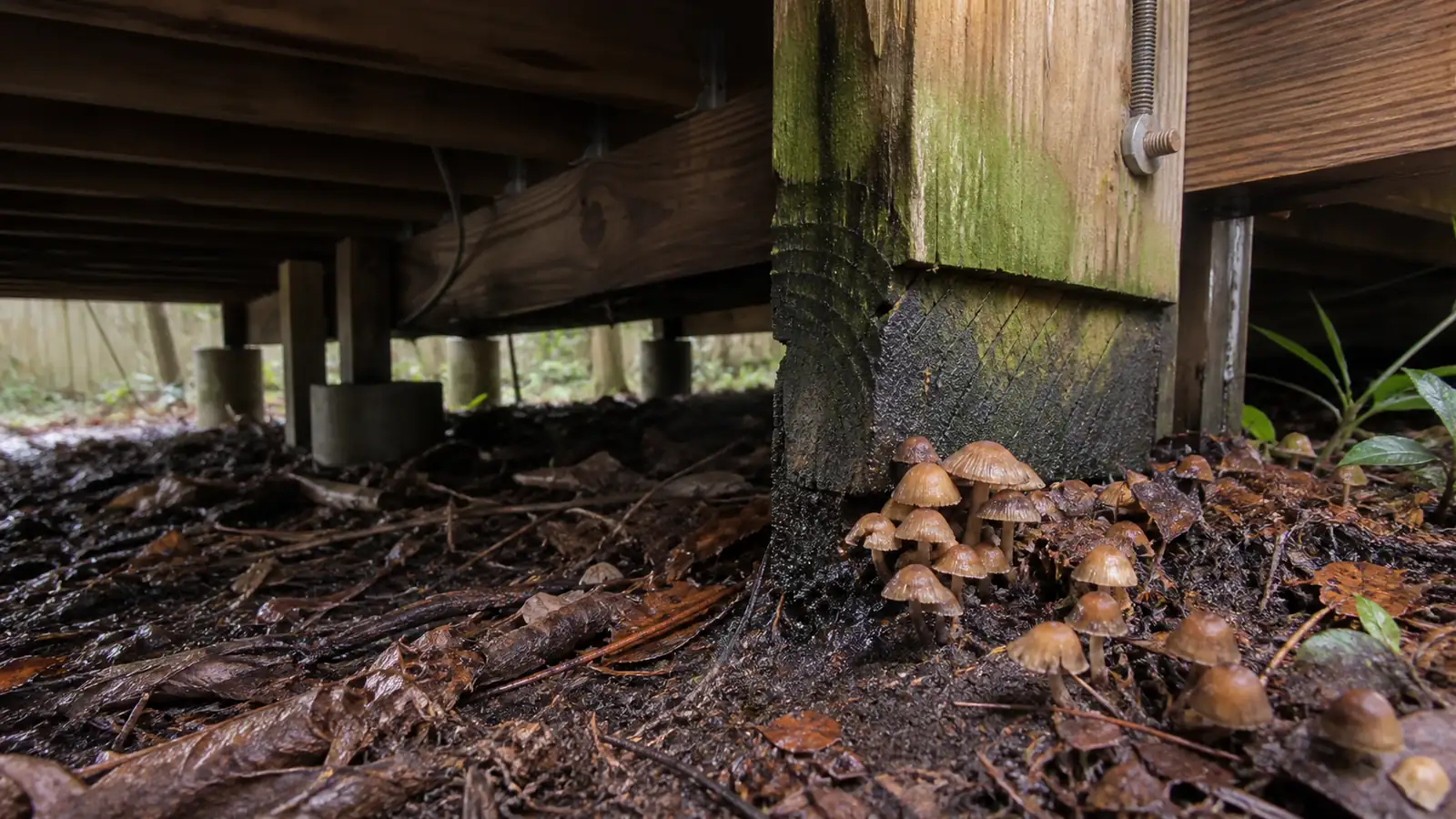
Mushrooms under a deck mark a persistently wet organic food source. Trace their attachment, inspect wood condition without damaging connections, control access, and fix the water before cleaning.
Mushrooms growing under a deck show that a fungus has found persistent moisture and organic food. The food may be the deck, but it can also be buried roots, leaf litter, cardboard, old landscape wood, or soil debris beside sound framing.
Treat the fruiting body as a location marker. Trace its full attachment and the water path before cleaning or judging structural safety.
What Are the Mushrooms Feeding On Under the Deck?
Several food sources can occupy the same shaded space, so attachment matters more than proximity. Trace the complete base before deciding that a cap beside a joist is growing from the joist.
| Where the mushroom attaches | Likely food source | What to inspect next | Important limit |
|---|---|---|---|
| Soil or mulch below framing | Buried roots, wood chips, or landscape debris | Expose one full base and trace nearby wood without digging around footings | The deck may remain sound |
| Leaf litter resting on a joist | Trapped organic debris | Remove loose material and inspect the wood surface after drying | Surface growth does not measure strength |
| Cut end, crack, or connection | Deck lumber or embedded debris | Map wetting, check firmness nearby, and inspect the complete connection | Do not damage a load-bearing member |
| Stored box, fabric, or scrap wood | Household material | Remove access, identify contamination, and inspect the surface below | The object may hide a broader wet zone |
Four live profiles illustrate different wood-associated forms that can appear in this setting; each card remains an example rather than a location-based identification.
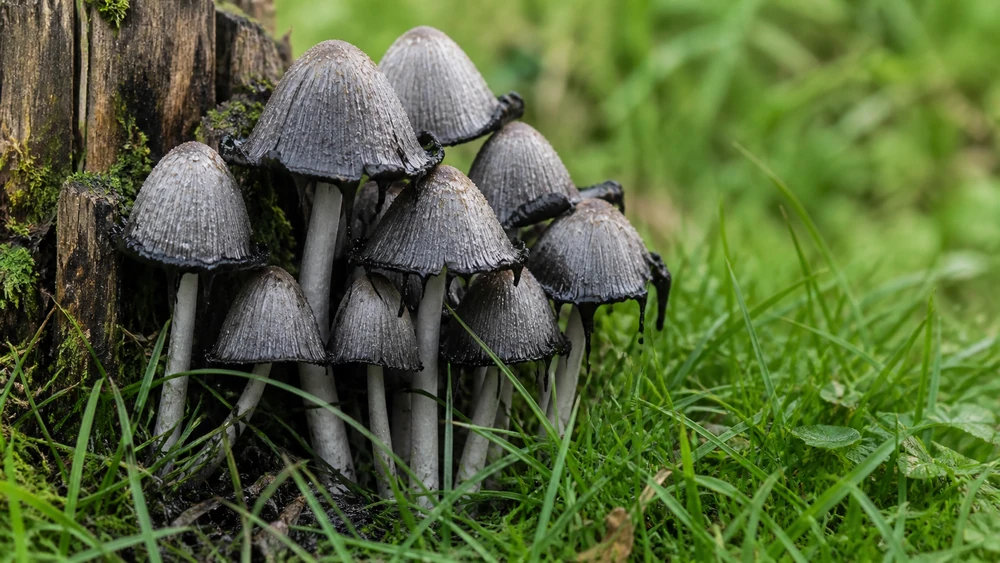 Buried wood and rootsCommon InkcapClustered gray-brown caps can blacken and collapse; poisonous.
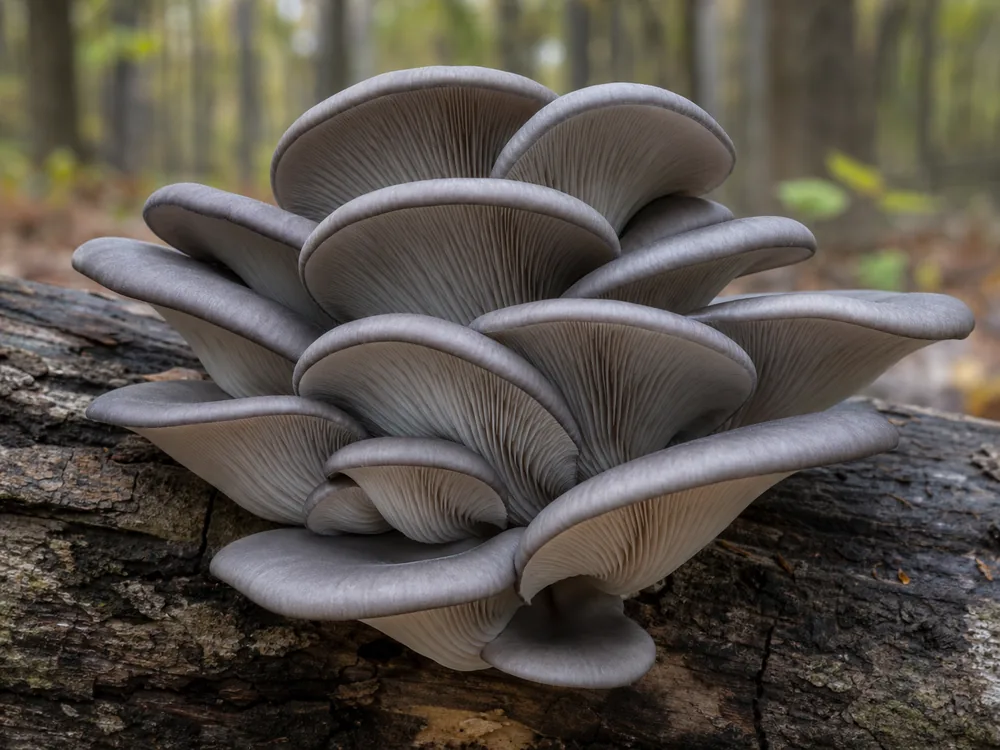 Dead hardwoodOyster MushroomOverlapping side-stemmed shelves point to attached hardwood rather than soil.
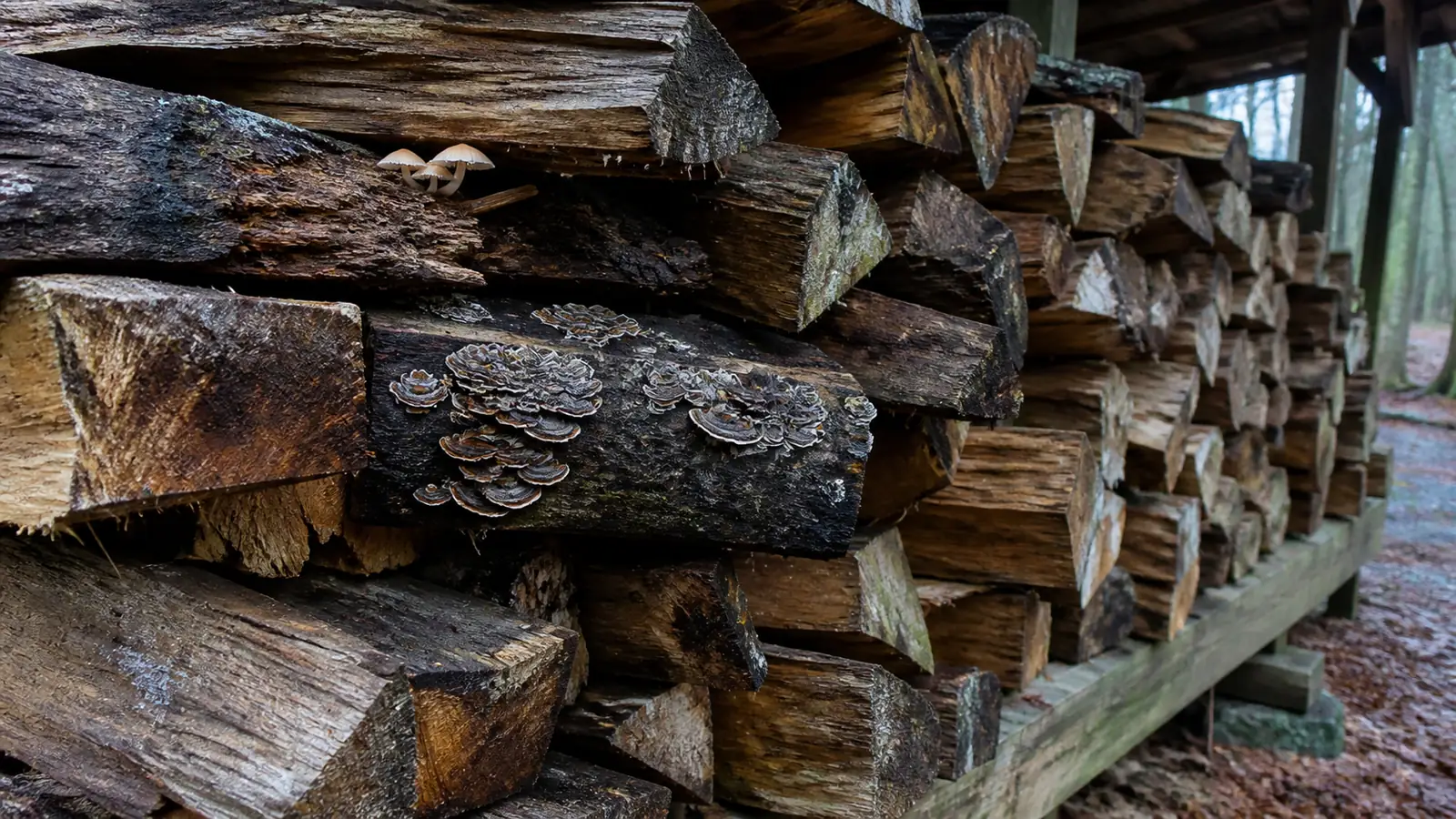
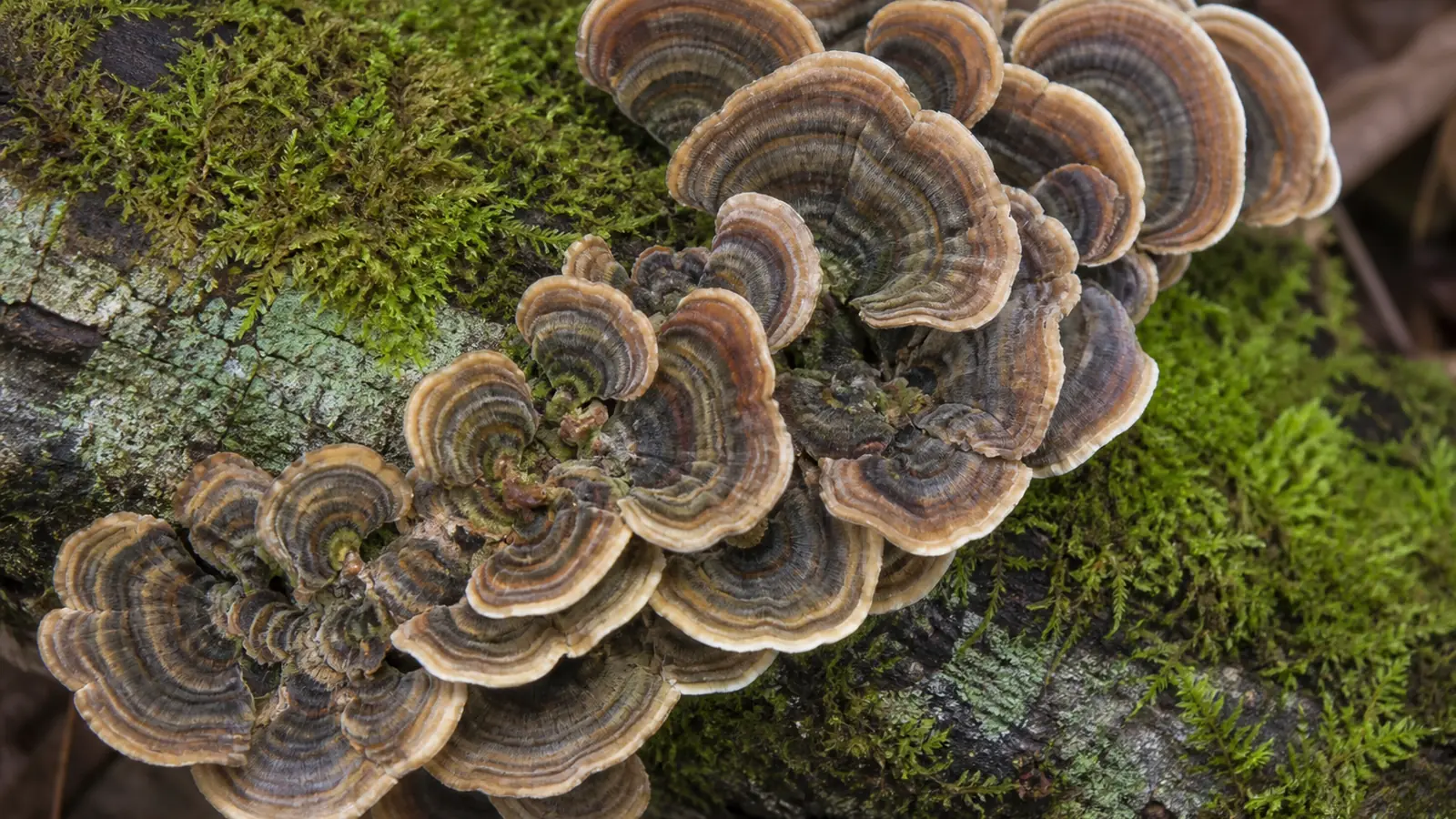 Dead hardwood scrapsTurkey TailThin zoned fans have a pore surface underneath instead of gills.
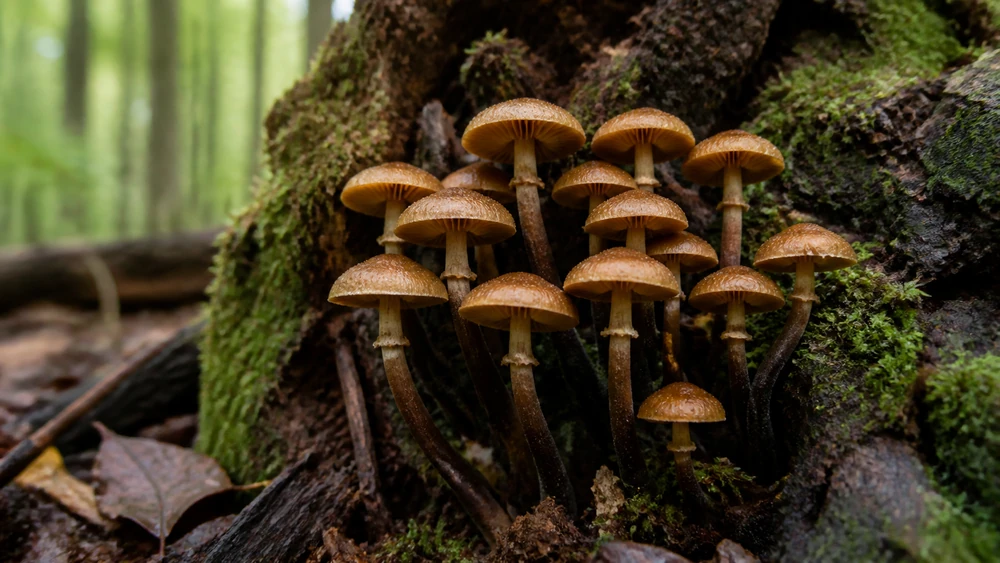 Rotting exposed or buried woodDeadly GalerinaSmall brown caps on wood can contain amatoxins; deadly poisonous.
The attachment-source comparison keeps the complete base and surrounding material visible before any structural conclusion is made.

A mushroom beside a post can arise from an old root rather than the post itself.
Mushrooms on a dead log follow wood anatomy and bark context that may be absent from manufactured deck lumber.
Buried form boards, old tree roots, mulch, and construction scraps can keep feeding fungi after the visible landscaping changes. If the base disappears into soil, record that boundary instead of digging around a footing to prove the substrate.
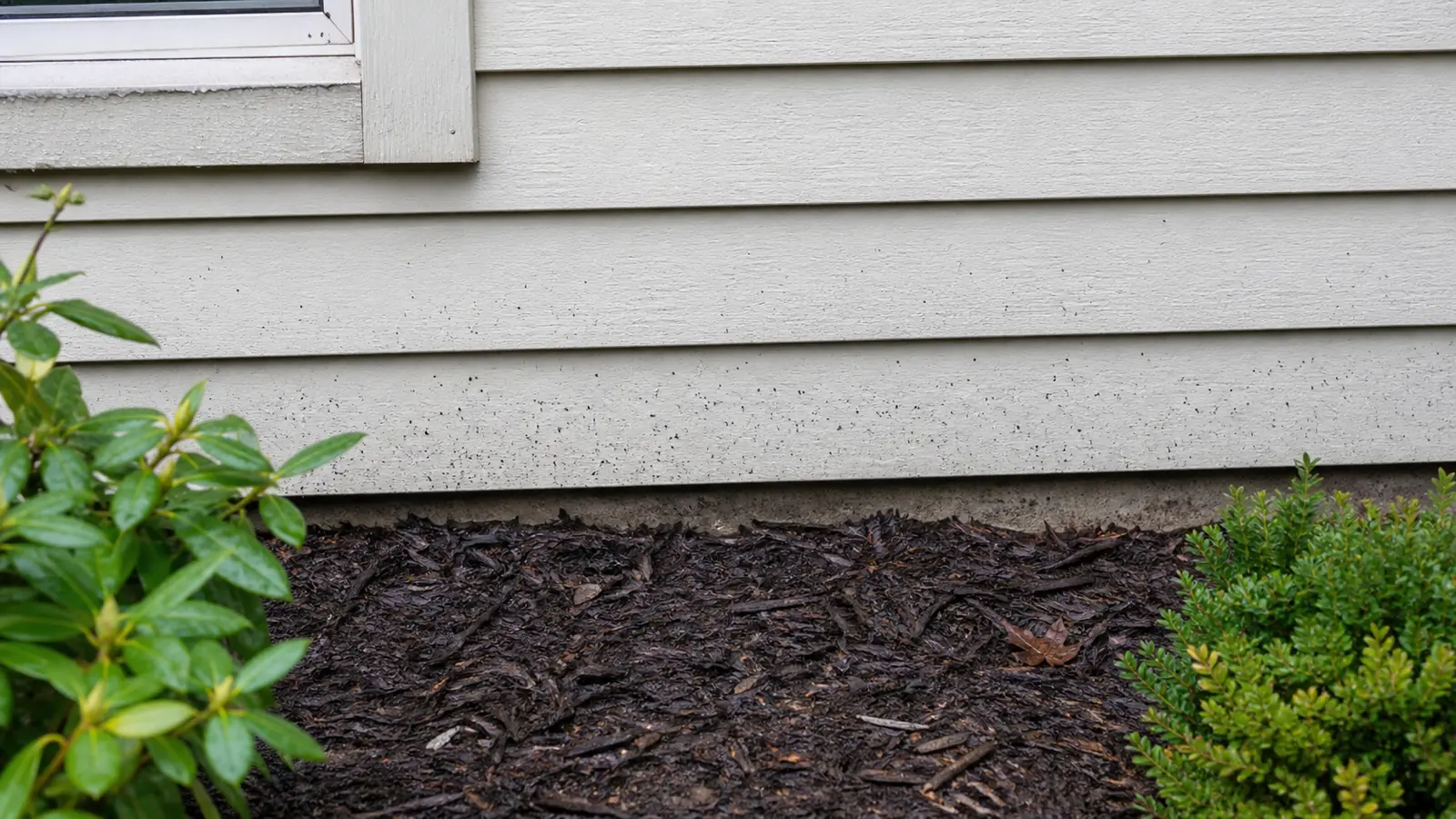
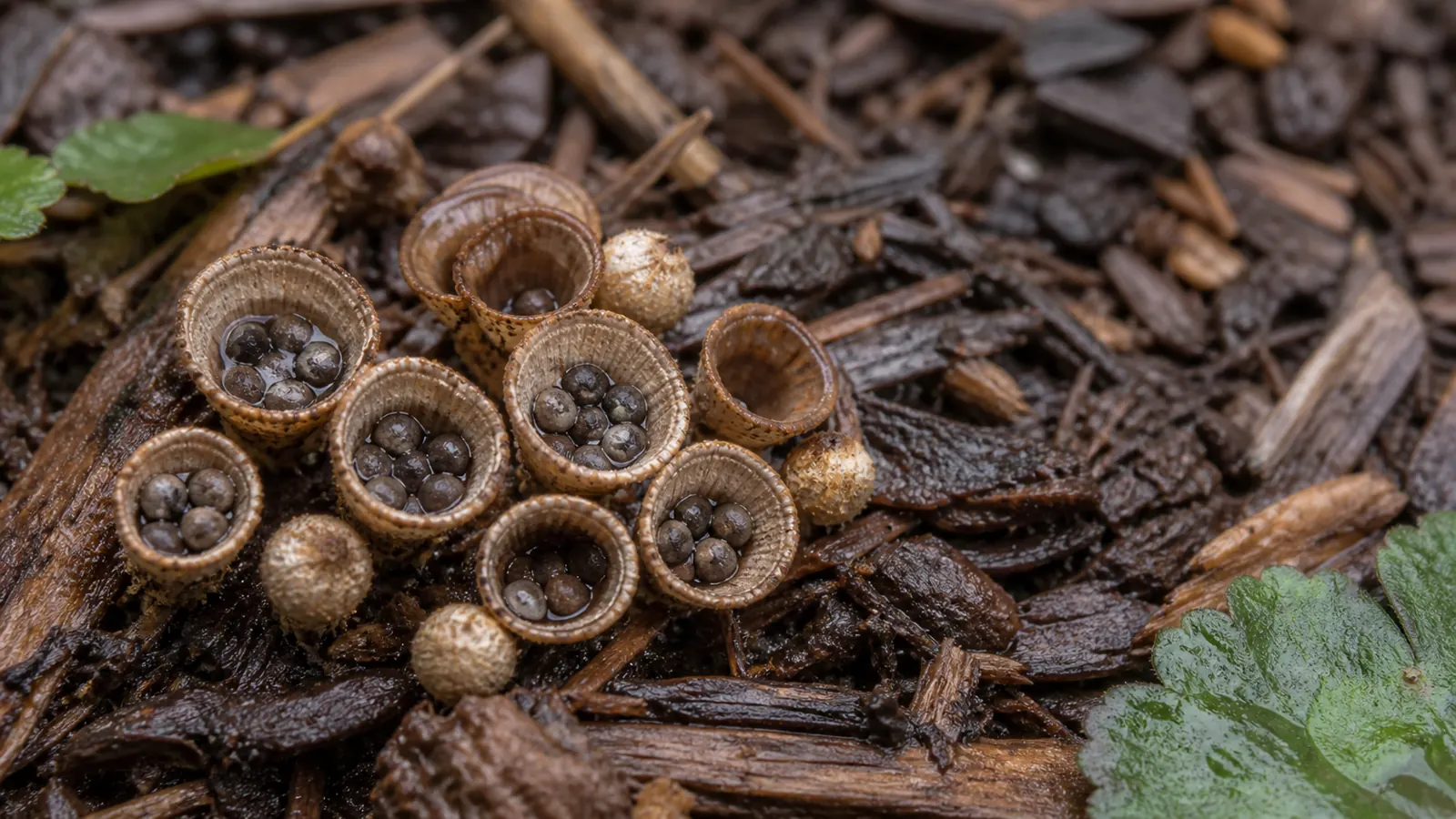
IdentificationWhat Are the Black Artillery Fungus Spots on Siding?Where Is Water Reaching the Under-Deck Space?
The shaded space below decking dries more slowly than an open yard. Rain through board gaps, leaking gutters, failed flashing, condensation, irrigation, poor grade, and damp soil can keep one pocket wet long after the walking surface looks dry.
Inspect during or soon after rain because a dry-day stain cannot show whether water came through a board gap, ran along a joist, or rose from saturated soil. Follow each dark path uphill until it ends at a joint, fastener, pipe, gutter, or landscape grade.
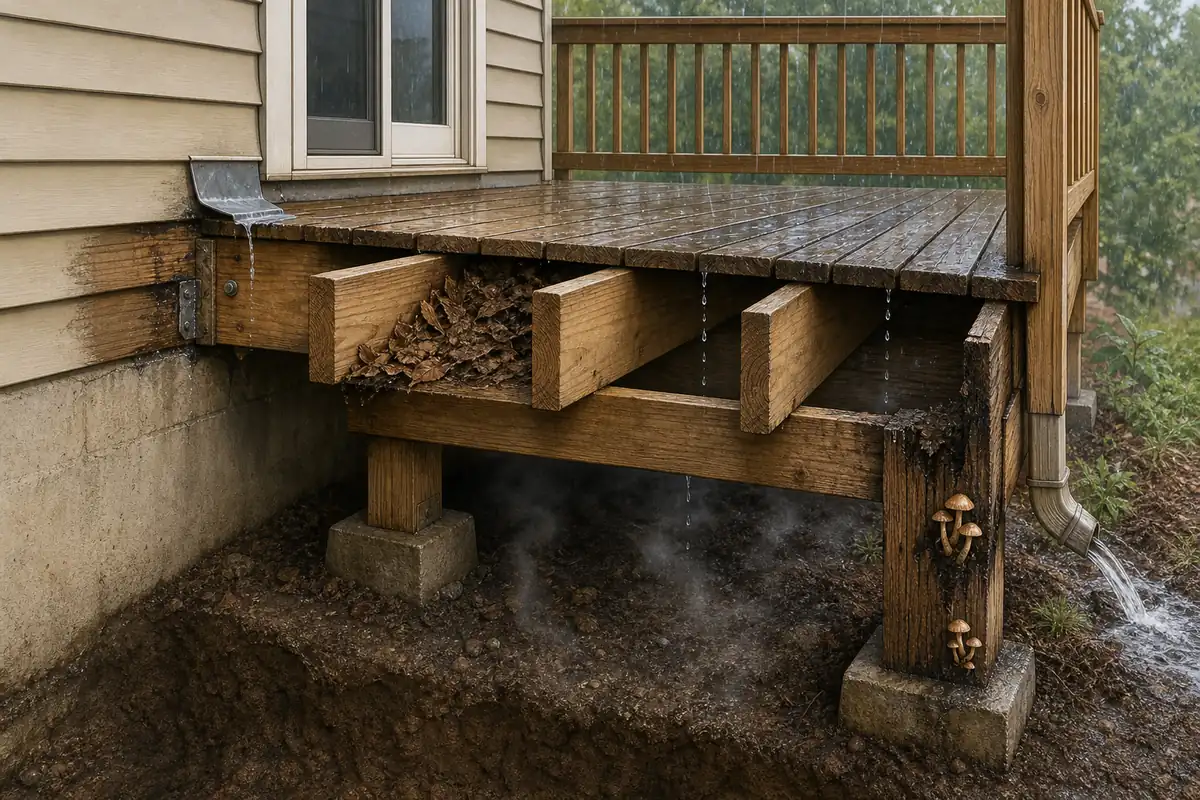
Photograph the full patch before moving debris. Include the underside, stem base, exact attachment, nearby fasteners, board ends, soil level, and a wide frame that shows the house and drainage direction.
- Look after rain while active drips and dark wet paths remain visible.
- Check gutters, downspouts, hose bibs, irrigation, flashing, and the slope below the deck.
- Note an under-deck ceiling, fascia, lattice, or stored material that blocks air or catches leaves.
- Compare the suspect area with a dry member of the same type.
- Keep clear of electrical wiring, sharp fasteners, animals, and unstable access.
An under-deck drainage ceiling can move water away from the ground while concealing leaks and trapped debris above it. Inspect the collection path, outlets, and accessible framing rather than assuming the dry floor below proves the joists are dry.
Do not crawl into a tight or unsafe space merely to obtain a species photograph.
Building access and structural safety come before identification detail.
IdentificationWhat Are the Tiny Bird's Nest Fungi in Your Mulch?Does Fungus Under a Deck Mean Wood Rot?
Visible fungus does not prove that a deck member has lost strength. It does prove that moisture and organic material deserve investigation.
A fuzzy film can remain superficial, while a mushroom or bracket attached directly to lumber suggests an established internal food source.
Neither appearance alone measures how much sound wood remains.
Press an exposed noncritical surface gently with a screwdriver or awl and compare it with known sound wood nearby. Stop before probing a connection, ledger, beam seat, post base, concealed utility, or member carrying load.
| Condition | Touch and structure | Meaning | Response |
|---|---|---|---|
| Dark stain on firm wood | Surface resists pressure and fibers remain coherent | Wetting or old staining without demonstrated strength loss | Find water, dry, and recheck |
| Surface mold on firm wood | Film wipes or brushes at the surface after safe wet cleaning | Surface growth supported by moisture or debris | Correct water before cosmetic work |
| Pale fibrous or stringy wood | Tool enters easily and fibers pull apart | White-rot type decay is possible | Stop relying on the member and obtain qualified inspection |
| Brown blocky or crumbly wood | Cubical cracks, low weight, or pieces break away | Brown-rot type decay is possible | Restrict deck use and escalate promptly |
The comparison image makes those texture differences visible at the same scale before any repair decision is made.

US Forest Products Laboratory guidance links deck decay risk to details that trap moisture and organic debris.
Fascia over cut ends, low clearance, under-deck ceilings, and leaf accumulation against joists can slow drying.
Pressure treatment lowers some decay risks but does not make every surface or cut equally protected. Field cuts can expose less-treated inner wood, and wet debris can feed fungi while holding water against the member.
A moisture reading is one data point.
Recent rain, species of wood, meter calibration, treatment chemicals, surface moisture, and probe depth affect the number.
When Should You Stop Using the Deck?
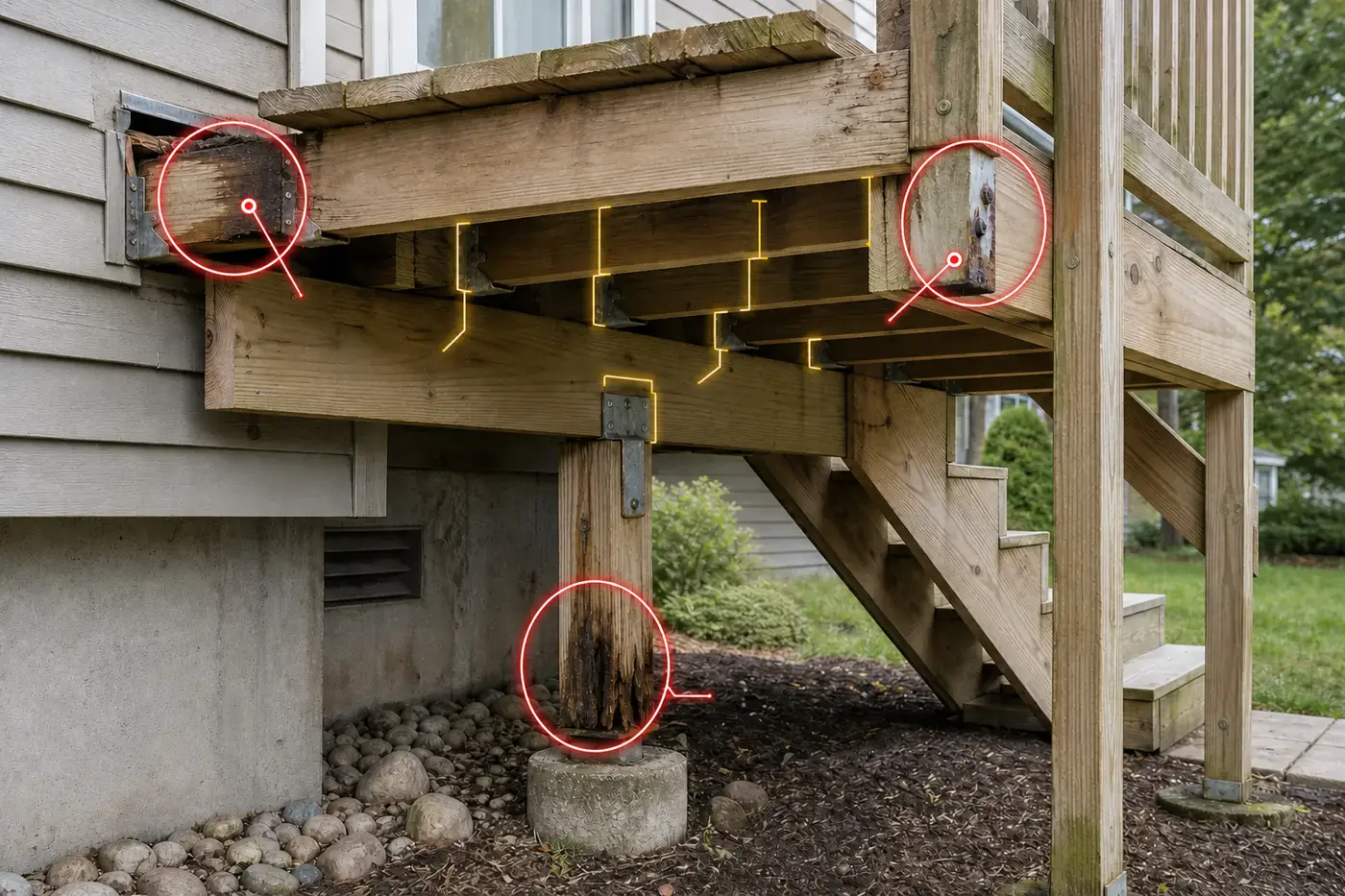
Restrict use when the evidence moves beyond a surface stain and into load-path uncertainty. The critical question is whether a weakened member or connection still supports people safely, and a mushroom photograph cannot answer it.
Stop loading the deck when a joist, beam, ledger, post, stair support, guard post, or connection feels soft, moves unexpectedly, sags, cracks, separates, or shows advanced fastener corrosion. Keep people out from below as well because loose material and a local failure can fall into the work area.
- Close access above and below the suspect zone.
- Photograph movement, gaps, water marks, decay texture, and connection corrosion without dismantling the joint.
- Note whether the condition changes under ordinary foot pressure, but do not bounce-test the deck.
- Record recent storms, plumbing leaks, impact, excavation, or repair work.
- Ask a qualified deck or structural professional to determine capacity and repair scope.
Cosmetic cleaning can wait until that assessment is complete. Paint, bleach, filler, and a new fascia board can hide evidence without restoring the wood or connection.
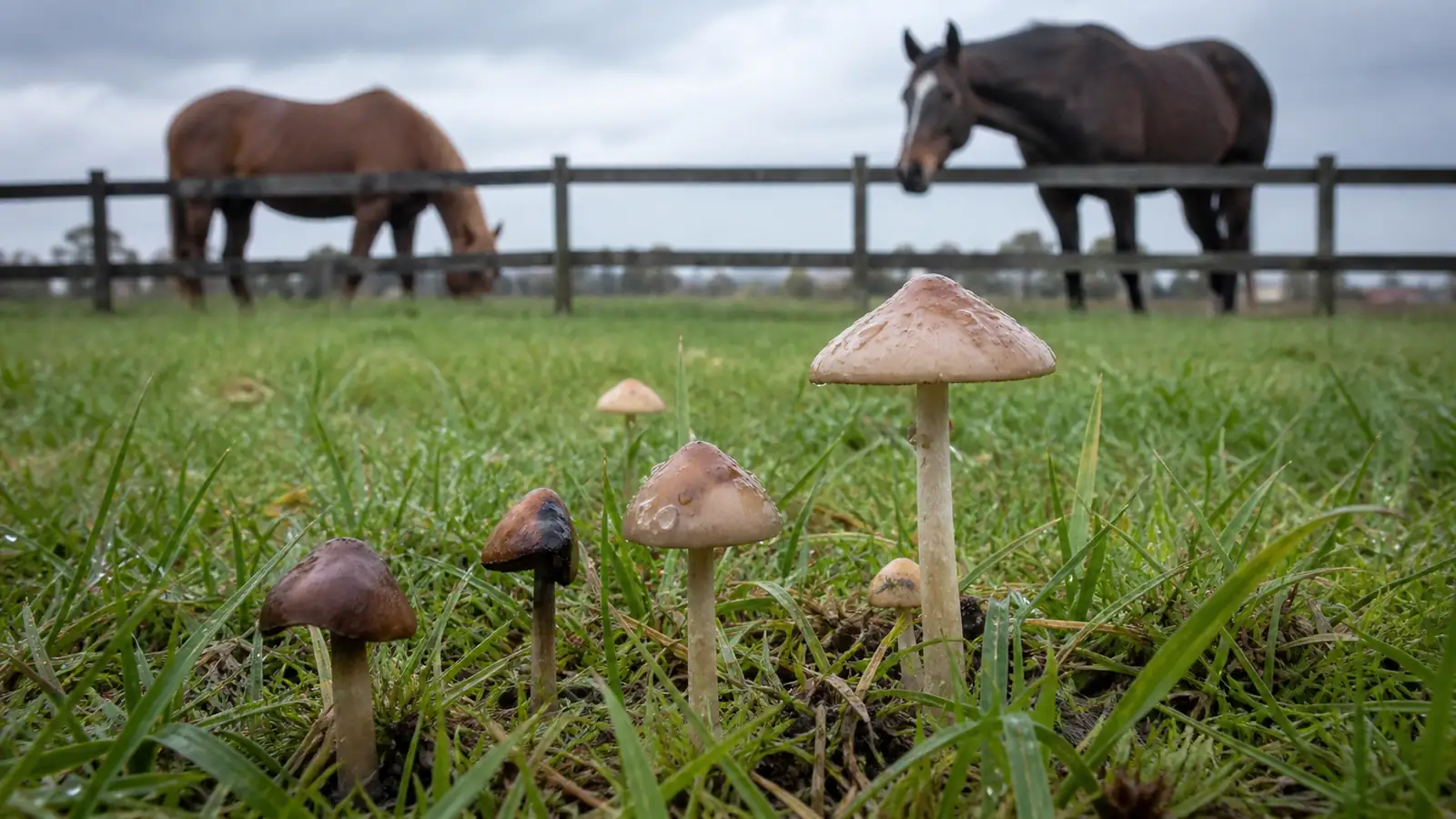
IdentificationWhat Should You Do About Mushrooms in a Horse Pasture?Are Under-Deck Mushrooms Dangerous to Pets or People?
An intact outdoor mushroom is mainly an ingestion concern, while damp debris and broad mold growth create a disturbance concern.
These exposure paths need different controls.
Block children, dogs, poultry, and other animals from the patch. Unknown habitat cannot establish edibility, and a pet can swallow a small cap before an identification is complete.
Warning
Possible ingestion or unsafe under-deck conditions | Call Poison Control at 1-800-222-1222 in the United States after possible human ingestion, or contact a veterinarian for an animal. Do not enter standing water near electricity, sewage contamination, unstable framing, wildlife, or a space too tight for safe exit.
Save fresh specimens and photographs when doing so does not delay the call.
Person or animal may have eaten a cap
Call the appropriate poison or veterinary service immediately and preserve the time and specimen evidenceWaiting for symptoms can waste useful response time.
Unknown caps are accessible but no intake occurred
Photograph one specimen, remove visible fruiting bodies, bag them securely, and block the areaAccess control handles the immediate preventable risk.
Water may contain sewage or chemicals
Keep people and pets out and use a qualified cleanup serviceContamination changes protective equipment and disposal requirements.
Soft structural member or unstable deck
Restrict use above and below, then obtain qualified structural assessmentMushroom identification cannot certify remaining capacity.
Touching an intact mushroom briefly is not the same as eating it.
Wash after handling manure, treated wood dust, contaminated water, or decayed debris.
Avoid dry sweeping, sanding, or using a blower on active growth. Those actions scatter dust and fragments before the moisture source and cleanup boundary are understood.
How Do You Stop Mushrooms From Returning Under a Deck?
Picking the caps does not remove the fungal network or its food.
Recurrence falls when the area dries reliably or the wet organic material is removed.
Work in a sequence that preserves evidence and avoids hiding damage.
Do not seal damp wood behind paint, a ceiling, or new trim.
A clean surface can conceal continuing wetting and give decay another protected interval.
Use cleaning products only as labeled for the surface and surrounding plants, pets, and water. Bleach does not restore wood strength and cannot replace removal of decayed material.
Return after heavy rain, irrigation cycles, and seasonal leaf fall. The repair is working when water drains away, debris no longer accumulates against wood, members remain firm, and new fruiting does not recur in the corrected zone.
Sources & References
- USDA Forest Products Laboratory Deck durability, trapped moisture, debris, and cut ends.
- USDA Forest Products Laboratory Moisture and decay in wood structures.
- US Environmental Protection Agency Moisture correction and drying.
- American Wood Council Wet-service structural design context.