
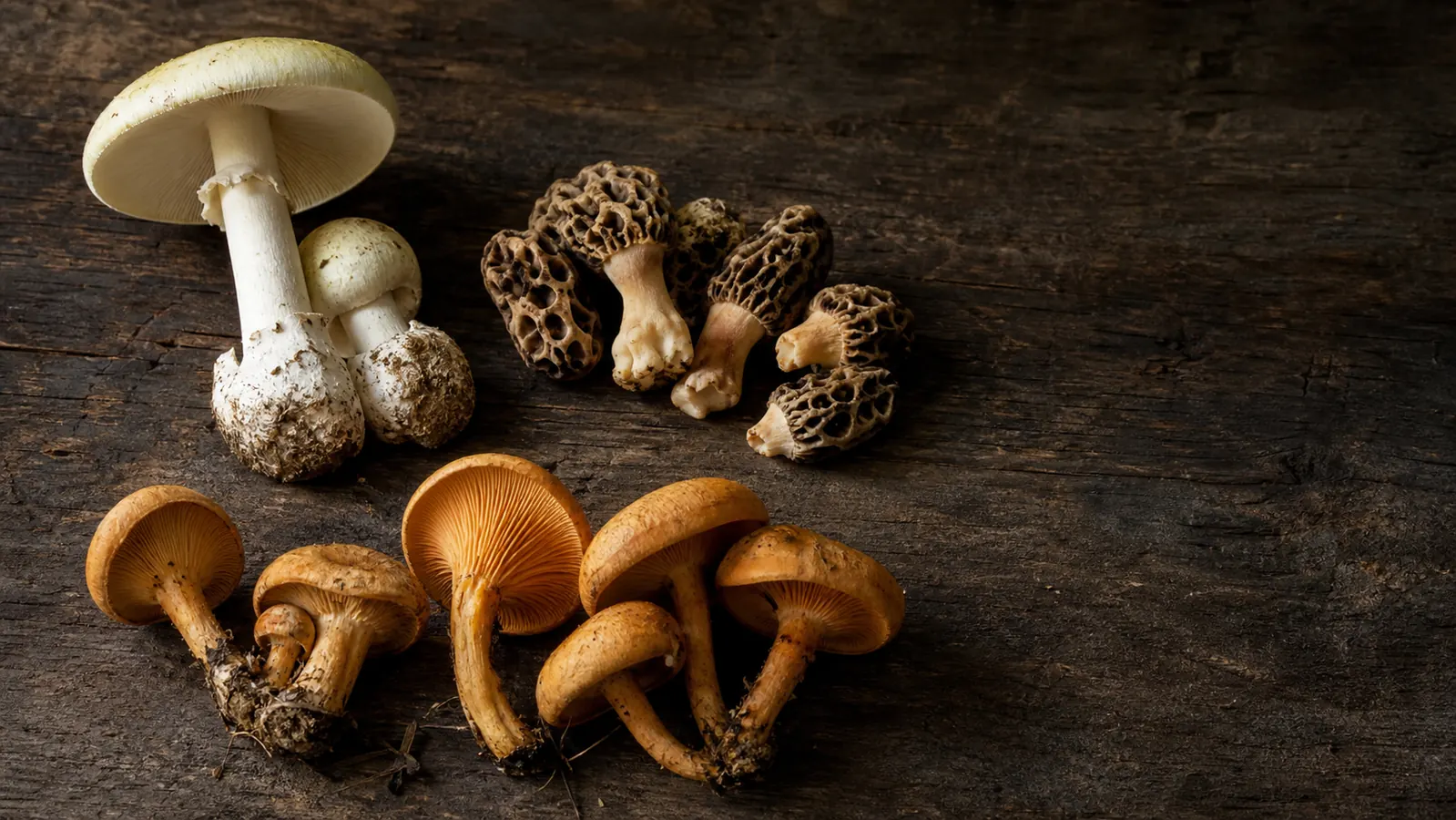
Some wild mushrooms upset your stomach for a day. A few destroy your liver and kill you within a week, so learning to spot the dangerous ones matters before anything reaches your plate.
Which wild mushrooms are actually poisonous?
Out of the thousands of mushroom species growing around us, roughly 100 are known to make people sick, and only a small handful are truly deadly. That small group still causes real harm every year because the dangerous species share the same woods, parks, and lawns as the good edibles.
Serious poisoning often begins when someone trusts a familiar outline, even though unrelated species can share the same cap color and general shape.
The dangerous mushroom is rarely exotic or hidden. It may grow a few steps from the edible species, so habitat overlap makes careful identification more important, not less.
Poisonous mushrooms are grouped by the toxins they carry, and some cause fast stomach trouble that passes within a day. Amatoxins behave differently because they can damage organs before the person feels ill.
The table below separates those toxin groups by symptom timing and danger.
| Toxin group | Example species | When symptoms start | Danger |
|---|---|---|---|
| Amatoxins | Death cap, destroying angel | 6 to 24 hours | Often fatal, attacks liver and kidneys |
| Gyromitrin | False morel | 6 to 12 hours | Can be fatal, damages liver and nerves |
| Muscarine | Some Inocybe and Clitocybe | 15 minutes to 2 hours | Rarely fatal, heavy sweating and drooling |
| Stomach irritants | Jack o'lantern, some boletes | 30 minutes to 3 hours | Rarely fatal, violent vomiting |
| Mixed toxins | Various small brown species | Minutes to hours | Usually not fatal, still needs care |
Fast symptoms often come from toxin groups that people survive, while delayed amatoxin symptoms can signal lethal liver damage. Deadly mushroom toxins make the time between the meal and the first illness useful information for emergency care.
How do you recognize a poisonous mushroom?
No single visible feature proves that a mushroom is safe, because a poisonous species can look plain, smell pleasant, and taste mild.
Folk tests cannot identify mushroom toxins. Deadly species come in white, brown, and yellow, while a death cap may even smell faintly sweet.
The silver-spoon test is also a myth because mushroom poison does not tarnish the spoon in a predictable way.
Recognizing a poisonous mushroom requires the same species-level work used to confirm an edible one. Cap shape, gills, stem structures, spore color, habitat, and substrate must agree.
A ring or sac at the stem base can carry more weight than cap color, but no feature should stand alone.

A spore print can separate mushrooms that share a cap color but release spores of different colors. The spore print method needs one mature cap, paper, and several hours.
Habitat supplies a second independent clue because a fungus growing from wood is biologically different from one rising from soil, even when their caps look alike.
A phone app or quick photo match can suggest a name, but it cannot supply a safe verdict. Treat the result as a question to test against field marks because image tools regularly confuse deadly and edible species.
Cooking cannot neutralize the worst mushroom toxins because amatoxins survive ordinary food preparation. Frying, boiling, drying, or freezing a death cap leaves it lethal.
Foraging safety rules therefore have to keep uncertain specimens out of the kitchen before heat enters the decision.
SafetyHow Is Mushroom Poisoning Treated in the Hospital?The most dangerous group: white Amanitas
If you learn one group of mushrooms by heart, make it the white Amanitas. This is the group that holds the death cap and its close cousins, and it accounts for most of the fatal mushroom poisonings worldwide.
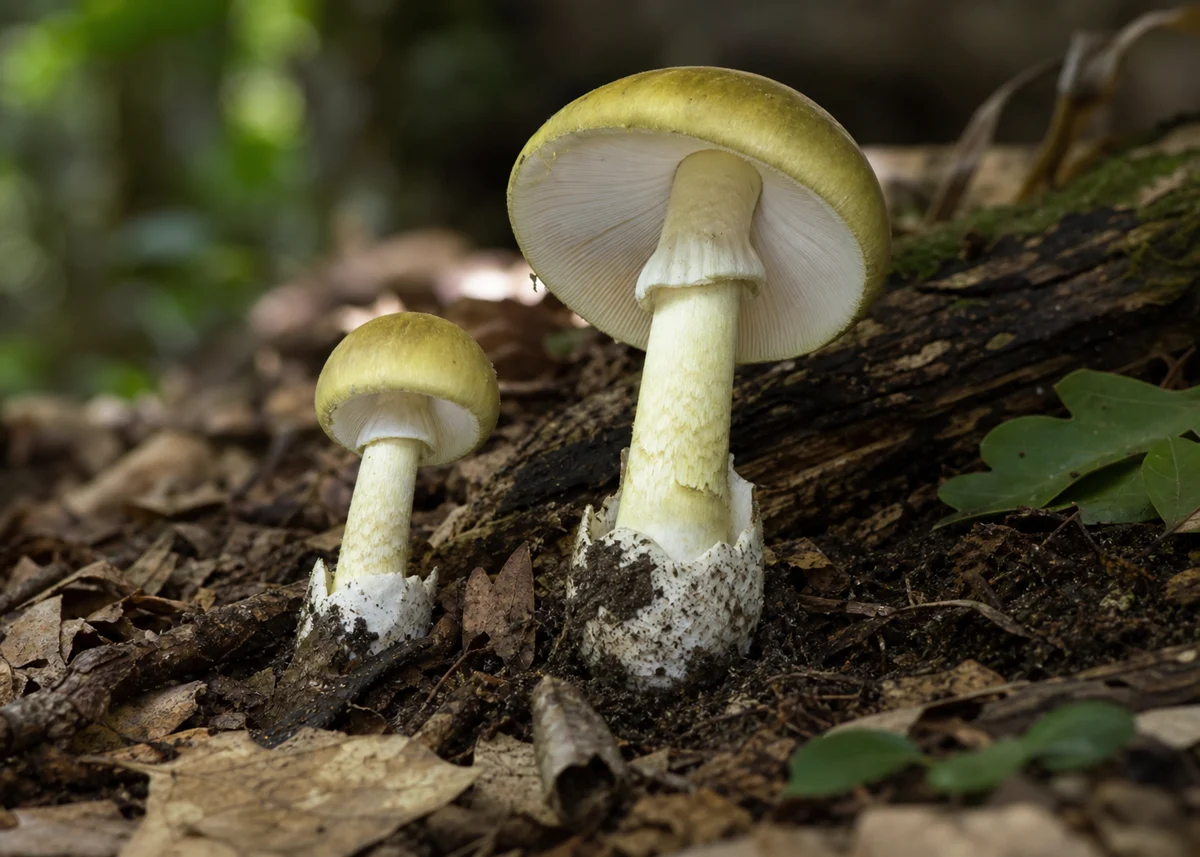
White Amanitas keep white gills as they mature and often carry a thin veil ring on the upper stem. Those two marks should trigger a careful look at the entire base.
An Amanita volva may sit below soil or leaf litter, so lift the mushroom intact instead of snapping it at ground level and hiding this warning sign.
Key takeaway
A white-gilled mushroom with a ring on the stem and a cup at its base is a hard stop. Do not eat it, and do not let it sit next to food you plan to eat.
A young Amanita can resemble a smooth white or tan puffball before its cap opens. Cutting the button from top to bottom reveals the outline of a tiny cap and stem inside.
That internal mushroom shape rules out a true puffball and makes the specimen a hard reject.
That rejected specimen may also belong to a group whose distribution has shifted, because death caps travel with planted trees and now fruit in parts of North America and Australia where earlier generations did not encounter them. A familiar edible from one country may therefore have a lethal counterpart in another.
Start mushroom edibility study with the deadly groups because local knowledge cannot safely be transferred across continents without checking the species anew.
SafetyMushroom Poisoning in Cats: Symptoms and First ActionsPoisonous lookalikes of popular edibles
Most poisonings are not wild guesses. They happen when a forager finds a mushroom that looks like a prize edible and trusts the resemblance.
Treat every lookalike pair as a reject question first. Ask which feature would make the edible ID impossible, then look for that feature before the basket fills.
In this orange lookalike pair, Jack o'lantern mushrooms can resemble golden chanterelles, but they grow in wood-based clumps and carry thin, sharp true gills. Chanterelles rise from soil alone or in loose groups and have blunt ridges that run down the stem.
Checking the underside structure and growth substrate makes this orange lookalike error much harder to make.
The false morel fruits in spring beside true morels, but its cap looks wrinkled or brain-like instead of evenly pitted. A lengthwise cut also shows cottony chambers where a true morel should be continuously hollow.
False morel toxins can form monomethylhydrazine in the body, which makes that internal structure a safety decision rather than a minor naming detail.
Underside structure and substrate matter across other lookalike groups, including shelf-shaped fungi mistaken for oyster mushrooms. Match the attachment, gills, stem, flesh, spore print, and growth material instead of trusting the outline.
A lookalike resemblance gives you a reason to investigate, never a reason to eat.
Dangerous lookalikes repeat this pattern across many edible groups. The practical skill is to find the feature that rules food out before the basket fills.
The one rule that keeps foragers safe
Experienced foragers keep one short rule for uncertainty: when in doubt, throw it out.

You do not need to identify every mushroom in the forest, but every mushroom intended for food needs a species-level identification. If the field marks cannot rule out each dangerous lookalike, keep the find as a photograph or study specimen instead of a meal.
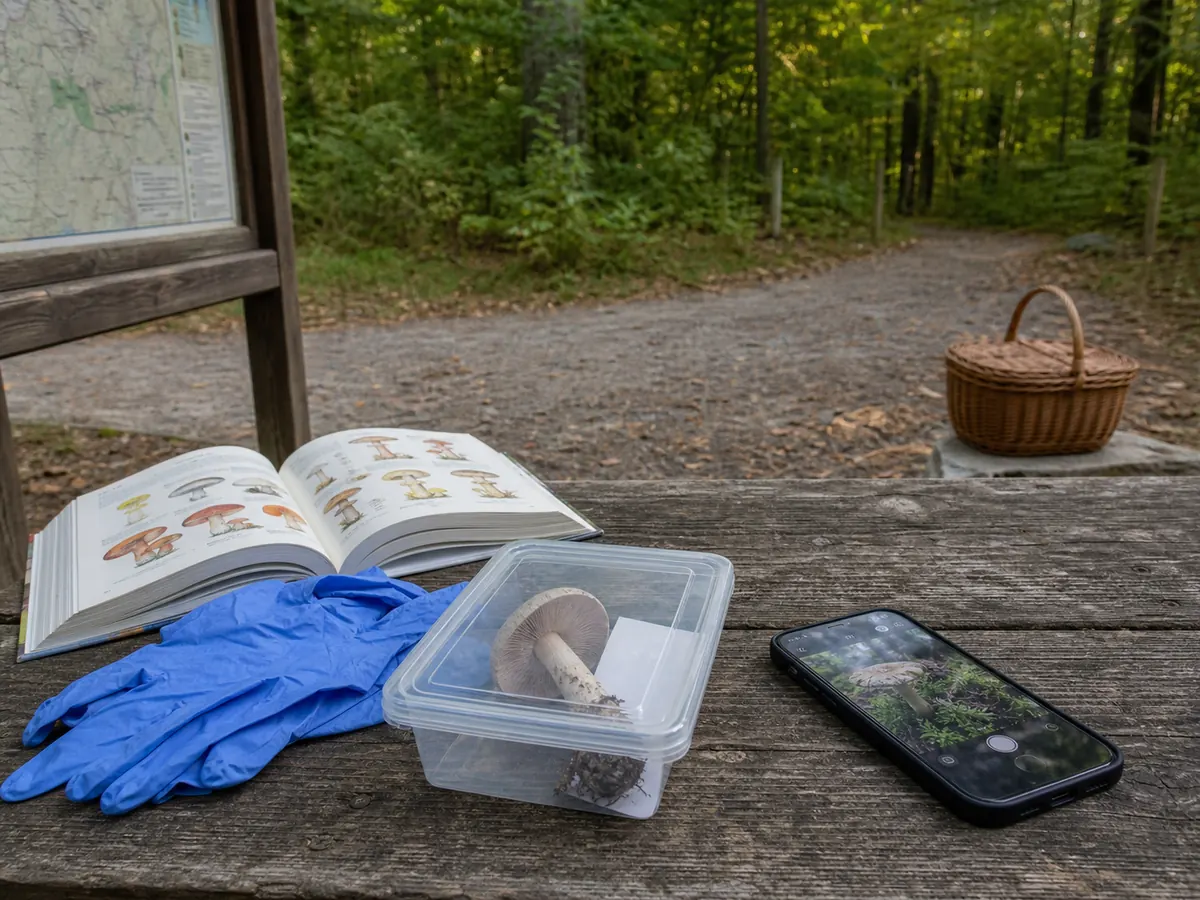
Certainty comes from several agreeing features, a spore print when it is diagnostic, and comparison with a trusted field guide or experienced local identifier. An app match or one photograph cannot provide that chain of evidence.
One mistaken white Amanita can end a life, so an unresolved specimen stays out of the basket regardless of how promising it looks.
The reject rule protects pets as well as foragers because dogs may eat toxic lawn mushrooms before anyone notices the new caps. Remove unidentified mushrooms from areas a dog can reach and review dog mushroom safety before symptoms appear.
When doubt remains, disposal is safer than leaving an uncertain specimen beside food or within reach of a pet.
- Fast illness
- Symptoms within a few hours still need expert advice because timing alone cannot identify the toxin.
- Delayed illness
- Vomiting or diarrhea that begins 6 hours or more after a wild mushroom meal is a medical emergency.
- Field rule
- An unidentified mushroom stays separate from food and out of reach of children and pets.