
DEADLY POISONOUS
Ibotenic acid and muscimol poisoning hits the brain and spinal cord. The person can swing from wild excitement to deep sleep and back. Anyone hit needs close watch on breathing, alertness, body heat and the risk of injury.
Ibotenic Acid and Muscimol Poisoning: Symptom Swings
Ibotenic acid and muscimol poisoning can swing a person from vomiting, agitation, distorted perception and poor coordination into profound drowsiness or coma. In the United States, call Poison Control at 1-800-222-1222 for any suspected fly agaric or panther cap ingestion. Call 911 for a seizure, collapse, breathing trouble, severe confusion, violent behavior, or a person you can't wake.
| Current state | Possible signs | Immediate concern |
|---|---|---|
| Excited | Agitation, confusion, shouting, hallucination-like behavior, tremor, or uncontrolled movement | Falls, trauma, overheating, and unsafe restraint |
| Poorly coordinated | Staggering, slurred speech, weakness, myoclonus, or repeated vomiting | Aspiration, head injury, and rapid decline |
| Depressed | Deep sleepiness, slow response, snoring or irregular breathing, or coma | Loss of airway protection and low oxygen |
| Changing | Alternation between excitation and sedation | A brief calm period may not mean recovery |
Why agitation and sedation can trade places
The clearest warning sign is a brain that keeps changing state, more than hallucinations alone. In a 34-case poison-center series, people who got sick had stomach upset, an overexcited nervous system, a slowed one, or a mix of these. All but one of those with symptoms felt effects within six hours. Even so, timing alone can't tell you which toxin caused them.
These swings mean someone must watch breathing and alertness the whole time help is on the way. Someone who was restless can turn hard to wake, lose the reflexes that guard the airway, or vomit while sedated. Until help arrives, keeping a confused or drowsy person safe means placing them only as emergency dispatch directs and clearing away nearby hazards. Do not give food, drink, alcohol, supplements, or another person's medicine.
Excited behavior needs a safety plan too. Cut noise and crowding, and keep the person away from traffic, stairs, water, fire and sharp objects. Avoid a struggle unless immediate physical danger leaves no other choice. Trained responders can manage agitation while they watch blood flow, temperature and breathing.
Dispatch can act on plain, literal reports. Say whether the person answers to their name and follows one instruction. Say whether they keep falling asleep, walk without support, vomit while drowsy, or pause between breaths. Those details tell responders far more than saying the person is high or acting strange.

Which mushrooms contain ibotenic acid and muscimol?
The best-known source is fly agaric, Amanita muscaria. Its cap runs from red to orange, yellow or faded, and it may carry pale veil patches. Rain, age and handling can strip off the famous white warts, so a clean cap does not rule it out.
Warning
Do not use a red cap, white spots, or one phone photograph as a safety decision. Preserve the cap, gills, stem, ring, bulbous base, universal-veil remnants, habitat, and several ages of the collection.
The panther cap, Amanita pantherina, can carry the same toxin pair and may cause a worse illness. In the poison-center series, panther cap cases had more stomach symptoms, excitement and sedation than fly agaric cases. But the sample was small, and it can't predict how any one person will do.
Related Amanita species may also contain these toxins. Cap color, veil patches, stem rings and bulb shape vary by species and region. So whoever names the mushroom needs the whole specimen. Drying or powdering a cap strips away many of the clues that could have pinned down the source.
Gummies, extracts and powders sold in shops add more doubt. Their labels may not prove which compounds they hold or how strong they are. Nor do they show how much batches vary, or rule out other drugs mixed in. Bring the package, receipt, batch details, photos and any leftover product while doctors treat the illness in front of them.
Keep everything in its original container, and don't move gummies, powder or liquid into an unlabeled bag. Lot numbers, ingredient lists, receipts and photos of the intact package let poison specialists find out if other people hold the same product. Count the pieces or measured spoonfuls left, and note how many there were before use. Don't ask an impaired person to piece together an exact dose.
The marketing name counts as evidence, but it is no chemical test. Products sold as Amanita or muscimol may hold a different strength than expected. They may also hold another mind-altering drug or contaminants that change the picture. So doctors treat the breathing, blood flow, temperature, blood sugar and behavior they can measure, and they look for other drugs while they weigh special testing.
Witnesses can describe the package, timing, order of events, alcohol, medicines and other products. They can do this without arguing with an agitated patient about memory. When the label and the symptoms don't match, these facts let the team widen its list of possible causes.
Preparation details still count when the species looks confirmed. Record whether the caps were fresh, dried, boiled, baked, powdered or mixed into a drink, and whether anyone drank the cooking liquid. Those facts give a rough idea of exposure and point to anyone else who may have got a concentrated portion. None of this turns the recipe into a dose calculation.

How the two toxins push the brain in opposite directions
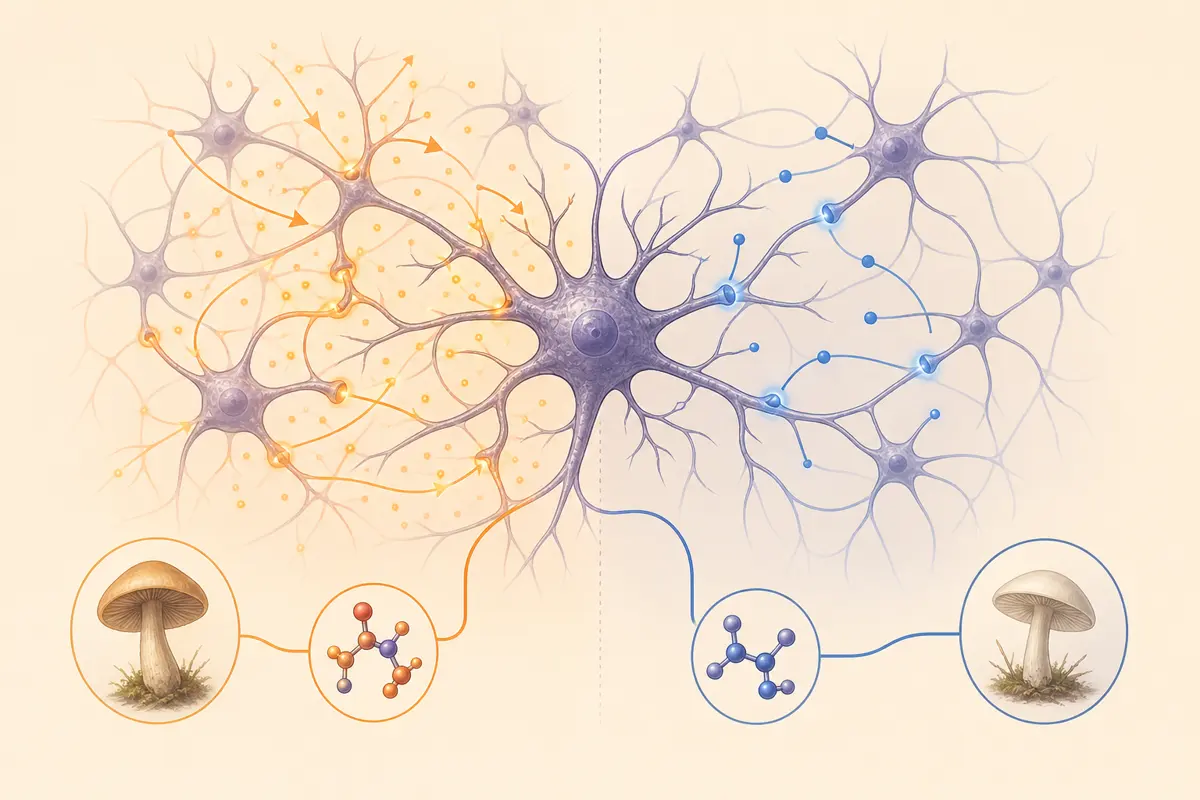
Ibotenic acid is an excitatory amino-acid toxin that acts at glutamate receptors. Too much of this "go" signal can explain agitation, odd movements, warped perception and unstable nerve function. Muscimol works the other way. It acts mainly as an agonist at GABA-A receptors, and GABA is one of the brain's main calming signals. So strong muscimol effects can bring drowsiness, slow responses, poor coordination and coma.
Ibotenic acid can also change into muscimol by decarboxylation. So their chemistry links the two. Still, that link gives no set dose ratio in a wild mushroom.
- Ibotenic acid
- Excitatory glutamate-receptor activity
- Muscimol
- Inhibitory GABA-A receptor activity
- Combined result
- Confusion, motor disturbance, excitation, depression, or alternating states
- Bedside consequence
- Behavior alone cannot show whether breathing and airway reflexes remain safe
The mixed picture follows from that chemistry. Each compound's strength, absorption time, breakdown and brain target can shape the state you see. Food, alcohol, medicines, age and illness can also change how fast someone turns excited or sleepy.
The receptor model shows direction, but it gives no fixed order of events. Muscimol's calming action can win out in one patient. In another, excitement linked to ibotenic acid shows more, and the balance may shift as doctors watch. So the team treats the airway, behavior, temperature and blood flow it can measure. It doesn't try to guess a toxin ratio from symptoms.
The brain focus also clears up a naming mix-up about muscarine, which chemists first isolated from fly agaric. But clinically important muscarine poisoning usually comes from other mushrooms. It makes the body "wet", with sweating, drooling, tears, pinpoint pupils, airway secretions and a slow pulse. Fly agaric's typical brain-and-behavior illness comes mainly from ibotenic acid and muscimol.
What symptoms appear, and in what order?
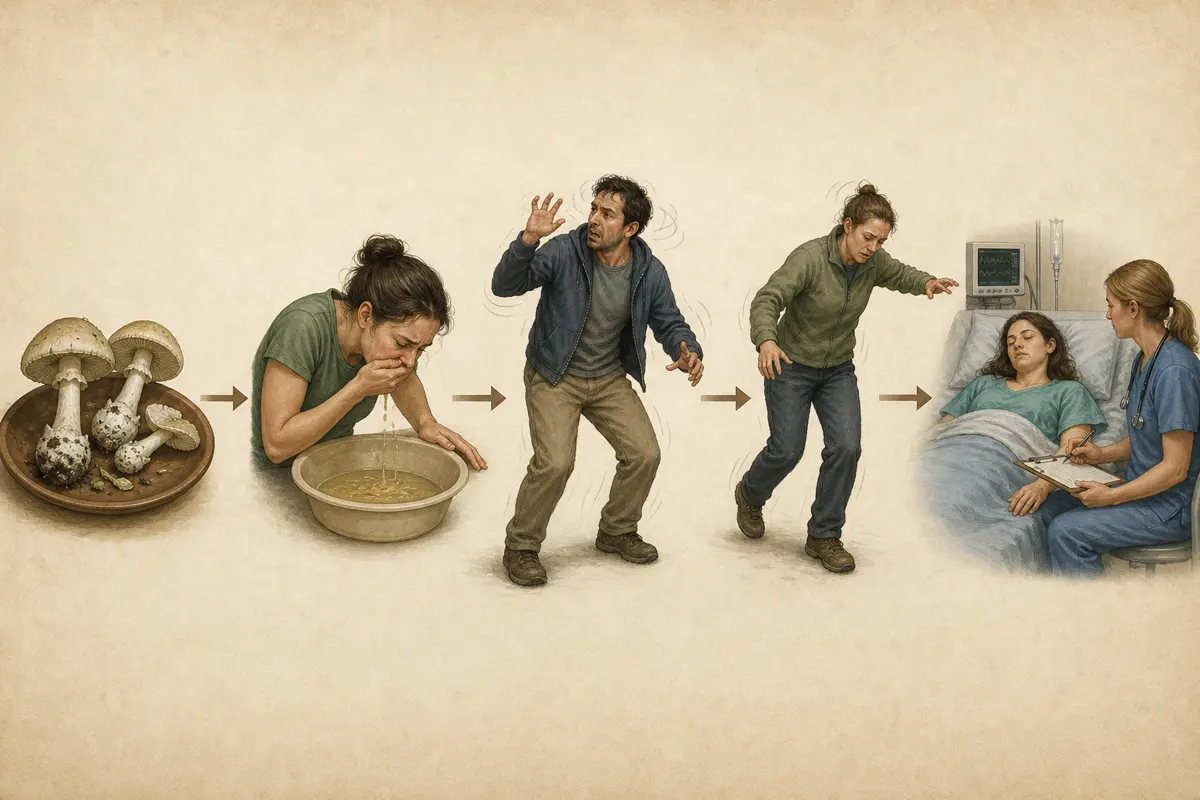
Nausea, vomiting, belly pain, dizziness and weakness may come before or along with the brain changes. Stomach symptoms don't have to appear. Their absence does not make a confused or sedated patient safe.
- Perception
- Visual or auditory distortion, altered sense of time, or dreamlike behavior may occur
- Movement
- Ataxia, tremor, jerking, myoclonus, or inability to walk safely can occur
- Behavior
- Agitation, fear, combativeness, laughter, shouting, or disorientation may appear
- Depression
- Lethargy, unresponsiveness, irregular breathing, or coma can follow
- Memory
- The person may remember little of the episode
The order varies from person to person. Some patients go from stomach illness to agitation and then sleepiness. Others arrive already sedated, or swing back and forth. Nobody can assume that a calm spell after restraint, vomiting or exhaustion means the toxin has cleared.
In the 34-case series, many illnesses with symptoms lasted less than 24 hours. Still, five patients needed a breathing tube (intubation), and one child with panther cap exposure spent three days in intensive care. Other case reports describe severe courses with serious heart and lung problems and, rarely, death. One separate report documents deep coma after panther cap poisoning that reversed.
Common outcomes don't erase those severe exceptions. Children may get worse after a small-looking bite, because the portion is large for their body size. Older adults may have less reserve in their lungs and heart. Taking high doses on purpose and using concentrated products add more doubt.
Telling this syndrome apart from other poisonings
Many things can mimic part of this picture, such as alcohol, sedatives, cannabis and stimulants. Anticholinergic plants, mental illness, low blood sugar, infection, head injury and other mushroom toxins can do it too. Several causes can exist at once, so doctors need the full exposure history.
These two toxins usually cause a fairly fast illness centered on the brain. Amatoxin poisoning more often starts after a longer quiet gap. Then come severe stomach illness and later liver damage. Early brain symptoms make amatoxin a weaker fit, but they don't clear an unknown mixed basket.
Muscarine produces a different set of body signs. Heavy secretions, sweating, tears, diarrhea, pinpoint pupils, wheezing and a slow heart rate (bradycardia) point toward muscarine acting on the body outside the brain. Swings between agitation and coma point toward the brain toxins. Real cases can show odd signs or involve several species, so the contrast guides the doctor's thinking without naming a species.
Psilocybin mushrooms can change perception and cause anxiety and fight-or-flight (sympathetic) effects. Deep sleep that comes and goes, repeated vomiting and signs of Amanita change the concern. Shop products of unknown makeup may contain several mind-altering ingredients. Nobody should judge them by branding alone.
Trauma can become a second diagnosis. Someone confused may fall, hit their head, or wander into cold or heat. They may also inhale vomit before anyone spots the poisoning. Report any missing time, bruises, wet clothing or witnessed fall, so doctors don't blame every abnormal sign on the toxin.
What doctors check again and again
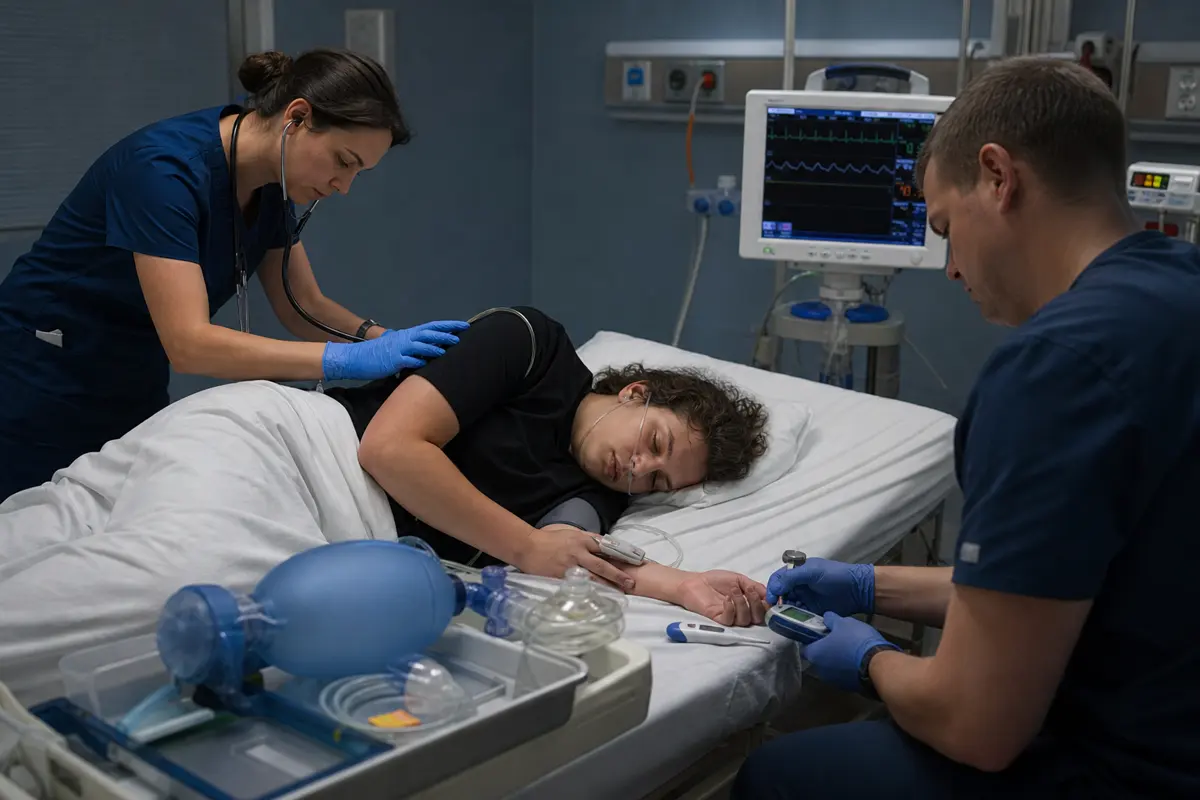
Emergency teams start with the airway, breathing, blood flow, oxygen and temperature. They also check blood sugar, mental state and the nerves with a focused exam. They repeat these checks because the main state can change fast.
Can the person still guard their airway? That tells the team more than how peaceful their sleep looks. Snoring, gurgling, irregular breathing, vomiting without waking, blue lips or falling oxygen can signal a blocked airway. They can also signal inhaled vomit (aspiration). Deeply sedated patients may need suction, oxygen, careful positioning or a protected airway.
Agitation brings a different problem. Temperature, pulse, blood pressure, fluid balance and muscle strain can all worsen during long struggling or odd movement. Quiet rooms and trained staff cut injury while the team looks for medical causes such as low blood sugar or other drugs.
Lab tests fit the case, and no one fixed set applies to all. They may cover salts in the blood (electrolytes), kidney function and acid balance. They may also look for muscle injury, alcohol or drugs, and the effects of vomiting. Doctors think about scans when trauma, another nerve emergency or an odd, long-lasting state still seems possible.
They may add a heart tracing, an electrocardiogram (ECG), when the pulse looks wrong, other drugs may be in play, or the person is very ill. Special toxin tests on urine and blood may not come back in time to guide immediate care.
Witnesses make the brain trends clearer. Someone who saw the person before they ate can describe their usual speech, coordination, sleep, medicines and mental health, and then say what changed first. Video taken before care may add detail when it is safe and respectful. Filming must never delay emergency action or provoke an agitated patient.
SafetyGastrointestinal Mushroom Poisoning: Timing and CareHow do hospitals treat ibotenic acid and muscimol poisoning?
No specific antidote reverses the full syndrome. Treatment keeps the patient safe while the body breaks down the toxins. Meanwhile, the team finds and treats any complications.
The room itself is part of care. Staff cut noise, bright light, crowding and hazards to keep things from escalating. Doctors may use benzodiazepines for dangerous agitation or seizures. The drug, dose, route and any repeat doses need close watching, because extra sedation can threaten breathing.
Sometimes guarding the airway is the most important step. Intubation leaves the toxin in place. It protects breathing and blocks inhaled vomit during deep coma, agitation nobody can control, or repeated vomiting. The team then rechecks brain recovery as sedating drugs and mushroom effects wear off.
Fluids, anti-nausea drugs, cooling or warming, blood sugar fixes, and care for injuries or muscle damage all depend on what the team measures. Someone with stable fluids and someone who keeps vomiting should not get the same automatic plan.
Poison specialists make the call on decontamination. They may consider activated charcoal for some recent ingestions when the airway is safe. But a drowsy or vomiting person has a substantial risk of breathing it into the lungs. Never improvise charcoal, gastric emptying, or forced fluids at home.
Physical restraint can also cause harm. If immediate safety leaves no choice but restraint, trained responders watch position, breathing, blood flow and temperature. Family members should clear hazards, step back and follow dispatch. They should never pin a struggling person face down.
Evidence, outcomes and going home
Bring whole mushrooms, raw pieces, cooked food, dried material and packaging. Bring vomited pieces too when you can collect them safely, plus original photos. Label each item with its pick time, cooking time and eating time, but don't delay transport to do it.
Each exposed person needs a separate timeline. Include the amount they likely ate, why they ate it, and any alcohol, medicines or recreational drugs. Add the first symptom, behavior changes, vomiting, sleep periods, injuries and treatment. One diner who feels fine does not clear the batch, because dose and sensitivity differ.
The poison-center series shows a typical middle without fixing the edges. Of 34 identified cases, 25 had symptoms, and no one died in that series. Most illnesses with symptoms lasted under 24 hours. Panther cap exposures more often caused symptoms, and several patients needed airway protection.
Those numbers describe one series and can't forecast your own case. The sample was small, the amounts eaten were uncertain, and referral patterns can gather more serious cases. Doctors use the series to frame what is possible while they follow the patient in front of them.
The species difference is a clue for the team. Whole mushroom evidence may raise concern about panther cap. Breathing, alertness, temperature, injury and repeat exams still set the level of care right now.
Other reports show why each case needs its own watching. Deep coma can fully reverse with support. Yet case reports also describe heart and lung arrest, and death. How a person does depends on dose, species, how someone prepared the mushroom, other things they took, inhaled vomit, injury, delay to care and their health before.
Going home takes more than waking up. Doctors look for steady breathing and blood flow, safe coordination, and clear alertness that lasts. Vomiting should be under control, and temperature and blood sugar should be back toward normal, with no untreated injury or delayed worry about other drugs. New confusion, collapse, repeated vomiting, breathing trouble, or deep sleepiness that returns after discharge needs urgent reassessment.
Memory gaps or exhaustion can make the handoff harder. The team should give the written return precautions to a responsible adult, who removes leftover mushrooms or products. That adult keeps the person from driving, swimming, climbing or drinking alcohol until the treating team says normal activity is safe. Behavior changes that last past the expected observation period need medical review, and nobody should brush them off as part of the experience.
Preventing another exposure
Fly agaric shows up in games, stories and online videos. That fame never replaces an expert ID and toxicology, because the mushroom in those pictures can still cause coma and need a ventilator. Keep whole Amanita specimens away from food, children, pets and recreational products.
Don't dry, powder, boil or bake an uncertain cap as a home safety test. Cooking and drying change the chemistry and strength, and nobody measures the final dose. Drying also strips away field context, and the dried bits can pass for an ordinary supplement.
- Before handling
- Photograph cap, gills, stem, bulb, veil remnants, habitat, and scale
- Before serving
- Exclude every uncertain Amanita from food
- Around children and pets
- Remove mushrooms from accessible play areas with gloves or tools
- If exposure occurs
- Preserve material and contact the poison center before symptoms become severe
Online products deserve the same proof. Save the packaging, lot details, receipt and what's left inside. Don't rely on marketing terms to name the active ingredient. Shop-bought mushroom edibles may need a broader toxicology workup than a confirmed wild specimen.
The last safeguard is knowing when to refuse. When the stem base is missing, the veil features conflict, the product source is uncertain, or no qualified identifier can confirm the material, keep it out of the body. Never test it with a small dose.
Sources5
- Toxicity of Muscimol and Ibotenic Acid Containing Mushrooms Reported to a Regional Poison Control Center 34-case series: GI, excitation and depression; all but one within 6 h; 25 symptomatic, five intubated, child 3 days ICU, no deaths, panther cap more symptomatic
- Two Cases of Severe Amanita Muscaria Poisoning Including a Fatality, Wilderness & Environmental Medicine 2022 Severe A. muscaria courses: cardiopulmonary arrest and one death
- Burst suppression electroencephalogram with mushroom poisoning, Amanita pantherina, Epilepsy & Behavior Case Reports 2015 Reversible coma after panther cap; ibotenic acid at glutamate receptors, muscimol at GABA receptors
- Mushroom Poisoning Syndromes, North American Mycological Association Muscarine first isolated from fly agaric; muscarine syndrome comes from Inocybe and Clitocybe
- Severe Illness Associated with Eating Mushroom-Containing Chocolate Products, 2024, CDC MMWR Mushroom chocolates and gummies held muscimol and other drugs, with different substances in the same product and flavor
Frequently Asked Questions
Which mushrooms contain ibotenic acid and muscimol?
Fly agaric and panther cap are the best-known sources. Their Latin names are Amanita muscaria and Amanita pantherina. Some related Amanita species can cause it too.
How quickly do muscimol and ibotenic acid symptoms begin?
In a 34-case poison-center series, most people with symptoms felt them within six hours. But timing alone can't name the toxin.
What symptoms can these toxins cause?
Vomiting, confusion, agitation, changed senses, poor balance and odd movements can occur. So can profound drowsiness and coma. These states can take turns, so a calm spell does not mean the person is getting well.
Is muscimol poisoning the same as muscarine poisoning?
No. Muscimol and ibotenic acid mainly act on the brain and spinal cord. Serious muscarine poisoning usually brings sweating, drooling, tears, tiny pupils, fluid in the airways and a slow pulse.
Is there an antidote for muscimol poisoning?
No antidote works on the whole illness. Hospital staff keep the person breathing and calm dangerous agitation or seizures. They also treat any other harm while the body clears the toxins.