
POISONOUS
Muscarine poisoning usually starts within minutes to two hours. It brings a cluster of wet signs like sweating, tearing, drooling, vomiting, diarrhea, pinpoint pupils, wheezing, and a slow pulse. Call Poison Control promptly, because breathing and blood flow can get worse even when nobody knows the mushroom species.
Muscarine Poisoning: Why Sweating and Salivation Start Fast
Muscarine poisoning can turn a wild-mushroom meal into a wet, slow-pulse emergency within minutes. In the United States, call Poison Control at 1-800-222-1222 when sweating, tearing, drooling, vomiting, pinpoint pupils, wheezing, or an unusually slow heartbeat show up together. Call 911 for breathing trouble, collapse, seizure, or a person you can't wake.
- Likely pattern
- Several secretion, stomach, pupil, pulse, or breathing signs begin within about two hours
- Immediate threat
- Heavy airway secretions, wheezing, low blood pressure, or marked bradycardia
- Important correction
- Inocybe, Inosperma, and Clitocybe are more typical sources than Amanita muscaria
- Do not wait
- The mushroom can remain unidentified while clinicians treat the toxidrome
How fast does muscarine poisoning start?
The strongest clue is a cluster of wet signs, and vomiting alone doesn't make that cluster. Sweat soaks the clothes while tears and saliva increase. The pupils shrink, the bowel and bladder get busy, and the pulse or blood pressure falls. Doctors call these parasympathetic signs, after the part of the nervous system that muscarine pushes into overdrive.
Symptoms often begin between 15 minutes and two hours after someone eats the mushroom. That fast start narrows the list of causes, but timing can't prove the toxin. Gastrointestinal irritants, mixed meals, pesticides, medicines, and other exposures can all overlap with it.
Breathing and blood flow set the urgency. Muscarine can flood the airways with mucus and tighten them while it slows the heart. So someone who is wheezing, can't clear their saliva, feels faint, looks blue around the lips, or is hard to wake needs emergency services. Driving them in a private car, with no one monitoring them, is not enough.
While help is on the way, note the meal time and the first symptom. Check whether the face looks flushed or pale, the skin dry or soaked, and the pupils small. Also note whether the person can talk normally without stopping for breath.
Don't make the person walk around to test how bad it is. Position them the way emergency dispatch tells you. Give no food or drink to someone who isn't fully alert, and don't make them vomit.
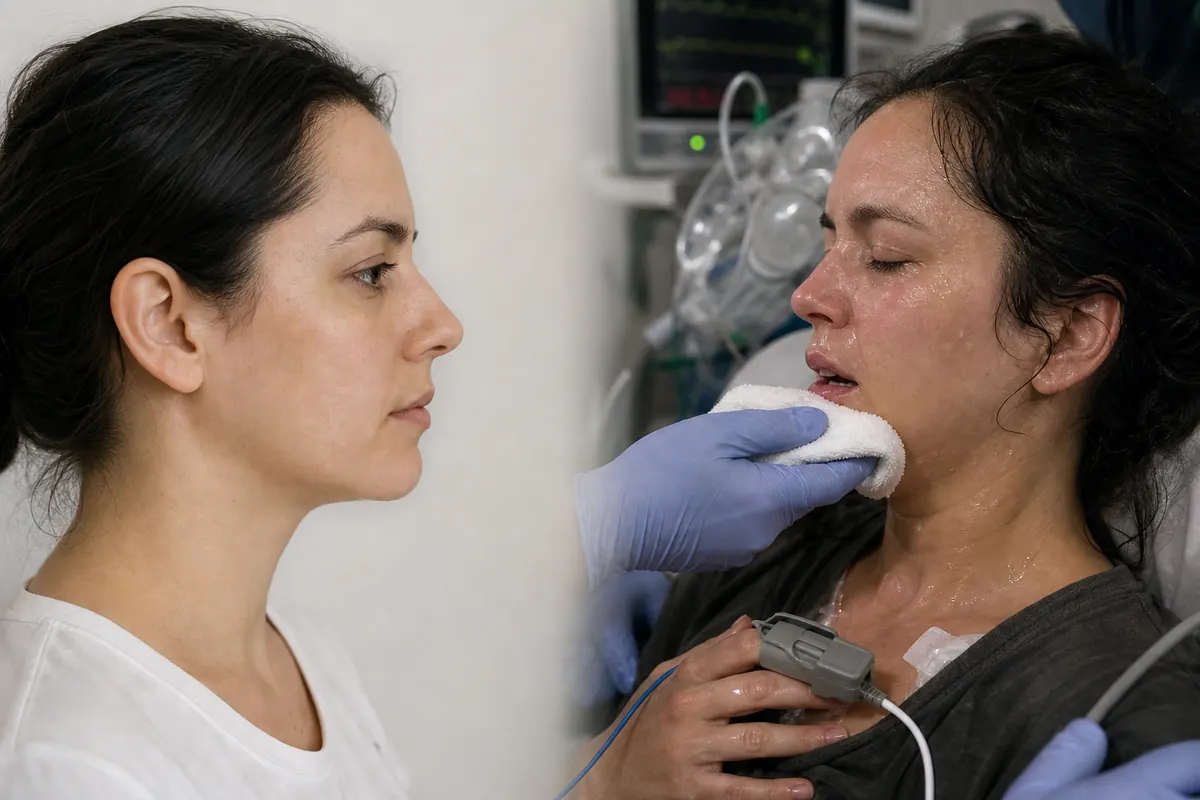
Every diner needs a separate timeline. One person may get only cramps, while another from the same dish develops heavy secretions and a slow heartbeat (bradycardia).
Warning
Do not wait for every symptom in a mnemonic. Breathing difficulty, collapse, severe weakness, confusion, or a very slow pulse after a wild-mushroom meal warrants immediate emergency care.
Which mushrooms cause muscarine poisoning?
Muscarine was first isolated from Amanita muscaria, the fly agaric, which gave the toxin its name. Yet fly agaric usually causes a different syndrome that acts on the brain. Ibotenic acid and muscimol drive that syndrome, because fly agaric's muscarine level is generally too low for the classic wet picture.
Serious muscarine poisoning more often follows a meal of species in Inocybe, Inosperma, Clitocybe, and related groups. The authors of a case report on cholinergic mushroom poisoning name Inocybe and Clitocybe as the most common sources. The white fibrecap, Inocybe geophylla, and the fool's funnel, Clitocybe rivulosa, both contain it. These mushrooms can be small, pale, tan, or brown, and they may lack the bold colors people link with poisonous fungi.
That changes what you look for. When the patient is sweating and drooling, don't search only for a red cap with white spots. Keep small mushrooms with fibrous caps, pale funnel-shaped mushrooms, fragments, cleaning scraps, and photos of the original haul.
Some of these groups are hard to name from a casual photo. Identifiers may need cap fibers, how the gills attach, smell, spore features, habitat, and a microscope. The medical team treats the patient long before that final name arrives.
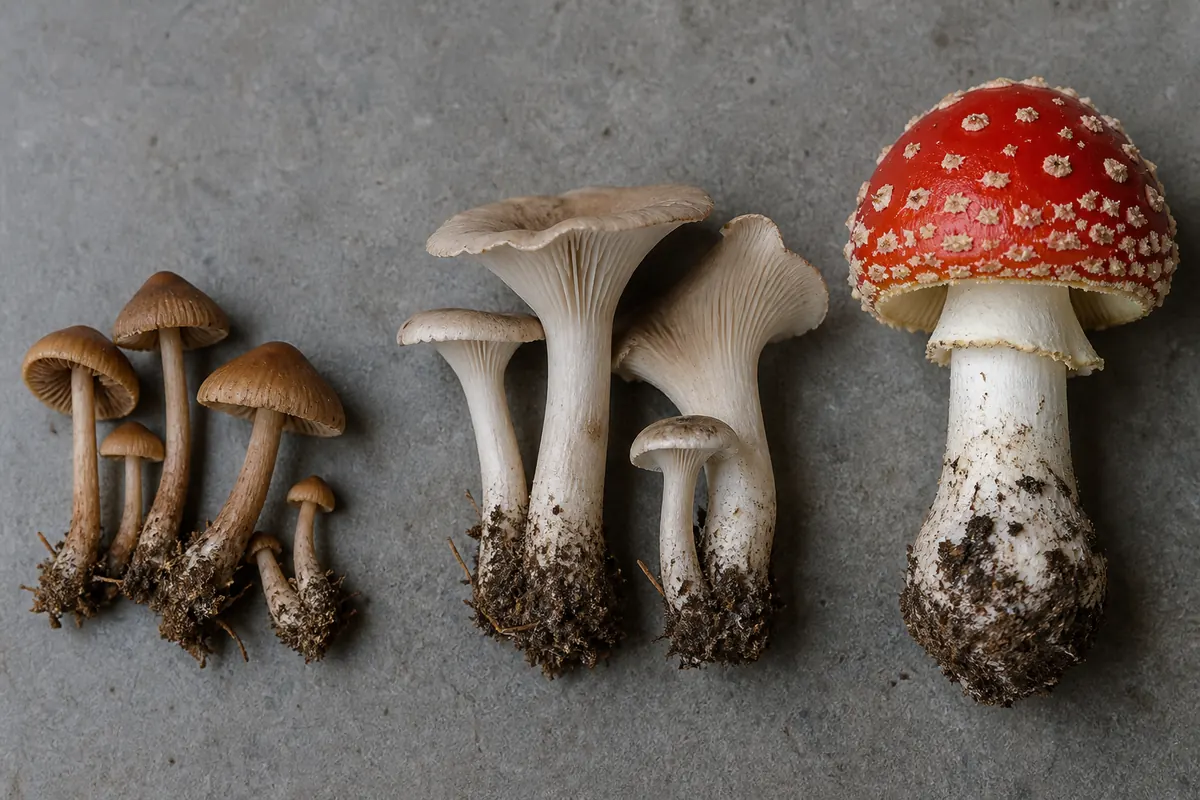
Common names make weak evidence, because one local name can cover several species. Give the identifier the whole mushroom and the story of where it grew, and skip asking whether a nickname is edible. Cooking can't confirm what a mushroom is or test it for toxin. Even well cooked, an unknown mushroom can still poison you, even when the meal tasted normal.
How muscarine acts on the body
Muscarine switches on muscarinic receptors, the docking sites that normally respond to the nerve signal acetylcholine. They belong to the autonomic nervous system, the outer network of nerves that runs glands and organs without conscious control. The result looks like an overload of "rest and digest" signals across glands, smooth muscle, the heart, the eyes, the gut, and the bladder.
- Glands
- Saliva, tears, sweat, and airway secretions increase
- Eyes
- Pupils can constrict and vision may blur
- Heart
- The pulse may slow and blood pressure may fall
- Lungs
- Bronchial secretions and bronchospasm can impair breathing
- Gut and bladder
- Cramping, vomiting, diarrhea, and urinary urgency can occur
One mechanism links all these signs. So sweating plus drooling, pinpoint pupils, and a slow pulse together point to muscarine far more strongly than any one sign on its own.
Muscarine gets into the brain poorly compared with several other mushroom toxins. So strong hallucinations, marked agitation, swings between drowsy and alert, or seizures push doctors to look further. They consider another toxin, a mixed meal, low oxygen, a severe drop in blood flow, or a separate medical problem.
Staying out of the brain doesn't make muscarine harmless. Airways flooded with mucus, tight airways (bronchospasm), a slow heart, and low blood pressure all happen outside the brain, and they can still turn critical. Older adults and people with heart or lung disease may have less in reserve when these effects arrive together.
Fluid lost through vomiting, diarrhea, and sweat can worsen weakness and blood pressure. The mouth and lungs may still hold too much fluid at the same time.
Muscarine works right on the receptors. Some pesticides work another way, by blocking the enzyme that clears acetylcholine (acetylcholinesterase). Those pesticides can also cause twitching, weakness, or paralysis through nicotinic receptors. So they may need a different antidote plan.
Nobody needs to show every sign before getting care. At the bedside, oxygen, secretions, blood flow, and the chance of another exposure come first. The mechanism guides what the team watches.
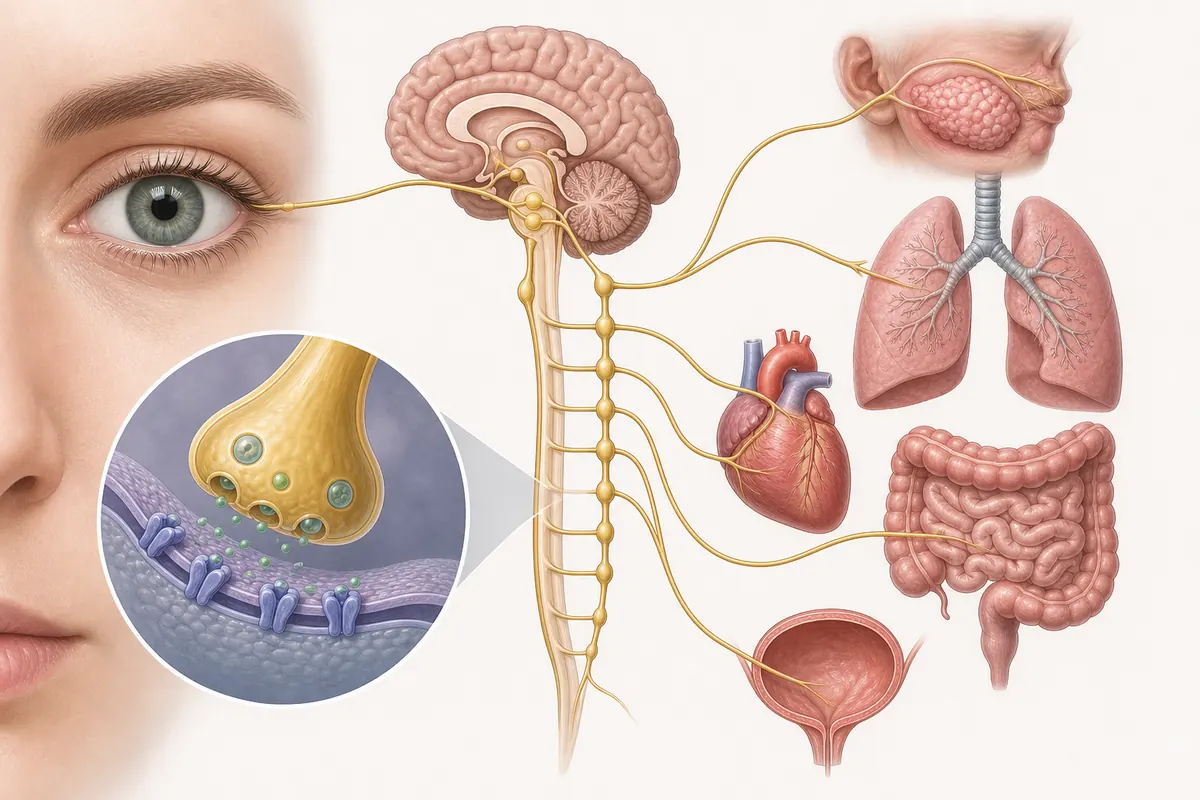
The symptom pattern, system by system
Early nausea or cramps may give way quickly to sweating, tearing, drooling, vomiting, and diarrhea. The order varies. Doctors look for several body systems reacting at once, and they don't wait for a fixed sequence.
| Body system | Possible muscarine effect | Why it matters |
|---|---|---|
| Eyes | Pinpoint pupils, blurred vision, tearing | Supports the cholinergic cluster |
| Mouth and glands | Heavy saliva and sweating | Can become difficult to manage when weakness develops |
| Lungs | Wheeze, bronchospasm, bronchial secretions | May threaten oxygenation and airway clearance |
| Heart and vessels | Slow pulse, low blood pressure, faintness | Can reduce circulation and require monitored treatment |
| Stomach and bowel | Cramps, vomiting, diarrhea | Causes fluid and electrolyte loss |
| Bladder | Urgency or increased urination | Adds to the peripheral muscarinic pattern |
No single sign shows up in every patient. Normal pupils in a photo don't clear heavy secretions and a slow pulse. Vomiting without the wider wet pattern may point to a different mushroom syndrome.
The picture can change within a short time. Someone who talks normally at the first call may later struggle with secretions or feel faint as heart rate and blood pressure fall. Keep watching the person closely, and report changes. Fast onset doesn't promise a fast recovery.
Home pulse devices and watches can be wrong when the person moves or has poor blood flow. Report the number on the screen along with the symptoms, and let emergency doctors confirm the rhythm and blood flow.
Watch temperature too. Heavy sweating can cool the skin, while effort, anxiety, clothing, or another toxin changes the core temperature. Touching the skin can't replace a measured reading or the rest of the exam.
How much someone ate doesn't map neatly onto how sick they get. Caps differ in size and age, and a sauce spreads fragments unevenly among diners. The species and toxin levels in the haul may be unknown as well.
Children can dry out quickly, and they may not describe blurred vision or chest symptoms clearly. Pets have their own emergency routes, so call a veterinarian or animal poison service, and don't apply advice meant for people.
SafetyCoprine Mushroom Alcohol Reaction: Symptoms and When to ActWhat can mimic muscarine poisoning?
Simple stomach-upset mushrooms can cause nausea, cramps, vomiting, and diarrhea within hours without the full wet pattern. Mixed baskets can still put both syndromes in one meal.
Amatoxin poisoning usually has a longer quiet period before severe stomach and bowel illness, followed later by liver injury. Early onset lowers that suspicion. It can't erase it when several unknown species went into the pan together.
Fly agaric poisoning is another naming trap. The fly agaric toxins muscimol and ibotenic acid more often act on the brain, with confusion, agitation, changed perception, poor coordination, drowsiness, or seizures. That differs from a mostly wet syndrome outside the brain, though real patients may not fit a textbook box.
Some pesticides, the organophosphates and carbamates, can cause a similar wet syndrome. Clinical reviews of mushroom toxicity sort these look-alike patterns before treatment. So tell doctors about farm chemicals, bug sprays, soaked clothing, and work exposure. Also mention anyone who got sick without eating the mushrooms.
Some medicines and health conditions can slow the pulse, lower blood pressure, cause diarrhea, or increase secretions. Bring the medicine list and describe symptoms that were there before the meal. The team can then compare the person's normal state with the change after eating.
| Pattern | Typical emphasis | Key uncertainty |
|---|---|---|
| Muscarine | Rapid wet secretions, miosis, gut activity, bradycardia | Mushroom species may remain unknown |
| Gastrointestinal irritant | Early vomiting, cramps, diarrhea | Mixed mushrooms can add another toxin |
| Amatoxin | Delayed gastrointestinal phase followed by liver injury | Early symptoms from a second species can mask the delay |
| Muscimol or ibotenic acid | Altered behavior, coordination, alertness, or seizures | Products and mixed ingestions may contain other compounds |
| Pesticide cholinergic toxicity | Similar wet syndrome plus exposure history | Mushroom meal may be coincidental |
This list of look-alikes guards against mistakes in both directions. Early vomiting can seem ordinary and give false comfort, and a guessed mushroom name can hide an exposure that has nothing to do with mushrooms.
Missing classic signs carry limited weight in some cases. Someone may have checked the pupils after the light changed, a slow pulse may have recovered before help arrived, or someone may have wiped secretions away. So the witness timeline belongs next to the current exam, and that gap is real evidence about timing.
Evidence to collect during the call
Write down the eating time, the first symptom, the order of new signs, and current breathing and alertness for the poison-center call. Add each diner's portion and symptoms on a separate line, including anyone who still feels well. Describe the wet signs plainly, such as pooling saliva, soaked clothing, small pupils, wheezing, or a very low pulse reading. "Looks poisoned" tells the specialist almost nothing.
Photograph whole leftover mushrooms from the cap, underside, side, and stem base, with an object for scale. Keep each suspected species in its own paper bag, and don't let this delay the trip to care.
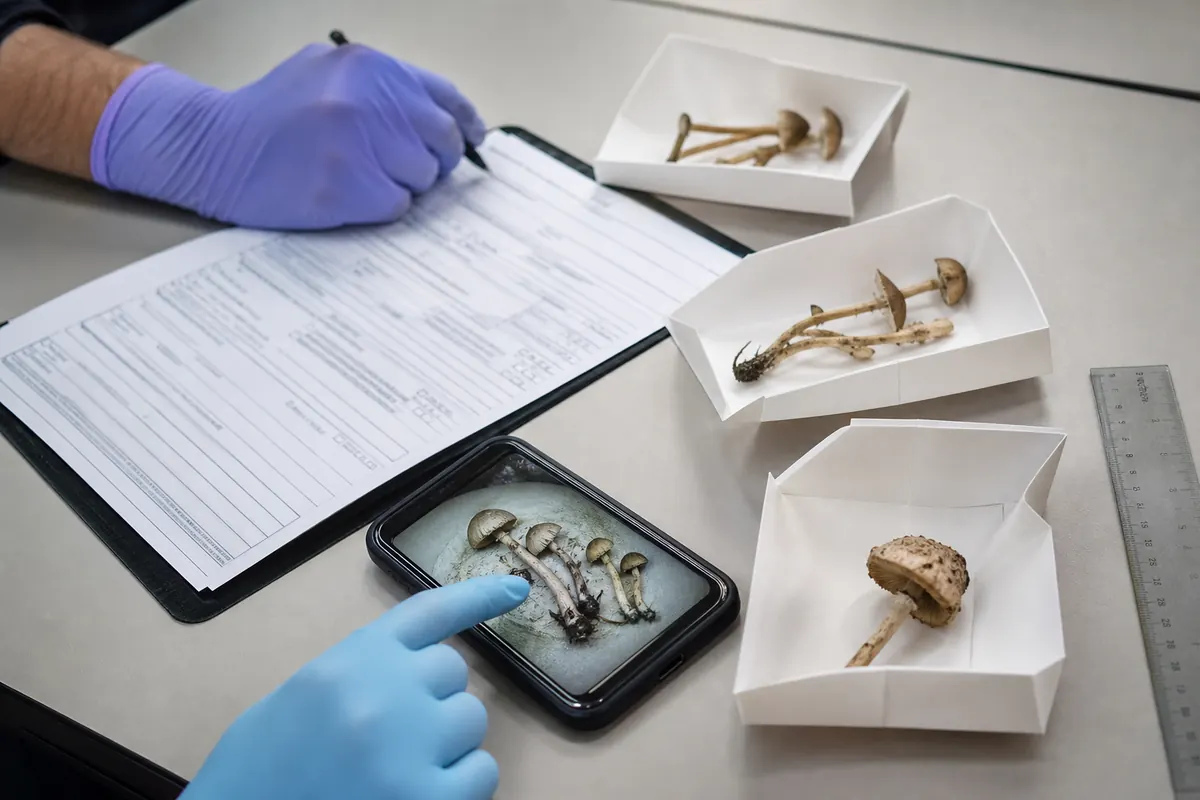
Keep cooked leftovers, raw scraps, packaging, receipts, and field photos. Don't taste another mushroom, ask someone else to test the meal, or go back to the site while the sick person waits.
Your report should cover alcohol, medicines, street drugs, supplements, and any chance of pesticide contact. Add heart, lung, kidney, pregnancy, or allergy history too. Each of these can change the diagnosis and the treatment.
Keep checking breathing, alertness, pulse, and secretions while help is coming. One early look can miss a worsening airway or falling blood pressure.
Give every measurement a time and say how you took it. Watch pulses, home blood-pressure cuffs, and phone photos may add context. Report an uncertain number as uncertain, and don't turn it into a precise medical claim.
People who ate together still need separate records, even from one pan. Portion size, the species mix, and each person's health can differ.
Someone who stays well can save the remaining food and describe where the mushrooms came from while the sick person gets care. That split keeps evidence work from delaying the trip, and it spares the sick person from handling more mushrooms.
Follow dispatch instructions about positioning and transport. Unless the treating professional directs it, do not give food, drink, or activated charcoal. The same goes for anti-diarrheal medicine or another person's prescription.
SafetyGastrointestinal Mushroom Poisoning: Timing and CareHospital treatment and the role of atropine
Hospital care starts with airway, breathing, blood flow, oxygen, heart rhythm, blood pressure, temperature, fluids, and mental state. Those checks guide suction, breathing support, an IV line, and fixing any fluid or salt problems. Supportive care forms the base of treatment.
Atropine is a medicine that blocks muscarine's effects, and doctors may use it when those effects threaten breathing or blood flow. Its prescribing label lists it as an antidote for muscarine mushroom poisoning. It can dry secretions and counter a slow heartbeat. The treatment goal and repeat checks guide the team, and a number copied from a webpage has no place in that decision.
Atropine is not a home antidote. The wrong dose, or use in the wrong syndrome, can cause a racing heart, overheating, trouble peeing, confusion, or other side effects of blocking acetylcholine. So medical teams choose treatment from the patient's secretions, oxygen, pulse, blood pressure, age, other exposures, and response.
Doctors may run an electrocardiogram (ECG) and keep rechecking pulse, breathing, and blood pressure. They may test blood sugar, salts, and kidney function, and look at what vomiting or diarrhea has done. More tests follow if the history hints at delayed toxins, pesticides, organ damage, or another illness.
Improvement after atropine can support the treatment plan, but it can't identify the mushroom. Other exposures of the same type may respond too. Mixed meals can also leave risks behind after the secretions and pulse improve.
Repeated exams keep the team treating the patient and not just the monitor. Speeding up the pulse isn't the goal on its own while wheezing, low oxygen, poor blood flow, dulled alertness, or ongoing fluid loss remain.

Any step to clear the gut belongs to a poison specialist. Dulled alertness and heavy secretions raise the risk of breathing in stomach contents, so nobody should ever improvise activated charcoal at home. The mushroom identifier narrows the exposure risk while the medical team treats the syndrome already in front of them, and neither should wait for the other to finish.
How long muscarine poisoning lasts
Many muscarine cases improve over several hours with the right supportive care, and published reports describe a course that generally ends on its own. That usual pattern can't promise when a specific patient will go home.
Some cases take longer. Heavy secretions, tight airways, low oxygen, a very slow heartbeat, or low blood pressure can all stretch out the stay. So can dehydration, older age, other illness, late care, or a mixed meal with a slower toxin.
Real improvement means more than less nausea. The team looks for controlled airway secretions, steady breathing, pulse and blood pressure, enough fluids, and test results heading back to normal. They also rule out any likely delayed syndrome, because the watch period follows the whole exposure and not just muscarine's usual length.
So report symptoms that return after early improvement right away. The first response to treatment doesn't prove the basket held only one species.
The watch period also lets the team compare the timing with the saved mushrooms and with every diner's course. If one person shows a delayed lab abnormality or a new nerve sign, the team rethinks the shared meal.
Severe outcomes are uncommon, but doctors have reported them when the wet effects badly impair breathing or blood flow. Their rarity is no reason to wait at home.
After discharge, follow the instructions about fluids, medicines, activity, and when to come back. New breathing trouble, fainting, vomiting that won't stop, less urine, confusion, or late yellowing of the skin or eyes (jaundice) needs a fresh check.
Safeguards against another exposure
Avoid eating small wild mushrooms unless a qualified identification process confirms the exact species from whole mushrooms. Small size, pale color, a pleasant smell, or growth in a familiar lawn doesn't show that a mushroom is edible.
Prevention starts by keeping finds apart. One paper bag per possible species keeps the cap, gills, stem base, and habitat notes together. It also lets you throw out a doubtful group before cooking.
Don't let an app result or one matching photo overrule features that disagree. Small fibrous and funnel-shaped mushrooms often need details that a top-down phone picture can't show.
Guests should know exactly which wild species they're eating and who identified it. So never serve a mixed dish when the collector can't account for every mushroom in the pan. Cooking can't turn an unknown mushroom into a confirmed edible species. Keep one whole uncooked mushroom from each species eaten, in a labeled paper bag, as short-term emergency evidence.
Sources5
- Cholinergic Mushroom Poisoning With Detection of Muscarine in Urine A 2023 report of two adults with vomiting, diarrhea, small pupils, palpitations and sweating after eating cooked wild mushrooms, confirmed by muscarine in their urine, who recovered within three days on supportive care without atropine. It names Inocybe and Clitocybe as the most common sources of muscarine and says intravenous atropine may be considered for low blood pressure and severe muscarinic symptoms.
- NCBI Bookshelf, Mushroom Toxicity Differential toxidromes before treatment (page behind reCAPTCHA this pass; not reopened)
- DailyMed, Atropine Sulfate Injection Atropine blocks muscarinic actions of acetylcholine; listed as an antidote for muscarine mushroom poisoning
- Mushroom Poisoning Syndromes, North American Mycological Association Muscarine symptoms usually begin within 15-30 minutes
- Mushroom poisoning: an updated review, Turkish Journal of Emergency Medicine 2025 Muscarine cholinergic symptoms within 30 minutes to 2 hours; usually resolve within 12 hours; death rare
Frequently Asked Questions
How quickly does muscarine poisoning start?
Symptoms commonly begin within 15 minutes to two hours after someone eats the mushroom. Timing alone can't identify the toxin, though.
What mushrooms cause muscarine poisoning?
Serious cases most often come from Inocybe, Inosperma, Clitocybe, and related mushrooms. The toxin takes its name from the fly agaric, but that mushroom is a less typical source.
What are the main muscarine symptoms?
Sweating, tears, drooling, vomiting, and diarrhea can all show up together. So can tiny pupils, a sudden need to pee, wheezing, and heavy mucus in the airways. The pulse may slow and blood pressure may drop.
Is atropine an antidote for muscarine poisoning?
Doctors may use atropine for serious muscarine effects, especially dangerous secretions or a drop in blood flow. It is not a home treatment, and the dose belongs to the medical team.
How long does muscarine poisoning last?
Many cases improve within several hours with the right care. Severe breathing or blood-pressure effects and meals of mixed mushrooms need a longer check.