Is white fibrecap poisonous?
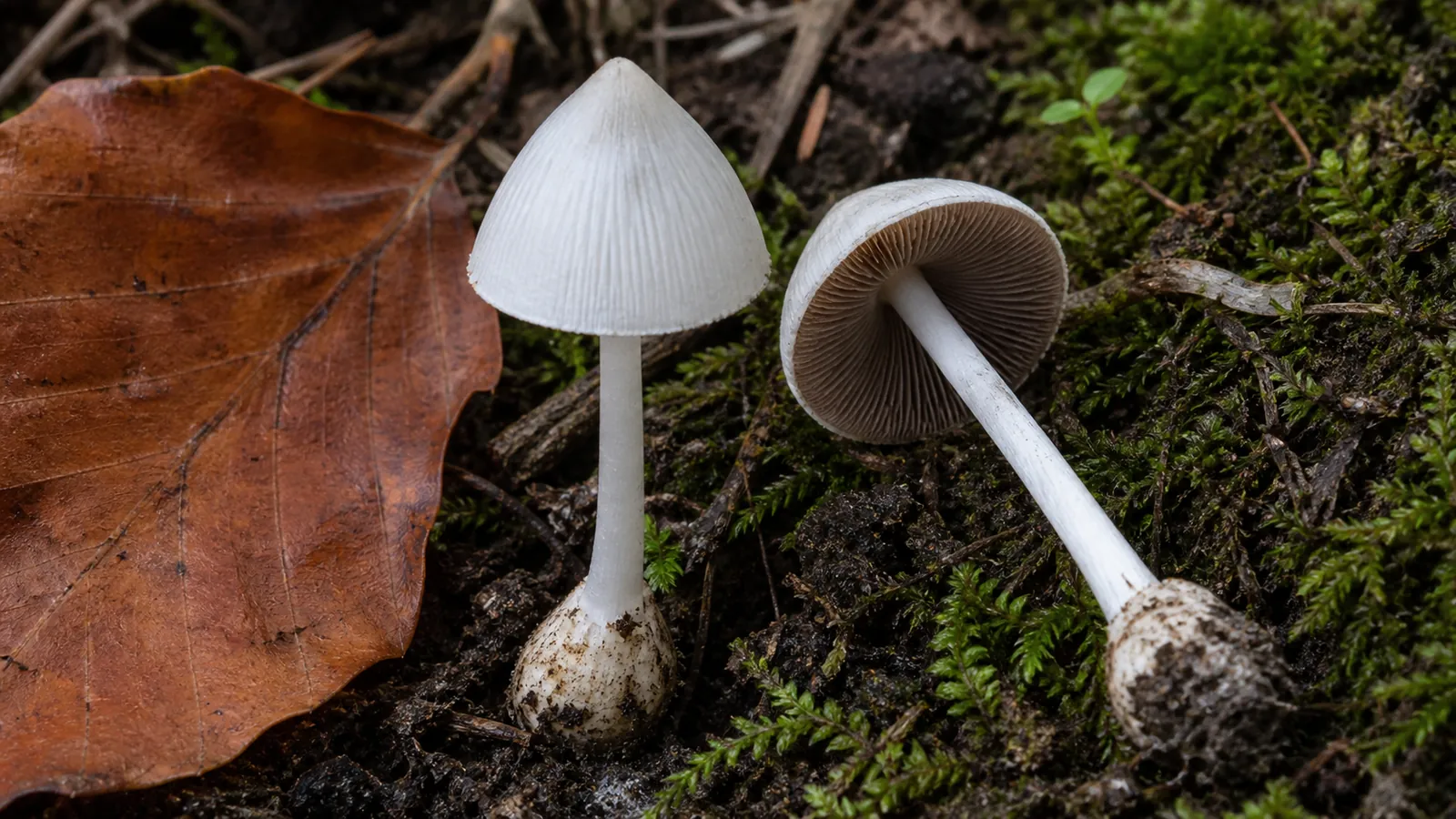
A fresh white fibrecap can resemble a miniature clean woodland mushroom, but its proportions are distinctive. The cap is often narrower and more sharply pointed than the rounded buttons of many edible species.
Silky radial fibers run from the umbo toward the margin. The surface can split slightly with age and may acquire cream or yellowish tones after rain, handling, or drying.
The gills begin pale enough to disappear against the cap, then darken through gray-beige to clay or tobacco brown.
That maturity change is essential because a young underside hides the brown-spored identity.
The slender stem lacks a ring and usually ends in a slightly swollen base. A pruinose or powdery coating can occur near the top, and fine fibers continue down the surface.
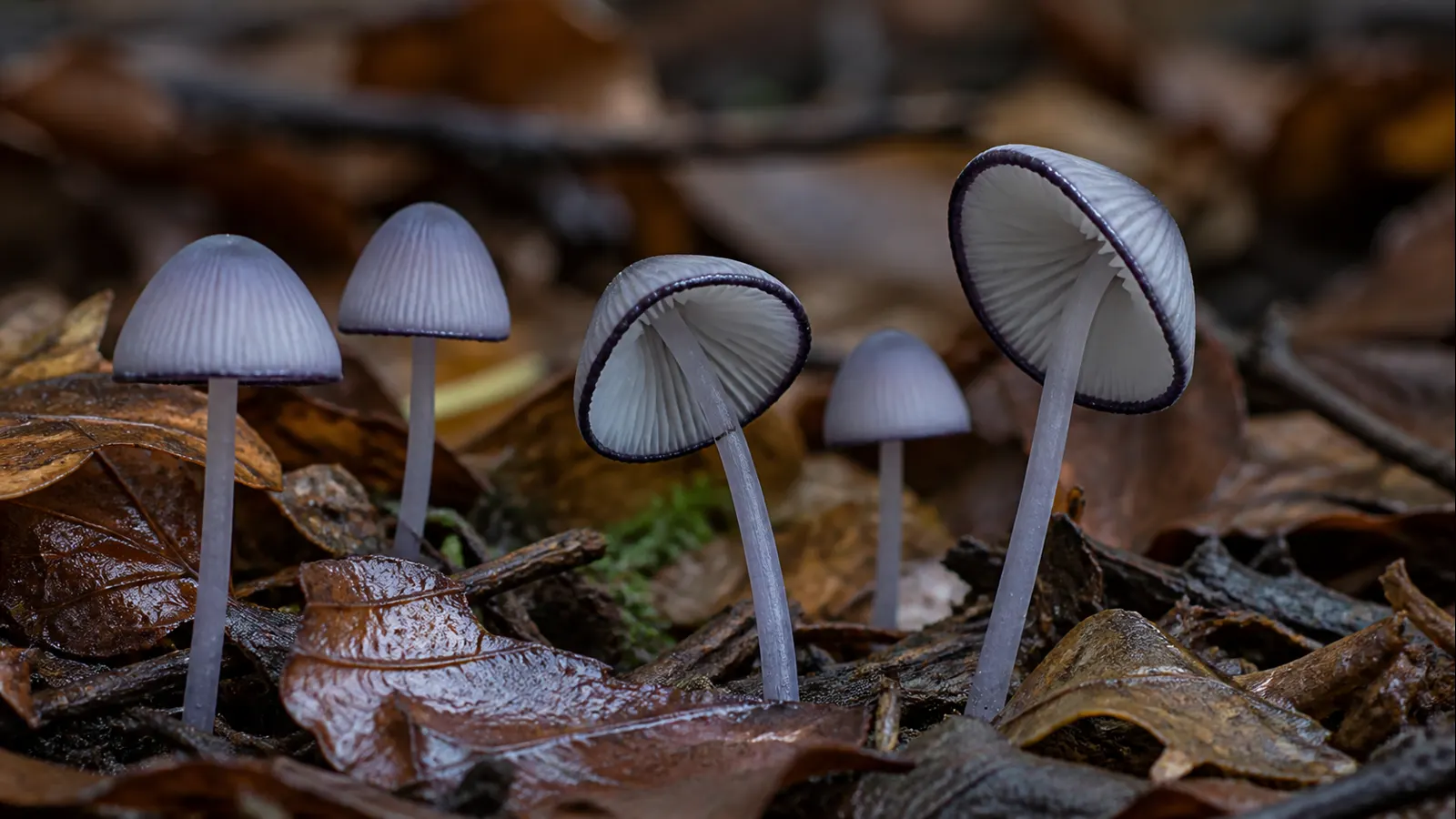
A lilac-colored variety or closely interpreted form is often called lilac fibrecap. Color can vary even within one fruiting site, which makes a white-only field concept unstable.
Small size increases risk in mixed collections. One fibrecap can disappear among fairy-ring mushrooms, waxcaps, or other lawn and woodland species before anyone examines its gills.
How do you identify white fibrecap?
Usually 1.5 to 4 cm across, white to cream, conical then bell-shaped or broadly convex with a pointed umbo, silky with radial fibers, and sometimes faintly yellowing.
Crowded and narrowly attached, cream or grayish when young, becoming clay-brown to tobacco-brown as spores mature.
Slender, white to cream, finely fibrillose or powdery near the top, slightly bulbous at the base, and without a ring or volva.
Thin pale flesh with an earthy, spermatic, or indistinct odor. Never taste it.
Photograph a group before collecting so spacing and tree context remain visible. Lift a complete specimen, then compare a young and mature underside under neutral light.

A spore print separates it from white-spored lookalikes but not from other fibrecaps.
Microscopy examines smooth almond-shaped spores, cystidia, and tissue features, yet DNA-era work has exposed additional lookalike species.
Do not treat odor as a confirmation test. Descriptions such as earthy or spermatic vary among observers and weaken in cold, dry, or old material.
Field identification should stop at an unsafe fibrecap group when the evidence cannot support a species. That is a complete food decision even when the Latin name remains unresolved.
If someone may have eaten this mushroom, act now. Call Poison Control at 1-800-222-1222 (US) or emergency services before symptoms appear, and save a piece of the mushroom for identification.
What happens if you eat white fibrecap?
Within minutes to a few hours, exposure can produce heavy sweating, salivation, tears, vomiting, diarrhea, abdominal cramps, pinpoint pupils, wheezing, a slow pulse, and low blood pressure.
Call Poison Control or emergency services after suspected ingestion, especially if breathing becomes wet or difficult. Save specimens, meal remains, and photographs of the cap, gills, base, and site.
A small lawn mushroom can be swallowed whole by a child or pet, leaving little material for identification. Collect intact neighbors from the exact patch, include a ruler in photographs, and record whether the missing specimen had a ring or colored gills.
Sweating alone can be mistaken for heat, anxiety, or exertion, while tears and saliva may look like distress from vomiting. The combination with pinpoint pupils, wheeze, slow pulse, or repeated diarrhea makes the cholinergic pattern more informative.
Do not let an app's low-confidence name delay the exposure call. Poison specialists can coordinate with mycologists and work from the clinical pattern while a specimen is being examined.
Keep dried and fresh material separate because drying changes color and collapses the cap. If several tiny species grew together, package each cluster with its location rather than mixing all yard finds in one bag.
Do not induce vomiting or take a home remedy.
Hospital teams can monitor breathing and circulation and use atropine when clinically indicated.
A person who seems better after vomiting still needs the plan given by Poison Control. A wrong species assignment or a mixed collection can introduce a delayed toxin outside the expected muscarine course.
Warning
Improvement can occur with appropriate care, but small body size, underlying lung or heart disease, and uncertain mixed species can increase risk.
Which small white mushrooms require an underside view?
White woodland mushrooms share more features than cap color suggests. The useful split asks whether gills stay white or mature brown, whether a ring is present, and whether the cap surface is silky, waxy, chalky, or scaly.
Many other Inocybe species remain equally unsuitable for food, so confusing one fibrecap with another does not create a safe alternative.
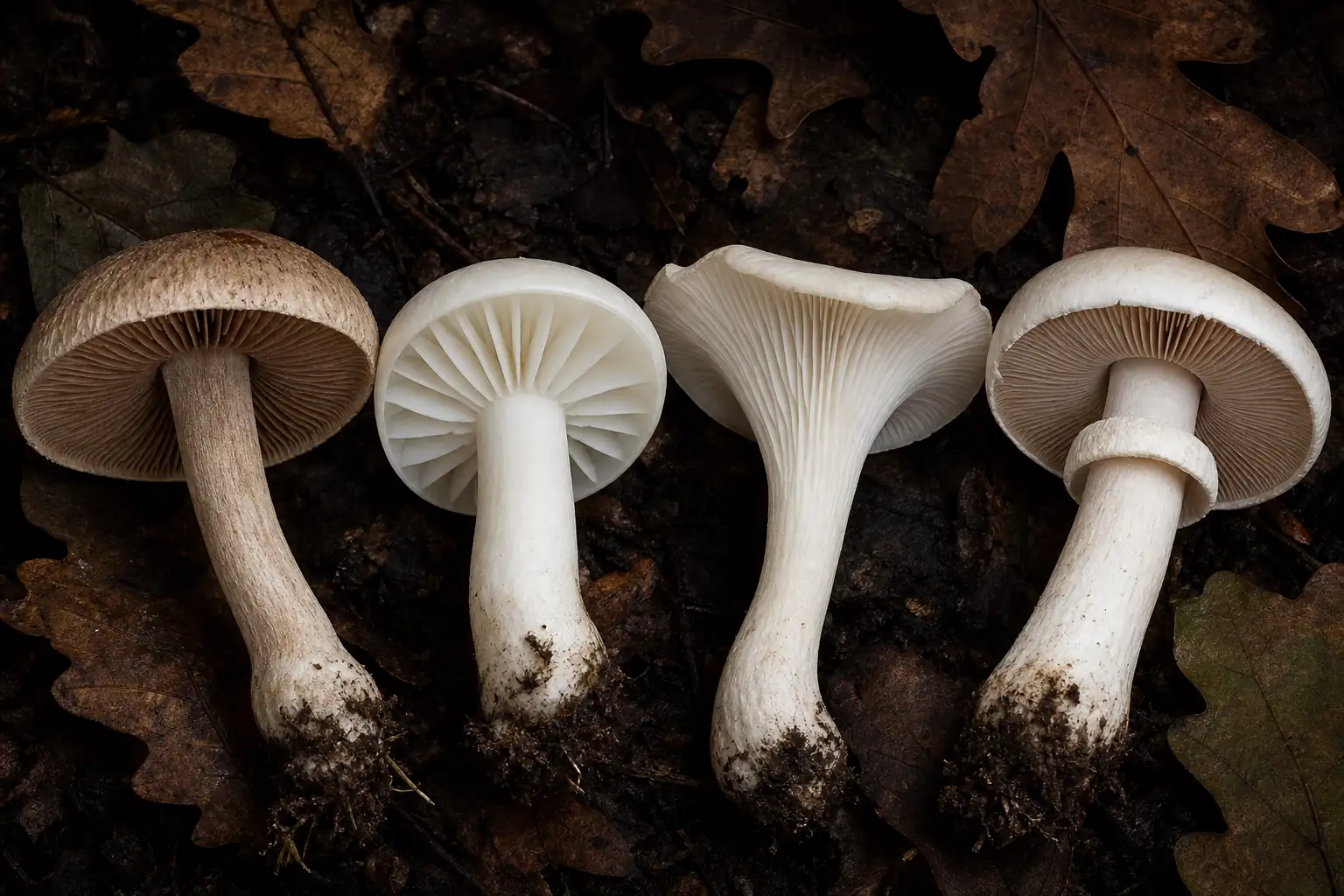
White waxcaps usually keep white spores and have thick waxy gills rather than thin clay-brown mature gills. Small white Clitocybe funnels have descending pale gills and white prints, while white fibrecap retains attached brown-spored gills.
Young field mushrooms have free gills and a developing ring, then turn pink and chocolate rather than clay-brown while attached. Small pale Lepiota may retain white gills and show a ring zone and cap scales.
| Comparison | Feature to inspect | Why a photo can fail |
|---|---|---|
| White waxcap | Thick waxy gills, white print | Young fibrecap gills also look pale |
| White funnel | Gills run down stem, white print | Small caps may not yet be funnel-shaped |
| Field mushroom | Free gills, ring, chocolate print | A tight button hides both |
| Small Lepiota | Free white gills, ring or veil remnants | Weather removes scales and veil |
| Other fibrecaps | Microscopic and DNA traits | Macroscopic overlap is extensive |
Key takeaway
Never clear a small white mushroom for eating from one overhead image. The underside and full base are minimum evidence.
Is the lilac fibrecap the same species?
Inocybe geophylla is the traditional name for this widespread white fibrecap concept.
Current taxonomic work indicates that apparently simple morphospecies can contain several lineages, and some local records may require reassessment.
The lilac form has been called I. geophylla var. lilacina, though modern treatments may recognize related material differently. Pale and lilac fruiting bodies can occur near one another.
The family Inocybaceae is recognized by a combination of brown spores, fibrous caps, mycorrhizal ecology, and microscopic characters. The label should remain conservative when only macroscopic evidence is available.
Why do young white gills create the most dangerous identification shortcut?
Young white fibrecaps can show pale gills before their brown spores mature, so an early underside photograph may resemble several unrelated white-gilled mushrooms. The useful evidence is the direction of change across specimens, not the color of one immature cap.
Collect photographs rather than a food sample. Compare a closed young cap, an expanding specimen, and a mature cap from the same patch while preserving each stem base and recording which mushrooms grew closest together.
A mixed-age patch can be more informative than one perfect specimen because it reveals changes in gill color, cap shape, and veil remnants. It can also contain more than one species, so each photographed mushroom must remain matched to its base and position.
Pale gills describe an age state, not a safe group. If the mature evidence is missing, the correct result is unresolved identification rather than an edible guess.
Why can it appear on paths and mossy lawns?
White fibrecap forms ectomycorrhiza with living trees. It occurs under both broadleaf and conifer hosts, which gives it a wider habitat envelope than one tree-specific profile.
Fruiting bodies emerge from soil in woodland, mossy lawns, parks, path edges, and landscaped areas where roots extend beyond visible trunks. Groups may appear scattered rather than clustered from wood.

Summer rain can start the season, with records continuing through late autumn. Local moisture, host roots, and soil conditions matter more than a single calendar month.
Removing caps reduces access but not the underground fungus. In a yard with children or pets, revisit the root zone after wet weather and dispose of fruiting bodies securely.
The fungus is not poisoning the tree or nearby plants.
The direct hazard is ingestion of the mushroom.
What happens if one enters a mixed basket?
White fibrecap has no culinary use. Cooking does not turn a muscarine-containing mushroom into food, and a small cap can contaminate a mixed batch before it is noticed.
Keep small white species out of general baskets and never use lawn habitat as evidence of edibility. Poisonous fibrecaps and funnels can fruit beside familiar edible species.
A field mushroom should show free gills, a ring, and a mature brown-gill sequence that differs from this ringless attached-gill mushroom. When those parts are missing, discard the collection rather than guessing.
Do not salvage chopped mushrooms after discovering a possible fibrecap.
Preserve representative pieces for identification and seek poison-center advice if anyone ate the dish.
What can microscopy answer that a photograph cannot?
A clear photograph can support the white-fibrecap group, but it cannot reliably expose every species hidden inside that historical name. Several pale Inocybaceae can share a silky cap, attached browning gills, a swollen stem base, and the same tree-root habitat.
| Evidence | What it can support | What it cannot settle |
|---|---|---|
| Whole-site photographs | Scale, spacing, host context, and cap color before handling | Spore dimensions or cystidial form |
| Mature spore deposit | A brown-spored rather than white-spored group | One fibrecap species among several |
| Microscopy | Spore shape, measurements, cystidia, and tissue characters | A confident name when the collection is incomplete or the key is outdated |
| DNA sequence with voucher | Comparison with current reference material | Safety of eating an unresolved collection |
Preserve a mature cap, complete stem base, and a separate spore deposit in a breathable paper packet if a mycologist requests material. Note the tree species, substrate, date, and whether white and lilac fruiting bodies occurred in the same patch.
The scientific label may end at Inocybe or an informal species group even after careful field work. That uncertainty does not weaken the food decision, because muscarine-containing fibrecaps remain excluded long before a sequence receives a final name.
A photograph still has value when it documents the unhandled color and collection context. Its limit is taxonomic resolution, not usefulness.
How does muscarine affect glands and airways?
Muscarine acts at peripheral acetylcholine receptors and drives glandular secretion, intestinal movement, airway constriction, and slowing of the heart. The wet respiratory symptoms matter more clinically than the mushroom's small size.
Atropine is a medical antagonist for significant muscarinic effects, but its use requires professional assessment and monitoring. A person should not self-dose an anticholinergic drug after a suspected mushroom exposure.
White fibrecap has no established medicinal application.
A 1970s chemical report detecting epi-muscarine helps characterize toxicity but does not support therapeutic ingestion.
Named chemistry is evidence of hazard, not a wellness claim.
White fibrecap questions
Is white fibrecap poisonous?
What color are mature gills?
Does it have a ring?
Can it be lilac?
Where does it grow?
Does cooking make it safe?
Sources & References
- NatureSpot Cap, gills, habitat, season, and lilac form.
- NatureServe Explorer Accepted name reference and classification.
- PubMed Detection of epi-muscarine in Inocybe geophylla.
- North American Mycological Association Muscarinic syndrome and response.
- Bucks Fungus Group DNA-era identification limits for the white fibrecap concept.