
DEADLY POISONOUS
Psilocybin changes how a person sees, feels and judges things. It can also change heart rate and blood pressure. How risky it is depends on the person's body and behavior, where they are, what the mushroom really was, and what else they took. The strength of the hallucinations alone tells you little.
Psilocybin Mushroom Effects: What Changes the Risk?
Psilocybin mushroom effects can include altered perception, hallucinations, confusion, anxiety, panic, nausea and impaired judgment. Convulsions, trouble breathing, loss of consciousness, intense vomiting or dangerous behavior need help right away. Do not wait to see what happens. How intense the hallucinations feel says little about danger. Watch the person's breathing, behavior and surroundings instead, and find out what the mushroom really was and what else they took.
Note
Educational and legal scope
This page explains health effects and emergency warning signs. It does not tell readers how to obtain, prepare, or use psilocybin. Psilocybin is a Schedule I substance under U.S. federal law. State and local rules differ, and a narrowly licensed program does not make personal possession or unsupervised use generally lawful.
- Typical onset
- A poison center describes effects beginning about 15 to 45 minutes after ingestion, while a clinical review gives a broader 30-minute to 2-hour range
- Common duration
- Prominent effects often last about 4 to 6 hours, although a clinical review reports that the syndrome may take up to about 12 hours to resolve
- Main safety question
- Is the person conscious, breathing normally, and protected from immediate danger?
Which effects fit psilocybin exposure?
Psilocybin can change what a person sees, hears and feels. It can also change what they believe is going on around them. Confusion, severe anxiety, panic, agitation, nausea and vomiting may follow, along with changes in heart rate or blood pressure. Several of these can turn severe, and nausea or vomiting can come with the mental effects.
Poor judgment can put someone in danger even while they are awake and can talk. Driving, swimming, climbing, cooking, handling weapons or walking into traffic can turn confusion or hallucinations into a serious injury. What the person does, and where they are, counts as much as how strong the effects feel.
- Hallucinations and distorted perception can occur.
- Confusion, anxiety, panic, and agitation can become severe.
- Nausea and vomiting may come with the mental effects.
- Poor judgment can lead to dangerous behavior.
- Convulsions, trouble breathing, and loss of consciousness are emergency signs.
These symptoms cannot prove that the mushroom held psilocybin. Toxic lookalikes and unknown products can cause a different kind of poisoning. The name someone gives the mushroom should never end the check.
SafetyAmatoxin Poisoning: Organ Damage Timeline and CareWhen effects begin and how long they last
California Poison Control says effects usually begin within 15 to 45 minutes and last about 4 to 6 hours. One review of mushroom poisoning gives a wider start of 30 minutes to 2 hours. It says the effects clear within about 12 hours. With two ranges that differ, no single clock fits every case.

Doctors use this timing to judge what kind of poisoning it is when nobody knows the mushroom. The timing cannot tell them which mushroom it was. It also cannot make severe symptoms safe to watch at home.
Call Poison Control as soon as you think someone has a mushroom poisoning. In the United States, the number is 1-800-222-1222. Call emergency services right away when symptoms are severe or someone is in immediate danger.
Which signs need emergency help?
Call emergency services for convulsions, trouble breathing, loss of consciousness, or behavior that puts the person or anyone nearby in immediate danger. Intense vomiting, severe agitation, panic and confusion also need quick advice from Poison Control or a doctor. So do big changes in heart rate or blood pressure. Neither list depends on what the mushroom was meant to be.
Warning
Do not assume that a severe symptom is simply a stronger psilocybin effect. Unknown mushrooms can include toxic lookalikes, and clinicians may need to manage the exposure before anyone can confirm the species.
- Call emergency services
- Convulsions, breathing difficulty, loss of consciousness, collapse, or immediate danger
- Call Poison Control now
- Any suspected mushroom poisoning, especially when identity or amount is uncertain
- Report what happened
- Symptoms, estimated time of ingestion, remaining material, and every other substance involved
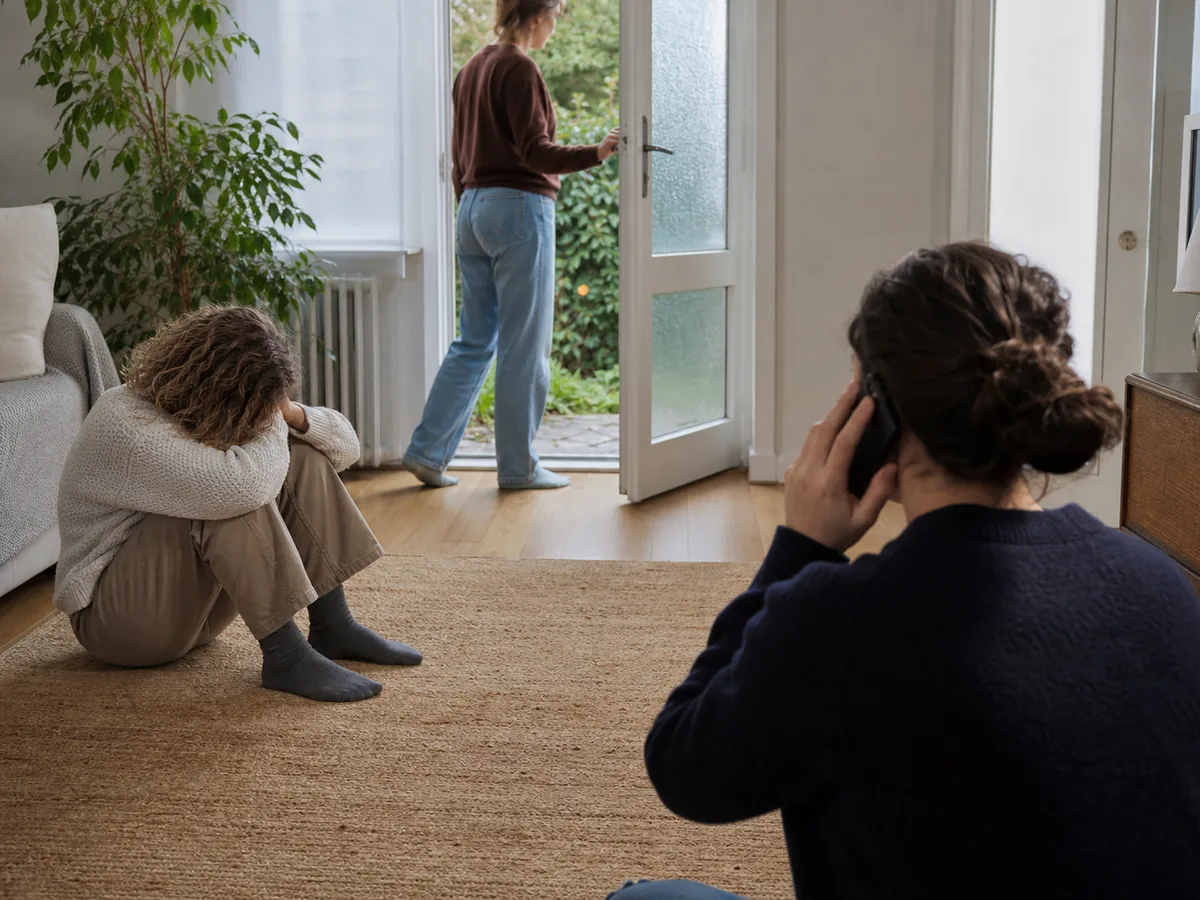
Make the call first, even when the mushroom came dried, as a powder, or baked into food or another product. Trying to name it can wait. Save the leftovers and the packaging for Poison Control or the doctors, if you can do it without putting anyone else at risk.
SafetyCoprine Mushroom Alcohol Reaction: Symptoms and When to ActWhat a helper can do while help is on the way
Keep the person away from traffic, water, heights, fire, cars, weapons and other close hazards. Stay with them if it is safe for you. Tell Poison Control or the emergency dispatcher plainly how they are acting and what physical symptoms you see.
Doctors describe the care for psilocybin poisoning as supportive care. That word does not mean every case can stay at home. The right place for care depends on the person's symptoms and what they took. It also depends on whether anyone can trust what the mushroom was.
Your job as a helper is small. Helping a friend who ate a wild mushroom never means treating them yourself.
- Call Poison Control and follow its advice; do not make up a treatment.
- Call emergency services when the person has a severe sign or you cannot keep them safe.
- Keep leftover mushrooms, product packaging and details of what was taken close by.
- Do not give a home remedy or medicine unless a poison specialist or clinician tells you to.
Doctors may give a benzodiazepine for anxiety or agitation as part of supportive care. That stays a medical choice. The doctor has to weigh the sedation against all the other signs the person shows.
Mushroom identity and toxic lookalikes
Hallucinations after eating a mushroom do not confirm what it was. California Poison Control warns that people can mistake toxic lookalikes for psilocybin mushrooms. The clinical review adds that in many poisoning cases, nobody ever names the species.
Liberty cap, Psilocybe semilanceata, is one mushroom that contains psilocybin. That fact cannot name an unknown batch, a dried bit, a powder, a chocolate, a gummy, a capsule or any other product. To tell a dangerous mushroom from the species that look like it, you need the whole mushroom. Product names give you none of that.
Keep any leftover material and packaging for the poison specialist or the hospital team. Say plainly what you do not know. Do not offer a species name just because of the product's label.
SafetyGastrointestinal Mushroom Poisoning: Timing and CareFly agaric, panther cap and the Amanita compounds
Fly agaric and panther cap contain ibotenic acid and muscimol, and no psilocybin. The poisoning review says these compounds can cause central nervous system excitation or depression. So agitation and reduced consciousness can come from a different toxic pathway.
| Claimed exposure | Main compounds named in the review | Important distinction |
|---|---|---|
| Psilocybin mushroom | Psilocybin and psilocin | Hallucinogenic syndrome with altered perception and judgment |
| Fly agaric | Ibotenic acid and muscimol | Central nervous system excitation or depression |
| Panther cap | Ibotenic acid and muscimol | Central nervous system excitation or depression |
| Unknown mushroom or product | Unverified | A toxic lookalike or different poisoning syndrome remains possible |
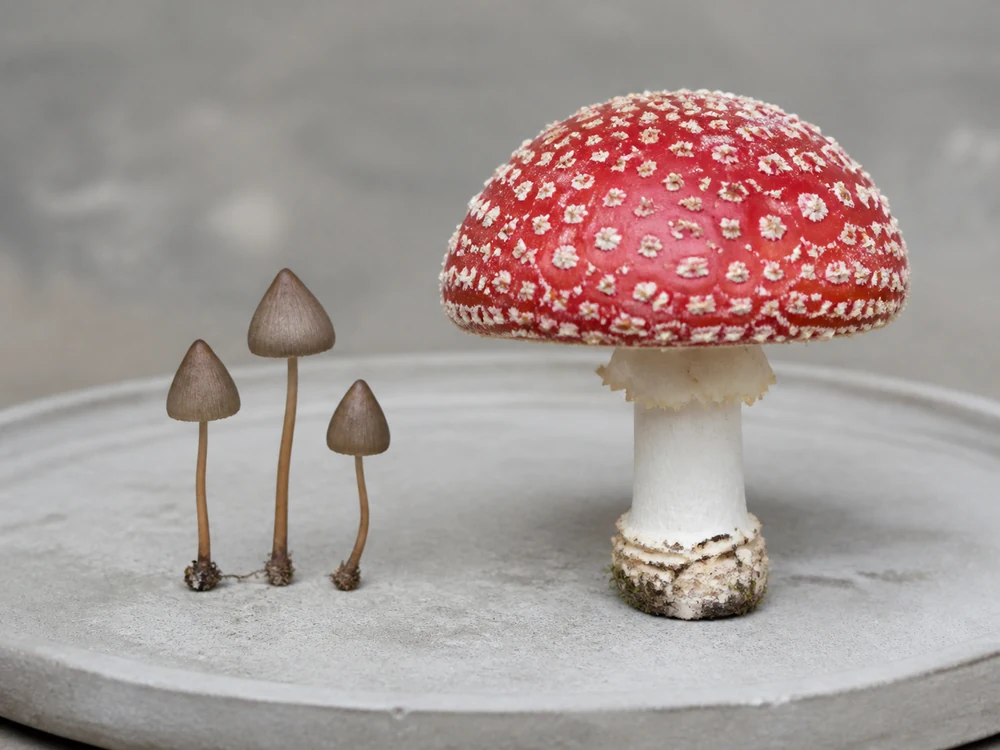
Poisoning from these two compounds is its own syndrome, so the compound shapes how doctors assess the person. Still, looks give you no way to rule anything out at home. When the mushroom or product is uncertain, let Poison Control guide what you do.
What clinical care can and cannot do
Hospital care treats the symptoms the person shows. It supports vital functions while staff work out what they took. The review calls the care for psilocybin supportive and notes that doctors may use benzodiazepines for anxiety or agitation. This care has no antidote, and it gives you no home plan to copy.
Doctors treat the real symptoms and keep an unknown species or another kind of poisoning in mind. The species may stay unknown, because poisoning cases often never name it. So doctors weigh the symptoms and their timing with what happened. Poison Control's advice and any mushroom or packaging you saved also count.
Calming down and the time since eating
The published ranges for start and length describe common patterns. None of them promises that a given person is safe. Anyone with convulsions, trouble breathing, loss of consciousness, intense vomiting, severe agitation or dangerous behavior needs help, however much time has passed.
If the person seems calmer but nobody knows for sure what the mushroom was, follow the poison specialist's advice. Do not let them drive or do anything else risky while their senses or judgment are still altered.
Warning
In the United States, call Poison Control at 1-800-222-1222 for suspected mushroom poisoning. Call emergency services immediately for convulsions, breathing difficulty, loss of consciousness, or an immediate threat to safety.
Sources4
- Mushroom poisoning: an updated review, Turkish Journal of Emergency Medicine 2025 Psilocybin onset 30 minutes to 2 hours, effects clear within about 12 hours
- California Poison Control System, Magic Mushrooms (Psilocybin) Safety Effects begin within 15 to 45 minutes and last four to six hours
- DEA, Psilocybin Drug Fact Sheet Psilocybin is Schedule I under the federal Controlled Substances Act
- Oregon Health Authority, What are Psilocybin Services? Narrow state-licensed service model; psilocybin stays Schedule I federally
Frequently Asked Questions
How long do psilocybin mushroom effects last?
California Poison Control says effects last about four to six hours. Clinical reviewers report that they may take up to about 12 hours to clear. Severe symptoms need help no matter how much time has passed.
When should someone call emergency services?
Call for convulsions, trouble breathing, loss of consciousness, or behavior that puts someone in immediate danger. Call Poison Control for any suspected mushroom poisoning.
Do hallucinations prove that a mushroom contains psilocybin?
No. Toxic lookalikes exist, and in many poisoning cases nobody ever names the mushroom that caused it.
Are fly agaric effects caused by psilocybin?
No. Fly agaric and panther cap contain ibotenic acid and muscimol. These can cause central nervous system excitation or depression.
What does supportive care mean for psilocybin poisoning?
It means doctors treat the symptoms the person shows. It is not a home treatment plan. Care should come from a poison specialist or clinician.