
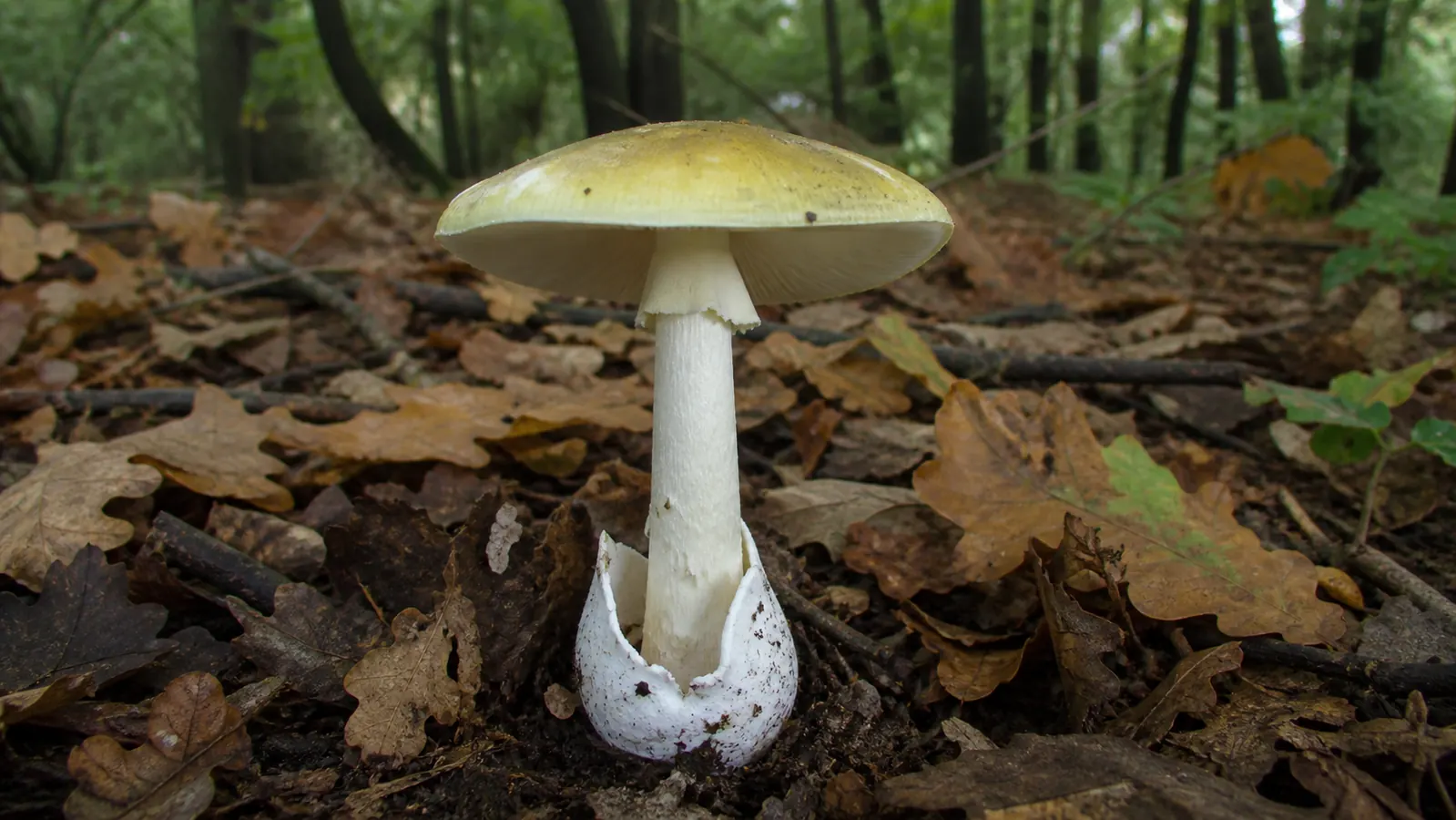
A handful of mushrooms do not just make you sick. They quietly destroy the organs that keep you alive, and this guide covers the few species that cause almost every fatal poisoning.
What makes a mushroom deadly rather than just poisonous?
Most poisonous mushrooms cause vomiting and misery followed by recovery, but a deadly species causes lasting organ damage that can end a life.
A deadly mushroom carries a toxin that kills essential cells, and amatoxins are the most lethal examples because they enter the bloodstream and stop the liver and kidneys from making proteins. By the time severe illness appears, the organ damage is already advanced.
A lethal amatoxin exposure can remain silent for 6 to 24 hours while a heat-stable toxin continues damaging organs.
The symptom delay removes the early warning that would normally stop a meal and prompt treatment. Quiet hours feel reassuring while amatoxins spread, so feeling normal after eating a suspect mushroom offers no safety.
No antidote reverses amatoxin damage, so doctors use fluids, organ-supporting medicines, and sometimes a liver transplant. Mushroom poisoning first aid starts with poison control because the toxin may not be obvious at the meal.
Because one death cap can contain a lethal adult dose and children need less tissue, a test bite offers no safe warning before amatoxin spreads.
SafetyHow Is Mushroom Poisoning Treated in the Hospital?Death cap: the world's most lethal mushroom
The death cap earns its name. This one species is behind more mushroom deaths than any other on Earth.
A pale green, yellow, or nearly white death cap with mild odor can conceal a lethal dose without any obvious warning feature.
Warning
If you find a white or pale mushroom and are not completely certain of the species, treat it as a death cap. Do not taste it, do not cook it, and keep it away from food, children, and pets.
Death caps grow with oaks and other hardwoods, and planted trees have carried the fungus into new regions. Immigrants familiar with an edible species from home have mistaken the similar death cap in a new country, turning a remembered identification into a fatal one.
Death caps fruit heavily in late summer and fall when foragers also seek prized edibles. Fall mushroom timing matters because deadly and edible species can share both habitat and weather window.
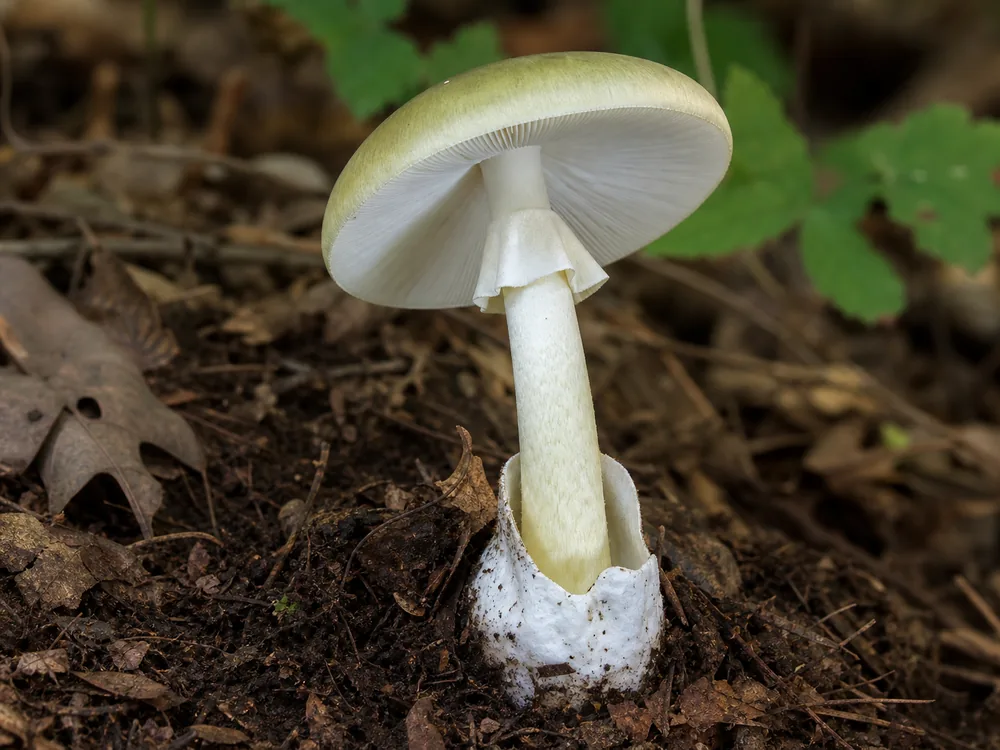
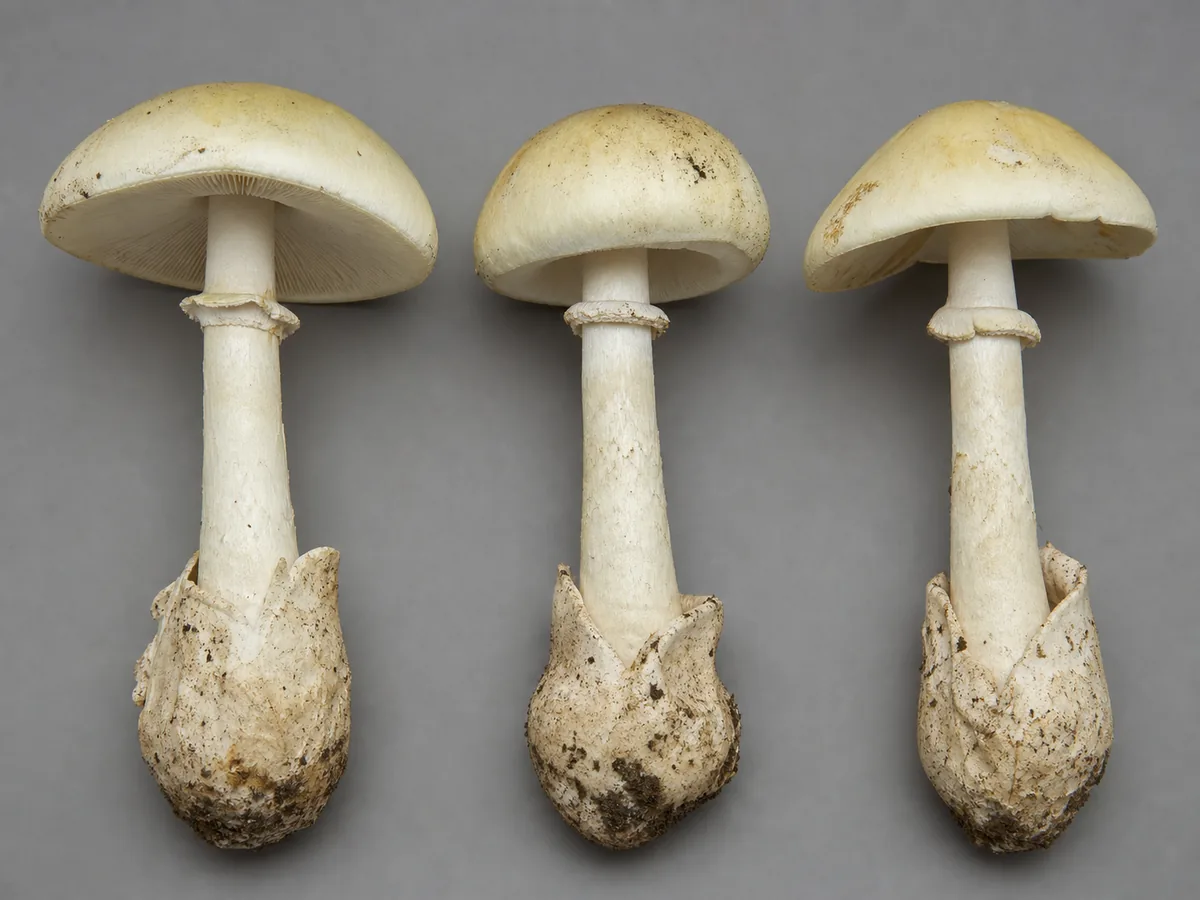
The deadly Amanitas share a feature set that should be checked together rather than as isolated clues.
- White gills that stay white and are free, meaning they do not attach to the stem
- A thin ring or skirt hanging on the upper stem
- A cup-shaped sac, the volva, wrapped around the swollen base underground
- An overall pale or all-white look, with flesh that stays white when cut
No single feature on that list proves a mushroom is deadly on its own. Seeing several of them together is a loud signal to stop, because that combination is the fingerprint of the amatoxin group.
Why regional familiarity can fail
After a move or trip, local field guides must replace memory because a familiar edible cap shape may belong to a toxic regional relative with different tree associations.
Introduced death caps now grow with planted oaks and other hardwoods in parks, neighborhoods, and disturbed ground as well as forests. An ordinary urban setting does not reduce toxicity, and a lawn specimen still needs the complete base because the volva may remain buried.
Rain can produce many similar fruiting bodies during one short window, increasing the chance that families share a mistaken identification in one communal dish. Keep each collection separate by location and date so one error does not erase the evidence for every specimen.
A regional mushroom club can also show which lethal Amanitas fruit locally and which imported common names create the most dangerous confusion. Bring complete specimens because local identifiers need the buried base to separate dangerous Amanitas.
SafetyMushroom Poisoning in Cats: Symptoms and First ActionsDestroying angels
Destroying angels are equally lethal all-white relatives of the sometimes greenish death cap.
Destroying angels carry the same amatoxins and delayed symptoms as death caps, yet their white form can resemble an edible field mushroom or a store button. Mature store mushrooms develop pink to brown gills and lack a basal cup, while a destroying angel keeps white gills and hides a volva in the soil.
A store button mushroom develops pink to chocolate-brown gills, while a destroying angel remains white underneath and produces a white spore deposit. When examining a white field mushroom, white gills plus white spores are a stop signal rather than evidence for food.
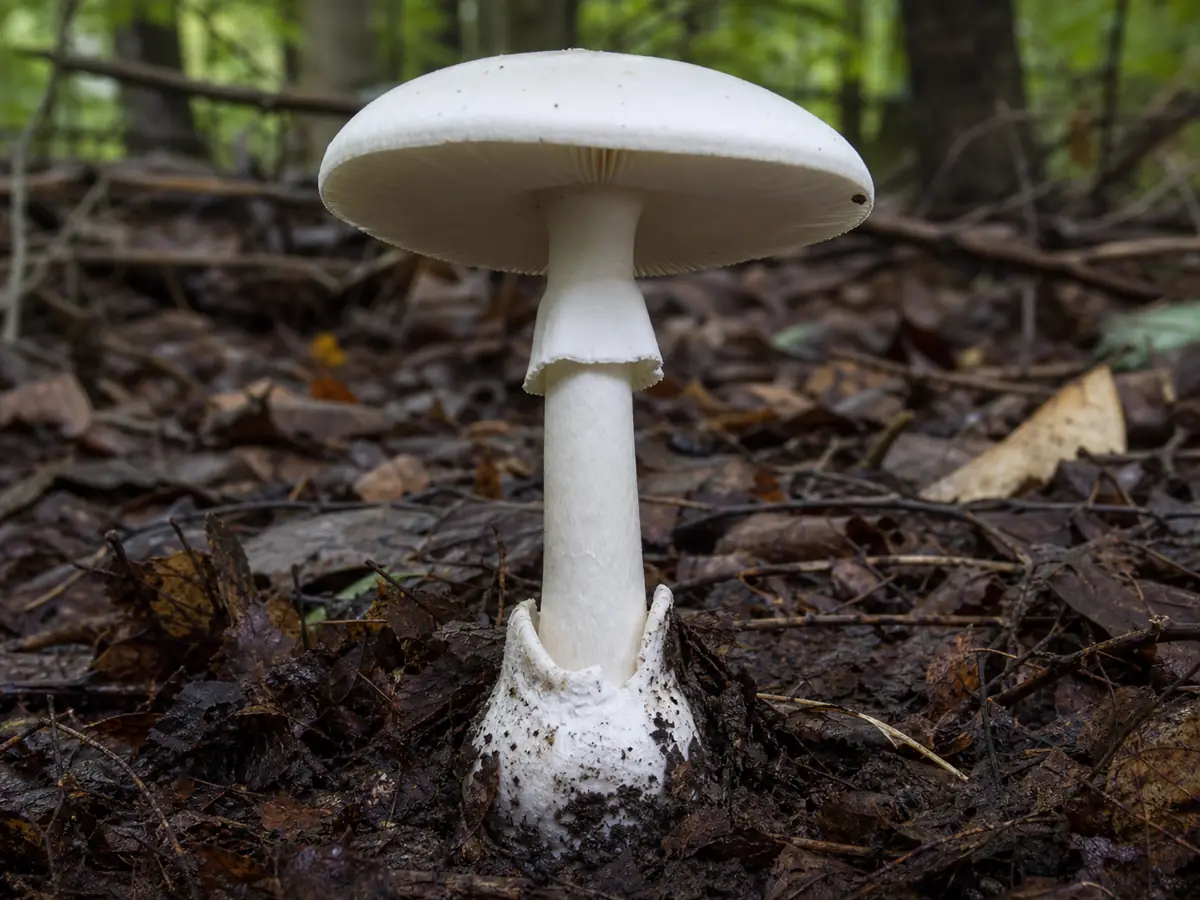
Dangerous lookalike pairs show why side-by-side structure matters before any foraging habit becomes automatic.
SafetyPoisonous Mushrooms: The Toxic Species to KnowFalse morel and its rocket-fuel toxin
Not every deadly mushroom is an Amanita. The false morel is a spring species that kills in a different way.
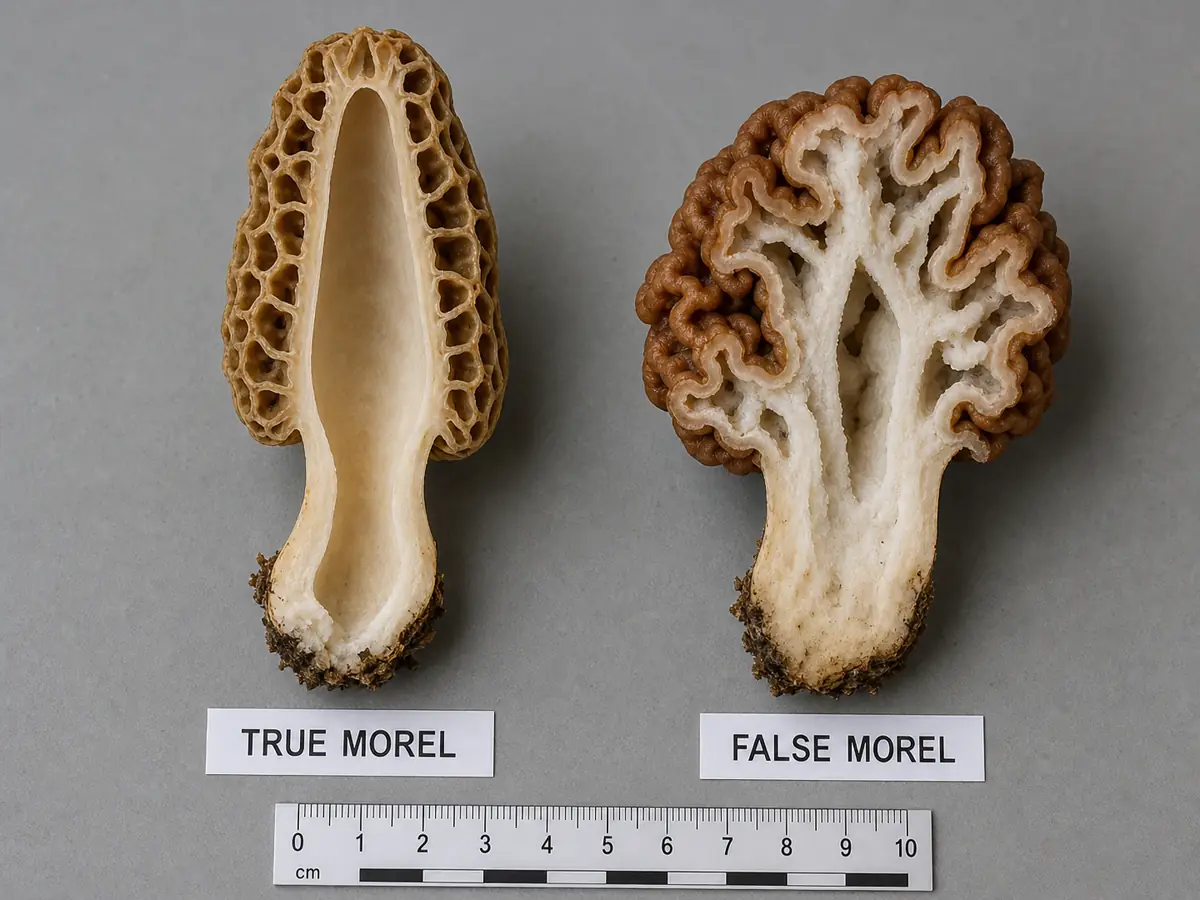
The false morel toxin gyromitrin becomes monomethylhydrazine, which can injure the liver and nervous system, cause seizures, and escape as hazardous cooking vapor.
Demand for true morels makes a quick false-morel decision tempting, but a lengthwise cut exposes the critical difference. A true morel has an orderly pitted cap and continuous hollow interior, while a false morel has brain-like folds with cottony or chambered tissue, so a spore print method must support rather than replace the cut.
Boiling false morels has caused poisonings because gyromitrin levels vary and neither boiling nor draining reliably removes the hazard. The cooking vapor can poison the cook, so this mushroom belongs outside the kitchen regardless of regional traditions.
Why the exposure record matters
A remaining cap cannot reconstruct dose because diners may have eaten different species, portions, or tissues, so record who ate what and when without declaring a smaller portion safe.
Keep uncooked leftovers, plate scraps, vomited mushroom material when a clinician requests it, and photographs that show the cap, underside, full stem, and base. Store specimens away from food, and do not delay the poison-control call while trying to produce a name at home.
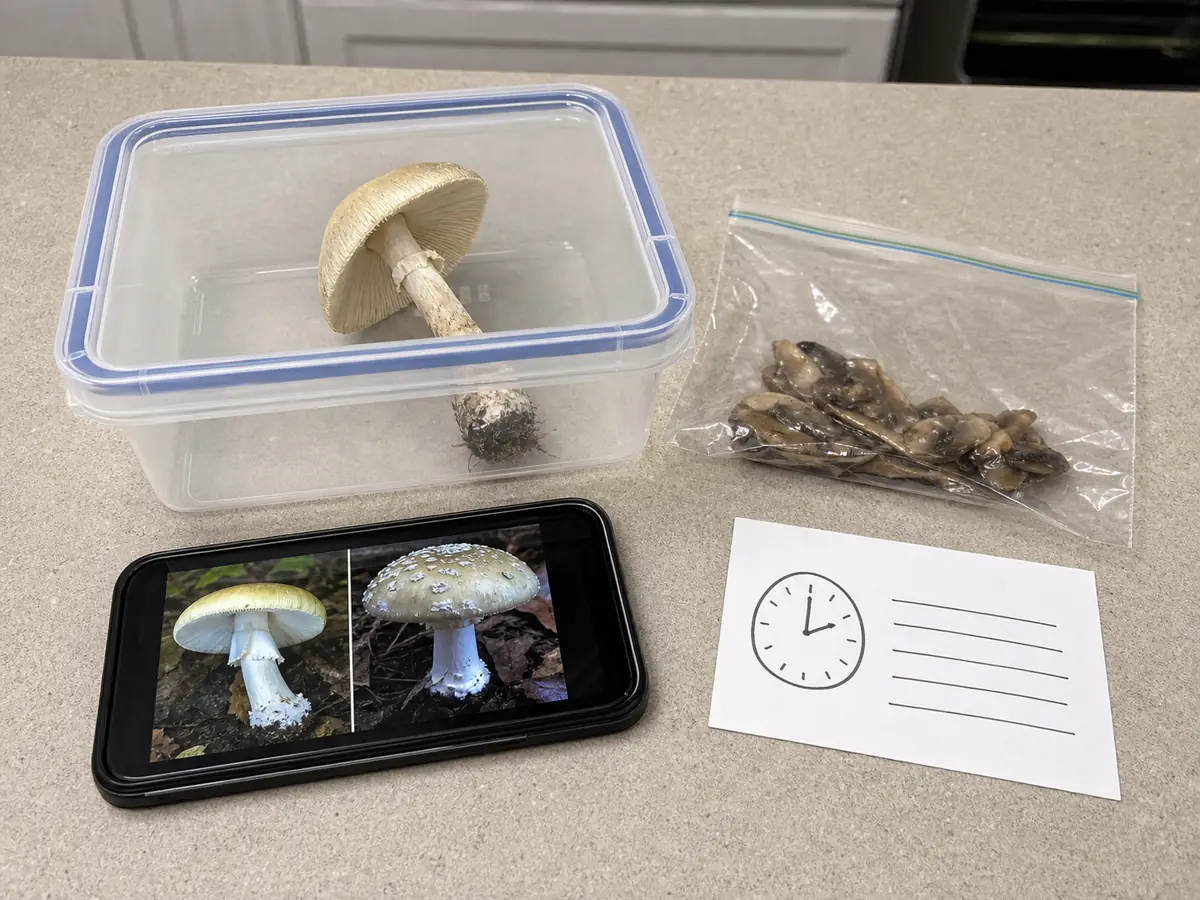
A poison center can combine the medical timeline with identification help from a qualified mycologist. The name supports clinical decisions, while the patient's symptoms and laboratory results still require professional interpretation rather than a forager's treatment plan.
The exposure record should also preserve where the mushrooms grew, nearby trees, whether the base was dug intact, and whether several species entered the dish. Those facts help a mycologist narrow the candidate set when cooked fragments no longer resemble a field specimen.
Do not clean the kitchen evidence before poison control advises what to retain because a washed pan, discarded trim, or emptied basket can remove the only material available for identification.
How to keep the deadly species off your plate
Keeping deadly mushrooms out of your kitchen comes down to a few firm habits.
Learn white Amanitas and false morels before edible targets because recognizing the dangerous candidates makes each later comparison more disciplined. Identify every wild mushroom to species from multiple features, never from one trait or a phone app alone.
After a suspected unknown-mushroom ingestion, call poison control immediately and save a whole specimen, chewed fragment, or clear base photograph because several symptom-free hours do not rule out amatoxins.
Keep unknown mushrooms physically separate from food because broken tissue in a shared basket can erase the identification trail before cooking. Beginners should use cultivated species and beginner foraging habits until they can reject deadly alternatives without guesswork.