Why the danger can remain hidden for days
Fool's webcap is Cortinarius orellanus, one of the European webcaps associated with orellanine poisoning. Its danger is easy to underestimate because the mushroom looks modest and kidney injury can remain hidden long after the meal.
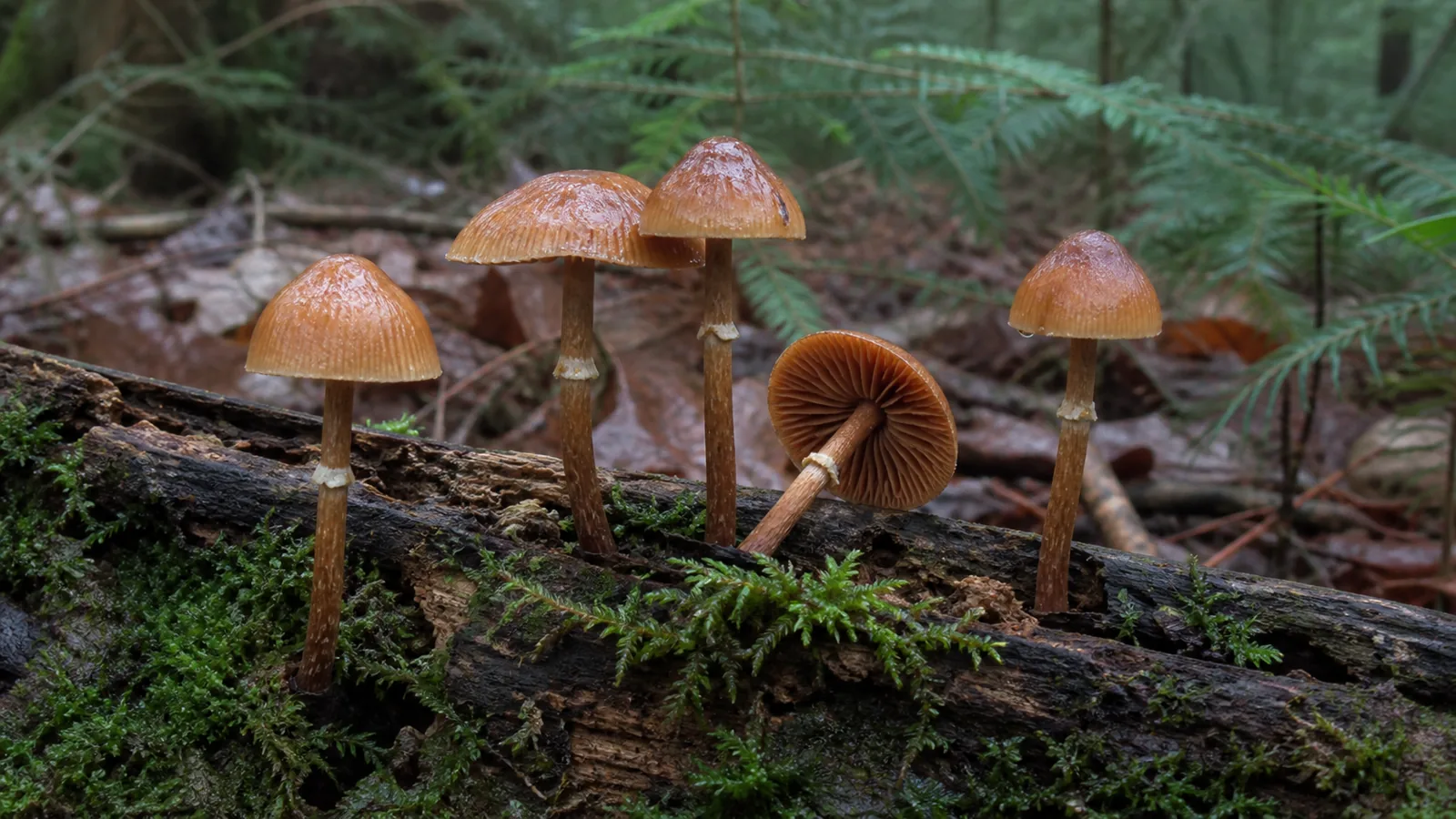
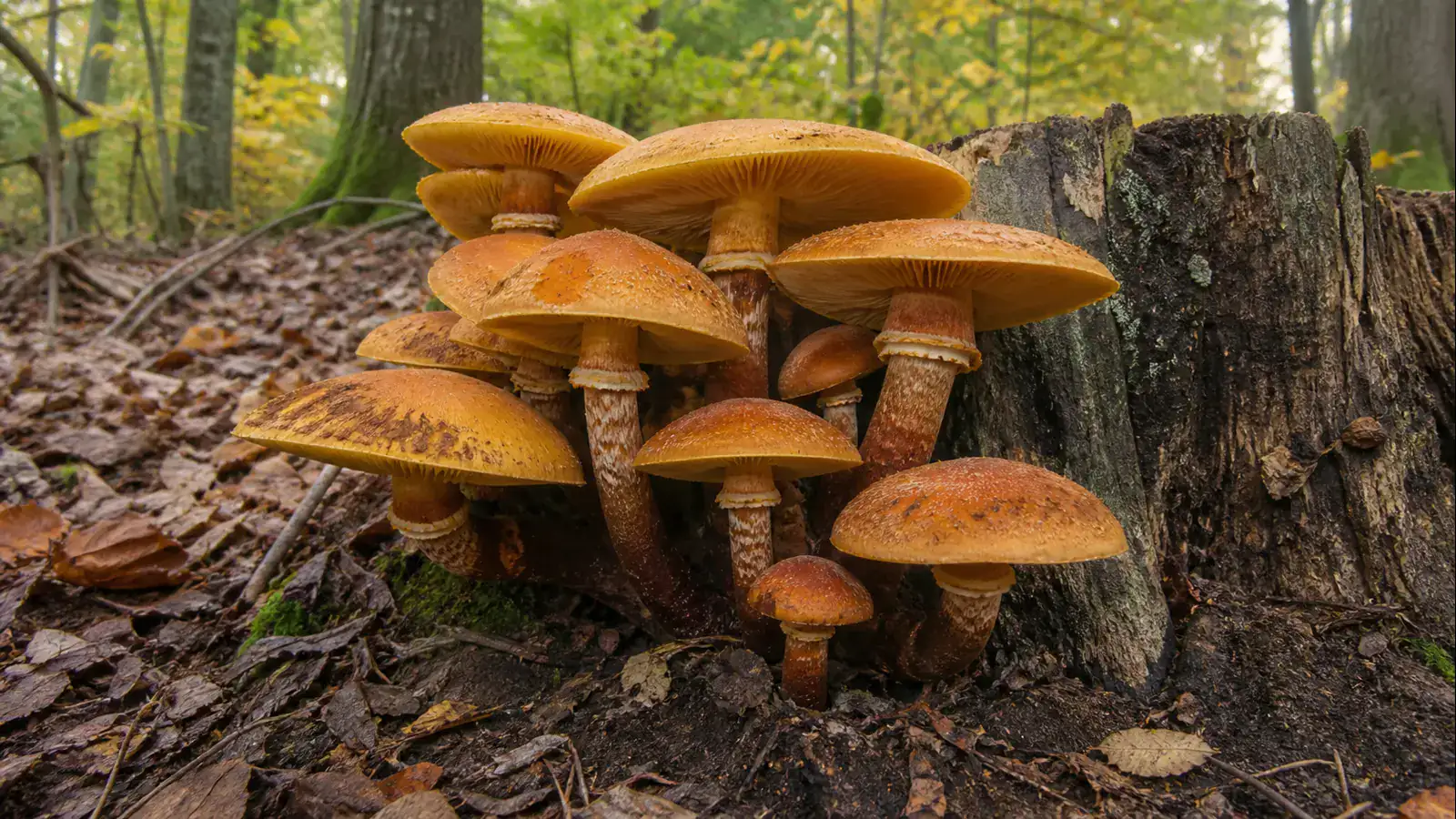
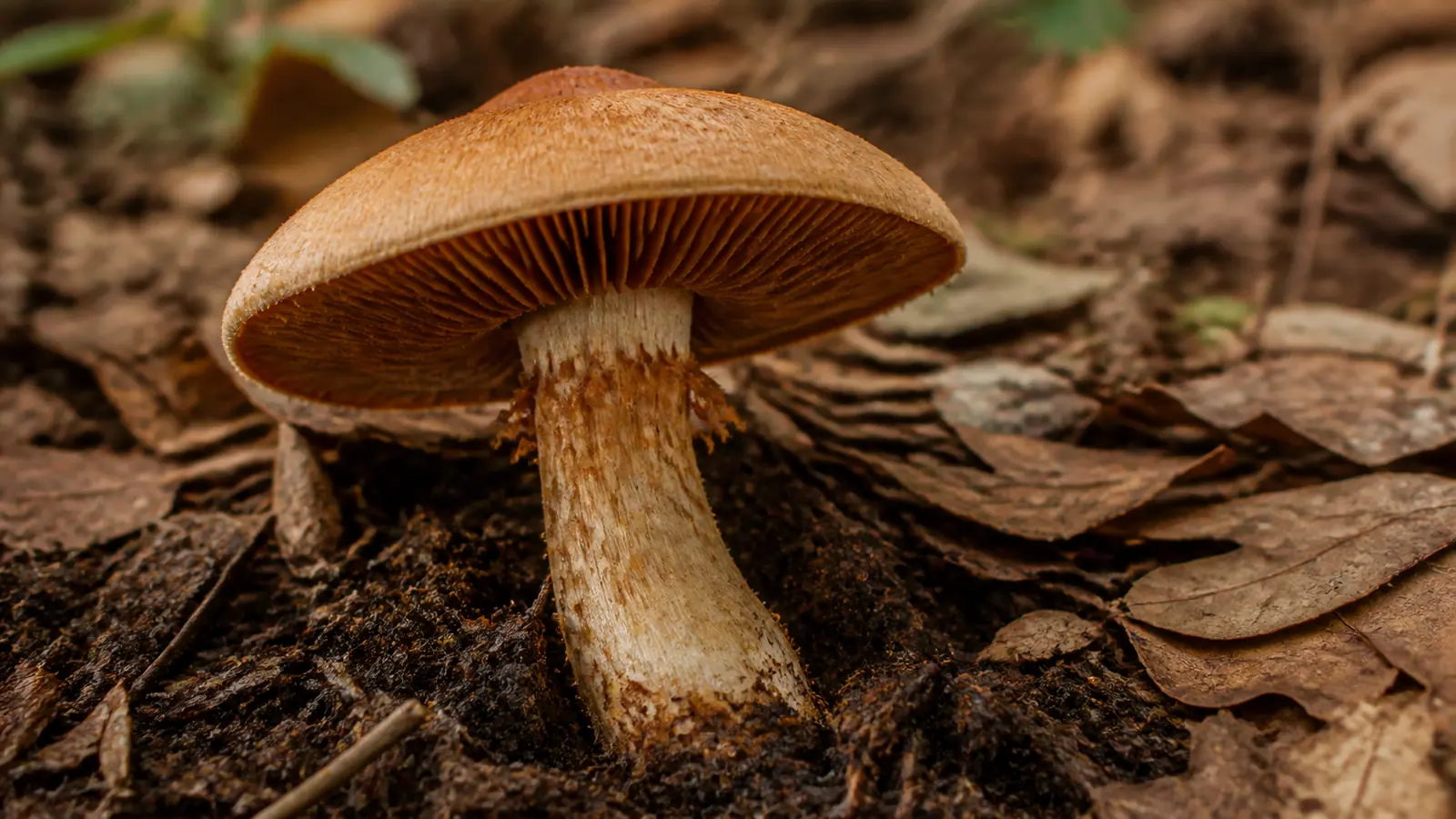
The cap is dry and warm-toned rather than slimy, usually tawny, reddish orange, or cinnamon. Beneath it, relatively spaced gills shift from yellowish tones to rusty brown as the spores mature.
A young specimen may show a cobwebby partial veil between the cap margin and stem. That cortina collapses and catches rust-colored spores, so an older stem may carry only fine brown fibers where a beginner expects a ring.
The disappearing veil is a central field problem. An old specimen can retain the cap color and rusty gills while losing the structure that explains the common name.
Fool's webcap grows from soil with living trees rather than from wood. European oak woodland is a characteristic setting, although reports also include other broadleaf trees and occasional conifers.
Warning
Do not use the absence of symptoms on the day of the meal as reassurance. Orellanine poisoning is notable for a latency that can extend from several days to roughly two weeks.
How does the webcap change as it matures?
Dry, tawny to reddish orange, usually 4 to 7 cm across, finely scaly or fibrillose, and often retaining a low broad umbo.
Fairly broad and spaced, beginning pale yellow to orange and becoming rusty brown as spores mature.
Paler than the cap, fibrous, often bowed or tapered toward the base, with fine rusty cortina remnants rather than a persistent ring.
Yellowish to orange-brown flesh with a faint radish-like odor. Never taste it.
Start beneath the cap. Young gills are pale yellow to orange, then mature through cinnamon to rusty brown, while the spore print is rusty reddish brown.

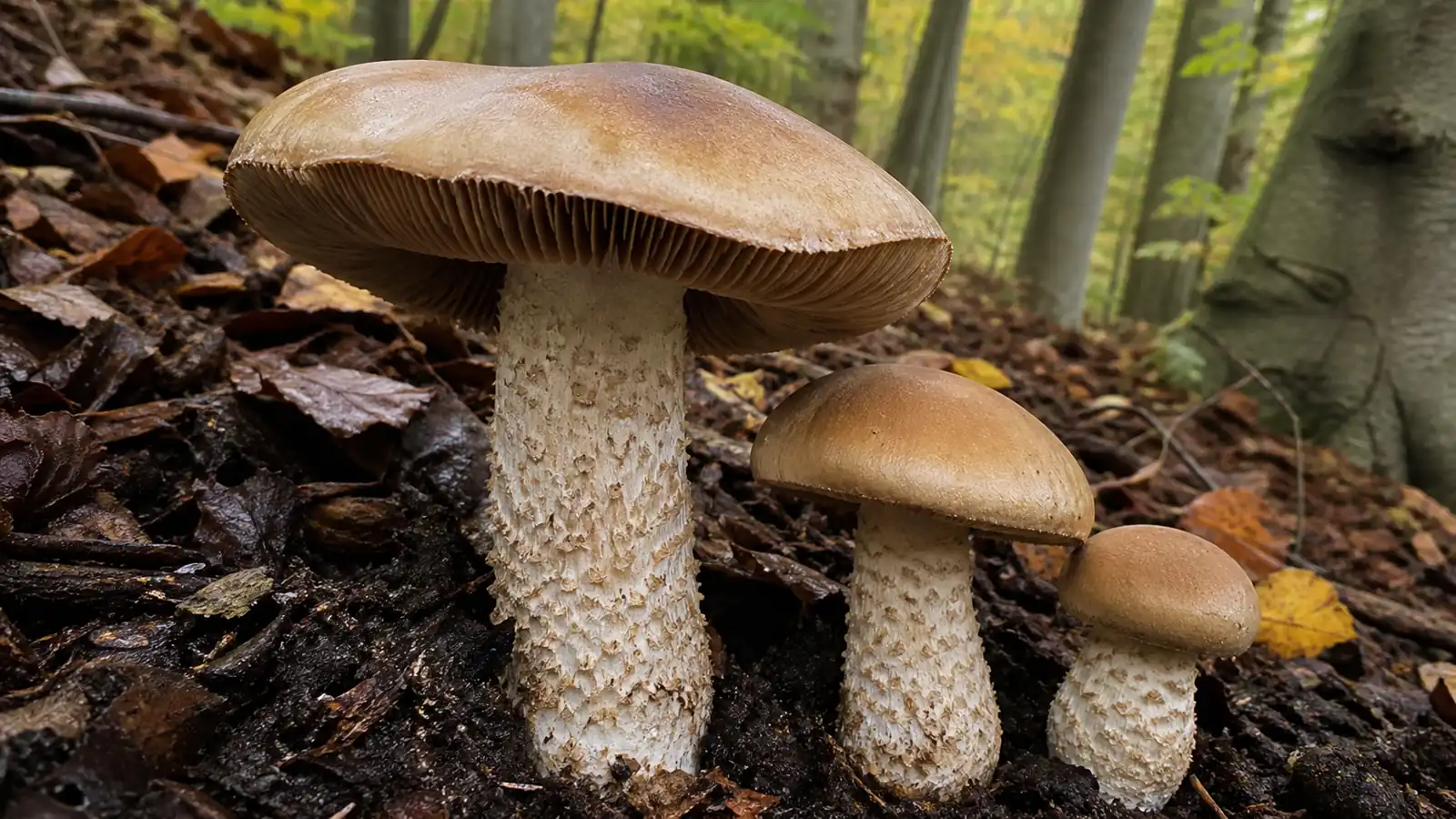
The dry cap usually measures 4 to 7 cm and keeps a low broad bump as it expands. Fine scales or radial fibers create a matte surface that differs from the smooth waxy look of many orange edible mushrooms.
The stem is paler, fibrous, and often slightly bowed, with no durable skirtlike ring. Look for fine rusty veil remnants and a tapering or curved base rather than expecting one bold character.
| Stage | What changes | Identification consequence |
|---|---|---|
| Young | Cortina is visible and gills are pale | Color alone can resemble chanterelles or other yellow mushrooms |
| Expanding | Veil tears and spores begin to rust the fibers | Record both the veil and gill transition |
| Mature | Gills and print are rusty brown | The cortina may be nearly gone |
| Weathered | Cap pales and fibers abrade | Species-level confidence falls quickly |
A rusty print places the mushroom among brown-spored groups but does not establish C. orellanus. Many webcaps share rusty spores, and reliable separation may require microscopy, regional keys, and DNA evidence.
Do not taste a webcap. Taste testing adds exposure without providing a dependable safety distinction.
If someone may have eaten this mushroom, act now. Call Poison Control at 1-800-222-1222 (US) or emergency services before symptoms appear, and save a piece of the mushroom for identification.
What should happen after a possible meal?
Call Poison Control or local emergency services immediately after a suspected ingestion, even if the person feels well. Symptoms may be delayed for days, and waiting for thirst, flank pain, or reduced urine can surrender valuable time.
Save uncooked mushrooms, meal remains, and photographs in paper. Tell clinicians that a possible orellanine-producing Cortinarius was eaten because ordinary early tests can appear reassuring.
How does it differ from chanterelles and other webcaps?
The famous confusion is with chanterelles, but the most dangerous error is broader. A collector sees an orange woodland mushroom, ignores the gill surface, and treats color as identity.
Use the fertile surface, veil evidence, spore color, substrate, and host together. True gills and rusty spores end a chanterelle decision.
A chanterelle has blunt, forked ridges that run down the stem rather than separate blade-like gills. Its flesh is solid and often pale inside, and it produces a pale spore print rather than a rusty one.

| Lookalike | Difference from fool's webcap | Remaining risk |
|---|---|---|
| Chanterelle | Blunt forked ridges, no cortina, pale print | A cap-only view hides every useful difference |
| Deadly webcap | More pointed cap and often orange bands on the stem | It also contains orellanine, so confusion stays medically serious |
| Other orange webcaps | Different cap, veil, host, spores, or microscopy | Some have unknown or significant toxicity |
| Saffron milkcap | Orange latex from damaged gills and zoned cap | Old or dry specimens may yield little latex |
The deadly webcap is not a safe alternative. Cortinarius rubellus typically has a more conical cap and patterned stem and favors coniferous or mixed woodland, but it produces the same delayed renal syndrome.
Key takeaway
If an orange woodland mushroom has true gills and any rusty spore deposit, keep it out of the food basket until an experienced identifier resolves it.
Which woodland context supports the identification?
Fool's webcap is mycorrhizal, exchanging nutrients with living tree roots. Fruiting bodies therefore emerge singly or in small groups from soil and leaf litter, not from a stump or buried log.
Oak is the strongest recurring host clue in European descriptions. Beech and other broadleaf settings are also reported, with occasional conifer associations, so the tree narrows context but never proves the species.
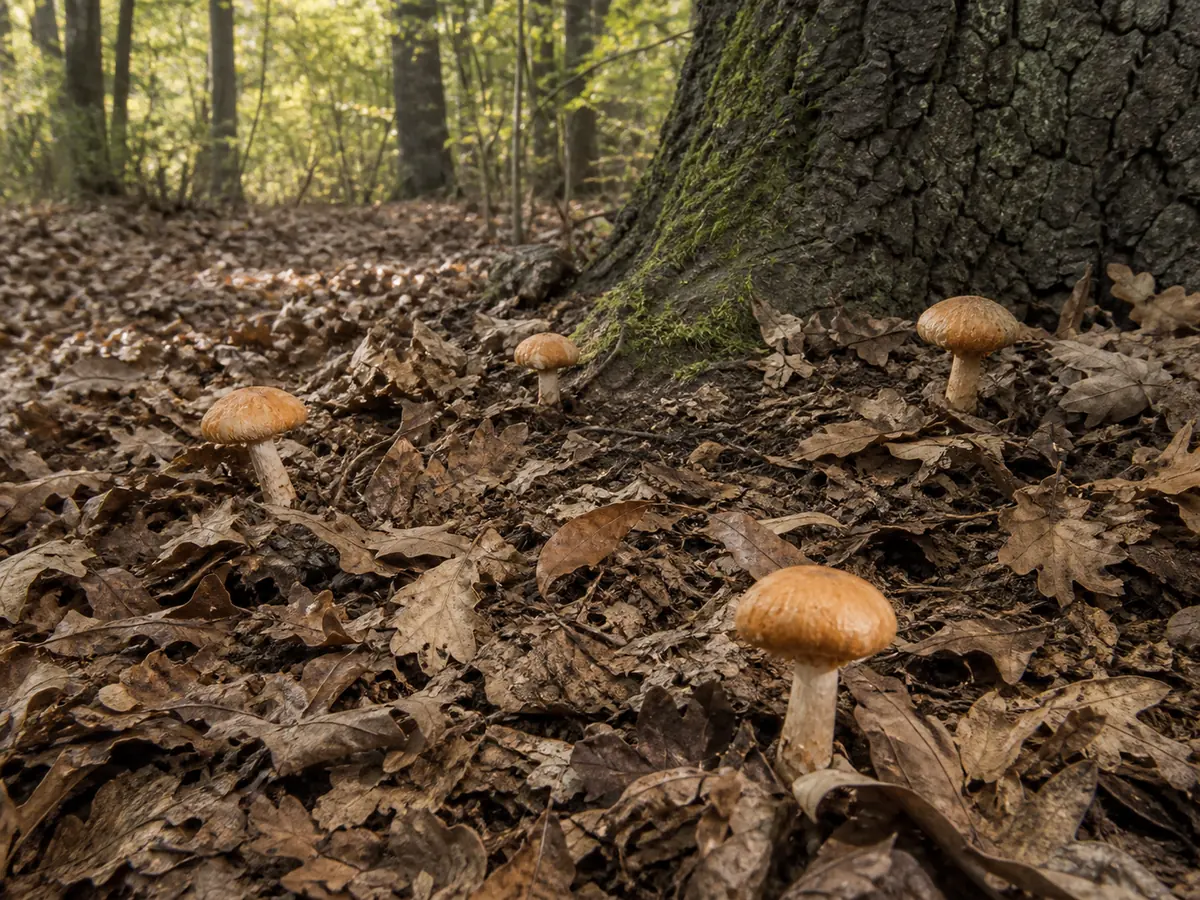
The species is uncommon in Britain and northern Europe but more frequent in parts of central and southern Europe. A rare regional record deserves documentation of trees, soil, date, and several intact specimens rather than confidence based on cap color.
Because mycelium persists underground, removing fruiting bodies does not eliminate the organism. Recheck the same tree root zone after suitable weather if children or pets use the site.
Which mushroom does the common name mean?
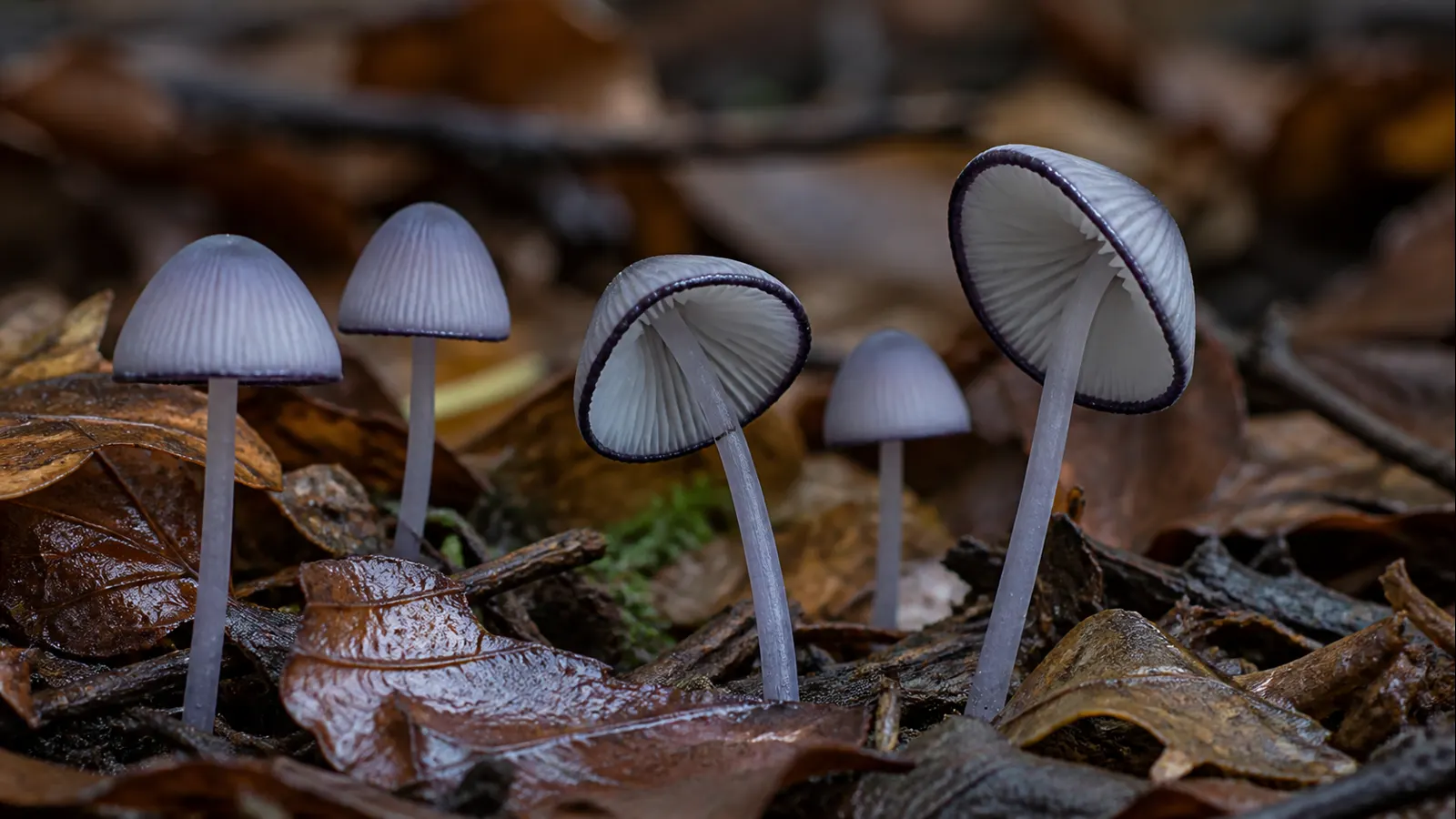
Cortinarius orellanus belongs to Cortinariaceae, a very large group whose species often share rusty spores and a cobwebby cortina. The species name refers to the well-documented European orellanine producer rather than every orange webcap.
Webcap taxonomy changes as DNA studies reorganize the genus, but the medical boundary remains simple. An unresolved rusty-spored webcap is not food.
The common name fool's webcap is sometimes confused with fool's mushroom, Amanita verna. They are unrelated in appearance and toxin syndrome.
The amanita causes delayed liver failure through amatoxins, while this webcap is associated primarily with delayed kidney failure through orellanine.
Why does orellanine injury appear so late?
Orellanine ultimately damages the renal tubules, the structures that filter and concentrate urine. The toxin can produce oxidative injury while the person still feels normal, which helps explain the unusually long delay before obvious illness.
Early complaints may include nausea, vomiting, abdominal discomfort, intense thirst, headache, or pain around the kidneys. Reduced urine can follow as renal function declines.
There is no proven antidote that reverses established orellanine damage. Treatment centers on early toxicology consultation, repeated renal testing, fluid and electrolyte management, and dialysis or transplantation when required.
A normal feeling the next morning, or one normal laboratory result soon after the meal, cannot close the exposure. Clinicians need the species suspicion and ingestion date so they can plan follow-up.
Can preparation remove orellanine?
Fool's webcap has no culinary use. Orellanine remains dangerous after cooking and drying, and the mushroom's mild appearance or smell gives no warning about kidney toxicity.
Never mix an unresolved webcap with edible chanterelles. Keep suspected material in a separate paper container so fragments and spores do not obscure the meal evidence.
Warning
Internet claims about parboiling webcaps are unsafe. No household process reliably removes orellanine, and tasting is not an identification method.
Fool's webcap questions
Is fool's webcap poisonous?
How long can symptoms take to appear?
How is it different from a chanterelle?
Does fool's webcap have a ring?
Where does it grow?
Can cooking make it safe?
Sources & References
- First Nature Cap, gills, stem, spore print, odor, habitat, season, lookalikes, and orellanine warning.
- Orellanine poisoning review Human and experimental renal toxicity, delayed presentation, and treatment limits.
- Long-term orellanine outcomes Renal outcomes, dialysis, and follow-up after Cortinarius poisoning.
- Human poisoning review Orellanine syndrome and forensic identification context.
- Mushroom poisoning updated review Renal-failure category and clinical management context.