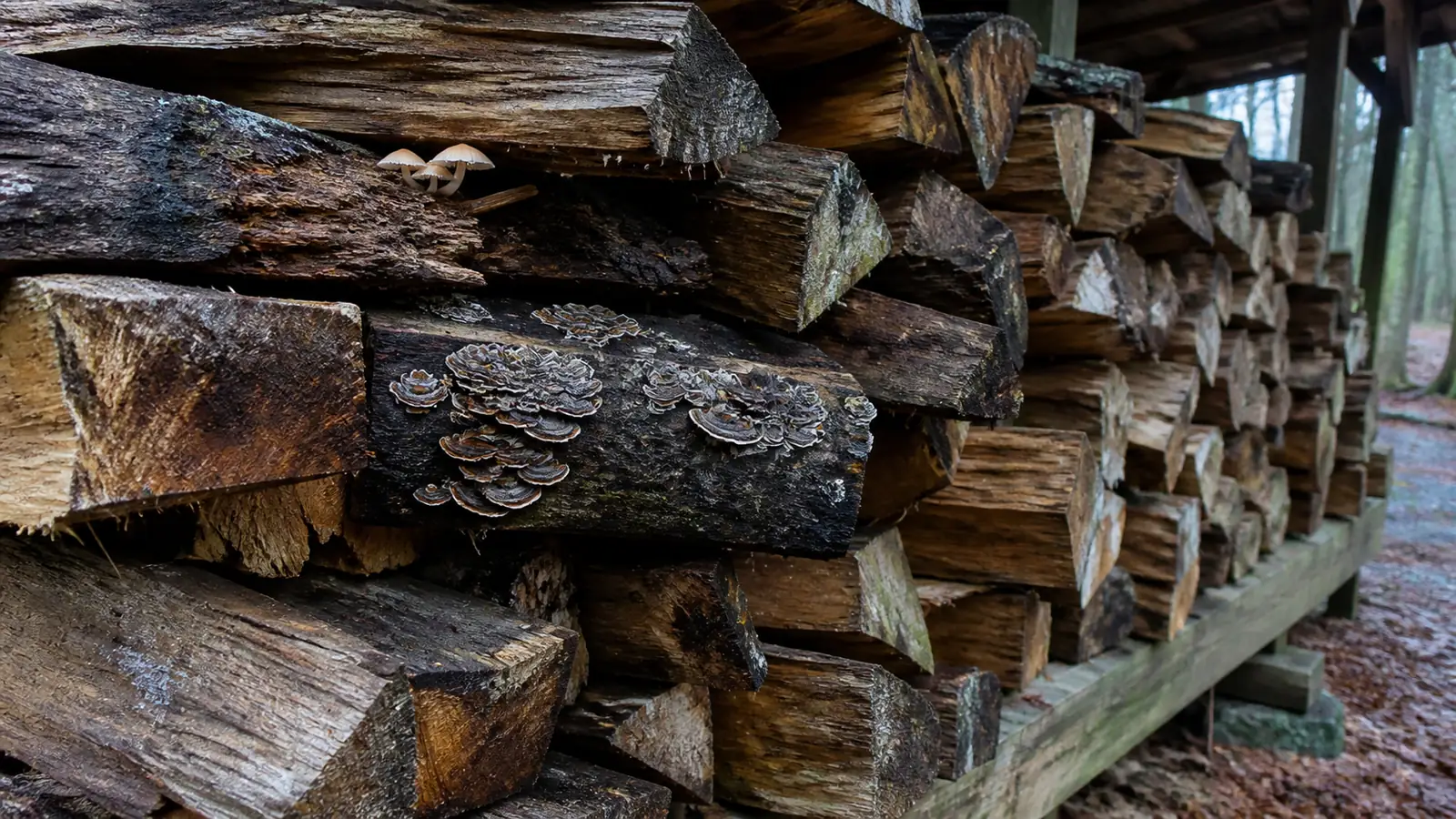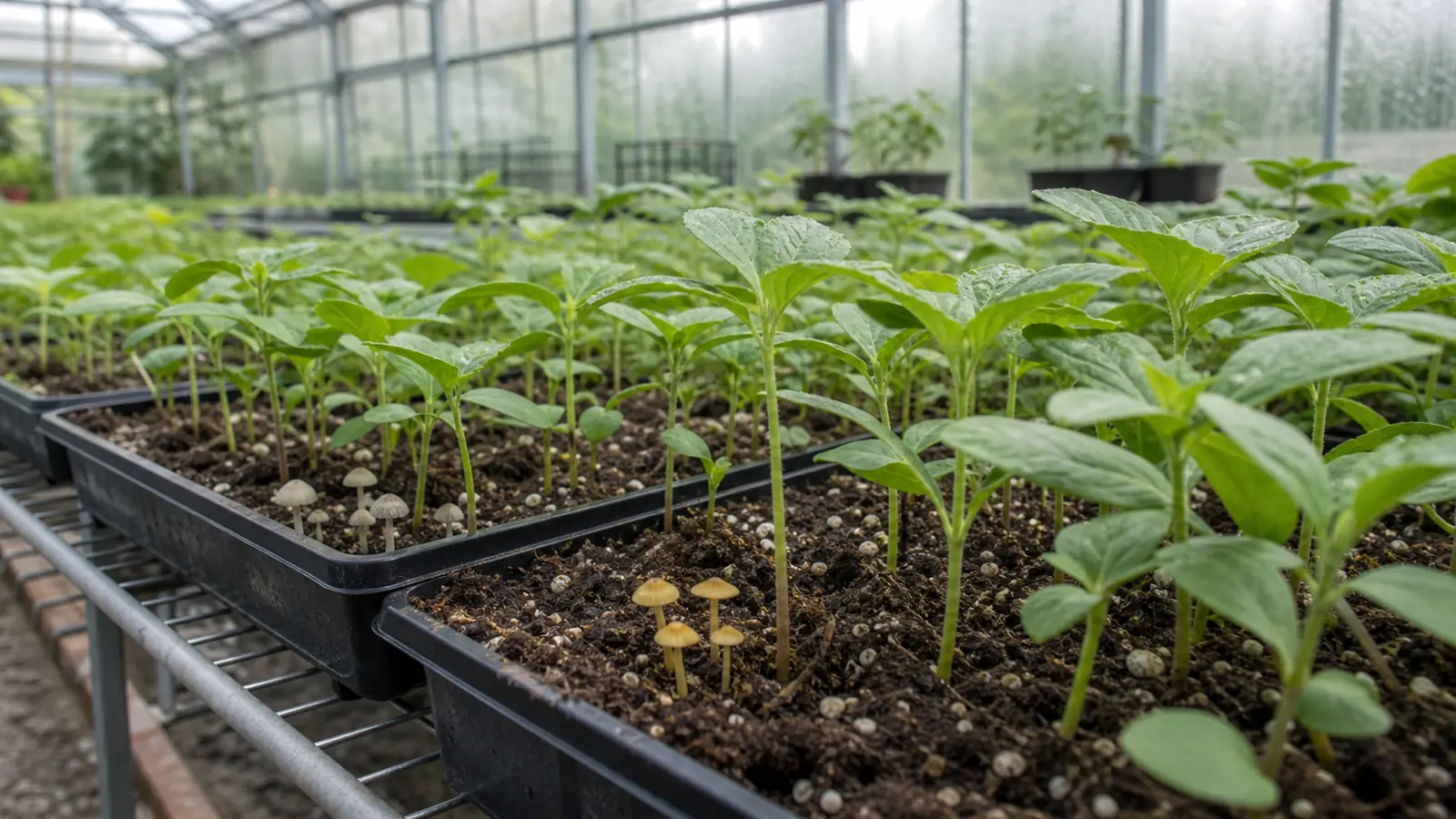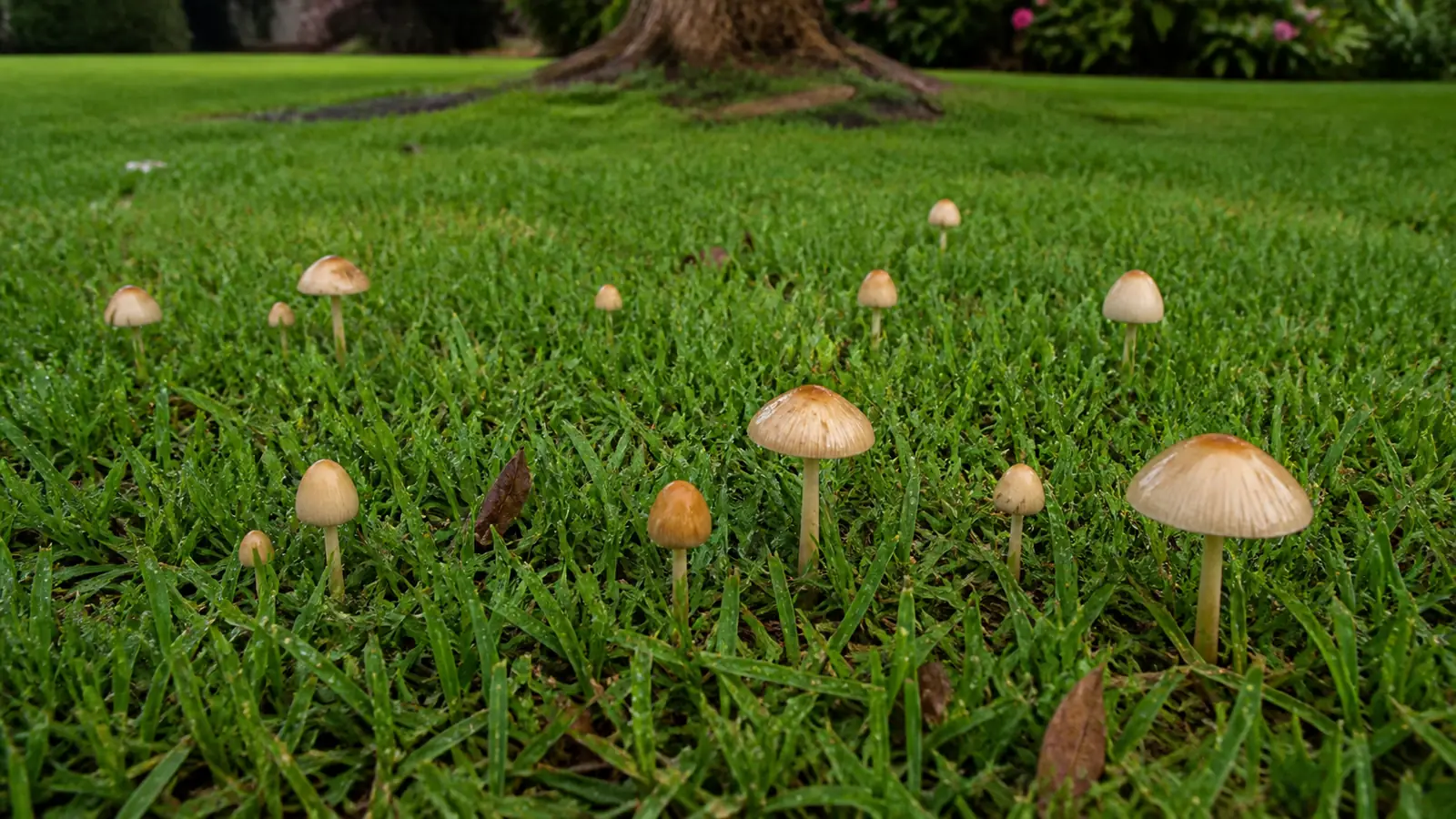
Mushrooms in a lawn are temporary fruiting bodies from fungi using organic matter below the turf. Their ring, cluster, or scattered pattern, plus the grass response and one complete specimen, gives safer evidence than cap color alone.
Mushrooms growing in a lawn usually mean that fungi are breaking down dead roots, buried wood, grass debris, or thatch below the turf. The visible caps can appear quickly after wet weather, but the fungal network was there first.
Do not use the lawn or cap color as proof of edibility. Read the distribution across the grass, note what the turf is doing, and document one complete specimen before trying to narrow the group.
That order separates a temporary cosmetic flush from a poisonous white parasol, a water-repellent fairy ring, or a cluster connected to old tree roots.
Why Lawn Mushrooms Appear and What Their Pattern Reveals
A lawn tells you about setting and possible food, not species.
The mushroom may be attached to fine organic matter in thatch, a dead root several inches down, a buried branch, or soil enriched by years of clipped grass.
The cap is a fruiting body produced by mycelium that can occupy far more ground than the mushrooms reveal. Picking one cap therefore removes the reproductive structure without removing the organism or the material it is using.
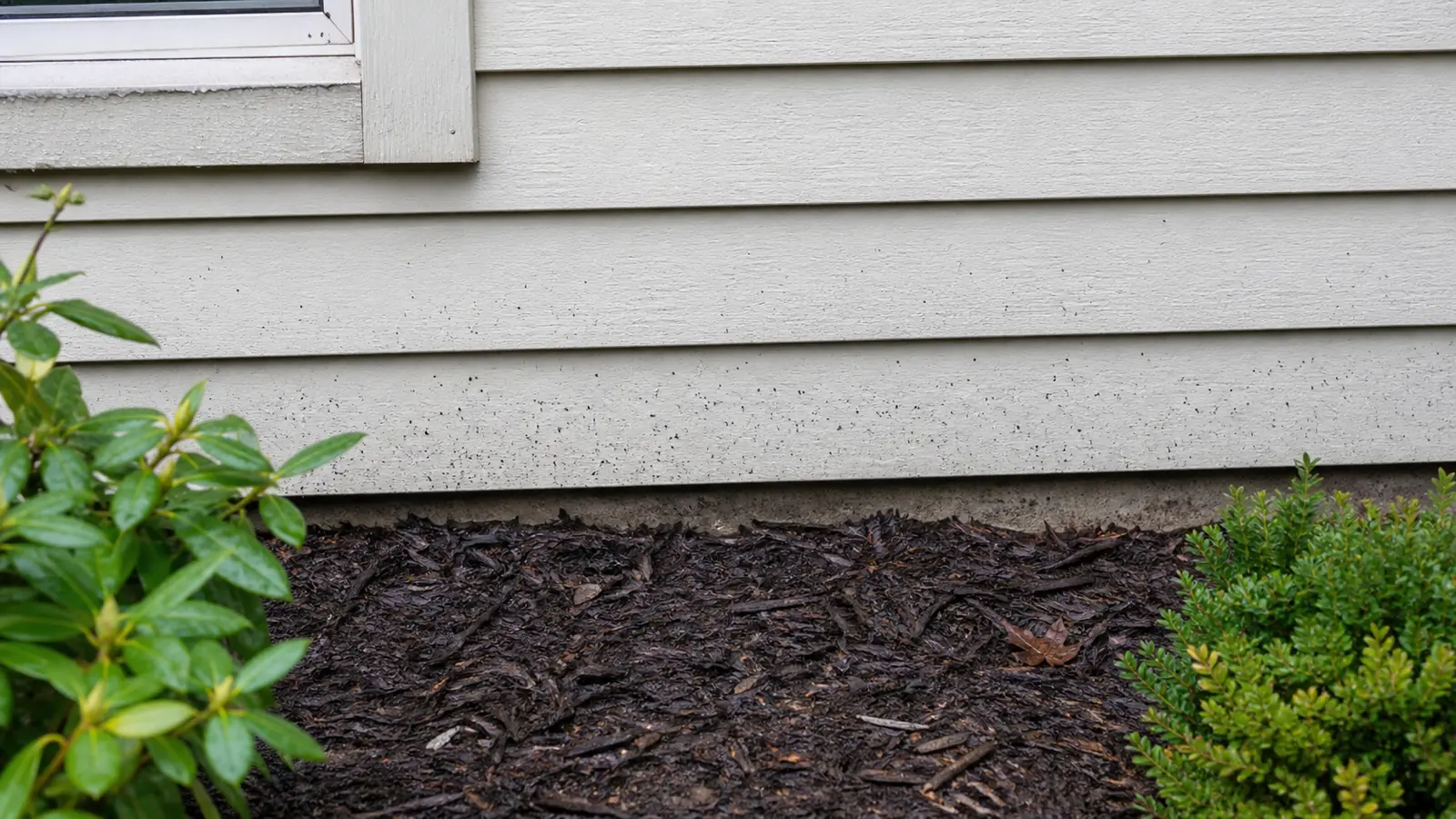
Look at the boundary of the fruiting before you assume it is coming from grass. A mushroom beside a landscape bed may originate in bark mulch, while a tight group in open turf may trace a root from a tree removed years ago.
Trace the point of attachment whenever you can do so without tearing apart the site. Soil, thatch, and buried wood lead to different candidate groups even when the caps look similar from standing height.
The lawn also records the fungus's effect.
Normal green grass suggests a different problem from a dark green arc, a dry brown ring, or a cluster beside a declining tree.
Why Rain and Mowing Seem to Trigger a Flush
Rain or irrigation supplies the moisture that an established mycelium needs to expand fruiting bodies. Suitable temperature and humidity can turn small hidden buttons into obvious caps between one lawn check and the next.
Mowing often happens during the same stretch of growing weather, so the mower receives credit for an event it did not start. Shorter grass reveals low caps, while the blade can cut taller mushrooms and scatter fragments that were already present.
Mowing changes visibility, but the underground food source remains.
A new flush can return after the next wet period because the mycelium and decaying material remain.
Check the irrigation pattern when mushrooms repeatedly appear in the same damp zone. Frequent shallow watering keeps thatch and the upper soil wet, while deeper and less frequent irrigation can let the surface dry between waterings when the turf species and local conditions permit it.
Do not withhold water from drought-stressed grass merely to suppress caps.
The useful adjustment is correcting unnecessary surface wetness, not trading mushrooms for damaged turf.
Read the Pattern Across the Grass
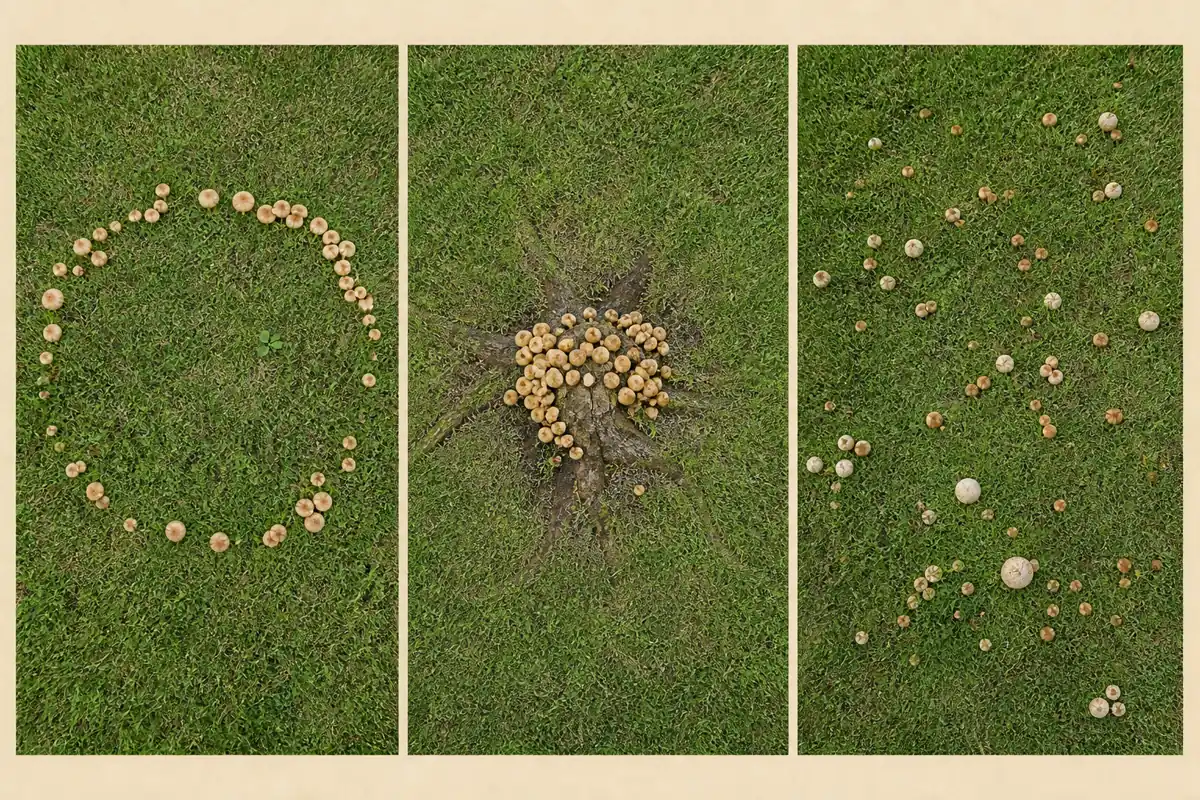
Step back before collecting anything and photograph the entire patch. Distribution is an identification character because it shows how the unseen fungus is moving through its food source.
A ring or arc
Mushrooms arranged in a circle or partial circle point to outward fungal growth, but they do not name one species. More than 60 kinds of basidiomycete fungi can produce fairy-ring symptoms, including cap-and-stem mushrooms and puffballs.
Read the grass with the ring. It may remain unchanged, grow darker and faster where decomposition releases nitrogen, or turn brown where dense fungal growth makes soil resist water.
A complete circle is not required. Paths, beds, compacted soil, overlapping colonies, and uneven organic matter can interrupt the visible arc.
A cluster over buried wood
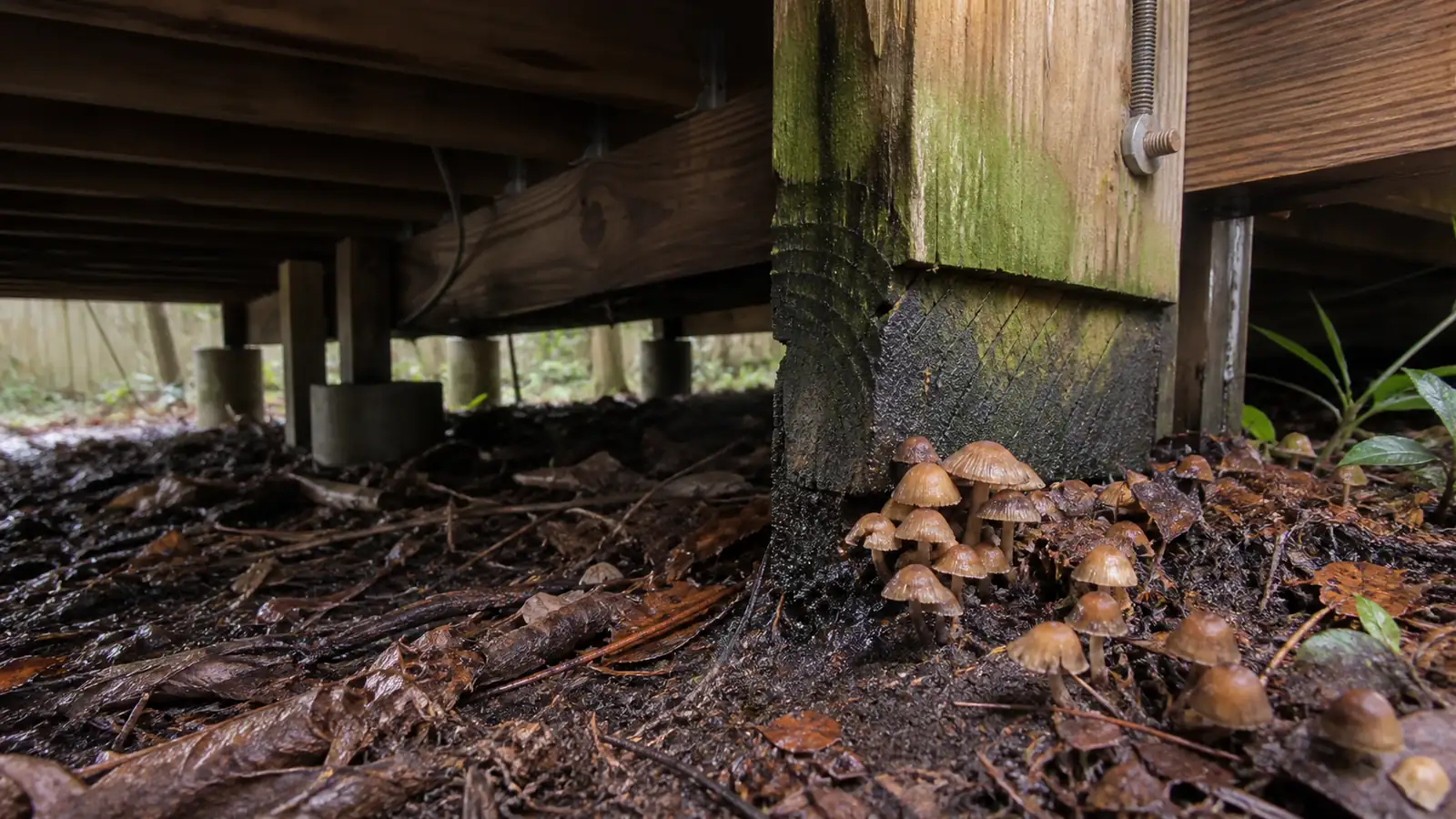
A dense tuft near an old stump position, removed tree, or tree base suggests a concentrated woody food source. Gently trace one stem to the soil and check whether several stems join near a root or buried wood rather than arising independently from open ground.
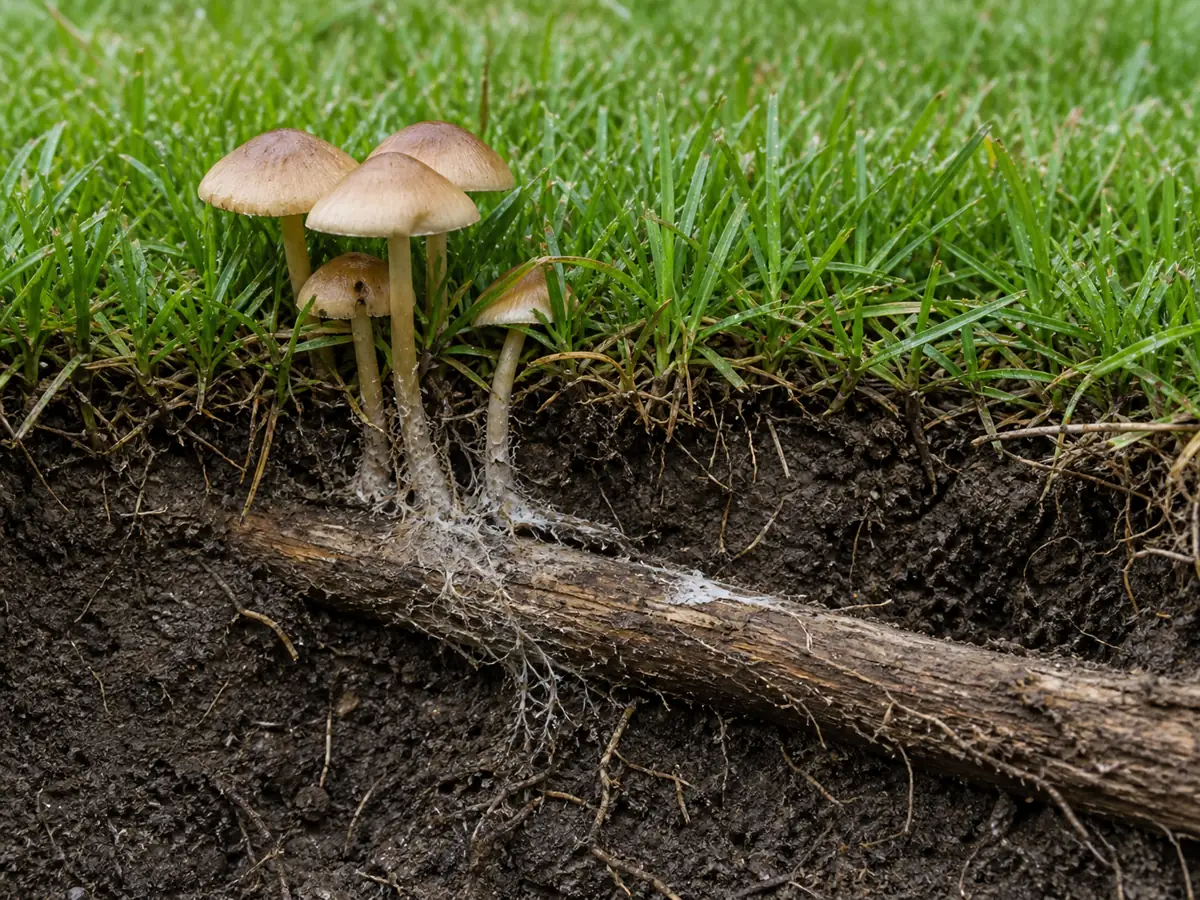
This pattern deserves extra attention when the nearby tree has thinning foliage, dead branches, loose bark, or decay at the root collar.
Some root-decay fungi can continue fruiting from buried roots after a tree is gone, while a living tree with decline needs assessment beyond lawn care.
A scatter across wet turf
Small caps or puffballs spread irregularly across a broad area fit dispersed organic matter such as thatch, dead grass tissue, and fine roots. Compare the scatter with sprinkler overlap, low spots, shade, soil compaction, and the thickness of the thatch layer.
Several species can share the same lawn and fruit at the same time. Treat differences in cap, underside, stem, spore deposit, and growth habit as possible separate collections instead of forcing every mushroom into one name.
| Lawn pattern | Likely substrate clue | Check the grass | Next useful observation |
|---|---|---|---|
| Circle or partial arc | Fungal colony expanding through soil or thatch | Dark green growth, dead band, or no change | Test water penetration inside and outside the ring |
| Tight cluster | Stump, buried branch, or connected roots | Nearby tree decline or an old removal site | Excavate one complete base and trace attachment |
| Broad irregular scatter | Distributed thatch, fine roots, or uniformly moist organic soil | Irrigation overlap, shade, low spots, or heavy thatch | Separate specimens by form and record each pattern |
The table narrows what to investigate. It does not turn geometry into an edibility test or a species verdict.
White Mushrooms in Grass Need a Specific Warning
A large pale mushroom in a warm-season lawn can be the green-spored parasol, Chlorophyllum molybdites. It is a common poisonous lawn mushroom in warmer parts of North America and often fruits in groups or broad rings.
Young caps are rounded and pale, then expand with tan or brown scales on a whitish background. The stem carries a substantial ring, and the free gills begin white before they mature toward gray-green as the green spores develop.
That color change matters because the youngest specimen can hide the most distinctive evidence. A mature cap can leave a visibly green spore deposit, an unusual color that supports the identification when it agrees with cap, gill, stem-ring, habitat, and regional characters.
A white cap is never a safety clearance. White dapperlings, pale Agaricus species, parasols, and dangerous white Amanita lookalikes can overlap in color while differing in the stem base, gill attachment, spore color, bruising, and toxicity.
Warning
Do not eat a large white lawn mushroom because it resembles a grocery mushroom or an edible parasol. Green-spored parasol can cause severe vomiting and diarrhea, and a young specimen may still have white gills.
Geography changes probability, not the standard of proof. Chlorophyllum molybdites is especially common in warm regions, but a northern lawn or cool week does not make an unknown pale mushroom edible.

Use a spore deposit to answer a character question, not to authorize a meal. Even a distinctive deposit must agree with a complete specimen and qualified identification.
These six profiles show why a lawn is a candidate pool rather than a species answer. The same grass can support edible, poisonous, psychoactive, and short-lived decomposers, while a tree-root partner may appear where roots extend beneath turf.
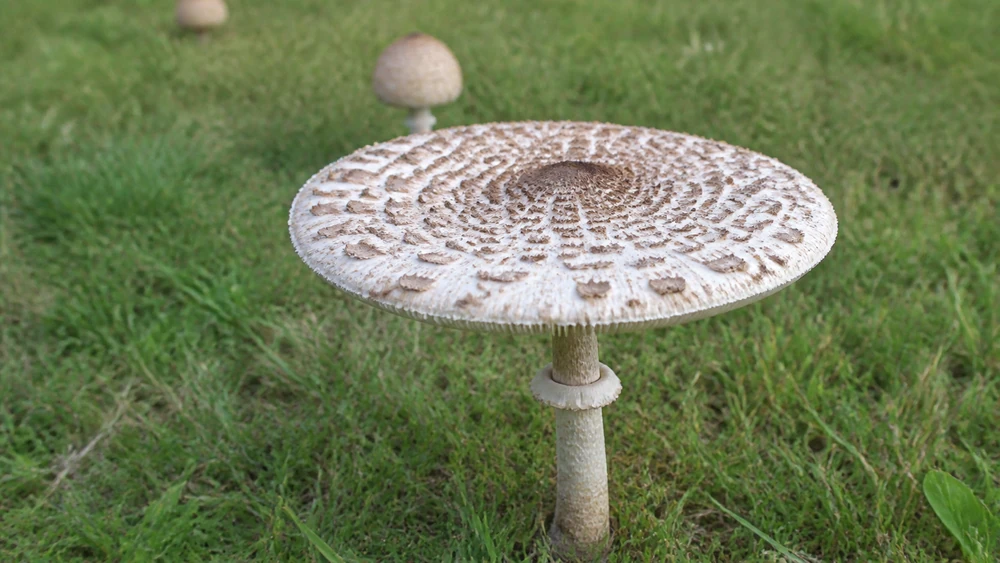 Large pale lawn parasolGreen-Spored ParasolMature green-gray gills and a green print are important, but young fruiting bodies can hide that color and still cause severe gastrointestinal poisoning.
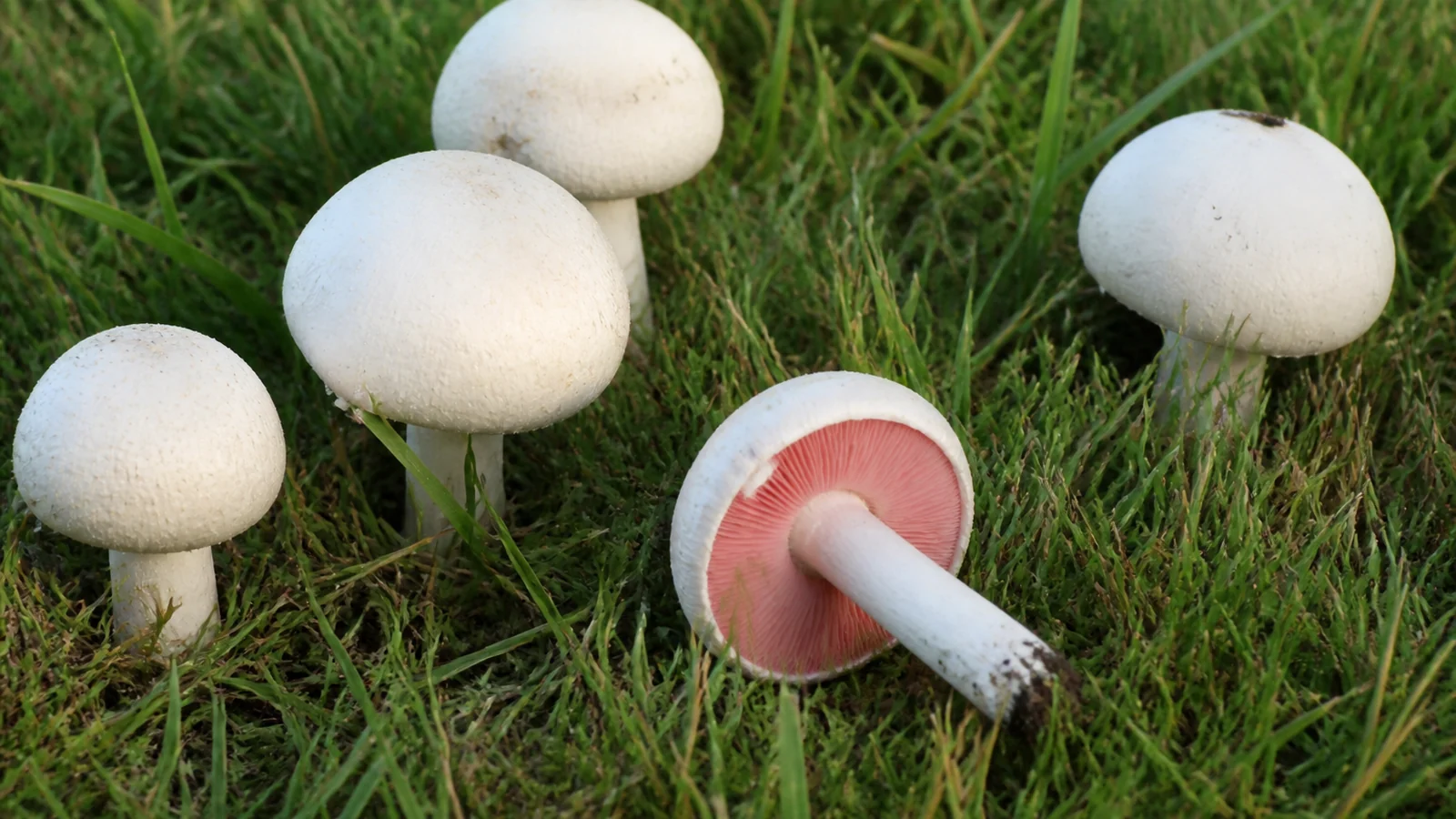 Brown-spored grassland AgaricusField MushroomPink gills mature dark brown, while the cap, fragile ring, lack of a volva, odor, staining, and open-grass attachment still need confirmation.
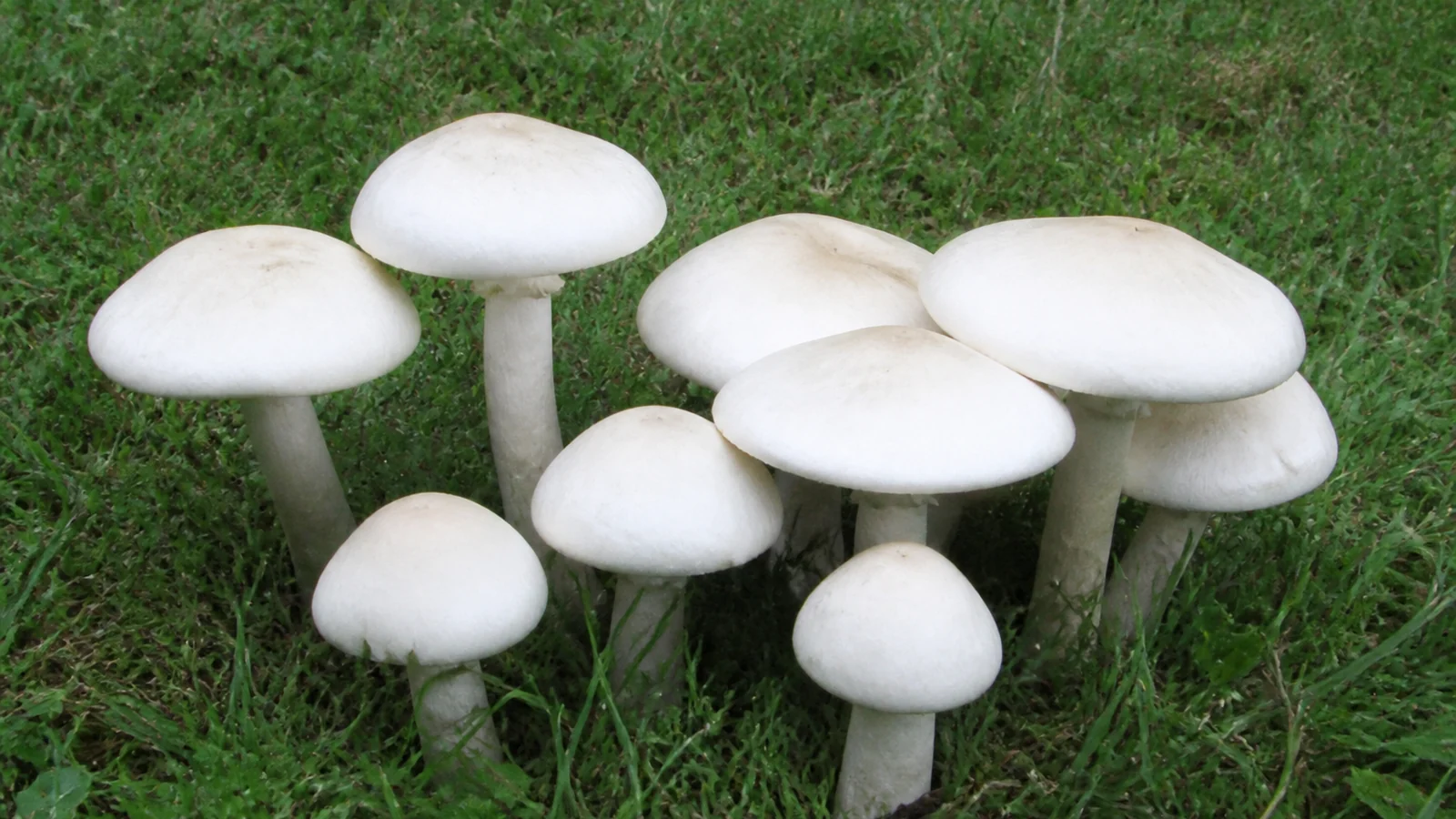 Poisonous Agaricus in grassYellow StainerRapid chrome-yellow staining near the stem base and a phenolic odor can reject an edible field-mushroom guess when the complete specimen is fresh.
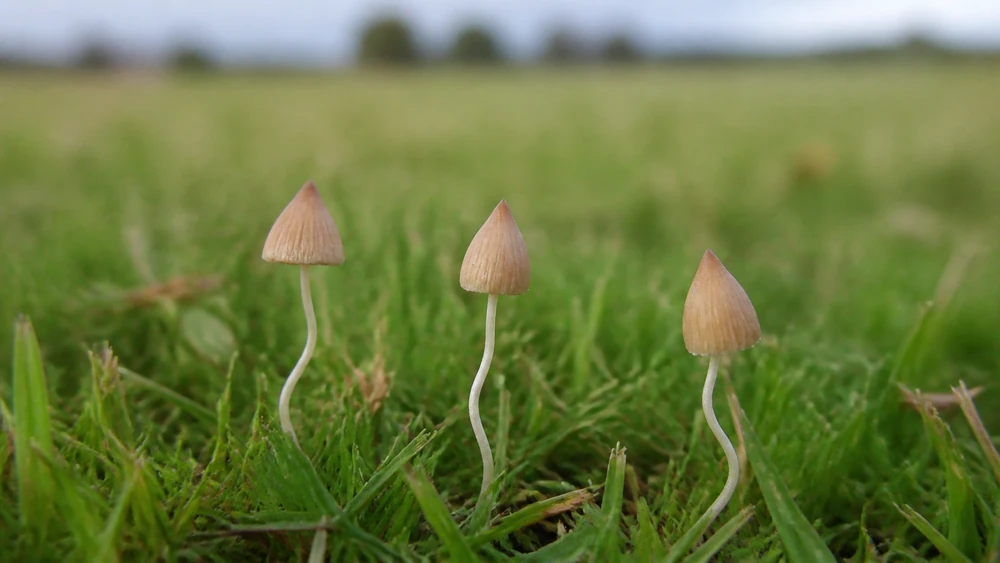 Small grassland mushroomLiberty CapA pointed hygrophanous cap and purple-brown deposit belong to a complete regional identification, not a lawn-photo shortcut.
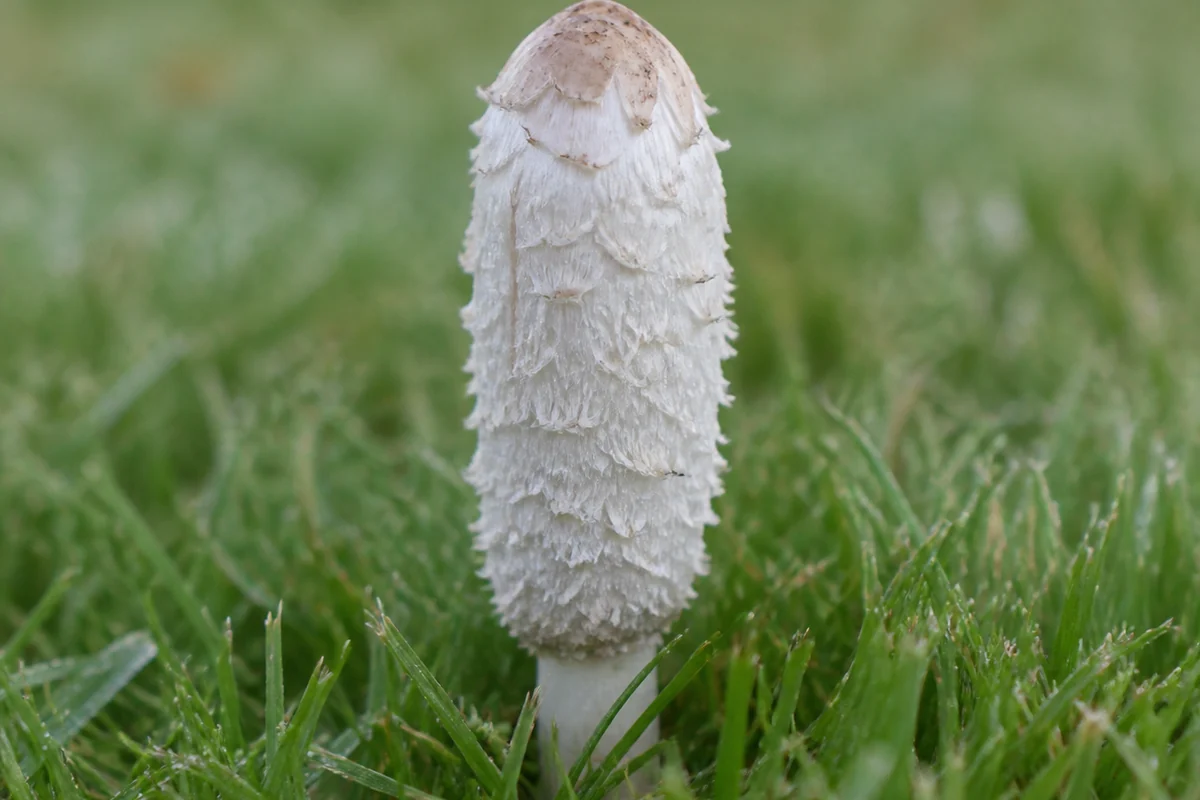 Tall cap that turns black and inkyShaggy ManeYoung white shaggy caps expand, the gills darken, and the fruiting body can collapse quickly, so age changes the field marks within hours.
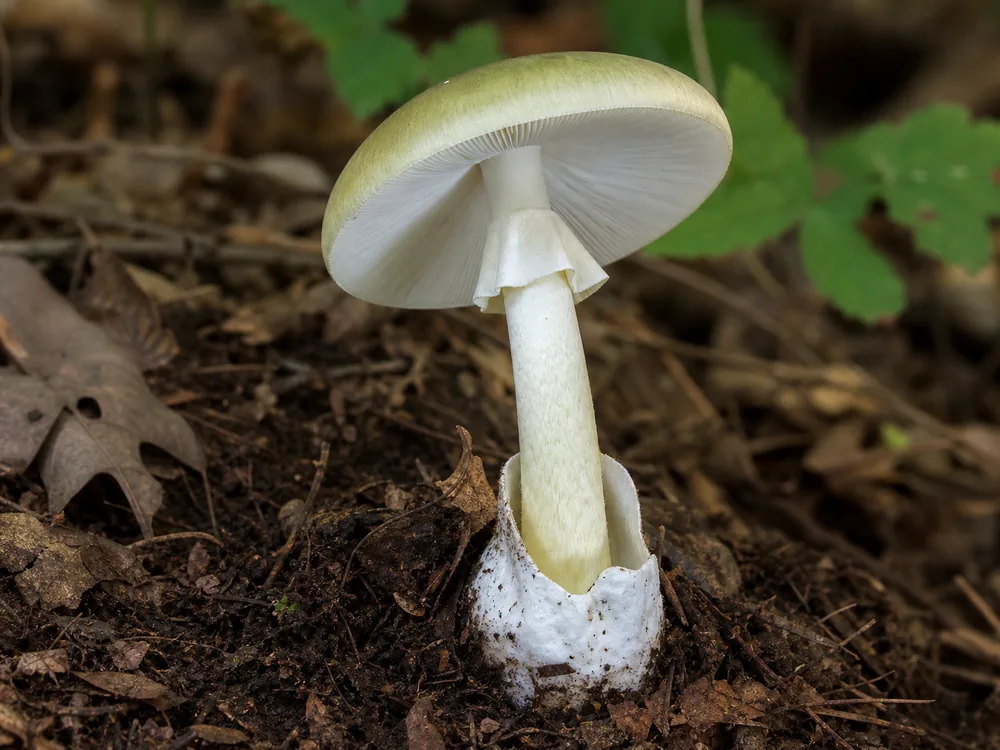 Tree-rooted danger in turfDeath CapWhite gills, a ring, a bulbous base with a sac-like volva, and nearby host trees matter when an Amanita fruits through a lawn or park verge.
The cards direct the next examination rather than rank likelihood. Region, season, nearby trees, lawn history, and intact anatomy decide whether any candidate belongs in the comparison set.
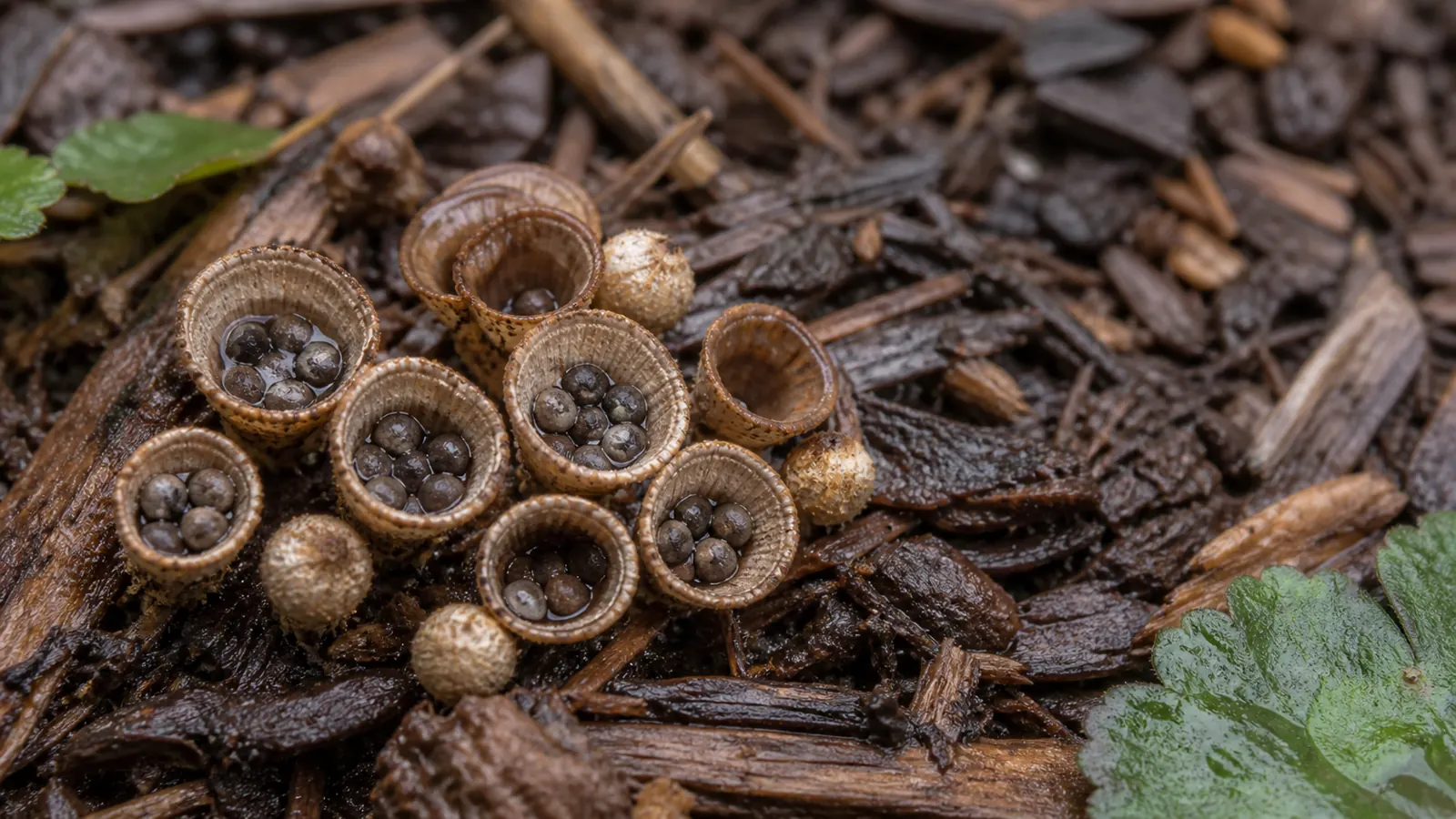
IdentificationWhat Are the Tiny Bird's Nest Fungi in Your Mulch?Build an Identification From One Complete Specimen
Collect evidence before the mower, rake, or curious pet changes the scene. One intact mushroom with its original pattern is more useful than a bag of separated caps.
Then preserve the entire stem base. Cutting at grass height can remove a buried bulb, sac, rooting extension, mycelial cords, or the attachment to wood that separates major groups.
An odor can support an identification, but avoid deep inhalation of an old or decomposing specimen. Never perform a nibble-and-spit test on an unknown lawn mushroom.
For a spore deposit, place a mature cap underside-down across black and white paper and cover it from moving air. The two backgrounds help reveal pale and dark deposits, while several hours of accumulation usually tells more than gill color alone.
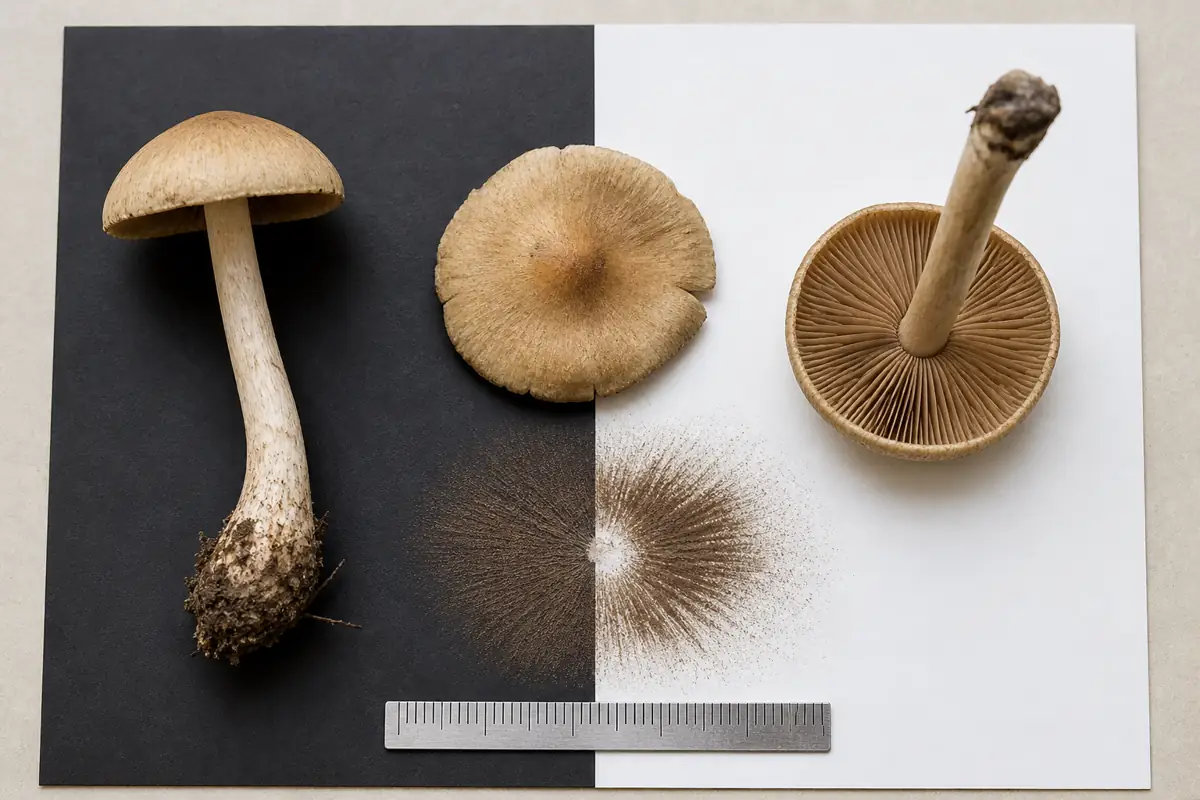
Photograph the fresh specimen promptly because thin lawn mushrooms can collapse or change color within hours. Record which cap produced which deposit so evidence from two species is not accidentally combined.
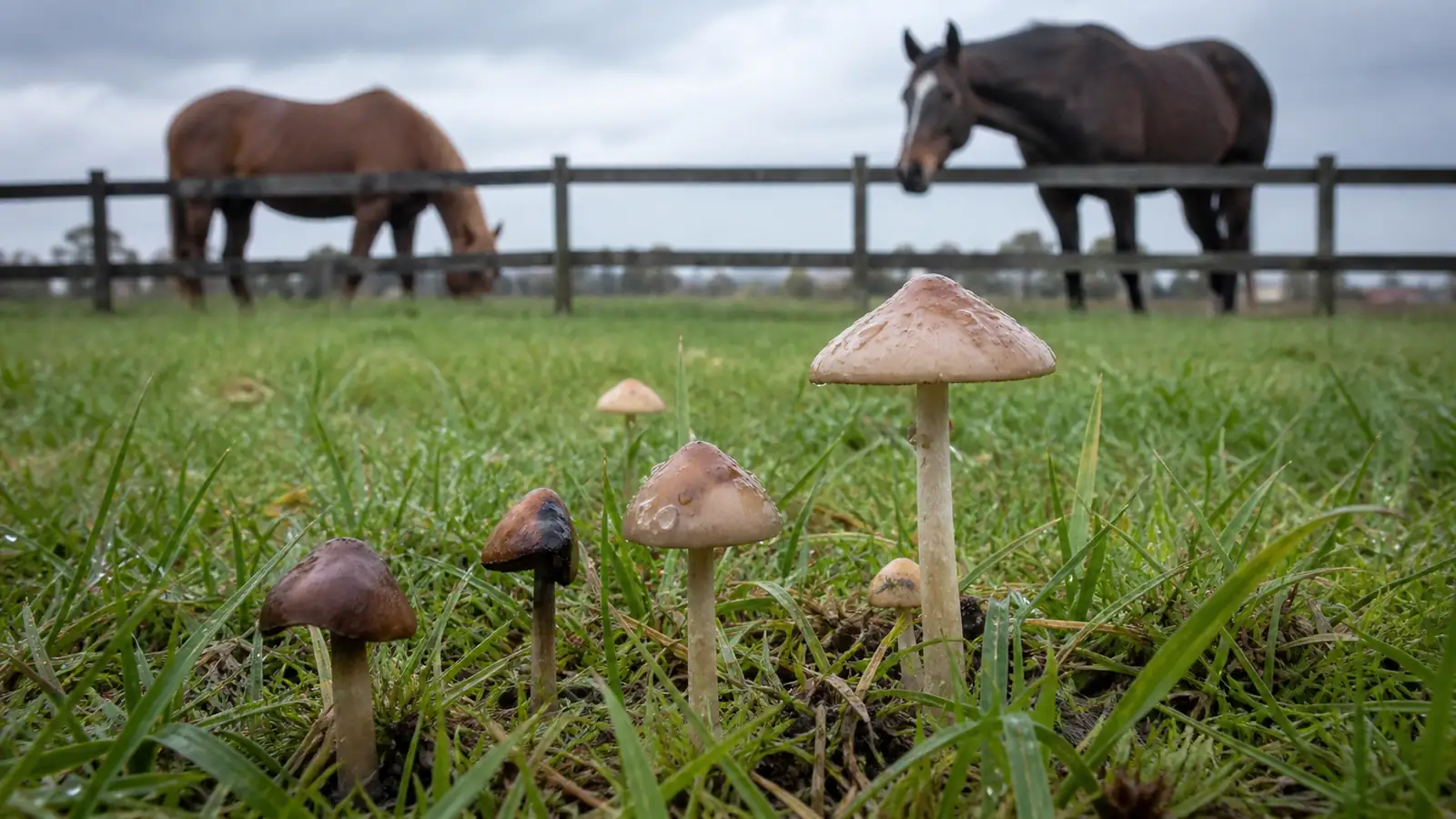
IdentificationWhat Should You Do About Mushrooms in a Horse Pasture?Are Lawn Mushrooms Poisonous to People or Pets?
Some lawn mushrooms are poisonous and no lawn-wide visual rule can separate every safe species from every dangerous lookalike. Unknown lawn mushrooms should not be eaten, even when insects have chewed them or the cap resembles a familiar food mushroom.
Touching an intact mushroom is not the same exposure as swallowing it. Wash hands after handling unknown material, prevent hand-to-mouth contact, and remove fruiting bodies from places where toddlers or pets actively forage.
If a person may have swallowed a wild lawn mushroom in the United States, call Poison Control at 1-800-222-1222 promptly. Do not wait for vomiting, diarrhea, confusion, or other symptoms because some serious mushroom toxins have a delayed onset.
Do not induce vomiting or try a home remedy unless a poison specialist directs you. Provide the person's age, estimated amount, time of ingestion, symptoms, photographs, location, and any matching specimen.
A dog or cat that may have eaten a lawn mushroom needs immediate veterinary or animal poison-control guidance. Pets can be severely affected by toxins that do not produce the same pattern in people, so an online human edibility claim is not a veterinary assessment.
After contacting help, collect a matching specimen from the same patch only when it is safe to do so. Keep it in paper or waxed paper, refrigerate it, and prevent it from contacting food while a veterinarian, poison specialist, or mycologist advises on identification.

Choose the Response From What the Grass Is Doing
The smallest useful response depends on the turf, soil, substrate, and who uses the lawn. A few caps in healthy grass require a different intervention from a dry brown ring or repeated clusters beside a declining tree.
Treat the condition, not the cap count. Picking and mowing can improve appearance and reduce access, but neither action reaches the mycelium or removes buried organic matter.
Healthy grass with temporary caps
Pick or rake the capsRemoval reduces immediate access and mess while the fruiting ends with changing weather
Repeated flush in a persistently wet zone
Review irrigation and drainageUnnecessary surface moisture can keep thatch and upper soil favorable for repeated fruiting
Thick thatch with scattered fruiting
Measure and manage the thatchExcess undecomposed material supplies food and can restrict water movement
Green ring without dry or dead turf
Monitor before escalatingNutrient release can darken grass even when the fungus is not directly attacking it
Brown ring or water-repellent soil
Assess aeration and fairy-ring treatmentDense fungal growth can block infiltration and stress roots below the ring
Cluster beside a declining tree or old stump
Request a tree-health assessmentThe fruiting may be connected to decaying structural roots rather than a lawn-only issue
Water a small test area inside and outside a troubled ring and watch infiltration instead of judging moisture by surface color. Beading or runoff over one zone supports a water-repellency problem, especially when the corresponding grass is thinning or brown.

Core aeration can improve water entry when compaction or a shallow fungal mat is involved. Dethatching belongs only where the thatch layer is excessive, because a normal thin layer protects soil and roots.
Grinding old stumps and removing accessible buried wood can reduce a concentrated food source, but extensive roots may keep decomposing for years. Expect occasional fruiting to continue while that material breaks down.
Home fungicide is rarely the first answer for nuisance caps, and treatment choice depends on the actual fairy-ring condition, turf species, product label, timing, and local guidance. A turf professional or county Extension office can assess a damaging ring before chemicals are applied.
When the grass is healthy and exposure is controlled, patience is a valid management choice. The fruiting bodies often disappear as the lawn surface dries even though the fungus continues its useful decomposition below.
Sources & References
- UC Statewide IPM Program Lawn mushroom biology, buried organic matter, fairy rings, and management.
- University of Georgia Cooperative Extension Fairy-ring symptom types, organic substrates, hydrophobic soil, and turf response.
- University of Minnesota Extension Lawn decomposition, thatch, roots, rainfall, and irrigation.
- UF/IFAS Extension Green-spored parasol identification, lawn habitat, and toxicity.
- UC Statewide IPM Program Mushroom clusters associated with stumps, buried roots, and woody-plant decline.
- Poison Control Human mushroom-exposure prevention and immediate poison-center guidance.
- North American Mycological Association Pet exposure response and specimen preservation.