What does a yellow stainer look like?
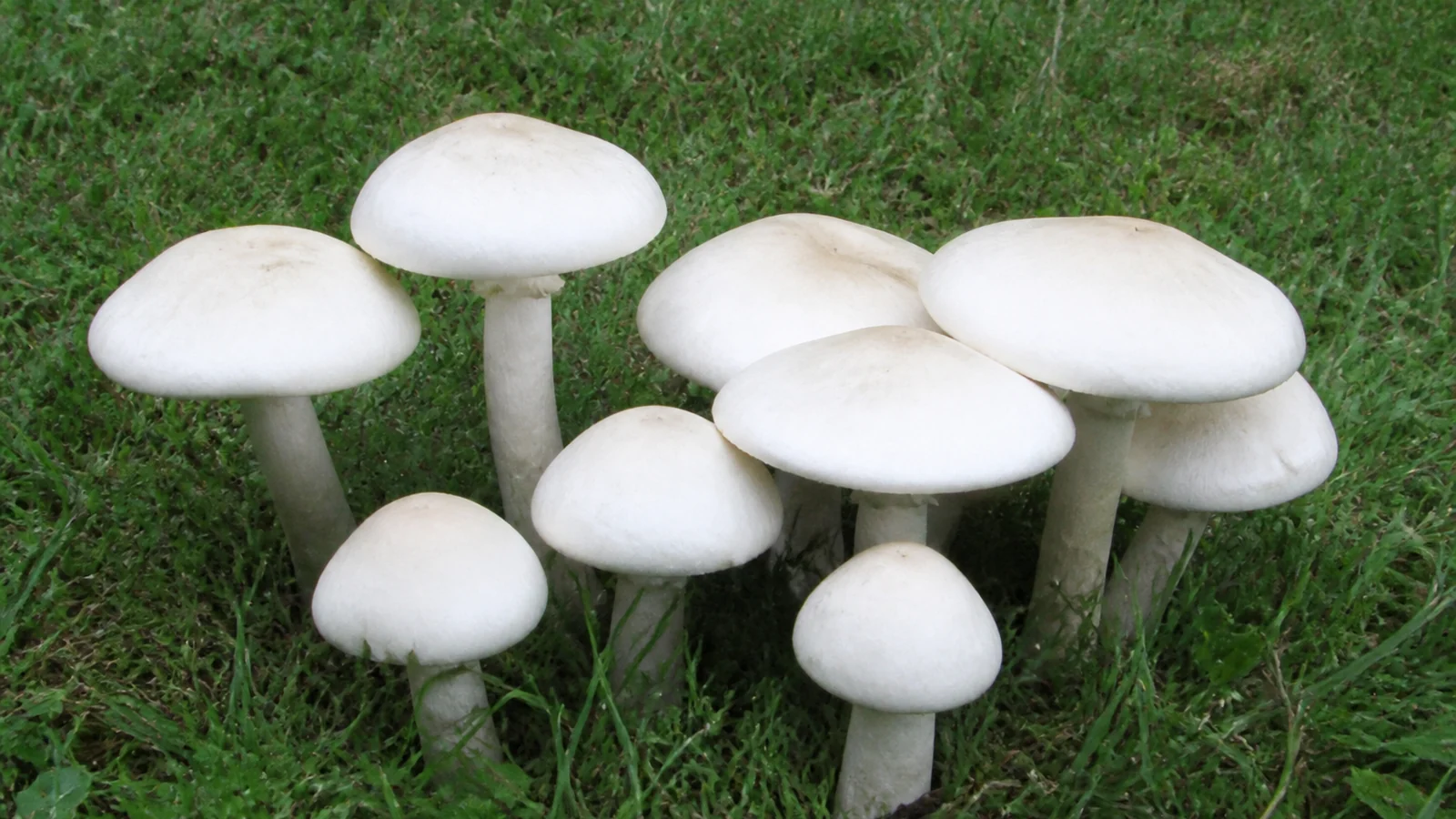
A yellow stainer is a white, clean, sturdy mushroom of the kind most people already trust. That is the whole problem with it.
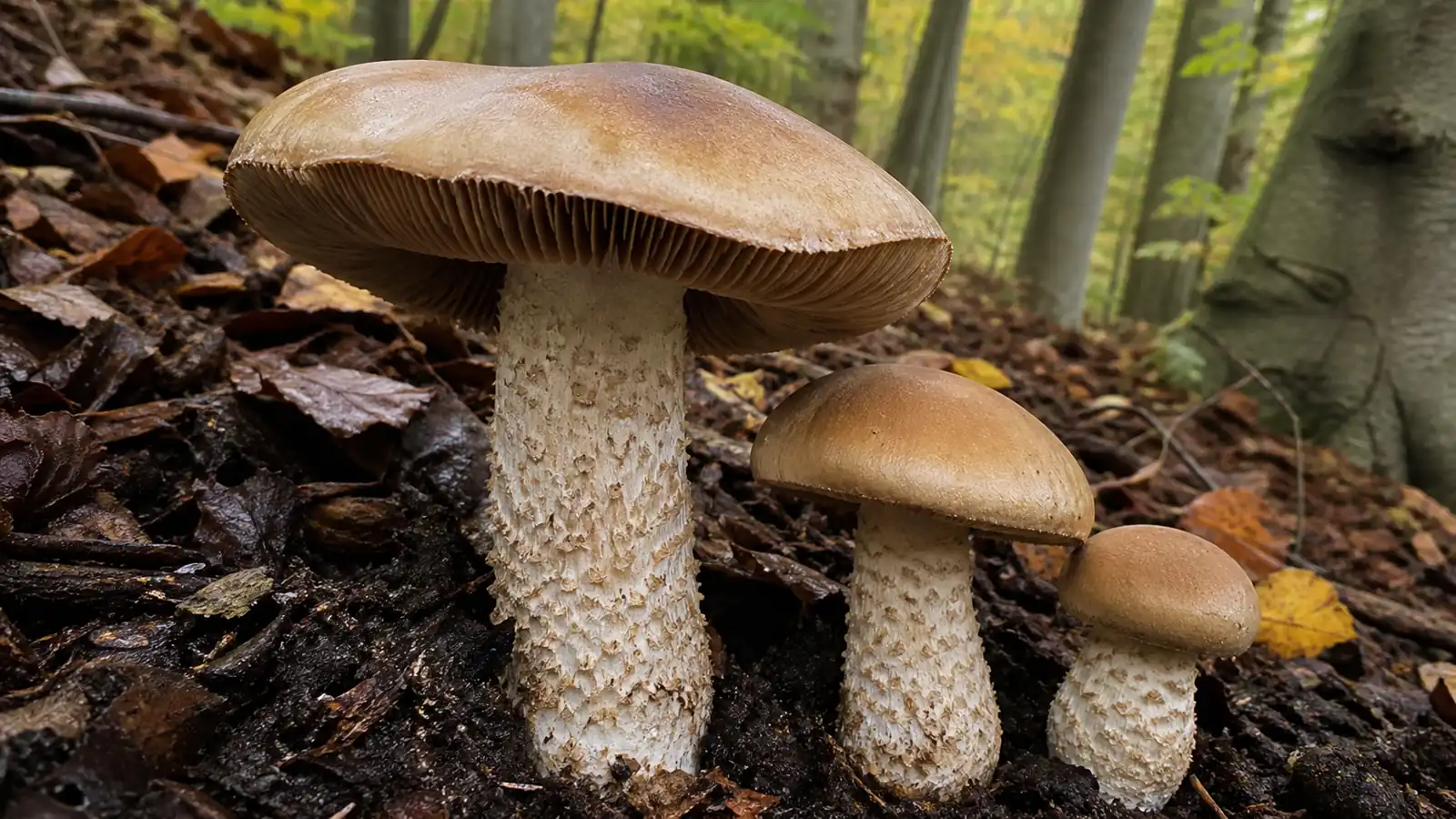
The cap is pure white and matt, five to fifteen centimeters across, and it starts domed before flattening out. In many specimens the top flattens so completely that it looks squared off, as though the dome had been pressed down onto a table.
The stem is white and smooth with a large floppy ring, and it swells into a bulb at the very bottom.
That bulb is where the mushroom gives itself away, and it is also the part most people leave in the ground.
Underneath, the gills are crowded and free of the stem, starting pale salmon pink and darkening through grayish brown to chocolate and finally to near black.
All of that describes several edible species just as well. Its shape, size, and color resemble mushrooms collected for food, so record its staining reaction as well as its appearance.
How do you test for a yellow stainer?
Pure white and matt, 5 to 15 cm across, domed at first and then flattening to a distinctly squared-off top, greying with age, and turning bright chrome yellow where the surface is rubbed or bruised.
Crowded and free of the stem, pale salmon pink when young, darkening through grayish brown to dark chocolate brown and finally near black.
White, smooth, with a large floppy ring, and a bulbous base that stains vivid yellow the instant it is cut or scratched.
White, firm, and carrying a phenolic smell described as ink, disinfectant or hospital corridor, strongest in the stem base and stronger again when heated.
One test settles this mushroom, and it works on any white Agaricus you will ever pick up.
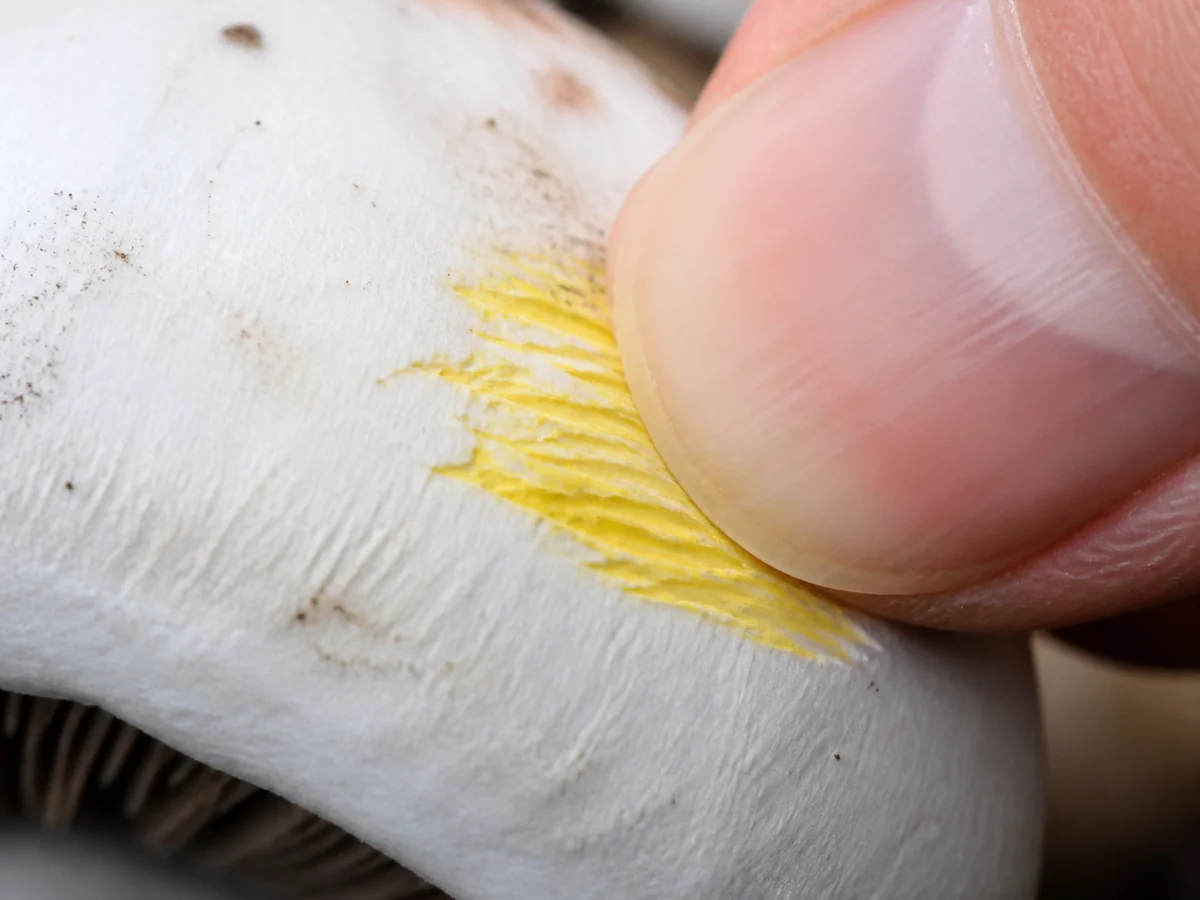
Scratch the very bottom of the stem with a thumbnail. A yellow stainer flashes bright chrome yellow within a few seconds, and the color is not subtle or arguable.
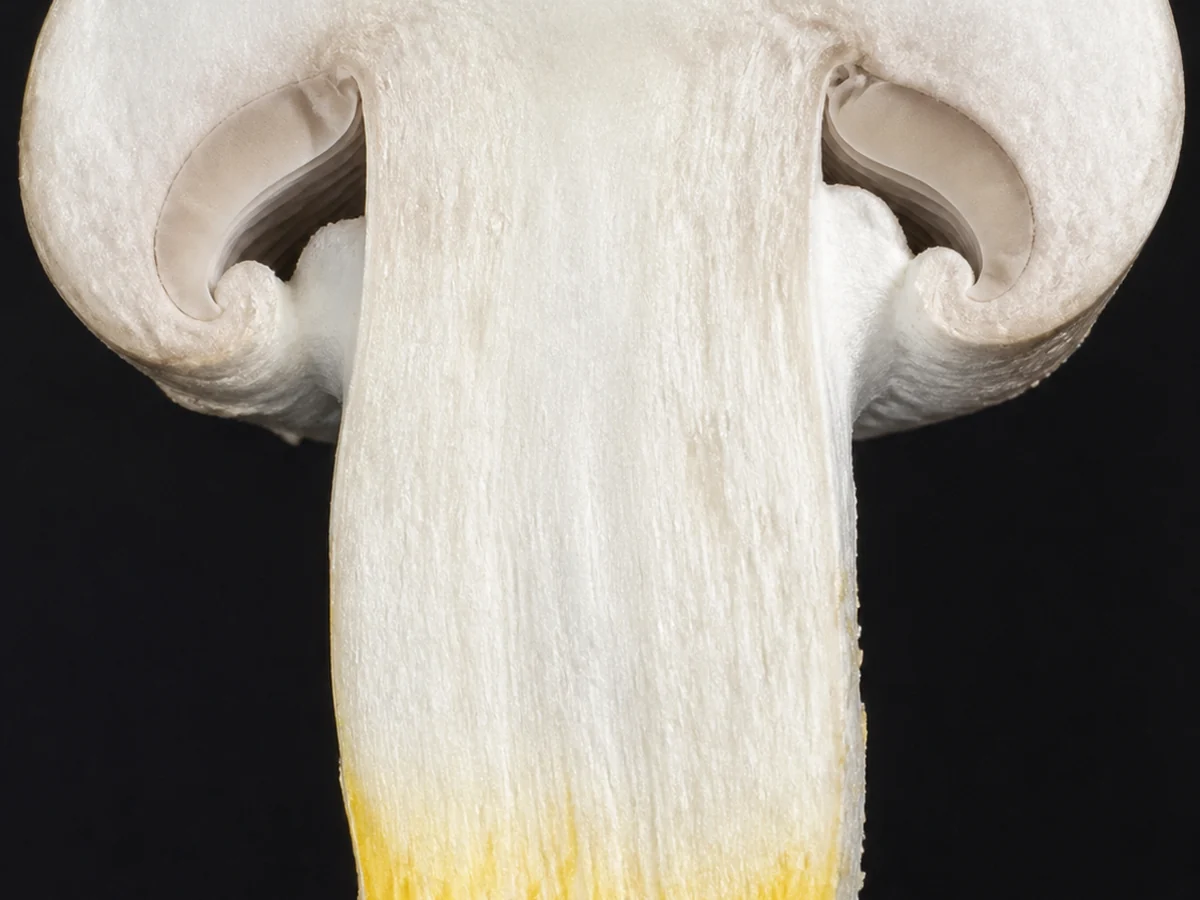
The location matters as much as the reaction. The staining is strongest in the bulbous base and can be faint or absent higher up the stem, so a mushroom snapped off at ground level takes the evidence with it.
The cap edge does the same thing more slowly. Rub the rim firmly with a thumb and a yellow stainer flushes yellow there too, then dulls toward brown after some minutes.
The smell is the second confirmation and it deserves more trust than most people give it.
Crush a fragment of the stem base between finger and thumb and the phenolic note is usually obvious.
People talk themselves out of that smell constantly. It is faint in a cold mushroom on a wet morning and unmistakable in a warm one, so a negative result outdoors in the cold is weak evidence rather than a clearance.
Nothing about the cap alone will settle this. A spore print will not either, because a yellow stainer and the edible white Agaricus species all drop dark brown, so the print narrows the genus and stops there.
If someone may have eaten this mushroom, act now. Call Poison Control at 1-800-222-1222 (US) or emergency services before symptoms appear, and save a piece of the mushroom for identification.
What safety details matter for Yellow Stainer?
The reaction is fast, free and unambiguous, and it is the single most useful two seconds in temperate foraging. A mushroom that flashes chrome yellow at the bulb goes back on the ground.
Pick with the base attached. A cap snapped off at ground level cannot be tested, and a basket of trimmed white mushrooms is a basket that can no longer be checked.
Do not let bruising elsewhere reassure you either way. Several edible species discolor, so the question is always speed, shade and place rather than whether any color change happened.
If a meal is followed by vomiting within a couple of hours, seek medical advice and say what was eaten and when symptoms began.
Rapid onset points toward this kind of irritant rather than toward the mushrooms that damage a liver, and that distinction changes what a clinician does next.
Keep any uneaten material, uncooked if possible. A specimen settles in minutes what a description argues about for hours.
How do you tell it from a field mushroom?
Every serious confusion here is with an edible white Agaricus, and there are several of them.
The field mushroom is the one that matters most, because it grows in the same paddocks and lawns and is the species people are actually looking for when they get this wrong.
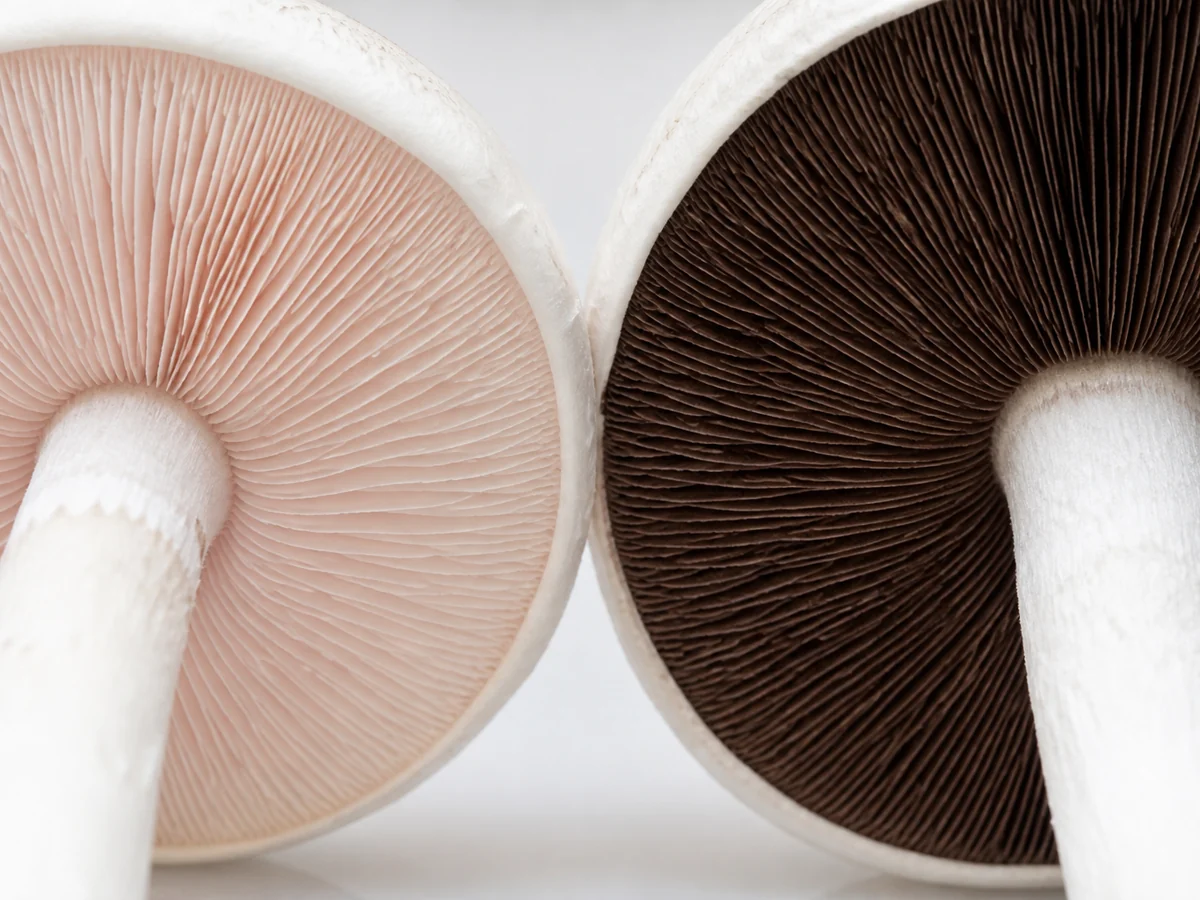
A true field mushroom carries bright pink gills when young that darken to chocolate brown, while a yellow stainer runs greyer through the same sequence. That difference is real and it is a comparison rather than a test, which makes it useless to somebody holding one mushroom and no reference.
Horse mushrooms and the cultivated white button are the other two. Both bruise, and that is where people get caught, because bruising alone is not the signal.
Several edible Agaricus species discolor when handled. What separates the yellow stainer is the speed, the shade and the place: an immediate chrome yellow at the bulbous base rather than a slow flush of dull yellow, pink or brown anywhere else.
Keep looking at itA slow flush of dull yellow, pink or brown, anywhere on the mushroom
Put it downImmediate bright chrome yellow at the bulbous stem base
So the honest instruction is narrower than the usual one.
It is not that yellow bruising means poisonous, it is that fast bright yellow at the stem base means put it down.
Warning
Yellow stainer causes gastrointestinal poisoning: cramping, nausea, vomiting and diarrhea, typically beginning within about thirty minutes to two hours of eating. It is not usually fatal in a healthy adult, and it is severe enough that it puts people in emergency departments, particularly children and anyone who ate a large portion.
Recovery is not the same as a mild experience. This mushroom accounts for a large share of the mushroom poisonings recorded in several countries, and Australia sees a run of them every autumn.
Cooking does not help. The phenolic compounds survive the pan, and the smell that warns you about them strengthens with heat rather than cooking away, which is a signal worth acting on even at the stove.
Tolerance also varies between people in a way nobody can predict. There are accounts of one person at a table being violently ill while another who ate the same dish was fine, so somebody else's good experience with a batch is not evidence about yours.
The clinical picture belongs with the other gastrointestinal irritants, which is a different and far better outcome than the mushrooms that damage organs, and the rapid onset is what distinguishes the two groups.
Why does it grow in lawns and parks?
The yellow stainer is a decomposer of enriched ground, and that is why it lives where people do.
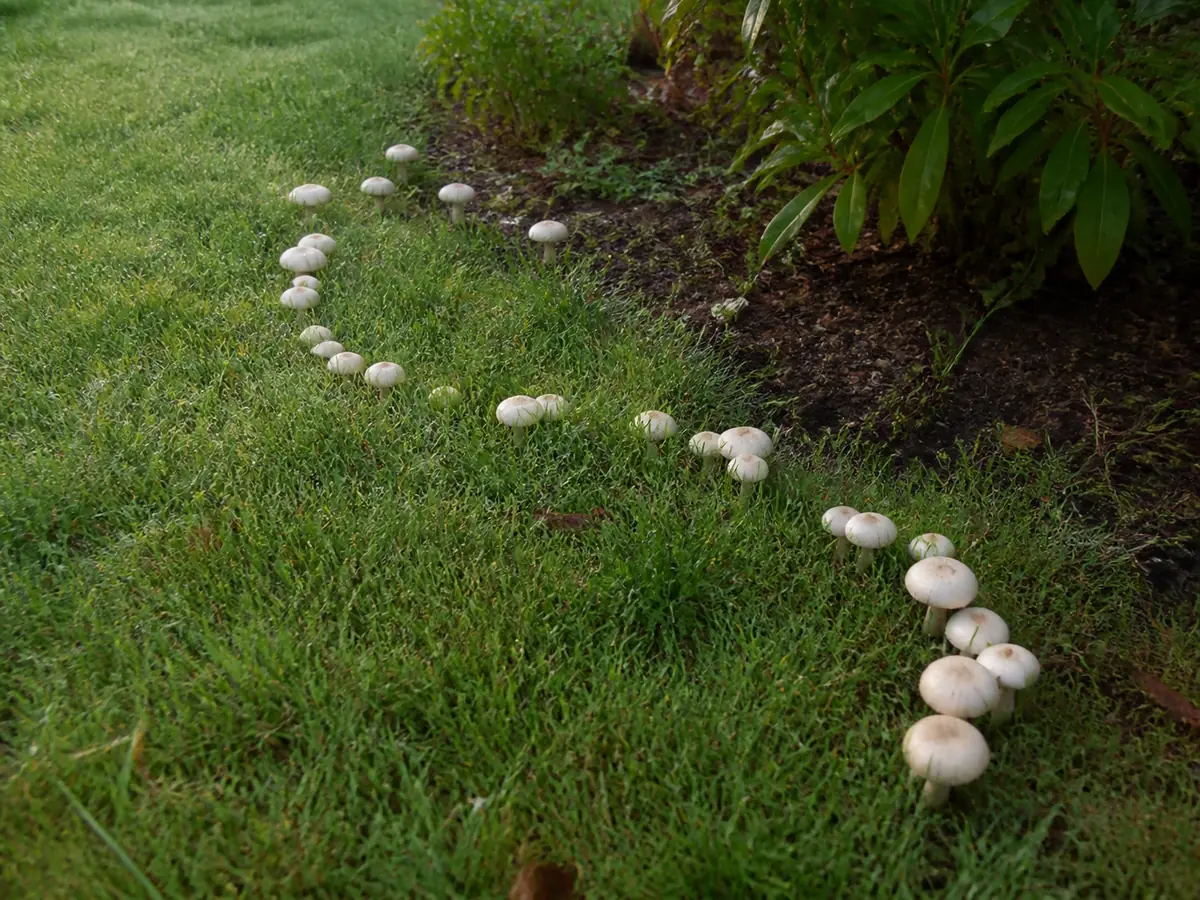
It fruits in lawns, parks, verges, gardens, woodland edges and grazed paddocks, favoring soil that carries nutrients from mowing, manure or garden waste rather than the leaner ground of a forest floor.
That ring habit is worth recognizing because it repeats. A mycelium spreading outward through soil fruits at its advancing edge, so the arc marks the growing front rather than anything about the species.

The consequence for a forager is that the encounter is rarely deliberate. Most people meet this mushroom because it appeared in their own lawn overnight, not because they went looking for it.
That is also why it reaches children and dogs more often than woodland species do. A mushroom in a back garden sits inside the space where nobody expects to need caution.
In Australia the species is introduced rather than native, and it has followed European settlement into exactly those managed grassland habitats, which is how it became a frequent cause of poisoning in a country whose native fungi are largely something else.
Can you cook the toxicity out?
There is nothing to cook here, and the reason is worth stating rather than assuming.
People do try. A yellow stainer looks appetising, it is firm and clean, and the flesh is white and pleasant to handle, so the decision to cook one is not obviously reckless from the outside.
The pan is where the last warning arrives. The phenolic smell intensifies with heat, so a dish that smelled faintly of ink raw smells strongly of it hot, and that moment is a reason to stop rather than to season more heavily.
Some accounts suggest that discarding the stem base or cooking thoroughly reduces the problem. Neither is supported well enough to act on, and neither addresses the fact that the compounds are present through the flesh rather than confined to the part that stains most visibly.
Is there any medicinal interest?
No medicinal use attaches to this species, and the phenolic compounds that make it toxic are not the subject of any therapeutic interest worth reporting.
It appears in the literature almost entirely as a poisoning case, which is a useful kind of documentation and not a health claim.
Why does it appear in garden beds?
Nobody cultivates the yellow stainer, and the practical interest runs the other way. It turns up uninvited in lawns, in garden beds mulched with compost, and occasionally in the enriched ground around outdoor mushroom beds, where its resemblance to an edible Agaricus makes it a genuine hazard rather than a curiosity.
Anyone growing mushrooms outdoors should assume that whatever fruits in the bed is not necessarily what was planted there. The stem base test costs nothing and settles a white Agaricus in seconds.
Why is there no nutrition table?
This poisonous mushroom has no place in a meal.
Publishing a composition table for a mushroom that causes vomiting would imply a use it does not have, and the only quantity that matters is that a portion large enough to be a meal is a portion large enough to be an illness.
Why does it look like a button mushroom?
Agaricus xanthodermus sits in the same genus as the cultivated button mushroom, which explains the resemblance rather than excusing it. The epithet means yellow skin, and it is one of the more useful species names in the genus because it names the diagnostic reaction directly.
The genus contains a group of yellow-staining species beyond this one, several of which cause the same kind of upset, so the test generalises further than the single name suggests.
That is the practical reading of the taxonomy. A white gilled Agaricus that flashes chrome yellow at the base belongs to a group to avoid, and identifying it to species is an interesting exercise rather than a safety requirement.
Yellow stainer identification and poisoning questions
How do you identify a yellow stainer?
Is the yellow stainer poisonous?
How do you tell a yellow stainer from a field mushroom?
Do edible mushrooms bruise yellow too?
Does cooking destroy the toxins?
Why is it in my lawn?
Sources & References
- Agaricus xanthodermus, Yellow Stainer mushroom, First Nature The immediate bright yellow on cutting the stem base fading later to dull brown, the cap edge flushing yellow when rubbed, the cap dimensions and flattened top, the gill sequence from pale salmon pink through chocolate brown, and the phenolic odor
- Yellow Stainer, Agaricus xanthodermus, iNaturalist The distribution across Europe and North America and its introduced and common status in Australia, where it is a frequent cause of mushroom poisoning