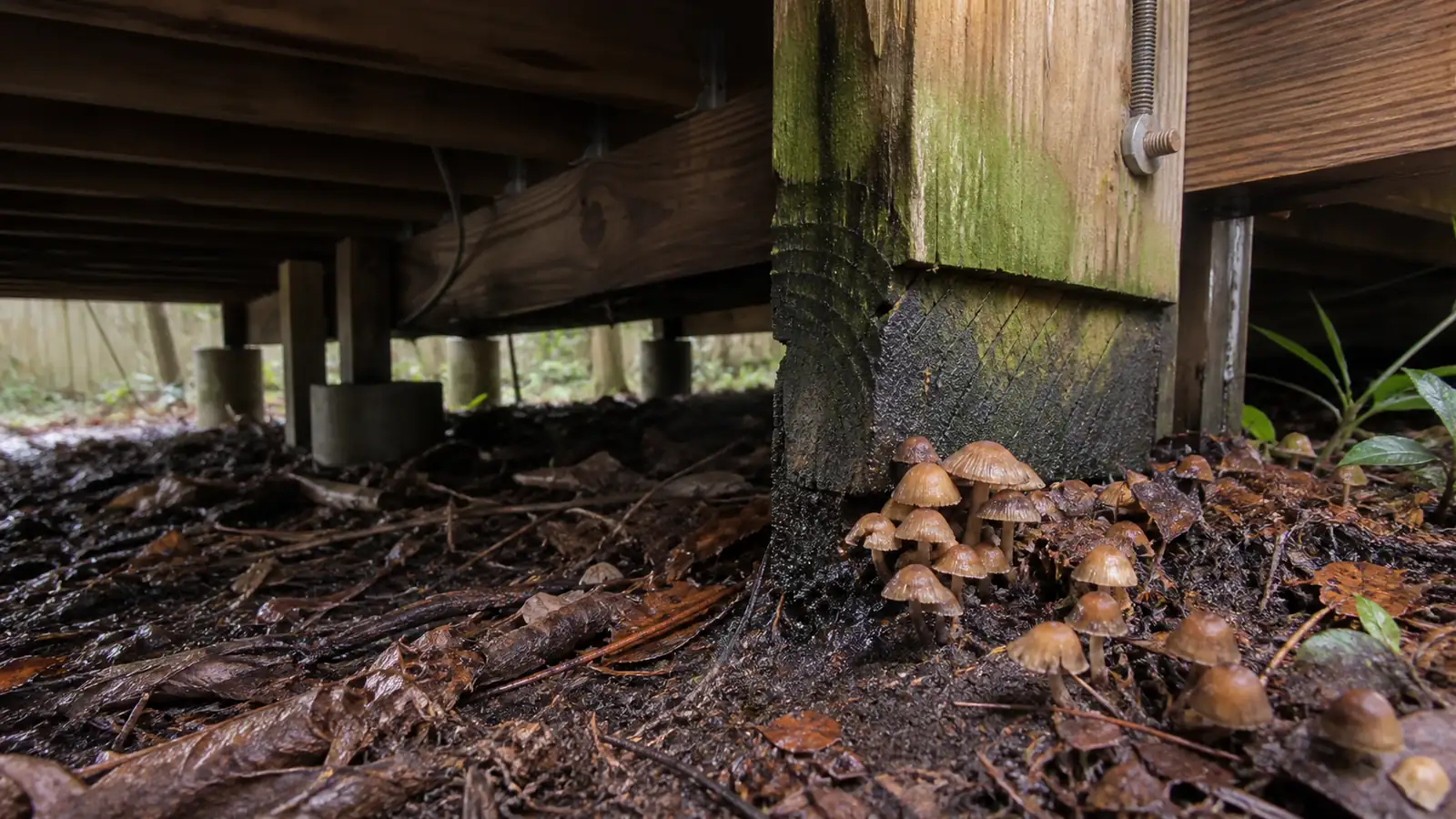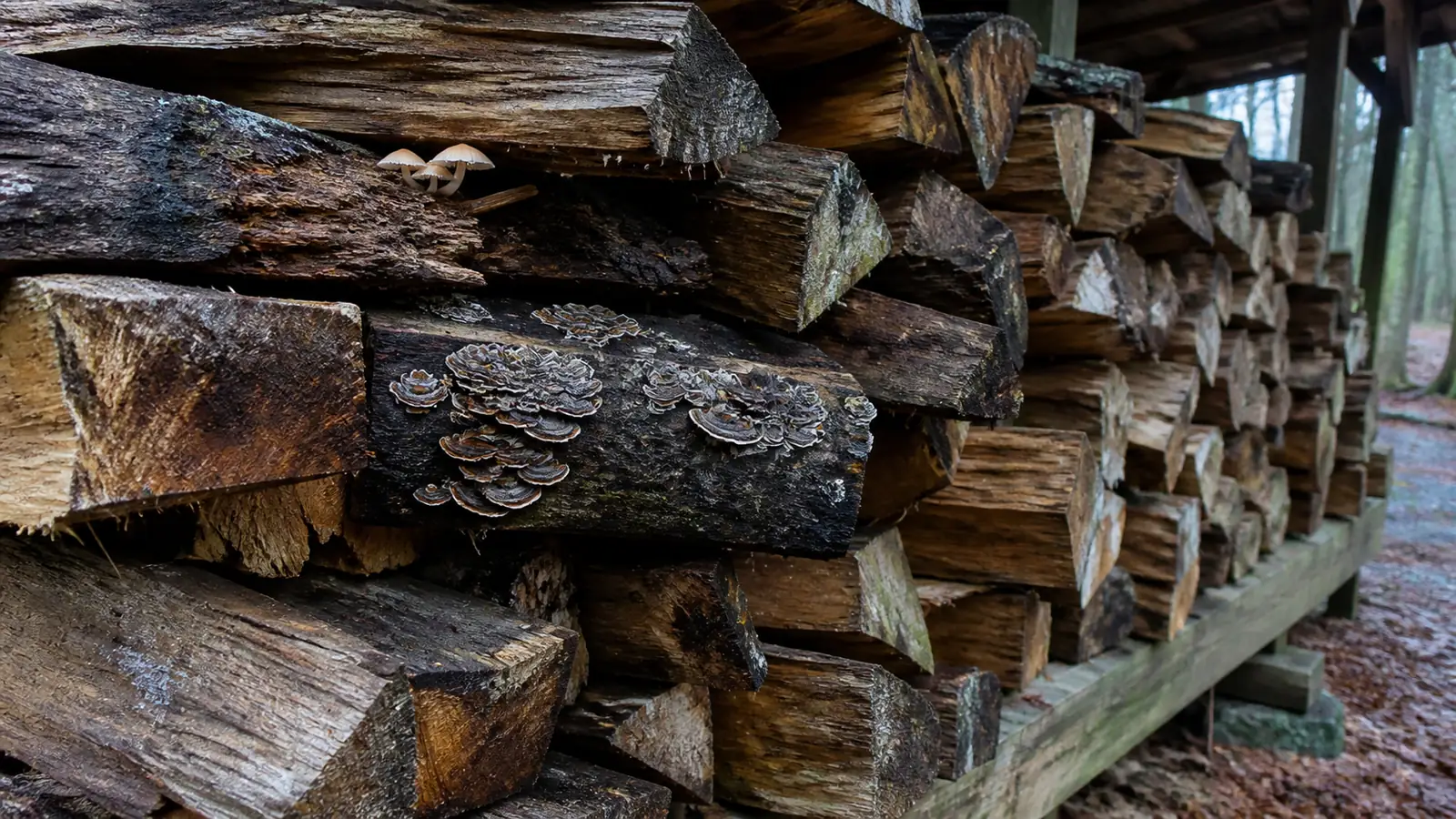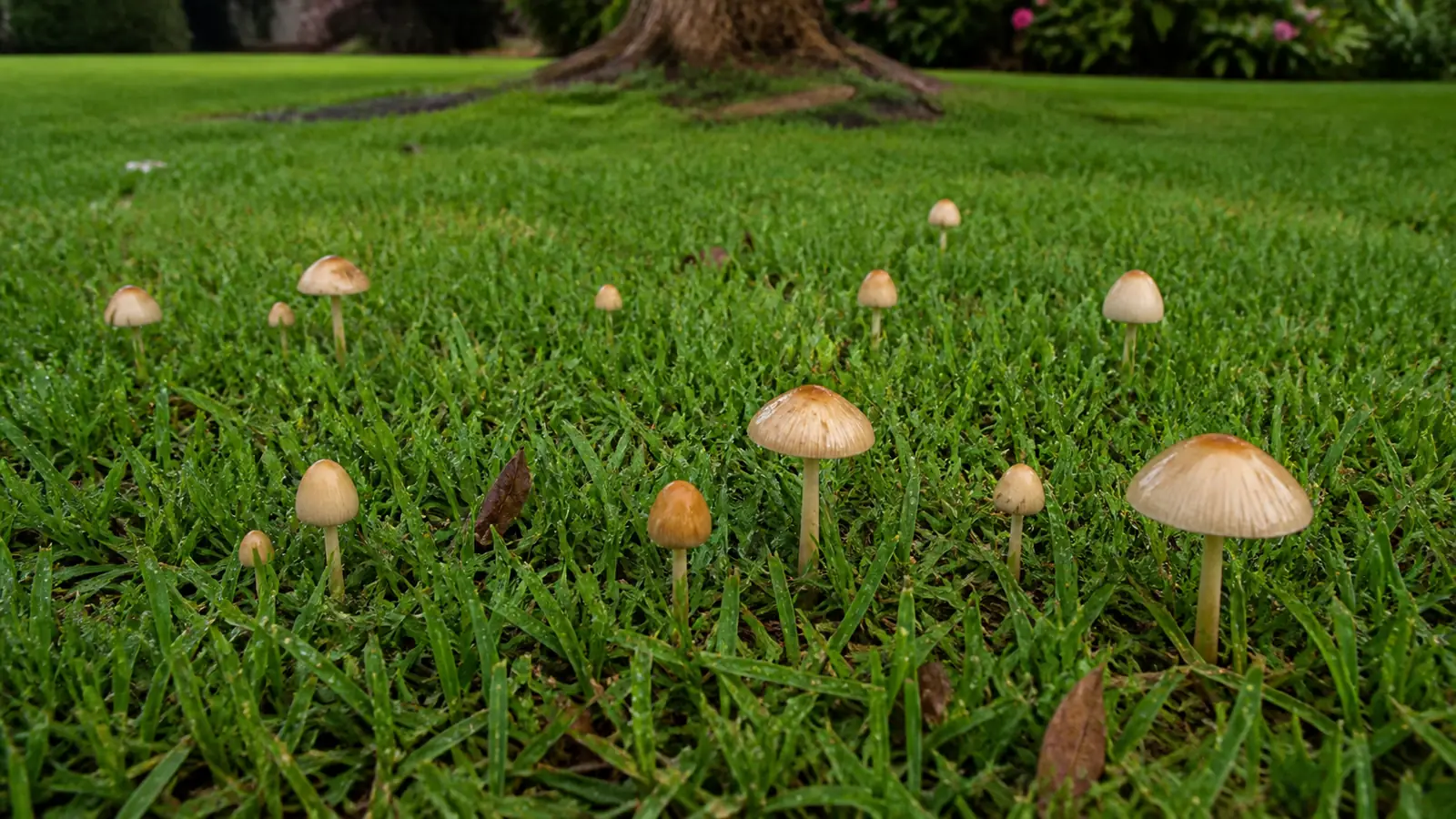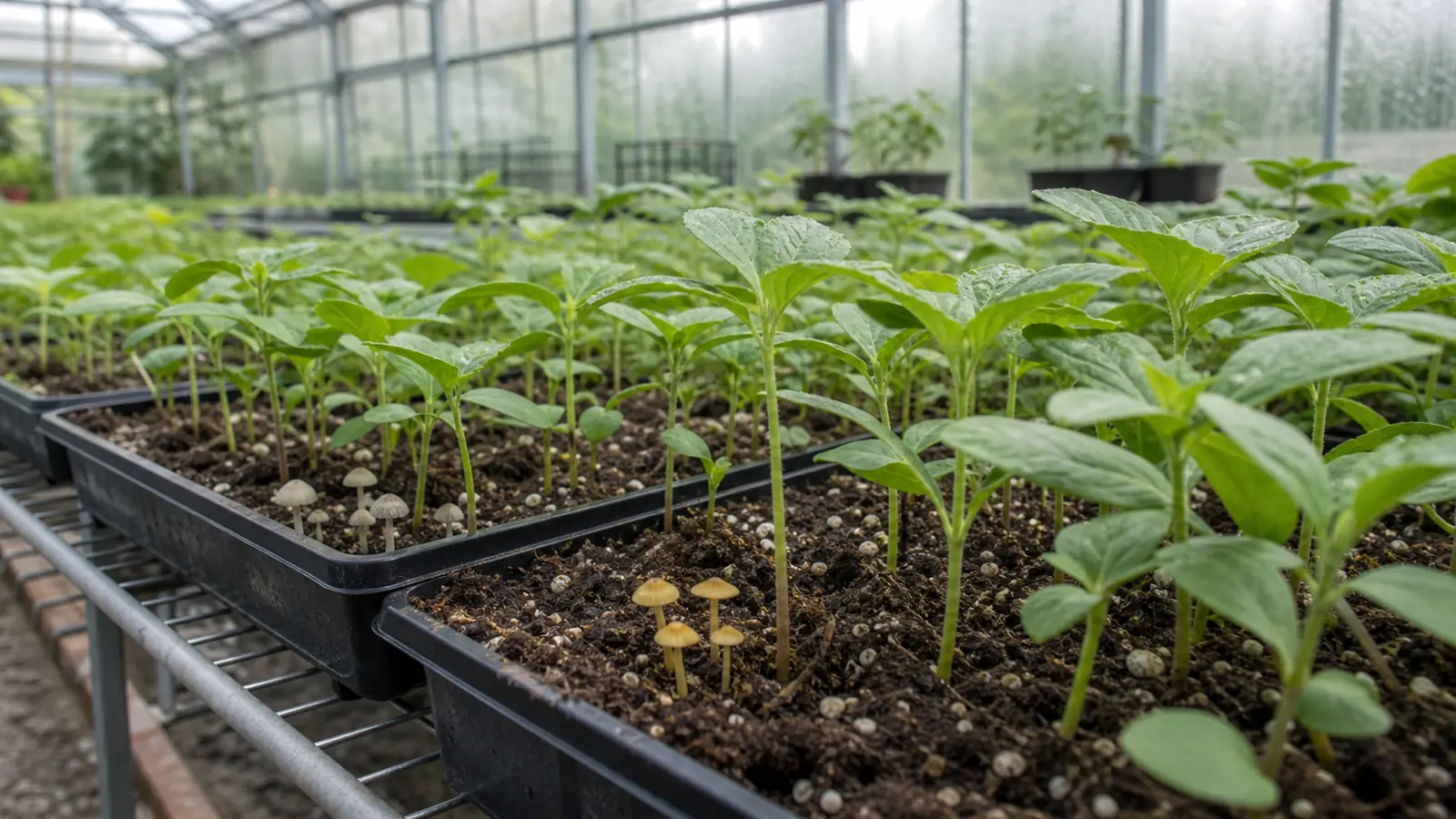
Most mushrooms in greenhouse pots and trays consume dead organic material in the media rather than living plants. Inspect cap form and plant symptoms separately because the same wet conditions can also favor damping-off.
Mushrooms growing in a greenhouse usually feed on bark, wood, peat, compost, or other dead organic material in the potting mix. Most do not attack living seedlings, but the warm wet conditions that trigger fruiting can also favor damping-off and other crop problems.
Inspect the visible growth and the plant as separate subjects. A cap and stem help identify a mushroom group, while water-soaked stems, root decay, collapse, and spread across a tray determine whether the crop needs disease attention.
What Mushrooms Grow in a Greenhouse?
Organic potting media create a repeatable habitat for several mushroom-forming fungi. Spores or mycelium can arrive with bark, peat, sphagnum, compost, reused pots, outdoor air, or contaminated debris, then remain invisible until temperature and moisture favor fruiting.
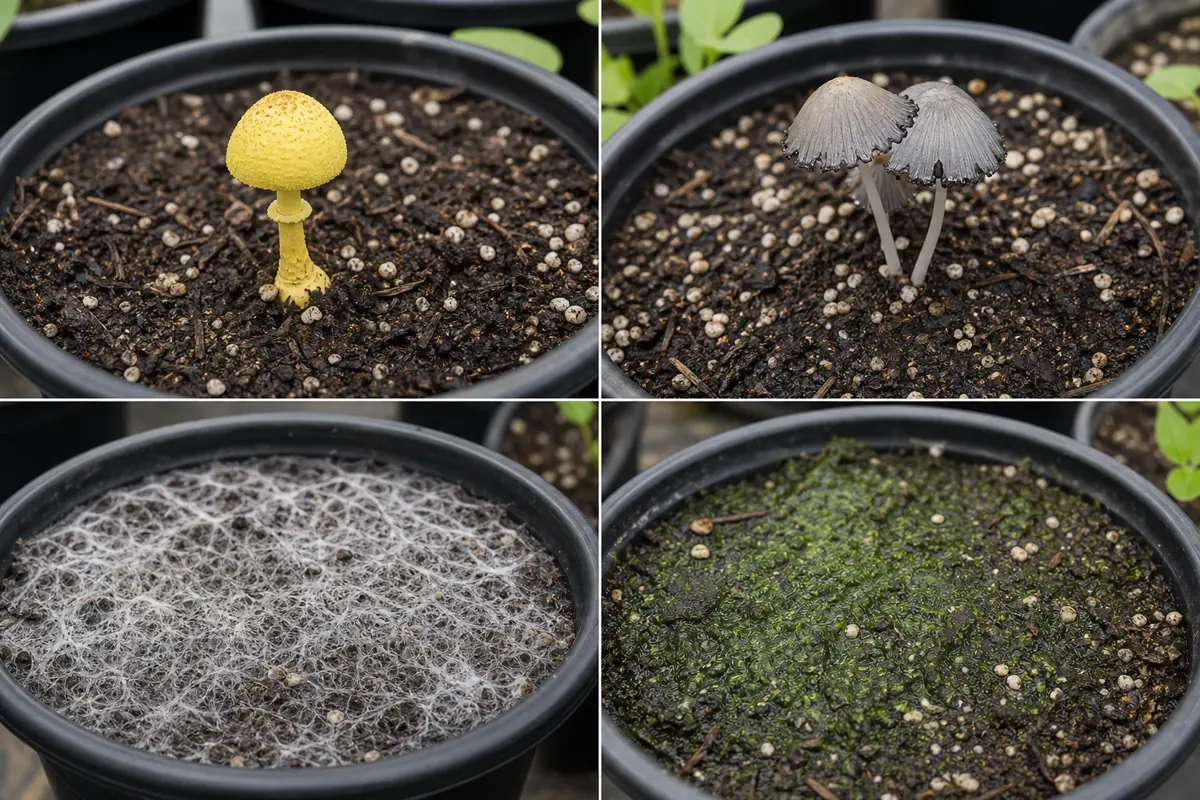
The yellow houseplant mushroom, Leucocoprinus birnbaumii, is one conspicuous candidate in warm containers and greenhouses. It has a sulfur-yellow cap and stem, fine surface scales, pale gills, and a ring on the slender stem.
Small coprinoid fungi can begin as pale or gray bells, then develop black gills and collapse or dissolve. Their rapid change makes a dated photo sequence more useful than one image of a ruined cap.
Conocybe and small Lepiota candidates can also appear in rich media. Some species in these groups are toxic, and a tan cap, stem ring, or familiar greenhouse setting cannot make them safe.
Use body form to assign the first inspection path, then use the image to compare features at a consistent scale.
Unknown greenhouse mushrooms should remain out of the kitchen.
Remove caps from areas accessible to children or pets, and wash after handling the potting material.
Warning
Possible ingestion of an unknown greenhouse mushroom | Call Poison Control at 1-800-222-1222 in the United States after a possible human ingestion. Contact a veterinarian or animal poison-control service for a pet, and save fresh specimens and photographs when doing so does not delay the call.
Photograph the container label, media, neighboring pots, cap top, underside, full stem, base, and fruiting pattern if an identification matters. Scale and time are especially valuable for delicate caps that vanish between greenhouse visits.
IdentificationWhat Are the Black Artillery Fungus Spots on Siding?Do Greenhouse Mushrooms Harm Seedlings?
Most mushrooms fruiting from potting mix are saprotrophs that consume dead organic material. A healthy plant can stand beside a cap without the fungus invading its living roots or stem.
That reassurance has two important limits.
A dense fungal mat can make the surface water-repellent, and the wet greenhouse conditions supporting mushrooms can independently favor plant pathogens.
Test infiltration before blaming the roots. If irrigation beads on a dry-looking white mat, runs down the pot wall, or leaves the root ball unevenly wet, break up or replace the affected surface material and correct the watering pattern.
Damping-off looks different because the plant tissue changes. Seeds can rot before emergence, or a young seedling can develop a water-soaked, dark, shriveled, or constricted stem at the media line and topple.
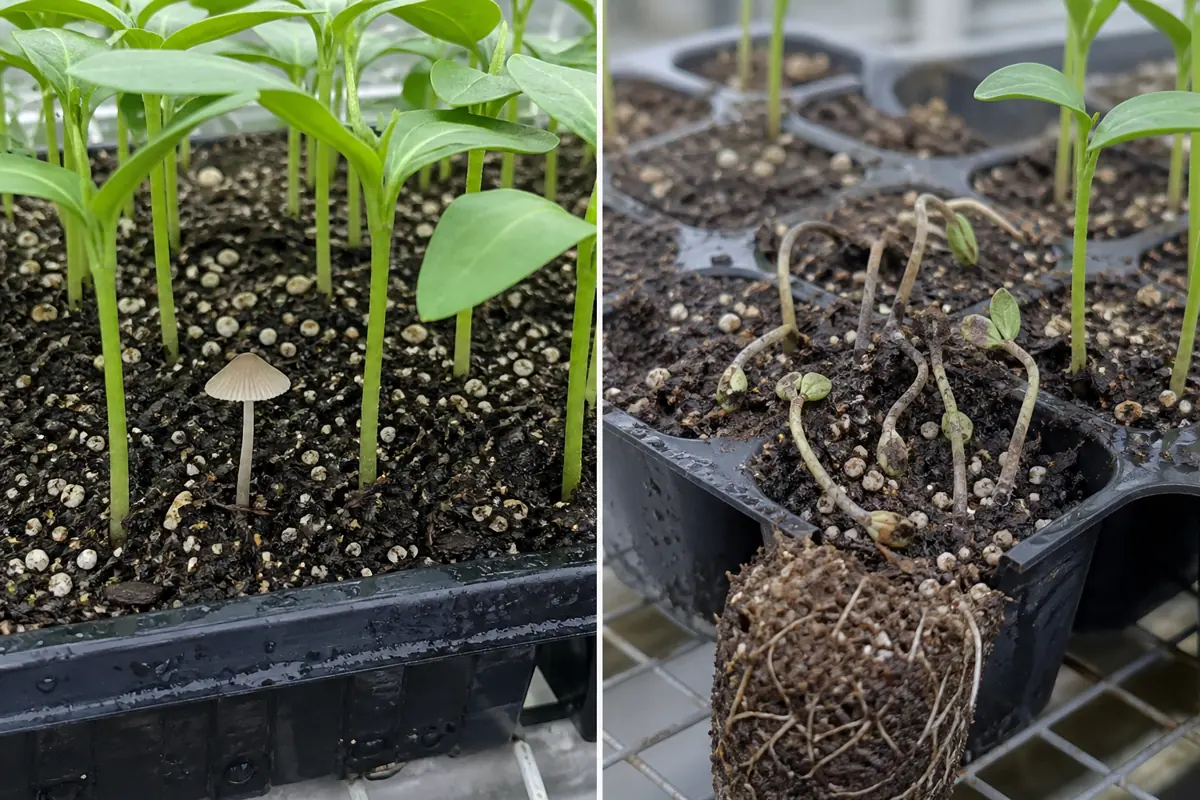
- Check whether poor emergence follows one batch, tray, or circular patch.
- Inspect the stem exactly at the media line rather than judging leaf wilt alone.
- Lift one affected plug to examine roots, seed condition, and the direction of decay.
- Compare irrigation, temperature, density, and sanitation with an unaffected tray.
Pythium, Rhizoctonia, Phytophthora, Fusarium, and other organisms can participate in damping-off, and they do not need to produce a visible mushroom. A cap in the same greenhouse therefore does not identify the pathogen.
Fungus gnats and shore flies can feed around wet media and move contaminated particles. Their presence strengthens the case for moisture and sanitation review, but an adult fly does not diagnose the cause of a collapsed seedling.
IdentificationWhat Are the Tiny Bird's Nest Fungi in Your Mulch?Do Greenhouse Mushrooms Mean Fungus Gnats Are Present?
Mushrooms and fungus gnats often share damp organic media, but one does not prove the other. The cap fruits from fungal material, while gnat larvae live in the upper media and feed on fungi, algae, decaying matter, and sometimes tender roots.
Check the crop instead of inferring from the mushroom. Small dark adults running across the media or flying low around pots support a gnat problem, while translucent larvae with dark head capsules require close inspection of a moist sample.
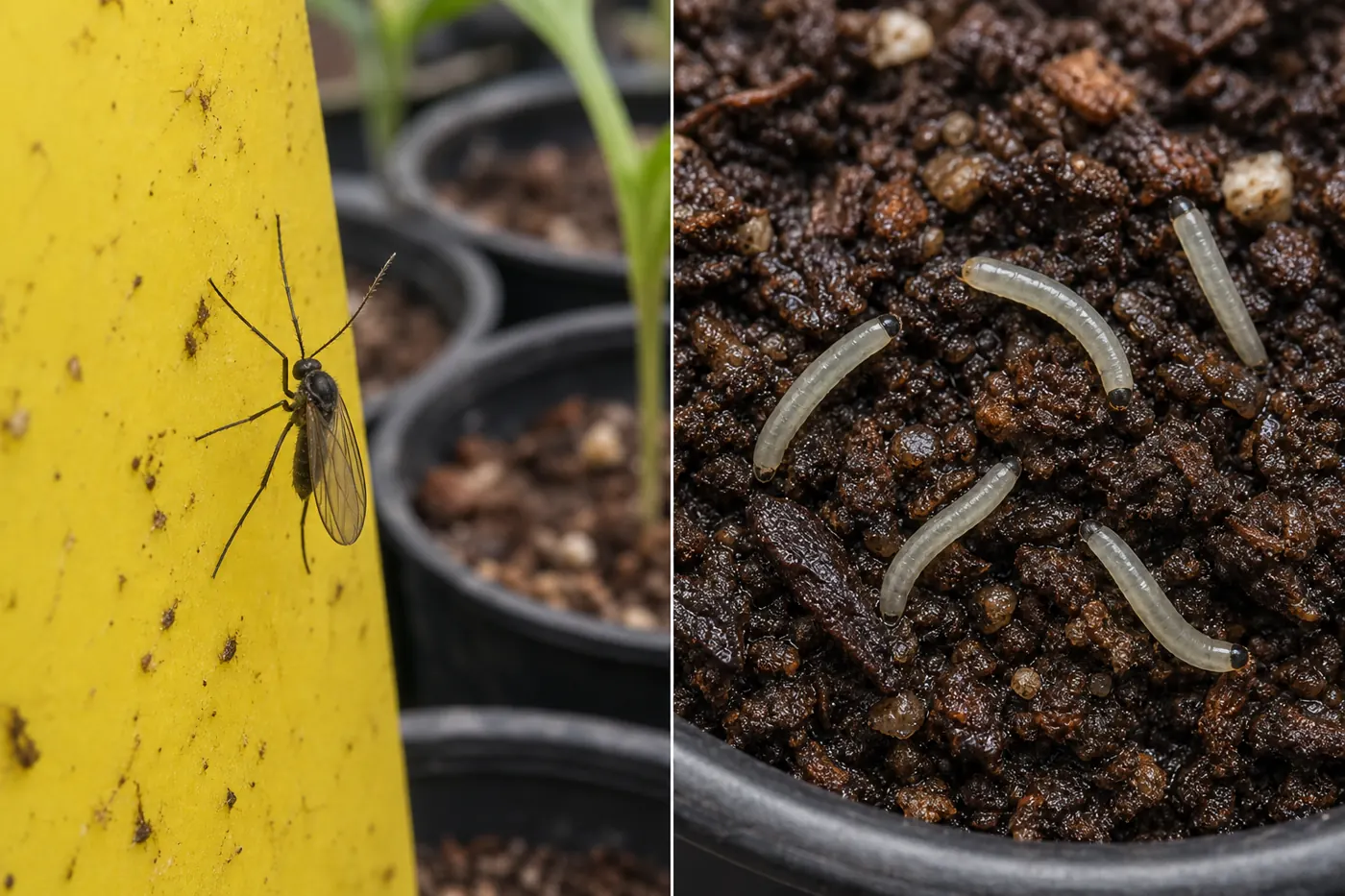
Where should you inspect for larvae?
Concentrate on pots that stay wet longest, propagation trays, algae-covered bench edges, spilled media, and floor drains with organic residue. A yellow sticky card records adult activity, but it does not show which container is producing larvae.
- Compare cards by bench and date rather than counting the whole greenhouse together.
- Inspect the top layer of media in the wettest and healthiest pots.
- Check beneath benches for spilled mix, weeds, algae, and standing runoff.
- Record root pruning or slow growth separately from damping-off lesions.
- Correct the wet habitat before assuming the visible mushroom needs a pesticide.
Larvae can damage fine roots when populations are high, particularly in young plants. The practical response is a pest assessment tied to affected benches, not a mushroom identification used as a substitute for evidence.
Should You Throw Away Plants With Mushrooms in the Pot?
A healthy established plant usually does not need to be discarded because one saprotrophic mushroom appeared. Remove the fruiting body if ingestion access or appearance matters, then judge the plant, roots, drainage, and media condition separately.
Seedlings deserve a lower threshold for intervention because root disturbance and disease can spread quickly through a dense tray. Isolate a symptomatic tray and obtain a crop diagnosis when emergence fails, stems constrict, or roots decay.
| What you find | Keep and monitor | Replace, isolate, or diagnose |
|---|---|---|
| Healthy established plant, one short flush | Remove caps, let the surface dry appropriately, and correct standing water | Replace surface material only if a dense mat blocks infiltration |
| Repeated caps from compacted or sour-smelling mix | Clear drainage and compare root condition before repotting | Repot when the root zone stays saturated or structure has collapsed |
| Seedlings with no tissue symptoms | Adjust irrigation and sanitation by bench | Isolate if neighboring plugs begin to fail in a pattern |
| Water-soaked stems, root decay, or patch collapse | Preserve samples and records | Submit plants and media for diagnosis before choosing a treatment |
| Edible crop with caps in the bed | Keep unknown mushrooms out of harvest containers and wash produce normally | Discard produce directly contaminated by unsafe water, animal waste, or a labeled chemical issue |
The presence of a mushroom does not make the crop poisonous by contact. Do not eat the mushroom itself, and keep food-safety decisions tied to the actual contamination pathway rather than the cap's appearance.
IdentificationWhat Should You Do About Mushrooms in a Horse Pasture?Why Do Greenhouse Mushrooms Keep Returning?
Picking a cap leaves the mycelium in the potting mix. When the media remains warm and wet, the same colony can fruit again within the container or appear from drainage holes.
Overhead irrigation wets cap foliage, benches, algae, and the media surface together. Closely spaced pots and still humid air extend that wet interval, especially overnight when evaporation slows.
Drainage matters inside each container. Blocked holes, nested pots, level benches that hold puddles, compacted media, and saucers left full can keep one crop wetter than the irrigation schedule suggests.
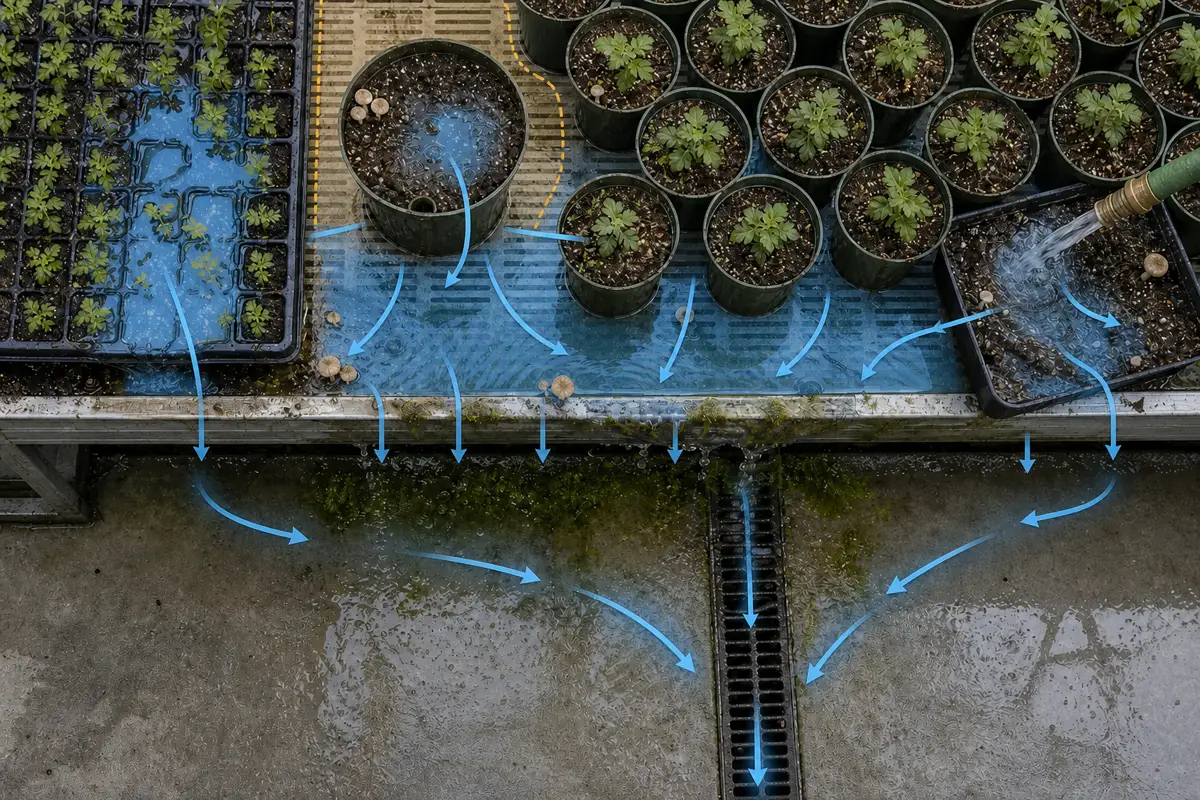
Contamination can also recur across batches because reused trays, dirty scoops, hose ends touching the floor, spilled old media, hands, carts, and splash move soil particles between otherwise clean pots.
Media ingredients are not sterile promises unless the product and handling system establish that condition. Bark, peat, sphagnum, compost, and wood fibers can support saprotrophs even when the mix remains suitable for plants.
Keep a short bench record before changing several variables at once.
- Mark the exact bench, crop, batch, media lot, and first fruiting date.
- Record irrigation time, runoff, drainage, overnight humidity, and air movement.
- Note whether caps return in the same pots or spread along a splash path.
- Separate mushroom fruiting from seedling symptoms in the record.
Use those observations to correct the watering or drainage problem instead of treating every visible fungus with a chemical. It also makes a diagnostic submission more useful if the crop begins to decline.
How Do You Stop Mushrooms on Potting Benches?
The goal is to reduce fruiting conditions while preserving the moisture the crop actually needs. Sterilizing the entire greenhouse is neither realistic nor necessary for an isolated saprotrophic cap.
Removing a thin surface mat can help infiltration, but replacing an entire root ball can injure a healthy established plant. Match the intervention to the extent of colonization and the plant's ability to tolerate disturbance.
Do not apply a blanket fungicide drench merely because caps appeared. Product choice depends on a diagnosed target, crop label, growth stage, dose, and local regulations, and some treatments can injure tender seedlings.
Review the bench after several normal irrigation cycles. Fewer caps, even moisture infiltration, dry aisles and bench surfaces between events, and upright seedlings provide a better success test than one mushroom-free morning.
Sources & References
- University of Florida IFAS Extension Potting-media mushrooms, toxicity, and cultural management.
- Cornell Greenhouse Horticulture Damping-off organisms and symptoms.
- UMass Extension Seedling collapse patterns and sanitation.
- University of Maryland Extension Surface mats, infiltration, and wet-condition pests.