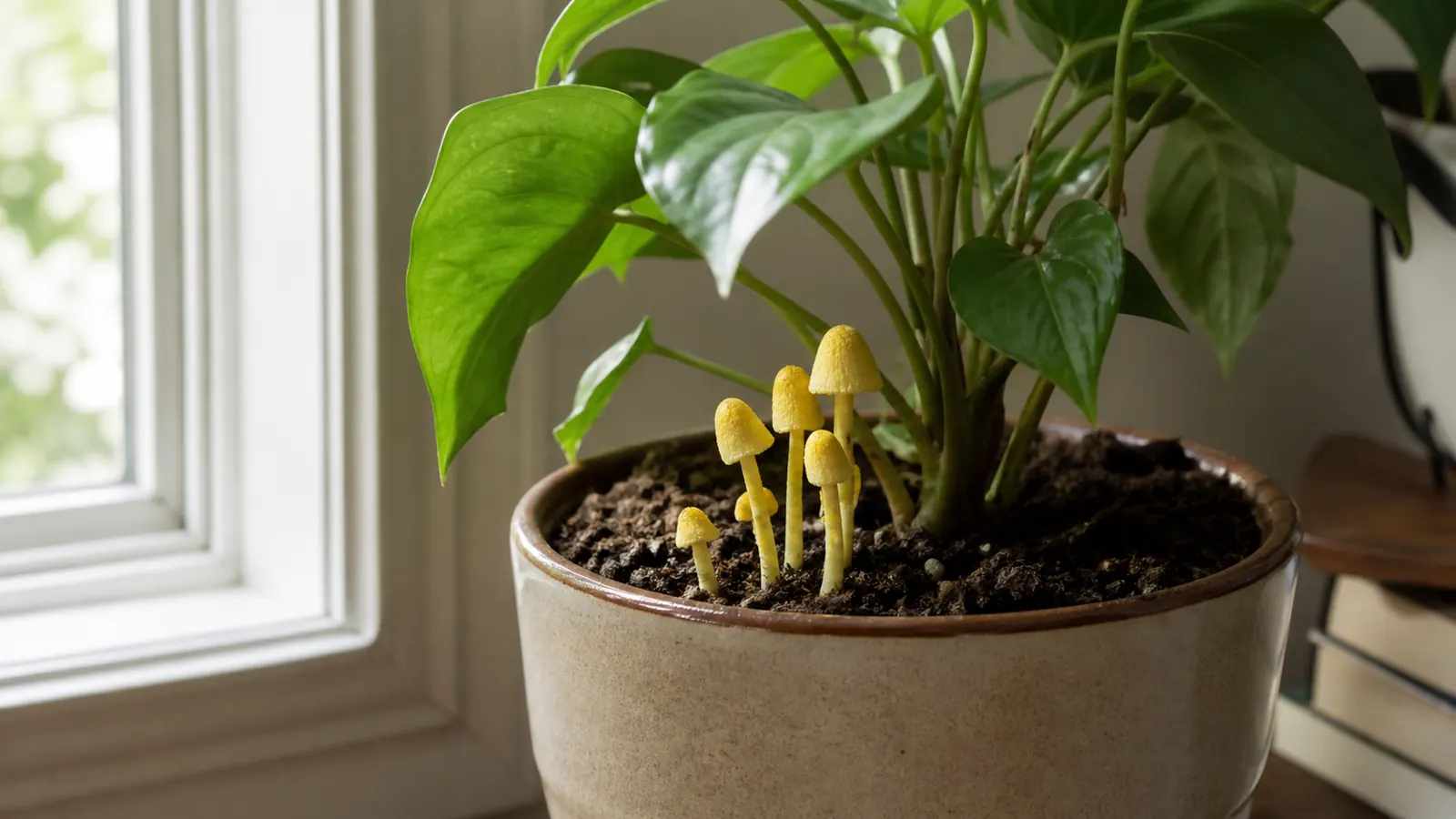
A yellow mushroom in a houseplant is often the flowerpot parasol, a fungus that consumes dead organic matter in potting mix rather than living roots. Remove accessible caps, correct persistent wetness, and repot only when drainage, root condition, or repeated fruiting gives you a separate reason.
A mushroom in potted plant soil usually means a fungus is consuming bark, peat, compost, or another dead ingredient in the mix. It does not automatically mean the houseplant is diseased.
The bright yellow kind is often the flowerpot parasol, Leucocoprinus birnbaumii. Treat that as a probable identification, but do not use it as permission to taste or ignore every mushroom that appears in a pot.
Start with the color and anatomy of a fresh specimen, then make a separate check of drainage, roots, and household access. Those observations tell you whether the pot needs simple cleanup, a watering correction, or fresh mix.
What Is the Yellow Mushroom in a Houseplant?
A small lemon-yellow mushroom in an indoor plant is most likely flowerpot parasol when several features agree. It is common in greenhouses and containers because warm rooms and organic potting mixes recreate conditions that suit this tropical fungus.
Young fruiting bodies often begin as narrow yellow ovals. The cap then opens into a bell or shallow parasol, usually about 1 to 2 inches wide, on a slender stalk that brings the mushroom to roughly 1 to 3 inches tall.
Fresh caps look powdery or finely scaled, not smooth and waxy.
The stalk is also yellow and may carry a thin ring, although that fragile tissue can sag, tear, or disappear as the mushroom ages.
Turn one intact specimen far enough to see the underside without snapping it. The pale yellow to whitish gills should end just before the stalk instead of running down it, and a mature cap can leave a white spore deposit.
| Character | What supports flowerpot parasol | What the clue cannot prove |
|---|---|---|
| Color | Lemon-yellow cap and stalk, often with a powdery surface | Indoor light, age, and camera processing can distort yellow |
| Shape | Oval young cap that becomes bell-shaped or parasol-like | Many small gilled mushrooms change shape as they mature |
| Underside | Crowded pale gills that stop before the stalk | One blurry underside photograph cannot show attachment reliably |
| Stem | Slender yellow stalk with a fragile ring | The ring may be lost, and a ring alone is not species-specific |
| Spore deposit | White spores in mass | A white print is one character, not an edibility test |
The value comes from the combination of characters, not one bright cap. A yellow mushroom with pores, thick waxy gills, a cup at the stem base, or a different spore color does not fit this compact pattern and needs a fresh assessment.
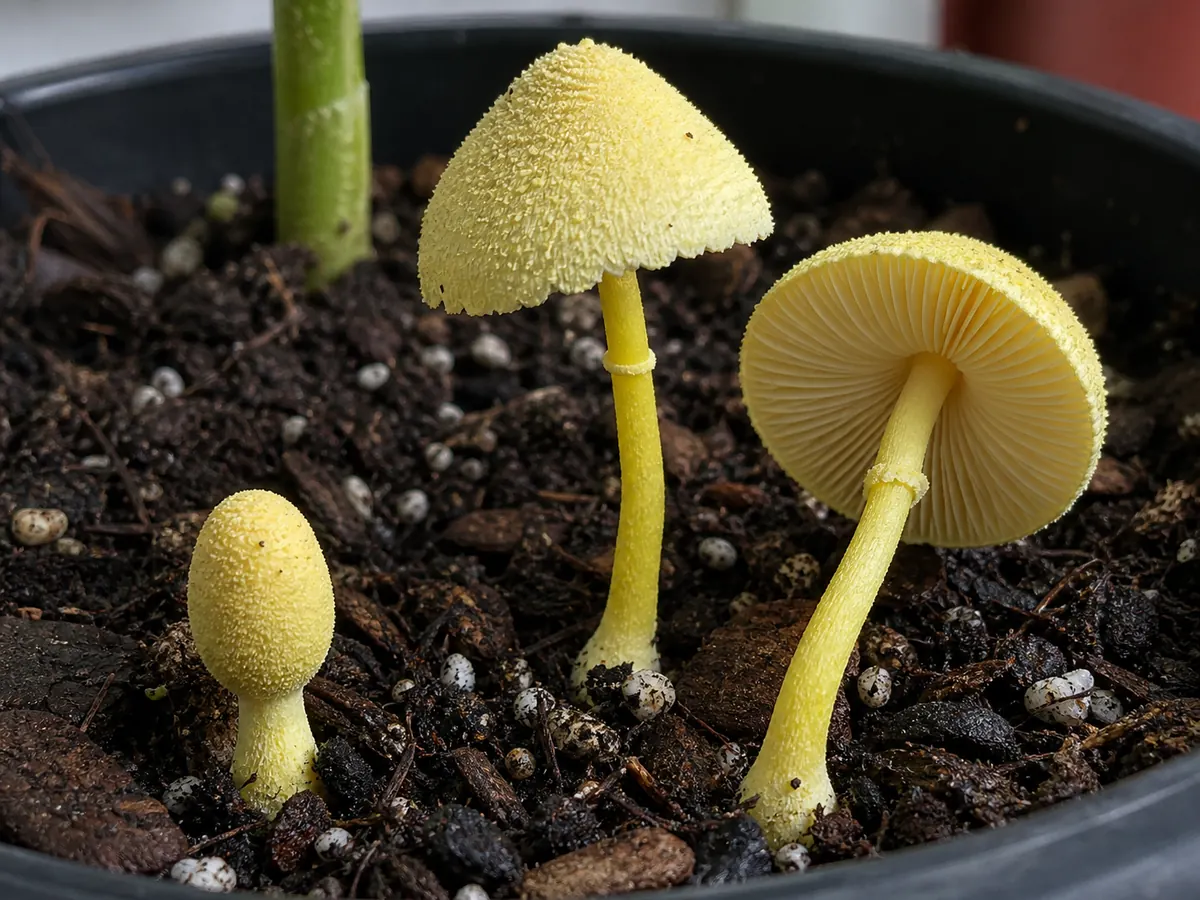
Old flowerpot parasols can fade toward cream, flatten, and collapse into a thin damp remnant.
Photograph a fresh mushroom from the side and underneath because the useful structure can be gone by the following day.
A brown, white, or gray mushroom in the same pot should not be forced into the yellow species. Potting mixes can support other fungi, so the container provides habitat evidence but does not name a species.
IdentificationWhat Are the Tiny Bird's Nest Fungi in Your Mulch?The Mushroom Is Feeding on Potting Mix, Not Living Roots
The cap above the soil is a temporary reproductive structure. Most of the fungus exists as mycelium, a network of fine threads spreading through moist organic particles below the surface.
Flowerpot parasol is saprotrophic.
It obtains energy from dead material in the mix and does not invade healthy living roots, so removing the mushroom is not a treatment the plant needs for an infection.
The fungus may have arrived as mycelium in commercial mix or with a transplanted plant. Airborne spores can also land in a pot, but their presence matters only when suitable food, temperature, and moisture allow growth.
Warm damp conditions can let a small fruiting body expand between two routine checks. The sudden cap therefore reveals a fruiting event, not a fungus that colonized the entire pot overnight.

Moisture deserves attention because repeated fruiting shows that at least part of the mix stayed damp long enough for the fungus. It still does not prove chronic overwatering, since ferns, calatheas, succulents, and orchids need very different watering patterns and substrates.
Judge the root zone separately from the mushroom.
Healthy new growth, firm roots, a normal earthy smell, and mix that drains and aerates point away from an urgent plant problem.
Standing water, a sour or swampy odor, persistently saturated mix, soft dark roots, slowed growth, wilting in wet soil, or spreading leaf yellowing give you a different diagnosis. Those signs justify correcting the pot conditions even though the mushroom itself is not attacking the plant.
Do not withhold water until a moisture-loving plant wilts just to stop fruiting.
Water according to the plant and its current root ball, then improve drainage or change a mix that stays wet longer than that plant can tolerate.
IdentificationWhat Should You Do About Mushrooms in a Horse Pasture?Remove the Caps, Fix the Moisture, or Repot?
Choose the least disruptive action that resolves the evidence in front of you.
A healthy plant with one brief flush does not benefit from having every root stripped of soil, while a plant standing in stagnant water needs more than cosmetic cap removal.
Healthy plant and one short flush
Lift the mushrooms and discard themThis limits access and mess without disturbing functioning roots
Healthy plant but water remains in the cachepot
Empty the outer pot and restore free drainageStanding water keeps the lower mix saturated after the surface looks dry
Repeated fruiting in slow-drying mix
Review watering, light, pot size, and mix structureThe moisture interval may be longer than the plant and its roots require
Sour mix, soft roots, or decline in wet soil
Inspect the root ball and replace failed mixPlant symptoms and damaged roots justify repotting, not the mushroom alone
When Simple Removal Is Enough
Pinch or lift fresh caps at the base before they open fully when children or animals can reach the plant. Place them in a closed trash container, then wash your hands and clean loose fragments from the pot rim or floor.
Picking removes the fruiting body but leaves mycelium among the organic particles. Another flush can appear when warmth and moisture align, so recurrence after cleanup does not show that removal was performed incorrectly.
Check whether the plant sits in a perforated nursery pot inside a decorative cachepot. Lift the inner pot after watering and empty any water below it so the root ball cannot wick that water back up for days.
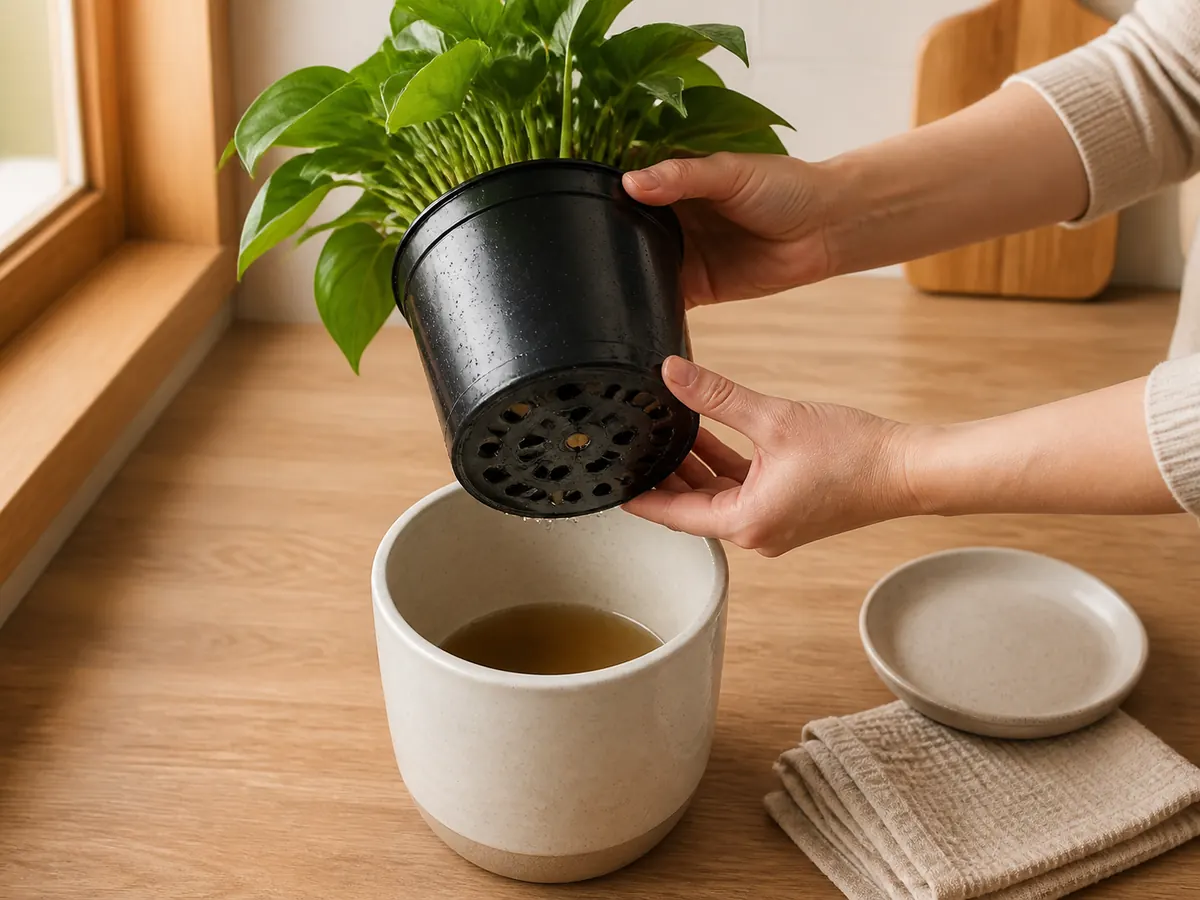
A container planted directly into an unperforated vessel cannot release excess water. Move the plant to a pot with drainage holes, then use the decorative vessel as an outer cover with enough clearance to inspect and empty it.
Let the appropriate portion of the mix dry before watering again, using the care needs of the plant instead of one universal finger depth. A succulent in gritty mix and a tropical fern in moisture-retentive mix should not receive the same drying rule.
Fungicide is usually ineffective against mycelium distributed through organic potting material.
Bleach, vinegar, salt, and improvised soil drenches can injure roots or alter the mix without giving reliable control.
When the Plant Needs New Mix
Repot when the container has no workable drainage, the mix has collapsed into an airless mass, roots are failing, or the plant remains stressed in wet soil. Repeated fruiting can support that decision, but it should accompany a real mix or root defect.
Choose a clean pot only slightly larger than the root ball unless the plant is returning to the same suitable container. Excess unused mix in an oversized pot holds more water and can recreate the condition you are trying to correct.
Do not move automatically to a much larger pot because the plant was already stressed. A modest fit lets roots occupy the mix while still leaving space for air and drainage.
Fresh mix can reduce the established fungal material, but spores are common and no houseplant pot remains biologically sterile. The practical goal is a healthy root environment and controlled access, not permanent elimination of every decomposer.
If a Child or Pet Eats a Pot Mushroom
A fungus that does not harm the plant can still harm whoever swallows it.
Flowerpot parasol is regarded as poisonous, and reports associate ingestion with nausea, vomiting, diarrhea, and other gastrointestinal symptoms.
Warning
Do not eat a yellow houseplant mushroom or use a photograph to clear an exposure. If a person in the United States may have swallowed any part, call Poison Control at 1-800-222-1222 immediately instead of waiting for symptoms.
Remove any remaining pieces from the mouth without forcing vomiting. Do not give a home remedy unless the poison specialist handling the case instructs you to do so.
For a dog or cat, contact a veterinarian, emergency animal hospital, or animal poison-control service promptly.
Human poison information does not replace veterinary assessment because dose, body size, and species response differ.
Record the time, estimated amount, current symptoms, and the person or animal's weight. Clear photographs of the cap, underside, stem, pot, and fresh patch can help, but making those photographs must not delay the call.
Keep one matching mushroom only when it can be collected safely and quickly. Place it in paper or waxed paper away from food, refrigerate it, and follow the expert's instructions about identification or disposal.
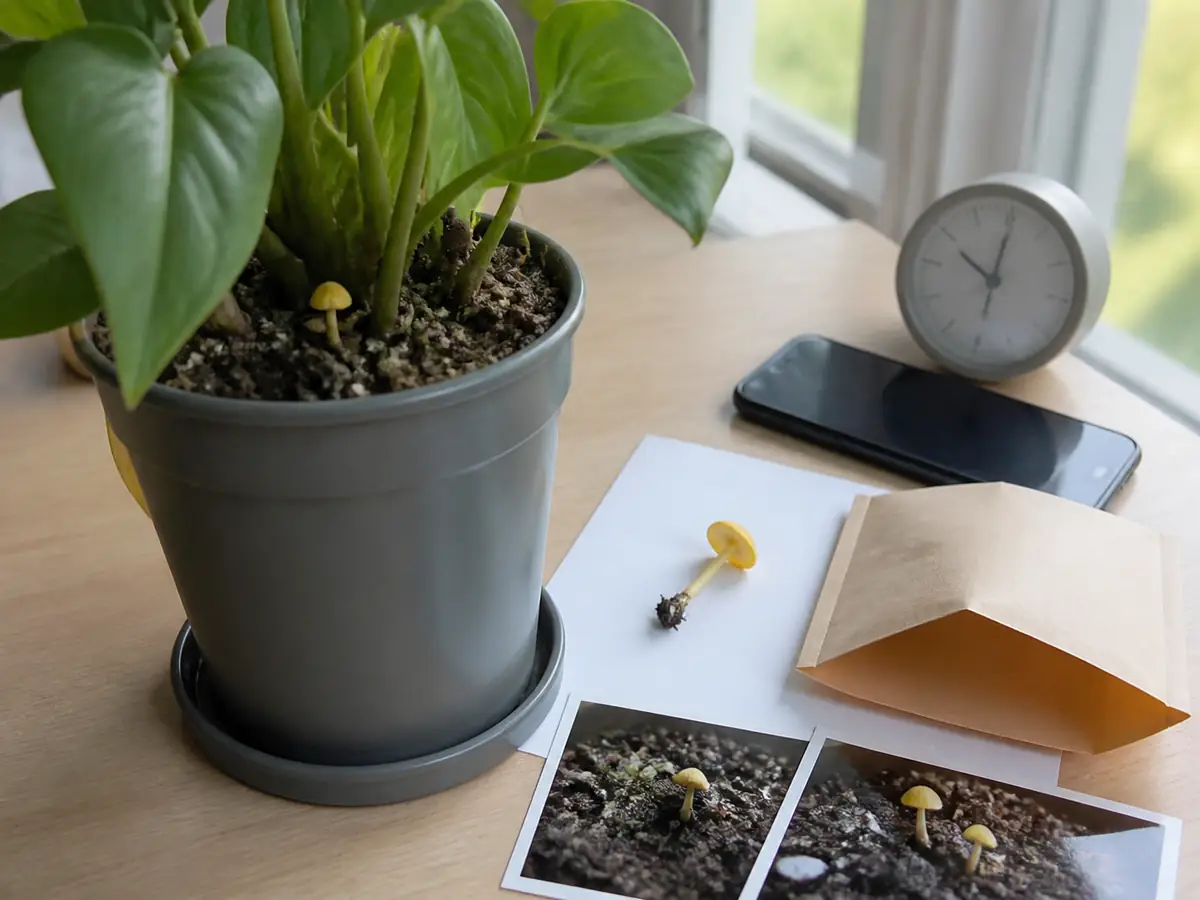
After the immediate risk is handled, remove the remaining fruiting bodies and place the pot out of reach. That access control matters more than trying to prove the species from an aging collapsed specimen.
Sources & References
- Iowa State University Extension and Outreach Yellow houseplant mushroom identity, saprotrophic growth, plant impact, and fungicide limits.
- Penn State Extension Warm moist conditions, repeated fruiting, and the decomposer relationship with potting mix.
- Penn State Extension Drainage, cachepots, soilless mix, root checks, and repotting procedure.
- Poison Control Immediate response to a possible wild mushroom ingestion.